 50 punkti
Autor soovib selle materjali allalaadimise eest saada 50 punkti.
50 punkti
Autor soovib selle materjali allalaadimise eest saada 50 punkti.
 ~ 3 lehte
Lehekülgede arv dokumendis
~ 3 lehte
Lehekülgede arv dokumendis
 2010-02-16
Kuupäev, millal dokument üles laeti
2010-02-16
Kuupäev, millal dokument üles laeti
 20 laadimist
Kokku alla laetud
20 laadimist
Kokku alla laetud
 0 arvamust
Teiste kasutajate poolt lisatud kommentaarid
0 arvamust
Teiste kasutajate poolt lisatud kommentaarid
 getzuke15
Õppematerjali autor
getzuke15
Õppematerjali autor
English have no "cuisine" themselves, but this is not quite the true. Vocabulary: to criticize - tasteless overcooked - ingredient - to invent - sauces - to disguise - spice herb - delicious - disappointing - to lend cuisine British Youth (2) Most 18 and 19 year-olds in Britain are quite independent people. English people say that children grow up more quickly now. Relationships within the British family are different now. Children have more freedom to make their own decisions. For example, children aged 13 may be employed part time in Great Britain. Age 15 is legally a "young person" not a "child". Age 16 is a school leaving age. They can leave home, drive a moped, marry with "parents' consent" buy beer. Age 17 can drive a car. Age 18 can vote, get married, drink in pubs. Education is a very important part in the life of British youth. One can't become an independent person without it
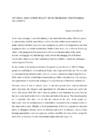
children rights to participate in decision making will overwhelm them with a great responsibility and denies them an opportunity of childhood. 29 It is strongly believed that children should have the time for play and innocence and henceforth `must be protected because they are children and as children they lack competence and autonomy presumed by the idea of a right.30 Moreover, rights also threaten the stability and harmony of family life in which too much freedom of choice in making decisions about the matters that affect children is considered to be fatal to adult authority. Laura Purdy`s argument greatly illustrates the deep concern over the idea of losing control over children and failing to meet their basic needs if granting children rights. She is a fierce opponent to the liberal education and proponent of child development. She contends that children do not have equal status with adults as they do
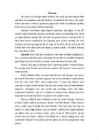
country. It is understandable, I would to the same thing, cause I would not care how big strangers are I would be interested just of protecting mine country. For example is event from history, what can prove that small countries fight for the state what they love. I think that everyone knew that point in history, when Estonia, Latvia and Lithuania public did a big human-chain, what later called a Baltic-chain. They were there to fight for freedom. Because they had created them country and they wanted to keep it and then they united to be much stronger together. That way was harder to destroy these countries and that was also people goal. In last subject I talked about wars and saving and also protecting a state what people had built. This all is in connection with studying an evil. Many years ago for example in 17 century were very funny laws. About five year old boy had to carry knights weapon send him
ESTONIAN EDUCATION POLICY. MAIN PROBLEMS AND POSSIBLE SOLUTIONS Hanna-Loora Bobrov Since I was a teenager, I remember thinking of the school education quality. How to improve it, where teacher could be more efficient and how to make a better environment for the pupils. And now all these years later I am a young teacher and it is still important for me what is going on within my society in education. I believe I have some kind of advance of knowing what is really going on in Estonian schools and how the education policy really works. Because not long ago I finished the high school, before that changing a lot of different schools and I think I can say that I superficially know how different schools are working in various regions of Estonia. Being a student at the faculty of education has opened my eyes for a lot of different things, perspectives and helped a lot to understand deeper, why things are like they are.
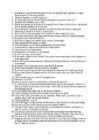
3 104. It is demeaning to submit outwardly to unjust authority, but one sometimes has no choice. It is doubly demeaning to submit inwardly to unjust authority, and here one sometimes does have a choice; it is necessary to seize these moments. 105. Often it takes some shit disturbing before people wake up and see that their rights are being violated. 106. One of the fundamental aspects of freedom of speech is that it has to be permitted past the point where it begins to annoy others. 107. How can you know that someone else can't know something? 108. The sun goes around the earth, which is flat, and heavier-than-air flight is impossible. 109. You know the story of the blind men and the elephant. But one part of the story is left out. Some of the men got their hands in elephant dung and concluded that the elephant was just a nasty practical joke.. 110
Libraries. We know a lot of things thanks to books, but we do not know exactly when and where they originated, and what should be considered the first book in the world. Ancient document, written on parchment, papyri and vellum can hardly be qualified as books the way we understand the word today. Centuries went before paper replaced parchment and papyri. In the 15 th century Johann Gutenberg invented a mechanical process of duplicating texts, which we today call book printing. The first book was printed between 1444 and 1446, so these years can be considered as the beginning years of book printing. His most important preserved printings are the 40 copies of the Bible. By the end of the 15 th century there were about 1000 print-shops in Europe already. The oldest Estonian book dates back to 1535. Libraries form a vital part of education. They make available-through books, films, recordings and other media- knowledge that h
Maturita Solutions Advanced Workbook Key stand bananas and coffee! It's a bit 3 1 to 8 of Unit 1 uncanny really. Is it something she's 2 about 9 century passed on to me genetically, or is it 3 like 10 assumed / 1A Memories page 3 learned behaviour? Who knows? 4 of thought / 1 See exercise 2 2 5 6 any fought
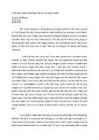
Education Education is so multifaceted that it is difficult for me to know where to begin discussing it, or how to prioritize the many factors. Relaying my own experience is easy: I had a standard classroom approach, supplemented by inordinate reading. In only the briefest and least memorable instances did I receive any individual tutoring. Education is commonly thought of as the job of schools. Adults cry "educate our children!" Everyone has opinions about the best way to do the job. It is of urgent importance, and all the numerous factors are much studied, debated, and new (or old) ideas continually tested or retested. Some people say "it's as simple as . . . " and then name their pet peeve or passion. My view is not of an education specialist, but of one who loves sharing what I learn, and owes much to educators. Since I don't have an educational theory neatly worked-out, nor an outline of my perceptions, my intent is to address each educational ingredient that comes to my m
 annaabi.ee






Kõik kommentaarid