between thatre and film or literature. Firstly the main difference between literature and theatre is that if you read a book, you have to imagine the whole image in your head and thus everybody sees one thing differently, but in theatre you have a real live picture in front of you. Also in books the feelings, thoughts and emotions are described better than in theatre performances. Secondly, in theatre performances you can only see one stage and one place but in movies the situations are depicted in various places, for example on streets and other places, which can not be depicted on a stage so easily. In addition to that, in books all the situations are decribed in very small details and that is a really big advantage of reading books. In movies and thatre all situations are generalized and short. In my opinion it is the best thing about books and because of that, i quite like reading. So in conclusion it can be said that theatre, movies and books all have their own pros that
Guild o f the Blac khe ad s His to ry Mentioned in 1399 Origin of the name is not entirely clear St. Mauritius is depicted in the coat of arms of Blackheads Active only in Estonia and Latvia Left Tallinn in the 1940s They were merchants Were also in Tartu and Pärnu Main building was in Tallinn The Ho us e o f Bro the rho o d o f Blac khe ad s Located in the old town Is nearly the only preserved renaissance building in Tallinn When it's not occupied by concerts or other events it's open 10.00 19.00. Thank you for watching Kalev Gustav Lillepruun Sources : Wikipedia.org Tallinn.com
Why is the Victorian period often compared to the Elizabethan period? In terms of size how would you describe the British Empire? Why was such an enormity needed at all? 3. Why did the Victorian's develop a doubt in religious matters? What were the new discoveries that triggered the questioning in religious faith? Who were David Livingston and Charles Darwin? What were their ideas like? 4. Describe the main social issues of Victorian Britain? How were they depicted in literature? (workhouses, slums, child labour, disease, etc) 5. What ideas and reforms were behind the 'woman question'? Describe the three types of the Victorian women, their roles and development throughout time? 6. Self-help books and the ideology behind them? 7. What is literary realism (definition, development)? Who were the writers whose style is best characterised by this term? 8. Victorian poetry: the dilemmas between aesthetics and morality
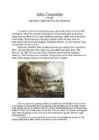
Sailsbury Cathedral from the Meadows was painted by John Consatble in 1831, one year after his wife's death. He later added nine lines from ,,The Seasons" by 18th Century poet James Thomson that reveal the painting's meaning: That the rainbow is a symbol of hope after a storm that follows on the death of the young Amelia in the arms of her lover Celadon. I like the name of the painting Sailsbury Cathedral from the Meadows, because there is everything very clearly depicted in the painting is the perception and the message. In front of the painting you can see chariots with horses and in the background can be seen church and rainbow. He has used oil colors and he used dark colors, but not all in sky he has used brighter color. In left of painting he used sooty, fawn colors and church is grizzly. The sky is light grizzly and sooty. In conclusion, it can be said that Kumu visit was very enlightening and diverse. We
The Constitution of Second level Canada is the supreme Third level Go law of the country, and consists of written text Fourth level Fifth level ver and unwritten conventions. nm On the picture is the Parliament Hill in ent Canada's capital city,Ottawa. and poli tics Culture Canadian society is often depicted as being "very progressive, diverse, and multicultural". Canadian visual art has been dominated by figures such as Tom Thomson and by the Group of Seven. Canada's official national sports are ice hockey and lacrosse. Thanks for watching! By:
Once met Vernon Maxine outside the local grocery store. They started communicating and his view of life turned upside down. Maxine introduces Vernon to her friend Mrs. Annie a retired schoolteacher. From Mrs. Annie he will learn that not everything in life is black or white. In exchange for tutoring, Vernon agrees to do odd jobs for Maxine. Vernon understands that Maxine's "craziness" is in reality alcoholism. Maxine's outrageous behavior is accurately depicted through clothes and language. Vernon changes from the role of teaser to the protector during the progress of the story. The author tries to show the life of 1980 in Tenley Heights. It feels like the story is based on real-life. The story addresses peer pressure, alcoholism, and people perceptions of other people with disabilities. Vernon finds out that you cannot control anyone's actions but your own. He finds out that his father has been there for him all the time and Vernon discovers
heterosexual liaisons.[182] Portraiture Main article: Portraits of Shakespeare There is no written description of Shakespeare's physical appearance and no evidence that he ever commissioned a portrait, so the Droeshout engraving, which Ben Jonson approved of as a good likeness,[183] and his Stratford monument provide the best evidence of his appearance. From the 18th century, the desire for authentic Shakespeare portraits fuelled claims that various surviving pictures depicted Shakespeare. That demand also led to the production of several fake portraits, as well as misattributions, repaintings and relabelling of portraits of other people.
affects the formation of the spiritual culture of the human personality. Also, the author wanted to arouse the interest of people to the world of art. For the implementation of the purposes and solving problems materials presented in the theoretical part were collected and analyzed. In the practical part the interviews of high school students were analyzed. The aim of the survey was to find out their attitude towards the art. At the end of the research the received results were depicted in the form of graphs and charts. The study found that the majority of students believe that art plays an important rolein their life. It broadens horizons, teaches to understand the beauty. Also, many students are addicted to some form of art, which helps them to develop and improve themselves. Thus, the purpose of research work has been achieved. 20
Mid-C19 Landscape. In C19, landscape painting became dominant and provided many unexplored subjects. The tradition of landscape art emerged in the 1820s through the work of the so-called Hudson River School. The school of "luminism" is also distinguished, it is interested in the phenomenon of light. Exemplary artists. Thomas Cole (early-C19). He painted more in the Romantic mold than his contemporaries. He was inspired by the valleys of Catskill Mountains. He depicted lonely wilderness and apocalyptic visions. Albert Bierstadt (late-C19). He painted the last frontier, the heroic landscape of the country. He compiled a portfolio of sketches during the mapping of a trail across the Rocky Mountains to California which became the basis for the gigantic paintings of western scenery. Subsidiary artists: Thomas Doughty, Asher B. Durand, Samuel F. B. Morse, John F. Kensett, Thomas W. Whittredge, Robert Salmon, Fritz H. Lane, Martin J
Mid-C19 Landscape. In C19, landscape painting became dominant and provided many unexplored subjects. The tradition of landscape art emerged in the 1820s through the work of the so-called Hudson River School. The school of "luminism" is also distinguished, it is interested in the phenomenon of light. Exemplary artists. Thomas Cole (early-C19). He painted more in the Romantic mold than his contemporaries. He was inspired by the valleys of Catskill Mountains. He depicted lonely wilderness and apocalyptic visions. Albert Bierstadt (late-C19). He painted the last frontier, the heroic landscape of the country. He compiled a portfolio of sketches during the mapping of a trail across the Rocky Mountains to California which became the basis for the gigantic paintings of western scenery. Subsidiary artists: Thomas Doughty, Asher B. Durand, Samuel F. B. Morse, John F. Kensett, Thomas W. Whittredge, Robert Salmon, Fritz H. Lane, Martin J
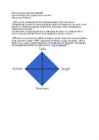
inefficient and outmoded." ,,For that reason, reengineering focuses on redesigning the process as a whole in order to achieve the greatest possible benefits to the organization and their customers." ,,BPR derives its existence from different disciplines, and four major areas can be identified as being subjected to change in BPR - organization, technology, strategy, and people - where a process view is used as common framework for considering these dimensions. The approach can be graphically depicted by a modification of "Leavitt's diamond".[8]" Early BPR literature [9] identified several so called disruptive technologies that were supposed to challenge traditional wisdom about how work should be performed. · Shared databases, making information available at many places · Expert systems, allowing generalists to perform specialist tasks · Telecommunication networks, allowing organizations to be centralized and decentralized at the same time
first in the nation for apples, pears, edible dry peas, red raspberries, hops, lentils, spearmint oil and sweet cherries. Washington also ranks high in the production of grapes, apricots, asparagus, peppermint oil and potatoes State. Washington state flower is Coast Rhododendron. Washington state bird is American Goldfinch. · Washington was named after George Washington, the first President of the United States, and is the only U.S. state named after a president. · Depicted above is the state flag of Washington. The flag of the state of Washington is a symbol of the authority and sovereignty of the state and is a valuable asset of its people. The Washington flag is flown over all state buildings just below the country flag of the United States of America. · Fort Canby State Park- One of the state's most scenic parks. You can see the mouth of the Columbia River and two lighthouses, Cape Disappointment Lighthouse (built
It is a classical love story, how a man and a woman at first loath each other and later on fall in love. But it can be said that it is a quite women- dominating story, as it shows women having power, although little, but still- and how it was uncommon those days to praise women in literature. Women are desperate to find a man to marry, especially a rich man, then they submit to their husbands, if not they are off to find a new one. Most of the action happens at balls. It is depicted as dances were the center of social world. Dancing seemed to be the only way how women could meet men, which is very unreasonable in my opinion, but what can I do? Women choose men by counting their finances rather than admireing their looks or personalities. Mostly women are shown as desperate ladies, whenever a man was approaching their home, they would go insane-everything had to be perfect, movements and emotions not highly expressed/showed.
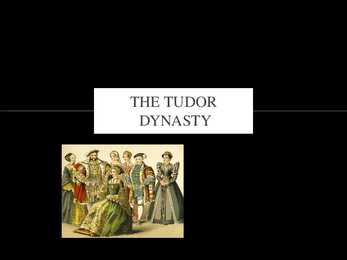
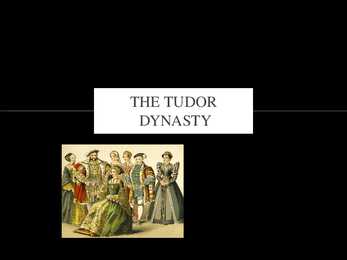
He is olso known for his six marriages. When Henry's first wife, Catherine of Aragon, had many unhappy births, King Henry decided to divorce from her. However, he was never satisfied with any of his wifes, because none of them gave birth to a son Henry had desire to provide England with a male heir. THE TUDOR DYNASTY Henry VIII In later life he became morbidly obese and his health suffered; his public image is frequently depicted as one of a lustful, egotistical, harsh, and insecure king. He died 28 January 1547. THE TUDOR DYNASTY ELIZABETH I Elizabeth I was queen regnant of England and Ireland from 17 November 1558 until her death. Sometimes called The Virgin Queen, Gloriana, or Good Queen Bess, Elizabeth was the fifth and last monarch of the Tudor dynasty. THE TUDOR DYNASTY ELIZABETH I Elizabeth's reign is known as
"she remarked contemptuously, that he lived in West Egg" (Fitzgerald 1993: 27). West Egg represented people, who had become rich on their own hard work, also known as "new money", whereas East Egg symbolized ageing and established aristocracy, "old money". Nick himself pointed out that "the less fashionable of the two /.../" (Fitzgerald 1993: 22) was West Egg. Jordan constantly had an attitude about her, which showed like she did not care for much or for anyone, for that matter. She was depicted as being unhappy and moody, without a clear purpose in life, despite the fact that she had a successful golf career and an active social life. As mentioned before, Jordan Baker had qualities that were often unlikeable and disagreeable. She was profiled as being "incurably dishonest" (Fitzgerald 1993: 65). Nick said that Jordan could not "endure being at a disadvantage" and she learned the deceitful way of life from an early age (Fitzgerald 1993: 65)
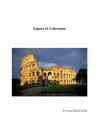
Although in the 21st century it stays partially ruined due to damage caused by devastating earthquakes and stone- robbers, the Colosseum is an iconic symbol of Imperial Rome and its breakthrough achievements in earthquake engineering. It is one of Rome's most popular tourist attractions and still has close connections with the Roman Catholic Church, as each Good Friday the Pope leads a torchlit "Way of the Cross" procession to the amphitheatre.[5]The Colosseum is also depicted on the Italian version of the five-cent euro coin. History Construction of the Colosseum began under the rule of the Emperor Vespasian in around 70 72AD. The site chosen was a flat area on the floor of a low valley between the Caelian, Esquiline and Palatine Hills, through which a canalised stream ran. By the 2nd century BC the area was densely inhabited. It was devastated by the Great Fire of Rome in AD 64, following which Nero seized much of the area to add to his personal domain
[436] The national anthem of the United Kingdom is "God Save the King", with "King" replaced with "Queen" in the lyrics whenever the monarch is a woman. Britannia is a national personification of the United Kingdom, originating from Roman Britain. Britannia is symbolised as a young woman with brown or golden hair wearing a Corinthian helmet and white robes. She holds Poseidon's three-pronged trident and a shield, bearing the Union Flag. Sometimes she is depicted as riding on the back of a lion. Major sports, including association football, rugby league, rugby union, rowing, boxing, badminton, cricket, tennis, darts and golf, originated or were substantially developed in the United Kingdom and the states that preceded it. A 2003 poll found that football is the most popular sport in the United Kingdom. In most international competitions, separate teams represent England, Scotland, Wales, and Northern Ireland, including at the Commonwealth Games
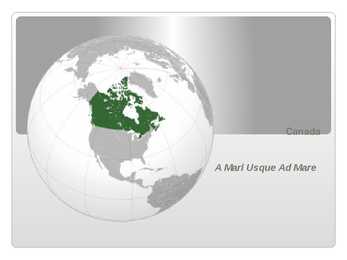
About fourfifths of Canada's population lives within 150 kilometres (93 mi) of the United States border The majority of Canadians (approximately 80%) live in urban areas concentrated in the Quebec City Windsor Corridor Canada's national symbols are influenced by natural, historical, and Aboriginal sources. The use of the maple leaf as a Canadian symbol dates to the early 18th century The maple leaf is depicted on Canada's current and previous flags, on the penny, and on the Arms of Canada Other symbols: beaver, Canada Goose, Common Loon, the Crown, the Royal Canadian Mounted Police, and more recently, the totem pole and Inuksuk THANK YOU FOR WATHING LET'S ALL VISIT CANADA!!! J
Land (such as the Yolngu), and then by only the men More recently, Indigenous Australian musicians have branched into rock and roll, hip hop and reggae. One of the most well known modern bands is Yothu Yindi playing in a style which has been called Aboriginal rock. [australia.gov.au] Traditional recreation Woggabaliri is recognised by the Australian Sports Commission as the oldest Indigenous game and is the earliest depicted by Europeans. Woggabaliri is a non-competitive "co- operative kicking volley game" played with a ball made of possum hide, using soccer type skills of teamwork and ball control. Aboriginal Food Australian Aboriginal food was very healthy. It was all based on thousands of years of experience and knowledge never written down, but passed on through generations. Their diet was perfectly healthy, they got all the minerals and vitamins, we get from our food today.
that the only pastime he enjoyed was drawing. It soon became apparent he communicated with the world through the language of drawing; first animals, then London buses, and finally buildings. The instructors at Queensmill School encouraged him to speak by temporarily taking away his art supplies so that he would be forced to ask for them. Stephen responded by making sounds and eventually uttered his first word - "paper." He learned to speak fully at the age of nine. His early illustrations depicted animals and cars; he is still extremely interested in american cars and is said to have an encyclopedic knowledge of them. When he was about seven, Stephen became fascinated with sketching landmark London buildings. A drawing Stephen did of St. Paul's Cathedral when he was 9 . 3.slaid One of Stephen's teachers took a particular interest in him, who later accompanied his young student on drawing excursions and entered his work in children's art competitions,
Prior to knowing sugar, our ancestors used honey and other sweet ingredients which were used as sweeteners. We know all that thanks to Mediterranean antique culture writings and bareljeefs . Oldest known sweetener is honey. In Arãna caves there are 12000 years old murals where are depicted woman honey collectors. As nowadays, womans used honey to make food, heal wounds and to make mead. At first our ancestors used wild bee's honey which was collected from their nests. Later, people started to keep bees in hives, as is the case today. Although the sugar arrived in Europe around 1100th year, it reached a
He is olso known for his six marriages. When Henry's first wife, Catherine of Aragon, had many unhappy births, King Henry decided to divorce from her. However, he was never satisfied with any of his wifes, because none of them gave birth to a son Henry had desire to provide England with a male heir. THE TUDOR DYNASTY Henry VIII In later life he became morbidly obese and his health suffered; his public image is frequently depicted as one of a lustful, egotistical, harsh, and insecure king. He died 28 January 1547. THE TUDOR DYNASTY ELIZABETH I Elizabeth I was queen regnant of England and Ireland from 17 November 1558 until her death. Sometimes called The Virgin Queen, Gloriana, or Good Queen Bess, Elizabeth was the fifth and last monarch of the Tudor dynasty. THE TUDOR DYNASTY ELIZABETH I Elizabeth's reign is known as
[23] In the two first designs the waves appear to be dense and uniform, they almost seem to be minerals. Their rigidity and verticality evoke the shape of a snow-capped mountain, while in the Great Wave the wave stands out because it is more active, dynamic, and aggressive, which make it threatening. The earlier images are very marked by the perspective traditionally used in Japanese painting, where the viewer sees the scene from a bird's-eye view. The Great Wave, on the other hand, is depicted in a more western perspective, giving the feeling that the wave will break on top of the viewer. In the earlier prints the horizon is in the middle, whereas in the Great Wave the horizon is so low that it forces the viewer's eye to the very center of the action. In the first two, there is a sail boat on the crest of the wave, as if it had managed to escape. Hokusai eliminated this element for the Great Wave, because it interfered with the dynamic of the curve or to make the image more dramatic
painting. In the later years historians have started to consider new perspectives and therefore they investigate using cultural documentations and anthropology. Historians found out that during the French Revolution, people who saw the painting would become more affectionate towards the Revolution and the new Republic, and would see Marat as a role model. (Vaughan,????????????????, p.56, 57) Last but not least, the third martyr that David depicted was Joseph Bara. Bara was a young boy, who anchored himself to an army fighting the opposers of the Revolution. He was murdered, because he refused to give away two horses to the counterrevolutionaries. David portrayed him as an innocent victim and therefore the painting of Bara was very different from two previous martyr portrays. Bara is depicted as lying naked on the ground with a national emblem in his hand. David did not paint the real story, but instead portrayed Bara as
Eva Asper Anna Pohlak 11.c The Norman Dynasty The Norman Conquest In the 11th century, Normans conquered England - The Battle of Hastings 14.10.1066 The Anglo-Saxon forces had more soldiers but the Normans had better military tactics and won in the end thanks to a clever strategy William I, also known as William the Conqueror, replaced King Harold on the throne The invasion was completed by 1071 - The Norman invasion is depicted on the Bayeux Tapestry a long embroidered cloth The death of King Harold embroidered on the Bayeux Tapestry The Norman England William I ensured his power by dividing the land into parts and making 1/7 of it a royal domain He made his nobles swear an oath of allegiance and become his vassals Died in 1087 while fighting in France, was succeeded by his third son, William II Rufus William II was very unpopular: - Problems with the church
College. Much later Hunt painted a second much larger version. It now hangs in St Paul`s Cathedral. "The Scapegoat"(1854-5)- (patuoinas) He wanted to use something from Christs life while visiting the Holy land. As part of the Jewish ritual of Atonement(lunastus), two goats are selected, one to be sacrificed and the other to be released into the wilderness to atone for the sins of the community. The goat depicted Jesus. During the process of creating this painting Hunt found a goat near the Dead Sea and studied and painted it for a long time. "The Lady of Shalott" ( 1886 1905)- poem by Tennyson "The Lady of Shalott". (the Lady's "isolation in the tower and her decision to participate in the living world) The painting depicts the moment when the lady decides to rebel and looks out of the window at Sir Lancelot. Her punishment for this will be death.
transmission Navigation databases Tides and tidal currents Seasonal currents Weather forecast chart overlay Potential Errors in Marine Navigation On a number of occasions chart data, particularly in canals, locks, harbours, ports and alongside wharves could not withstand the resolution of the ECDIS ‘zooming’ function. In many instances, the result has been that the ship’s image on an ECDIS display is depicted as overlapping the dock or jetty. There are many contributing factors that may suggest that the ship’s image on the ECDIS screen is portrayed where ‘it does not belong’. These are due to GPS errors; DGPS errors; ECDIS errors; Installation errors; ENC conversion errors; chart errors; and hydrographic survey errors. There is also the factor of humaninduced error. Risk of under or overinterpretation
Nende armastus paisus üha suuremaks ja suuremaks tõustes taevastesse kõrgustesse. "Oh jääks see igavesti nii", sosistas tüdruk. "Armas taevas, jäägu see nii alatiseks" ja sulges silmad uueks suudluseks. ... Samal hetkel müristas kõu ja välgusähvatuses muutusid noored armastajad kivikujuks. Sculpture: Oscar Wilde and Eduard Vilde The statue of the two writers. The imaginary conversation between the Irish writer Oscar Wilde (1854-1900) and Estonian writer Eduard Vilde (1865-1933), depicted in the statue, might have taken place in the year 1892, but actually, the two men never did meet. A copy of the sculpture was given as a gift from the town of Tartu to the Irish city of Galway in 2004. Father and Son The bronze sculpture, "Father and Son", created by sculptor Ülo Õuna (1944-1988), was placed on Küüni Street, on Children's Day ('childrens protection day'), 1 June 2004. Bridges Tartu Stone Bridge
in 1990 [7]; images of fabric samples, pilled using Martindale equipment, were acquired using a commercial camera under near-tangential illumination thus obtaining images with high pill-to-background contrast. Obtained images are then binarized using two different thresholds with the final result of detaching the background from the pills. In Konda’s work, the background is represented with black (pixel value equal to 0) while pills are depicted as white blobs (pixel value equal to 1). Eventually, pilling class of the fabric sample under investigation is evaluated from the total number (or total area) of pills. FIGURE 4. Flow diagram of 2D imaging methods based on thresholding. 9 In Figure 5 an illustrative image from Konda’s work describing the number of pills as a function of pill size is proposed.
Her visit marked the climax of the development of friendly relations between the two countries. In November 27 and 28 the President of the Unites States of America had an official visit to Estonia. When the visit of Queen Elizabeth II was more of the friendly visit to the whole nation, the visit of President Georg Bush was a working visit. This was the first time, when the president of USA has ever visited Estonia. The meetings and discussions were widely depicted in international media. It was noted that Mr. Bush was interested in the tax system of Estonia and in the e government system. In fact he was so interested in them that he even mentioned this in his speech during the press conference. One thing that the news network CNN pointed out was that in comparison with the "usual press conference themes about the world peace" President focused much attention on the efforts and developments that Estonia had made after it gained back its independence
artistic and cultural heritage far removed from the mundanities of economics". The traditional values are irrelevant to the peoples basic (economic) needs. Bazarov gives a harsh evaluation to Nikolai as " . , ". Evidently, one of the traits that is omitted to the generation of 1840s the fathers - is the sentimentality and overly romantic feelings that contrast strongly with that of the new men of the 1960s. Nikolai is depicted as sentimental and dreamy as he awaits his son. He ponders long in his thoughts, and sighs overly emotionally "... ... ...", while also thinking of his long-lost wife. Throughout the novel he does not hesitate to kiss his son, initiate physical contact and openly express his fondness qualities which are not overly `manly' or adult, but rather emotional and child-like. In nature, he thinks " , !" .. ". Nikolais fondness of poetry is also deemed
newts (Gussie Fink-Nottle) or socks (Archibald Mulliner). His "mentally negligible" good-natured characters invariably make their lot worse by their half-witted (if that) schemes to improve a bad situation. Wodehouse's aristocrats, however, embody many of the comic attributes that characterize buffoons created by a genius. In many cases the classic eccentricities of Wodehouse's upperclass give rise to plot complications. Relatives, especially aunts and uncles, are commonly depicted with an exaggerated power to help or impede marriage or financial prospects, or simply to make life miserable. Friends are often more a trouble than a comfort in Wodehouse stories: the main character is typically being placed in a most painful situation just to please a friend. Antagonists (particularly rivals in love) are frequently terrifying, and just as often get their come-uppance in a delicious fashion. Although his plots are on the surface formulaic, Wodehouse's genius lies in the
allowing him to eat vast amounts of junk food Cartman has a large collection of stuffed animals, the one of which he is most fond being a frog he refers to as "Clyde Frog". He finds his cat, Mr. Kitty, to be particularly bothersome, often reacting angrily to its presence Cartman's extreme disdain for hippies (based on his voice actor's real life hatred of hippies[18]), his desire to appear on television, and his avarice are other traits the show has customarily depicted. He has shown an initiative in taking a businesslike approach to earning money, starting his own "hippie control", and "parental revenge" operations Cartman has also proven a knack for bargaining, serving as negotiator for his and his friends' snow-shoveling venture, and mediating relentlessly with potential buyers of fetuses he intended to sell for stem cell research In the season five episode "Scott Tenorman Must Die", Cartman, feeling cheated out of $16
· Carl Robert Jakobson was one the most important public figures during the Estonian Period of Awakening as well as a columnist, writer, teacher and founder of Sakala, the newspaper of Viljandi County. The statue was erected in 1998, for Jakobson's 157th birthday. · Skulptuuri kujuriks on Mati Karmin. · C.R.Jakobson was great figure of the estonian national Movement. Jakobson founded the "Sakala" newspaper in Viljandi in 1878. · C.R. Jakobson is depicted on the Estonian 500-kroon note. Johann Köleri monument. · Johann Köleri monument paigaldati Linnaväljakule 1976.a mil tähistati rahvusliku maalikunsti rajaja 150. sünniaastapäeva. · Johann Köler sündis Viljandimaal, Suure-Jaani kihelkonnas. Õppis Kunstiakadeemias maalikunsti. Tegi täiendusreise läbi Saksamaa, Hollandi ja Belgia Pariisi. 1858. aastal siirdus Rooma ja tegeles seal maalimisega ja esines oma töödega.
Goneril, Regan, Cornelia. Lear's kind of an asshole. Ill, gains sympathy for the poor and oppressed, on his deathbed only Codelia and the fool care for him. Macbeth The Romantic Period Cymbeline, The Tempest, The Winter's Tale. Evil is not absolute, but relative. The guy learned how to write complexly. 1. What does the term RENAISSANCE mean in literature and art? When and where did the renaissance start? Compare how man was depicted during the Renaissance and Medieval Times. When did the Renaissance reach England? 2. The historical background of the Renaissance. The War of Roses, the monarchs of this period. 3. Cultural background. Discoveries, grammar schools, the first playwrites. 4. Emigration to America. Why, when, how + Thanksgiving. 5. Thomas Moore and utopia. 6. The development of drama. Mysteries and mirscles, morality plays, etc
sculpture, on the walls of Cathedrals and abbeys. Christian art was often typological in nature (see Medieval allegory), showing the stories of the New Testament and the Old Testament side by side. Saints' lives were often depicted. Images of the Virgin Mary changed from the Byzantine iconic form to a more human and affectionate mother, cuddling her infant, swaying from her hip, and showing the refined manners of a well-born aristocratic courtly lady. Secular art came in to its own during this period with the
al-Ghazzali argued against them and ultimately prevailed. Sufism became a full-fledged movement that had moved towards mysticism and away from its ascetic roots, while Shi'ism split due to disagreements over the succession of Imams. The spread of the Islamic dominion induced hostility among medieval ecclesiastical Christian authors who saw Islam as an adversary in the light of the large numbers of new Muslim converts. This opposition resulted in polemical treatises which depicted Islam as the religion of the antichrist and of Muslims as libidinous and subhuman. Córdoba, the largest Muslim city of the world in 1000, was home to about half a million people. Public hospitals established during this time, are considered "the first hospitals" in the modern sense of the word and issued the first medical diplomas to license doctors of medicine. The Guinness Book of World Records recognizes the University of Al Karaouine
but can be viewed mainly as intense short periods of work in one’s country of citizenship, travelling expressly to a country for its work opportunities and/or opportunities for casual employment while travelling overseas. These latter two methods largely reflect Uriely’s (2001) description of a ‘non-institutionalised working tourist’, wherein work while travelling is aimed at financing a prolonged trip. Whilst this practice is typically depicted as unskilled work, Felipe (Cuban, 29) subverted this assignment through the use of technology, by sustainably financing his travel through IT work attended to whilst backpacking. Technology thus allowed Felipe to dislocate work from place through virtual commuting. Charlotte (Canadian, 26), who funded her trips through intensive stints of bartending in Canada, exemplified how intermittent work in her own country allowed her to maintain her lifestyle:
general acts only on the advice of the Canadian prime minister. Official symbols of Canada include the maple leaf, beaver, and the Canadian Horse. Many official symbols of the country such as the Flag of Canada have been changed or modified over the past few decades in order to 'Canadianize' them and remove references to the United Kingdom. Prominently, the use of the maple leaf as a Canadian symbol dates back to the early 18th century, and is depicted on its current and previous flags, the penny, and on the coat of arms (or royal arms). The Canadian Horse is an official Canadian symbol [1] [2] and commonly appears in images with the Mounties. Products made from the country's natural resources, such as maple syrup, are also associated with Canadian identity. In recent years, other symbols have become a source of pride: notably, the I Am Canadian campaign by Molson beer,
The Creole flag celebrates the mixed lineage, culture and religion of these Louisiana Creoles. The upper left section, a white fleur de lis on a blue field, represents Louisiana's French heritage. On the lower left and upper right sections, West African heritage is represented by the Mali Republic National tricolor flag (green, yellow and red) and the Senegal Republic National flag (green, yellow and red). Spanish Colonial heritage is depicted by the Tower of Castile (gold tower on a red field) on the lower left section. A white cross dividing the four symbols represents the Christian faith accepted by the Muslim and Islamic from Senegal and Mali in Louisiana. 11 Conclusion I have learned that creoles are just not a little culture with a few thousand people in a
Fig. 6: "Fronting" and "tailing" of peaks as a result of electrodispersion While this peaks asymmetry are always present, it is in most cases smaller compared with other dispersion effects, such as diffusion. On Fig. 6 are depicted anions that are highly distinguished by their mobility. It is known that the "fronting" is observed in fast eluting 11 anions with high mobility, Gaussian peaks at an average mobility of anions and "tailing" is observed in lowmobility anions which eluted last.
conductor Tõnu Kaljuste and Paul Hillier. Male voice and boys' choirs are equally popular. There are also many pop singers and groups such as Koit Toome, Eda- Ines Etti, Vanilla Ninja, Terminaator, Bedwetters and Traffic. In the middle of the 19th century F. R. Kreutzvald published the national epic Kalevipoeg, based on themes from Estonian folklore. Then national art began to develop. The first Estonian born artist, Johann Köler, depicted Estonian peasants and the countryside in his paintings. August Weizenberg was the first Estonian born sculptor. He and Köler are considered to be the founders of Estonian national art. Tallinn and Tartu are the biggest cultural centres. The majority of higher education establishments are also in these towns. 10.Sports The first Estonian mentioned in the Guinness Book of Records was a sportsman. In the Olympic Games of 1912, the Finn Alfred Asikainen and the Estonian Martin
It consists of a shield containing the badges of six Australian states, enclosed by an ermine border. The shield is a symbol for the federation of the states, which took place in 1901. The crest, which is above the shield, is a seven-pointed gold star on a blue and gold wreath. The seven points of the star represent exactly the same thing that they do on the flag. The supporters of the shield are native Australian animals: the red kangaroo and the emu. Usually the coat of arms is depicted on the background of sprays of golden wattle with a scroll beneath it containing the word `Australia'. Australia's national anthem is `Advance Australia Fair', which replaced `God Save the Queen' in 1984. It was written by a Scottish-born composer, Peter Dodds McCormick. The unofficial anthem of Australia is `Waltzing Matilda'. It tells a story about a swagman, who has named his sleeping blanket Matilda. He is chased by police for stealing a sheep which he wanted to eat
the nation was born, and in stirring language explains the reasons for its birth. In the post-Revolution period the search began for a characteristic Am lit. The most important writers of the early 19th cent were Washington Irving (1783-1859), James Fennimore Cooper (1789-1851) and Edgar Allan Poe (1809-1849). Irving's first venture into lit was a collaboration with his brother and a friend on the Salmagundi Papers (1807-1808), a serial publication, later reissued as a book, which depicted life in New York in the first decade of the cent. This was followed by A History of New York (1809), a satirical attack on the upper class old Dutch families of New York. Irving's early works were very heavily influenced by neo-classical satirists such as Alexander Pope and Jonathan Swift. After he met Sir Walter Scott and became familiar with imaginative German lit, a new romantic note became evident in works such as The
). Each holds a musical instrument except the singer, who holds a fan. Left to right, from viewer's perspective, they are the: 1.Small drum Taiko, seated, 2.Large drum tsuzumi, standing, 3.Hand drum Kotsuzumi, standing, 4.Flute Fue or Yokobue seated, 5.Singer Utaikata, holding a folding fan sensu, seated. Fourth platform Two ministers (daijin) may be displayed on the fourth tier: the Minister of the Right and the Minister of the Left . The Minister of the Right is depicted as a young person, while the Minister of the Left is much older. Also, because the dolls are placed in positions relative to each other, the Minister of the Right will be on the viewer's left and the Minister of the Left will be on the viewer's right. Both are sometimes equipped with bows and arrows. Between the two figures are covered bowl tables kakebanzen, also referred to as o-zen, as well as diamond-shaped stands hishidai bearing diamond-shaped ricecakes hishimochi.
71. Chav/ Chavette- Another, more recent stereotype is that of the Chav. According to the Oxford English Dictionary, the word was first used in a Usenet forum in 1998 and made its first appearance in conventional media in 2002. By 2004, the word was in common usage. The origin of the word is unknown, but it is most often thought to have originated in the Romany word chavi, meaning child. It has become a widely used derogatory word for young people of working-class origin, who are depicted as uneducated, uncultured and prone to antisocial or immoral behaviour. 72. Sloane Ranger/ Sloanies- Sloane Rangers have been around since the 1980ies. The term refers to young, upper class or upper-midsloane ranger ahndbookdle-class fashion-conscious but conventional young people, living in the more expensive parts of West London. The term was popularised by The Official Sloane Ranger Handbook (1982) written by Peter York and Ann Barr
and Germany supplied 69% of the global biodiesel. Bioethanol production is concentrated in two countries: Brazil and the USA and in 2005, they together accounted for 80% of global ethanol production (Msangi et al. 2007; Zuurbier, 2008). While Brazil's biofuels production has grown steadily since the 1980s, then in the USA, the production started to hike in 2003 with the Renewable Fuel Standard legislation. In Europe, biofuels production started to rise in 2005, as depicted on figure 2. Figure 2. World biofuels production ( F.o. Licht's World Ethanol and Biofuels Report, 2006) Figure 3. Global biodiesel production projection (USDA, 2012). Biodiesel is mainly produced in Europe, but production in other countries is expected to increase. In Europe and the US, biofuels have been boosted with the government's goals to source certain percentage of transport fuel from biofuels and therefore biofuels production is heavily subsidised
enemies, from the heavnely point of view, his poetry must teavh, purify and elevate the heart (his work assume great knowledge of Bible); purpose: assert Eternal Providence, justify the ways of God to men, his God mysterious and inscrutable, to understand God’s message men must purigy their hearts. Paradise lost: a prayer to God from mankind. 10. 17th century autobiographical writing (Pepys, Evelyn) Diarists like Pepys and Evelyn depicted everyday London life and the cultural scene of the times. In 17th increase in autobiographical writing. Form of self-expression open to both men and women Samuel Pepys: detailed private diary, 1660 – 1669. Combination of personal revelation and eyewitness accounts of great events (Great Plague of London, the Second Dutch War, Great Fire of London). Breathtaking honesty: women he pursued, extramarital relationships, friends, dealings. Reveals his
underwent major changes in the 9th century. Sufism became a fullfledged movement that had moved towards mysticism and away from its ascetic roots, while Shi'ism split due to disagreements over the succession of Imams. The spread of the Islamic dominion induced hostility among medieval ecclesiastical Christian authors who saw Islam as an adversary in the light of the large numbers of new Muslim converts. This opposition resulted in polemical treatises which depicted Islam as the religion of the antichrist and of Muslims as libidinous and subhuman. In the medieval period, a few Arab philosophers like the poet AlMa'arri adopted a critical approach to Islam, and the Jewish philosopher Maimonides contrasted Islamic views of morality to Jewish views that he himself elaborated. Starting in the 9th century, Muslim conquests in the West began to be reversed. The Reconquista was launched against Muslim principalities in Iberia, and Muslim Italian
moody, loner, relies only on himself, ready to fight against the world if necessary – exile, secret past, disrespect for authority and privilege, though has both; self-‐destructive. Women in romantic literature even more restricted than during Middle Ages; depicted as utterly devoted to their men with no character of their own. Early 19th century – “feminine romantics” or “anti-‐romantics”. Maria Edgeworth, Mary Hays and Jane Austen portrayed the lack of intelligence and moral virtue of both men
 annaabi.ee