 50 punkti
Autor soovib selle materjali allalaadimise eest saada 50 punkti.
50 punkti
Autor soovib selle materjali allalaadimise eest saada 50 punkti.
 ~ 2 lehte
Lehekülgede arv dokumendis
~ 2 lehte
Lehekülgede arv dokumendis
 2010-01-19
Kuupäev, millal dokument üles laeti
2010-01-19
Kuupäev, millal dokument üles laeti
 31 laadimist
Kokku alla laetud
31 laadimist
Kokku alla laetud
 0 arvamust
Teiste kasutajate poolt lisatud kommentaarid
0 arvamust
Teiste kasutajate poolt lisatud kommentaarid
 KristiV
Õppematerjali autor
KristiV
Õppematerjali autor
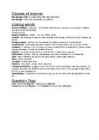
(proper nouns, common nouns), abstract vs concrete nouns, one class or more?; grammatical categories: number, gender, case. Identifying nouns: meaning, function, form The noun phrase (NP): The NP consists of the head, which is typically a noun, and other elements which (either obligatory or optional) determine the head and (optionally) modify the head or complement another element in the phrase. The NP typically functions as the subject, object or complement of clauses and as complement of prepositional phrases. Peter likes the girl (determiner: def. article + head) the small girl (det + premodifier: adjective + head) the small girl in a black skirt (det + prem + head + postmodifier: prepositional phrase) the small girl wearing a black skirt (det + prem + head + postmodifier: non-finite clause) the small girl who is wearing a black skirt (det+prem+head + postmodifier: relative clause)
Concrete nouns refer to physical entities that can be observed and measured (cat, garage, soldier). Abstract nouns refer to abstractions that cannot be observed and measured (competition, conscience). verb tegusõna, In a clause, the verb is an obligatory and the most walk, put, do, be, must pöördsõna, verb central element. It denotes actions, events, processes and states. Verbs are either regular (cough, coughs, coughing, coughed) or irregular (speak, speaks, spoke, speaking, spoken)
Neutral pronouns: It, its, itself Gender distinctions get neutralised in plural: them, they 5. The English verbal system Basic verb types and their characteristics 5.1 Main verbs (full/lexical verbs) are verbs that have a meaning on their own and are the key to all sentences. For example: walk, sing, dance 5.2 Helping verbs add functional or grammatical information to the clause and they behave differently from the main verbs. The helping verbs have NICE-properties which distinguish them from the main verbs. Negation To make helping verbs negative, you must use ‘not’ or suffix ‘n’t. Main verbs can’t express negation like this For example: You should not do this. *She liken’t it.* Inversion
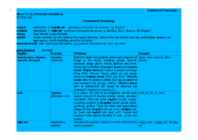
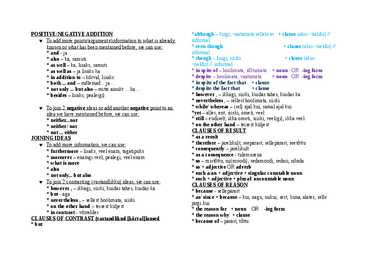
POSITIVE/NEGATIVE ADDITION *although kuigi, vaatamata sellele et + clause (alus->öeldis) // To add more points/arguments/information to what is already informal known or what has been mentioned before, we can use: * even though + clause (alus->öeldis) // * and - ja informal * also ka, samuti * though kuigi, siiski + clause (alus- * as well ka, lisaks, samuti >öeldis) // informal * as well as ja lisaks ka * in spite of hoolimata, sõltumata + noun OR -ing form
Philosophy of Language Philosophy of Language: a Contemporary Introduction introduces the student to the main issues and theories in twentieth and twenty-first-century phi- losophy of language, focusing specifically on linguistic phenomena. Topics are structured in four parts in the book. Part I, Reference and Referring, includes topics such as Russell's Theory of Descriptions, Donnellan's distinction, problems of anaphora, the description theory of proper names, Searle's cluster theory, and the causalhistorical theory. Part II, Theories of Meaning, surveys the competing theories of linguistic mean- ing and compares their various advantages and liabilities. Part III, Pragmatics and Speech Acts, introduces the basic concepts of linguistic pragmatics, includes a detailed discussion of the problem of indirect force and surveys approaches to metaphor. Part IV, new to this edition, examines the four theories of metaphor. Features of Philosophy of Language include: · new c
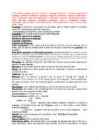
There is some difference between an adverb particle and a preposition. While the particle is closely tied to its verb to form idiomatic expressions, the preposition is closely tied to the noun or pronoun it modifies. The following words are used only as particles and never as prepositions – away, back, out, backward, forward, upward, downward preposition vs. conjunction The difference is in the context. A conjunction joins a dependent clause to a sentences. A preposition joins a prepositional phrase to a sentence. Examples: •The families got separated after the war. Here, The families got separated is a sentence and the war is a prepositional phrase being joined to it. Hence, the word after is a preposition in this case. •We went to the bar after we won the game. In this case, we went to the bar is the main sentence and we won the game is a dependent clause. Hence, the word after is a conjunction here. prepositional phrases
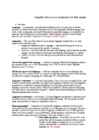
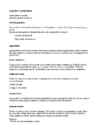
Letters Letters FORMAL, INFORMAL, TRANSACTIONAL TASK 1 Read the extracts and answer the questions. · Where are the extracts from? · What is the purpose of each letter? · How do they differ? · Which extracts are examples of formal letters? · How is the reader addressed in a formal letter? · What are the closing remarks for formal letters? · What is the salutation in a friendly letter? · How would you end extracts 1,2,3 ? · How would you begin the extracts 4 and 5? 1. Dear Mr Miller, I received your kind invitation to the reception. Unfortunately, owing to other commitments. I will be unable to attend ... 2. Dear Ralph, l just got your invitation to the company's event. l `m afraid I can't make it because I've a/ready made plans which l can "t change ... 3. Dear Sirs, I am writing to complain about the poor quality of the items which I received from your co
INGLISE KEELE GRAMMATIKA Present Simple Lihtoleviku moodustamine Jaatav vorm Eitav vorm Küsiv vorm I make I do not make Do I make? He/she/it speaks He/she/it does not speak Does he/she/it speak? We/you/they go We/you/they do not go Do we/you/they go? NB! ERANDID! · Verbidele, mis lõpevad ss, h, ch, tch, x või oga, lisatakse ainsuse kolmdandas pöördes es. he does he goes he misses he watches he mixes · Verbid, mis lõpevad yga, mille ees on konsonant, muudavad y iks enne es lisamist. fly he flies carry he carries Võrdle: say he says Lihtolevik väljendab: · Antud momendil toimuvat tegevust, mis ei väljenda kestvat aega, näiteks see, hear,
 annaabi.ee






Kõik kommentaarid