Leidsid 33 sarnast õppematerjali, mis on seotud failiga "Clauses". Need materjalid aitavad sul teemat sügavamalt mõista.
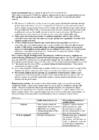
clause, nimisõna, though, clauses, omadussõna, reason, such, case, even, cause, result, loendamatu, mitmus, reference, object, first, verb, order, present, tense, while, other, addition, either, till, results, loendatav, määrsõna, account, fact, formal, noun, contrast, although, however, still, hand, negative, exclamation, relative, subject, whomwords; syntax. Language: a systematic, conventional use of sounds, signs or written symbols in a human society for communication and self-expression. - human language at all levels is rule- or principle-governed. Linguistics: the scientific study of human natural language Synchronic approach to language: Diachronic approach to language: Linguistic competence: Linguistic performance: What is grammar?: "The sounds and sound patterns, the basic units of meaning, such as words, and the rules to combine them to form new sentences constitute the grammar of a language" Prescriptive grammar vs. Descriptive garmmar: Descriptive grammar: the systematic study and description of a language. Descriptive grammar refers to the structure of a language as it is actually used by speakers and writers. Prescriptive grammar: a set of rules and examples dealing with the syntax and word structures of a language, usually intended as an aid to the learning of that language
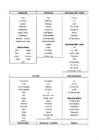
tegevusnime, oleviku kesksõna, mineviku kesksõna) derivational affix liide, tuletusliide, tuletusafiks (e.g. postwar, anti-American, wiser, greenish) parts of speech sõnaliigid English Estonian Definition Example noun (proper, common, nimisõna, Refers to words which denote classes and categories of book, water, sincerity, Mary, concrete, abstract) substantiiv things in the world, including people, animals, Estonia inanimate things, places, events, qualities, and states. Nouns can be divided into proper nouns and common
North Germanic languages → Swedish, Norwegian, Danish, Icelandic and Faroese. West Germanic languages → English, German, Dutch, Frisian, Afrikaans and Flemish. 2. How to classify words into different word classes? 1) One of the most common classification ways goes by the definition of words. Most of the linguists believe though, that this is not an absolute classification. Examples of definitions: Noun is the name of a person, place or a thing. (I love this place). A verb expresses an action, process or a state. (I love this place). An adjective describes a noun. (This place is lovely). 2) Distribution test → Takes the context in which the word occurs in, into consideration. Also the whereabouts of the word in a sentence
POSITIVE/NEGATIVE ADDITION *although kuigi, vaatamata sellele et + clause (alus->öeldis) // To add more points/arguments/information to what is already informal known or what has been mentioned before, we can use: * even though + clause (alus->öeldis) // * and - ja informal * also ka, samuti * though kuigi, siiski + clause (alus- * as well ka, lisaks, samuti >öeldis) // informal * as well as ja lisaks ka * in spite of hoolimata, sõltumata + noun OR -ing form * in addition to kõrval, lisaks * despite hoolimata, vaatamata + noun OR -ing form * both ... and mõlemad .. ja ..
Philosophy of Language Philosophy of Language: a Contemporary Introduction introduces the student to the main issues and theories in twentieth and twenty-first-century phi- losophy of language, focusing specifically on linguistic phenomena. Topics are structured in four parts in the book. Part I, Reference and Referring, includes topics such as Russell's Theory of Descriptions, Donnellan's distinction, problems of anaphora, the description theory of proper names, Searle's cluster theory, and the causalhistorical theory. Part II, Theories of Meaning, surveys the competing theories of linguistic mean- ing and compares their various advantages and liabilities. Part III, Pragmatics and Speech Acts, introduces the basic concepts of linguistic pragmatics, includes a detailed discussion of the problem of indirect force and surveys
The definite article with names: We do not normally use the definite article with names: William Shakespeare wrote Hamlet. Paris is the capital of France. Iran is in Asia. But we do use the definite article with: • countries whose names include words like kingdom, states or republic: the United Kingdom; the Kingdom of Nepal; the United States; the People’s Republic of China. • countries which have plural nouns as their names: the Netherlands; the Philippines • geographical features, such as mountain ranges, groups of islands, rivers, seas, oceans and canals: the Himalayas; the Canaries; the Atlantic; the Atlantic Ocean; the Amazon; the Panama Canal. • newspapers: The Times; The Washington Post • well known buildings or works of art: the Empire State Building; the Taj Mahal; the Mona Lisa; the Sunflowers • organisations: the United Nations; the Seamen’s Union • hotels, pubs and restaurants*: the Ritz; the Ritz Hotel; the King’s Head; the Déjà Vu
I ................... (go) out last night for the first time in weeks! 3. Bob ................... (fly) to Rome yesterday. He ................... (go) on a business trip and I really miss him; it's the first time we ................... (be) apart since we ................... (get) married. 4. We ................... (sell) the house last month but we ...................( not move ) into our new house yet. The builders still ................... (not/finish) the bathroom, even though they ................. (start) work on it three months ago. TASK 9 Write a letter in groups of three or four people. You have been on holiday abroad for a week. Write a letter to your friends describing your holidays so far. Use no more than 200 words. TASK 10 Read the letter below and put the verbs in brackets into the correct tense. What is being described in this letter? Dear Gemma, Remember I 1) ...............
Mary goes to school. Mary käib koolis. 4. keeled I speak Estonian, English, French and Russian. Ma räägin eesti, inglise, prantsuse ja vene keelt. 5. mängud I hate basketball. Ma vihkan korvpalli. 6. sõnad mother, father, kui neid kasutavad sama pereliikmed Tell mother that I will be late today. Ütle emale, et ma jään täna hiljaks. Adjective Omadussõna Omadussõna kasutatakse kahel moel: · nimisõna täiend a smart girl a pretty boy · verbi be öeldistäide The girl is smart. The boy is pretty. Omadussõnal ei ole inglise keeles mitmust. smart girls pretty boys Omadussõnal on kolm võrdlusastet: Algvõrre Keskvõrre Ülivõrre The positive degree The comparative degree The superlative degree
Extended Rules for Using Commas Comma Use 1. Use commas to separate independent clauses when they are joined by any of these seven coordinating conjunctions: and, but, for, or, nor, so, yet. The game was over, but the crowd refused to leave. The student explained her question, yet the instructor still didn't seem to understand. Yesterday was her brother's birthday, so she took him out to dinner. 2. Use commas after introductory a) clauses, b) phrases, or c) words that come before the main clause. a. Common starter words for introductory clauses that should be followed by a comma include after, although, as, because, if, since, when, while. While I was eating, the cat scratched at the door. Because her alarm clock was broken, she was late for class. If you are ill, you ought to see a doctor. When the snow stops falling, we'll shovel the driveway. However, don't put a comma after the main clause when a dependent (subordinate) clause follows it (except for cases of extreme contrast).
Adding and Contrasting Expressing cause / reason *and *but because as well as However, as besides Although since Moreover, despite This is why Furthermore, In spite of because of
Most people agree with me. (BUT NOT Most of people agree with me.) 81. In `unreal' conditions with if, use would, not will. If I knew the price, I would tell you. (NOT If I knew the price, I will tell you.) It would be better if he told the truth. (NOT It will be better if he told the truth.) 82. Don't use later with an expression of time to talk about the future. I'll see you later. I'll see you in a few days. (BUT NOT I'll see you a few days later.) 83. Don't use in case to mean `if'. Compare: I'll take an umbrella in case it rains. (= `... because it might rain.') I'll open the umbrella if it rains. (NOT I'll open the umbrella in case it rains.) 84. Use so before an adjective, but not before adjective + noun. I love this country it's so beautiful. (NOT I love this so beautiful country.) Thanks for your help. That was so kind of you. (NOT Thanks for your so kind help.) 85. Only use unless to mean `except if'. Compare:
Outside this context this shade of meaning is not present. INHERENT CONNOTATION (IC) 1. IC may be secured by the very object, quality or notion that word denotes. Positively charged words are: noble, manly, virtue, beauty, love, etc. Negatively charged words: nasty, vulgar, greedy, sin, death, fool, etc.). This connotation is called referential; it depends on the referent (mean the thing the word stands for). 2. IC may depend on the structure of the word. Such words normally have a transparent structure and more often negative affixes are used (e.g. unkind, impolite, injustice, heartless, etc.). This kind of connotation is purely linguistic. 3. Emotional connotation characterizes words in synonymic sets that occupy the so-called final position (e.g. big tremendous "tremendous" has emotional colouring; interesting amazing; good marvelous, etc.). The expressive use of
If a person be insensitive, be it from numbing cold, exhaustion, drugs, genetic makeup, or upbringing, then the process of education is bogged down, and results come only after great efforts. Sensitivity in my integrated meaning is broad, covering literally the senses, so that deaf and blind people are less sensitive, as well as people whose senses work perfectly, but whose receptivity or thought processes are blunted for whatever reason. A person can be insensitive in one way, such as blind, and extraordinarily sensitive in another way, such as in hearing. It is also possible to be so ultra-sensitive that the result is disadvantageous. I expect no argument in asserting that a normal sensitivity is a healthy, indispensable ingredient for optimal education. Sensitivity can be heightened or blunted by education. It is intertwined with curiosity. An ideal education affords numerous and varied opportunities for students to touch, see, smell,
Conditionals Sentences with if are used to express possibilities. 0 Zero conditional If-clause present (past) simple Main clause present (past) simple Sometimes sentences with if express certainty rather than possibility. The zero conditional is used to talk about sth. that is always true (such as a scientific fact), or that was always true in the past. In this type of conditional we can use when instead of if. E.g., If/When you mix blue and red, you get purple. If/When you don't water flowers, they die. (present simple in both parts of the sentence) If/When I asked her to come with us, she always said no.
g hey o oh x ah-kees h ah-chay p pay y ee-gree-ay-gah i ee q koo z say-tah The Spanish language academy no longer considers the ch, ll or rr to be separate letters in dictionaries, but they are still separate letters in the alphabet. In Spain, you can say oo-bay for v, but in Latin America most dialects just use bay and an adjective, such as chica (Mexico and Peru) or corta (Argentina and Chile). 4 4. Articles & Demonstratives Masc. Singular Fem. Singular Masc. Plural Fem. Plural the el (ail) la (lah) the los (lohs) las (lahs) a, an un (oon) una (oon-ah) some unos (oon-ohs) unas (oon-ahs)
story of chapter, A helps to give a laconic ... and at the same time detailed information into the action proper. NT: The motion of the camp at night was everywhere. People sang. People cried. People fought. People loved. People hated. Some were sad. Others gay. Others with friends. Others lonely. NT: He yawned, put on his shirt, slammed the door, patted the dog, opened the mailbox, yawned, went back, wound the clock, yawned. APOKOINU CONSTRUCTION APOKOINU CONSTRUCTIONS mean a combination of two clauses into one at the expense of omitting the connecting world (usually who or that). This is regarded bad grammar and this is characteristic of irregular oral speech (dialogue). NT: I am the first one saw her. 1 2
). "He came home drunk" no extra shades of meaning. "He returned to his residence in a state of intoxication" has extra shade of meaning (irony). "He died poor" no extra shades of meaning. "He expired in indigent circumstances" has extra shade of meaning. "My parent has passed away" bookish. "My old man has kicked a basket" colloquial. The choice of words may be peculiar and so unexpected word combinations may arise. Any such phrase is of an interest in stylistics: USUAL UNUSUAL a week / month ago a grief ago / a smile ago / a cigarette ago delicious meal delicious murder ungrammatical sentence ungrammatical house a crooked street a crooked hook bloodthirsty killer bloodthirsty embrace
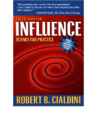
the influence process works is inte- Science and Practice, gra ted throughout. For instance, brain imaging research is presented, showing here are 5 good reasons! how the "Expensive = Good" heuristic o Updated coverage of social influence leads people to perceive more costly effects in popular culture, such as the items as better than (identical) less contagion of obesity among the young costly ones. and the contagion of violence in such tragedies as the Virginia Tech and North- o Enhanced coverage of "how to say no." New evidence is presented to ern Illinois mass killings. help readers identify their special
To list points: one major advantage/disadvantage of, a further advantage, one point of view in favor of/against, in the first place, first of all, to start with, secondly, thirdly, finally, last but not least… To add more points to the same topic: what is more, furthermore, also, in addition to, beside, apart from this/that, not to mention the fact that… To make contrasting points: on the other hand, however, in spite of, while, nevertheless, despite, even though, although, it can be argued that, one can argue that… To conclude: to sum up, all in all, all things considered, in conclusion, on the whole, taking everything into account, above all, as was previously stated… Opinion essays For example: Will life be better in the future? Has genetic science gone too far? Outline: Introduction – state topic Paragraph 2 – argument 1 + reason+ support (statistics, examples, quotes)
Linking words used in Conditionals ...................................... 4 Conditionals Conditions deal with imagined situations: some are possible, some are unlikely, some are impossible. A. Real Conditionals Real Conditionals refer to situations that are true, have happened, generally happen or are likely to happen. The First Conditional expresses a possible condition and a probable result: If I have time, I will help you. In the if-clause we use the Present Simple, in the main clause will + the verb. We can also use the Present Continuous or Perfect in the if-clause and a Modal Verb in the main clause. If we are having a party tomorrow, we shouldn’t go out tonight. If you have finished with the computer, you should turn it off. It can also be used in offers and suggestions, or warnings and threats. If you need a ticket, I can get you one. If you don’t study harder, you won’t pass the exam.
g. People are generally better off than they were ten years ago. This is illustrated/demonstrated/indicated/shown by the fact that 64% of the population how holiday abroad.) Assessing good and bad points Introduction – aim, status, source Main body – summary of each point, giving both negative and positive aspects Conclusion – general assessment and recommendation Style: formal, sub-headings Useful language: To make contrasting points: However, although, despite, but, while, even, though, in spite of, nevertheless, yet…. To express difference between appearance and reality: It may seem, on the surface, apparently, on the face of it, at first sight… Useful vocabulary To introduce: The aim/purpose of this report is(to describe/advise/recommend)… The reason for this report is… This report was written/carried out… This report describes… This report looks at… The aim of this report is to outline the results of a survey which was carried out…
Conjunctions join, in many ways, Sentences, words, or phrase and phrase. The interjection cries out, "Heed! Interjection Conjunction An exclamation point must follow me!" 2 The Capital Letter The capital letter is also called a big letter or upper- case letter, or sometimes just a capital. A B C D E F G H I J K L M N O P Q R S T U V W X Y Z When do you use a capital letter? 4Use a capital letter for the first letter in a sentence: The dog is barking. Come here! 4Always use a capital letter for the word I : I am eight years old. Tom and I are good friends. 4Use a capital letter for the names of people:
Before I go on, are there any questions about ...? Using rhetorical questions What should we do? (pause) How much would it cost? (pause) Dramatic structures We have a revolutionary product. --» What we have is a revolutionary product. Making comparisons It's like ... It's as if... Similarly In the same way Contradicting In fact Actually Digressing By the way In passing Painting word pictures Imagine ... Suppose ... Giving examples For example, ... ... for instance ... ... such as ... Let me give you an example. A good example of this is ... To illustrate this point, ... Generalising Usually Generally As a rule As a whole In general Giving reasons/causes Therefore So As a result That's why For this reason Consequently Because of this Contrasting Highlighting but in particular however especially on the other hand in spite of this although
Linguistic style Linguistic style is a variety of language with its peculiar vocabulary, phraseology, grammatical, phonetic features that are used selectively and purposefully to express ideas in a given situation. Linguostylistics or linguistic stylistics Studies linguistic facts from the point of view of the ability to convey additional shades of meaning. Any act of speech that is both oral and written is meant to pass on information. There are 2 types: 1. the content as such 2. additional information The second one is expressed by emotional, emphatic shades of meaning that are attached to the main content. Stylistics studies this latter information type. Every speaker has experienced that the form of speech may vary depending on a speaker, the listener and the circumstances in which both find themselves. 2 Separate words
Byron) · the manner of expressing ideas characteristic of a literary movement or period (symbolism, romanticism) · the use of lg. typical of a literary genre (comedy, drama, novel) · the selective use of lg that depends on spheres of human activity. These are called functional styles or registers (fiction, newspaper) Stylistics is the study of style. However, for some reason, English stylistics is less developed than French, German or Russian. The term ,,stylistics"came into more common use in English only some 35 years ago. It was recorded much earlier; in 1882 as "the study of literary style, the study of stylistic features" Stylistics is a branch of linguistics that studies principles of selecting different linguistic means for passing on thoughts and emotions. It studies: · Different functional styles, styles of genres, individual styles
advanced system. Its speed of operation was greater than comparable hardware then available. In recent months major faults have developed in the equipment. The local agent appears incapable of providing a reliable repair service. The system is regularly out of order for several days at a time. The makers have agreed to replace the system free of charge. The new equipment will not be installed for at least six months. Such a delay is clearly unacceptable to us. We should insist that ICN send their own engineer to service the equipment. The equipment should be transported to the ICN plant for inspection and repair there. When the ICN equipment was first introduced, it was found to provide a flexible and advanced system. Moreover, its speed of operation was greater than comparable hardware then available. However, in recent months major faults have developed in the
words Main body (para. 2 - 4) Give the first, second and third argument and examples or reasons to support your opinion Conclusion Re-state your opinion, using different words Useful language To list points firstly, in the first place, first of all, to start with, secondly, thirdly, finally, last but not least To add more points to the same topic what is more, furthermore, also, apart from this, in addition to, moreover, besides, too, not to mention the fact that, another major reason To introduce conflicting viewpoints a lot of people believe/think, many people are in favour of/against, peopleoften claim that, it is popularly believed that, it is argued that, people argue that, opponents of this view say, however there are people/those who oppose, contrary to popular belief To express personal opinion in my opinion/view, to my mind, personally I believe, it strikes me that, I feel very strongly that, I am inclined to believe that, it seems to me that,
Chapter 18 Chapter 39 Chapter 59 Chapter 19 Chapter 40 Chapter 60 Chapter 20 Chapter 41 Chapter 61 Chapter 21 Chapter 42 Chapter 1 It is a truth universally acknowledged, that a single man in possession of a good fortune, must be in want of a wife. However little known the feelings or views of such a man may be on his first entering a neighbourhood, this truth is so well fixed in the minds of the surrounding families, that he is considered the rightful property of some one or other of their daughters. "My dear Mr. Bennet," said his lady to him one day, "have you heard that Netherfield Park is let at last?" Mr. Bennet replied that he had not. "But it is," returned she; "for Mrs. Long has just been here, and she told me all about it." Mr. Bennet made no answer.
wings and turned into birds, thus defying the force of gravity that had held them for so long. They didn’t become better at crawling or walking, but transcended crawling and walking entirely. Since time immemorial, flowers, crystals, precious stones, and birds have held special significance for the human spirit. Like all life-forms, they are, of course, temporary manifestations of the underlying one Life, one Consciousness. Their special significance and the reason why humans feel such fascination for and affinity with them can be attributed to their ethereal quality. Once there is a certain degree of presence, of still and alert attention in human beings’ perceptions, they can sense the divine life essence, the one indwelling consciousness or spirit in every creature, every life-form, recognize it as one with their own essence and so love it as themselves. Until this happens, however, most humans see only the outer forms, unaware of the
M. LOYAL, a bailiff A Police Officer FLIPOTTE, Madame Pernelle's servant The Scene is at Paris ACT I SCENE I MADAME PERNELLE and FLIPOTTE, her servant; ELMIRE, MARIANE, CLEANTE, DAMIS, DORINE MADAME PERNELLE Come, come, Flipotte, and let me get away. ELMIRE You hurry so, I hardly can attend you. MADAME PERNELLE Then don't, my daughter-in law. Stay where you are. I can dispense with your polite attentions. ELMIRE We're only paying what is due you, mother. Why must you go away in such a hurry? MADAME PERNELLE Because I can't endure your carryings-on, And no one takes the slightest pains to please me. I leave your house, I tell you, quite disgusted; You do the opposite of my instructions; You've no respect for anything; each one Must have his say; it's perfect pandemonium. DORINE If . . . MADAME PERNELLE You're a servant wench, my girl, and much Too full of gab, and too impertinent And free with your advice on all occasions. DAMIS But . . . MADAME PERNELLE
States apply international regulations to national regulations and they have to be in accordance with each other, the states can always specify these regulations. Therefore, PIL regulates people indirectly. Another unique feature: domestic law sources have a clear pyramid (top to bottom: constitution, laws, individual contracts, they cannot contradict each other) and all sources are written. In PIL there is no such hierarchy, but there are primary sources (all are equally important) and secondary sources and all are not written. Primary sources: written documents (int treaties, conventions, declarations etc), international customary law (legally binding), fundamental principles (legally binding). PIL= system of (legally binding) norms and principles, written or customary, regulates the conduct of states and intergovernmental international organizations. Also known as International
What is the real meaning of life? Why prefer one thing to another? Can we trust observation? It’s raining outside - how do you know it is? I can see it’s raining. How to convince yourself its raining? A good reason to doubt - 49 other peaople have the same opinion. Falsifiable → possible; not falsified World disappeared in 2012 and got recreated 3 secs later → unfalsifiable - cannot prove it’s true/wrong, cannot provide any tests to prove it. Or - one or another but not both → exclusive - one or another (both) → inclusive (Invited those who are managers or specialists - both) Arguments valid or not - logic is a science where to decide it
· He has his passport in his hand. · Do you have your passport with you? ADVERB PLACEMENT Examples: The examples below show the placement for grammar adverbs such as: always, only, never, ever, · Cats like milk. still, just, etc. · Birds do not like milk. · Do pigs like milk? Examples: · California is in America. · California is not in the United Kingdom. · You only speak English. · Windows are made of glass. · Do you only speak English?
 annaabi.ee