Book review Title: ,,Vanamees ja meri" Author: Ernest Hemingway Publisher: ,,Eesti raamat" Year: 1985 Original: ,,The old man and the sea" Charles Scribner's Sons New York (1952) First printing: 1952 The book ,, The old man and the sea", is written by Ernest Hemingway. It tells the story of an old man called Santiago who lives in a small house near the ocean. The story takes place in the sea, about 50 years ago.The characters in the book are: a little boy, old man Santiago and a big fish. It is an short novel. There are film based on this book. The story is set on a big ocean. On the first pages, old man comes from fishing. Then he starts eating dinner with a boy. As the story develops, the man goes again to the sea to get fish. Then a big fish swallows the beat. The fish is so big that starts to pull the boat. The plot of the story is quite drab, but interesting too. The book contains lots...
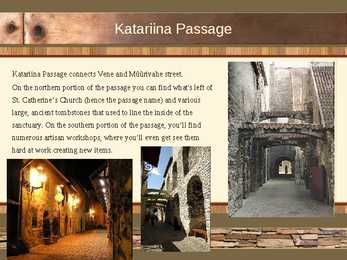
Katariina Passage Katariina Passage connects Vene and Müürivahe street. On the northern portion of the passage you can find what's left of St. Catherine's Church (hence the passage name) and various large, ancient tombstones that used to line the inside of the sanctuary. On the southern portion of the passage, you'll find numerous artisan workshops, where you'll even get see them hard at work creating new items. City wall Tallinn's medieval city wall is a sub-facility that was built to protect the lower Tallinn and upper Tallinn (Toompea). The building of the city wall began in 1310th years, and by improving over time it formed the city wall with defensive buildings (towers). It was finished by the end of the 1561. Then it was 2.35-kilometer-long circular wall, which had 27 wall gate, 8 tower gate and 21 other stone fortifications. Many parts of the to...
Reading reflection 12/19/06 Title: The Way Home Writer: Sue Leather This book is about eight journeys which change lives forever. Every story is touched and helps me think more about the meanings of life. The Way Home: Alex had a nice husband she went on many trips from time to time. In one of her journeys, she bumped into an attractive man, Stefano. After a nice talk, he asked her to stay at the same hotel and the same room. At the time she agreed, it just began her betrayal and she didn't know how to stop it. Remembering her childhood, she was very frighten about her mom's betrayal and ran away in a long distance from home. And now, she was going home, she was beginning to believe that only her journey home would help her to bring her betrayal to an end...... Betrayal could happen so easily, that's why more and more people have extramarital relations recently. But, it's really hard to find somethin...
No comebacks and other stories No Comebacks Mark Sanderson was a very rich and famous man. He was thirty-nine years old. He met the woman, who he had always looked, but the woman was married and she lived in Spain. Mark Sanderson decided to changed his name, and hired a detective to kill her husband, deteective kills this woman too. There are some days... Liam Clark was a lorry driver. One day he was in the ferry to drive to Dublin. His lorry had broken. Next day two mans rob Liam with his lorry. They thought that in the ferry was brandy. Police hit on of the kidnapper with lorry. And they saw that in the lorry was guns. A Careful man Mr. Hanson, went to a doctor, where he heard that he had a cancer and he only has 6 month to live. He was very rich. He sold his estate.After he died came out tha...
French Joe By W. Somerset Maugham CHARACTERS: • Captain Bartlett – pilot, bald, alcoholic, queer fish • Captain Cook – discovered the Thursday Island on a Thursday. • Woman – a red flannel dressing-gown; holding a paraffin lamp; hair - a little bit over her shoulders, long black wisps, a little stoutish, keen eyes, a red nose. • French Joe aka Josep de Paoli – 93Y, Corsican, a lietutenant of artillery, French army in 1851, later communist, started new life many times, black shining eyes, really thin and old. • Boswell Johnson – really famous author, the ancestor of Joe. • Napoleon Bonaparte – a relative of French Joe, lietutenant of artillery • Russians + Prussians – Joe fougth against them in French army • Hospital Nurse PLACES: • Thursday Island in Torres Straits – where...
Russian 2nd year translation. Prose. The Childhood of Mikhail Lomonosov The great Russian scholar Mikhail Vasil'evich Lomonosov was born in the beginning of the eighteenth century in a little village near the White Sea. His father was a fisherman and he often took his son with him when he went fishing. When Lomonosov was a little boy he wanted to study. This was difficult because books were rare and expensive and because there was no school in the village. However, the village priest taught Lomonosov to read and write. After that, Mikhail Lomonosov began to look for books. One man in the village had an arithmetic book. When Lomonosov saw this book, he ased the man to give it to him. He read it so often that soon he knew it by heart. He managed to get more books from his friends and spent many days reading them. Lomonosov was already nineteen years old when he decided to go to school. Though he already knew much, he needed the help of e...
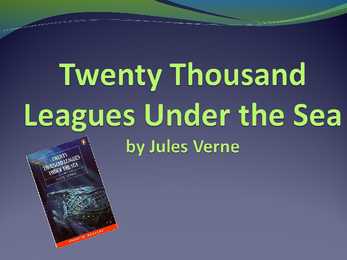
o Jules Verne was a French novelist o He was born on February 8, 1828 at Nantes, France o Studied Law in Paris o Took up writing in his early twenties o His first major success was in 1864 Voyage to the Centre of the Earth o Died on March 24, 1905 at Amiens o Considered to be the `father' of science fiction o Professor Pierre Aronnax the main character, narrator, a professor in the museum in Paris of Natural History; gruff, unrefined and a classic pedant. o Conseil Aronnax's domestic servant, 30 years old, knowledgeable of science, never complains o Ned Land - a Canadian and the king of harpooners, a large and quiet man, easily angered when contradicted. o Captain Nemo- the antagonist of the novel, creator of the Nautilus. o takes place in 1866. o rumors spreading about a large sea monster that inhabiting the ocean waters and destroying surface vessels o The US government commissions the Abraham Lincoln to...
Joseph Mallord William Turner (1775-1851) I'm going to talk a little about Joseph Mallord William Turner and his most gorgeous painting ,, The Fighting `Temeraire' tugged to her Last Berth to be broken up". Joseph Mallord William Turner was born on 23 April 1775. He was an English Romantic landscape painter, watercolourist and printmaker. He has laid the foundation for Impressionism. Turner is also one of the greatest masters of British watercolour landscape painting. He is commonly known as "the painter of light". One of his main themes was the helplessness and smallness of man against the destructive forces of nature. One of my favourite paintings is "The Fighting `Temeraire' tugged to her Last Berth to be broken up. Turner was in his sixties when he painted this painting. It shows his mastery of painting techniques to suggest sea and sky. It depicts one of the last second-rate ships of the line which played a distinguished role i...
American literature The literary history of this nation when the first humanbeing living in what has since become the U.S used language creatively. · Mid to late 18 century put down · Words are powerful, magical · Words must be remembered · Native Americans stories creation of the world · Attidude thought their land/language · Similar stories Dates and names · America was discovered in 1492 by Columbus · 1497 John Cabot went to Canada · 1579 San Fransisco/St. Fransis · 1607 Jamestown collony/John Smith · 1620 a boat called MayFlower · 1630 Boston was established · 1636 Harvard University · 1773 Boston Teaparty · 1775 War of Independence · 1776 4 July Declaration of Independence · First President George Washington Christopher Columbus Chris...
The beginning 1981 Los Angeles, California Metallica First members Click to edit Master text styles Second level Third level Fourth level Fifth level James Hetfield -> Ronald McGovey -> Lars Ulrich -> Dave Mustaine Rhythm guitar, Bass Drums Lead guitar vocals Click to edit Master text styles Second level Third level Clifford Lee "Cliff" Fourth level Fifth level Burton ( 1962 1...
Enrique Iglesias Favorite musician Enrique Iglesias Click to edit Master text styles Second level Third level Birth name: Enrique Miguel Fourth level Fifth level Preysler Iglesias Years active: 1995 - today Born: 08-05-1975 Birth Place: Madrid, Madrid, Spain Genre: Pop , Latin Albums and Singles Enrique Iglesias (1995) Vivir (1997) · Insomniac (2007) Cosas Del Amor (1998) · Euphoria (2010) Enrique (1999) Bailamos (1999) Remixes (19...
History of English literature Periods: 1. Anglo-saxon or early literature (499 - 1066) 2. Second or Norman or late Medieval period (1066 - 13/14 century) 3. Renaissance or Modern period (13-14 century present) Anglo-Saxon period · All of the literature had its roots in folklore · Texts were orally transmitted, the anglosaxons had no written language · Two types of singers: 1) scop (attached to the royal court, wrote poetry and songs, performed them); 2) gleeman (travelled, mostly sang other peoples' songs, not their own songs; performers of scop songs) · The oldest known song Widsith (The Far Traveller/Wonderer); tells of a gleeman who travels in Europe, of his love of noble deeds, speaks of the shortness of life http://en.wikipedia.org/wiki/Widsith · The other known song Deor's Lament. Can be called the first English lyrics, about 40 lines. Talks about a scop who is not happy w...
The Article Table of Contents General Rules....................................................................... 2 The Definite Article ............................................................... 5 Names that take the Definite Article...................................... 6 No article.............................................................................. 7 Countable and uncountable nouns ....................................... 9 General Rules There are two articles in the English language – the Indefinite Article and the Definite Article. The Indefinite Article has two forms – a and an (a precedes words beginning with a consonant sound and an precedes words beginning with a vowel sound). It comes from the Old English word ãn, which meant one. The Definite Article is the. It comes from the Old English word ţis, which meant this. Thus, in most general term...
Tristan & Isolde is set in Britain and Ireland, in the Early Middle Ages, after the fall of the Roman Empire in the 5th century. The scattered British settlements are in the process of becoming unified under Lord Marke (Rufus Sewell), who wishes to fortify England against attacks by the Irish king Donnchadh (David O'Hara). The Cornish knight Tristan of Aerygone (James Franco) engages in combat with Morholt, leader of Donnchadh's army and to whom Princess Isolde (Sophia Myles) has been promised in marriage. Though he kills Morholt and Donnchadh's army is overrun, Tristan is severely wounded in the fight and believed dead, though he is in fact only suffering the effects of having been sliced in the abdomen by Morholt's poisoned sword. Tristan's body is put out to sea on a funeral boat which eventually washes up along the shores of Ireland. He is discovered by Isolde and her maid Bragnae, who administer an antidote that revives him and t...
GEOGRAPHY Estonia lies of the eastern coast of the Baltic sea. Total area of Estonia is approximately 45000 square kilometer and the population is about 1.5 million . Estonia is one of the most sparsely populated country in Europe. With 35 people per square kilometer. Nearly 1/3 of the nation live in the capital Tallinn. Along the coast of Estonia lies many bays and peninsulas. Lots of islands lie off the west- and north coast. The largest of them are Saaremaa and Hiiumaa. Geographically Estonia can be divided into 4 parts: North-, South-, West-, and East-Estonia. North-Estonia is relatively flat. Here is a nice coastline with coves, capes and a high coast. South-Estonia is more hillier, but there aren't any mountains or mountain ranges. The highest peak in Estonia is Suur Munamägi and its 318m above sealine. The largest industrial areas are situated in East-Estonia. There are beautiful nature parks in Wes...
Past simple vs past continuous 1.In the following sentences put the verbs in brackets in either the past simple or past continuous tense. Put any other words in the brackets in the correct place. Look at the example provided. 1.While the teacher was explaining (explain) the sum on the blackboard, the children were throwing (throw) paper aeroplanes around the classroom. 2.Eve ............................ (live) in Athens when she ............................ (meet) the man who was to become her husband. 3............................. you ............................ (not work) at Mcllroy's when they ............................ (have) that terrible fire? 4.As it ............................ (get) foggier it ............................ (become) almost impossible to steer the boat along the narrow canal. 5.I ............................ (hear) a strange noise just as I ............................ (go) ...
Suppletion Present in languages of different families. Present in Old, Middle and Modern English, though the general tendency is towards more regularity/iconicity so the number of suppletive forms has decreased.In the text: goon to go wenden - to turn Gan was suppletive in Old English, past form: eode.Eode was supplanted by went (past form of wenden) at the end of the Middle English period.To wend has survived in Modern English in phrases such as to wend one's way, we wended homewards (ironic usage). Thus: suppletivity- suppletion different parts of one and the same paradigm come from what were originally different paradigms (different words with close meanings or words in different but close dialects).Suppletion embraces verbs, adjectives, nouns. Be was/were been (Old English beon/wesan) (am, art, is, are); in Old English some suppletive forms were used parallel to one another) Good better best Bad worse worst Much more...
Rudyard Kipling - One of the most memorable English writers of all time Family of Joseph Rudyard Kipling Mother- Alice MacDonald Kipling. Alice Kipling (one of four remarkable Victorian sisters) was a vivacious woman about whom a future Viceroy of India would say, "Dullness and Mrs. Kipling cannot exist in the same room."[3] Father - John Lockwood Kipling. Lockwood Kipling, a sculptor, an illustrator, museum curator and pottery designer, was the principal and professor of architectural sculpture at the newly- founded Sir Jamsetjee Jeejeebhoy School of Art and Industry in Bombay. Later in life Kipling illustrated many of Rudyard Kipling's books, and other works. Kipling also remained editor of the Journal of Indian Art and Industry, which carried drawing works from the students of the Mayo School. COUPLE named their son after the place they had first met Rudyard Lake. Alice Kipling Fleming - Sister of British author Rudyard Kipling w...
12. Articles zero, a/an, the Zero · Zero article is used, when article the or a/an is not used. · Articles are not used with the names of languages. Example: He was learning Chinese. · Is not used with the names of sports. Example: She plays badminton and basketball. · Is not used before academic subjects. Example: She's taking economics and math. · Is not used with seasons. Example: In spring, we like to clean the house. · Is not used with institutions. Example: He's in church/college/jail/class. · Is not used with meals. Example: Breakfast was delicious. · Is not used with diseases. Example: She has cancer. · Is not used with time of day. Example: We'll be there around midnight. · Is not used when you are speaking about transport. Example: He comes to work by taxi. A/an Using a or an depends on the sound that begins the next word. · a is used before ...
Chekov Lady and the Lapdog Reid about Chekov: The characters in Chekhov's plays are never fully "known" as a writer, he seems to delight in maintaining a sense of indeterminacy, and unknowability, about them. The bare facts are always laughably inadequate to the complexity of "real" people. Anton Pavlovich Chekhov was born on 29 January (New Style), 1860, in Taganrog, a small port on the Sea of Azov, in southern Russia. As the son of a grocer and grandson of a serf, Chekhov was a first-generation intellectual. His modest background and upbringing are crucial to his development as a writer. Chekhov always felt that he missed out on childhood. It was a very hard lifeand it may have contributed to his poor health: he succumbed later on to the"family disease", tuberculosis, which led to his early death at the age of 44.His mother was a quiet, gentle soul who was full of stories of her early life. In later years, Chekhov would say that "w...
Chapter1: An unknown woman was found lying in the street and brought into the workhouse. She delivered a sickly child who had trouble breathing. The woman, without a word of who she was, died and left her new born boy, Oliver, to the drunken nurse that stood by. Chapter2: The State gave Oliver to Mrs. Mann who housed a number of orphaned children. Mrs. Mann took a large portion of the money given to her by the authorities for each child's food so Oliver grew up small and malnourished. On his ninth birthday, the town beadle, Mr. Bumble, came to collect Oliver and take him to the board for an interview. They told him he was to live with other wards of the state to become educated and learn a trade. Oliver did not mind this, but soon after he arrived, the state decided to implement a plan that would save money by feeding the people very little. After a time on this diet, the boys at the table chose Oliver to go ask the head cook for more ...
History of Great Britain Prehistory (55BC) no written records 6th 3rd c. BC the Celts came to British isles hill figures, hill forts, stone circles ( Stonehenge ) RomanBritain (55BC 400AD) Julius Caesar, named the country Albion Hadrian's Wall, villas, roads, the town of Bath The AngloSaxon, Danish and Norman invasions Germanic tribes settled and stayed Anglia Christianity was brought, religion became important, churches were built 8th century = raids by the Vikings and the Danes 1016 1042 : Under Danish rule ( York was the capital ) 1042 : local AngloSaxons regain their rule 1066 : Normans arrive ( the Norman conquest ) Medieval Britain (106615th c.) the Battle of Hastings William the Conqueror a new AngloNorman state the feudal system introduced the rule of the king and church strengthened centralised country, military rule Scotland, Wales and Ire...
English structure revision for the exam 1. Terms Language → A systematic, conventional (tavakohane) use of sounds, signs or written symbols in a human society for communication and self-expression. Human language at all levels is rule- or principle- governed (valitsema) meaning that language corresponds to the grammar. Natural language is usually spoken, while language can also be encoded into symbols (such as letters, morse etc) For example: Estonian, English. Linguistics → The scientific study of human natural language. Broadly, there are three aspects to the study which are Pragmatics (studies the use of language → interested in the gap between the sentence’s meaning and the speaker’s meaning). Semantics (concerned with the meaning of the language aspects and the way they change, also how objects and language and thinking and language are related). ...
ENGLISH LITERATURE Ancient Britain Lived on the British Isles in the 1st millenium. They most probably came from Eastern Europe and belonged to the Celtic race and also spoke Celtic. They were primitive hunters- gatherers, farmers. Some Celtic words are still used in modern English, however they are used mostly in place names. For example: · avon river · cumb valley · ford shallow place in the river Ancient Britons had their own religion and priests or druids and temples. In the year 55 BC Britain became a Roman province. Romans were highly developed and had their own language latin, which has also greatly influenced English. The military occupation of the Isles ended in 410 AD. The Romans eventually brought Christianity to Britain. Hadrian's wall on the border of Scotland and England. It began constru...
Estonia Estonia is a small country in Northern Europe with an area of about 45 000 sq km. As a part of the East-European Plain, the country has a rather flat surface. The highest and most diverse region in Estonia is in the south-eastern part of the country. At 318 metres, Suur Munamägi is not only the highest point in Estonia, but of all the Baltic countries. There are about 1500 islands in Estonia, the biggest of which being Saaremaa and Hiiumaa. Sixty-four species of mammals have been recorded in Estonia, three of them have been introduced: the racoon dog, the American mink and the muskrat. A couple of species have been re-introduced The European beaver, who was hunted to extinction by the end of the 19th century. A vital population of them now exists in Estonia once again. Another re- introduced species is the red deer. An attempt has been made in Estonia in recent years to disperse the p...
Dear Sir/Madam, I am writing in the hope that you can help me with a problem regarding a camera that I have bought recently. On 24 April, I purchased a Canon digital SLR camera from a duty-free shop at Freetown Airport on my way from Freetown to Wondercity. The camera cost $599, and I paid for it by credit card. When I arrived at my hotel in Wondercity almost 24 hours later, I discovered that the box which contained the camera did not include the battery, and the space in the box for the charger was empty. I am now in Wondercity, and I am not returning to Freetown, so I need to get the missing parts here. I would be grateful if you could arrange for the parts to be sent to me. I attach a copy of the receipt for your information. I look forward to hearing from you. Yours faithfully, Introduction This report looks at the dietary habits of twenty students in their final year at Freedonian Secondary School. The report is bas...
TALLINN UNIVERSITY OF TECHNOLOGY Department of International Relations CLOSING KALARAND FOR PUBLIC. Essay in Expository Writing Supervisor: Tallinn 2015 Kalarand is a part of Kalamaja district in Tallinn, it is a unique beach in the city centre, only few hundred meters from the Old Town. While being close to the city centre, it still has a remote area atmosphere to it where people could enjoy the seaside and views in a car-free environment. While not officially a public beach, the locals have still put in great effort into keeping it a clean and enjoyable public area (Klementi, 2011). In August 2015 historic Kalarand beach was fenced by Pro Kapital and public was denied access despite laws again...
1. Be ready to explain the terms (lecture 1): language, linguistics, synchronic approach to language, diachronic approach to language, linguistic competence, linguistic performance, what is grammar?, prescriptive grammar vs. descriptive grammar; phonology, phonetics, phone, allophone, phoneme; morphology, morphemes (types of morphemes), morphs, allomorphs, types of affixes, derivational affixes, inflectional affixes; open vs closed class words; syntax. Language: a systematic, conventional use of sounds, signs or written symbols in a human society for communication and self-expression. - human language at all levels is rule- or principle-governed. Linguistics: the scientific study of human natural language Synchronic approach to language: Diachronic approach to language: Linguistic competence: Linguistic performance: What is grammar?: "The sounds and sound patterns, the basic units of meaning, such as words, and the rules to combine them...
English lexicology 1. Size of English vocabulary Vocabulary is a sum total of words used in a language by speakers or for dictionary-making. Active and passive vocabulary. The Old English vocabulary was homogenous. There were about 50 000 – 60 000 words, 1/3 of which have survived. o About 450 loans from Latin o About 2000 from the Viking invasions. The Middle-English vocabulary became a heterogeneous hybrid of Germanic and Romanic languages. 100 000 to 125 000 words. o About 10 000 loans from Norman French, 75% are still in use o Continuing Latin influence Early Modern English. 200 000 – 250 000 words o English becomes a pluricentric language. o Polyglot. Cosmopolitan language Modern English. 500 000 words o At present at least 1 billion lexical units 2....
Topic Australia Introduction Many people know Australia as the land down under because it is the only continent except for Antarctica that is all on the southern hemisphere. Its name means ,,Southland". The official name of the country is the Commonwealth of Australia. It's capital is Canberra. Australia is the sixth largest country in the world but the smallest continent. Australia has 6 states and 2 territories (New South Wales, Victoria, Tasmania, Queensland, Western Australia , South Australia, The Australian Capital Territory and the Northern Territory). The Australian people are culturally the same as the Anglo Americans. There also live aborigines. Aborigines are the ancestors of the people. Like the US and Canada, Australia was an English speaking colony of Great Britain. Today Australia is a modern developed country with a diversified economy. Australia is an island continent of 7.7 million square kilometres, which ma...
LEXICOLOGY 1. Size of English vocabulary 1) Old English – 50,000 to 60,000 words Vocabulary of Shakespeare OE – homogeneous; 1/3 of the vocabulary has survived • 884,647 words of running text About 450 Latin loans (Amosova) • 29,000 different words (incl. work, working, Viking invasions added 2,000 worked, which are counted here as separate 2) Middle English – 100,000 – 125,000 words) English becomes heterogeneous (Norman French, • 21,000 words English, Latin), hybrid of Germanic and Romance languages Norman French influence – about 10,000 words, 75 % are still in use (Baugh) Latin influence continues 3) Early Modern English – 200,000 – 250,000 English becomes a polycentric language; polyglot, cosmopolitan lang...
Book Report Title ,,Othello" Author William Shakespeare Genre play, tragedy Setting time between 1489 and 1571 Setting place Venice and Cyprus Topics miscommunication, jealousy, revenge, hatred Othello was written in the 17th century and it is based on the Italian short story "Un Capitano Moro" (A Moorish Captain) by Cinthio (Giovanni Battista Giraldi). It was first published in 1565. The main characters of the play are Othello, Desdemona, Cassio and Iago. The play in this book has 91 pages and this book is published in 1996 by Dover Publications. Characters: Major characters: Othello he is the play's protagonist and hero. He has risen to high military prestige in Venice, after defeating the Turks and other enemies in battle. He is well-liked and honored, despite his racial difference. He moves to Cyprus after becoming a general and he marries Desdemona. He falls v...
1) General facts The UK: * the United Kingdom of Great Britain and Northern Ireland was formed in 1801 * it covers 243,610 sq km * everybody from the UK is called British * the capital city is London * is made up of four constituent countries: England, Scotland, Wales and Northern Ireland which in turn are divided into counties * the flag is called the Union Jack which is a combination of the flags of England, Scotland and Northern Ireland * the population is about 60,000,000 people, the population density is 242 people/sq km * its coasts are washed by the Atlantic Ocean, the North Sea, the English Channel, the Celtic Sea, Saint George's Channel, and the Irish Sea. It is linked to France by the Channel Tunnel * the United Kingdom is a constitutional monarchy. The current monarch is Queen Elizabeth II, who is also the Queen and Head of State of fifteen other Commonwealth Realms, such as Can...
Russian philology The meaning of the word "philology" is "love for word". This is love that unites teachers and researchers of modern and Classical languages and literature, interpreters and diplomats, journalists and publishers, writers and poets. Russian philologis are highly demanded in various spheres of scholarly research and education, in the mass media, in civil service at the Ministry of Foreign Affairs, in archives, libraries, museums, in travel agencies, as well as Russian and international companies. Curriculum within in philological faculty includes courses of Russian and European languages and literature, courses of Linguistics and Theory of Literature for students to familiarize themselves with various schools and trends of Russian and foreign philology. The core curriculum also includes a number of Liberal Arts courses (Philosophy, History, Psychology, Pedagogy), as well as courses of basic mathematics and compute...
Book 1 BASIC ENGLISH BASIC ENGLISH GRAMMAR GRAMMAR BASIC ENGLISH GRAMMAR Book 1 Book 1 Younger students at beginning to intermediate levels will greatly benefit from this step-by-step approach to English grammar basics. This is the ideal supplement to your language arts program whether your students are native English speakers or beginning English language learners. Skill-specific lessons make it easy to locate and prescribe instant reinforc...
British Literature in the 20th-21st Century REVISION QUESTIONS 1. The Contradictory, diverse, chaotic 20th century. New developments in science and philosophy. The essence and influence of Freudian theory. Contradictory, diverse, chaotic 20th c- simultaneous rejection and invocation of the past. While modernists apotheosized the creative geniuses of the past, they also rejected old poetic forms. Challenge old and established beliefs and more and more people had access to books and education more people went to universities. profound change in morals: · No universal value and perspective on things · Multiple truths, multiple perspectives · Nothing has inherent (kaasasündinud, sisemist) importance · Life lacks purpose Science: Albert Einstein-general theory of relativity had a huge impact on culture as well. Everything is relative. Philosophy:...
khTallinn English College The United Kingdom Topic Mari-Liis Pakats Tallinn 2008 2 Table of Contents Introduction..................................................................................................................4 Geographical Position .................................................................................................4 History .........................................................................................................................4 Government..................................................................................................................5 Queen Victoria.............................................................................................................5 Relief...............................................................................................................................
Ameerika Kirjandus 30.01.13 Naturalism · France, Emile Zola · Put down his theory in 1879: Le Roman Experimental, attempt to explain the development of human society throuch biological laws · Outlook is deterministic, pessimistic, fatalistic (fate or biology) · Man as an animal-clever than other beasts, still explainable within the framework · Man is not a free agent, is govern by something · Unable to determine his own faith · Hereditary · Naturalists tried to apply in fiction the processes of natural sciences · Writers task is to record facts, systems of behaviour, living conditions, never revealing any natural unbiased (completely natural) · Point of view: amoral-outside the category of morality, neither good or bad · Naturalist find it absurd to blame the wicked. These criminals are doing what nature, environment, their unconscious tells them to do. Naturalists do not ...
Hamlet Shakespeare, William Published: 1599 Categorie(s): Fiction, Drama Source: Feedbooks 1 About Shakespeare: William Shakespeare (baptised 26 April 1564 – died 23 April 1616) was an English poet and playwright, widely regarded as the greatest writer in the English language and the world's pre-eminent dramatist. He is often called England's national poet and the "Bard of Avon" (or simply "The Bard"). His surviv- ing works consist of 38 plays, 154 sonnets, two long narrative poems, and several other poems. His plays have been trans- lated into every major living language, and are performed more often than those of any other playwright. Shakespeare was born and raised in Stratford-upon-Avon. At the age of 18 he married Anne Hathaway, who bore him three children: Susanna, and twins Hamnet and Judith. Between 1585 and 1592 he began a successful c...
Tallinna Inglise Kolledž Australia Referaat Tallinn Table of contents: Introduction.....................................................................................................................3 Geographical Position.....................................................................................................3 Relief...............................................................................................................................4 Climate & Time Zones....................................................................................................5 Plants...............................................................................................................................5 Animals...........................................................................................................................6 Population........................................
Artikkel Artikkel on abisõna, mis kuulub nimisõna juurde. Inglise keeles on kaks artiklit: 1) umbmäärane artikkel umbmäärane artikkel on a, täishäälikuga algava nimisõna ees an 2) Määrav artikkel on the Umbmäärase artikli puudumine võib muuta nimisõna tähendust wood puit a wood mets fire tuli a fire lõke iron raud a iron triikraud He gave me the book. Ta andis mulle selle raamatu. He gave me a book. Ta andis mulle ühe raamatu. Umbmääran artikkel a (an) näitab, et tegemist on ühe asjaga või isikuga. Umbmäärane artikkel on tekkinud arvsõnast one (üks). Seepärast saab umbmäärast artiklit tarvitada ainult ainsus oleva nimisõnaga. Give the child a book. Anna lapsele üks raamat. Umbmäärase artikli tarvitamine elukutusete ja rahvuste puhul. Ainsus: I am a doctor. He i...
Esimesed romaanid 1926. a. ilmus ta romaan ,,Ja päike tõuseb" (,,And the Sun Also Rises"), mis räägib rühma Esimese maailmasõja järgsesse ,,kadunud põlvkonda" (Hemingway loodud mõiste) kuuluvate immigrantide sihitust elust Prantsusmaal ja Hispaanias. Selle kirjutamiseks sai ta inspiratsiooni oma reisist Hispaaniasse. Ta hakkas kirjutama ka lühijuttude kogumikku. Hemingwayl oli afäär Pauline Pfeifferiga ning Hadley sai sellest teada. Nad lahutasid abielu 1927. a. jaanuaris ning juba mais abiellus Hemingway Pauline'iga. Pauline oli Arkansasest pärit, ta pere oli jõukas ja katoliiklik. Enne abielu otsustas Hemingway hakata katoliiklaseks. Pauline kirjutas artikleid Vogue'i ja Vanity Fairi. 1928. a. kolis paar Key Westi, et alustada oma kooselu. Hemingway jätkas lühijuttude kirjutamist ning oli õnnelik, kuid varsti sooritas ta isa enesetapu. Hemingway oli väga kurb ning see inspireeris kirjutama romaani ,,Kellele lüüakse hingekella", mida h...
Unit 4 HEALTH AND CARE 17.conventional medicine n - the usual form of medicine Language Leader Advanced practised in most European and North American countries [= western medicine] tavameditsiin 1. alternative medicine ['meds()n] n - medical 18.cough v - [kf] to suddenly push air out of your throat treatment that is not based on the usual western with a short sound, often repeatedly: Matthew methods: Acupuncture is widely used by practitioners coughed and cleared his throat. köhima of alternative medicine. 19.discharge v - to officially allow someone to leave 2. anonymous ['nnims] adj - unknown by name: Our somewhere, especially the hospital or the army, navy client prefers to remain anonymous. ...
Estonia Topic Tallinn 2007 2 List of Contents page Facts and figures 3 Geography 3 Climate 3 Nature 4 History 5 Economy 6 Culture 6 Biggest towns 7 Language 8 3 Facts and figures The Republic of Estonia is a small country. Covering only 45, 228 sq km it is slightly bigger than Denmark, Belgium or Switzerland. Estonia's population is under 1.4 million. The official language is Estonian but since very many Russians live here Russian is also wide spread. The capital of Estonia is Tallinn. The currency used in Estonia is Eesti kroon. The Estonian national flag is blue-black-white. It was originally the flag of the Estonian Students' Society. The flag was first consecrated in Otepää Church in 1884. For a while, during the Soviet occupation, the flag was banned but it was again seen in p...
Report of SCOTLAND Maiki Joakit 10. klass 2008 Etymology Scotland is from the Latin Scoti, the term applied to Gaels. The Late Latin word Scotia (land of the Gaels) was initially used to refer to Ireland. By the 11th century at the latest, Scotia was being used to refer to (Gaelic-speaking) Scotland north of the river Forth, alongside Albania or Albany, both derived from the Gaelic Alba. The use of the words Scots and Scotland to encompass all of what is now Scotland became common in the Late Middle Ages. History Repeated glaciations, which covered the entire land-mass of modern Scotland, have destroyed any traces of human habitation that may have existed before the Mesolithic period. It is believed that the first post-glacial groups of hunter-gatherers arrived in Scotland around 12,800 years ago, as the ice sheet retreated after the last glaciation. Groups of settlers began building the first known permanen...
Contents Contents.................................................................................................................................. 1 # When the Tigers Broke Free................................................................................................ 2 # In The Flesh ?...................................................................................................................... 3 # The Thin Ice......................................................................................................................... 4 # Another Brick in the Wall part 1........................................................................................... 5 # The Happiest Days of our Lives........................................................................................... 6 # Another Brick in the Wall part 2........................................................................................... 7 # Mother...........
1. Ancient Britain: the Celtic tribes. 2000 years ago there was an Iron Age Celtic culture throughout the Br Isles. It seems that the Celts, who had been arriving from Europe from the 8th cent BC onward, intermingled with the peoples who were already there. The Celts were extremely talented people, creative and artistic. More than 1 Celtic tribe invaded Br. The descendants of ancient Celts live in Wales, Scotland, Cornwall and Ireland. They lived in primitive society. Druids priests, more powerful than chiefs. Acted like prophets. 2. Stonehenge From prehistoric period. Was built on Salisbury plain between 2500 and 1500 bc. One of the most famous and mysterious archaeological sites in the world. One of the mysteries is how it was built at all with the technology of the time. Another is its purpose. It appears to function as a kind on astronomical clock and we know it was used by the Druids for ceremonies marking the passing ...
1. Society- people who interact in such a way as to share a common culture. The cultural bond may be ethnic or racial or geographical, based on gender, or due to shared beliefs, values, and activities. 2. Culture- beliefs, behaviors, objects, and other characteristics common to the members of a particular group or society. 3. A unitary state- a state governed as one single power in which the central government is ultimately supreme and any administrative divisions (subnational units) exercise only powers that their central government chooses to delegate. The majority of states in the world have a unitary system of government. 4. A federal state-- a political entity characterized by a union of partially self- governing states or regions under a central (federal) government. 5. A multinational state- A multinational state is a sovereign state which is viewed as comprising two or more nations. Such a state contrasts with a nation-state...
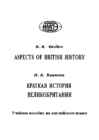
N. A. Vavilov ASPECTS OF BRITISH HISTORY Н. А. Вавилов КРАТКАЯ ИСТОРИЯ ВЕЛИКОБРИТАНИИ Учебное пособие на английском языке Москва Институт международного права и экономики имени А. С. Грибоедова 2008 2 УТВЕРЖДЕНО кафедрой лингвистики и переводоведения Вавилов Н.А. Краткая история Великобритании: Учебное пособие на английском языке. – 2-е изд., пересмотр. и испр. – М.: ИМПЭ им. А.С. Грибоедова, 2008. – 88 с. Пособие содержит краткий очерк важнейших событий в истории Великобритании – от первых документально засвидетельствованных вторжений на остров (кельтов, римлян и англосаксов) до создания и распада Британск...
HISPAANIA RIIGIHÜMN Marcha Real ('kuninglik marss') on Hispaania riigihümn. See on üks väheseid riigihümne, millel pole sõnu. Hispaania riigihümn on üks vanemaid Euroopas. Selle päritolu pole teada. Esimest korda mainiti seda 1761. aastast pärinevas dokumendis Libro de Ordenanza de los toques militares de la Infantería Española ('Hispaania jalaväe fanfaarisignaalide määrustik'). Seda nimetati "Marcha Granadera" ('Grenaderide marss'), kuid autorit ei mainitud, sest see polnud juba siis teada. Dokumendis oli ära toodud partituur. Ammust ajast läksid kuninga grenaderid selle hümni saatel võitlusse ja defileerisid kuningliku perekonna ees. Kirjanik Hugo Kehrer väidab, et teose komponeeris Preisimaa kuningas Friedrich Suur, kuigi selle väite kasuks puuduvad tõendid. Mõned ajaloolased, sealhulgas isa Otaño, rõhutavad selle marsi ühisjooni mõningate Carlos I või Felipe II aegsete sõjaväekäiguviisidega, lähtudes hüpoteesist, et Alfonso X Targa ...
 annaabi.ee