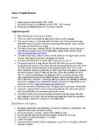
Britain History Pre-Norman Britain The Iberians brought their metal-working skills and the first real civilization to Britain in the third millennium B.C and were overrun by various Celtic invasions that began in the 8th century. The Celts introduced their tribal organization and an early form of agriculture before they were forced westward by the Roman invasion. Forms of Celtic language are still spoken in Britain. Romans (with Julius Caesar in the head of them) first tried to occupy Britain in 55 B.C., but there was a rebellion in Gaul so they had to leave to fight against it. Next time they came in 43 A.D. and their leader was Emperor Claudius. Romans brought a lot with them. Their brought paved roads, the sites of important cities, the seeds of Christianity, the Roman law, Roman baths, language and advanced civilization. They also built Hadrian's Wall in 122 A.D. Romans occupied...
The Middle Ages The Middle Ages are one of the most turbulent periods in English history. The Middle Ages are so called as the middle period between the decline of the Roman Empire and the Renaissance. The Middle Ages started in 1066. with the Battle of Hastings and the Norman Conquest. William the Conqueror took all the lands from the Saxon English and gave these to French nobles. Normans were known as great builders. This is assured by the fact that many great castles and other buildings, including the Tower of London, were built during the Norman Conquest. In 1086. Domesday Book was compiled. It is a detailed survey of England ordered by William the Conqueror. The reign of King William Rufus who was the son of William started in 1087 and lasted until 1100. Next king was Henry I who was the brother of William Rufus. His reign was from 1100-1135. In 1135 Henry I nephew Stephen got to the throne of Engla...
The Germanic Invasions Anglo-Saxon invasion During the 5th c. a number of Germanic tribes invaded The Angles, the Saxons, the Jutes Different peoples, but common language and customs Advance halted by King Arthur Distortions of popular history In folklore, myth (and films) a great English hero, an example of medieval nobility and chivalry In fact a Romanized Celt, lived before medieval times, fought the Anglo-Saxons (people who became "the English") Predominated by the end of the 6th c. Kingdoms established: Wessex, Essex, Sussex, Mercia, Northumbria, East Anglia etc. Kingdoms constantly at war with each other Celtic culture and language survived in Scotland, Wales and Cornwall Anglo-Saxon lifestyle A great impact on the countryside Introduced new farming methods Established numerous villa...
History of Football Forerunners of football The creation of football as we understand it today is geographically confined to British shores, but there is extensive evidence of ancient games with the same basic principles as the modern day incarnation. The first of these was identified as part of Shang Dynasty China in the 5th century BC, the game's objective being to kick a leather ball through a hole in a piece of cloth which between two 30 foot poles. The Tsu'Chu military exercise in 3rd century China was also an interesting elaboration on this theme; the premise once again being to kick a leather ball through a 30-40 centimetre opening. As the Tsu'Chu exercise lacked the central team element of today's football, attention has also been given to the Greek and Roman games of episkyros and Harpastum respectively. The latter is particularly interesting as a game played on a rectangular grass surface wi...
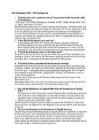
1.Who were the Normans and what did they bring with them? The normans were the people who in the 10th and 11th centuries gave their name to Normandy, a region in France. 2.How long did the Norman period last in the British Isles? 1066-1154 3.How did the Norman Conquest take place and what were the events leading to this? Edward the Confessor died and the throne was seized by his leading aristocrat, Harold Godwinson, who was crowned. Almost immediately, Harold faced two invasions - one from the king of Norway, Harald Hardrada, who was supported by Harold Godwinson's brother Tostig, and the other from William, Duke of Normandy. Harold defeated the Norwegian invasion at the Battle of Stamford Bridge in September 1066, but he was defeated and killed shortly afterwards at the Battle of Hastings. The victorious William claimed the throne. 4.What is Domesday book all about ? William the Conqueror started recording England, because he wanted...
Vikings and Norman invasion, Jorvik Centre in York Who were normans? · They were descended from norse vikings. · Norman means norseman or viking. · They played a major political, military, and cultural role in medieval Europe. Invasion to England · The Norman conquest of England began on 28 September 1066 with the invasion of England by William, Duke of Normandy. · The Norman conquest largely removed the native ruling class, replacing it with a foreign, French-speaking monarchy. Battle of Hastings · The Battle of Hastings occurred on 14 October 1066. · Norman-French army was lead by Duke William II and the English army was lead by King Harold II. · The famous Bayeux Tapestry depicts the events before and during the battle. Bayeux Tapestry Jorvik Centre in York · Jorvik Centre in York is a museum and visitor attraction. · Well-preserved remains of some of...
Literature of the 14th century The highpoint of medieval literature, the best writer of late medieval lived then. William Langland 1332-1376 the last important poet of alliterative verse. His masterpiece "The Vision of Piers Ploughman" how important working hard is, the labour of peasants is the base of the welfare of the people. A passionate protest against social injustice. A time when peasants were slowly rising against their feudal lords. Descriptions of different social classes. Religious mysticism. Two great principles: 1) all men are equal before God; 2) honest labour is dignified. It is a dream allegory. A young maiden named Youth, Greed is an old witch. The greatest writer of this period and the whole of medieval times Geoffrey Chaucer (1340?-1400): · The father of English poetry · The creator of English versification · The first poet to use various metres · Laid the foundation of the new literary English ...
The Medieval period The Middle Ages began in 1066, when the Normans defeated Anglo-saxons at the Battle of Hastings. Now England had a Norman king William the Conquer. Norman kings ruled in England less than 100 years, during that time Normans brought England closer to the mainstream of European society. William introduced the feudalism. Under it, land was divided among noble overlords, or barons. Knights pledged their wealth and services to the overlords. In return overlords let them use their land. At the lowest end of the social scale were the serfs, peasants bound to the land. In 1154 the Norman time was at the end. In 1154 Henry II started to reign. Henry II was the king who increased royal power at the expense of nobles. His desire to control the Roman Catholic Church in England led to the murder of T. Becket. Richard I has become a model of a true knight. John(Richards brother) gained a weak, even villainous ruler. 1215 he signe...
History of English literature Periods: 1. Anglo-saxon or early literature (499 - 1066) 2. Second or Norman or late Medieval period (1066 - 13/14 century) 3. Renaissance or Modern period (13-14 century present) Anglo-Saxon period · All of the literature had its roots in folklore · Texts were orally transmitted, the anglosaxons had no written language · Two types of singers: 1) scop (attached to the royal court, wrote poetry and songs, performed them); 2) gleeman (travelled, mostly sang other peoples' songs, not their own songs; performers of scop songs) · The oldest known song Widsith (The Far Traveller/Wonderer); tells of a gleeman who travels in Europe, of his love of noble deeds, speaks of the shortness of life http://en.wikipedia.org/wiki/Widsith · The other known song Deor's Lament. Can be called the first English lyrics, about 40 lines. Talks about a scop who is not happy w...
The Renaissance 1500 1650: background 1. What does the word ,,renaissance mean? Characterize briefly the period called the Renaissance. "The rebirth" from French Renaissance, meaning "rebirth"; Italian: Rinascimento, from re- "again" and nascere "be born") Rebirth of scholarship based on classical learning and philosophy. The Renaissance was a cultural movement that spanned roughly the 14th to the 17th century, beginning in Italy in the late Middle Ages and later spreading to the rest of Europe. It encompassed a revival of learning based on classical sources, the development of linear perspective in painting, and gradual but widespread educational reform. (wikipedia)Bridge between Medieval Ages and Modern Era. 2. Where did the Renaissance start and why? In the opening years of the 14th century, there began to develop in Italy and increasing interest in the manuscripts that had surviv...
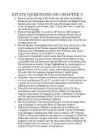
STUDY QUESTIONS ON CHAPTER 3 · Battle of Stamford Bridge 1066- Battle, that took place on Stamford Bridge between Norwegians who were led by Harald and England (king Harold Godwinson). During the battle many Norwegian leaders were killed. Norwegians lost the battle, and it is very often taken to mark the end of the Viking Age. · Battle of Hastings 1066- Occurred on 14th October 1066 during the Norman conquest of England, between the Norman-French army of William the Conqueror and the English army under king Harold II. During the battle Harold was killed and the Normans won. It was the end of Anglo-Saxon era. · Bayeux Tapestry- Embroidered cloth nearly 70m long, which depicts the events leading up to the Norman conquest of England concerning William, Duke of Normandy and Harold, Earl of Wessex, later king of England and culminating in the battle of Hastings. · Debate poem- ...
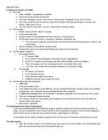
HISTORY TEST 5 invasions to Britain until 1066 1) The Celts o Gaels in 600BC; Cymry(Britons) in 300BC o From present-day Austria, Switzerland o The Celtic language survives in the names of many places in England- Dover, Kent, Thames o The Celts are best known for their art- many bronze objects with elaborate designs; brooches; pins; mirrors; Celtic stone crosses o The Celts had 3 social orders: warriors, druids(priests) ordinary people 2) The Romans o (55 BC-Caesar) 43 AD- 410 AD- Claudius o From present-day Italy o Southern Britain became Britannia and was ruled by a roman governor o The Romans built over 20 towns: Colchester, Londinium, Winchester etc. They were good engineers and built roads and villas that had central heating, glass windows and mosaic floors ...
Medieval England 1066-1485 Eva Asper Anna Pohlak 11.c The Norman Dynasty The Norman Conquest In the 11th century, Normans conquered England - The Battle of Hastings 14.10.1066 The Anglo-Saxon forces had more soldiers but the Normans had better military tactics and won in the end thanks to a clever strategy William I, also known as William the Conqueror, replaced King Harold on the throne The invasion was completed by 1071 - The Norman invasion is depicted on the Bayeux Tapestry a long embroidered cloth The death of King Harold embroidered on the Bayeux Tapestry The Norman England William I ensured his power by dividing the land into parts and making 1/7 of it a royal domain He made his nobles swear an oath of allegiance and become his vassals Died in 1087 while fighting in France, was succeeded by his third son, William...
The Tower in the Middle Ages The Tower of London, that formidable symbol of England's national heritage, served as a royal residence as well as a prison in the medieval period. The monarch traditionally spent the night at the Tower prior to his or her coronation ceremony at Westminster Abbey. It has been the stage on which much of England's dramatic but often sad and bloody saga of royal history has been played out. The founding of the Tower The Tower of London was founded by King William the Conqueror. After his coronation on Christmas Day, 1066, William hastily ordered the erection of a wooden fortress between the Thames and the ancient Roman wall which then surrounded London. William began the building of what is now termed as the White Tower ten years later. A rectangular stone keep of Caen stone, designed as an impregnable fortress and as an impressive and awesome demonstration of his power to the Londoners. With ramparts which wer...
England Sightseeings Stonehenge Is a prehistoric monument located in the English county of Wiltshire, about 3.2 kilometres (2.0 mi) west of Amesbury and 13 kilometres (8.1 mi) north of Salisbury. The dating of cremated remains found that burials took place as early as 3000 B.C, when the first ditches were being built around the monument. One of the most famous prehistoric sites in the world. The site and its surroundings were added to the UNESCO's list of World Heritage Sites in 1986 in a co-listing with Avebury henge monument, and it is also a legally protected Scheduled Ancient Monument. Biggest stone is press 26 ton. Cambridge'is College was founded in the 13.century. this is world oldest ang the best collage. Oxford college Is founded in 1379. The College's motto, created by William of Wykeham, is "Manners Makyth Man" Lake District Also known as The Lakes or Lakeland, is a rural area in Nor...
William the Conqueror (~1028-1087) · Was born in Falaise , Normandy. It's not exactly known when William born but it is is believed to have been born in either 1027 or 1028.He was son of Robert I , the Duke of Normandy. He was known as "William the Bastard" because of the illegitimacy of his birth. · Duke of Normandy from 1035. By his father's will, William succeeded him as Duke of Normandy at age seven. He was knighted by Henry at age 15. By the time William turned 19 he was successfully dealing with threats of rebellion and invasion. · King of England from 1066 to his death. Upon the death of the childless Edward the Confessor, the English throne was fiercely disputed by three claimants--William, Harold Godwinson, the powerful Earl of Wessex, and the Viking King Harald III of Norway, known as Harald Hardraada. Ba...
The black Death(1340s) Laura Runthal Overview Originated in 1338 in Kyrgyzstan. It spread by way of the Silk Road or by ship to Europe. By the end of 1346 it had reached the seaports of Europe. In 1348 the disease spread northwest across Europe, including England. It killed between 75 and 200 million people by current estimates. The Black Death was one of the most devastating pandemics in human history, peaking in Europe between 1347 and 1350. The speed with which the disease could kill was terrifying to population of the medieval world. Infected people can spread the disease through the air by coughing, sneezing, or just breathing! When there was a infected in the house, a red cross was painted on the door. Because of black spots, the disease was called the black death. Nowadays we know it is bubonic plague The dead bodie...
Medieval literature Religious literature- mostly written in church languages(Latin, Greek, Old Slavic) Secular literature- written in vernacular languages as well 6th -15th century Anonymity Religious writing Liturgical writing-hymns, psalms Theological writing-aquinas, abelard etc Religious poetry Mystery plays-reenactment of bible stories Secular writing Troubadour writing:"courtly love", romance Epic poem(song of roland) Travel writing History writing-chronicles Allegory The use of symbols and analogy to convey a certain meaning /message Literary output of medieval English Anglo-saxon or Old English literature(7th century-1066) Middle english literature(12th century-15th century) End of the period:1470s chancery standard(regulating english) and onset of renaissance Middle English literature Written in many dialects in early period 14th century Middle english was used for majority literary works...
LANDMARCS HYDE PARK: Hyde Park is one of the largest parks in central London, England and one of the Royal Parks of London, famous for its Speakers' Corner. The park is divided in two by the Serpentine. The park is contiguous with Kensington Gardens; although often still assumed to be part of Hyde Park, Kensington Gardens has been technically separate since 1728, when Queen Caroline made a division between the two. THE TOWER OF LONDON: Her Majesty's Royal Palace and Fortress, more commonly known as the Tower of London (and historically as The Tower), is a historic fortress and scheduled monument in central London, England, on the north bank of the River Thames. It is located within the London Borough of Tower Hamlets and is separated from the eastern edge of the City of London by the open space known as Tower Hill. It is the oldest building used by the British government. [1] TOWER BRIDGE: Tower Br...
Martin Lawrence Life story Date of Birth: 16 April 1965 Birth Place: Frankfurt-am-Main, Hessen, Germany Nationality: German Education: Eleanor Roosevelt High School, Landover, Maryland Family Mother: Chlora Lawrence Two sisters: Ursula Lawrence (born in 1966; runs Lawrence's fan club), Rae Proctor (Lawrence's personal assistant) Brother: Robert Lawrence Father: John Lawrence (served in the US military; worked as a police officer at the time) His parents divorced in 1973. Career His is an American actor, comedian, director and producer. Became famous during the 1990s, Hollywood leading actor. Lawrence moved to Los Angeles and found his way to the legendary comedy club. Awards: 4 wins & 10 nominations Personal life He married Patricia Southall. They divorced in September 1996. Lawrence has a daughter with Patricia named Jasmine Page, born o...
History of Great Britain Prehistory (55BC) no written records 6th 3rd c. BC the Celts came to British isles hill figures, hill forts, stone circles ( Stonehenge ) RomanBritain (55BC 400AD) Julius Caesar, named the country Albion Hadrian's Wall, villas, roads, the town of Bath The AngloSaxon, Danish and Norman invasions Germanic tribes settled and stayed Anglia Christianity was brought, religion became important, churches were built 8th century = raids by the Vikings and the Danes 1016 1042 : Under Danish rule ( York was the capital ) 1042 : local AngloSaxons regain their rule 1066 : Normans arrive ( the Norman conquest ) Medieval Britain (106615th c.) the Battle of Hastings William the Conqueror a new AngloNorman state the feudal system introduced the rule of the king and church strengthened centralised country, military rule Scotland, Wales and Ire...
Anglo-norman period (1066-1300) The normans · The name derives from "the Northmen" · Descendants of the Vikings · Seized the north-western part of France · The area known as Normandy · Adopted French customs and Christianity · Norman-French (their version of French). 1066 · Edward the Confessor dies in January · Harold Godwinson crowned as king in Westminster Abbey on the same day · Another candidate for the throne William, Duke of Normandy · Gathered an army · Invasion delayed (bad weather) · Harald, king of Norway, invades England from the North · A battle at Stamford Bridge · Harald's army defeated, leaders killed · The end of the Viking Age · The Normans land in Britain (a few days after Stamford Bridge) · The Battle of Hastings · Harold defeated ...
1. What are the capitals of the 4 constituent countries? England- London; Northen Ireland- Belfast; Scotland- Edinburgh; Wales- Cardiff 2. Order the invaders in correct chronological order: Anglo-Saxons, Normans, Romans, Celts. Romans Anglusaxons , Norman 3. How did the Celts influence Britain? Language. Wars. Engand and Scotland eventually became 1 contry 4. How many people approximately speak English? Approximately 600 million 5. Who (which tribes) gave the base of the English language?Germanic tribes- Anglo-Saxons. 6. Describe Wales.- Wales is a mountainous country on the western side of Great Britain. The national game of Wales is Rugby. Flag- Red dragon on a green and white field. They have their own language Cymraeg ( Welsh) . Anthem- Land Of My Fathers. Official animal- Dragon. There used to be a lot of coalmines. 7. What are the symbols of the 4 constit...
The United Kingdom The United Kingdom consists of England, Scotland, Wales and North Ireland and it is situated in the Atlantic Ocean near the mainland of Europe. The population of the UK is 58.6 million and area is 244,110 sq km. Britain has a temperate humid climate. Its characteristic features are mild winters, warm summer, no temperature extremes, abundant rain all year round and frequent changes of weather. The mild climate is partly due to the warm Gulf Stream and partly to the south westerly winds. Occasional winds from the east in winter may bring cold and dry weather. The distribution of rainfall is influenced by the Atlantic Stream. The mountainous areas of the north and west have more rain than the lowlands of the south and east. Wales is located on a peninsula in central-west Britain. The entire area of Wales is about 20,779 km². Wales borders by England to the e...
The Renaissance Between 14th and 16th century in Europe From French word rebirth It was an age of growth in Europe. New, powerful city states emerged. A new middle class had more and more money to spend. Great artists, writers and thinkers lived during this time. During the Middle Ages many people who lived in the countryside worked on the land that they got from the noblemen. In return, they were protected by them Between the middle and the end of the 14th century, the plague, also called "Black Death" killed almost half of Europe's population. It spread most rapidly in the larger cities where many people lived. This led to economic depression. When the plague slowly decreased in the 15th century, the population in Europe began to grow. A new middle class emerged --bankers, merchants and trades people had a new market for their services. People became wealthier and had more than enough money to spend. They bega...
London important sights guide Roman period 20th century · Big Ben is the nickname for the great bell of the clock at the north end of the Palace of Westminster in London and is often extended to refer to the clock or the clock tower as well. It is the largest four-faced chiming clock and the third-tallest free-standing clock tower in the world. The clock first ticked on 31 May 1859. The pendulum is installed within an enclosed windproof box sunk beneath the clockroom. It is 3.9m long, weighs 300 kg and beats every 2 seconds. The clockwork mechanism in a room below weighs 5 tons. · Buckingham Palace is the official London residence of the British monarch. Originally known as, the building which forms the core of today's palace was a large townhouse built for the Duke of ...
Topic London Tallinn English College Tallinn 2007 1. Introduction London is the capital city of the United Kingdom and the largest urban area in England. The ancient City of London, to which the name originally belonged, still maintains its medieval boundaries, but the name "London" has long applied more to the whole metropolis that has grown up around it. London has been an important settlement for over two millenniums. It is also one of the world's leading business, financial and cultural centres and its influence in politics, education, entertainment and even fashion contribute to its status as a major global city. London is a major tourist attraction with four world heritage sites, several royal parks and numerous iconic landmarks such as the Houses of Parliament, Towe Bridge, the Tower of London, Westminster Abbey and the London Eye. 2. History Although there is some evidence of a permanent settle...
kool Research work Styles in interior design nimi TALLINN2010 Interior design is a multifaceted profession in which creative and technical solutions are applied within a structure to achieve a built interior environment. The interior design process follows a systematic and coordinated methodology, including research, analysis, and integration of knowledge into the creative process, whereby the needs and resources of the client are satisfied to produce an interior space that fulfills the project goals. Baroque Baroque (pronounced /brok/ b-ROHK in American English or /brk/ in British English) is an artistic style prevalent from the late 16th century to the early 18th century in Europe.[1] It is most o...
Contents Introduction...................................................3 London's early history.....................................45 The people of London......................................6 Buildings and bridges......................................7 Intruduction London is the capital of the united kingdom (UK), which is made up of Great Britain(England, Scotland, Wales) and Northern Ireland. The city lies in the southeast of England and covers an area of about 1,578 square kilometres on either side of the River Thames. With population of seven million, London is by far the largest city in the UK. Birmingham, the second largest, has just over one million inhabitants. Cultural life London is the worldclass centre. It has more than40 theatres, where audiences enjoy everything from musicals to William Shakespeare's plays. The city also ...
The UK & London The United Kingdom (or the UK) is a short way of saying the United Kingdom of Great Britain and Norther Ireland. The UK is situated north-west of the European continent between the Atlantic Ocean and the North Sea. The UK consists of England, Wales, Scotland and Northern Ireland. Its highest point is Ben Nevis in Scotland followed by Snowdon in Wales. The Severn is the longest river in the United Kingdom. Other important rivers are the Trent, the Mersey, the Tyne, etc. Lough Neagh which lies in the centre of Northern Ireland is thr UK's largest freshwater lake. The climate in the UK is variable. The weather changes so frequently that it is difficult to forecast. It is not unusual for people to complain that the weathermen were wrong. Fortunately there is no extreme weather conditions, it is never very cold or very hot. The first inhabitants were Iberians and Celts who sett...
Ireland Famous Irish people Maureen O'Hara Niall Horan · Born on August 17, · Born on September 13, 1920, in Ranelagh, 1993, in Mullingar, Ireland County Westmeath, · On October 24, 2015, Ireland O'Hara died in her sleep · Is best known as the only in her Boise, Idaho home at the age of 95 Irish-born member of the boy band One Direction · She was an Irish-born actress who was billed alongside Hollywood's leading men Famous Irish people Maureen O'Hara Niall Horan Culture of Ireland · The national holiday in · The Leprechaun has the Republic of Ireland been estimated to figure is Saint Patrick's Day to a large degree in Irish · Christianity in the form folklore of both Roman · Other pre-Christian Catholicism and festivals, whose names Protestantism is...
Report of SCOTLAND Maiki Joakit 10. klass 2008 Etymology Scotland is from the Latin Scoti, the term applied to Gaels. The Late Latin word Scotia (land of the Gaels) was initially used to refer to Ireland. By the 11th century at the latest, Scotia was being used to refer to (Gaelic-speaking) Scotland north of the river Forth, alongside Albania or Albany, both derived from the Gaelic Alba. The use of the words Scots and Scotland to encompass all of what is now Scotland became common in the Late Middle Ages. History Repeated glaciations, which covered the entire land-mass of modern Scotland, have destroyed any traces of human habitation that may have existed before the Mesolithic period. It is believed that the first post-glacial groups of hunter-gatherers arrived in Scotland around 12,800 years ago, as the ice sheet retreated after the last glaciation. Groups of settlers began building the first known permanen...
History exam *Stonehenge - is a monument located in England. It is one of the most famous prehistoric sites in the world and is composed of earthworks surrounding a circular setting of large standing stones. The surrounding circular, earth bank and ditch, have been dated to about 3100 BC. Stonehenge was produced by a culture with no written language. Many aspects of Stonehenge remain subject to debate. There is little or no direct evidence for the construction techniques used by the Stonehenge builders. *The Celts in Britain and their legacy The Cets lived in Britain in The Iron Age. They were warring tribes who were battleful amongst themselves as well as inter-tribal war. They were not centrally governed. The Celts brought iron working, iron ploughs and metal swords, horses, wheels and chariots - all these things gave them an instant superiority over the native tribes. The Celts built a number ...
Revision questions for the test on Old English and Medieval Literature. 1.) How is literature analysed and studied? What is the difference between the diachronic and synchronic view? Literature is studied and analysed by reading the piece of work profoundly and work on all the aspects of the piece. Diachronic is development in history Synchronic is particular state at any given moment 2.) Give a general overview of Celtic Britain, Roman invasion in 55-54 BC, Anglo-Saxon invasion and the second Roman "invasion" of Great Britain, who were the leaders, what influence did they leave on the culture of Great Britain? Celtic Britain was during the Bronze Age, there were many small tribal kingdoms fighting one another. Many megalithic monuments were built around that time, e.g. Stonehenge, the Avebury ring. The Roman Invasion 55-54 BC, Julius Caesar ruled Rome, Rome built the Hadrian's wall (73 miles long, built in 121 127 AD) agains...
William Shakespeare (1564-1616) playwright, actor, poet 37 plays, over 400 screen adaptions Lord Chamberlain's Men, King's Men, The Globe Early life: John Shakespeare, Mary Arden, 2 sis', 3 bros; married Anne Hathaway 3 children Life in London: 1599 built Globe, 1623 first compilation Forms: classical & history plays, comedies+tragedies, poetry Style: metaphors, rhetorical phrases, free flow of words, unrhymed iambic pentameter; deviations Renaissance (end of 14th century) Italy, reaches rest of Europe Elizabethan era (16th II h - 17th I h) Theatre: combined medieval theatre, morality plays & Roman drama to create Elizabethan tragedy Poetry: Italian influences, sonnet (English: cddc ee) Rulers of England: Henry VII (brings prosperity, repairs economic situation; made alliances); Henry VIII (beginning of English reformation; killed "traitors"; 6 marriages); Mary I (Catholic); Elizabeth I (The Virgin Queen restores order; Religiou...
London is the capital of both England and the United Kingdom, and the largest metropolitan area in the European Union. An important settlement for two millennia, London's history goes back to its founding by the Romans. Since its foundation, London has been part of many movements and phenomena throughout history, including the English Renaissance, the Industrial Revolution, and the Gothic Revival.The city's core, the ancient City of London, still retains its limited medieval boundaries; but since at least the 19th century, the name "London" has also referred to the whole metropolis that has developed around it. Today the bulk of this conurbation forms the London region of England and the Greater London administrative area, with its own elected mayor and assembly. London is one of the world's most important business, financial and cultural centres and its influence in politics, education, entertainment, media, fashion and the arts contri...
Country Study Mari-Liis Luukas 11c The British Isles Administrative / d'mnstrtv / haldus- Self-governing / self'gvn / isemajandav, iseseisev Legislative assembly/ 'ledsltv 'sembl/ seadusandlik kogu The British Isles is the name of a group of islands washed by the North Sea in the east and the ...
British history Roman Britain Roman Britain was those parts of the island of Great Britain controlled by the Roman Empire between 43 and about 410. The Romans referred to their province as Britannia. Prior to the Roman invasion, Iron Age Britain already had cultural and economic links with Continental Europe, but the invaders introduced new developments in agriculture, urbanization, industry and architecture, leaving a legacy that is still apparent today. Historical records beyond the initial invasion are sparse, although many Roman historians mention the province in passing. Most of the knowledge of the period stems from archaeological investigations and especially epigraphic evidence. The invasion force in AD 43 was led by Aulus Plautius.It is not known how many Roman legions were sent; only one legion, the II Augusta, commanded by the future emperor Vespasian, ...
Architecture Early Anglo-Saxon buildings in Britain were generally simple, constructed mainly using timber with thatch for roofing. The Anglo-Saxons built small towns near their centres of agriculture. In each town, a main hall was in the centre. The architectural character of Anglo- Saxon ecclesiastical buildings range from Coptic influenced architecture in the early period; basilica influenced Romanesque architecture; and in the later Anglo-Saxon period, an architecture characterised by pilaster-strips, blank arcading, baluster shafts and triangular headed openings. There are few remains of Anglo-Saxon architecture, with no secular work remaining above ground. All surviving churches, except one timber church, are built of stone or brick and in some cases show evidence of re-used Roman work. Art Anglo-Saxon art is mainly known today through illuminated manuscripts. Although they are the most well known to have survived. Perhaps the bes...
Teaduslik revolutsioon 15431600 I One of the most important developments in the western intellectual tradition was the Scientific Revolution. The Scientific Revolution was nothing less than a revolution in the way the individual perceives [ tajub ] the world. As such, this revolution was primarily an epistemological revolution it changed man's thought process. It was an intellectual revolution a revolution in human knowledge. Even more than Renaissance scholars who discovered man and Nature, the scientific revolutionaries attempted to understand and explain man and the natural world. Thinkers such as the Polish astronomer Nicholas Copernicus(14731543), the French philosopher René Descartes(15961650) and the British mathematician Isaac Newton(16421727) overturned the...
London is the capital of both England and the United Kingdom, and the largest metropolitan area in the European Union. An important settlement for two millennia, London's history goes back to its founding by the Romans. Since its foundation, London has been part of many movements and phenomena throughout history, including the English Renaissance, the Industrial Revolution, and the Gothic Revival. The city's core, the ancient City of London, still retains its limited medieval boundaries; but since at least the 19th century, the name "London" has also referred to the whole metropolis that has developed around it. Today the bulk of this conurbation forms the London region of England and the Greater London administrative area, with its own elected mayor and assembly. London is one of the world's most important business, financial and cultural centres and its influence in politics, education, entertainment, media, fashion and the arts cont...
1) General facts The UK: * the United Kingdom of Great Britain and Northern Ireland was formed in 1801 * it covers 243,610 sq km * everybody from the UK is called British * the capital city is London * is made up of four constituent countries: England, Scotland, Wales and Northern Ireland which in turn are divided into counties * the flag is called the Union Jack which is a combination of the flags of England, Scotland and Northern Ireland * the population is about 60,000,000 people, the population density is 242 people/sq km * its coasts are washed by the Atlantic Ocean, the North Sea, the English Channel, the Celtic Sea, Saint George's Channel, and the Irish Sea. It is linked to France by the Channel Tunnel * the United Kingdom is a constitutional monarchy. The current monarch is Queen Elizabeth II, who is also the Queen and Head of State of fifteen other Commonwealth Realms, such as Can...
THE PRE-RAPHAELITES The PRB was formed in 1848 in London and it was an association of painters, poets, critics, sculptors. It was founded by three Royal Academy students who wanted to brake free from the academic art and return to the moral and descriptive truthfulness that they felt was gone from art. (The Royal Academy of Arts is and institution with a purpose to promote the creation, enjoyment and appreciation of the visual arts through exhibitions, education and debate.). The founders were William Hunt, John Millais, Dante Rossetti. Because of the fact that they were all students they were also very young- the oldest one, Hunt, was 21. They were soon joined by William Rossetti(critic), James Collison(painter), Frederic Stephens (critic), Thomas Woolner(sculptor). The three youthful Pre-Raphaelites deliberately challenged the established view of art, drawing up a manifesto of their intentions and publishi...
London History The Romans AD 43- AD 410 The Romans finally invaded Britain in AD 43 from Kent. The Romans lead by Julius Caesar attempted to invade Britain twice before that in 55 and 54 BC but the invasions were unsuccessful. They made their way to the river Thames and sailed up it. The Romans knew it was important to control a crossing point at the river Thames, so they decided to build a settlement on the north bank. Although small settlements had been built on the banks of the Thames, the Romans were the ones who built the first city. They called their city Londinium. The Roman engineers noticed that the point where the swampy river narrowed would make an ideal crossing point, they built London Bridge. Less than 20 years later the native Iceni tribe, led by Queen Boudicca, rose up against the Romans in revenge for mistreatment and burnt Londinium to the ground. The well disciplined Roman army defeated her forces and Londinium was r...
English literature is one of the oldest literatures in Europe; dates back to the 6th century AD. Oral literature, i.e. not written down, spread from person to person. In 449 AD Anglo-‐Saxon tribes invaded England – beginning of the Anglo-‐Saxon period in English literature. The first form of literature was folklore, carried by scops and gleemen, who sang in alliterative verse (a kind of simple poetry). Prose developed much later. The first form of recorded English literature was the epic Beowulf, which was produced sometime near the end of the 7th and beginning of the 8th century. It has no ...
Suppletion Present in languages of different families. Present in Old, Middle and Modern English, though the general tendency is towards more regularity/iconicity so the number of suppletive forms has decreased.In the text: goon to go wenden - to turn Gan was suppletive in Old English, past form: eode.Eode was supplanted by went (past form of wenden) at the end of the Middle English period.To wend has survived in Modern English in phrases such as to wend one's way, we wended homewards (ironic usage). Thus: suppletivity- suppletion different parts of one and the same paradigm come from what were originally different paradigms (different words with close meanings or words in different but close dialects).Suppletion embraces verbs, adjectives, nouns. Be was/were been (Old English beon/wesan) (am, art, is, are); in Old English some suppletive forms were used parallel to one another) Good better best Bad worse worst Much more...
1. Beowulf. The dating of Beowulf is still controversial. The poem is one of the earliest and greatest monuments of the Germanic literatures. The main stories of the poem (the fights of B.) are versions of common folk-tales, but the poet also introduces many incidental stories, some of which belong to the world of ancient Germanic legend. He writes his folk-tales and legends in a web of other events, mainly set in the Baltic Kingdoms. He shows a very rich and leisurely portrayal of this Baltic world, providing many customs like the close relationship between lord and man in the war-band and others. All this encouraged the supposition that the unknown author of the poem was himself a bard of the ancient type portrayed within the poem (a lord's scoop). However, many people propose that the author could be Christian poet, perhaps a monk, versed not only in old native traditions, but also in the culture and literatur...
1. Ancient Britain: the Celtic tribes. 2000 years ago there was an Iron Age Celtic culture throughout the Br Isles. It seems that the Celts, who had been arriving from Europe from the 8th cent BC onward, intermingled with the peoples who were already there. The Celts were extremely talented people, creative and artistic. More than 1 Celtic tribe invaded Br. The descendants of ancient Celts live in Wales, Scotland, Cornwall and Ireland. They lived in primitive society. Druids priests, more powerful than chiefs. Acted like prophets. 2. Stonehenge From prehistoric period. Was built on Salisbury plain between 2500 and 1500 bc. One of the most famous and mysterious archaeological sites in the world. One of the mysteries is how it was built at all with the technology of the time. Another is its purpose. It appears to function as a kind on astronomical clock and we know it was used by the Druids for ceremonies marking the passing ...
ENGLISH LITERATURE Ancient Britain Lived on the British Isles in the 1st millenium. They most probably came from Eastern Europe and belonged to the Celtic race and also spoke Celtic. They were primitive hunters- gatherers, farmers. Some Celtic words are still used in modern English, however they are used mostly in place names. For example: · avon river · cumb valley · ford shallow place in the river Ancient Britons had their own religion and priests or druids and temples. In the year 55 BC Britain became a Roman province. Romans were highly developed and had their own language latin, which has also greatly influenced English. The military occupation of the Isles ended in 410 AD. The Romans eventually brought Christianity to Britain. Hadrian's wall on the border of Scotland and England. It began constru...
Changing the Guard · Perhaps the epitome of London's surviving pageantry can be found in the ceremonial Changing of the Guard. · A hugely popular spectacle, the Changing of the Guard takes place at a range of royal locations in and around · London daily during the summer and on alternate days for the rest of the year. · There is no ticketing, so make sure you get there early. · Ever since 1660 Household Troops have guarded the Sovereign Palaces. · The Palace of Whitehall was the main residence until 1689 and was guarded by the Household Cavalry. · The court moved to St James's Palace in 1689 and when Queen Victoria moved into Buckingham Palace the Queen's Guard remained at St James's Palace and a detachment guarded Buckingham Place, as it does today. Trooping the Colour · Often cited as the ceremonial event of the year, the Troopi...
 annaabi.ee