Leidsid 33 sarnast õppematerjali, mis on seotud failiga "Inglismaa valitsejad". Need materjalid aitavad sul teemat sügavamalt mõista.
king, henry, queen, richard, mary, 1154, 1189, 1199, 1471, 1547, 1553, elizabeth, 1603, 1685, 1727, 1760, 1837, 1910, england, normannid, 1087, stephen, keisrinna, matilda, lõvisüda, york, tuudorid, jane, grey, 1554, stuartid, 1649, juneMedieval England 1066-1485 Eva Asper Anna Pohlak 11.c The Norman Dynasty The Norman Conquest In the 11th century, Normans conquered England - The Battle of Hastings 14.10.1066 The Anglo-Saxon forces had more soldiers but the Normans had better military tactics and won in the end thanks to a clever strategy William I, also known as William the Conqueror, replaced King Harold on the throne The invasion was completed by 1071 - The Norman invasion is depicted on the Bayeux Tapestry a long embroidered cloth The death of King Harold embroidered on the Bayeux Tapestry The Norman England William I ensured his power by dividing the land into parts and making 1/7 of it a royal domain He made his nobles swear an oath of allegiance and become his vassals Died in 1087 while fighting in France, was
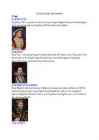
British kings and queens Kings King Henry VIII King Henry VIII is arguably the most well-known king of England. Famous for beheading his wives, of which he had six, King Henry VIII also had several children. King James I King James I was already King of Scotland when he got the English crown. King James I was the first ruler to call himself King of Great Britain, as he ruled England, Scotland and Wales. King James was the first King of Great Britain. King William I, the Conqueror King William I, otherwise known as William the Conqueror was born in France on 1028. He became friendly with the current English King, Edward the Confessor. He invaded and attacked England on Edward's death, as he was promised the English crown, but then denied it by the Saxon Harold. King George VI King George VI did not expect to become king, he was the shy brother of Edward VIII who only took the thrown when Edward abdicated
The Middle Ages started in 1066. with the Battle of Hastings and the Norman Conquest. William the Conqueror took all the lands from the Saxon English and gave these to French nobles. Normans were known as great builders. This is assured by the fact that many great castles and other buildings, including the Tower of London, were built during the Norman Conquest. In 1086. Domesday Book was compiled. It is a detailed survey of England ordered by William the Conqueror. The reign of King William Rufus who was the son of William started in 1087 and lasted until 1100. Next king was Henry I who was the brother of William Rufus. His reign was from 1100-1135. In 1135 Henry I nephew Stephen got to the throne of England and reigned the country for 19 years. He was the last Norman king of England and his reign ended in 1154. From 1154 until 1377 the Plantagenet Kings of England ruled the English. The first Plantagenet King was Henry II. He was the grandson of Henry I
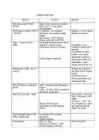
The Roman occupation (AD 43 Londinium not important Boadicea a revolt against - AD 410) politically. An important trading the Roman conquest centre. Devastation AD 61. Rebuilt. Roman walls built in AD 200. Anglo Saxons (AD 400 Destroyed the Roman towns. Many 1066) kingdoms. London in ruins. King Egbert one Flourishing. Attacks by Vikings. kingdom England (the 9th century) King Albert the Great London is the capital Edward the Confessor
Peaminister: Tony Blair. Britannial ei ole konstitutsiooni, riigi põhiseaduseks loetakse seaduste (Parlamendi Aktide), pretsedentide (kohtulahendite) ja konventsioonide kogu. Riigipeaks on monarh, praegu kuninganna Elizabeth II, kes põlvneb otseselt kuningas Egbert'ist, kes valitses Inglismaad 9. sajandi algul. Kuninganna ametlik tiitel on Elizabeth the Second, by the Grace of God of the United Kingdom of Great Britain and Northern Ireland and of Her other Realms and Territories Queen, Head of the Commonwealth, Defender of the Faith. Monarhil on formaalselt küll üsna suur võim, kuid tegelikkuses konsulteerib riigipea praktiliselt kõigi otsuste tegemisel valitsusega. Seadusandvaks organiks on Parlament, mis koosneb Alamkojast ja Ülemkojast. Kuna Britannial ei ole kirjutatud konstitutsiooni, siis ei ole Parlamendil mingeid formaalseid piiranguid otsuste ja seaduste vastuvõtmisel.
väge ja krooniti William I Vallutaja nime all Inglise kuningaks. 13. saj 1215 ,,Suure vabaduskirjaga" (Magna Charta) kitsendati kuninga võimu. 1265 Inglismaal tuli esmakordselt kokku seisuste esinduskogu- kahekojaline parlament. 14. saj 1337 algas Saja-aastane sõda Inglismaa ja Prantsusmaa vahel (kuni 1453). 15. saj 1455-1485 Rooside sõda Lancasteri ja York`i suguvõsade vahel. 16. saj 1534 - Henry VIII pani supremaatiaaktiga aluse anglikaani kirikule. 1558 Inglismaa kuningannaks tõusis viimane Tudorite dünastia monarh Elizabeth I (valitses kuni 1603). 1588 Hispaania Võitmatu Armaada purustati Inglise laevastiku poolt. 17. saj 1603 Inglismaal tõusis troonile soti-päritolu James I Stuartite dünastiast. 1642-1649 kodusõda Charles I toetavate rojalistide ja parlamendi vahel.
väge ja krooniti William I Vallutaja nime all Inglise kuningaks. 13.saj · 1215 ,,Suure vabaduskirjaga" (Magna Charta) kitsendati kuninga võimu. · 1265 Inglismaal tuli esmakordselt kokku seisuste esinduskogu- kahekojaline parlament. 14.saj · 1337 algas Saja-aastane sõda Inglismaa ja Prantsusmaa vahel (kuni 1453). 15.saj · 1455-1487 Rooside sõda Lancasteri ja York`i suguvõsade vahel. 16.saj · 1534 - Henry VIII pani supremaatiaaktiga aluse anglikaani kirikule. · 1558 Inglismaa kuningannaks tõusis viimane Tudorite dünastia monarh Elizabeth I (valitses kuni 1603). · 1588 Hispaania Võitmatu Armaada purustati Inglise laevastiku poolt. 17.saj · 1603 Inglismaal tõusis troonile soti-päritolu James I Stuartite dünastiast. · 1642-1649 kodusõda Charles I toetavate rojalistide ja parlamendi vahel.
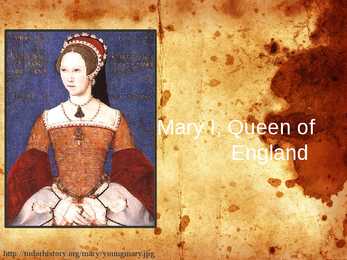
Mary I, Queen of England http://tudorhistory.org/mary/youngmary.jpg Queen Mary I of England Born: 18 February 1516 Proclaimed Queen: 19 July 1553 at St. Paul's Cathedral Coronation: 1 October 1553 Died: 17 November 1558 Buried: 14 Decenber 1558 http://tudorhistory.org/mary/marywhitehall.jpg Mary Tudor The Tudor Britain (1485-1603) Daughter of Henry VIII and Catherine of Aragon Henry divorced Catherine and married Anne Boleyn From "princess" to "The Lady Mary" http://tudorhistory.org/mary/marytudorsig.gif http://tudorhistory.org/elizabeth/signature.gif Catherine of Aragon 16 Dec 1485- 7 Jan 1536 Born in Toledo's Palace, Spain Youngest child Ferdinand and Isabella Married to Prince Arthur: 14 Nov 1501
Oli keeldunud 1207 keeldunud paavsti poolt valitud piiskopi (paavst Innocentius III) Canterbury peapiiskopiks nimetamast. Lepituseks andis ta kõik kuninga valdused Inglismaal paavstile. Jäi maatuks. Maad andis tagasi rendile talle. Üritas Magna Charta’t ka annulleerida. Prantsusmaa invasioon. Saadi enda kätte London ja pool Iirimaad. Johni päästis vaid üks asi. 1216 suri ära. Tal oli troonipärija. 1215. a Magna Carta, Henry III. Kuningal oli piiramatu võim. Siin tuleb mängu antud kiri. 5 Oli 63 artikliline. Sündis väga põletavast sisepoliitilisest kriisist. Aadel oli väga tige maksude ja kohustuste peale, mida John Maata peale surus. Linnadele kinnitati nende vanad privileegid ja nende puutumatus. 4 artiklit on tänaseni
Legacy- new types of animals, plants; miles, feet, inches-roman measurements;christianity; Roman basilica in curches; reading, writing; buildings, roads Christianity in Roman Britain Until 4th C christians were persecuted 313 AD Emperor Constantine legalised christianity 380 AD Emperor Theodosius I made it the official religion of the empire Paganism had been eclipsed but continued to pose a political, religious challenge Boudicca Queen of Iceni people of Eastern England, led an uprising against Roman forces Prasutagus(ruler) was first allowed to rule when romans conquered England, after his death, romans decided to rule Iceni and flogged Boudicca and raped her daughters 60-62 AD Iceni rebelled, Boudicca´s warriors defeated Roman Ninth Legion, destroied capital-Colchester Finally Boudicca was defetated, she poisoned herself to avoid capture Hadrian´s wall
Mary I Mary I, called Mary Tudor (1516-1558), Queen of England (1553-1558). Mary was born in London on February 18, 1516, the daughter of Henry VIII by his first wife, Catherine of Aragón. Because Henry divorced Catherine, Mary was declared illegitimate. Nonetheless, Henry included her in his will, and on the death of her half-brother, Edward VI, on July 6, 1553, she became the legal heir to the throne. Although Lord High Chamberlain John Dudley, Duke of Northumberland, favoured the succession of his daughter-in-law, Lady Jane Grey, and proclaimed her queen on July 10, the country supported Mary. As a Roman Catholic, Mary began her reign by sweeping away the religious innovations of
Elu lõpus paksuke. U. 178 cm pikk William I abikaasa. 1053.a. abiellus Flandria Matildaga. Abielust sündis vähemalt 9-10 last, lisaks lapsed abieluvälistest suhetest. Tower of London. Riigi kindlustamiseks pustitati kindlustusi- Toweri rajamist alustati 1078.a. Asub Thames'i jõe kaldal. Henry VII Olukord Ingl nn Rooside sõda 15. Saj · Nim oli vappidel rooside pärast · Rooside sõda 1455-1485 Lancasteri suguvõsa · Toetajaks suurfeodaalid · Valitseja Henry Tudor · PUNANE ROOS Yorki suguvõsa · Oli võimul · Uusaadlikud ja kodanlased (inteligentsed) · Valitseja sel ajal Richard III, eduakas reformija · VALGE ROOS Lõpp · 1485. A. Bosworthi lahing Henry Tudor lõi Richard III vägesid ning Inglismaal algas Tudorite ajastu · Uus kuningas Henry VII Tudor (1485-1509) · Tudorid olid troonil 118 aastat, absolutistlik monarhia Henry VII Tudor
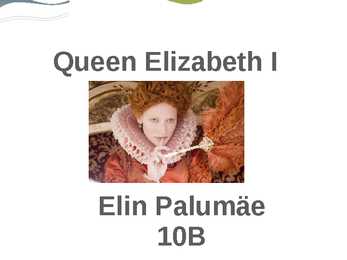
Queen Elizabeth I Elin Palumäe 10B Elizabeth I Reign - 17 Nov. 1558 24 March 1603 (44 years) Coronation - 15 January 1559(25 years) Predecessor - Mary I Successor - James I House - House of Tudor Father - Henry VIII Mother - Anne Boleyn Born - 7 September 1533 Greenwich, England Died - 24 March 1603 (aged 69) Burial - Westminster Abbey Anne Boleyn Queen consort of England Mother of Elizabeth I Tenure - 28 May 1533 17 May 1536 Coronation 1 June 1533 Anne Boleyn was Queen of England from 1533 to 1536 as the second wife of Henry VIII of England and the 1st Marquess of Pembroke in her own right for herself and her descendants. House - House of Tudor Father - Thomas Boleyn, 1st Earl of Wiltshire Mother - Lady Elizabeth Howard Born c.1501/1507 Blickling Hall/ Hever Castle, England Died 19 May 1536 (aged 29-35)Tower of London Religion - Anglican, formerly Roman Catholic King of England Henry VIII Reign - 21 April 1509 28 January House - House of Tudor
Years 1154-1485 Henry I was the first unquestioned ruler. One of the most important kings in the Middle Ages. He had lands in Britain & France. Then the government was the monarch, a person, not a place. He had more land than any pervious king. After his marriage to Eleanor of Aquitaine, he also ruled the lands south of Anjou. His empire stretched from the Scottish border to the Pyrenees. England provided most of its wealth, but the heart was Anjou. Henry II began to regain royal control. During the war some barons had become very powerful. He pulled down some of their castles. He tried to restore law & order. He wanted the same kind of justice to be used everywhere. He appointed his own judges to travel around the country
D. As the century progressed Christianity spread very quickly. Despite official recognition there was no mass conversion to Christianity; worship of the pagan gods and goddesses was not even formally banned until late in the fourth century. *Boadicea/Boudica At his death bed, Boudica's husband left half his possession to the emperor, expecting that this would protect his family. However, his property was confiscated. When Boudica, the queen of the Celts, protested, she was flogged and her daughters were raped. She swept trough Southern Britain with her tribe and tortured every Roman she met. A women having power seemed unnatural to the Romans. She fought back for 2 years, but finally took poison and died. *Hadrian's Wall It was built by the emperor Hadrian and it marked the Northen border of the Roman empire. Hadrian's Wall was built, beginning in 122, to keep Roman Britain safe from hostile attacks from the Picts
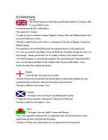
in turn are divided into counties * the flag is called the Union Jack which is a combination of the flags of England, Scotland and Northern Ireland * the population is about 60,000,000 people, the population density is 242 people/sq km * its coasts are washed by the Atlantic Ocean, the North Sea, the English Channel, the Celtic Sea, Saint George's Channel, and the Irish Sea. It is linked to France by the Channel Tunnel * the United Kingdom is a constitutional monarchy. The current monarch is Queen Elizabeth II, who is also the Queen and Head of State of fifteen other Commonwealth Realms, such as Canada, Australia, New Zealand and Jamaica. England: * it has 50 cities, the capital city is London * despite of the density of population and the high degree of urbanisation, England has many unspoilt rural and coastal areas which have been placed under protection * the flag is called the Saint George's Cross Scotland:
Richborough landing, on the river Medway, the second on the Thames. One of the Catuvellaunian leaders, Togodumnus, was killed, but his brother Caratacus survived to continue resistance elsewhere. Plautius halted at the Thames and sent for Claudius, who arrived with reinforcements, including artillery and elephants, for the final march to the Catuvellaunian capital, Camulodunum . The future emperor Vespasian subdued the southwest,Cogidubnus was set up as a friendly king of several territories, and treaties were made with tribes outside the area under direct Roman control.Romans built many roads and also many great bulidings like the Hadrians wall. Anglo-Saxons and Normans The history of Anglo-Saxon England broadly covers early medieval England from the end of Roman rule and the establishment of Anglo-Saxon kingdoms in the 5th century until the Conquest by the Normans in 1066.
The Romans knew it was important to control a crossing point at the river Thames, so they decided to build a settlement on the north bank. Although small settlements had been built on the banks of the Thames, the Romans were the ones who built the first city. They called their city Londinium. The Roman engineers noticed that the point where the swampy river narrowed would make an ideal crossing point, they built London Bridge. Less than 20 years later the native Iceni tribe, led by Queen Boudicca, rose up against the Romans in revenge for mistreatment and burnt Londinium to the ground. The well disciplined Roman army defeated her forces and Londinium was rebuilt. By AD 100 it had also become the capital of the Roman province. A massive wall was built to protect the city from further attacks. The Roman Empire came under increasing attack across Europe and in AD 410 they retreated. The Romans gave us a language based on Latin, the calendar, law and legal system, the
Famous sights and people of England Kaspar Rätsep G1a Famous persons Kings & Queens: Queen Elizabeth I, Queen Victoria, Queen Elizabeth II, Henry VIII Politicians: Winston Churchil, Baroness Margaret Thatcher Writers & Poets: William Shakespeare, Daniel Defoe, Charles Dickens, Rudyard Kipling, Dame Agatha Christie Philosophers &Economists: Francis Bacon, John Locke Inventors & Scientists: Isaac Newton, Charles Darwin Actors,Actresses & Filmmakers: Sir Charlie Chaplin, Dame Elizabethe Taylor, AlfredHitchock, Hugh Grant, Orlando Bloom, KeiraKnightley, Daniel Radcliffe Musicians & Singers: Sir Elton John,Phil Collins,George
A.D. Romans occupied Britain for four centuries. The Roman way of life all vanished after the invasions from Northern Europe by the Angles, Saxons and Jutes from the 5th century onwards. They ruined Londinium, but they were easily turned into Christianity and religion became more and more important. The Vikings, who came in the 9th century, first raided England to plunder it, but then they decided to stay. In the 10th century England fell under Danish Rule, with King Canute finally managing to unite the Anglo-Saxons and Danes at the beginning of 11th century. Medieval England After defeating the Anglo-Saxon King Harold at the Battle of Hastings in 1066, William of Normandy (who became William I, also called William the Conqueror) introduced the Norman feudal system, rewarding his French-speaking followers with land in return for their continued support. French remained the language of the upper classes and administration until the 14th century.
mosaic floors o 122 AD- Hadrian's Wall; 138 AD- Antonine Wall o Druids(celtic priests) were banned and Britain was influenced by christianity 3) The Germanic Invasions I. The Anglo-Saxons o 5th century- 1066 o From Southern Denmark(angles); Germany(saxons); Jutland(jutes) o By the 7th c kingdoms had emerged and later KING ALFRED united the kingdoms o They were pagans and very rural people, built in wood rather than stone o It was the saxon farmstead that laid the foundations of the English village II. The Vikings o 8th century- 11th century o From Denmark, Norway o They were ship builders and sailors o In 886 the Danelaw peace treaty was made
religion became very important. The Vikings settled mainly in Scotland and Ireland, the Danes in the north and east of England. Local Anglo-Saxons lost their power in 1066 to Norman conqueror William the Conqueror. Medieval Britain Centralised / 'sentrlazd / tsentraliseeritud, kesestatud Administration / dmn'stren / valitsus, juhtkond The Normans introduced the feudal system, strengthened the power of the King and the Church. England became a strong country under military rule. The Normans enjoyed absolute power: they built castles and destroyed villages. The main language spoken was Norman French which influenced the development of English. Main Events of the Period Canonised / 'kænnasd / pühakuks kuulutatud Charter / 't:t / üürima, harta Latter / 'læt / viimane, lõpupoolne
7.The Anglo-Saxon Chronicle The Anglo-Saxon Chronicle is a collection of annals in Old English chronicling the history of the Anglo-Saxons. The annals were initially created late in the 9th century, probably in Wessex, during the reign of Alfred the Great. Multiple manuscript copies were made and distributed to monasteries across England and were independently updated. In one case, the chronicle was still being actively updated in 1154. Nine manuscripts survive in whole or in part, though not all are of equal historical value and none of them are the original version. 8. Beowulf Beowulf is the most famous heroic poem (written down 8-9cc) Beowulf is a war-leader from Scandinavia.He rescued the land of the Danes from a man-like monster Grendel. The monster kills the hero.The poet describes the funeral and how warriors mourned their king. 9. The Vikings, their way of life. Sutton Hoo
1. The Queen’s official title. Elizabeth the Second, by the Grace of God, of the United Kingdom of Great Britain and Northern Ireland and of Her other Realms and Territories Queen, Head of the Commonwealth, Defender of the Faith. 2. The Queen’s working day. Starts after breakfast. Reads the newspapers which are prepared by the Press Secretary, and a report on the previous day’s proceedings in the Parliament and the letters she receives. Also phone calls. Once a month she attends the Privy Council in order to give Royal Assent to various items of government legislation. Discusses domestic matters with the Master of the Household.
N. A. Vavilov ASPECTS OF BRITISH HISTORY Н. А. Вавилов КРАТКАЯ ИСТОРИЯ ВЕЛИКОБРИТАНИИ Учебное пособие на английском языке Москва Институт международного права и экономики имени А. С. Грибоедова 2008 2 УТВЕРЖДЕНО кафедрой лингвистики и переводоведения Вавилов Н.А. Краткая история Великобритании: Учебное пособие на английском языке. – 2-е изд., пересмотр. и испр. – М.: ИМПЭ им. А.С. Грибоедова, 2008. �
century. The author is unknown and the manuscript is kept in the British Museum (near Trafalgar Square). The story is very important as it allows us to lear about the way of life in the 4th century. The characters can be divided into two groups fictitious and historical. The epic deploys many metaphors - e.g. the sea = the swan's road, body = a house for bones and alliteration. It is structured as two parts. In the first part King Hroghtgar, king of Danes built a palace Hereot near a lake. He disturbed the lake monsters sleep with his racuous parties. Grendel then goes to the castle every night and kidnaps a man. This went on for 12 years. Beowulf, a young viking, decides to put an end to it. He chooses 14 men to join him and sails across the strait with no weapns, mind you, because Grendel fought unarmed and Beowulf was an idiot however according to the rules of fiction he defeats Grendel
Ref. eripära Inglismaal. * poliitiliste ja majanduslike vastuolude domineerimine usuliste probleemide üle * ei haaranud kohe suuri rahvahulki * lahkumine Rooma kat.kir. Alluvusest -> uus, anglikaani kirik, jäädakse truuks katoliikluse dogmadele säilitati senine jumalateenistuskord; anglikaani usutunnistus (peapiiskop Thomas Cranmer) Henry VIII tegevus: jätkas isa poliitikat kuningavõimu tugevdamisel, tahtis Roomast lahku lüüa (Ingl. kiriku pea), sulges kloostrid), konfiskeeris maad ja varad, kaotas tsölibaadi,keelas indulgentside müügi, kõigi teisitimõtlejate hukkamine, keelas talupoegadel käsitöölistel piibli lugemise. 3) Parlamentarismi kujunemine Inglismaal: parlamendi kokkukutsumine, parlamentaarse monarhia kujunemine (millise sündmusega seoses)
1124 lõi tagasi Saksa-Rooma. Investituurireguleerija-paavstitoetus-sõdaInglisejaSks-R Saint Denis' abt Suger (suri 1151) Louis VI nõuandja, ehitas üles Prantsuse keskvalitsuse. Sõlmis suhted kuningavõimu ja rüütliordude vahel. Asendas kuningas Louis VII Püha, kui too oli II ristisõjas. Paksunõuandja-suhtedkuningajarüütliordudevahel-asendasPüha Philippe II Auguste (valitses 1180-1223) 1181-1186 sõda Burgundia, Champagne ja Flandriaga, liitis alasid domeeni. Oli algul Richard Lõvisüdame liitlane. 1189-1191 osales III ristisõjas, lahkus seal enne Richard Lõvisüdant.1202 kuulutas Inglise kuninga John Maata reeturvasalliks (John maata abiellus ühe oma vasalli kihlatuga) ja vallutas tema läänid Prantsusmaal. Niiviisi suurendas ta domeeni kahekordseks. 1209 algas ristisõda albilaste (usulahk Lõuna-Prantsusmaal) vastu, selle käigus allutati ka ketseriteks kuulutatud templirüütlid. Iiristisõjas-JohnMaatareeturiks-vallutastalääni-suurendasdomeeni-vs
Genreaalstaadid ei kinnitanud seda rahulepingut. Rahulepingu järgi loobus Inglise kuningas õigusest Prantsuse troonile ja Prantsuse kuningas loobus oma suvenääriõigusest Lõuna Prantsusmaa üle. Need läksid Inglise kuningale pärusvaldusena. Prantsuse kuningas Charles V tegi rahu ajal sõjaväe ja maksuregormi ning vabastas peaaegu kogu Edela Prantsusmaa. AZINCOURT’I LAHING 1415- 15 sajandi algul alustas noor Inglise kuningas Henry V uut pealetungi. Prantsuse suurfeodaalide hulgas valitsesid teravad lahkhelid ja võisaim neist, Burgundia hertsog, liitus inglastega. 1415 saavutasid inglaste ja burgundlaste ühendatud väed Azincourt’I lahingud hiilgava võidu. Seejärel vallutati kogu Põhja Prantsusmaa, Pariis kaasaarvaud. Kuid Henry V suri ootamatult. Tema poeg oli alles imikueasi ja nii jäid inglased otsustaval hetkel juhita. INGLISE-PRANTSUSE RAHU 1420- Henry V sõlmis 1420 aastal hiilgava tehingu abielludes
Tema peamine poliitiline nõuandja oli Saint-Denis' kloostri abt Suger. Suger Louis VI nõuandja, ehitas üles Prantsuse keskvalitsuse. Sõlmis suhted kuningavõimu ja rüütliordude vahel. Asendas kuningas Louis VII Püha, kui too oli II ristisõjas. Philippe II Auguste Prantsuse kuningas 1170-1223, Louis VII poeg. Välispoliitikas pidas lakkamatut võitlust Inglise kuningatega, kasutades ära tülisid Henry II ja tema kahe poja Richard Lõvisüdame ja John Maata vahel. Kaasaegsed võrdlesid teda saavutuste poolest Karl Suurega. Suurendas märgatavalt kuninga domeeni, laiendas oma võimu kõikide suurte läänide üle, toetudes kirikule ja linnadele. Tema rahvusvaheline roll oli märkimisväärne nii Inglise monarhia kriisis (Magna Carta) kui ka keisririigi küsimustes. Võit Bouvines'i lahingus (1214) Braunschweigi Otto üle tugevdas Friedrich II-t ja ka Kapetingide võimu Põhja-Prantsusmaa feodaalide üle.
Tema peamine poliitiline nõuandja oli Saint-Denis' kloostri abt Suger. Saint-Denis' abt Suger Louis VI nõuandja, ehitas üles Prantsuse keskvalitsuse. Sõlmis suhted kuningavõimu ja rüütliordude vahel. Asendas kuningas Louis VII Püha, kui too oli II ristisõjas. Gotika stiili ristiisa. Philippe II Auguste Prantsuse kuningas 1170-1223, Louis VII poeg. Välispoliitikas pidas lakkamatut võitlust Inglise kuningatega, kasutades ära tülisid Henry II ja tema kahe poja Richard Lõvisüdame ja John Maata vahel. Kaasaegsed võrdlesid teda saavutuste poolest Karl Suurega. Suurendas märgatavalt kuninga domeeni, laiendas oma võimu kõikide suurte läänide üle, toetudes kirikule ja linnadele. Tema rahvusvaheline roll oli märkimisväärne nii Inglise monarhia kriisis (Magna Carta) kui ka keisririigi küsimustes. Võit Bouvines'i lahingus (1214) Braunschweigi Otto üle tugevdas Friedrich II-t ja ka Kapetingide võimu Põhja-Prantsusmaa feodaalide üle.
Time Channel 1 Seconds °C 0 12,62 1 12,6 24 2 12,57 22 3 12,53 4 12,5 20 5 12,47 18 16 6 12,43 14 7 12,4 12 8 12,36 10 9 12,33 t,C 8 10 12,29 11 12,26 6 12 12,24 4 13 12,2 14 12,16 2 15 12,13 0 16 12,1 0 200 400 600 800 1000 1200 14 17 12,07 -2 18 12,03 19 12 -4 20 11,
Aastas külastab neid paika miljoneid inimesi. (Parks, 2009) 8 4. KANADA KINDRALKUBERNERID LÄBI AJALOO 4.1 Kuningas George III ajal: 1760-1763 Söör Jeffrey Amherst 1764-1768 James Murray 1768-1778 Söör Guy Carleton 1778-1786 Söör Frederick Haldimand 1786-1791 Söör Guy Carleton 1791-1796 Söör Guy Carleton 1796-1799 Robert Prescott 1799-1805 Söör Robert Shore Milnes 1805-1807 Thomas Dunn 1807-1811 Söör James Henry Craig 1812-1815 Söör George Prevost 1816-1818 Söör John Coape Sherbrooke 1818-1819 Vürst Richmond 4.2 Kuningas George IV ajal: 1820-1828 Dalhousie krahv 1828-1830 Söör James Kempt 4.3 Kuningas William IV ajal: 1830-1835 Isand Aylmer 1835-1837 Gosfordi krahv 4.4 Kuninganna Victoria ajal: 1835-1837 Gosfordi krahv 1837-1838 Söör John Colborne 1838-1839 Durhami krahv 1839-1841 Isand Sydenham 1842-1843 Söör Charles Bagot 1843-1845 Charles Metcalfe 1846-1847 Krahv Cathcart
 annaabi.ee