Leidsid 33 sarnast õppematerjali, mis on seotud failiga "Active tenses". Need materjalid aitavad sul teemat sügavamalt mõista.
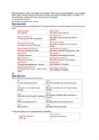
verb, thing, tense, tenses, since, before, something, action, clock, happen, perfect, period, present, verbs, year, during, till, adverb, doing, tomorrow, days, until, active, subject, kestvad, visit, happened, night, times, christmas, years, month, match, left, conjunctions, clauses, glasses, object, mary, indefinite, yesterday, continuous, five, oftenhttp://www.english-4u.de/a_an_some_ex1.htm ◦ *some bananas *some cats *some monkeys *some 2. http://www.english-4u.de/a_an_some_ex3.htm balls ◦ *some eggs*some oranges *some umbrellas *some 3. http://www.english-4u.de/a_an_some_ex6.htm eagles We us the • when we talk about a specific thing. • when it is clear which thing or person we mean. A – AN - THE • when there is only one of something. Examples:
Moved to Cali 2005 Was Born Traveled to Europe Husband 1978 School graduates @ Oxford 1999 Started Got married School 1983 2008 2 The Six English Verb Tenses Three Simple Tenses Simple continuous Present You walk. You are walking I run. I am running. Past You Walked You were walking. I ran. I was running. Future You will walk. You will be walking. I will run. I will be running. Three Perfect Tenses Perfect continuous Present perfect you have walked
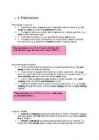
) It usually rains a lot in November. 4. Use will ..., not the present, for offers and promises. I'll cook you supper this evening. (NOT I cook you supper this evening.) I promise I'll phone you tomorrow. (NOT I promise I phone you tomorrow.) 5. Don't drop prepositions with passive verbs. I don't like to be shouted at. (NOT I don't like to be shouted.) This needs to be thought about some more. (NOT This needs to be thought some more.) 6. Don't use a present tense after It's time. It's time you went home. (NOT It's time you go home.) It's time we invited Bill and Sonia. (NOT It's time we invite Bill and Sonia.) 7. Use was/were born to give dates of birth. I was born in 1975. (NOT I am born in 1975.) Shakespeare was born in 1564. 8. Police is a plural noun. The police are looking for him. (NOT The police is looking for him.) I called the police, but they were too busy to come. 9. Don't use the to talk about things in general. Books are expensive
Examples: · I lived in Brazil for two years. · You called Debbie. · Shauna studied Japanese for five years. · Did you call Debbie? · They sat at the beach all day. · You did not call Debbie. · They did not stay at the party the entire time. USE 1 Completed Action in the Past · We talked on the phone for thirty minutes. · A: How long did you wait for them? B: We waited for one hour. USE 4 Habits in the Past Examples: · I saw a movie yesterday. · I didn't see a play yesterday. · Last year, I traveled to Japan. Examples:
FUTURE SIMPLE BE GOING TO Will + infinitive (will go) Am/is/are going to + infinitive (is going to rain) 1.A decision at the moment of 1.Future plans made before the speaking: moment of speaking: A: 'I'm cold'. A: 'We've run out of milk.' B: 'I'll close the window'. B: 'I know, I'm going to buy some.' 2.Prediction based on opinion: 2.Prediction based on present I think the Conservatives will win the evidence: next election. Look at those boys playing football! 3
etc, at night/the weekend, on Fridays etc. Present Continuous · Actions taking place at or arount the moment of speaking (The kids are watching TV..) · Fixed arrangements in the near future (I'm going to the dentist tomorrow) · Currently changing ang developing situations (The number of burgularies is increasing) · With ,,Always" to express anger or irritation at a repeated action (You're always forgetting..) TIME EXPRESSIONS USED WITH PRESENT CONTINUOUS: now, at the moment, at present, these days, nowadays, still, today, tonight etc. Present Perfect · Action happened at an unstated time in the past. Emphasis on the action, time is unimportant or unknown. (I have washed the car) · Action started in the past and continues up to the present, especially with stative verbs (I have known her for six years)
, the expressions be sure be afraid, etc., and the adverbs probably perhaps, certainly, etc I'm afraid we won't be on time for the meeting. b) for on-the-spot decisions. c) for promises (usually with the verbs promise, swear, guarantee, etc.), threats, warnings, requests, hopes (usually with the verb hope) and offers. d) for actions/events/situations which will definitely happen in the future and which we cannot control. The temperature will reach 40°C tomorrow. Be going to a) for plans, intentions or ambitions we have for the future. Now that they've won the lottery, they are
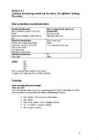
MODULE 1 Greeting. Introducing oneself and the others. The alphabet. Spelling. The tenses. How to introduce yourself and others Formal introductions How to respond and reply to an May I introduce myself? I am John introduction Smith. How do you do. Allow me to introduce John Smith to Pleased to meet you. you. Standard introduction Nice to meet you. I'd like you to meet John Smith. Hello. I want you to meet John Smith. I'm so pleased to meet you.
PAST TENSES Past Simple Used to talk about a completed past action which happened at a completed time in the past. We went to Tallinn yesterday. I saw him a long time ago. We met last week. Used to talk about a series of events that happened one after another. He walked to school, took off his coat, went to class and fell asleep. Used to report what people said. He said that he was tired. He asked to go home. Used after "It's time" (even though we're talking about now)
All rights reserved. No part of this book may be reproduced in any form or by any means, electronic or mechanical, including photocopying, recording, or by any information storage and retrieval system, without the written permission of the publisher. ISBN 1-59905-201-6 Printed in the United States of America 13 12 11 10 09 08 07 9 8 7 6 5 4 3 2 1 Introduction Grammar is a very old field of study. Did you know that the sentence was first divided into subject and verb by Plato, the famed philosopher from ancient Greece? That was about 2,400 years ago! Ever since then, students all over the world have found it worthwhile to study the structure of words and sentences. Why? Because skill in speaking and writing is the hallmark of all educated people. Lesson by lesson, this book provides basic instruction in the eight parts of speech--nouns, pronouns, verbs, adjectives, adverbs, prepositions, conjunctions, and
Prepositions Table of Contents Prepositions of Time – in, on & at ....................................................................... 2 Prepositions of Time – for & since ....................................................................... 3 Prepositions of Time – for & during ..................................................................... 3 Prepositions of Time – during & while ................................................................. 4 Prepositions of Time – by & by the time .............................................................. 4 Prepositions of Time – until & from ... till / to ... .........................................
....................... 3 Present Simple ..................................................................... 4 Future Continuous ............................................................... 4 Future Perfect....................................................................... 6 Other ways of referring to the future ..................................... 7 Other future references......................................................... 8 Future Simple In Future Simple we use the modal verb will + the verb. It is the same in all persons. I will work I’ll work you will study you’ll study he will come he’ll come Negative I/you/he/we/they will not write I/you/he/we/they won’t write Question Will you/he/she/we/they come? 1. We often use will as a neutral way of expressing the future. We use will to say what we know or think about the future.
Notes: Proto-Germanic » Northwest Germanic » West Germanic » North Sea Germanic » Anglo Frisian » English 2. How to classify words into different word classes? (definition is that enough?, morphology, distribution and function tests); Grammatical categories for nominals, verbs, adjectives. "A set of words like dog, child, cat, man, bird where the individual words are mutually substitutable is known as a word class..." Definitions a) A noun is the name of a person, place or thing. b) A verb expresses an action, process or state. c) An adjective is a describing word which modifies a noun. "Although such definitions will identify many members of a word class, linguists generally agree that they need to be supplemented by formal tests. e.g. sincerity Sincerity can be frightening misery Lee is misery itself. Such miseries are uncommon Distribution: - a distribution test
..................................... 4 When to use the Passive ..................................................................... 5 Verbs with two objects ........................................................................ 5 The Passive with ’by/with’ .................................................................. 6 Talking about what other people say ................................................ 6 The Passive Voice The subject is the starting point of the sentence, the thing we are talking about. The new information about the subject comes at the end of the sentence. When the subject is the person or thing doing the action, then we use an active verb: Bell invented the telephone. When the subject is not doing the action, but something is happening or being done to it, or the action is directed at it, then we use a passive verb. The telephone was invented by Bell. NB! The object of an active sentence becomes the subject of a passive sentence
Reported speech is often also called indirect speech. When we use reported speech, we are usually talking about the past (because obviously the person who spoke originally spoke in the past). The verbs therefore usually have to be in the past too. For example: "I'm going to the cinema". He said he was going to the cinema. Basic tense chart The tenses generally move backwards in this way (the tense on the left changes to the tense on the right): present simple past simple I'm a teacher. He said he was a teacher past continuous. present continuous He said he was having lunch with his I'm having lunch with my parents. parents.
Past habits or states. E.g. my grandfather always wore a hat. Complete actions not connected to the present with a stated or implied time reference. E.g. Beethoven created wonderful classical pieces. Time expressions used with Past Simple: yesterday, last week/month etc, ago, then, just, now, when, in 1991, etc Past continuous is used for: Actions in the middle of happening at a stated past time. E.g. She was flying to Paris this time last Monday. A past action in progress interrupted by another past action. The longer action is in the Past Continuous, the shorter action is in the past Simple. E.g. I was watching television when my mother came home. Two or more simultaneous past actions of certain duration. E.g. I was reading while my brother was listening to music. Background description to events in a strong description. E.g. as he was walking through the woods, the birds were singing and the sun was shining
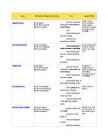
Get/ Have something TENSE ACTIVE PASSIVE WHEN? done Present Simple Am/is/are + Every day, year, often, I pv + do/does Have/ get + sth+ III pv
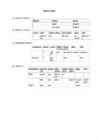
I will you the story at school tomorrow. tell because I don´t time now. have Questions interrogative auxiliary subject other indirect direct place time verb verb(s) object object What would you like to me tell Did you have a party in your yester flat day? When were you here?
PRESENT SIMPLE (lihtolevik) Form: 1st form (+s) Use: 1. Things in general. Nurses look after patients in hospitals. 2. Things that happen all the time or repeatedly. She usually goes away at weekends. 3. Laws of nature (things that are true in general). The sun rises in the east. 4. Timetable events. The train leaves at 6.50 p.m. Negative form: I don't (do not) normally eat my lunch here. He doesn't (does not) like this film at all. Question form: Do you live here? How often does it rain around here?
Tests Superstar 1 Luke Prodromou Test 1 Name____________________ Class_______ Use your English 1 Complete these sentences using the correct form (present simple or present continuous) of the verb in brackets. _ 1 She is in a band and she _________________________________ (record) a CD at the moment. _ 2 She is an actress and often _________________________________ (appear) on television. _ 3 At the moment she _________________________________ (have) a rest because she is tired. _ 4 Mike is a doctor and he _________________________________ (live) in Manchester. _ 5 I _________________________________ (start) work at 8.30 every morning.
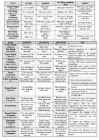
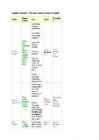
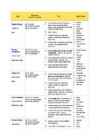
englisch-hilfen.de LEARNING ENGLISH ONLINE Examples Examples Examples Tense Signal words Use Form affirmative negative interrogative every day something happens repeatedly sometimes how often something happens always I work. I don't work. Do I work? one action follows another often Infinitive He works. He doesn't work. Does he work? Simple Present things in general
The Present Simple is the most basic tense in the English language. It is an interesting tense because it can be used Present Simple to express the future. Generally, though, we use it to Basic form describe the present activities or to talk about routines or Subject + Verb + -s (present form) John lives in New York. We play football every day. You are really kind. The meeting starts at 3 PM. Use the Present Simple: with state verbs. to talk about situations in life that last a relatively long time. when an event is certain to happen in the future. to talk about events that we can't change (for example, an official meeting or a train departure).
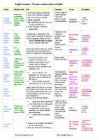
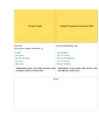
English Grammar - The most common tenses in English Tense Signal words Use Estonian Form Examples · something happens repeatedly *korduv tegevus every day · how often something happens *püsiv olukord sometimes, *tulevikus · one action follows another I work Present twice a week toimuv, seotud · things in general infinitive he works Simple always, often sõiduplaanidega · after the following verbs (to love, he/she/it + s I go
problema (problem). Other feminine words end in -ción, -tad, -dad, or -tud. Use the ese forms to mean that when what you are talking about is near the person you are addressing. Use the aquel forms when what you are talking about is far from both you and the person you are addressing. Esto and eso are the neuter forms of this and that. They can be used in general and abstract ways. Demonstrative adjectives (listed above) are used before a noun; if you want to use the demonstrative pronouns, which are used before a verb, add an accent on all of the first e's: éste, ésta, éstos, éstas, ése, ésa, ésos, ésas, aquél, aquélla, aquéllos, aquéllas. 5. Subject Pronouns nosotros / noh-soh-trohs / yo yoh I we
Past Perfect Simple and Continuous Table of Contents Past Perfect Simple ............................................................... 2 When to use the Past Perfect Simple ..................................... 2 Past Perfect Continuous (Progressive) ................................... 3 When to use the Past Perfect Continuous.............................. 3 Comparison of the use of different past tenses ...................... 4 Past Perfect Simple The Past Perfect is had + a past participle. It is the same in all persons. I had worked he had gone Negative I had not slept/hadn’t slept Question Had he studied? When to use the Past Perfect Simple Past Perfect tenses in general refer to: An event in the past which happened before another event in the past, where there is no time expression to make this clear.
English Grammar - The most common tenses in English Signal Example Tense Use Form words s something happens repeatedly how often something happens every one action day follows sometim another es I work always infinitive Present things in he/she/it he works often Simple general + s I go usually he goes seldom
We can report people's words by using direct speech or direct speech reported speech. speech `I'm tired!', Helen said. Helen said (that) she was tired. The main verb of the sentence is usually past ( Tom said that... / I told her that...) and the rest of the sentence is usually past too. Sequence of tenses if the verb in the main sentence is in the past tense the other verbs are usually in one of the past tense too. Present Simple Past Simple I'm a teacher. He said (that) he was a teacher Present Progressive Past Progressive I'm having lunch with my He said (that) he was having parents. lunch with his parents. Past Simple Past Perfect He said (that) he had bought a I bought a new car. new car.
tense Affirmative/Negative/Question Use Signal Words always, every ..., action in the present Simple Present A: He speaks. never, normally, N: He does not speak. taking place once, never or often, seldom, Q: Does he speak? several times sometimes, usually if sentences type I
............................................................................2 When to use the Present Perfect Simple ...........................................2 Present Perfect Continuous ...................................................................3 When to use the Present Perfect Continuous..................................4 Time expressions with Present Perfect...............................................5 Present Perfect Simple The Present Perfect is the present tense of have + a past participle I have washed / I’ve washed you have written /you’ve written he/she/it has worked /he’s/she’s/it’s worked we have forgotten /we’ve forgotten they have gone /they’ve gone Negative I/you/we/they have not washed /haven’t washed he/she/it has not worked /hasn’t worked
The kitchen ( noun) door is locked. 2 Word Order in Affirmative Sentences In English the word order is not as flexible as in many other languages. The basic structure of an affirmative sentence is SUBJECT (Who?/What?) – PREDICATE (Action/State) – OBJECT (What?): Monkeys like bananas. Mary has a little lamb. All the world is a stage. The teacher is explaining the rule. Peter is playing the guitar. If we want to say something about the manner of the action ( how does something happen?), we put the adverbial of manner in front of the predicate: She quietly opened the door. If we want to stress the mode of action, we put the adverbial of manner after the object. She opened the door quietly. If we want to show the place where the action takes place we put the adverbial of place after the predicate. Janet lives in Paris. I work in the library.
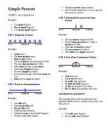
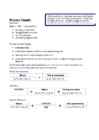
Simple Present Present Progressive/Continious (99%) infinitive form of 'be' and verb + ing (3rd person singular: infinitive + 's') I speak I am speaking you speak you are speaking he / she / it speaks he / she / it is speaking we speak we are speaking they speak they are speaking
Affirmative tense Use Signal Words /Negative/Question · always · action in the present taking place Simple Present A: He speaks. · every ... once, never or several times N: He does not speak. tegevus, mis toimub ühe korra, mitte · never Lihtolevik Q: Does he speak? · normally
Present Simple and Continuous Table of Contents Present Simple ..................................................................... 2 The spelling of endings in the Present Simple ....................... 2 When to use the Present Simple ........................................... 3 The verb 'be' ......................................................................... 4 Present Continuous.............................................................. 5 The spelling of endings in the Present Continuous................ 5 When to use the Present Continuous.................................... 6 State verbs and event (action or dynamic) verbs ................... 7 Present Simple In the Present Simple we use the verb without an ending. I work you live
 annaabi.ee