1) Standard and non-standard varieties of English Standard varieties of English are the varieties of the English language that are considered to be a norm and are spoken and written by the minority (educated people). This is the optimum for educational purposes. The standard varieties of English are: BrEng (British), EngEng (English), NAmEng (North-America), USEng (United States), CanEng (Canada), AusEng (Australia), NZEng (New Zealand). Standard English (British English) is the most widely accepted and understood among native speakers, learned by foreigners. It is used in broadcasting, TV, news etc. It doesn't concern pronounciation (accent), but grammar and vocabulary. It includes formal and informal styles. British Standard English grammar and vocabulary, together with the RP accent should be called English English. RP (Received Pronounciation) is an accent that originates from South-East of England. A social accent, associated o...
Pidgins, creoles and standard language Pidgin language A simplified language Mainly employed in trade NOT the native language of any community may be built from words, sounds, or body language from multiple other languages and cultures No particular rules Chinese Pidgin English a pidgin lexically based on English and influenced by Chinese developed in 17th century in China Began to decline during the 19th century, when standard English began to be taught in schools Chinese Pidgin English Some characteristics: Based on a vocabulary of 700 English words Grammar and syntax are simple and positional (grammatical categories are indicated by the position of words in a sentence) Lack of plural personal pronouns Chinese Pidgin English Example sentences: Hab gat rening kum daun (Have got raining come down) “There is rain coming down” Tumoro mai no kan kum (Tomorrow my ...
Inglise keel kui normitud kirjakeel Enn Veldi Tartu ülikooli inglise filoloogia õppetooli dotsent Inglise keele puhul ei saa rääkida riiklikust keelekorraldusest. NIMELT Ei ole olemas Briti, Põhja-Ameerika ega ka rahvusvahelist inglise keele akadeemiat. AGA Prantsuse Akadeemia eeskujul püüti küll kunagi keelekorralduslikku akadeemiat luua ka Inglismaal ja Ameerikas, kuid need katsed luhtusid. SEEGA Seepärast ei saa inglise keele puhul ükski ametkond ära keelata näiteks prantsuse võõrsõnade kasutamist ingliskeelsetes restoranimenüüdes. Ei eksisteeri ka keelepolitseid, kes võiks eksimuste eest trahve määrata. Inglise keele normid põhinevad tegelikul keelekasutusel; kasutuselolevate normide kogu moodustab standardi. NIMELT Õigekeelsusnorme kirjeldavad sõ...
Inglise keel kui normitud kirjakeel Enn Veldi, Tartu ülikooli inglise filoloogia õppetooli dotsent Oma Keel 2001, nr 1, lk 20-27 Referaat Tartu 16.03.2014 Inglise keel ei ole riiklikul tasemel normeeritud. Keelekorralduslikku akadeemiat on püütud luua nii Ameerikas kui Suurbritannias, aga see ei ole õnnestunud. Inglise keelt normeerib tegelik keelekasutus. Standardiks peetakse erinevates ringkondades nii tavainimeste poolt igapäevaselt kõneldavat keelt kui eliidi lihvitud keelekasutust. Aastal 1417 hakkas kuningas Henry V ametlikus kirjalikus suhtluses kasutama inglise keelt varasema prantsuse keele asemel. Siis algas inglise kirjakeele ühtlustamine. William Perry ,,The Royal Standard English Dictionary" (,,Kuninglik stan...
The history of the English Language Kristin Klaus, 10a Short history · Started with the arrival of three Germanic tribes who invaded Britain during the 5th century AD · The tribes: the Angles, the Saxons, the Jutes · At that time the inhabitants spoke a Celtic language · The invadors pushed them west and north Germanic invaders entered Britain on the east and south coasts in the 5th century. Old English · 450-1100 AD · The Germanic tribes spoke similar languages which developed into Old English · Did not sound or look like English today · About half of the most commonly used English words have Old English roots · Be, strong, water Part of Beowulf, a poem written in Old English. Middle English · 1100-1500 · In 1066 William the Conqueror, the Duke of Normandy (part of modern France), invaded and conquered England · The new conquerors (called the Normans) brought with them a kind of French, which became the la...
English began as a west Germanic language which was brought to England bt the Saxons around 400 AD. The spoken and written laguage berween 400 and 1100 AD is referred to as Old English. Many words used today come from Old English. In the 9th and 10th centuries, when Vikings invaded England, Old Norse words entered the language English from about 1300 to 1500 is known as Middle English. It was influenced by French and Latin. French brouht many words connected with goverment. Modern English eas greatly influenced by the English used in London and changed a great deal until the end of the 18th century. Many words were introduced from Greek and Latin to express new ideas, especially in science, medicine and philosophy. Nowadays 80 percent of the word-stock is foreign-born. So we can say that most world languages have contributed some words to English at some time, and the process is now being reversed. Purists of the languages are res...
Curriculum Vitae Name: Vanessa Maibaum Date of Birth: 25th September 1995 Nationality: Estonian Address: 2 Mereranna Street Viimsi 74001 Email: [email protected] Mobile Tel: +372 538 892 52 Education & Qualifications 2008- Present Pirita Secondary School of Economics, Tallinn Higher Grades Include: Spanish, Business and Marketing, Micro- Economic, Macro- Economics, Business English, Data Procressing, Web Page Creation, Accounting. 2002- 2008 Merivälja School, Tallinn 6 Standard Grades Additional Information Languages: Estonian- Mother tongue English- Fluent written and spoken Russian Spanish Finnish Computer Knowledge: Experienced user of Microsoft office products. Keen user of the internet.
Medieval literature Religious literature- mostly written in church languages(Latin, Greek, Old Slavic) Secular literature- written in vernacular languages as well 6th -15th century Anonymity Religious writing Liturgical writing-hymns, psalms Theological writing-aquinas, abelard etc Religious poetry Mystery plays-reenactment of bible stories Secular writing Troubadour writing:"courtly love", romance Epic poem(song of roland) Travel writing History writing-chronicles Allegory The use of symbols and analogy to convey a certain meaning /message Literary output of medieval English Anglo-saxon or Old English literature(7th century-1066) Middle english literature(12th century-15th century) End of the period:1470s chancery standard(regulating english) and onset of renaissance Middle English literature Written in many dialects in early period 14th century Middle english was used for majority literary works...
CHARACTERISTIC FEATURES OF OLD ENGLISH - 15 monophtongs, (7 long, 7 short, 1 central), 4 diphtongs, 17 consonants. Free variaton of R, and it was pronounced everywhere. Very much Germanic in character. Quite some special consonants that no longer exist. About morphology: synthetic with numerous aglutinating tendencies. System of tenses Germanic, but with a reduction of tenses. Paradigmatic leveling; Stress shift; Word order; Loan words (Old Norse, Old French). Dual pronouns. Determiners - no separate definite article. Strong and weak verbs. Word order relatively free with tendencies towards SVO. SVO, SOV, VSO most common. Adposition and podposition were both possible (eesliide ja tagaliide). About syntax: clauses were joined much simpler than nowadays, using and, then etc. Because of case syncretion the word order in a sentence became much more important to be able to tell the difference between words. FIRST CONSONANT SHIFT (GRIMM'S L...
Estuary English 1. The geographical dimension: Is `Estuary' English estuary? Estuary English is a dialect of English widely spoken in South East England, especially along the River Thames and its estuary. Phonetician John C. Wells defines Estuary English as "Standard English spoken with the accent of the southeast of England".[1] The name comes from the area around the Thames, particularly London, Kent, north Surrey and south Essex. The variety first came to public prominence in an article by DavidRosewarne in the Times Educational Supplement in October 1984. [2] Rosewarne argued that it may eventually replace RP (Received Pronunciation) in the south-east. Studies have indicated that Estuary English is not a single coherent form of English; rather, the reality behind the construct consists of some (but not a...
1.The Authorized Version, commonly known as the King James Version, King James Bible or KJV. English translation of Christian Bible. Translation began by the church of england in 1604 and completed in 1611. It was the third official translation into english. The first was the great bible which was made during the reign of kind henry VIII and the second was bishops bible. They started making the new version in 1604 because the puritans(a factino within the church of england) perceived (detected)problems with earlier translations. 2.The translation was done by 47 scholars, all of who were members of the Church of England. The New Testament was translated from Greek, the Old Testament was translated from Hebrew text, while the Apocrypha were translated from the Greek and Latin. Over the course of the 18th century, the Authorized Version supplanted the Latin Vulgate as the standard version of scripture for English speaking scholars. Person ...
Summary • Early history of translation studies – Cicero and St. Jerome (what did they do/how/why are they relevant to translation studies?) St. Jerome – Greek scholar, did some translation work. Lived during the 4th century. Jerome is best known as the translator of the Bible into Latin. A previous version (now called the Old Latin) existed, but Jerome's version far surpassed it in scholarship and in literary quality. Jerome was well versed in classical Latin (as well as Greek and Hebrew), but deliberately translated the Bible into the style of Latin that was actually spoken and written by the majority of persons in his own time. This kind of Latin is known as Vulgate Latin (meaning the Latin of the common people), and accordingly Jerome's translation is called the Vulgate. Cicero – Lived during the 1st century BC. Roman politician, philosopher & translator. Theory ‘‘word-for-word’’ & ‘‘sense-for-sen...
William Shakespeare (1564-1616) playwright, actor, poet 37 plays, over 400 screen adaptions Lord Chamberlain's Men, King's Men, The Globe Early life: John Shakespeare, Mary Arden, 2 sis', 3 bros; married Anne Hathaway 3 children Life in London: 1599 built Globe, 1623 first compilation Forms: classical & history plays, comedies+tragedies, poetry Style: metaphors, rhetorical phrases, free flow of words, unrhymed iambic pentameter; deviations Renaissance (end of 14th century) Italy, reaches rest of Europe Elizabethan era (16th II h - 17th I h) Theatre: combined medieval theatre, morality plays & Roman drama to create Elizabethan tragedy Poetry: Italian influences, sonnet (English: cddc ee) Rulers of England: Henry VII (brings prosperity, repairs economic situation; made alliances); Henry VIII (beginning of English reformation; killed "traitors"; 6 marriages); Mary I (Catholic); Elizabeth I (The Virgin Queen restores order; Religiou...
1. How many public holidays or Red-Letter Days are there in Britain? Name them. 8 public holidays in Britain: two at Christmas, one for the New Year(which was only introduced in the late 1970s) two at Easter and three Bank Holidays. 2. What is the same and what is different about the way Christmas is celebrated in England and Estonia? In England, there's common to sing Carol's and for children, Christmas means pantomimes plays based on fairy tales which combine comedy, dance and song. A traditional Christmas dinner includes roast turkey with roast potatoes, a range of vegetables, cranberry sauce etc., followed by Christmas pudding and Christmas cake. The pulling of crackers(and the wearing of paper hats) before the meal is quite popular. Afterwards many watch the Queen's traditional Christmas address on TV at 3 pm. Christmas actually contains of 3 days: Christmas Eve, Christmas Day and Boxing Day. The ...
Accommodation in Lahemaa region Introduction Lahemaa region consists of tree rural municipalities Kuusalu, Vihula, Kadrina and one small town Loksa, in North-Estonia. Accommodation in Lahemaa represents almost all allowed types according to Estonian tourism law. There are some differences between accommodation types in Estonia and Great Britain. Comparison of the accommodation ways in Lahemaa and Great Britain The types of accommodation in Lahemaa are: villa, guesthouse, hotel, tourist farm, bed and breakfast, manor hotel, hostel, motel, cottage, campsite, caravan and lodge. Officially in Estonia there are no accommodation types like lodges and caravans, caravans belong under the accommodation type campsite. Lodges in Estonia, also in Lahemaa are managed by State Forest Board (RMK) and are meant to be independently used free of charge by any tourists. If there is a lodge in a tourism farm, it is considered to be an alternative a...
Tallinna Polütehnikum Automation Author: TomTom2 Group :AA-09 Instructor: Marina Zotikova Tallinn 2010 Contents Introduction......................................................................................................................3-4 Person Knowledge Technologies supports......................................................................4-6 Online Essay Evaluation Service.....................................................................................6-7 WordNet lexical database................................................................................................7-8 Practice Online (TPO)................................................................................................
Estonian language Seliin-Doris Tsinjakov 11. Klass Kehra Gümnaasium · Estonian is the official language of Estonia. · Spoken natively by about 1.1 million people. · It belongs to the Finnic branch of the Uralic language family. Classification · Belongs to the Finnic branch of the Uralic languages, along with Finnish, Karelian, and other nearby languages. · Estonian has been influenced by Swedish, German and Russian, though it is not related to them genetically. History · The two different historical Estonian languages, the North and South Estonian languages, are based on the ancestors of modern Estonians migration into the territory of Estonia in at least two different waves, both groups speaking considerably different Finnic vernaculars. · Modern standard Estonian has evolved on the basis of the dialects of Northern Estonia. · The domination of Estonia a...
Etiquette in england *meeting and greeting · The British are reserved, which may cause them to appear cool and indifferent or overly formal. In fact, they are very friendly and helpful to foreigners. · Shake hands with everyone present men, women, and children at business and social meetings. Shake hands again when leaving. · Use last names and appropriate titles until specifically invited by your British hosts or colleagues to use their first names. *body language · The English tend to keep about an 23 feet between them while speaking. · Touching is usually kept to a minimum. · Family members are more relaxed and familiar with each other, so touching of the arms, elbows, or hands is acceptable. However in a business environment, touching is very minimal and personal space is respected much more than in a family setting. · Direct ...
WALES GREAT BRITAIN Cymru am byth GENERAL OVERVIEW Territory:20,779 sq km Population:2.9 million(2002) Languages:English and Welsh Capital:Cardiff(since 1955) Anthem:Hen Wlad Fy Nhadau (Land Of My Fathers) Main religions: anglicanism,methodism National holiday:St David`s day,1 March National instrument:The harp Highest point: Snowdon 1085 metres Longest river:Towy (Tywi) 103 km Largest lake: Bala (4.4 sq km) CYMRU Wales is a mountainous country on the western side of Great Britain. Wales is bordered by England to the east, the Bristol Channel to the south, St George's Channel in the west, and the Irish Sea to the north. Wales is one of the four parts of the United Kingdom (along with England, Scotland, and Northern Ireland). FLAG Red dragon may have been the battle standard of the early Britons af...
Anton Teljutsenko AAp-11 What is it? Ruby is a dynamic, reflective, general-purpose object- oriented programming language that combines syntax inspired by Perl with Smalltalk-like features It was also influenced by Eiffel and Lisp Ruby has "Ruby License" and "BSD License" Ruby was first designed and developed in the mid-1990s by Yukihiro "Matz" Matsumoto in Japan Ruby is cross-platform programming language History Ruby was conceived on February 24, 1993 by Yukihiro Matsumoto who wished to create a new language that balanced functional programming with imperative programming Ruby was disignet to be more powerful than Perl and more object-oriented than Python The name "Ruby" was decided on during an online chat session between Matsumoto and Keiju Ishitsuka on February 24, 1993, before any code had been written for the language. History Initially two names were proposed: "Coral" and "Ruby", with the latter being chosen by M...
American English Take-home exam 1) Discuss the significance of American English in the English-speaking world. English is one the most widely used languages in the world and globally acknowledged as the lingua franca. It is also the dominant business language. For these facts already, English has a great importance in the today’s world. As the United States of America is one of the leading countries of the world, American English has a certain authority as well. It is now an inescapable fact that America, through its worldwide influence and massive entertainment industry is the mighty power-house that drives the English language. Although British English is considered to be more sophisticated and prestigious than American English, the latter is clearly more featured in television, music, video games and internet, naturally appealing more to English learners than Brit...
Partner schools in Comenius project Targo Timak Form 7a Tartu Veeriku School Sehit Millis Nuri Ilkogretim Okulu l There are 1300 students and 43 staffs. l Students are aged 6-14. l Even though their school takes place in the urban part of the city, most of the families still have their old traditional ways of life which belong to rural areas. l Their school needs this kind of projects because pupils around the school have really low economic standards and they may not be able to find another chance to attend a high standard intercultural activity in the rest of their lives. Fichtenberg Oberschule l Fichtenberg-Oberschule is a general secondary school (grades 7-12) in Berlin-Steglitz. l Fichtenberg-Oberschule looks back at a long tradition of secondary education in Berlin-Steglitz and has been known under its present name and administrational stru...
Report The aim of this report is to compare Estonian and British students opinion on educational system. We wrote down our opinion on the 6th of september 2012 in our english class. We had 12 students who gave an opinion about the Estonian educational system. Corporal punishment is illegal in British and Estonian schools. 62% of British childrens think that it would be needful but only 31% Estonian childrens have the same opinion. Actually it could be not banned, because if they used controlled corporal punishment it is not likely to be harmful. I would argue that there were actually fewer discipline problems back in the old days when corporal punishment was more common. Most school in England require children to wear school uniform. Estonian children no longer wear uniforms but few decades ago they wore uniforms. 74% British students and 39% Estonian students believes that school uniforms ...
Population 1. Size, its changes 2. Distribution 3. Towns 4. Ethnic makeup 5. Age breakdown 6. Religion(s) 1. Size. 1 July 2006 population estimates by UK National Statistics: % (mid- Part Population (mid-2006) 2006) England 50,762,900 83.8 Scotland 5,116,900 8.4 Wales 2,965,900 4.9 Northern Ireland 1,741,600 2.9 United Kingdom 60,587,300 100 Although Britain is quite small in terms of land area (245,000 sq km), it has a large population of nearly 61 million, which ranks the 21st in the world (Britain is the 21st most populous state in the world) and the third largest in the European Union. The size of population is chan...
Tallinn- London Tallinn information: Train operators in Internal trains run by Edelarautee: www.edel.ee, Estonia: www.elektriraudtee.ee Sleeper train Tallinn to Moscow: www.gorail.ee Ferry operators to www.Tallink.ee (Stockholm-Tallinn, Helsinki-Tallinn) Estonia: www.tallinksilja.com/en/ (Rostock-Helsinki-Tallinn) Time: GMT+2 (GMT+3 from last Sunday in March to last Saturday in October) Currency: £1 = approx 16.5 Kroons. Tourist information: www.inyourpocket.com/Estonia/ & http://tourism.tallinn.ee. Hotels in Tallinn: www.hostelbookers.com Visas: UK citizens do not need a visa for Estonia for stays of up to 6 months. London information: Area: ...
16th century (Tudors) 1. Henry VII - avoided wars, careful with money, didnt have expensive parties, was a rather shadowy figure 2. Henry VIII- brilliant scholar, excellent knight, good-looking, ambitious, self- centered, loved expensive clothes and parties. Wasted his fathers money very quickly and had 6 wives. His first wife couldnt give birth to a baby boy and they only had a daughter. His next wife only gave birth to a girl too. His next wife gave birth to a boy but died after the labor. He didnt like his 4th wife so he sent her back. His fifth wife was young and beautiful but had many lovers and Henry didnt like it so she was sent to the Tower and was beheaded. HIs 6th wife survived. 3. Edward- was sickly and ruled only for a few years and then he died 4. Mary Tudor/Bloody Mary- was catholic and killed many protesntants. Ruled only f...
Geography New Zealand is an island country in the Southwest Pacific Ocean. It lies about 1600 kilometres southeast of Australia, its nearest continental neighbour. New Zealand belongs to Polynesia, a large island group. The country consists of two main islands The North Island and the South Island and several dozen much smaller islands. The population is 4.1 million. New Zealand is a beautiful country of snowcapped mountains, green lowlands, beaches and many lakes and waterfalls. No place is more than 130 kilometres from the coast. Lakes, rivers, and waterfalls are found throughout New Zealand. Most of the lakes lie in the volcanic plateu of the North Island and in glacial valleys near the Southern Alps of the South Isaland. On both islands the rivers rise in the mountains and flow down to the sea. The rapid flow of New Zealand's rivers makes them important sources of hydroelectric power. New Zealan...
Tallinna Mustamäe Humanitargümnaasium Valeria Jefremenkova ENGLISH AS A GLOBAL LANGUAGE INGLISE KEEL KUI ÜLEMAAILMNE KEEL Research work Supervisor: Jevgenija Kozlova Tallinn 2016 1 Table of Contents СONTENT…………………………………………………………………………………...2 INTRODUCTION…………………………………………………………………………...3 CHAPTER I……………………………………………………………………………….....5 1.1. A Brief History of the English Language…………………………………………...…..5 1.2. Origins of English as the Global Language……………………………………..……....6 1.3. Necessity of a Global Language...……………………………………………………....8 1.4. Criticism of a Global Language………………………………………………………....9 1.5. The Role of English Today……………………………………………………………..10 1.6. English Speaking Countries…………………………………………………………….11 1.7. Perspectives of English………………………………………………………………....13 CHAPTER I...
Scotland Overview Flag-Saltire Royal Standard of Scotland Edinburgh, Glasgow First Minister Alex Salmond 78,387km² 5,222,100 St Andrew History Picts (Celtic tribe) Romans named scotland Caledonia The Scots Queen Mary was forced to abdicate the Scottish throne in 1567. National Symbols Thistle Declaration of Arbroath Tartan Bagpipes Kilt Honours of Scotland Crown, Sword and sceptre are from late fifteenth and early sixteenth century. Crown was made in 1540. Pope Julius II presented the sword to King James IV in 1507. The sceptre was made in 1494 and was presented to King James IV by Pope Alexander VI Honours of Scotland Language Have spoken Pictish, Scottish Gaelic similar Norse, Norman- to Irish, it is French and Brythonic recognised a...
Great Britain Pärnu 2012 Contents Great Britain Great Britain or Britain is an island situated to the northwest of Continental Europe. It is the ninth largest island in the world, the largest European island, and the largest of the British Isles. With a population of about 60.0 million people in mid-2009, it is the third most populous isla...
SQL SQL ajalugu ja areng 21. sajandi esimese kümnendi alguses on andmebaasisüsteemide turul valdavad andmebaasisüsteemid, mis kasutavad SQL (Structured Query Language) keelt, mis omakorda põhineb (aga mitte kõiki Codd'i ettepanekuid arvesse võttes) Edgar F. Codd'i esialgsel relatsioonilise mudeli kirjeldusel. 1970-ndate keskel loodi IBMi uurimislaboris relatsioonilise andmebaasi prototüüp System R. Andmetega töötamiseks kasutati selles keelt SEQUEL (Structured English Query Language), mida võib pidada SQL keele esimeseks versiooniks. Keelt kirjeldati 1976 a. novembris ajakirjas IBM Journal of R&D. Keelele anti hiljem uus nimi - SQL (Structured Query Language). Esimene reaalsesse kasutusse tulnud SQL'i kasutav produkt oli 1979 Oracle Corp. poolt loodud Oracle andmebaasisüsteem. 80-ndatel asuti SQL keelt standardiseerima. Olulisemad verstapostid SQL standardi arengus: 1987 - ISO (International Organisation for Standardization) kinnita...
CANADA Pavel Zubarev 8.a Geographical position Canada is the second largest country in the world. Only Russia has a greater land area. Canada is situated in North America. Canada is a federation of 10 provinces and 2 territories. The population Canada is slightly larger than the United States, but has only about a tenth as many people. About 28 million of people live in Canada. About 80% of the population live within 320 km of the southern border. Much of the rest of Canada is uninhabited or thinly populated because of severe natural conditions. Canada's people are varied. About 57% of all Canadians have some English ancestry and about 32% have some French ancestry. Native people American Indians and Eskimos make up about 2% of the country's population. 77% of Canada's people live in cites or towns. The Capital of Canada Ottawa is the capit...
Doing business in Australia Business Mentality *Australians are very straightforward when it comes to business, so they do not need to build relationships for a long time before doing business. They are receptive to new ideas. * They appreciate modesty, so try not to oversell your company and do not even think of applying aggressive sales techniques. Try to be factual, friendly and to the point, avoiding self-importance. *If you manage to impress them, they will not make it obvious. *The decision making will be slower than usually, as the work environment in Australian business culture is collaborative. Top management will consult subordinates. *Do not try to rush the decision - patience is very much appreciated. * The good news is that Australians do not find it hard to say "no", so the answer will be clear and straightforward. * Business hours are 9:00 am to 5:00 pm, Monday to Friday. *For business purpose...
[Your Name] [Instructor] [Class] [Date] ABOUT SERIAL KILLERS INTRODUCTION Let's play a quick game of catchphrase - guess the word. My phrase is two words, and describes a person. Charles Manson. Ted Bundy. Jack the Ripper. Serial killer - serial meaning "arranged in a straight line or succession" (1) and killer meaning "one who kills, or any agent used to neutralize the active property of anything." We tend to have a morbid interest in people who commit murder. Today, I'd like to explain what distinguishes serial killing from mass murders, how long serial killing has been around, and highlight some of the psychological traits common to serial killers. BODY I. Serial killing vs mass murders Now at a glance serial killing and mass murder seems basically the same: one person kills many other people. The distinction between the two is notable: mass murder happens when one person murders mult...
Chinese americans Chinese Americans (traditional Chinese or simplified Chinese) are Americans of Chinese descent. Chinese people came to the United States from Singapore, Vietnam, Malaysia, Indonesia, Burma, the Philippines, and Taiwan.[6] The first Chinese immigrants arrived in 1820 according to U.S. government records. 325 men are known to have arrived before the 1848California Gold Rush[7] which drew the first significant number of laborers from China who mined for gold and performed menial labor.[8] [9][10] There were 25,000 immigrants by 1852, and 105,465 by 1880, most of whom lived on the West Coast. They formed over a tenth of California's population. Nearly all the early immigrants were young males with low educational levels from six districts in the Guangdong province.[11] ...
BOOK REPORT Title & author of the book: 'Anita and Me' by Meera Syal The setting of the book? The story resolves around Meena Syal, the daughter of the only Punjabi family in the Midlands' mining village of Tollington. The novel provides a vision of British childhood in the 1960s, a childhood caught between two cultures, each on the brink of enormous change. Meena is desperate to fit in with the other children in her neighbourhood while forever feeling like an outsider because she is "different". Eventhough the Punjabi family is well respected by the locals, there are still sutations when they have to deal with racism. Plot summary (NB! Use the present tenses) Anita and Me by Meera Syal is the story of a young Punjabi girl growing up in the fictional English village of Tollington in the Midlands in the 1960s. The book follows Meena during her pre-teen years as she is desperate to fit in ...
Main Sights England is known for its many world-famous sightseeings and people all around the world come to see them. Some of them are even like symbols of England. The most famous ones are: Stonehenge is one of the greatest national icons of Britain. That prehistoric monument is located in the plain of Salisbury, in the county of Wiltshire in the south-west of England. It is built of 150 enormous stones which are set in a purposive circular pattern. Stonehenge was probably built to mark the longest and shortest day of the year because it lies on the line of the midsummer sunrise and the midsummer sunset. That would have enabled people to keep a record of changing of seasons. Although it is still unclear who built it. Hadrian’s Wall is an ancient wall which was built in 2nd century by Hadrian, the emperor of Rome from AD 117 to 138, and it marked the northern border of the Roman Empire in Britain. The wall was 80 Roman miles (117 kilom...
BRITISH NATIONAL SYMBOLS Research work CONTENTS CONTENTS.....................................................................................................................................2 INTRODUCTION............................................................................................................................3 1. BRITISH NATIONAL SYMBOLS..............................................................................................5 1.1 Great Britain and British story................................................................................................5 1.2 National Symbols and Nation Building..................................................................................5 1.3 The Use of Flags throughout History.....................................................................................6 1.4 The Early Modern Flags. United Kindom: Union Jack.........................................
London London is almost 2,000 years old. Romans came to England in 43 AD. It was first called Londinium. In 1666 the Great Fire destroyed four fifths of the wooden buildings in the City including St Paul`s Cathedral. The fire began in the kitchen of the King`s baker Thomas Farriner in Pudding Lane and lasted for five days. London is the capital of England and the United Kingdom. By now London has swallowed up many of the small towns and villages that once surrounded it. London is on the same latitude as Warsaw. London is a city were more than 7 million inhabitants live. In London there are famous Telephone booths and taxis. Also there are red double- decker buses. The quick and easy way is use the underground trains. The cheapest is to buy a Travelcard. London hosted the 1908 and 1948 Summer Olympic Games and will host the 2012 Summer Olympic Games. ...
Motivation Letter I have always known that I want to engage oneself with science. I am interested in how different things react with each other, their influence on human and realised that I can find all these in food science and nutrition. Nowadays people try to improve their food excesses, however, they do this incorrectly. People restrict themselves in food, but in such a manner they are depriving themselves of the important components necessary for the efficiency of the body. Personally, I faced with such diseases and it was hard enough to deal with this by myself. In order to return a healthy appetite, I read a lot of literature but was not sure that I would find the correct way to restore health. That`s why, I want to study Nutrition and Food Science course. I desire to help people cope with eating diseases and find out more about healthy eating, explore the foundations of human nutritio...
EPIC ,,A long narrative poem on a great and serious subject, related in an elevated style, and centered on a heroic or quasi-divine figure on whose actions depends the fate of a tribe, a nation, or the human race. The traditional epics were shaped by a literary artist from historical and legendary materials which had developed in the oral traditions of his nation during a period of expansion and warfare" An epic is a lengthy narrative poem, ordinarily concerning a serious subject containing details of heroic deeds and events significant to a culture or nation. Nonetheless, epics have been written down at least since the works of Virgil, Dante Alighieri, and John Milton. Many probably would not have survived if not written down. The first epics are known as primary, or original, epics. One such epic is the Old English story Beowulf. Epic Conventions, or characteristics common to both type...
Arkady Shilkloper The critic Jeffrey Agrell referred to Shilkloper’s style as: ''Arkady Shilkloper goes to places that horn players aren't supposed to go without a net, map, seat belt, crash helmet, overhead air support, and a note from their mothers.And he does so with extraordinary ease and musicality. I think maybe nobody ever told him "Jazz playing on horn is very difficult, and probably not natural" or perhaps the phrase does not translate into Russian. I'd walk on a camel for a mile to hear this guy. ''Jazz Times Magazine wrote:“His control of the instrument, and his blowing creativity have set a new standard, even Julius Watkins, his idol never produced such results.” Arkady Shilkloper was born in 1956, in Moscow, Russia. He began to study alto horn at the age of six and switched to French horn in 1967. At the age of eleven he entered the Moscow Military Music School. One of most unusual Russian ...
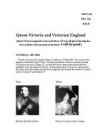
Kadri Laur PRG 11B. 26.05.07 Queen Victoria and Victorian England (Queen Victoria is supposed to have said this as a 10-year-old girl on learning that she was likely to become queen in the future: I will be good.) VICTORIA (r. 1837-1901) Victoria was born at Kensington Palace, London, on 24 May 1819. She was the only daughter of Edward, Duke of Kent. The Duke and Duchess of Kent selected the name Victoria but her uncle, George IV, insisted that she be named Alexandrina after her godfather, Tsar Alexander II of Russia. Edward died when Victoria was eight months old, upon which her mother enacted a strict regimen that shunned the courts of Victoria's uncles, George IV and William IV. Father ...
The Saxons & Vikings Fragmentary knowledge of England in the 5th & 6th centuries comes from the British writer Gildas, the Anglo-Saxon Chronicle, saints' lives, poetry, archaelogical findings and place- name studies. British landlords ruled small, unstable kingdoms and continued some Roman traditions of governance. In the mid-5th cent, Vertigern, a British leader, hired Germanic mercenaries to help defend against peoples of the north (Picts & Scots). In the end they revolted & the process of invasion and settlement began. The first Saxon ,,kings" were Hengist & Horsa in Kent, Aelle in Sussex, Cerdic / Cynric in Wessex. So the first ,,English" became mainly from Northern Germany & Denmark. The resistance of the Celts was long. They were free at the time, not like other Roman provinces on the Continent. Around 500, the Britons seem to have won several victories. One of their leaders was Ambrosius Aurelianus and one of...
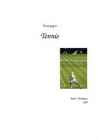
Term paper Tennis Karin Visnapuu 10B I decided to make this term about tennis, because I enjoy playing tennis. I have played it for two years. It's not long time but I have learned lots of skills during that time. Tennis is a sport played between two players or between two teams of two players each. Each player has a racket. Tennis is played with a tennis-ball. At first, the ball was white but in the later part of the 20th century it was changed to yellow to allow improved visibility. The modern game of tennis originated in the United Kingdom in ...
Milleks FORMAT C: ? Sõna FORMAT tuleb Inglise keelest ning tähendab Eesti keeles FORMAATI. Format ketta puhul tähendabki ketta seadmist töökorda, ehk siis tühja ning puhta ketta seadmist windowsi installiks(ka linuxi ja muude op süstemide installiks). Miks aga FORMAT C: ? Miks mitte D, E jne? C tähistab arvuti ESIMEST ning PRIMAARSET ketast! Kui arvuti kõvaketas on jagatud mitmeks või on tal neid mitu, siis tähise C saab IDE0 kaabli MASTER ketas, D saab IDE0 otsas SLAVE või IDE1 otsas olev MASTER ketas(samuti võib selleks olla CD/DVD seade). Milleks see hea on? Kui ostad poest uue ketta, kui on vaja windows uuesti "puhtana" peale panna, kui soovid installida windowsi asemele linuxit või vastupidi, siis selle jaoks tuleb teha FORMAT, ehk siis ketta ümber seadistamine uue operatsiooni süsteemi jaoks. Siit tuleneb ka veidike väär väide, et FORMAT kustutab ketta tühjaks, tegelikult tehakse ketas puhtaks enne formaatimist ning selle käigu...
1. The Jacobean masque Elizabethan one nation culture, now cultural polarisation between the new courtly culture and the rest of the country. Court in cultural isolation. Ben Jonson. King and courtiers were close to universally recognised ideal types (conflict with the reality). Mysticism. Emergence of perspective view, stage machinery, artificial light, revolution. The stage cast the monarch in the focal point (the lines of perspective of the stage met there. Inigo Jones. Masque an educative vehicle, towards classical antiquity and architecture. Tide towards absolute monarchy. Masque – linked poetry and moral philosophy into art. Music, dance, poetry, lavish illusionistic scenic display to express the doctrines of divine kingship. Great impact. Like gods come down to earth. 2. The Caroline masque Charles decided on subject matter, and acted and danced in masques. Now the regal divinity even more obvious. Ben Jonson. Divine m...
English literature is one of the oldest literatures in Europe; dates back to the 6th century AD. Oral literature, i.e. not written down, spread from person to person. In 449 AD Anglo-‐Saxon tribes invaded England – beginning of the Anglo-‐Saxon period in English literature. The first form of literature was folklore, carried by scops and gleemen, who sang in alliterative verse (a kind of simple poetry). Prose developed much later. The first form of recorded English literature was the epic Beowulf, which was produced sometime near the end of the 7th and beginning of the 8th century. It has no ...
Hard rock Karl-Richard Sänna Form 9B Hard rock (or heavy rock) A loosely defined subgenre of rock music which has its earliest roots in mid-1960s garage rock, blues rock and psychedelic rock Typified by a heavy use of distorted electric guitars, bass guitar, drums, and often accompanied with pianos and keyboards Developed into a major form of popular music in the 1970s and reached a commercial peak in the mid to late 1980s Led Zeppelin, The Who, Deep Purple, Aerosmith, AC/DC, Van Halen, Bon Jovi, Def Leppard, Guns N' Roses Definitions A form of loud, aggressive rock music Has sometimes been labelled cock rock for its emphasis on overt masculinity and sexuality and because it has historically been predominately performed and consumed by men: in the case of its audience, particularly white, working-class adolescents In the late 1960s the term heavy metal was used interchangeably wit...
Tartu Miina Härma gymnasium Biogas The source of future energy Report Tartu 2010 Table of Contents Introduction......................................................................................................... What is biogas?................................................................................................... Producing process............................................................................................... Nowadays............................................................................................................ Areas where biogas is used in............................................................................. Biogas as replacement of fuel.......................................................................... Other benefits.......................................................................
 annaabi.ee