 50 punkti
Autor soovib selle materjali allalaadimise eest saada 50 punkti.
50 punkti
Autor soovib selle materjali allalaadimise eest saada 50 punkti.
 ~ 3 lehte
Lehekülgede arv dokumendis
~ 3 lehte
Lehekülgede arv dokumendis
 2018-02-13
Kuupäev, millal dokument üles laeti
2018-02-13
Kuupäev, millal dokument üles laeti
 2 laadimist
Kokku alla laetud
2 laadimist
Kokku alla laetud
 0 arvamust
Teiste kasutajate poolt lisatud kommentaarid
0 arvamust
Teiste kasutajate poolt lisatud kommentaarid
 56169951
Õppematerjali autor
56169951
Õppematerjali autor
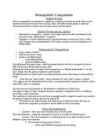
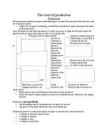
Monopolistic Competition Market Power Firms in monopolistic competition or imperfectly competitive markets are more likely to have limited market power because there are many firms with differentiated products (there are substitutes) and there is relative ease of entry and exit into the market Market Power among Sellers · Monopolistic competition - a market with a large number of sellers and relatively free entry; each firm "differentiates" its product. · Oligopoly - a market characterized by significant barriers to entry and "a few "sellers who recognize their interdependence in the market; products may be homogeneous or differentiated. Monopolistic Competition · Large number of sellers · relative ease of exit / entry · products are differentiated
(Pages : 15-23) Prepared: Kadri Tamm, MF-I-4 Instructed: Jane Tammeorg Tartu 2009 Marketing Basics for the Small Business Marketing is the wide range of activities involved in making sure that you're continuing to meet the needs of your customers and getting value in return. Marketing is usually focused on one product or service. Thus, a marketing plan for one product might be very different than that for another product. Marketing activities include "inbound marketing," such as market research to find out, for example, what groups of potential customers exist, what their needs are, which of those needs you can meet, how you should meet them, etc. Inbound marketing also includes analyzing the competition,
6. Information flow Pure Competition · Involves very large numbers of sellers and buyers. · Firms producing identical or homogeneous products. · Standardized product (a product identical to that of other producers). (ex. corn or cucumbers). · Free Entry and Exit: no significant legal, technological, financial, or other obstacles prohibiting new firms from selling their output in any competitive market No control over the price: "Price Takers" ( the firms have no market power) . The individual firm has very little to no impact on the market. · Demand is perfectly elastic. · Maximizes productive and allocative efficiency. · Perfect competition includes complete information. ex. Agriculture Pure competition markets do not actually exist. · Note: Pure competition does not actually exist in our society, and the agriculture industry
important for clinical trial success. This results in overproduction of drug products to take care of last minute change in demand. R&D manufacturing is very expensive and overproduction of patient kits adds significant cost to the total cost of clinical trials. An integrated supply chain can reduce the overproduction of drug products by efficient demand management, planning, and inventory management. Traditionally, marketing, distribution, planning, manufacturing, and the purchasing organizations along the supply chain operated independently. These organizations have their own objectives and these are often conflicting. Marketing's objective of high customer service and maximum sales dollars conflict with manufacturing and distribution goals. Many manufacturing operations are designed to maximize throughput and lower costs with little consideration for the impact on inventory levels and distribution capabilities.
Indroduction This assignment will examine Britain's car market and shows how the external and internal environment factors influences it, mostly on Mini Ltd. External marketing environment is divided into 4 different groups; socio-cultural, economic, technological and political factors. Internal marketing evironment is divided into 6 different groups; which are customers, competitors, suppliers, distributors, employees and stakeholders. Also this assignment is provided with the SWOT analysis, where strengths, weaknesses, opportunities and threats are examined. Mini Mini was at first manufactured by the Austin Motor Company Ltd. In 1957 Alec Issigonis was commissioned to develop a new type of small car. At the same year were the first sketches of
different inputs to be used. Production is an activity where resources are altered or changed and there is an increase in the ability of these resources to satisfy wants. · Before goods can be distributed or sold, they must be produced. · Within the market model, production and costs of production are reflected in the supply function Production, more specifically, · the technology used in the production of a good (or service) · the prices of the inputs determine the cost of production. Production processes increase the ability of inputs (or resources) to satisfy wants by: · a change in physical characteristics · a change in location · a change in time · a change in ownership
to consumers. 16. generic products - products without brand name 17. own brand product - products which have the trademark or label of a retailer 18. brand leader - most widely sold and recognized product of a particular brand 19. brand equity - the value premium that a company realizes from a product 20. brand loyalty - when a person buys the same brand products repeatedly rather than other brand's. 21. brand stretching - a marketing strategy in which a company uses the same brand name of a product with a well-developed image in a different product category or for a new product HOW COMPANIES ADVERTISE 1. Word-of-mouth advertising - is when people tell (in a good way) their family or/and friends about products or services that they have bought and used. 2. Institutional or prestige advertising - tries to develop goodwill for a company rather than to sell a specific product. 3
Tallinna Majanduskool ,,Notes on preparing a marketing plan" Homework 03.05.2012 Liisi Nigul Turundus II Tallinn 2012 Toscana Gourmet is a place for family togetherness and will also be the leading gourmet Italian restaurant in Tallinn. The signature line of innovative, premium, pasta and risotto dishes include pesto with smoked salmon, pancetta and peas linguini in an special sauce, and
 annaabi.ee






Kõik kommentaarid