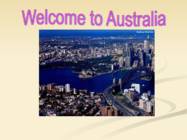
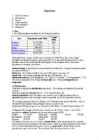
Main industries Industry • Mining • Manufacturing • Agriculture • Services • Finance • Tourism • Media • Education Mining • Queensland, New South Wales and Victoria • world's leading coal exporter • the second largest diamond mine in the World Agriculture • major agricultural producer and exporter • There are three main zones • Wide variety of fruits, vegetables and nuts • The beef industry Manufacturing • peaked in the 1960s • In 2004–05, the manufacturing industry exported • Motor vehicles • Chemical industries Conclusion Australia has alot of large industries that bring in money for the people, especially mining and agriculture. Sources • http://en.wikipedia.org/wiki/Economy_of_Australia • http://en.wikipedia.org/wiki/Agriculture_in_Australia • http://en.wikipedia.org/wiki/Manufacturing_in_Australia THANK YOU FOR WATCHING!
United States of America Table of Contents 1. Facts 2. Geography 3. Nature 4. History 5. Population 6. Government 7. Industry, economy 8. America's pop culture Facts Official Name: United States of America Capital City: Washington, D.C. Largest city: New York City Official languages: None at federal level National language: English Government: Federal constitutional republic President: Barack Obama ( Barack Hussein Obama II) Vice President: Joe Biden (Joseph Robinette "Joe" Biden, Jr) Population: 2009 estimate 306,108,000 people Area: Total 9,826,630 km2 (by CIA World Factbook) Currency: United States dollar ($) Motto: In God We Trust Anthem: "The Star-Spangled Banner" Flag Names: The Stars and Stripes, Old Glory, The Starry Banner Seal: Great Seal of the United States Flag ...
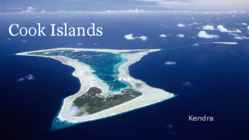
Cook Islands Kendra Location Capital: Avarua South Pacific Ocean 15 islands, 9 main islands Rarotonga Area: 240 square km Time zone: 12h behind Associated: New Zealand Geography Capital: Avarua Divided into two Coastline: 120km Natural resources: coconuts Climate: Tropical Mountainous, volcanoes, palms, soils, caves, People European, Chineese, African settlers Polynesian roots 2 polynesian languages: Pukapuka and other islands Official language Cook Islands Maori, English Population: 14,974 Villages, farms Politics Left: Henry Puna, right: John Key Self-governing state In international treaties Head of state: British monarch Parliamentary elections: 4 years Independence: 4th August 1965 Political parties: Cook islands party, the Democratic Economy Few natural resources: cobalt, phosphate Inadequate infrastructure Main industries: Tourism, fishing, banking, mining Export: citrus & tropical fruits, handicraft...
The Prarie Provinces Main Facts The Prairies comprise the states of Alberta, Saskatchewan and Manitoba Covers about 2,1 million square kilometers. About 5,7 million people live in that region. What is a Prarie? Prarie (aslo known as a temperate grassland) is a treeless ecozone in North America. Different names in different countries. Only about 400 mm per year. Hot summers and cold winters. Humans and the Prairies Almost 95 % of the Prairies are converted into farmland. The biggest towns are Calgary, Saskatoon and Winnipeg. The main argiculture industries are wheat, barely and canola. Rich in oil and natural gas. Fauna The most common carnivores are the Black Bear, Coyote and Badger. The most common herbivores are the Mule Deer, Pronghorne Antil...
Forestry Importance: · Environmental-protective importance Oxygen Cleans the air/soils/ground water Protects the soil from erosion · Timber Firewood Woodwork Building materials Timber cellulose paper · Mushrooms/berries/juices · Habitat of different species Measuring the amount of forest: · Fixing the area under the forests (ha/%) -> In Estonia 47.4%, 2.143 mil/ha It doesn't take into account the amount of timber · To measure the amount of timber (m3) -> 352.7 mil/m3 It doesn't take into account the annual increase · To fix different species of trees (%) -> Pine 40%, Birch 30%, Spruce 20% · To measure the annual increase of timber (m3, ha, year) -> 9 mil. m3/ha/year Main principle of the economy of forests: Annual cutting should be equal to annual increase. Trees are divided into: · Precious trees (ebony, mahagony, sandalwood) · Hard-br...
Economy of Estonia The economic growth during the recent years has been very fast. The Estonian economy is diverse industry and transport, as well as commerce and different branches of services are all equally important. Due to the available natural resources Estonian economy largely relies on the branches related to the forest; Estonian energy sector is based on oil shale. Finland and Sweden are the most important trade partners. The Estonian economy profits significantly from the business generated by more than 2 million tourists a year. The important sectors of the Estonian economy are the processing, transport, warehousing and communications, commerce and estate, rental and letting, as well as business services, agriculture, construction and government, education and health care. In order to be able to import all the products and services, something must be exported, that's why export holds such a prominent posit...
How to Make Tourism in Tallinn Profitable Nowadays tourism is one of the world`s largest industries. In Estonia it is also developed really largely. First of all, the main what attracts people abroad are journeys. People want to widen their outlook. Tallinn is the right place for tourists who want to get know about the medieval life in Europe. Here are such attractions as the Medieval Old Town, Kadriorg Park and Rusalka monument. These are the main places people usually want to visit. So, we must develop our tourism system. For example, make up some journey programmes with elements of the Estonian tales. That certainly attracts much more tourists in Tallinn. Moreover, Tallinn has the good benefit in its geographical location. Estonia is like a bridge or gate between Europe and Russia. And Tallinn is the heart of Estonia its capital. Estonians could get some profits from such situation, but for some unknown reasons they did not d...
Estonian Economy Estonians earn about half of the average European income, despite the fact that the economic growth during the recent years has been very fast and the differences have been diminishing. Although the extremely vigorous period of economic reforms is now over, the changes that Estonia is presently going through are far more extensive than those in the developed countries. The Estonian economy is diverse industry and transport, as well as commerce and different branches of services are all equally important. Due to the available natural resources Estonian economy largely relies on the branches related to the forest; Estonian energy sector is based on oil shale, a resource quite rare elsewhere in the world. Finland and Sweden are the most important trade partners. The Estonian economy profits significantly from the business generated by more than 2 million tourists a year, most of who...
Estonia Estonia is a little country in Northen Europe. Estonia is borderd by the Baltic Sea and Gulf of Finland, it's between Latvia and Russia. Its geographic coordinates are 59 North 26 Eeast. Estonias capital is Tallin, it is situated in the North of Estonia. Estonias mainland terrain is flat, boggy, and partly wooded, offshore lie more than 1,500 islands. From the north flat and from the east is Estonia hilly. It's highest peak is Suur Munamägi(318 m). Sometimes flooding occurs in the spring in Estonia. It's biggest lakes are Lake Peipsi and Lake Võrtsjärv. It's biggest islands are Saaremaa and Hiiumaa. In Estonia there is 26.5% arable land, 0.35% permanent crops and 73.15% other land. Natural resources in Estonai are oil shale, peat, phosphorite, clay, limestone, sand, dolomite, arable land, sea mud. The population of Estonia is about 1,341,000 people. Estonia, as a new member of the Wor...
Essay about Food Inc. Food Inc. is a 2008 American documentary film directed by filmmaker Robert Kenner. Food Inc. is about corporate farming in the United States, where farms produce food that is unhealthy, in a way that is environmentally harmful and abusive of both animals and employees. The main problem is how the animals are raised, how they are slaughtered and how the meat is manufactured. Farms are controlled by big food industries. Cows are fed corn instead of grass, because corn is cheeper and makes cows obese more quickly. Because of the unhealthy environment animals are raised in, they get infected with salmonella and coliform bacteria. Salmonella and coliform bacteria infected food can lead to serious diseases and death. The chickens are raised in dark rooms, where there isn’t even room to move. They live in the middle of their own droppings and they eat each other. They are fed stuff that ma...
The Commonwealth of Australia. The Commonwealth of Australia is a federal state within the Commonwealth of Nations. Its territories are the continent of Australia, the island of Tasmania and a number of smaller islands. It has an area of about eight million square kilometres. The continent of Australia is mostly a great plain with mountains in the east and south-east. The western part of the continent forms a plateau which occupies half of the continent. Australia's greatest rivers are the Murray and the Darling. Australia has several different climatic regions, from warm to subtropical and tropical. There are five big cities in Australia: Sydney, Melbourne, Adelaide, Perth and Brisbane. Each city is the capital of the state in which it is situated. Most of the factories are concentrated in or around the big cities. They produce goods for the motor-car, machine-building, clothing and food industries. Sydney, Melbourne, Adelaide, Bris...
History First people who lived in Canada came by a land bridge from Russia and Greenland. They were the ancestors of nowadays indigenous people of Canada. They just searched better for living places and followed their prey and they didn't even know they were on a different continent. The first explorers were Norse seafarers known as Vikings. As they sailed from Iceland to Greenland in AD 985, they were blown far off their course and they saw the coast what must have been Labrador. The forested areas of Canada's coast encouraged further explorations, because their settlement lacked lumber. They established a colony, what they called Vinland on Newfoundland. It died out during the 14th and 15th centuries. 500 years later Europeans started looking for a waterway to Asia, because travelling with spices over land wasn't very safe anymore. The first explorer was Christopher Kolumbus who reached America's shore in 1492, although he thought it ...
The United States and its economy are known to be one of the thriving and strongest in the world. It represents 16.6% of the world’s total GDP. The estimated worth of USA's GDP is estimated to be around 17.5 trillion dollars and dollar being the third currency in the world and the official currency of the US. They also manage a 5% growth every quarter. So how do they manage it? There are three main sectors that contribute to the USA's GDP. First is services that is 80% of the total GDP. The output of services in 2014 was 13,8 billion dollars witch was the nr.1 in front of European Union’s output witch was 13,4. The second contributing sector is the industry sector which provides 19% of the country’s GDP. In this area USA has fallen behind and has to accept the third position in the world’s total industry's output. First in industry’s output last year was European Union who had 4,6 billion dollar output, not far was China who ha...
Solomon Islands Geography The Solomon Islands lie northeast of Australia in the South Pacific Ocean. They are part of a long chain of archipelagos called Melanesia, which stretches from Papua New Guinea in the north to New Caledonia and Fiji in the south. Second largest in the Melanesian chain, the Solomon Islands archipelago covers approximately 310,000 square miles (803,000 square kilometers) of ocean and consists of 10,639 square miles (27,556 square kilometers) of land. There are a total of 992 islands in the Solomon Islands History When Spanish explorer Álvaro de Mendaña de Neira visited the Solomon Islands in 1568, he found some gold at the mouth, he erroneously thought that this could be one of the locations in which King Solomon (the Israelite monarch) obtained gold for his temple in Jerusalem. Mendaña then named the islands after King Solomon--Solomon Islands. Papuan-speaking hunter-gatherer...
Environmental Issues and Sustainable Development in Estonia We are all a part of the environment that surrounds us. Unfortunately, people do not always know how to take care of the things that are vital to our survivor but what we take for granted such as water, air and forests products. However, things have improved in recent years. What has been done to improve the environment in Estonia? People today are too lazy to think or to do something to protect the environment. They dump their waste into forests and even rivers which causes air and water pollution. Fortunately, people have come up with different organisations and events to help clean our envrionment. An annual event such as ,,Teeme ära!" motivates people to go out, spend time with friends and family and have fun while cleaning up the trash. This event first took place in 2008 and is now one of the biggest worldwide environmental events. Estonian Commission on Sustainabl...
Ottawa Ottawa is the capital of Canada and a municipality within the Province of Ontario. Located in the Ottawa Valley in the eastern portion of Southern Ontario, the city lies on the southern banks of the Ottawa River, a major waterway forming the local boundary between the Provinces of Ontario and Quebec. The 2006 Census recorded the population at 812,129, making it the fourth largest municipality in the country and second largest in Ontario. Connected by several bridges to its Quebec neighbour , the City of Gatineau on the northern shores of the Ottawa River, the two cities had a combined 2006 population of over 1,130,000, making it the country's fourth largest metropolitan area. On December 31, 1857, Queen Victoria was asked to choose a common capital for the Province of Canada (modern day Ontario and Quebec) and chose Ottawa. While Ottawa is now a major metropolis and Canada's fourth largest ci...
1. USA’s type of the country is constitutinal republic. Their type of government is parliamentary democracy 2. The flag has 13 red and white stipes which stand for the first states. The flag also has 50 stars on it which represent the states now and the last star is for Hawaii. 3. Their motto is In God We Trust. The national bird is the bald eagle. Symbols : The Lincoln Memorial, The White House, the Statue of Liberty (a gift from France 1886), Uncle Sam, the Jefferson Memorial, the Washington Monument. 4. America was discovered by Christopher Columbus in 1492. Christopher Columbus arrived in the „New World“ in 1492 and thought it was India and called the people Indians. 5. Thomas Jefferson, author of the Declaration of Independence and the third U.S. president, was a leading figure in America’s early development. During the American Revolutionary War (1775-83), Jefferson served in the Virgini...
Tallinn English College Report of Canada 8a Teacher: Merike Sisask Composer: Kärt Kalvet 2010 Canada, Kärt Kalvet 8a Canada General Information Canada is in North America. It's area is 9220970 sq km. Canada's population is 313.612.000 people. Canada is divided into 10 provinces and 3 territories. The capital of Canada is Ottawa. Canada has constitutional monarchy. The head of state in Canada's government is the Queen of England. There are two main languages in Canada: English and French. Canada's curreny is Canadian dollar (1 dollar=100 cents[Can$]). The highest peak of Canada is Mount Logan, 5959 metres. The lowest point is sea level. The longest river is the Mackenzie. The climate and geography of Canada vary greatly from temperate in the south to arctic in the north and from islands and plains in the east to mountains in the west. Location...
Air pollution Every day, the average person inhales about 20,000 liters of air. Every time we breathe, we risk inhaling dangerous chemicals that have found their way into the air. Air pollution includes all contaminants found in the atmosphere. These dangerous substances can be either in the form of gases or particles. Air pollution can be found both outdoors and indoors. Pollutants can be trapped inside buildings, causing indoor pollution that lasts for a long time. The sources of air pollution are both natural and human-based. As one might expect, humans have been producing increasing amounts of pollution as time has progressed, and they now account for the majority of pollutants released into the air. Air pollution has been a problem throughout history. Even in Ancient Romepeople complained about smoke put into the atmosphere. The effects of air pollution are diverse and numerous. Air...
Estonia. Estonia, officially the Republic of Estonia is a country in Northern Europe. It is the smallest of the three Baltic countries. Estonia has land borders with Latvia (339 km) to the south and Russia (229 km) to the east. It is separated from Finland in the north by the narrow Gulf of Finland and from Sweden in the west by the Baltic Sea. Estonia has been a member of the European Union since May 1, 2004 and of the NATO since March 29, 2004. The area of Estonia is about 45000 square kilometres and the population is about 1.4 million people. The capital of Estonia is Tallinn and the official language is Estonian. The currency is Eesti kroon. The main religion is Lutheran. Anniversary of the republic is celebrated on February 20. The national flower is cornflower, national bird is barn swallow and national stone is limestone. It is a land of great natural beaut...
Palm oil Kristiina Pällo LU1 EMÜ 2016 • Edible vegetable oil that is derived from the palm fruit • Oil palm trees are grown in tropical areas • Widely used in food industry due to its semi-solid state in room temperature and long shelf-life • It is in a lot of everyday products – makeup, shampoo, soap, biodiesel. Also in food – sweet treats (chocolate, biscuits etc), margarine, nut butters, crisps. The Two kinds of palm oil • Palm oil comes from palm fruit. It is rich in vitamin E and it has a red colour due to beta-caroten in it. High in saturated fats. Used mostly in food industry • Palm kernel oil comes from palm fruit seed. Also high in saturated fats. Used mostly in products such as shampoos, makeup, biofuel etc Ingridient list • Vegetable Oil, Vegetable Fat, Palm Kernel, Palm Kernel Oil, Palm Fruit Oil, Palmate, Palmitate, Palmolein, Glyceryl, Stearate, Stearic Acid, Elaeis Guinee...
BOOK REPORT Title of the book: Fight Club Author (name and some general information): Chuck Palahniuk is an American novelist born February 21, 1962 in Washington, USA. He is best known as the author for the novel Fight Club (1996), which was made into a movie in 1999. Palahniuk began writing fiction in his mid-thirties. When he attempted to publish his novel, Invisible Monsters, publishers rejected it for its disturbing content. This led him to work on Fight Club which he wrote as an attempt to disturb the publisher even more for rejecting him. After initially publishing it as a short story in the 1995 compilation, Pursuit of Happiness, Palahniuk expanded it into a full novel, which --contrary to his expectations--the publisher was willing to publish. Some other well-known novels: Rant, Choke, Diary. Analysis of the book 1. Setting The story takes place in somewhere between 1980s...
Bora Bora Today the island is almost entirely dependent on tourism. Bora Bora, as you know is a paradise for honeymooners. This island offers blue skies, blue sea, golden sands and green flora. Vaitape is the largest city of island Bora Bora Some of the bigger industries on the island include deep-sea fishing, with exports going mainly to Japan, as well as mother-of-pearl and pearl production. Agricultural practices produce sugar, vanilla, rum, and copra (used to extract coconut oil). Despite all of these activities, tourism is by far the leading economic contributor. The island has several hotels to cater to tourists, including twelve 4 and 5-store places like Club Med, for example. 3 Bora Bora experiences a tropical, humid climate with relatively stable temperatures year- round. The island is characterized by its vol...
Pure Competition Competition The word "competition" may be used in two ways: rivalry (synonym; opposition, antagonism) structural competition or "pure competition" The main characteristics of competition: 1. Number of firms 2. Type of product 3. Control over price 4. Conditions of entry 5. Nonprice competition 6. Information flow Pure Competition · Involves very large numbers of sellers and buyers. · Firms producing identical or homogeneous products. · Standardized product (a product identical to that of other producers). (ex. corn or cucumbers). · Free Entry and Exit: no significant legal, technological, financial, or other obstacles prohibiting new firms from selling their output in any competitive market N...
Topic Estonia, Tallinn The Republic of Estonia is the northernmost of the three Baltic States on the eastern shore of the Baltic Sea. To the east Estonia borders on Russia and Lake Peipsi and on the south on Latvia. The area of Estonia is 45 100km2, its coastline is 774km long. The geography of the land is surprisingly varied. Islands make up 9,2 per cent of Estonian's total territory, the largest islands are Saaremaa, Hiiumaa and Vormsi. The highest point is Suur Munamägi, which is 317m high. Estonia has a surprisingly mild climate for an area so far north. Sea winds keep the weather from becoming very cold or hot. The population of Estonia is 1.5 million. Of this number 62 per cent are Estonians. Estonians speak the Estonian language, which is closely related to Finnish. Estonia's flag has three horizontal stripes. The blue stripe at the top of the fla...
Ireland Ireland (Irish: Éire, Irish pronunciation:) is a country in north-western Europe. The modern sovereign state occupies about five-sixths of the island of Ireland, which was first partitioned on 3 May 1921. It is bordered by Northern Ireland--part of the United Kingdom--to the north, by the Atlantic Ocean to the west, the Irish Sea to the east and the Celtic Sea and St George's Channel to the South and South-East. The legal name of the state is simply "Ireland", but its legal description the Republic of Ireland is sometimes used to differentiate the state from the island. On 29 December 1937 Ireland became the successor-state to the Irish Free State, itself established on 6 December 1922. Ireland was one of the poorest countries in Western Europe and had high emigration. The protectionist economy was opened in the late 1950s and Ireland joined the European Communities (now the European Un...
Estonia Estonia, officially the Republic of Estonia, is a state in the Baltic region of Northern Europe. It is bordered to the north by the Gulf of Finland, to the west by the Baltic Sea, to the south by Latvia, and to the east by Lake Peipus and Russia. Across the Baltic Sea lies Sweden in the west and Finland in the north. The territory of Estonia covers 45,227 km 2, and is influenced by a humid continental climate. The Estonians are a Finnic people, and the official language, Estonian, is a Finno-Ugric language closely related to Finnish, and distantly to Hungarian and to the Sami languages. The population of Estonia is 1.5 million. Of this number 62 per cent are Estonians. The geography of the land is surprisingly varied. Islands make up 9,2 per cent of Estonian’s total territory, the largest islands are Saaremaa, Hiiumaa and Vormsi. The highest point is Suur Munamägi, which is 317m...
Territory and landscape Canada is one of the largest countries in the world. It covers nearly 4 million square miles. It is dividend into ten provinces( British Columbia, Manitoba, New Brunswick, Alberta, Nova Scotia, Ontario, Prince Edward Island, Quebec, Saskatchewan, Newfoundland ) along with two territories( the Yukon, the Northwest territories ). The capital city is Ottawa. Canada is a country rich in forests. It borders in the south with The United States and it's surrounded in the west by the Pacific Ocean, in the east by the Atlantic Ocean and above by many smaller bays, but is also borderedd with Alaska in the north-west. To the north of Canada is the broad Canadian Shield, an area of rock scoured clean by the last ice age, thinly soiled, rich in minerals, and dotted with lakes and rivers. Canada by far has more lakes than any other country and has ...
Australia Australia is the smallest continent in the world. It is 7.6 million square kilometres big. It is often called the island continent because it is rather small for a continent and very big for an island. There are only five countries bigger than Australia in the World. There are five states in the mainland. Tasmania is also considered as a state so there are six states. The Northern Territory and Canberra are also independent but they are not states. Canberra is the capital of Australia and it is situated between Sydney and Melbourne because both of these cities wanted to be the capital. The population is about 19 million people and growing. New South Wales is the most populated state and Victoria is the most densely populated state. The national language is English. It is English because British settlers came to live in Australia in the past and they brought conv...
ERLE MAIDO TAAB11 Report Purpose The purpose of this report is to give an overview of Estonian population, political factors, technological factors, economic factors and the trends in Estonian economy compared to Germany and to briefly discuss Estonian business environment. Estonian population The total population of Estonia is 1 313 271 according to Statistics Estonia, of which 69.1% are Estonians, 25.1% Russians, 4.9% of which are of different nationalities for example Ukrainians, Belarusians and Finns. Rest are of unknown nationality. 68.5% of population speaks Estonian as a mother language, 29.6% speaks Russian as a mother language and 0.6% Ukrainian. Estonia has only one official language which is Estonian. Ac...
The United Kingdom The United Kingdom consists of England, Scotland, Wales and North Ireland and it is situated in the Atlantic Ocean near the mainland of Europe. The population of the UK is 58.6 million and area is 244,110 sq km. Britain has a temperate humid climate. Its characteristic features are mild winters, warm summer, no temperature extremes, abundant rain all year round and frequent changes of weather. The mild climate is partly due to the warm Gulf Stream and partly to the south westerly winds. Occasional winds from the east in winter may bring cold and dry weather. The distribution of rainfall is influenced by the Atlantic Stream. The mountainous areas of the north and west have more rain than the lowlands of the south and east. Wales is located on a peninsula in central-west Britain. The entire area of Wales is about 20,779 km². Wales borders by England to the e...
THE U.K Different Parts The United Kingdom is a short way of saying the United Kingdom of Great Britain and Northern Ireland. The UK is the political name for those countries which share a parliament in London. All of them were at one time independent kingdoms with their own monarch. Now they are all part of the same kingdom and share the same monarch. The UK consists of Northern Ireland, Scotland, England and Wales. The peoples of these countries are British subjects; they hold British passports and therefore their nationality is British. The british Isles is the geographical name for all the islands off the west coast of Europe. These islands also include The Republic of Ireland, which is politically independent of the Britsh government. Many people refer to the inhabitants of the British isles as 'the English', but England is only one of the countries. The other countries are Scotla...
S C O T L A N D GENERAL OVERVIEW Territory: 31, 510 sq miles Highest peak: Ben Nevis 1343m Population: 5, 055, 000 National emblem: the thistle Capital: Edinburgh National flower: the bluebell Islands: About 790 National instrument: bagpipes Lakes: the best- known is Loch Ness, famous for National dish: haggis Nessie, its mythical monster Scotland is also famous for: whisky, kilts and sheep · One of the four constituent nations which form the UK · They have their own money, system of law, history, stamps, deep- rooted customs, traditions and ancient language- Gaelic · Most people speak the Scottish dialect becoming endangered language · Weather unpredictable · Breat...
IN THE LIGHT OF RECENT DEVELOPMENTS IN MEDIA ECONOMY AND TECHNOLOGY, HOW VALID IS THE CRITIQUE OF THE FRANKFURT SCHOOL OF MEDIA DECEIVING AND PACIFYING THE POPULATION? Essay Tallinn 2013 The rapid development of computer technologies and internet has been one of the main factors affecting our everyday life over the last decades. They have made our life more efficient, comfortable and also changed the way we communicate and consume media. Digitalization has also brought us many new platforms and more possibilities for media to reach even more people. The internet is allowing anyone to share information instantly to all over the world. It might be thought that with all these new developments, problems like controlling of the media and deceiving people are gone, but it seems that things are not that clear. When the first newspapers a...
Tallinn English College Topic Estonia Tallinn 2008 1. Introduction Estonia is a small country about the size of Switzerland, or New Hampshire and Massachussetts combined. Estonia is named after the people called "Ests" who lived in the region in the 1 st century AD. The Republic of Estonia is one of the three countries commonly known as the "Baltic States". The other Baltic States are Latvia and Lithuania. 2. Geographical position Estonia is situated in northeastern Europe. Estonia is bounded on the north by the Gulf of Finland, on the east by Russia, on the south by Latvia and on the west by the Baltic Sea. In the north it borders on Finland. The coastline of the Baltic Sea in Estonia is characterized by numerous gulfs and bays, the biggest of them being the Gulf of Finland, the Gulf of Riga and the Gulf of Pärnu. Bays include the Narva Bay, Matsalu Bay, Kolga Bay, Kunda Bay, Tallinn Bay etc....
- What is the capital of Australia? a. Sydney b. Melbourne c. Canberra - Which city is the oldest and largest? a. Canberra b. Sydney c. Darwin - Which is a popular Australian animal? a. bear b. kangaroo c. fox - Who are the Australian natives a. Eskimos b. Aborigines c. Indians - Who discovered Australia? a. Columbus b. Captain Cook c. Lewis and Clark - What is the official Language in Australia? a. English b. German c. Spain Australia is situated south of Asia, between the Pacific and the Indian Oceans. Australia is a continent, a country and an island at the same time. Australia is located in the southern hemisphere. OFFITIAL NAME : Commonwealth of Australia CAPITAL: Canberra TOTAL AREA: 7,700,000 sq.km POPULATION: 20 million people HEAD OF STATE: Queen Elizabeth II represented by Governor-...
Running head: DE BEERS MONOPOLY De Beers Monopoly Microeconomics Diamonds an extremely hard, highly refractive crystalline form of carbon that is usually colourless and well know as "girl's best friends", but the story of how diamonds got so famous and how they have remained so rare is down to a company named DeBeers. This paper is about DeBeers, the most powerful diamond company in the world. Monopoly main characteristics were that firm is single seller of the product without any close substitutes. Nowadays DeBeers have many substitutes and that is the reason why they are not a pure monopoly, but they are definitely nearly one. This is because the firm still has the bulk of world sales and controls 45% of world diamonds market. This paper examines these monopoly characterises, also how and why DeBeers diamonds monopoly still exists and what be...
TartuWaldorf School FINLAND Report Johan Mähar Tartu 2008 Contents p. 1. Introduction....................................................................................................1 2. Nature and geography.....................................................................................2 3. Position and size.............................................................................................2 4. Climate..............................................................................................
Topic Australia Introduction Many people know Australia as the land down under because it is the only continent except for Antarctica that is all on the southern hemisphere. Its name means ,,Southland". The official name of the country is the Commonwealth of Australia. It's capital is Canberra. Australia is the sixth largest country in the world but the smallest continent. Australia has 6 states and 2 territories (New South Wales, Victoria, Tasmania, Queensland, Western Australia , South Australia, The Australian Capital Territory and the Northern Territory). The Australian people are culturally the same as the Anglo Americans. There also live aborigines. Aborigines are the ancestors of the people. Like the US and Canada, Australia was an English speaking colony of Great Britain. Today Australia is a modern developed country with a diversified economy. Australia is an island continent of 7.7 million square kilometres, which ma...
Life in Estonia through the eyes of an economics student With a population of 1 313 271 people, Estonia is one of the least populous member states of the European Union. However, according to the IMF, it is a developed country with an advanced and high-income economy. Estonia follows market economy system which ensures the little government intervention and the determination of prices of goods and services in a free price system. Therefore, economic decisions are guided solely by the aggregate interactions of a country's citizens and businesses. In addition to mentioned afore, Estonia tends to perform favourably in measurements of civil liberties, education, and press freedom. Living in Estonia has many of its good sides, for instance it is a secure place from nature disasters and it has a beautiful nature. Although, when not to look only through rose-tinted glasses, there are still some minuses in country’s organiz...
Case Google 1. What were the key factors behind Google's early success? There were 4 main key factors behind Google's early success: · Perfecting an innovative search engine- clearly the most important factor for Google's success. Google stopped counting keywords like old search engines and started using famous Page Rank algorithm. A reliable searches through the number of websites that link to a page to weight search result relevance. · Google focusing on the user- Focus on the user and all else will follow. Attraction for users were the no-nonsense simple white search pages and distractive colorful logo with no ads or editorial content on the page lead to easy and fast search that Yahoo couldn't imitate. · Google delivered search results people really wanted- trustworthy for users. The promised not to sell placement in search results to advertisers and instead ...
Tallinn English College Topic Great Britain 2007 1. Introduction The official name of Great Britain is `the United Kingdom of Great Britain and Northern Ireland (or short United Kingdom)' The population is about 60.4 million. The capital is London. Other biggest cities include Birmingham, Bristol, Portsmouth, Glasgow and Swansea. English is the main language of Great Britain, but Welsh is officially recognized in Wales and Gaelic in Scotland. 2. Geographical position The British Isles is the geographical term for a group of about 5000 islands off the coast of mainland Europe. The largest island is Great Britain, which is also the largest island in Europe. It consists of England, Wales and Scotland. The next largest island is Ireland, which is made up of Northern Ireland and the Irish Republic. Britain and Northern Island together form the United Kingdom. When referring to Britain ...
SISUKORD ENERGY STORY................................................................................................................4 USES OF ENERGY............................................................................................................. 4 2.1 Uses of energy in homes...............................................................................................5 2.2 Types of energy used in homes.................................................................................... 6 2.3 Energy use in different types of homes........................................................................ 6 2.4 Commercial Energy Use...............................................................................................9 2.5 Industrial and Manufacturing Energy Use..................................................................11 2.6 Transportation Energy Use.................................................
MIINA HÄRMA GYMNASIUM Deserts Saudi-Arabia Tartu 2007 Deserts In geography, a desert is a landscape form or region that receives very little precipitation. Generally, deserts are defined as areas that receive an average annual precipitation of less than 250 mm (10 inches). Deserts cover at least one-fourth of the Earth's land surface. Desert biomes can be classified according to several characteristics. There are four major types of deserts: · Hot and dry · Semiarid · Coastal · Cold Location The four major North American deserts of hot and dry deserts are the Chihuahuan, Sonoran, Mojave and Great Basin. Others outside the U.S. include the Southern Asian realm, Neotropical (South and Central America), Ethiopian (Africa) and Australian. The major deserts of semiarid deserts include the sagebrush of Utah, Montana...
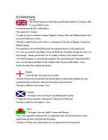
1) General facts The UK: * the United Kingdom of Great Britain and Northern Ireland was formed in 1801 * it covers 243,610 sq km * everybody from the UK is called British * the capital city is London * is made up of four constituent countries: England, Scotland, Wales and Northern Ireland which in turn are divided into counties * the flag is called the Union Jack which is a combination of the flags of England, Scotland and Northern Ireland * the population is about 60,000,000 people, the population density is 242 people/sq km * its coasts are washed by the Atlantic Ocean, the North Sea, the English Channel, the Celtic Sea, Saint George's Channel, and the Irish Sea. It is linked to France by the Channel Tunnel * the United Kingdom is a constitutional monarchy. The current monarch is Queen Elizabeth II, who is also the Queen and Head of State of fifteen other Commonwealth Realms, such as Can...
Introduction The United States of America is a very big country. Its territory is about 9.4 million square kilometres and its population is more than 260 million people, 12% of them are the Afro-Americans. It is the world's third-largest country by size and by population. The population density is about 27 people per square kilometre. Most of the people live in towns. There are 50 states in America. The biggest of the state is Texas, next by size are California, Alaska and Montana. Six states - Maine, Vermont, New Hampshire, Connecticut ,Rhode Island and Massachusetts are called New England. They are all small states in the U.S. that lie in the north-east. The first colony of immigrants settled down in Virginia, in the eastern part of the U.S.A. The biggest cities are New York, Washington, Chicago, Los Angeles, San Francisco, etc. The official language of the USA is English; Spanish is also...
Population 1. Size, its changes 2. Distribution 3. Towns 4. Ethnic makeup 5. Age breakdown 6. Religion(s) 1. Size. 1 July 2006 population estimates by UK National Statistics: % (mid- Part Population (mid-2006) 2006) England 50,762,900 83.8 Scotland 5,116,900 8.4 Wales 2,965,900 4.9 Northern Ireland 1,741,600 2.9 United Kingdom 60,587,300 100 Although Britain is quite small in terms of land area (245,000 sq km), it has a large population of nearly 61 million, which ranks the 21st in the world (Britain is the 21st most populous state in the world) and the third largest in the European Union. The size of population is chan...
Ergo Pikas Integration of Lean Construction and Building Information Modelling DISSERTATION Tallinn 2010 2 UNIVERSITY OF APPLIED SCIENCES Author: Ergo Pikas- Civil Engineering student, Faculty of Construction, Tallinn University of Applied Sciences Supervisor: Rafael Sacks- Associate Professor, Faculty of Civil and Env. Engineering, Technion Israel Institute of Technology Consultant: Roode Liias- Professor and Dean, Faculty of Civil Engineering, Tallinn University of Technology Title: Integration of Lean Construction and Building Information Modelling Archived: University of Applied Sciences, Faculty of Construction ABSTRACT This research can be divided into two. The first part investigates the current state of the construction industry, ...
TRADERUN MOODUL TRADERUN MODULE BUSINESS PECULIARITIES IN THE EU, RUSSIA AND EASTERN PARTNERSHIP COUNTRIES ÄRI ERIPÄRAD EUROOPA LIIDUS, VENEMAAL JA IDAPARTNERLUSRIIKIDES Lecturers: Ryhor Nizhnikau (responsible) Giorgi Gaganidze, Sergei Proskura, Andres Assor P2EC.00.202 (UT code), RIE 7044 (TLU code) Reading materials: Business peculiarities in Ukraine and Belarus Lugemismatejal: Äri eripärad Ukrainas ja Valgenenes Created by Andres Assor Tartu 2013 TABLE OF CONTENTS INTRODUCTION ................................................................................................................... 4 1. UKRAINE ...................................................................................................................
Great Britain Pärnu 2012 Contents Great Britain Great Britain or Britain is an island situated to the northwest of Continental Europe. It is the ninth largest island in the world, the largest European island, and the largest of the British Isles. With a population of about 60.0 million people in mid-2009, it is the third most populous isla...
 annaabi.ee