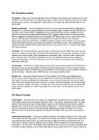
The Middle Ages The Middle Ages are one of the most turbulent periods in English history. The Middle Ages are so called as the middle period between the decline of the Roman Empire and the Renaissance. The Middle Ages started in 1066. with the Battle of Hastings and the Norman Conquest. William the Conqueror took all the lands from the Saxon English and gave these to French nobles. Normans were known as great builders. This is assured by the fact that many great castles and other buildings, including the Tower of London, were built during the Norman Conquest. In 1086. Domesday Book was compiled. It is a detailed survey of England ordered by William the Conqueror. The reign of King William Rufus who was the son of William started in 1087 and lasted until 1100. Next king was Henry I who was the brother of William Rufus. His reign was from 1100-1135. In 1135 Henry I nephew Stephen got to the throne of Engla...
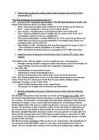
Medieval England 1066-1485 Eva Asper Anna Pohlak 11.c The Norman Dynasty The Norman Conquest In the 11th century, Normans conquered England - The Battle of Hastings 14.10.1066 The Anglo-Saxon forces had more soldiers but the Normans had better military tactics and won in the end thanks to a clever strategy William I, also known as William the Conqueror, replaced King Harold on the throne The invasion was completed by 1071 - The Norman invasion is depicted on the Bayeux Tapestry a long embroidered cloth The death of King Harold embroidered on the Bayeux Tapestry The Norman England William I ensured his power by dividing the land into parts and making 1/7 of it a royal domain He made his nobles swear an oath of allegiance and become his vassals Died in 1087 while fighting in France, was succeeded by his third son, William...
LONDON The history of the town is very closely linked with the history of the country itself. The name probably comes from the celtic words Llyn, which means a lake, and Dun, which means a fort or a strong place. Although the site was not important during the Celtic period (400 BC 43 AD) During the Roman occupation Londinium, as it was called then, was not influential politically, but was, however an important crossing point for the romans over the river Thames. Londinium was at a very good place, so it soon became a trading centre. In AD 61 the city was devastated by Boudicca, who led a revolt againt the Roman conquest of Britain. The city was burned down and its inhabitants massacred. London was rapidly rebuilt, becoming the capital of the province Britannia. AD 122 Roman walls were built around it as a Around AD 400 the Anglo-Saxons invaded Britain. They destroyed the roman towns and formed many kingdoms that were hostile to one a...
LONDON HISTORY PERIOD EVENTS PEOPLE The Celtic period (400 BC Name: Celtic words (Llyn (a lake) + AD 43) Dun (a fort or strong place) ) Not important The Roman occupation (AD 43 Londinium not important Boadicea a revolt against - AD 410) politically. An important trading the Roman conquest centre. Devastation AD 61. Rebuilt. Roman walls built in AD 200. Anglo Saxons (AD 400 Destroyed the Roman towns. Many 1066) kingdoms. London in ruins. King Egbert one Flourishing. Attacks by Vikings. kingdom England (the 9th ...
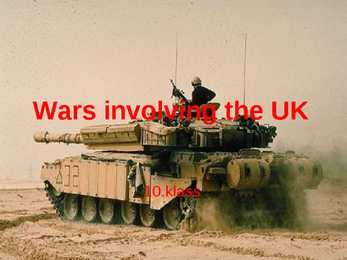
Wars involving the UK 10.klass Roman Invasion · 43 AD 410 AD · Aulus Platius · Archeological and epigraphic evidence The Lunt Fort near Coventry, · New developments a reconstructed Roman fort Aulus Platius Hadrian's Wall Norman conquest of England · 1066 AD · William the Conqueror · Battle of Hastings · Last succesful conquest of the UK Hundred Years' War · 1337 1453 · England France · Edward III · Joan of Arc · French victory English and Welsh longbow; the most Painting of Jeanne d'Arc at famous and efficient weapon during the war the Siege of Orléans The Wars of the Roses · 1455 1485 · Henry VI · Edward IV · Henry Tudor Red Rose of Lancaster The Tudor Rose of England White Rose of York ...
History of Different cultures Maile Kikerpill 2013 The Roman Empire began as a farming community on the Tiber River in central Italy was occupied in the 700 BC by 500 BC the area was dominated by Etruscans by 300 BC the Latins ruled central and southern Italy in 264 BC the Latins began to dispute the territorial ambitions of the Carthaginians known as the ,,Punic Wars,, finally destroyed in 146 BC By 70 AD Rome ruled every country that touched the Mediterranean was not the largest empire in total territory in world history until 27 BC the Roman Empire was a Republic Julius Caesar declared war on the Roman Senate itself became sole ruler Brutus, Cassius and others assasinated Julius Caesar Octavius declared himself "Caesar Augustus" and first Emperor of Rome 200 years of peace followed by 100 years of warfare in 284 AD Diocletian divided the Roman empire into two halves: East and West in 306 Constantine I declared Christianity in 401 ...
The Irish Problem ~the Irish can not be trusted~ In 1641, just prior to the Civil War, the Irish of Ulster had begun an uprising and attacked the planters who had been settled 30 years before. Between 10,000 and 15,000 Protestant planters were murdered by the Irish at places such as Portadown. Due to the war, the English did nothing about this and the death-toll became heavily exaggerated over time. In 1649, after the Civil War had ended, Cromwell landed at ...
Michael Morpurgo Michael Morpurgo was born in 5 October 1943, his full name is Michael Andrew Bridge Morpurgo . He is a well-known British author, who has written over a hundred books for children. There has been released three biogrphies about Michael Morpurgo. First on wasreleased in 1999 called “Interview with Michael Morpurgo”, written by JoannaCarey. In 2004 there was released “Dear mr Morpingo: Inside the world of Michael Morpurgo”, written by Geoff Fox. In 2005 was released “Michael Morpurgo”,written by Shaun McCarthy. Favorites among his own books are The Butterfly Lion, Kensuke´s Kingdom, WarHorse and Private Peaceful. The book talks about a horse who lives on a farm and moves into the battles of World War I. It is a story of friendship lasting through the toughest tests. Michael Morpurgo tells the story trough the eyes of a horse. It is a moving and a powerful story of survival. Right n...
The Ellis Island The ellis island is located in upper new york bay. Ellis island was a gateway for a millions of immigrants to the US from 1892 to 1954. The original island was quite small , but it was expanded with land reclamation between 1892 adn 1934. the name ellis island came from samuel ellis who brought the island in 1775. Ellis dies in 1794, and in 1808 New York State buys the island from his family for $10,000. The U.S. War Department pays the state for the right to use Ellis Island to build military fortifications and store ammunition The first Ellis Island Immigration Station officially opens on January 1, 1892, as three large ships wait to land. Seven hundred immigrants passed through Ellis Island that day, and nearly 450,000 passed throught Ellis Island first year. Over the next five years, more than 12 million people will pass through the island on their way into the United States. The Elli...
Tallinn English College Topic Great Britain 2007 1. Introduction The official name of Great Britain is `the United Kingdom of Great Britain and Northern Ireland (or short United Kingdom)' The population is about 60.4 million. The capital is London. Other biggest cities include Birmingham, Bristol, Portsmouth, Glasgow and Swansea. English is the main language of Great Britain, but Welsh is officially recognized in Wales and Gaelic in Scotland. 2. Geographical position The British Isles is the geographical term for a group of about 5000 islands off the coast of mainland Europe. The largest island is Great Britain, which is also the largest island in Europe. It consists of England, Wales and Scotland. The next largest island is Ireland, which is made up of Northern Ireland and the Irish Republic. Britain and Northern Island together form the United Kingdom. When referring to Britain ...
RICHARD II Richard II (6 January 1367 14 February 1400) was King of England. He ruled from 1377 - 1399. Richard was a son of Edward, the Black Prince, and was born during the reign of his grandfather, Edward III. At the age of four, Richard became second in line to the throne when his older brother Edward of Angouleme died. Richard succeeded to the throne at the age of ten in 1377. Richard was tall, good-looking and intelligent. As earlier historians used to believe, he may have suffered from a personality disorders. Richard's mental state has been a major issue since the 19th century. One of the first modern historians to deal with Richard II as a king and as a person was Bishop Stubbs. Stubbs argued that towards the end of his reign, Richard's mind "was losing its balance altogether" even though there is no basis for assuming the king suffered from mental illness he showed clear signs of a narcissistic per...
History exam *Stonehenge - is a monument located in England. It is one of the most famous prehistoric sites in the world and is composed of earthworks surrounding a circular setting of large standing stones. The surrounding circular, earth bank and ditch, have been dated to about 3100 BC. Stonehenge was produced by a culture with no written language. Many aspects of Stonehenge remain subject to debate. There is little or no direct evidence for the construction techniques used by the Stonehenge builders. *The Celts in Britain and their legacy The Cets lived in Britain in The Iron Age. They were warring tribes who were battleful amongst themselves as well as inter-tribal war. They were not centrally governed. The Celts brought iron working, iron ploughs and metal swords, horses, wheels and chariots - all these things gave them an instant superiority over the native tribes. The Celts built a number ...
Running head: NUCLEAR ENERGY Nuclear Energy U.S. Government History of Nuclear Energy- Nuclear Energy History of Nuclear Energy · Uranium was discovered in 1789 by Martin Klaproth. He was a German chemist, and named his discovery after the planet Uranus ("Outline history of," 2010) · 1939-1945 Manhattan Project- atomic energy program to develop the first transportable atomic bomb ("Nuclear technologies timeline," ) · 1942- First self-sustaining nuclear chain reaction ("Nuclear technologies timeline," ) · 1945- Hiroshima and Nagasaki- US. drops atomic bombs to Japan to end World War II ("Nuclear technologies timeline," ) · 1946- First nuclear energy in civilian use ("Nuclear technologies timeline," ) NUCLEAR ENERGY · 1954- Atomic Energy Act ...
Years 1154-1485 Henry I was the first unquestioned ruler. One of the most important kings in the Middle Ages. He had lands in Britain & France. Then the government was the monarch, a person, not a place. He had more land than any pervious king. After his marriage to Eleanor of Aquitaine, he also ruled the lands south of Anjou. His empire stretched from the Scottish border to the Pyrenees. England provided most of its wealth, but the heart was Anjou. Henry II began to regain royal control. During the war some barons had become very powerful. He pulled down some of their castles. He tried to restore law & order. He wanted the same kind of justice to be used everywhere. He appointed his own judges to travel around the country. They dealt with crimes & disagreements over poverty. Serious offences were tried in the king's court. At first they had no special knowledge or training. They were trusted to use common se...
Mustamäe College Tallinn's Seaplane Harbour Report Anna Elise Rohtmets G2K Tallinn 2010 Table of Contents 1. Introduction.................................................................................................3 2. History.........................................................................................................4 3. Early History...............................................................................................4 4. The Post-War Years....................................................................................5 5. Recent History.................................................
Spanish California Sten Endrik Mihkelsoo MM-14 California's contact with Europeans began in the mid 1530s when Cortez's men ventured to Baja California. Not until 1542 did Spaniards sail north to Alta California, and Juan Rodriguez Cabrillo's expedition of that year made landings as far north as modern Santa Barbara. The Spaniards, of course, were hardly the first to discover this land of wonder and extremes. The earliest Californians were adventurous Asians who made their way across the Bering Straits to Alaska thousands of years ago when a warmer climate and a now-vanished land bridge made such travel easier. These men and women and their descendants settled North and South America, spreading out to form the various nations and tribes whom the first European visitors to this hemisphere dubbed "Indians." The mountain ranges of the Pacifi...
The United States of America (The U.S.A) Geography The main part of the United states extends from the Atlantic Ocean in the east to the Pacific Ocean in the west. It covers the middle of the North American continent. This area is called ,,the continental United states". The continental United States is bounded to the North by Canada and to the South by Mexico. The border with Canada is often called ,,the longest unguarded border in the world". The United States and Canada are good friends and they have very few problems in managing the border. The borded with Mexico is different. Immigrants are constantly crossing the border illegally. Every day about 2,000 of them are captured and sent back, but may others get through. There are also two states that are not connected to the continental United States. They are Alaska and Hawaii. There are two mountain ranges in ...
RUNNING HEAD: RUSSIA Russia Throughout the History U.S Government Table of Contents 1. Introduction 2. History of Russia 3. Russia nowadays 4. Important people in Russia throughout the history 5. Conclusion 6. References Introduction- Russia Throughout the History Russia is a one of the biggest countries is the world. The first clues about Russian history are from as early as the 9th century. Russia has suffered through rough times in war, mad leaders and tough life amongst the locals. Over times the country has had several different names and political systems. They have been an empire ruled by a czar, a communist nation, and a democratic federation. Nowadays the country's official name is the Russian Federation ("Basic facts about,"). The head of the executive branch i...
History of Great Britain Prehistory (55BC) no written records 6th 3rd c. BC the Celts came to British isles hill figures, hill forts, stone circles ( Stonehenge ) RomanBritain (55BC 400AD) Julius Caesar, named the country Albion Hadrian's Wall, villas, roads, the town of Bath The AngloSaxon, Danish and Norman invasions Germanic tribes settled and stayed Anglia Christianity was brought, religion became important, churches were built 8th century = raids by the Vikings and the Danes 1016 1042 : Under Danish rule ( York was the capital ) 1042 : local AngloSaxons regain their rule 1066 : Normans arrive ( the Norman conquest ) Medieval Britain (106615th c.) the Battle of Hastings William the Conqueror a new AngloNorman state the feudal system introduced the rule of the king and church strengthened centralised country, military rule Scotland, Wales and Ire...
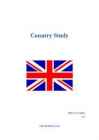
Country Study Mari-Liis Luukas 11c The British Isles Administrative / d'mnstrtv / haldus- Self-governing / self'gvn / isemajandav, iseseisev Legislative assembly/ 'ledsltv 'sembl/ seadusandlik kogu The British Isles is the name of a group of islands washed by the North Sea in the east and the ...
Britain History Pre-Norman Britain The Iberians brought their metal-working skills and the first real civilization to Britain in the third millennium B.C and were overrun by various Celtic invasions that began in the 8th century. The Celts introduced their tribal organization and an early form of agriculture before they were forced westward by the Roman invasion. Forms of Celtic language are still spoken in Britain. Romans (with Julius Caesar in the head of them) first tried to occupy Britain in 55 B.C., but there was a rebellion in Gaul so they had to leave to fight against it. Next time they came in 43 A.D. and their leader was Emperor Claudius. Romans brought a lot with them. Their brought paved roads, the sites of important cities, the seeds of Christianity, the Roman law, Roman baths, language and advanced civilization. They also built Hadrian's Wall in 122 A.D. Romans occupied...
Stonehenge One of the best known ancient wonders of the world, 5000 years old Megalith monument, built by western mediterraneans during 3000-1600 BC Circular structure, large standing stones, aligned with rising sun at teh solstice Attlers and bones were sued to dig pits that hold the stones The Celts in Britain and their legacy 700-200 BC celts invade Britain Gaels or Goehls(Ireland and Scotland),Cymri(Wales) and Brythons(gave name to Brittany) Fierce fighters,superb horsemen.Most of them farmers, lived in thatched houses Good at art, craftmanship, used iron Divided into tribes, ruled by kings, only in face of danger would they choose a single leader Legacy- hill-forts, farms, churches, field system, woodland, pasture, weapons, iron objects, langugae, culture Caesar in Britain The great Roman Emperor Firts came 55 BC to gather information, celts ...
English a global language Aleksander 10B This essay explores British and English history and its influence to the world. English is spoken all around the world. We can even say that it is a international language. It begun when Great Britain started founding colonies. Empire growed from the 17'th century up to 1920's. It was said that the sun never sets on British empire. It had expanded all over the world. In the colonies, English started to change, it had spread all around the world, just like the empire. It was leading country in the world for a very long time. It had strong economy and the strongest navy that any one had ever seen, so it was till the world wars. The British Isles, because of their good geographical position have been conqured only twice. And both occasions had a great influence...
The United Kingdom The United Kingdom consists of England, Scotland, Wales and North Ireland and it is situated in the Atlantic Ocean near the mainland of Europe. The population of the UK is 58.6 million and area is 244,110 sq km. Britain has a temperate humid climate. Its characteristic features are mild winters, warm summer, no temperature extremes, abundant rain all year round and frequent changes of weather. The mild climate is partly due to the warm Gulf Stream and partly to the south westerly winds. Occasional winds from the east in winter may bring cold and dry weather. The distribution of rainfall is influenced by the Atlantic Stream. The mountainous areas of the north and west have more rain than the lowlands of the south and east. Wales is located on a peninsula in central-west Britain. The entire area of Wales is about 20,779 km². Wales borders by England to the e...
WORD FORMATION Exercise I 1. Chestnut honey provides quick and ............. relief.(EFFECT) 2. Come rain, wind or shine these snapdragons give a superb display over an ....................... long period. (EXCEPTION) 3. Dreaming of a beautiful home for your ........................... .(RETIRE)? Enjoy lifetime ownership of a luxury home for an ................. price.(AFFORD) 4. The post-war decline in beer ......................... was practically halted last year. (CONSUME) 5. Better is a dinner of herbs where love is, than a stalled ox and ..................therewith.(HATE) 6. In the first quarter of the 18th century people began to realise the ......................... of hygiene to public health.(IMPORTANT) 7. The ....................collapse of the Roman Empire lasted for nearly three hundred years before its final dissolution in AD 476.(GRADE) 8. Jamie's ....................of the night's events is hazy but the tabloids will re...
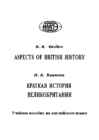
N. A. Vavilov ASPECTS OF BRITISH HISTORY Н. А. Вавилов КРАТКАЯ ИСТОРИЯ ВЕЛИКОБРИТАНИИ Учебное пособие на английском языке Москва Институт международного права и экономики имени А. С. Грибоедова 2008 2 УТВЕРЖДЕНО кафедрой лингвистики и переводоведения Вавилов Н.А. Краткая история Великобритании: Учебное пособие на английском языке. – 2-е изд., пересмотр. и испр. – М.: ИМПЭ им. А.С. Грибоедова, 2008. – 88 с. Пособие содержит краткий очерк важнейших событий в истории Великобритании – от первых документально засвидетельствованных вторжений на остров (кельтов, римлян и англосаксов) до создания и распада Британск...
London History The Romans AD 43- AD 410 The Romans finally invaded Britain in AD 43 from Kent. The Romans lead by Julius Caesar attempted to invade Britain twice before that in 55 and 54 BC but the invasions were unsuccessful. They made their way to the river Thames and sailed up it. The Romans knew it was important to control a crossing point at the river Thames, so they decided to build a settlement on the north bank. Although small settlements had been built on the banks of the Thames, the Romans were the ones who built the first city. They called their city Londinium. The Roman engineers noticed that the point where the swampy river narrowed would make an ideal crossing point, they built London Bridge. Less than 20 years later the native Iceni tribe, led by Queen Boudicca, rose up against the Romans in revenge for mistreatment and burnt Londinium to the ground. The well disciplined Roman army defeated her forces and Londinium was r...
1) General facts The UK: * the United Kingdom of Great Britain and Northern Ireland was formed in 1801 * it covers 243,610 sq km * everybody from the UK is called British * the capital city is London * is made up of four constituent countries: England, Scotland, Wales and Northern Ireland which in turn are divided into counties * the flag is called the Union Jack which is a combination of the flags of England, Scotland and Northern Ireland * the population is about 60,000,000 people, the population density is 242 people/sq km * its coasts are washed by the Atlantic Ocean, the North Sea, the English Channel, the Celtic Sea, Saint George's Channel, and the Irish Sea. It is linked to France by the Channel Tunnel * the United Kingdom is a constitutional monarchy. The current monarch is Queen Elizabeth II, who is also the Queen and Head of State of fifteen other Commonwealth Realms, such as Can...
Audentese Erakool Frederick Douglas Author: Kristin Liiv Supervisor: Martin Sillaots Tallinn 2007 Frederick Douglas................................................................................................................3 Life as a slave...................................................................................................................3 Early education................................................................................................................ 3 Abolitionist activities.......................................................................................................4 Autobiography................................................................................................................. 5 Travels to Europe.............................................................................................................
Literature of the 14th century The highpoint of medieval literature, the best writer of late medieval lived then. William Langland 1332-1376 the last important poet of alliterative verse. His masterpiece "The Vision of Piers Ploughman" how important working hard is, the labour of peasants is the base of the welfare of the people. A passionate protest against social injustice. A time when peasants were slowly rising against their feudal lords. Descriptions of different social classes. Religious mysticism. Two great principles: 1) all men are equal before God; 2) honest labour is dignified. It is a dream allegory. A young maiden named Youth, Greed is an old witch. The greatest writer of this period and the whole of medieval times Geoffrey Chaucer (1340?-1400): · The father of English poetry · The creator of English versification · The first poet to use various metres · Laid the foundation of the new literary English ...
The Norman Conquest William I (the Conqueror) (1066 - 1087) On October 14, in the fateful Battle of Hastings, William defeated and killed Harold and seized the English throne. Two months after the Battle of Hastings, William I was crowned king in Westminster Abbey. The service was held on Christmas Day 1066, with all the traditional ceremonies associated with the coronation of English kings since the time of Edgar. William had gained his throne by accepting the English form of coronation, William emphasised his claim to be legitimate successor to Edward the Confessor. William I was a strong king and a man of immense determination. He was stern to people who opposed his will, but kindly disposed to those who did not. William saw England as an extension of his French domains. He dispossessed nearly all the Anglo-Saxon nobles of their lands, and put Normans in their places. These men discouraged rebellion by building stro...
khTallinn English College The United Kingdom Topic Mari-Liis Pakats Tallinn 2008 2 Table of Contents Introduction..................................................................................................................4 Geographical Position .................................................................................................4 History .........................................................................................................................4 Government..................................................................................................................5 Queen Victoria.............................................................................................................5 Relief...............................................................................................................................
AUSTRALIA Tallinn 2008 Only one country in the world fills a whole continent. That country is Australia. The continent it fills is Australia, too. Australia, then, is both a country and a continent. Australia is one only continent except Antartctica that is all south of the equator. Since it is south of the equator, its seasons are just the opposite of ours. It has summer while we have winter, and the other way round. Sometimes Australia is called the island continent. There is a good reason why. It is an island. It is 1800 miles from the mainland of Asia and almost half way round the world from Europe. More than 6000 miles of ocean separate it from the America. Australia is the world's smallest, flattest and driest continent. It is also the oldest some of the rocks are more than 3,000 million years old. It is the 6th largest country. Its territory is 7 700 000 km2. Australia is...
Mary I Mary I, called Mary Tudor (1516-1558), Queen of England (1553-1558). Mary was born in London on February 18, 1516, the daughter of Henry VIII by his first wife, Catherine of Aragón. Because Henry divorced Catherine, Mary was declared illegitimate. Nonetheless, Henry included her in his will, and on the death of her half-brother, Edward VI, on July 6, 1553, she became the legal heir to the throne. Although Lord High Chamberlain John Dudley, Duke of Northumberland, favoured the succession of his daughter-in-law, Lady Jane Grey, and proclaimed her queen on July 10, the country supported Mary. As a Roman Catholic, Mary began her reign by sweeping awa...
Urban trail in Tartu old town. Tartu, small town in southern-Estonia. Town was first mentioned in 1030. Nowadays there is living nearly 100 000 people. Tartu is known as city of students, and students come to improve to Tartu from all over the world. But Tartu is also known as a Hansa town, that is why one of the most attractive sightseeing place is the old town. It is a valuable place for Tartu and for Estonia as well. PHOTO HUNT MAP: Start the photo hunt on the corner of Lai and Jakobi street. Go up to the Toome hill, it's a great upturn and a great test for legs. As you move forward you will see the famous ,,Musumägi". In english it is called ,,The Kissing Hill" Take a picture with your crew members in the background of the hill. After a brief walk in the Toome Park you see the Ruins of Toome Cathedral. Is it possible to visit the ruins of the Cathedral? Now, go straight ahead until you reach the Lossi street, turn rig...
The United Kingdom and London United Kingdom is a political name of the United Kingdom of Great Britain and Northern Ireland. These political names include the countries of England, Scotland and Wales. Every country has its own capital and language. The capital of England is London, the people there are english and the language spoken is English. In scotland live the scots, capital is Edingburg and the languages spoken are English and Scottish. The capital of Wales is Cardiff, the people tehre are welsh and the languages spoken are welsh and English. N. Ireland is the home for the Irish, the capital is Belfast and the language is Irish. The first inhabitants were Iberians and Celts who settled on the land and were often at war with each other. In AD 43 Britain was made a Roman province. The romans stayed there for three hundred years. After the romans left came the Angles, Saxons and Jutes...
had no direct experience of World War I and because he is Jewish. He holds on to the romantic prewar ideals of love and fair play, yet, against the backdrop of the devastating legacy of World War I, these values seem tragically absurd. As a Jew and a nonveteran, Cohn is a convenient target for the cruel and petty antagonism of Jake and his friends. Read an in-depth analysis of Robert Cohn. Bill Gorton - Like Jake, a heavy-drinking war veteran, though not an expatriate. Bill uses humor to deal with the emotional and psychological fallout of World War I. He and Jake, as American veterans, share a strong bond, and their friendship is one of the few genuine emotional connections in the novel. However, Bill is not immune to the petty cruelty that characterizes Jake and Jake's circle of friends. Mike Campbell - A constantly drunk, bankrupt Scottish war veteran. Mike has a terrible temper, which most often manifests itself during his extreme...
Tallinn English College Topic Estonia Tallinn 2008 1. Introduction Estonia is a small country about the size of Switzerland, or New Hampshire and Massachussetts combined. Estonia is named after the people called "Ests" who lived in the region in the 1 st century AD. The Republic of Estonia is one of the three countries commonly known as the "Baltic States". The other Baltic States are Latvia and Lithuania. 2. Geographical position Estonia is situated in northeastern Europe. Estonia is bounded on the north by the Gulf of Finland, on the east by Russia, on the south by Latvia and on the west by the Baltic Sea. In the north it borders on Finland. The coastline of the Baltic Sea in Estonia is characterized by numerous gulfs and bays, the biggest of them being the Gulf of Finland, the Gulf of Riga and the Gulf of Pärnu. Bays include the Narva Bay, Matsalu Bay, Kolga Bay, Kunda Bay, Tallinn Bay etc....
Jonathan Dekel-Chen lectures, Jews in the USSR, 1917-2000 1937 census didn't get published. 1939, pretty accurate for Js. 3.1 mill Js in pre- Molotov-Ribbentrop area. 1939, 2.2 mill. Js not shy about declaring Jewishness. Inherits 1.3 mill in Poland. Similar # annexed by Germ. 250,000 in Lithuania. 330,000 Bessarabia. Back to pre-1917 #s of Sov Jewry. 5 ½ mill of pre-war levels. Pre-mature deaths during famine of '21-'22, '31-'33, 7 years of war, emigration up to 1924 (vast majority to West, 3rd and 4th aliyahs). J pop growth still significant, high birth rates, but pop static. Grows more in SU than anywhere else few leaving, pop growth significant. Vast majority in W borderlands. Very few emigrate during year and a half from annexed areas. Germans occupied Leningrad-Moscow-Stalingrad, all and more of former Pale. 1939, started evacuating. Stalin thought 43-44, war. Purges, Winter War, military needed improvement, military industrial ...
25/11/2012 22:54 The World According to Student Bloopers Richard Lederer St. Paul's School One of the fringe benefits of being an English or History teacher is receiving the occasional jewel of a student blooper in an essay. I have pasted together the following "history" of the world from certifiably genuine student bloopers collected by teachers throughout the United States, from eight grade through college level. Read carefully, and you will learn a lot. The inhabitants of Egypt were called mummies. They lived in the Sarah Dessert and traveled by Camelot. The climate of the Sarah is such that the inhabitants have to live elsewhere, so certain areas of the dessert are cul- tivated by irritation. The Egyptians built the Pyramids in the shape of a huge triangular cube. The Pramids are a range of mountains between France and Spain. The Bible is full of interesting caricatures. In the first book of the Bible, Guinesses, Adam a...
Holidays, Festivals, Cultural events TALLINN - If you're looking for entertainment in Estonia this summer, you are really spoiled for choice. Festivals and events dedicated to the consumption of beer are a lot of fun, but if you want to get the true feel of the country, you need something a little more ethnic. Like a town fair. Just as July becomes August, the seaside town of Haapsalu will host a grand spectacle of rural Estonian entertainment. The White Lady Days is a summer celebration filled with amusement for all the family. Held in and around the remains of the Teutonic-knights-era castles, the fair combines enchanting medieval legends with modern countryside charm to create a comprehensive experience of Estonia beyond the big cities. But the legend of the White Lady of Haapsalu, which is at the heart of the festival, is perhaps the most famous tall tale of the many that are so abundant in Estonia's folklore. It is the story of...
Trafalgar Square is a square in central London, England. With its position in the heart of London, it is a tourist attraction, and one of the most famous squares in the United Kingdom and the world. At its centre is Nelson's Column, which is guarded by four lion statues at its base. Statues and sculptures are on display in the square, including a fourth plinth displaying changing pieces of contemporary art, and it is a site of political demonstrations. The name commemorates the Battle of Trafalgar (1805), a British naval victory of the Napoleonic Wars. The original name was to have been "King William the Fourth's Square", but George Ledwell Taylor suggested the name "Trafalgar Square". The northern area of the square had been the site of the King's Mews since the time of Edward I, while the southern end was the original Charing Cross, where the Strand from the City met Whitehall, coming north from Westminster. As the midpoint between th...
The foundation stones The Island Britain has a mild climate due to the Gulf Stream which brings warm waters from the Gulf of Mexico. The northern part of the island in average 5'C cooler and it's mountainous or hilly and that's why the south has been more populated.. Britain became an island only 5000 years BC after the Ice Age ended. Britain's prehistory The first evidence of human life on the island are dated back to 250 000 BC. 50 000 BC in a milder Ice Age period Britain became habitable again. People from that time were the ancestors of the modern British. 10 000 BC ige age ended and Britain became inhabited by small groups of hunters who probably followed herds of deer. 5000BC Britain became an island and deer died out. 3000BC the Neolithic people came (probably from Spanish peninsula or even North African ...
1. What is known about the earliest settlers from Estonia to the territory of the present-day US? *The first immigrants from Estonia in the US = 1627 no trace of the "Estonians and Livonians" who left their homeland to settle at the mouth of the Delaware River (a Swedish colony) · 1654 at least one Estonian in the settlement of New Sweden on the Delaware River Johan Schalbrick, a drummer from Tallinn (Reval) · New Sweden Swedish colony on the Delaware River from 16381655 · 1657 Martinus Hoffman, born in Tallinn (Reval), came to New York (New Amsterdam), started to work as a saddlemaker. · His great-granddaughter Cornelia Hoffmann (b. 1734) married Isaac Roosevelt, which makes her the great-great-grandmother of Franklin Delano Roosevelt, president of the US from 193345. · Hans Rebane = 1897 founded the first Estonian-language newspaper in the US Eesti Ameerika Po...
Tallinn English College Topic The United States of America Tallinn 2007 1. Introduction The United States of America's territory is over 3.7 million square miles (over 9.6 million km²) and population more than 300 million people. The capital city is Washington D.C. Although the United States has no official language at the federal level, English is the de facto national language. English is the most common language for daily interaction among both native and non-native speakers. Spanish is the second language. The largest city is the New York City. The Government is Federal constitutional republic and the president is George W. Bush. 2. Geographical position The United States of America is located on the continent of North America. It has borders with two countries Mexico and Canada. There are also the Atlantic Ocean, the Pacific Ocean and the Gulf of Mexico surrounding ...
1. The Queen’s official title. Elizabeth the Second, by the Grace of God, of the United Kingdom of Great Britain and Northern Ireland and of Her other Realms and Territories Queen, Head of the Commonwealth, Defender of the Faith. 2. The Queen’s working day. Starts after breakfast. Reads the newspapers which are prepared by the Press Secretary, and a report on the previous day’s proceedings in the Parliament and the letters she receives. Also phone calls. Once a month she attends the Privy Council in order to give Royal Assent to various items of government legislation. Discusses domestic matters with the Master of the Household. Towards the end of the day, there is always another pile of official papers and reports waiting to be read or acted upon. The business on constitutional monarchy never ends. 3. Who is the present heir to the throne? Speak about his education. Wh...
I. Portugal ABOUT Photo Location of Portugal (dark green) Portugal (Portuguese: Portugal, IPA: [putua]; officially the Portuguese Republic, Portuguese: República Portuguesa) is a country located in Southwestern Europe, on the Iberian Peninsula. It is the westernmost country of mainland Europe, and is bordered by the Atlantic Ocean to the west and south and by Spain to the north and east. The Atlantic archipelagos of the Azores and Madeira are Portuguese territory as well. The country is named after its second largest city, Porto, whose Latin name wa...
1. Ancient Britain: the Celtic tribes. 2000 years ago there was an Iron Age Celtic culture throughout the Br Isles. It seems that the Celts, who had been arriving from Europe from the 8th cent BC onward, intermingled with the peoples who were already there. The Celts were extremely talented people, creative and artistic. More than 1 Celtic tribe invaded Br. The descendants of ancient Celts live in Wales, Scotland, Cornwall and Ireland. They lived in primitive society. Druids priests, more powerful than chiefs. Acted like prophets. 2. Stonehenge From prehistoric period. Was built on Salisbury plain between 2500 and 1500 bc. One of the most famous and mysterious archaeological sites in the world. One of the mysteries is how it was built at all with the technology of the time. Another is its purpose. It appears to function as a kind on astronomical clock and we know it was used by the Druids for ceremonies marking the passing ...
I Native Americans · Origin of Native Americans Origin is debatable Siberia->Alaska Crossed the land bridge around 14,000 years ago "ice-free corridor" Hunters, searching for fresh grounds · Different tribes and their way of life In tents, dark skin, hair is long, black and straight, women-agriculture, men- hunting. bands(chief. Travelled together) and tribes land was owned by the tribe that occupied it. 200 different tribes Apache- "enemy"- hunted buffalos, oil and natural gas from their land Cherokee- largest tribe Cheyenne- from Minnesota and S & N Dakota. High system of laws Northwest Ordinance of 1787 Signed in 1787 by Thomas Jefferson. The creation of the Northwest Territory as the first organized territory Ohio River was settled, 5 new states Advancement of education, maintenance of civil liberties, exclusion of slavery Promised not to invade or disturb Indians Northwest Indian War-> to stop white expropriation (sun...
Kunda Gymnasium Rait Türkel Old Tallinn Report Instructor:Teacher Kristi Aron Kunda 2012 Introduction Like most cities with an eight-hundred-year-old past, Tallinn is a patchwork of historic areas. The city's pride and joy is without a doubt its Medieval Old Town, but equally enchanting is the Kadriorg district, a throwback to the time when Estonia was ruled by the Russian Tsars. Tallinn is the capital and largest city of Estonia. It occupies an area of 159.2 km2 with a population of 416,470. It is situated on the northern coast of the country, on the shore of the Gulf of Finland, 80 km south of Helsinki, east of Stockholm and west of Saint Petersburg. Tallinn's Old Town is in the list of UNESCO World Heritage Sites. It is ranked as a global city and has been listed among the top 10 digital cities in the world.The city was a European Capital of Culture for 2011, along with urku, Finland.T...
 annaabi.ee