 50 punkti
Autor soovib selle materjali allalaadimise eest saada 50 punkti.
50 punkti
Autor soovib selle materjali allalaadimise eest saada 50 punkti.
 ~ 5 lehte
Lehekülgede arv dokumendis
~ 5 lehte
Lehekülgede arv dokumendis
 2011-10-13
Kuupäev, millal dokument üles laeti
2011-10-13
Kuupäev, millal dokument üles laeti
 6 laadimist
Kokku alla laetud
6 laadimist
Kokku alla laetud
 0 arvamust
Teiste kasutajate poolt lisatud kommentaarid
0 arvamust
Teiste kasutajate poolt lisatud kommentaarid
 laurarox
Õppematerjali autor
laurarox
Õppematerjali autor
Tartus secondary school of business Nuclear Power Helena Nulk form 11b Tartu 2009 Table of contents Introduction..........................................................................................................................................3 What is nuclear power?....................................................................................................................3 Nuclear life cycle.............................................................................................................................3 What is nuclear energy?...................................................................................................................3 What is nuclear fusion?...........................................................
SISUKORD ENERGY STORY................................................................................................................4 USES OF ENERGY............................................................................................................. 4 2.1 Uses of energy in homes...............................................................................................5 2.2 Types of energy used in homes.................................................................................... 6 2.3 Energy use in different types of homes........................................................................ 6 2.4 Commercial Energy Use...............................................................................................9 2.5 Industrial and Manufacturing Energy Use..................................................................11 2.6 Transportation Energy Use........
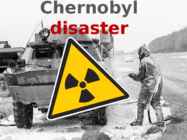
Chernobyl disaster Outline • What happened? • Elimination of the consequences • The Exclusion Zone • Conclusion • Quiz • Reference list What happened? • The Chernobyl disaster was a catastrophic nuclear accident that occurred on 26 April 1986 at the Chernobyl Nuclear Power Plant in Ukraine (then officially the Ukrainian SSR). An explosion and fire released large quantities of radioactive particles into the atmosphere, which spread over much of the western USSR and Europe. • The Chernobyl disaster was the worst nuclear power plant accident in history in terms of cost and casualties, and is one of only two classified as a level 7 event (the maximum classification) on the International Nuclear Event Scale
The Chernobyl accident in 1986 was the result of a flawed reactor design that was operated with inadequately trained personnel. The resulting steam explosion and fires released at least 5% of the radioactive reactor core into the atmosphere and downwind. Two Chernobyl plant workers died on the night of the accident, and a further 28 people died within a few weeks as a result of acute radiation poisoning. The April 1986 disaster at the Chernobyl nuclear power plant in the Ukraine was the product of a flawed Soviet reactor design coupled with serious mistakes made by the plant operators. It was a direct consequence of Cold War isolation and the resulting lack of any safety culture. The accident destroyed the Chernobyl 4 reactor, killing 30 operators and firemen within three months and several further deaths later. Acute radiation syndrome was originally diagnosed in 237 people on-site and involved with the clean-up. Of these, 28 people died
Nuclear Power: A Burden or a Blessing? Today, when the pollution of Earth is an important matter, people are trying to find economic solutions to produce power. This is where the necessity of nuclear power plants comes in question. Nuclear power plants are a cheap way to generate electricity but it also brings a lot of pollution that is much more radioactive and toxic than, for example, coal waste. But if we are looking at the facts, burning coal pollutes the Earth much more than nuclear power plants because more waste is generated. CO2, which is released from burning coal, is the main cause of global warming. Nuclear waste is collected and hidden in rocks or under
ELEKTROENERGEETIKA INSTITUUT Referaat Taastvad Energiaallikad Esitamise tähtaeg 14.04.2009 Õppejõud: Hannes Agabus Tudeng: Sergei Belosapko Nikita Naumov Tallinn 2009 Contents: 1. Renewable energy 1.1. Costs................................................................................................................... 2 1.2. Potential future utilization..............................................................................4 1.3. Why Don't We Use More Renewable Energy? ...........................................5 2. Energy Types 2.1. Wind Energy.......................................................................................................6 2.1.1. Annual Generation........
http://www.whitehouse.gov/news/releases/2001/06/20010611-2.html *I also call on Congress to work with my administration to achieve the significant emission reductions made possible by implementing the clean energy technologies proposed in our energy plan. Our working group study has made it clear that we need to know a lot more. *The United States has spent $18 billion on climate research since 1990 -- three times as much as any other country, and more than Japan and all 15 nations of the EU combined. http://www.guardian.co.uk/environment/2004/feb/22/usnews.theobserver *Jeremy Symons, a former whistleblower at the Environmental Protection Agency (EPA), said that suppression of the report for four months was a further example of the White House trying to bury the threat of climate change.
In this case, avoiding certain foods as prevention is obviously necessary. Other more serious genetic diseases, for instance neuropathies, spinocerebellar degenerations, and certain metabolic disorders, cannot be treated by prevention and need to be treated medically. In conclusion, although many illnesses are preventable, in some cases, however, it may already be too late for any prevention efforts; and the money could be spent on research and on developing cures for people with chronic disorders. Dear Sir/Madam, I am writing in the hope that you can help me with a problem regarding a camera that I have bought recently. On 24 April, I purchased a Canon digital SLR camera from a duty-free shop at Freetown Airport on my way from Freetown to Wondercity. The camera cost $599, and I paid for it by credit card.
 annaabi.ee








Kõik kommentaarid