 5 punkti
Autor soovib selle materjali allalaadimise eest saada 5 punkti.
5 punkti
Autor soovib selle materjali allalaadimise eest saada 5 punkti.
 ~ 2 lehte
Lehekülgede arv dokumendis
~ 2 lehte
Lehekülgede arv dokumendis
 2012-04-03
Kuupäev, millal dokument üles laeti
2012-04-03
Kuupäev, millal dokument üles laeti
 4 laadimist
Kokku alla laetud
4 laadimist
Kokku alla laetud
 0 arvamust
Teiste kasutajate poolt lisatud kommentaarid
0 arvamust
Teiste kasutajate poolt lisatud kommentaarid
 Alice Edel
Õppematerjali autor
Alice Edel
Õppematerjali autor
raped. She swept trough Southern Britain with her tribe and tortured every Roman she met. A women having power seemed unnatural to the Romans. She fought back for 2 years, but finally took poison and died. *Hadrian's Wall It was built by the emperor Hadrian and it marked the Northen border of the Roman empire. Hadrian's Wall was built, beginning in 122, to keep Roman Britain safe from hostile attacks from the Picts. The wall stretched from the North Sea to the Irish Sea. In addition to the wall, the Romans built a system of small forts called milecastles. Sixteen larger forts holding from 500 to 1000 troops were built into the wall, with large gates on the north face. To the south of the wall the Romans dug a wide ditch with high earth banks. *The Picts, Caledonia The Romans called Scotland 'Caledonia' because the dominant tribe of Picts they encountered was the Calidonii. Romans thought they were barbarian savages, but
Kent-JUtes, Essex, Sussex, Vessex- Saxons East Anglia, Mercia, Nothumbria- Angles Series of over-kings from various kingdoms St Patrick Conversion of Irish- 432-461 Patron saint of Ireland, originally pagan, slave He escaped, became a Christian priest and later bishop. Ireland was largely christian by 6th C Monasteries multiplied, monastic lines, provinces were ruled by abbots St Columba 6th, 7th C Irish sent missionaries to Gaul, Germany, Scotland and England St Columba went to Scotland, converted Picts, 563 founded a monastery of island Iona Credited with major role in converting Scotland to Christianity St Aidan Irish missionary, King Oswalds of Northumbria bishop Had qualities to convet Northumbria. After monastery of Lindisfarne 635 had built he set up a church in royal village He always travelled on foot,
built there after the discovery of natural hot springs. Today the city is a popular among tourists. In the Middle Ages the town was a center of the wool industry. It was under King George III in the 18th century that Bath developed into an elegant town. Its neoclassical Palladian buildings co-exist in harmony with its Roman structures. 27. Lindisfarne. Lindisfarne is an island off the coast of Northumbria where the Irish monk St Aidan founded a monastery in 635. The island was one of the most important centers for Christianity, influencing the development of other monastic communities. Around the year 700 the monks on the island compiled the “Lindisfarne Gospels”, a book of illustrated Gospel stories that greatly influenced later history-writing. The gospels were kept safe from the Vikings and are now in display in the Library of the British Museum. 28. Downing Street.
She later set up a school for nurses, turning nursing into true profession. The Boer War, also called the South African War (1899-1902) saw the British army fight successfully against two Boer republics and make them part of the British Empire. The Potato Famine, which hit Ireland between 1845 and 1850, was one of the greatest natural disasters the Western world has seen. Ireland lost about half o its population: one million died and another million emigrated. Irish corn crops remained unaffected, but they were exported. Profit counted more than human lives. The Victorian age is also known for its literary achievements. Charles Dickens is considered one of the greatest English novelists of all time. His books included "Oliver Twist", "Old Curiosity Shop", "Nicholas Nickleby" and others. He became very rich and used his wealth for the antislavery movement, social housing projects and international copyright laws.
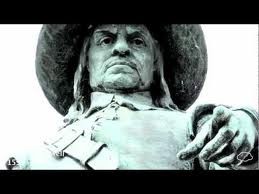
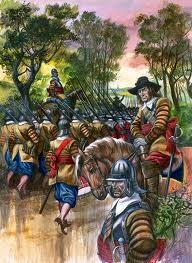
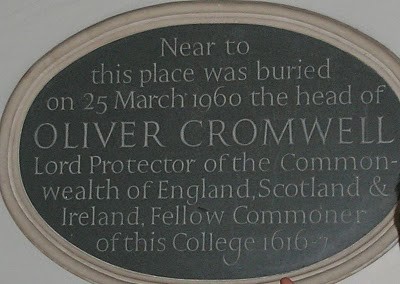
The Irish Problem "The curse of Cromwell on you" Oliver Cromwell... Detested Roman Catholicism Believed that the Irish could never be trusted Used Irish land as a way to pay 1652 "Cromwellian Settlement" in Munster and and Leinster Was a cruel man: claimed to be acting on God's behalf and expelled about 1000 Catholic priests from Ireland The main reason for this was Cromwell's belief in fundamental Protestantism and hatred of Catholicism A church place for religious people to meet each other Oliver Cromwell Attempts to 'solve' the Irish problem New Model Army Coerce the Irish into obedience export children from Ireland
1666 The Great Fire of London destroys most of the city's old wooden buildings. It also destroys bubonic plague, which never reappears. Most of the city's finest churches, including St Paul's Cathedral, date from the period of rebuilding which follows. 1688 The Glorious Revolution 1690 The Presbyterian Church becomes the official Church of Scotland" The Battle of the Boyne, in which William III and the Ulster Protestants defeat James II and the Irish Catholics. EIGHTEENTH-CENTURY ✿ Politically, this century was stable. Monarch and Parliament got on quite well together. ✿ The Whigs, were the political 'descendants' of the parliamentarians - supported the Protestant values of hard work and thrift, were sympathetic to Dissenters, and believed in government by monarch and aristocracy together. ✿ The Tories, had a greater respect for the idea of the monarchy and the importance of the Anglican Church
The English army invaded Wales in 1277. Llywelyn was killed & in 1284 he united Wales with England. Split Wales into 6 counties, encouraged English settlers to go there. In 1301 gave his own baby son Edward (later Edward II) the title of Prince of Wales. From that time the eldest son of the ruling king or queen has been made Prince of Wales. Ireland had been conquered by Norman lords in 1169. Henry II was afraid his lords might become too independent & went to Ireland himself. He forced the Irish chiefs & Norman lords to accept his lordship. He made Dublin the capital of his new colony. He took money & men for his wars. The Norman nobles & Irist chiefs quietly avoided English authority. As a result the English crown only controlled Dublin & a small area around it, known as the ,,Pale". The Anglo-Irish lords built strong castles, some became ,,more Irish than the Irish". The Irish chiefs continued to live as they always had done, moving from place to place &
ENGLISH LITERATURE Ancient Britain Lived on the British Isles in the 1st millenium. They most probably came from Eastern Europe and belonged to the Celtic race and also spoke Celtic. They were primitive hunters- gatherers, farmers. Some Celtic words are still used in modern English, however they are used mostly in place names. For example: · avon river · cumb valley · ford shallow place in the river Ancient Britons had their own religion and priests or druids and temples. In the year 55 BC Britain became a Roman province. Romans were highly developed and had their own language latin, which has also greatly influenced English. The military occupation of the Isles ended in 410 AD. The Romans eventually brought Christianity to Britain. Hadrian's wall on the border of Scotland and England. It began construction in 122 AD. An Anglo-Saxon att
 annaabi.ee







Kõik kommentaarid