Leidsid 33 sarnast õppematerjali, mis on seotud failiga "How to write a book review?". Need materjalid aitavad sul teemat sügavamalt mõista.
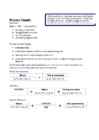
author, liking, subject, mystery, unusual, person, language, simple, rich, literary, formal, plain, characters, cleves, teacher, plot, events, present, tense, message, something, important5. Expressiveness on the level of word-building 6. Phonetic expressive means Study independen tly 7. Phonetic SD ("Rhythm And Style") 8. Lexical SD* 9. Syntactic SD* Use lecture notes 10. Graphical means and devices 11. Common literary and common colloquial vocabulary 12. Special literary vocabulary 13. Special colloquial vocabulary 14. Metre in English poetry. Modifications of metre ("Rhythm and Text") 15. Typically English stanzas ("Rhythm and Text") 16. Rhythm in poetry and in prose ("Rhythm and Text") Study independently 17
was extended to denote the manner of expressing one's ideas in written or oral form. One of the abts/the best was given by Jonathan Swift: ,,Proper words in proper places." In present- day english, the world style is used in about half a dozen basic meanings. 1. the characteristic manner in which a writer expresses his ideas. Some speak about the style of Hemingway, Dickens etc. 2. the manner of expressing ideas, characteristic of a literary movement or period. Style of symbolism, romanticism 3. the use of language to pick a literary genre-comedy, novel, drama, O.D (poetic form) etc. 4. the selective use of language that depends on spheres of human activity fiction, scientific prose, newspapers, official documents, business correspondenc etc. Style bears the stamp of indivual usage, that is every writer has a unique pattern/habit and abilities that form his style.
ancient people. Already in classical Latin the meaning was extended to denote the manner of expressing one's ideas in written or oral form. Jonathan Swift defined style as "proper words in proper places". In present day English the word "style" is used in about a dozen of principle meanings: 1. the characteristic manner in which a writer expresses his/her ideas (e.g. style of Byron) 2. the manner of expressing ideas, characteristic of a literary movement or period 3. the use of language typical of a literary genre (e.g. the style of a comedy, drama, novel). 4. the selective use of language that depends on spheres / areas of human activity (e.g. style of fiction, scientific prose, newspapers, business correspondence, etc.). STYLISTICS Stylistics is the study of style. The very term "stylistics" came in more common use in English only some 45 years ago.
to cajole (36) - persuade (someone) to do something by sustained coaxing or flattery. Situation: Lynette cajoled Eli to wear a hat for a while and then she took it. to relent (39) - abandon or mitigate a severe or harsh attitude, especially by finally yielding to a request. Situation: When Lipsha was talking about mother with Albertine he said he wouldn't relent on her even if she would come back, goes down on her knees and begged him for forgiveness. 2. Explain the following literary terms. Learn and use them in your discussion of the book: Protagonist - the leading character or one of the major characters in a play, film, novel, etc. Theme - an idea that recurs in or pervades a work of art or literature. 2 Motif - a dominant or recurring idea in an artistic work. Symbol - a thing that represents or stands for something else, especially a material object
English literature is one of the oldest literatures in Europe; dates back to the 6th century AD. Oral literature, i.e. not written down, spread from person to person. In 449 AD Anglo-‐Saxon tribes invaded England – beginning of the Anglo-‐Saxon period in English literature. The first form of literature was folklore, carried by scops and gleemen, who sang in alliterative verse (a kind of simple poetry). Prose developed much later.
- the ability to classify it (grouping ability); - the ability to describe the material ("some say this ..., they are not wrong, but other say that ...." Etc.); - the ability to draw conclusions (on theoretical and practical materials); - your personal contribution (do something that no one has done before); - talking about the material (as if you are speaking to the first year student avoid sophistication in language, that may sound unnatural). Comment on examples (from where the example is taken how it is used explain all). NB! Comments everywhere. You have right to: · Supervisor discusses and specifies the topic with you; · Supervisor gives a tutorial where the supervisor sets general directions for your paper and recommends a book (source) for your study; · Supervisor reads your rough sketch (and if necessary checks faults); BUT
france. Organization of LEIVA??, industrial interest, war and ??, art, expluatation, standardisation, dehumanistaion, degradation of ethical and cultural values. He is fascinated with outcasts, the alienated, the outsiders, people who have been beated with life, the descenters-those who don't agree with the majority are the descenters, they are interested in those people. The book follows the lives of nine characters. All aspects of the lives are represented to us, the rich are corrupt, the poor may be not so corrupt, decent, but they can accomplish nothing because they are poor. The unjust triumph and the whole trilogy ends with a memorable sketch of a young harmless hitchhiker who wants to catch a car on a highway that leads nowhere. The final scene is the big indictment-critisism of america, road to nowhere. It is one of the experimental novels. The narrative structure is very complex. 12
1. Be ready to explain the terms (lecture 1): language, linguistics, synchronic approach to language, diachronic approach to language, linguistic competence, linguistic performance, what is grammar?, prescriptive grammar vs. descriptive grammar; phonology, phonetics, phone, allophone, phoneme; morphology, morphemes (types of morphemes), morphs, allomorphs, types of affixes, derivational affixes, inflectional affixes; open vs closed class words; syntax. Language: a systematic, conventional use of sounds, signs or written symbols in a human society for communication and self-expression.
The Present Simple is the most basic tense in the English language. It is an interesting tense because it can be used Present Simple to express the future. Generally, though, we use it to Basic form describe the present activities or to talk about routines or Subject + Verb + -s (present form) John lives in New York. We play football every day. You are really kind. The meeting starts at 3 PM. Use the Present Simple: with state verbs.
Latin ,,stilus"--a writing instrument used by the ancients for writing on waxed tablets. Soon, the meaning was extended to denote the manner of expressing one's ideas in written or oral form. Jonathan Swift said: ,, Style is proper words in proper places" Present day--half a dozen meanings: · the characteristic manner in which a writer expresses his ideas (Style of Byron) · the manner of expressing ideas characteristic of a literary movement or period (symbolism, romanticism) · the use of lg. typical of a literary genre (comedy, drama, novel) · the selective use of lg that depends on spheres of human activity. These are called functional styles or registers (fiction, newspaper) Stylistics is the study of style. However, for some reason, English stylistics is less developed than French, German or Russian. The term ,,stylistics"came into more
I look forward to meeting you to discuss employment opportunities. Yours faithfully, Nicole Porter Paragraph Plan for Letters · salutation · Paragraph 1 reasons for writing · Paragraphs 2, 3 development · Final paragraph closing remarks · Name · Letters are divided into two categories, formal and informal. There are various types of formal and informal letters . · It is important to think about the person who you are writing to before you begin writing a letter. If the wrong style is used, the letter will look impolite, silly or odd. For example, if you used formal language to write to a close friend, the letter would look odd, or if you used informal language to write a letter to a company, the letter would look impolite. · There are certain characteristics which allow us to distinguish between formal and informal letters. These are: ~ The salutation (e.g
............................................................... 4 When to use the Passive ..................................................................... 5 Verbs with two objects ........................................................................ 5 The Passive with ’by/with’ .................................................................. 6 Talking about what other people say ................................................ 6 The Passive Voice The subject is the starting point of the sentence, the thing we are talking about. The new information about the subject comes at the end of the sentence. When the subject is the person or thing doing the action, then we use an active verb: Bell invented the telephone. When the subject is not doing the action, but something is happening or being done to it, or the action is directed at it, then we use a passive verb. The telephone was invented by Bell. NB
problems of the day; Tennyson's favourite themes were conflict of religion and science; wrote much about death and other morbid themes; Browning's works were full on monologues, psychological insight into man's motives and passions; Rossetti's works have medieval subjects and forms (like ballad) and dreamy melancholy; Hopkins focused on relationships with God 4. The Victorian novel and Charles Dickens · What kind of trend is literary realism? Literary realism is the accurate observation of individual problems and social relationships. · What were the main issues that the Victorian novel dealt with? The Victorian novel dealt with the economic and social changes that the Industrial Revolution had created, mass migration of workers to industrial towns(people lived in new urban slums), more radical changes in the 19th century, democratization resulting from extension of the franchise(valimisõigus), challenges to
BASIC ENGLISH GRAMMAR Book 1 Book 1 Younger students at beginning to intermediate levels will greatly benefit from this step-by-step approach to English grammar basics. This is the ideal supplement to your language arts program whether your students are native English speakers or beginning English language learners. Skill-specific lessons make it easy to locate and prescribe instant reinforcement or intervention. · Illustrated lessons are tightly focused on core concepts of grammar · Nearly 70 practice exercises are included for ready reinforcement · A wealth of examples are provided on every topic · Concise explanations are bolstered by extra grammar tips and useful language notes Book 1 Anne Seaton · Y. H. Mew
Superego-society, conscience, morals, traditions, religion, a moral censor Ego-rational behavior, motivation, self-identification, conscious decisions Id-instincts, natural responses, the pleasure principle, aggressive instincts, the death wish Influence: In art and literature, Freud's theories influenced surrealism . Like psychoanalysis, surrealistic painting and writing explores the inner depths of the unconscious mind. Freudian ideas have provided subject matter for authors and artists. Critics often analyze art and literature in Freudian terms. 2. Literary Modernism and its sub-movements. The influence of Structuralism and psychoanalysis. Main characteristic features of Modernism. Denial of conventions, traditional structure, plot and presentation of character. The stream of consciousness. Allusiveness. Virginia Woolf's Modern Fiction as a theoretical platform for Modernism. Criticism of Realist literary method.
SYNTACTIC STYLISTIC DEVICES SYNTACTIC STYLISTIC DEVICES are based on a peculiar place of the word or phrase in the utterance (text, sentence, etc).This special place creates emphasis irrespective of the lexical meaning of the words used. Categories: syntactic stylistic devises based on: SDD: based on ABSENCE OF LOGICALLY REQUIRED ELEMENTS OF SPEECH ELLIPSIS ELLIPSIS or ELLIPTICAL SENTENCES means leaving out one or both principle members of the sentence that is the subject or predicate. NT: Where is the man I'm going to marry? - Out in the garden. (no subject) What is he doing out there? - Annoying father. Here, in the dialogue, ellipsis creates the colloquial tone of the utterance. It also renders realistically the way the characters speak. The elliptical sentences convoy/render carelessness, familiarity, harshness. It makes the utterance tens and emotional or helps to stress most important elements. NT: I went to Oxford, as one goes to exile; she to London.
References: Kahny, Jim. Classroom dynamics: An interview with Jill Hadfield. Available at http://ltprofessionals.com/journalpdfs/vol1no1/features/winter2000kahny.pdf accessed 27.12.2012 ESOL Teaching Skills TaskBook. Classroom dynamics: unit 1 a). Available at http://akoaotearoa.ac.nz/download/ng/file/group-4/n2431-esol-teaching-skills- taskbook-unit-1-a---classroom-dynamics.pdf accessed 27.12.2012 III Language teaching methods. · (Traditional: the grammar-translation method/ classical method.) · Traditional: the direct method Youtube: http://www.youtube.com/watch?v=XiQvG-fvzLM Kids lesson (direct method) Language is primarily speech Reading skills are developed through practice with speaking Realia is used to convey the meaning Demonstration instead of translation or explanation Complete sentences instead of vocabulary lists The purpose of language learning is communication
Summary • Early history of translation studies – Cicero and St. Jerome (what did they do/how/why are they relevant to translation studies?) St. Jerome – Greek scholar, did some translation work. Lived during the 4th century. Jerome is best known as the translator of the Bible into Latin. A previous version (now called the Old Latin) existed, but Jerome's version far surpassed it in scholarship and in literary quality. Jerome was well versed in classical Latin (as well as Greek and Hebrew), but deliberately translated the Bible into the style of Latin that was actually spoken and written by the majority of persons in his own time. This kind of Latin is known as Vulgate Latin (meaning the Latin of the common people), and accordingly Jerome's translation is called the Vulgate. Cicero – Lived during the 1st century BC. Roman politician, philosopher & translator
Word order: positive sentences subjects verb(s) object I speak English. I can speak English. Negative sentences subject verbs Indirect object Direct object place time I will not you the story at Tomorro tell school w. Subordinate Clauses conjunction subject verb(s) Indirec Direct place time t object object
computerized databases, maps etc. In addition to ordinary books libraries may have large-print books and Braille books for people with impaired vision. There are different kinds of libraries to meet the needs of people: university, research, school, medical, government libraries and other libraries. Public libraries serve a wider range of people than other libraries. They may range from big city libraries to small village libraries. Big city libraries' materials are usually organized into subject areas, such as history, science, sports, fiction etc. There may be specials sections also for children. Almost every library has a special reading room with comfortable furniture for the readers and the students can work on independent study projects. School libraries. School libraries are part of the education system. It supports the curriculum as it helps the teachers and pupils to prepare for the lesson. Pupils can read extra materials there about the subjects they like
............................2 Word Order in Affirmative Sentences ...................................................3 Position of Adverbs of Frequency .........................................................5 Word Order in Negative Sentences......................................................6 Word Order in General Questions.........................................................7 Word Order in Special Questions ..........................................................8 Word Order in Subject Questions ..........................................................9 Types of Sentences There are four basic types of sentences in English. AFFIRMATIVE and NEGATIVE sentences both end with a full stop ( ) : . I live in Tallinn. I do not live in Tallinn. I never watch soap operas. INTERROGATIVE sentences end with a question mark ( ? ) : Do you live in Tallinn? Why do you never watch soap operas? EXCLAMATORY and IMPERATIVE sentences end with an exclamation mark ( ! ) :
something I'd think of something like this: The way you lived in the past mustn't change the way you are right now. Past is past and you have to keep it there. Across 1. A member of a religious community of men typically living under vows of poverty, chastity, and obedience 5. without variation or change 8. Too unusual, extreme, or indefinite to be adequately described 9. The time or a period of time before the moment of speaking or writing 10. A person who practices or studies law; an attorney or a counselor 11. Completely; absolutely; entirely 12. A motion picture genre that depicts the actual death or murder of a person or people
english-4u.de/a_an_some_ex3.htm balls ◦ *some eggs*some oranges *some umbrellas *some 3. http://www.english-4u.de/a_an_some_ex6.htm eagles We us the • when we talk about a specific thing. • when it is clear which thing or person we mean. A – AN - THE • when there is only one of something. Examples: What is the highest building in the world?
English structure revision for the exam 1. Terms Language → A systematic, conventional (tavakohane) use of sounds, signs or written symbols in a human society for communication and self-expression. Human language at all levels is rule- or principle- governed (valitsema) meaning that language corresponds to the grammar. Natural language is usually spoken, while language can also be encoded into symbols (such as letters, morse etc) For example: Estonian, English. Linguistics → The scientific study of human natural language. Broadly, there are three aspects to the study which are Pragmatics (studies the use of language → interested in the gap between the sentence’s meaning and the speaker’s meaning). Semantics (concerned with the meaning of the language aspects and the way they
"It is not composed, as in Europe, of great lords who posses everything, and of a herd of people who have nothing". During the period of enlightenment the people of America came to realize that if they work hard enough that what they earn is for them to keep. There are no Kings or Dictators ruling the lower class. There is a huge amount of personal and financial freedom to be gained in American during this time. Crevecoeur states that "each person works for himself". American became a classless society during the Enlightenment period where each individual was allowed as much room to grow as needed. The Age of Romanticism. The early romantic writers. Washington Irving as a transitional figure from the traditions of the Enlightenment to those of Romanticism. Romanticism (or the Romantic era/Period) was an artistic, literary, and intellectual movement that originated in Europe toward the end of the 18th
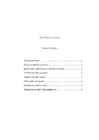
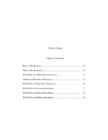
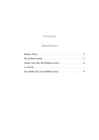
SINU KOOLI NIMI SINU NIMI BOOK REPORT FORM "Life, The Universe and Everything" KOHT, AASTAARV Page 1 Contents · About the author .................................................................................................................... 3 · Plot ................................................................................................................................... ........ 4 · Characters ......................................................................................................................... ...... 5 · Theme/setting..................................................
Philip Larkin’s Poetry: Themes, Form, Style, Imagery and Symbolism Author: Sandra Olivares González Tutor: Jesús Marín Calvarro Degree in English Studies, English Department, Faculty of Philosophy and Letters, University of Extremadura Cáceres, 29th January 2016 Philip Larkin’s Poetry: Themes, Form, Style, Imagery and Symbolism The aim of this work is to obtain some characteristics of the poetry of Philip
speech. Some teachers are not used that student expresses her own strong opinion. When another way some teachers are just waitening it. As well as people can not speak along with state public topics and express their opinion. Therefore freedom of speech is debateable. Already from the old times Estonians have been fighting for their own freedom, because they do not like to allow to another country or state, foreign public and foreign language. Estonian public have been fighting with German, Russian and a lot of other states. Estonians has strongly tried to keep alive their own nationality, independent that Estonia is a very small state in comparison with other states. Thanks to the Tartu peace treaty, liberty war, finally public achieved to their state a freedom. Republic gives to people feeling that they are free inside and outside to express their own opinion on many subjects.
Austen's most popular novel. Austen sold the copyright for Pride and Prejudice to Thomas Egerton. Egerton published the first edition of Pride and Prejudice in three hardcover volumes in January. The tone is light and a little humoristic. Pride and Prejudice is a humorous story of love and life among English gentility. At first the book was called "First impressions" and this gives a better expression to the requests of the author, than the later heading. People meet, do not understand each other and communication does not offer joy either. So this is contrary to love at first sight. It is a tale of love and values in the class-conscious England of the late 18th century. It is a story of five sisters and their lives. It is a story through the dangerous, exciting and loving feelings of the characters. The Bennets five daughters - the beautiful Jane, the clever Elizabeth, the bookish
on every warm log. mica (79) - a shiny silicate mineral with a layered structure, found as minute scales in granite and other rocks, or as crystals. It is used as a thermal or electrical insulator. S the front was fitted of mortared stones set with jewelled windows, jagged shards of gleaming mica. avid (82) - having an eager desire for. S Lulu feels that cats made her one of them - sleek, without mercy and avid , hungry upon defenseless body. 2. Explain the following literary terms. Learn and use them in your discussion of the book: Antagonist - a person who actively opposes or is hostile to someone or something; an adversary. Irony - the expression of one's meaning by using language that normally signifies the opposite, typically for humorous or emphatic effect Oxymoron - a figure of speech in which apparently contradictory terms appear in conjunction (e.g. faith unfaithful kept him falsely true ).
different now. Children have more freedom to make their own decisions. For example, children aged 13 may be employed part time in Great Britain. Age 15 is legally a "young person" not a "child". Age 16 is a school leaving age. They can leave home, drive a moped, marry with "parents' consent" buy beer. Age 17 can drive a car. Age 18 can vote, get married, drink in pubs. Education is a very important part in the life of British youth. One can't become an independent person without it. When time comes to enter a college a young Englishman chooses one far away from home. It is a necessary part of becoming adult. During the last 30 years there were a lot of different trends in youth movements. All of them were characterized by their own philosophy, way of life, style of dressing. Each tendency was born by the influence of economic and political changes in the society. Those trends are known as the "hippies" the "punks" the "rockers".
4 VESITERM 12 LADA 5 STOW 13 SCHWUNG 6 KALEV 14 MAIASMOKK 7 YAMAHA 15 ISKU 8 ESTRAVEL 2 Affirmative tense Use Signal Words Negative/Questions · action in the present taking always, Present Simple A: He speaks. place once, never or several every ..., N: He does not speak. normally, often, Q: Does he speak? times seldom, · facts sometimes,
General Rules....................................................................... 2 The Definite Article ............................................................... 5 Names that take the Definite Article...................................... 6 No article.............................................................................. 7 Countable and uncountable nouns ....................................... 9 General Rules There are two articles in the English language – the Indefinite Article and the Definite Article. The Indefinite Article has two forms – a and an (a precedes words beginning with a consonant sound and an precedes words beginning with a vowel sound). It comes from the Old English word ãn, which meant one. The Definite Article is the. It comes from the Old English word ţis, which meant this. Thus, in most general terms, a and an cannot be used with countable nouns in the plural and with uncountable nouns
 annaabi.ee