 50 punkti
Autor soovib selle materjali allalaadimise eest saada 50 punkti.
50 punkti
Autor soovib selle materjali allalaadimise eest saada 50 punkti.
 ~ 1 leht
Lehekülgede arv dokumendis
~ 1 leht
Lehekülgede arv dokumendis
 2010-10-29
Kuupäev, millal dokument üles laeti
2010-10-29
Kuupäev, millal dokument üles laeti
 10 laadimist
Kokku alla laetud
10 laadimist
Kokku alla laetud
 0 arvamust
Teiste kasutajate poolt lisatud kommentaarid
0 arvamust
Teiste kasutajate poolt lisatud kommentaarid
 R.Saaremaa
Õppematerjali autor
R.Saaremaa
Õppematerjali autor
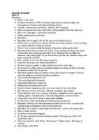
sentences: establish the device used, recognize it, and name it). Care about the pronunciation of the terms. Books: - I. Galperin "Stylistics" - I. Ladusseva "Rhythm and Text" - I. Ladusseva "Vocabulary and Style" - I. Ladusseva "Stylistic practice: Book I, Book II" - I. Ladusseva "A Guide to Punctuation" EXAMINATION TOPICS: 1. Style, stylistics, a survey of stylistic studies 2. Inherent connotations. Phonesthemes Use lecture notes 3. Adherent connotations 4. Stylistic morphology: articles, nouns, pronouns, adjectives, verbs, adverbs, number *
8 chap, a fellow, a girl. (A man knows how much to pay). The speaker/writer may use the pronoun she/he meaning herself or himself. In this case, the speaker/writer kind of used himself from the distance and thus is focusing more attention on herself/himself. In other words, a device to draw attention to oneself. e.g C.Mansfield: ,,I do not want to write: I want to live." What does she mean by that? Nowadays, the archaic second person singular ,,thou" and its forms such as (thee, thy, thine, thyself) may be used in poetry where they create elevated high-flow colouring. In prose, they may may create geographical or historical background. Geographical background: Hemingway render the speeech of a spanyard (spanish) by using thou in his dialogue to imply his non-english nationality. Strangely, he doesn't make speaker use spanish words, in fact.
g. "asked the moustache to show the way."). Metonymy is expressed by nouns or substantivized numerals (e.g. "She was a pale eighteen."). SYNECDOCHE is a subtype of metonymy. Synecdoche is a part that stands for a whole or vice versa; the singular for the plural or vice versa (e.g. "I am all ears."). 3. Antonomasia from Greek "name instead". It is the use of proper name instead of the general idea (e.g. "He is a Napoleon of crime."). In the book a word or phrase may be spelled with the capital initial letters, which resembles a proper name - the effect is often irony. The use of meaningful names, which serve the writer to characterize a person (e.g. Snearwell, Mr. Snake, Mr. Blackbite, Mr. Boastall, etc.). 4. Irony is a figure of speech where the literal meaning of a word is opposite of what intended, often a positive word is used in negative sense ("I hope he brakes his neck. That is dear of you."). (8) II
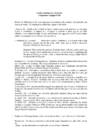
Louise Erdrich Love Medicine Assignment 1 (pages 142) 1. Define the following words and expressions (considering the context) and reproduce (in your own words) the situations in which they appear in the book: a beacon (2) (AmE) a fire or light set up in a high or prominent position as a warning, signal, or celebration, it appears as a metaphor to describe a white egg in her hand. Situation: June walked through the door and toward blue egg in the white hand of Andy, which she compares with a beacon in the murky air. a turtleneck (2) - Example. Definition: (AmE) a `turtleneck' is a sweater with a high part fitting closely around the neck
English literature is one of the oldest literatures in Europe; dates back to the 6th century AD. Oral literature, i.e. not written down, spread from person to person. In 449 AD Anglo-‐Saxon tribes invaded England – beginning of the Anglo-‐Saxon period in English literature. The first form of literature was folklore, carried by scops and gleemen, who sang in alliterative verse (a kind of simple poetry). Prose developed much later. The first form of recorded English literature was the epic Beowulf, which was produced sometime near the end of the 7th and beginning ?
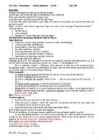
FGI 1811 Proseminar (Irina Ladusseva) 2.0 AP Kab. 420 03.09.2002. Writing a term paper (this spring) and graduation paper. To get a pass: one written task (part of introduction, thesis statement) Term paper should be printed (20-25 pages long). Graduation paper should be printed (50-60 pages long). First write term paper, and choose a topic right now (theme of term paper later will be developed into graduation paper). Rights: we have a right to have a supervisor. Supervisor writes on the front page "Lubatud kaitsmisele". You need time to: 1. read the theory 2. collect material 3. regularity (1-2 hours a day deal with your paper) The first draft of term paper should be ready by March. Supervisors are: 1. Suliko Liiv (country study, grammar, contrastive studies, methodology) 2
Geography of the novel extends from east coast to west coast. It is also international because part of it takes place in france. Organization of LEIVA??, industrial interest, war and ??, art, expluatation, standardisation, dehumanistaion, degradation of ethical and cultural values. He is fascinated with outcasts, the alienated, the outsiders, people who have been beated with life, the descenters-those who don't agree with the majority are the descenters, they are interested in those people. The book follows the lives of nine characters. All aspects of the lives are represented to us, the rich are corrupt, the poor may be not so corrupt, decent, but they can accomplish nothing because they are poor. The unjust triumph and the whole trilogy ends with a memorable sketch of a young harmless hitchhiker who wants to catch a car on a highway that leads nowhere. The final scene is the big indictment-critisism of america, road to nowhere. It is one of the experimental novels
`If you had sugar, we could drink tea now.' English: They demanded that he leave the room. If I were you, I wouldn't buy this car. - transitivity: sleep, kiss Manam (a Kairiru-Manam language; Malalyo-Polynesian) dang i- aka- gita i water be hot `he heated the water' II. Relational categories for verbs: voice The workers painted the house. The house was painted by the workers. Das Buch wird von zwei Autoren geschrieben. `The book is being written by two authors.' Heute Abend wird viel getanzt. `There will be a lot of dancing tonight.' III. Agreement categories for verbs: I am/he is/they are sleeping he sleeps Grammatical categories for adjectives I. Inherent categories for adjectives: degree of comparison (comparative, superlative): cold colder coldest II. Agreement categories for adjectives: agreement of attributive adjectives with the head
 annaabi.ee






Kõik kommentaarid