Leidsid 33 sarnast õppematerjali, mis on seotud failiga "Emily Dickinson". Need materjalid aitavad sul teemat sügavamalt mõista.
emily, dickinson, poet, door, lost, poetry, passing, street, instant, width, warmth, wealth, sudden, shut, contrast, misery, elizabeth, 1886, strong, mostly, greatest, poets, known, unusual, imposed, social, living, wrote, power, nature, death, times, almost, quality, different, aura, often, interest, remembered, unique, within, phrases, reaching, ideascolonisation to Englishmen back in the homeland. An example of this form of writing is John Smith's A True Relation of Virginia, which is widely recognized to be the first example of Am lit. The early years of colonisation produced a mass of utilitarian writings including biographies, accounts of voyages, diaries, sermons, pamphlets. Much of the material addressed the problems of Church and State. There were few examples of fiction, poetry or drama. Anne Bradstreet of Massachusetts published some lyrical poems of high literary quality (1650) and Edward Taylor, who was born in England but lived in Boston, wrote some poetry in the style of John Donne and the metaphysical poets. All 17 th cent Am writings were, both in content and form, similar to English lit of the same period. The great literary figures of the 18th cent were Benjamin Franklin (1706-1790), Thomas Paine (1737-1809) and Thomas Jefferson (1743-1826).
diplomacy. He is best known, however, as the first American to make a living solely from writing. Initially, he wrote under pen names; one was "Diedrich Knickerbocker." In 1809, using this pen name, Irving wrote A History of New-York that describes and pokes fun at the lives of the early Dutch settlers of Manhattan. Letters of Jonathan Oldstyle 1802 Salmagundi 1807-1808 A History of New York 1809 Emily Elizabeth Dickinson Emily Elizabeth Dickinson (December 10, 1830 May 15, 1886) was an American poet. Born in Amherst, Massachusetts to a successful family with strong community ties, she lived a mostly introverted and reclusive life. After she studied at the Amherst Academy for seven years in her youth, she spent a short time at Mount Holyoke Female Seminary before returning to her family's house in Amherst. Thought of as an eccentric by the locals, she
James Fenimore Cooper, with their emphasis on heroic simplicity and their fervent landscape descriptions of an alreadyexotic mythicized frontier peopled by "noble savages", similar to the philosophical theory of Rousseau, exemplified by Uncas, from The Last of the Mohicans. There are picturesque "local color" elements in Washington Irving's essays and especially his travel books. Edgar Allan Poe's tales of the macabre and his balladic poetry were more influential in France than at home, but the romantic American novel developed fully with the atmosphere and melodrama of Nathaniel Hawthorne's The Scarlet Letter (1850). Later Transcendentalist writers such as Henry David Thoreau and Ralph Waldo Emerson still show elements of its influence and imagination, as does the romantic realism of Walt Whitman. The poetry of Emily Dickinson--nearly unread in her
The book is a state-of-the-nation novel, which aimed to highlight the social and economic pressures that some people were experiencing. Unlike other such writings at the time, the novel is unusual in that it is not set in London. A Christmas Carol in Prose, Being a Ghost Story of Christmas (commonly known as A Christmas Carol) is a novella by Charles Dickens first published on December 19, 1843 with illustrations by John Leech. The story was an instant success, selling over six thousand copies in one week, and the tale has become one of the most popular and enduring Christmas stories of all time. William Makepeace Thackeray William Makepeace Thackeray was an English novelist of the 19th century. He was famous for his satirical works, particularly Vanity Fair, a panoramic portrait of English society. Thackeray, an only child, was born in Calcutta, India, where his father, Richmond Thackeray
metaphors. He only has one sonnet that conforms to traditional rules; his songs are not lyrical at all. He introduces sex, death and erotic love into poetry. John Milton (1608–74) – poet; introduced the blank verse into English poetry. Best known for epic poem Paradise Lost; story of the fall of man and the eventual expulsion from the Garden of Eden. Literature after the Restoration (of Monarchy in 1660) – rich and many-‐sided, covering
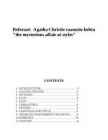
THE MAN IN THE BROWN SUIT, 1924 POIROT INVESTIGATES, 1924 THE ROAD OF DREAMS, 1925 THE MYSTERIOUS MR. QUINN, 1930 Young Agatha Christie: Old Agatha Christie: PLOT The story begins when Captain Hastings, recovering(taastama) from wounds he suffered during the World War I, runs into an old friend, John Cavendish. Hastings is invited down to Styles, where Cavendish lives, to recuperate. At Styles, the center of attention is Emily Inglethorp, John Cavendish's stepmother. Emily inherited Styles from John's father when he died and runs the household with a firm hand. Hastings describes her as "an energetic, autocratic personality" with a fondness for "playing the Lady Bountiful." She is devoted to charitable causes and is always getting involved(haaratud) in bazaars and other functions. Emily hasn't changed since Hastings last saw her, and there is no question of who is running the show at Styles
the country. Court in cultural isolation. Ben Jonson. King and courtiers were close to universally recognised ideal types (conflict with the reality). Mysticism. Emergence of perspective view, stage machinery, artificial light, revolution. The stage cast the monarch in the focal point (the lines of perspective of the stage met there. Inigo Jones. Masque an educative vehicle, towards classical antiquity and architecture. Tide towards absolute monarchy. Masque – linked poetry and moral philosophy into art. Music, dance, poetry, lavish illusionistic scenic display to express the doctrines of divine kingship. Great impact. Like gods come down to earth. 2. The Caroline masque Charles decided on subject matter, and acted and danced in masques. Now the regal divinity even more obvious. Ben Jonson. Divine minds of this incomparable pair. Arts role – to set a noble ideals, to strengthen practice of virtue. He and queen living incarnations of ideals
Main aims were to restore old things; make new things more like Gothic (old); displaying old things etc. · What was the ides behind the creation of the public park? In towns there was a need for "green lungs"; air of the city was problematic; people had a place to go on a free day (people started to work 6 days in a week- 1 day off); a place for different classes to mingle and mix (Georgian/landscape park with Romantic/pleasure garden etc.) 3) Lord Tennyson and Victorian poetry · What was his main source of inspiration? He was inspired by romantic authors, especially Keats; another source was King Arthur and Arthurian Tales; (also inspired by nature many descriptions of nature, in many works discussed the role of man and woman in society; morbid themes/deaths etc.); · His works: Collection ,,Poems", ,,The Epic. Morte d'Arthur", ,,Idylls of a King", ,,The Holy Grail", ,,In Memoriam A.H.H" · Other important Victorian poets:
negligible largely because external wars and internal strife ravaged the country for almost a century and a half (1337-1485) The Renaissance in England may be divided into 3 parts: the rise of the R. under early Tudor monarchs, the height of R. under Elizabeth I, the decline of the R. under the Stuart monarchs. 6. The first manifestations of the Renaissance in English literature. The first major impact of the Renaissance on English literature is observable in the poetry of Wyatt and Surrey, who introduced and Anglicized the sonnet, a verse form that has proved to be both popular and durable. Surrey is credited also with inventing English blank verse. Other verse forms, borrowed from the Italian and French, had a lesser impact. Elaborate Renaissance conventions of love poetry were also transplanted, finding their outlet chiefly in sonnets and sonnet sequences. 7. Which events diminished the power of the Catholic Church in England?
The Life of Dante, the Inferno of Dante Dante Alighieri, one of the greatest poets of the Middle Ages, was born in Florence, Italy on June 5, 1265. He was born to a middle-class Florentine family. At an early age he began to write poetry and became fascinated with lyrics. During his adolescence, Dante fell in love with a beautiful girl named Beatrice Portinari. He saw her only twice but she provided much inspiration for his literary masterpieces. Her death at a young age left him grief-stricken. His first book, La Vita Nuova, was written about her. Sometime before 1294, Dante married Gemma Donati. They had four children. Dante was active in the political and military life of Florence.
Denial of conventions, traditional structure, plot and presentation of character. The stream of consciousness. Allusiveness. Virginia Woolf's Modern Fiction as a theoretical platform for Modernism. Criticism of Realist literary method. Literary modernism: end of the 19th century-1920 (reached its height) and ended 1940s. A self- conscious break with traditional aesthetic forms. Rejecting the sentiment and discursiveness typical of Romanticism and Victorian literature for poetry that instead favored precision (täppis) of imagery and clear, sharp language. Modernist writers embraced the unconscious fears of a darker humanity. Sub movements: surrealism, formalism, avant-garde, symbolism, imagism Structuralism: Writers used myth and music as a part of the books structure. J. Joyce "Ulysses". Deep structure is the same as in "odyssey" and T.S. Elliot "the fisher king"-more complicated experiment
Phonetic SD ("Rhythm And Style") 8. Lexical SD* 9. Syntactic SD* Use lecture notes 10. Graphical means and devices 11. Common literary and common colloquial vocabulary 12. Special literary vocabulary 13. Special colloquial vocabulary 14. Metre in English poetry. Modifications of metre ("Rhythm and Text") 15. Typically English stanzas ("Rhythm and Text") 16. Rhythm in poetry and in prose ("Rhythm and Text") Study independently 17. Varieties of language (I. Galperin "Stylistics") 18. Emotive prose (I. Galperin "Stylistics") 19. Scientific prose style (I. Galperin "Stylistics")
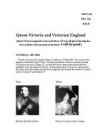
[6] Her marriage to Prince Albert brought nine children between 1840 and 1857. Most of her children married into other Royal families of Europe. [7] On December 14th 1861 Albert died from typhoid fever at Windsor Castle. Victoria remained in self-imposed seclusion for ten years. This genuine, but obsessive mourning kept her occupied for the rest of her life and played an important role in the evolution of what would become the Victorian mentality. [6] She had lost a devoted husband and her principal trusted adviser in affairs of state. For the rest of her reign she wore black. Widowhood Until the late 1860s she rarely appeared in public; although she never neglected her official Correspondence, and continued to give audiences to her ministers and official visitors, she was reluctant to resume a full public life. [7] Victoria's isolation from the public greatly diminished the popularity of the monarchy, and
Latin, works in Old, Middle, and Modern English, each of which represents a different period Full of great works British works in Latin Venerable Bede He lived between 673 and 735 AD The greatest of all the AngloSaxon scholars He's the earliest English historian, whose work has shed light on a period of English history that would have otherwise been unknown ,,The Father of English History" Wrote / translated about 40 books on almost every area of knowledge, i.e. nature, astronomy, and poetry His best known work is "The Ecclesiastical History of the English People" Starting with the Roman invasion in the 5th century, he recorded the history of the English up to his own day Old English Cædmon ,,The Father of English Hymn" Cædmon's Hymn is the oldest recorded Old English poem, and also one of the oldest surviving samples of Germanic alliterative verse The Hymn itself was composed between 658 and 680, recorded in the earlier part of the 8th century Middle English
) activities us to show exession (succession) of minute immediately following each of the actions. Opening the story of chapter, A helps to give a laconic ... and at the same time detailed information into the action proper. NT: The motion of the camp at night was everywhere. People sang. People cried. People fought. People loved. People hated. Some were sad. Others gay. Others with friends. Others lonely. NT: He yawned, put on his shirt, slammed the door, patted the dog, opened the mailbox, yawned, went back, wound the clock, yawned. APOKOINU CONSTRUCTION APOKOINU CONSTRUCTIONS mean a combination of two clauses into one at the expense of omitting the connecting world (usually who or that). This is regarded bad grammar and this is characteristic of irregular oral speech (dialogue). NT: I am the first one saw her. 1
PRONOUNS: instead of "I" the speaker may use: "one", "you" to create a close contact with the reader or listener. In colloquial speech the same effect is achieved by "man", "chap", "fellow". The speaker may use pronouns "he / she" meaning himself as if viewing himself from the distance and focusing more attention on the speaker. The archaic second personal pronoun "thou" and its forms may be used to create an elevated mood in poetry. In prose they may convey historical background. "It", "he", "she" may be involved in personification (e.g. "The Moon smiled her smile."). "We" may be used to denote only a speaker. "We" the Majestic Plural that is used in king or queen's orders or manifesto. The Modest Plural is when "we" is used out of modesty as if involving the audience, and it creates a true to life effect. "They" becomes emotional when used independently
Literature of the 14th century The highpoint of medieval literature, the best writer of late medieval lived then. William Langland 1332-1376 the last important poet of alliterative verse. His masterpiece "The Vision of Piers Ploughman" how important working hard is, the labour of peasants is the base of the welfare of the people. A passionate protest against social injustice. A time when peasants were slowly rising against their feudal lords. Descriptions of different social classes. Religious mysticism. Two great principles: 1) all men are equal before God; 2) honest labour is dignified. It is a dream allegory
Albert took an active interest in the arts, science, trade and industry; the project for which he is best remembered was the Great Exhibition of 1851, the profits from which helped to establish the South Kensington museums complex in London. Reflecting back into her childhood, Victoria was always prone to self pity. On Dec. 14th 1861 Albert died(aged 42) from typhoid fever at Windsore Castle. Victoria was deeply attached to her husband and she sank into depression after he died. She had lost a devoted husband and her principal trusted adviser in affairs of state. For the rest of her reign she wore black. She was persuaded to open Parliament in person in 1866 and 1867, but she was widely criticised for living in seclusion and quite a strong republican movement developed. Seven attempts were made on Victoria's life, between 1840 and 1882 - her courageous attitude towards these attacks greatly strengthened her popularity. In 1876 she was crowned Empress of India by Disraeli
Exemplary artists. Max Weber (early-C20). He combined the influences of Cézanne, Matisse, Rousseau and Cubism. He later approached Futurism. He exploited violent and kaleidoscopic effects. He was largely experimental. Georgia O'Keeffe (early-C20). She painted experimental pictures in watercolors. She married Stieglitz. She later began to isolate images, especially flowers and enlarging them. She magnified details until they lost recognizability. She then displayed severe edges, rigorous formality and austere paint surfaces, often in her landscape paintings. Later in her career, she painted romantic essence of New Mexico, displaying skulls, bones and flowers and veered towards the abstract. Subsidiary artists: Gertrude Stein, Joseph Stella, John Marin, Arthur G. Dove, Marsden Hartley. The Armory Show. Held in 1913, this was the most influential art exhibition ever held in America. The revolutionary
Exemplary artists. Max Weber (early-C20). He combined the influences of Cézanne, Matisse, Rousseau and Cubism. He later approached Futurism. He exploited violent and kaleidoscopic effects. He was largely experimental. Georgia O'Keeffe (early-C20). She painted experimental pictures in watercolors. She married Stieglitz. She later began to isolate images, especially flowers and enlarging them. She magnified details until they lost recognizability. She then displayed severe edges, rigorous formality and austere paint surfaces, often in her landscape paintings. Later in her career, she painted romantic essence of New Mexico, displaying skulls, bones and flowers and veered towards the abstract. Subsidiary artists: Gertrude Stein, Joseph Stella, John Marin, Arthur G. Dove, Marsden Hartley. The Armory Show. Held in 1913, this was the most influential art exhibition ever held in America. The revolutionary
The most famous representative was Michael Gold. The most interesting style was modernist combined with realism. The most interesting writer of this period was John Dos Passos 1896-1970. He is linked to the 1930's, the period of fear, unemployment, the rise of facism, market crashing. Came from an interesting background, grandfather was portugese, his mother came from puritan New England. Father was a lawyer and importand figure on wall street. He was born into a well off family and this is a paradox about him. Upper middle class family, yet his political views were very radical, he was extremely well educated. He was hostile against the social order in the usa. The central theme in his writings is the criticism of basic institutions of american society. Interestingly, he wasnt just a social critic but one of the best experimentalists. Anti war novel called ,,Three soldiers". Dos Passos went to Europe, served for a while. Three
1. Beowulf. The dating of Beowulf is still controversial. The poem is one of the earliest and greatest monuments of the Germanic literatures. The main stories of the poem (the fights of B.) are versions of common folk-tales, but the poet also introduces many incidental stories, some of which belong to the world of ancient Germanic legend. He writes his folk-tales and legends in a web of other events, mainly set in the Baltic Kingdoms. He shows a very rich and leisurely portrayal of this Baltic world, providing many customs like the close relationship between lord and man in the war-band and others. All this encouraged the supposition that the unknown author of the poem was himself a bard of the ancient type
3. the use of language to pick a literary genre-comedy, novel, drama, O.D (poetic form) etc. 4. the selective use of language that depends on spheres of human activity fiction, scientific prose, newspapers, official documents, business correspondenc etc. Style bears the stamp of indivual usage, that is every writer has a unique pattern/habit and abilities that form his style. This approach is best illustrated in the well-known victum of the french poet Georges-Louis de Buffon ,,Style is the man himself." Stylistics English stylistics or the study of style has not been discussed on the same scale as french stylistics, german or russian. The very term stylistics came into more common use in english only some 30-40 years ago. It was however recorded much earlier that is in 1882 for the first time, meaning ,,The Study of literary style, the study of stylistic features." A short history of the development of stylistics
Romantic ideal is the organic world. Romanticism: · Returns to nature and belief in the goodness of mankind · Exaltation of the senses and emotion overcome reason and intellect is the time when novels became more important · Imagination is very important, it is a God-like creator (W. Blake: "I know that this world is a World of Imagination and Vision") 3. Romantic image of the poet The poet was a learned man who also knew how to appreciate nature. He was in spiritual marriage between the mind and the external world. Poets believed that emotions were universal and almost inexpressible. They were always looking for smth. new, but also fought against previous literary styles and argued with philosophers from the 18th c and earlier. Romantic poet keeps the image of a nation alive and is: · A visionary · A free spirit whose most important sense was seeing
Philip Larkin’s Poetry: Themes, Form, Style, Imagery and Symbolism Author: Sandra Olivares González Tutor: Jesús Marín Calvarro Degree in English Studies, English Department, Faculty of Philosophy and Letters, University of Extremadura Cáceres, 29th January 2016 Philip Larkin’s Poetry: Themes, Form, Style, Imagery and Symbolism The aim of this work is to obtain some characteristics of the poetry of Philip Larkin, such us the origin of his themes, the way in which he writes his poems and the symbolism he uses (which is a very controversial topic because some assume that he does use it, while some others say that he uses it in an ironic way). In this work we tried to make a revision on the vision of Larkin through the studies that had been made on
Bennet! But I knew I should persuade you at last. I was sure you loved your girls too well to neglect such an acquaintance. Well, how pleased I am! and it is such a good joke, too, that you should have gone this morning and never said a word about it till now." "Now, Kitty, you may cough as much as you choose," said Mr. Bennet; and, as he spoke, he left the room, fatigued with the raptures of his wife. "What an excellent father you have, girls!" said she, when the door was shut. "I do not know how you will ever make him amends for his kindness; or me, either, for that matter. At our time of life it is not so pleasant, I can tell you, to be making new acquaintances every day; but for your sakes, we would do anything. Lydia, my love, though you are the youngest, I dare say Mr. Bingley will dance with you at the next ball." "Oh!" said Lydia stoutly, "I am not afraid; for though I am the youngest, I'm the tallest."
Stylistics is the study of style. However, for some reason, English stylistics is less developed than French, German or Russian. The term ,,stylistics"came into more common use in English only some 35 years ago. It was recorded much earlier; in 1882 as "the study of literary style, the study of stylistic features" Stylistics is a branch of linguistics that studies principles of selecting different linguistic means for passing on thoughts and emotions. It studies: · Different functional styles, styles of genres, individual styles · Expressive, emotional features of different language units Stylist--a writer or a speaker skilled in a literary style Stylistition--a scholar who studies stylistics The word "style" is applied to many things. A linguistic style is a variety of subsystem of lg with its peculiar vocabulary, phraseology, grammatical and phonetic features that are
This article was downloaded by: [KU Leuven University Library] On: 02 June 2015, At: 06:11 Publisher: Routledge Informa Ltd Registered in England and Wales Registered Number: 1072954 Registered office: Mortimer House, 37-41 Mortimer Street, London W1T 3JH, UK Perspectives: Studies in Translatology Publication details, including instructions for authors and subscription information: http://www.tandfonline.com/loi/rmps20 When `we' are `the other'. Travel books on Romania as exercises in
Among the assembled guests is a young officer of engineers, Hermann, who is of German origin, and who never gambles, but observes the play keenly. Tomsky, another member of the company, remarks that his octogenarian grandmother, the Countess Anna Fedotovna, also does not "punt" despite the circumstances of an anecdote, which (summarised as follows) he then proceeds to narrate: Sixty years before (i.e. about 1770) the Countess was the rage of Paris, known there as la Vénus moscovite. Having lost a considerable sum at cards (at the game of faro) to the Duke of Orleans, Literary Encyclopedia: Pikovaia dama 10/20/2007 07:09 PM http://www.litencyc.com/php/sworks.php?rec=true&UID=11210 Page 2 of 3 moscovite. Having lost a considerable sum at cards (at the game of faro) to the Duke of Orleans, which her husband refused to cover, she faced financial and social ruin. In desperation, she turned to the Count Saint-Germain, an occultist of dubious repute [on the subject of whom, thanks in part to
Ego: The Current State of Humanity – 19 The Illusory Self......................................................................................20 The Voice in the Head.............................................................................22 Content and Structure of the Ego.............................................................24 Identification with Things........................................................................25 The Lost Ring...........................................................................................26 The Illusion of Ownership........................................................................29 Wanting: The Need for More....................................................................31 Identification with the Body.....................................................................33 Feeling the Inner Body.............................................................................34
combination of cruelty and neglect he experienced there at the hands of Mrs. Holloway might not have hastened the onset of his literary life. She ruled the boarding house with fire and brimstone and Kipling was often beaten by her and her son. "Then the old Captain died, and I was sorry, for he was the only person in that house as far as I can remember who ever threw me a kind word."--ibid. Kipling soon learned to read and found solace in literature and poetry, voraciously turning to the magazines and books his parents sent him including Daniel Defoe's Robinson Crusoe. Wilkie Collins' The Moonstone and works by the likes of Ralph Waldo Emerson and Bret Harte also left an indelible impression on Kipling. Respite from the Holloway household was gained when he spent one month a year in London with his mother's kindly sister Aunt Georgie and her husband, pre-Raphaelite painter Edward Burne Jones and their children
During Queen Victoria`s reign interest grew in classical literature and the history of ancient Greece and Rome, as well as in the legendary medieval past of Britain itself. Artists started to combine sex and art in a tasteful manner acceptable to Victorian sensibility- paintings of Greek and Roman ladies at their bath and in other intimate situations. The technical expectations were very high towards these paintings. A new current was set in motion by Rossetti, who was a poet as well as a painter. He developed a style full of mysterious undertones, using colour not to describe nature realistically but to suggest mood and feeling. William Hunt (1827-1910) He was the leading member. Kept true to the original aims of the brotherhood. He wasn't as talented as the other two. His works have been said to be remarkable force. Hunt was a well- known artist during his lifetime. "Light of the World" ( 1853)- For a very long time it was one of Britain's best known pictures.
socialising with other enclavic tourists. Local interactions, whether through food, water/coastal sport, yoga, or meditation, were predominantly instrumental and commercialised. Although many sought to ‘go native’, their participation was often imaginary. Despite limited non-commercialised contact with the Other, many participants found that years of backpacking led them to a more pointed sense of identity confusion, or a feeling of being lost in a ‘sea’ of cultural differences (see Cohen, 2010). Return trips home for the participants were also commonly marked by distress and intense ‘reverse culture confusion’ (Hottola, 2004, p. 460), which in more pronounced cases manifested in a brief depressive state: ‘Every time I go back to the United States, it’s hard, I get real depressed, lay in bed for about a week, every single time (Josh, American, 23). Rather
 annaabi.ee