Leidsid 33 sarnast õppematerjali, mis on seotud failiga "Charles I". Need materjalid aitavad sul teemat sügavamalt mõista.
june, king, march, denmark, child, english, civil, january649, england, annie, palace, weak, collect, started, mama, papa566574, children, february685, mary, elizabeth650, catherine, henry, duke, gloucester, july644, events, during, lifetime610, moons, jupiter, became, scotland, ireland, thirty, years, first, arrive, british, northernlaws to a new province of the Roman Empire and started to build good roads. Officials were appointed (governors, procurators to collect taxes, look after the estates and mines and se that the gold, silver, iron and lead were exported back to Rome). Introduced schools,a new language Latin, large farms (villas), baths. In AD 410 they had to leave . roman occupation lasted nearly 400 years. They left behind very little. Roman province of Britannia covered most of present-day England and Wales. 4. Latin influence on English *The influence of Latin is noticeable also in the names of European cities: the Latin noun colonia (settlement, colony) may be found in numerous place-names: Lincoln, Colchester, Cologne ; from Latin word castrum (military camp) were derived English affixes -chester and -castle: Manchester, Lancaster, Newcastle; Latin word portus (seaport) in Portsmouth *-tor - person, doer, masculine form
feet, inches-roman measurements;christianity; Roman basilica in curches; reading, writing; buildings, roads Christianity in Roman Britain Until 4th C christians were persecuted 313 AD Emperor Constantine legalised christianity 380 AD Emperor Theodosius I made it the official religion of the empire Paganism had been eclipsed but continued to pose a political, religious challenge Boudicca Queen of Iceni people of Eastern England, led an uprising against Roman forces Prasutagus(ruler) was first allowed to rule when romans conquered England, after his death, romans decided to rule Iceni and flogged Boudicca and raped her daughters 60-62 AD Iceni rebelled, Boudicca´s warriors defeated Roman Ninth Legion, destroied capital-Colchester Finally Boudicca was defetated, she poisoned herself to avoid capture Hadrian´s wall A defensive barrier builtin 122 AD by Roman
Mary I Mary I, called Mary Tudor (1516-1558), Queen of England (1553-1558). Mary was born in London on February 18, 1516, the daughter of Henry VIII by his first wife, Catherine of Aragón. Because Henry divorced Catherine, Mary was declared illegitimate. Nonetheless, Henry included her in his will, and on the death of her half-brother, Edward VI, on
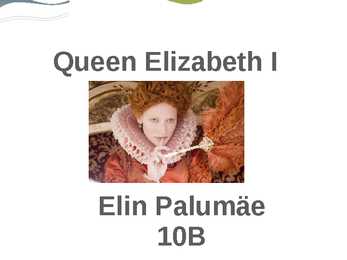
Queen Elizabeth I Elin Palumäe 10B Elizabeth I Reign - 17 Nov. 1558 24 March 1603 (44 years) Coronation - 15 January 1559(25 years) Predecessor - Mary I Successor - James I House - House of Tudor Father - Henry VIII Mother - Anne Boleyn Born - 7 September 1533 Greenwich, England Died - 24 March 1603 (aged 69) Burial - Westminster Abbey Anne Boleyn Queen consort of England Mother of Elizabeth I Tenure - 28 May 1533 17 May 1536 Coronation 1 June 1533 Anne Boleyn was Queen of England from 1533 to 1536 as the second wife of Henry VIII of England and the 1st Marquess of Pembroke in her own right for herself and her descendants. House - House of Tudor Father - Thomas Boleyn, 1st Earl of Wiltshire Mother - Lady Elizabeth Howard Born c.1501/1507 Blickling Hall/ Hever Castle, England Died 19 May 1536 (aged 29-35)Tower of London
It was watched by a global television audience of 750 million. At the altar Diana accidentally reversed the order of Charles's names, saying Philip Charles Arthur George instead. The ceremony began at 11:20 A.M. and Diana wore a dress valued at £9000 with 25 foot train. On 5 November 1981, Diana's first pregnancy was officially announced, and she frankly discussed her pregnancy with members of the press corps. In the private Lindo wing of St. Mary's Hospital, Paddington on 21 June 1982, Diana gave birth to her first son and heir, William. A second son, Harry, was born a little over two years after William on 15 September 1984. According to Diana, she and Prince Charles were closest during her pregnancy with "Harry". She was aware their second child was a boy, but did not share the knowledge with anyone else, including Prince Charles, who was hoping for a girl. Prince Charles
History exam *Stonehenge - is a monument located in England. It is one of the most famous prehistoric sites in the world and is composed of earthworks surrounding a circular setting of large standing stones. The surrounding circular, earth bank and ditch, have been dated to about 3100 BC. Stonehenge was produced by a culture with no written language. Many aspects of Stonehenge remain subject to debate. There is little or no direct evidence for the construction techniques used by the Stonehenge builders.
Introduction I chose Swedish royal family, because it is not far away from Estonia and we have a good friendship with each other. I also chose it, because it seemed so interesting. I really wanted to know, who controls Estonia's neighbour Sweden. Anyway, I enjoyed doing this report and now you can read a little about them. 3 King Carl XVI Gustaf Carl XVI Gustaf is the King of Sweden. Carl Gustaf was born twenty minutes past ten in the morning on Tuesday, on April 30, 1946, at Haga Palace. He was baptised at the Palace church and his real name is Carl Gustaf Folke Hubertus. He is also the Duke of Jämtland. Carl became Sweden's King on September 19, 1973 at the age of 27, succeeding his grandfather, King Gustaf VI Adolf. He is son of the Crown
ENGLISH LITERATURE Ancient Britain Lived on the British Isles in the 1st millenium. They most probably came from Eastern Europe and belonged to the Celtic race and also spoke Celtic. They were primitive hunters- gatherers, farmers. Some Celtic words are still used in modern English, however they are used mostly in place names. For example: · avon river · cumb valley · ford shallow place in the river Ancient Britons had their own religion and priests or druids and temples. In the year 55 BC Britain became a Roman province. Romans were highly developed and had their own language latin, which has also greatly influenced English. The military occupation of the Isles ended in 410 AD
Writers & Poets: William Shakespeare, Daniel Defoe, Charles Dickens, Rudyard Kipling, Dame Agatha Christie Philosophers &Economists: Francis Bacon, John Locke Inventors & Scientists: Isaac Newton, Charles Darwin Actors,Actresses & Filmmakers: Sir Charlie Chaplin, Dame Elizabethe Taylor, AlfredHitchock, Hugh Grant, Orlando Bloom, KeiraKnightley, Daniel Radcliffe Musicians & Singers: Sir Elton John,Phil Collins,George Michael,Robbie Williams King Henry VIII Born: June 28, 1491 at Greenwich Palace Parents: Henry VII and Elizabeth of Y ork House of Tudor Ascended to the throne: April 21, 1509 aged 17 years Crowned: June 24, 1509 at Westminster Abbey Married: (1) Catherine of Aragon 1509-1533 Divorced (2) Anne Boleyn 1533-1536 Beheaded (3) Jane Seymour 1536-1537 Died (4) Anne of Cleves 1540 Divorced (5) Catherine Howard 1540-1542 Beheaded (6) Catherine Parr 1543-1547 Survived Children: Three legitimate who survived infancy; Mary, Elizabeth and Edward
Charles Dickens Charles John Huffam Dickens was the foremost English novelist of the Victorian era, as well as a vigorous social campaigner. Considered one of the English language's greatest writers, he was acclaimed for his rich storytelling and memorable characters, and achieved massive worldwide popularity in his lifetime. Charles Dickens was born in Landport, Portsmouth in Hampshire, the second of eight children to John Dickens n 7 February 1812. The 12-year-old Dickens began working ten hour days in a Warren's boot-blacking factory. In May 1827, Dickens began work in the office of Ellis and Blackmore as a law clerk. At the age
British kings and queens Kings King Henry VIII King Henry VIII is arguably the most well-known king of England. Famous for beheading his wives, of which he had six, King Henry VIII also had several children. King James I King James I was already King of Scotland when he got the English crown. King James I was the first ruler to call himself King of Great Britain, as he ruled England, Scotland and Wales. King James was the first King of Great Britain. King William I, the Conqueror King William I, otherwise known as William the Conqueror was born in France on 1028. He became friendly with the current English King, Edward the Confessor. He invaded and attacked England on Edward's death, as he was promised the English crown, but then denied it by the Saxon Harold. King George VI King George VI did not expect to become king, he was the shy brother of Edward VIII who only took the thrown when Edward abdicated
The Roman occupation (AD 43 Londinium not important Boadicea a revolt against - AD 410) politically. An important trading the Roman conquest centre. Devastation AD 61. Rebuilt. Roman walls built in AD 200. Anglo Saxons (AD 400 Destroyed the Roman towns. Many 1066) kingdoms. London in ruins. King Egbert one Flourishing. Attacks by Vikings. kingdom England (the 9th century) King Albert the Great London is the capital Edward the Confessor
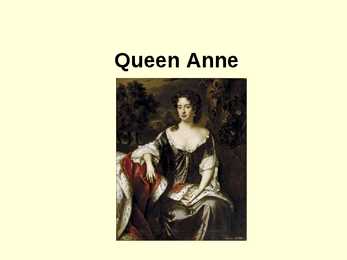
Queen Anne Anne's reign (8 March 1702 1 August 1714) · Queen of England, Scotland, Ireland in 1702 · Became the first sovereign of the Kingdom of Great Britain · Last monarch of the House Of Stuart · reigned for twelve years until her death in August 1714. Anne's life · Born at St. James Palace, London · Anne suffered as a child from an eye infection and was sent to France · Anne returned from France in 1670. · On 28 July 1683, Anne married · Anne's husband died in October 1708 Family · Father James II and VII First wife- Lady Anne Hyde Second wife Mary of Modena · Grandmother Henrietta Maria · Sister Mary · Aunt Henrietta Anne · Uncle King Charles II Anne's son · Anne suffered great personal misfortune · She had been pregnant at least eighteen times
used last name. But let's start from the beginning. The House of Windsor is the reigning royal house of the United Kingdom and the other Commonwealth realms. The dynasty is of German paternal descent and was originally a branch of the House of Saxe-Coburg and Gotha, itself derived from the House of Wettin, which succeeded the House of Hanover to the British monarchy following the death of Queen Victoria, wife of Albert, Prince Consort. The name was changed from Saxe-Coburg and Gotha to the English Windsor (from "Windsor Castle"[1]) in 1917 because of anti-German sentiment in the British Empire during World War I.[2] There have been four British monarchs of the house of Windsor to date: three kings and the present queen, Elizabeth II. During the reign of the Windsors, major changes took place in British society. The British Empire participated in the First and Second World Wars, ending up on the winning side both times, but subsequently lost its status as a superpower during decolonisation
on the south coast, in the Fishbourne area of West Sussex. The Romans defeated the Catuvellauni and their allies in two battles: the first, assuming a Richborough landing, on the river Medway, the second on the Thames. One of the Catuvellaunian leaders, Togodumnus, was killed, but his brother Caratacus survived to continue resistance elsewhere. Plautius halted at the Thames and sent for Claudius, who arrived with reinforcements, including artillery and elephants, for the final march to the Catuvellaunian capital, Camulodunum . The future emperor Vespasian subdued the southwest,Cogidubnus was set up as a friendly king of several territories, and treaties were made with tribes outside the area under direct Roman control.Romans built many roads and also many great bulidings like the Hadrians wall. Anglo-Saxons and Normans The history of Anglo-Saxon England broadly covers early medieval England from the end
law, Roman baths, language and advanced civilization. They also built Hadrian's Wall in 122 A.D. Romans occupied Britain for four centuries. The Roman way of life all vanished after the invasions from Northern Europe by the Angles, Saxons and Jutes from the 5th century onwards. They ruined Londinium, but they were easily turned into Christianity and religion became more and more important. The Vikings, who came in the 9th century, first raided England to plunder it, but then they decided to stay. In the 10th century England fell under Danish Rule, with King Canute finally managing to unite the Anglo-Saxons and Danes at the beginning of 11th century. Medieval England After defeating the Anglo-Saxon King Harold at the Battle of Hastings in 1066, William of Normandy (who became William I, also called William the Conqueror) introduced the Norman feudal system, rewarding his French-speaking followers with land in return for
Londinium was rebuilt. By AD 100 it had also become the capital of the Roman province. A massive wall was built to protect the city from further attacks. The Roman Empire came under increasing attack across Europe and in AD 410 they retreated. The Romans gave us a language based on Latin, the calendar, law and legal system, the census and also straight roads, central heating and concrete. Anglo- Saxons around AD 400 Anglo- Saxons were warrior farmers from Germany, Denmark and the Netherlands. Later in the 5th century, Anglo-Saxons settled just west of Londinium, around the Strand, and formed the town of Lundenwic. The area of the old Roman city became a landing-place for ships and a centre for trade.The first English King to convert to Christianity, King Ethelbert, founded St Paul's Cathedral in 604. The Vikings 8th and 9th century By the 9th century, London was a very prosperous trading centre, and its wealth attracted the attention of Danish Vikings
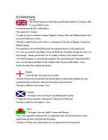
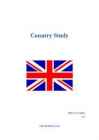
1) General facts The UK: * the United Kingdom of Great Britain and Northern Ireland was formed in 1801 * it covers 243,610 sq km * everybody from the UK is called British * the capital city is London * is made up of four constituent countries: England, Scotland, Wales and Northern Ireland which in turn are divided into counties * the flag is called the Union Jack which is a combination of the flags of England, Scotland and Northern Ireland * the population is about 60,000,000 people, the population density is 242 people/sq km * its coasts are washed by the Atlantic Ocean, the North Sea, the English Channel, the Celtic Sea, Saint George's Channel, and the Irish Sea. It is linked to France by the Channel Tunnel * the United Kingdom is a constitutional monarchy. The current monarch is Queen Elizabeth II, who is also the Queen and Head of State of fifteen other Commonwealth Realms, such as
mosaic floors o 122 AD- Hadrian's Wall; 138 AD- Antonine Wall o Druids(celtic priests) were banned and Britain was influenced by christianity 3) The Germanic Invasions I. The Anglo-Saxons o 5th century- 1066 o From Southern Denmark(angles); Germany(saxons); Jutland(jutes) o By the 7th c kingdoms had emerged and later KING ALFRED united the kingdoms o They were pagans and very rural people, built in wood rather than stone o It was the saxon farmstead that laid the foundations of the English village II. The Vikings o 8th century- 11th century o From Denmark, Norway o They were ship builders and sailors o In 886 the Danelaw peace treaty was made
5. Which 5 places attract visitors in Wales and Scotland? Edinburgh, Loch Ness, The Highlands, Snowdonia, Cardiff. 6. Name 6 islands, 5 rivers, 3 lakes, 3 mountains in UK. Isle of Man, Isle of Wight, Isle of Lewis, Island of Mull, Island of Arran, Anglesey Island Severn, Thames, Tweed, Avon, Trent, Dove Ben Nevis, Snowdon, Ben Macdui 7. Stonehenge. Stonehenge was produced by a culture that left no written records. Built on Salisbury Plain, in Wiltshire, England some time between 5,000-4,300 years ago. One of the most famous megaliths in the world, dating from prehistoric times. Stonehenge consists of circles of stone arranged in complex patterns, and their origin is still being explored. Some of the stones come from over 200 miles away in Wales. There is little or no direct evidence revealing the construction techniques used by the Stonehenge builders. It was probably associated with sun-worship and
BRITISH HISTORY 17TH-19TH CENTURY SEVENTEENTH-CENTURY ☄ When James I became the first English king of the Stuart dynasty, he was already king of Scotland, so the crowns of these two countries were united. ☄ The kind of Middle English spoken in lowland Scotland had developed into a written language known as Scots ☄ The Scottish Protestant church adopted English rather than Scots bibles ☄ Religion and politics are inextricably linked ☄ Some people tried to kill the king because he wasn't Catholic enough and another king had been killed, partly because he seemed too Catholic ☄ Anger grew in the country at the way that the Stuart monarchs raised money ☄ Puritanism- ideological Protestantism ☄ Some of them thought the luxurious lifestyle of the king and his followers was immoral
relations and defence. Great Britain Across / 'krs / risti, läbi, põiki Locality / l'kælt / asukoht, paikkond Inland body / 'nlænd 'bd / sisemaine osa Inlet / 'nlet / merekäär, laht Headland / 'hedlnd / neem Scour / 'ska / küürima Foreshore / 'f:: / tõusu ja mõõna vaheline rand Recreational / rekr'enl / lõõgastumis-, vabaaja- Scenery / 'si:nr / maastik Juxtaposition / dkstpz'in / kõrvuti asetsev GB consists of England, Scotland and Wales. GB is only a dot on the world map. It offers a great variety and scenic contrasts are often within easy reach. The coastline is washed by the tidal system twice a day. Britain´s speciality is the man-made scenery. Each part of the country has its peculiar geographical features. England Indented / n'dentd / sakiline Estuary / 'estjr / suudmelaht
Arthur Conan Doyle Life Arthur Conan Doyle was born on 22 May 1859, in Edinburgh, Scotland, to an English father, Charles Altamont Doyle, and an Irish mother, Mary Foley, who had married in 1855.] Although he is now referred to as "Conan Doyle", the origin of this compound surname is uncertain. Conan Doyle's father was an artist, as were his paternal uncles (one of whom was Richard Doyle), and his paternal grandfather John Doyle. Conan Doyle was sent to the Roman Catholic Jesuit preparatory school St. Mary's Hall, Stonyhurst, at the age of eight
been painted over, spoilt with knives, even used for target practice. The American Rock Art Research Association protects rock-art sites. 2) THE FAVOURITE SPORT IN BRITAIN The most popular sport is probably football. Two kinds of football is played in Great Britain. One of them, which is called association football, is played all over Europe. The other kind: rugby football is also very popular in New Zealand, France, and some other European countries. English boys play it at school, and in public parks. When they grow up, they play as members of important amateur teams or as a professional in teams competing in football ,,leagues". Professional football is as much a business as a sport. Rugby football was first played in 1823. In rugby every player is allowed to carry the ball. The ball is oval, not round. Each team contains 15 players. The oldest game of football in England is probably the football match which takes place at
The Renaissance In the history the Middle Ages were followed by the Renassance period. During this period a new class called bourgeoeisie came into being. This is the period when monarchies based on nationality were estabilished. The Renaessance started in Italy In the 14th century. Then it spread all over Europe, reached England in 16th century. The struggle for power culminated in a war called The War of Roses. It was a civil war between two dynasties, families. They had different emblems on one side the Yorks (white rose) other Lancasters (red). They couldn't decide who gets the throne. War ended 1485. A new dynasty came to throne, Tudor, the first king in this dynasty was Henry Vll. When he came to throne a period of stability followed because he built a nation based state. He was good at diplomacy.He could avoid quarrels and wars with neigbouring countries. France, Spain - greatest enemies.So he could save much
The Saxons & Vikings Fragmentary knowledge of England in the 5th & 6th centuries comes from the British writer Gildas, the Anglo-Saxon Chronicle, saints' lives, poetry, archaelogical findings and place- name studies. British landlords ruled small, unstable kingdoms and continued some Roman traditions of governance. In the mid-5th cent, Vertigern, a British leader, hired Germanic mercenaries to help defend against peoples of the north (Picts & Scots). In the end they revolted & the process of invasion and settlement began
He discovered America in 1492. I Indian sun, they pray for fan. J we hate Jews, they are fools. K Bush is okey, because he is not gay. L Americans are large, they eat much. M Mc`Donalds is good, there is a lot of food. N is for Nigga who pulled the trigger. O is for Osama who wears pyjamas. P is for Pamela who likes camera. Puritans The Puritans were a group of people who grew discontent in the Church of England and worked towards religious, moral and societal reforms. The writings and ideas of John Calvin, a leader in the Reformation, gave rise to Protestantism and were pivotal to the Christian revolt. They contended that The Church of England had become a product of political struggles and man-made doctrines. The Puritans were one branch of dissenters who decided that the Church of England was beyond reform. Escaping persecution from church leadership and the King, they came to America.
The Middle Ages The Middle Ages are one of the most turbulent periods in English history. The Middle Ages are so called as the middle period between the decline of the Roman Empire and the Renaissance. The Middle Ages started in 1066. with the Battle of Hastings and the Norman Conquest. William the Conqueror took all the lands from the Saxon English and gave these to French nobles. Normans were known as great builders. This is assured by the fact that many great castles and other buildings, including the Tower of London, were built during the Norman Conquest. In 1086. Domesday Book was compiled. It is a detailed survey of England ordered by William the Conqueror. The reign of King William Rufus who was the son of William started in 1087 and lasted until 1100. Next king was Henry I who was the brother of William Rufus. His reign
стран мира. 6 INTRODUCTION Aspects of British History presents a brief outline of the most significant milestones in the long and eventful history of Great Britain, such as the five successful invasions of the island, the birth of Parliament and transformation of an absolute monarchy into a constitutional monarchy, the origin of the English language, the rise and fall of the British Empire. The units contain an informative reading text on an important issue, preceded by preparatory discussion questions and followed by notes offering some additional information, and a vocabulary with relevant language notes. The main reading text is accompanied by comprehension, vocabulary and grammar exercises and discussion activities. Some of the units include reading passages.
Later in life Kipling illustrated many of Rudyard Kipling's books, and other works. Kipling also remained editor of the Journal of Indian Art and Industry, which carried drawing works from the students of the Mayo School. COUPLE named their son after the place they had first met Rudyard Lake. Alice Kipling Fleming - Sister of British author Rudyard Kipling who became a well-known psychic, producing automatic writing under the name "Mrs. Holland." Born June 11, 1868, Alice Kipling was privately educated. She went to India at age 16 and married British army officer John Fleming. While in India she wrote a number of poems, and in 1893 initially experimented with automatic writing. After a long illness she returned to England in 1902 and in the following year read the classic study Human Personality and Its Survival of Bodily Death, by F. W. H. Myers. As a result she contacted the secretary
60.0 million people in mid-2009, it is the third most populous island in the world, after Java and Honsh. Great Britain is surrounded by over 1,000 smaller islands and islets. The island of Ireland lies to its west. Politically, Great Britain may also refer to the island itself together with a number of surrounding islands which comprise the territory of England, Scotland and Wales. All of the island is territory of the sovereign state of the United Kingdom of Great Britain and Northern Ireland, and most of the United Kingdom's territory is in Great Britain. Most of England, Scotland, and Wales are on the island of Great Britain, as are their respective capital cities: London, Edinburgh, and Cardiff. The Kingdom of Great Britain resulted from the political union of the kingdoms of England
........... 8 Population and Ethnicity..............................................................................................9 3 Introduction The official name of the country is the United Kingdom. The United Kingdom is an island country. It consists of the island of Great Britain and Northern Ireland. Great Britain can be divided into three parts England, Wales and Scotland. Each of them has their own capital city. Glasgow in Scotland, Cardiff in Wales and London in England. The country is situated in the north-western Europe. The territory of the United Kingdom is about 244,000 square kilometres and about 60 million people live there. The UK contains a number of small islands. The largest islands that belong to the United Kingdom are the Isle of Man in the Irish Sea and the Isle of Wight which lies off of England's southern coast
For the Indians of the Northeast area, the trees of the forest were the primary material for shelter, tools and fuel, and the animals of the forest were the primary food source. But the Northeast Woodland Native Americans were not solely hunters and gatherers, but also fishermen and farmers. The people of the Southeast were farmers first and hunters, gatherers, and fishermen second. Legend of Pocahontas Pocahontas is most famous for saving the life of John Smith, a leader among the English colonists. In 1607, Smith was captured by Powhatan warriors and held captive for four days. When two large rocks were brought in, the legend goes, Smith had a hunch his beheading was imminent. But Pocahontas begged Powhatan not to kill the Englishman and, being her father's favorite, the chief obeyed his daughter and spared Smith. It is true that Pocahontas had acted as an ambassador for her people to the English. In the first years of the
 annaabi.ee