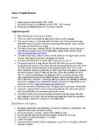
Unit 2 Test 1 Translate. 1 Mulle ei meeldi, kui sa kasutad minu arvutit luba küsimata. I don´t like it when you use my computer without asking permission. 2 Jason ja Jack koristavad oma tuba kordamööda. Jason and Jack take turns tidying their room. 3 Mulle ei meeldi see salat; selles on liiga palju äädikat. I don´t like this salad; it has too much vinegar in it. 4 Isa nõudis, et me tõtt räägiksime. Father insisted us telling the truth. 5 Kui ma karbi avasin, leidsin, et äratuskell oli viga saanud. When I opened the box, I found that the alarm clock was damaged. 6 See pole aus! See on pettus! It´s not fair! That´s cheating! 7 Vanaema tavaliselt küpsetab mu sünnipäevaks metspähkikooki. My grandmother usually bakes hazelnut cake for my birthday. 8 Meie meeskonnal läheb sellel hooajal hästi. Our team is doing well this season. 2 Complete the sentences with prepositions. 1 According to a survey pe...
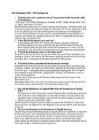
Unit 2 Test 1. Translate 1.Ann püüdis keskenduda uute sõnade õppimisele. Ann tried to focus on learning new words 2.On võimalik, et meie võistkond võidab The chances are that our team will win. 3.Kasuta oma vaba aega ja loe raamatuid. Make use of your free time and read books. 4.Millise eesmärgi sa endale püstitasid? Which goal did you set for yourself? 5.Amy andis lõpuks mulle võimaluse oma kirjandit lugeda. Amy finally gave me a chance to read her essey. 6.Kahjuks on üldteadmised üpris piiratud. Unfortunately my general knowledge is quite limited. 7.Meeldejätmise oskust on võimalik parandada. It`s possible to improve your memory skills. 8.Kas sa olid viktoriinis edukas? Were you successful at the quiz? 2. Write the verb in the suitable tense. The teacher was very angry with Little Tommy, who …….(be) läte for school for two weeks. He even raised(raise) his...
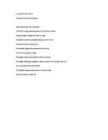
TEST Unit 2 1 1. Ann tried to focus on learning new words. 2. The chances are that our tearm will win. 3. Make use of your free time and read books. 4. What goal did you set for yourself? 5. Amy finally gave me a chance to read her essay. 6. Unfortunately, my general knowledge is quite limited. 7. It`s possible to improve your memory skills. 8. Where you successful in the quiz? 2 1. had been 2. raised 3. puffed 4. said 5. did I punish / have I punished 6. sobbed 7. shout / shouted 8. tear / tore 9. don`t remember 10. did 3 1. b 2. c 3. b 4. a 4 1. What did the student have to do? 2. Why didn`t he buy the book? 3. Where did he try to find the book? 4. How did he solve the problem? 5. Was the student told off for reading the book? 6. Why was the book put in another place? Model answer...
RETSENSIOON INGLISE KEELE ÕPPEKOMPLEKTILE I LOVE ENGLISH 2 Ülle Kurmi ja Ene Sooleppa õppekomplekt I Love English 2 on oluliselt uuendatud versioon samanimelisest õpikust. Õppekomplekt koosneb õpikust, töövihikust, CD-st kuulamisülesannetega, kontrolltöödest ja õpetajaraamatust. Õppekomplekt on mõeldud kasutamiseks A-võõrekeele õpikuna 4. klassile ning on loogiliseks järjeks varemilmunud komplektile I Love English 1. Õpik koosneb 20 õppeühikust, millest iga viies on mõeldud kordamiseks. Õppetükid kajastavad laia teemavaldkonda (Unit1: kool ja keeled; Unit 2: numbrid ja aeg; Unit 3: viisakus; Unit 4: loomad; Unit 5: reeglid koolis ja mujal; Unit 6: sõbrad ja sõprus; Unit 7: päev ja tegevused; Unit 8: riietus; Unit 9: sport; Unit 10: hobid; Unit 11: piknik, toiduained; Unit 12: turvalisus; Unit 13: hädaolukorrad; Unit 14: külaskäik; Unit 15: ilm ja aastaajad; Unit 16: sünnipäev; Unit 17: matkamine; Unit18: tee juh...
Test 2 1 Translate. 1 Küll on kahju, et sa ei saanud tulla. What a pity that you couldn´t came. 2 Mitte keegi ei olnud närvis. Nobody was nervous. 3 Klass oli täis juttu ja naeru. The classroom was full of laughter and talk. 4 Õpilased tervitasid oma õpetajat rõõmsalt. The students greeted their teacher cheerfully. 5 Ma õppisin selle luuletuse pähe. I learned this poem by heart. 6 Lapsed olid enne pidu ootusärevil. The children were excited before the party. 7 osasid vahetama swap the role 8 kahe nädala pärast in two time a week 2 Complete the sentences with the correct verb form 1 Did you meet Ann at the party last night? (meet) 2 Do you think our team will win the football match tomorrow? (win) 3 I can´t go out because I haven´t done my homework yet. (not do) 4 Somebody has broken the lock. I can´t get in. (break) 5 Next year Mary will spend two weeks in Liverpool. (spend) 6 I usual...
Inglise keele kontrolltööd 3. ja 4. klassile. I love English 1 (3. ja 4. Round-up õppetükkide peale). I love English 2 (4. Round-up õppetüki peale). Koostaja Heddy Uustal. Viljandi Maagümnaasium. Juhendaja Toomas Rähn. I love English Form 4 Test 4 name................................. 1. Kirjuta sobiv küsisõna. What? When? Where? Who? Why? 1) .................................... do you go after school? 2) .................................... books do you like? 3) .................................... do you like summer? 4) .................................... do you do in summer? 5) ...................................
1 Ryker Huffman Spanish 432.001 4-15-2013 La Celestina Ejercicio de Traducción Esta cita es en el auto uno, cuando Celestina y Sempronio hablan en privado. Calisto y Pármeno se acercan, de la habitación, y empiezan a escuchar la conversación. Celestina puede oír que se están acercando e instruye Sempronio "escucha y déjame hablar lo que a ti y a mí me conviene." Después de escuchar a algunos de la conversación diseñada por Celestina y Sempronio, Calisto y Pármeno salen y Celestina y Sempronio continúan de hablar en privado. Entonces, Celestina explica a Sempronio que Calisto está "enfermo del amor." Eligio este pasaje porque explica la punta de vista de la Celestina sobre el "amor impervio." En la cita ella explica de dónde viene el amor y qué podemos hacer. Finch, 2003 Has de ...
INGLISE KEELE TÖÖPLAAN 6. KLASSILE Aeg: I, II veerand 2003/2004 õ.-a Õpetaja: Age Tamm Õppe- Teemad. Alateemad. Mõisted, faktid nädal 1. nädal Unit 1. What did you do last summer? Past Simple questions, statements 2. nädal Summer activities Did you...? Yes, I did / No, I didn't Alan's summer play ball / the violin My summer go swimming / ...ing Polite English. Saying hello and introducing 3. nädal Unit 2. A trip to England Past Simple 4. nädal Outdoor activities by bus / car / train / plane, on foot English Country School Ordinals (the first, the second, ...) The Tower of London Posessive pronouns ...
Kirjapraktika Portfoolio 2013 1. Poems Sea Warm, Cool Moving, Waving, Feeding Part of my happy dream Life Life Long, Hard Exiting, Full-filling, Never-ending Funny, Weird, Mad, Painful Trying, Hurting, Haunting Sad, Irrefutable Death 2. Short message a)note Dear Mike, Thank you for that amazing CD you gave me. It has changed my life and I love that band. Thank you! Love, Regin...
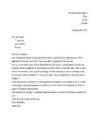
15 Tihase Street, Apt. 2 Tartu 50416 Estonia 23 September 2012 SA Tartu Sport 7 Ihaste tee Tartu 51013 Estonia Dear Sir or Madam, I am writing in response to your advertisement for a sports facility's administrator which appeared in Postimees last week. I am interested in applying for this position. I am a 14-year-old student in Tartu Miina Härma Gymnasium. I learn English, Russian and German, which can help me to communicate with the clients. On my free time I like to spend time on the internet. I ha...
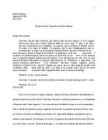
1 Ryker Huffman Spanish 432.001 29-4-2013 Proyecto Final: Transducción Entre Idiomas Pasaje seleccionado Celestina: Has de saber, Pármeno, que Calisto anda `de amor quejoso. Y no lo juzgues por eso por flaco, que el amor impervio todas las cosas vence. Y sabe, si no sabes, que dos conclusiones son verdaderas. La primera, que es forzoso el hombre amar a la mujer y la mujer al hombre. La segunda, que el que verdaderamente ama es necesario que `se turbe con la dulzura del soberano deleite, que por el Hacedor de las cosas fue puesto, porque el linaje de los hombres `se perpetuase, sin lo cual perescería. Y no sólo en `la humana especie; mas en los pesces, en las bestias, en las aves, en las reptilias; y en `lo vegetativo algunas plantas han este respecto, si ...
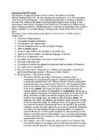
Literature of the 14th century The highpoint of medieval literature, the best writer of late medieval lived then. William Langland 1332-1376 the last important poet of alliterative verse. His masterpiece "The Vision of Piers Ploughman" how important working hard is, the labour of peasants is the base of the welfare of the people. A passionate protest against social injustice. A time when peasants were slowly rising against their feudal lords. Descriptions of different social classes. Religious mysticism. Two great principles: 1) all men are equal before God; 2) honest labour is dignified. It is a dream allegory. A young maiden named Youth, Greed is an old witch. The greatest writer of this period and the whole of medieval times Geoffrey Chaucer (1340?-1400): · The father of English poetry · The creator of English versification · The first poet to use various metres · Laid the foundation of the new literary English ...
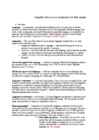
English structure revision for the exam 1. Terms Language → A systematic, conventional (tavakohane) use of sounds, signs or written symbols in a human society for communication and self-expression. Human language at all levels is rule- or principle- governed (valitsema) meaning that language corresponds to the grammar. Natural language is usually spoken, while language can also be encoded into symbols (such as letters, morse etc) For example: Estonian, English. Linguistics → The scientific study of human natural language. Broadly, there are three aspects to the study which are Pragmatics (studies the use of language → interested in the gap between the sentence’s meaning and the speaker’s meaning). Semantics (concerned with the meaning of the language aspects and the way they change, also how objects and language and thinking and language are related). ...
History of English literature Periods: 1. Anglo-saxon or early literature (499 - 1066) 2. Second or Norman or late Medieval period (1066 - 13/14 century) 3. Renaissance or Modern period (13-14 century present) Anglo-Saxon period · All of the literature had its roots in folklore · Texts were orally transmitted, the anglosaxons had no written language · Two types of singers: 1) scop (attached to the royal court, wrote poetry and songs, performed them); 2) gleeman (travelled, mostly sang other peoples' songs, not their own songs; performers of scop songs) · The oldest known song Widsith (The Far Traveller/Wonderer); tells of a gleeman who travels in Europe, of his love of noble deeds, speaks of the shortness of life http://en.wikipedia.org/wiki/Widsith · The other known song Deor's Lament. Can be called the first English lyrics, about 40 lines. Talks about a scop who is not happy w...
The Renaissance 1500 1650: background 1. What does the word ,,renaissance mean? Characterize briefly the period called the Renaissance. "The rebirth" from French Renaissance, meaning "rebirth"; Italian: Rinascimento, from re- "again" and nascere "be born") Rebirth of scholarship based on classical learning and philosophy. The Renaissance was a cultural movement that spanned roughly the 14th to the 17th century, beginning in Italy in the late Middle Ages and later spreading to the rest of Europe. It encompassed a revival of learning based on classical sources, the development of linear perspective in painting, and gradual but widespread educational reform. (wikipedia)Bridge between Medieval Ages and Modern Era. 2. Where did the Renaissance start and why? In the opening years of the 14th century, there began to develop in Italy and increasing interest in the manuscripts that had surviv...
I love english 5 Revision Unit 11 1) Vocabulary 1. Who is the patron saint of Scotland? 2. A clan is a large group of related familys. 3. The Scots are proud of their national costume. 4. There are heather moors, moutains and lochs in Scotland. 5. Do you belive that there is a monster in Loch Ness? 6. We saw many sheeps on the hillside. 7. An indrustial centre. 2) Make sentences 1. LAKE / POND long/big/sweet/deep/high A lake is deeper than a pond. 2. MOUNTAIN/HILL A mountain is higher than a hill. 3. SCOTLAND/WALES Scotland is bigger than Wales. 4. NOVEL/SHORT STORY A novel is longer than a short story 3) Reported speech Said to -› told ,,I,, -› II II -› had+ III 4) Reading
I LOVE ENGLISH 5 Textbook unit4 exercise4 1.jõe ääres-by the riverside 2.ümber nurga pöörama-turn round the corner 3.jalutuskäiku tegema-have a walk 4.jõeäärt lonkima-dawdle along by the river 5.ärrituma-Get worked up 6.kellegile jalga ette panema-trip sb up 7.tüli norima-pick a fight 8.kedagi maha rahustama-calm sb down 9.midagi kellegagi selgeks rääkima-talk sth through with sb 10.maha jahtuma-cool down 11.tõsises hädas olema-be in real trouble 12.ära minema-walk off
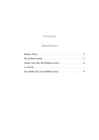
The Article Table of Contents General Rules....................................................................... 2 The Definite Article ............................................................... 5 Names that take the Definite Article...................................... 6 No article.............................................................................. 7 Countable and uncountable nouns ....................................... 9 General Rules There are two articles in the English language – the Indefinite Article and the Definite Article. The Indefinite Article has two forms – a and an (a precedes words beginning with a consonant sound and an precedes words beginning with a vowel sound). It comes from the Old English word ãn, which meant one. The Definite Article is the. It comes from the Old English word ţis, which meant this. Thus, in most general term...
Some Love Poems and English Phrases!!! 1. A kiss is just a kiss until you find the one you love. A hug is just a hug until you find the one you're thinking of. A dream is just a dream until it comes true. Love was just a word until the day I saw you. 2. You are my sun, my moon you're my words, my tune. My earth, my sky, my sea you're everything to me! You're my light in the darkness you're my peace and happiness. You're ma hope and you put my above you are my forever love. 3. Love is an energy, love is a mystery love is meant to be true. Love is a part of me, love is the harmony love is going to be me and you. Love is patient, love is kind. It always protects, always trusts, always hopes. That what you are (name)...My love! 4. There's only 1 thing 2 do 3 words 4 you. I LOVE YOU! 5. I wrote you're name in t...
Test 15 1 Translate. 1 Maakera kliima on muutunud. The climate of the Earth has changed. 2 Põlisameeriklaste suguharud vahetasid kaupu. Nateive American tribes exchanged goods. 3 Nende põhilised vaated olid sarnased. Their basic views were similar. 4 Nad austasid kõiki eluvorme. They respected every form of life. 5 Valged asukad liikusid läände. The white settlers moved westward. 6 Tänapäeval elavad paljud põlisameeriklased reservaatides. Today lots of Native Americans live in reservations. 7 kellegisse armuma fall in love with sb 8 kellestki / millestki erinema differ from sb/sth 2 Write the missing forms. Noun Adjective Verb Adverb 1 attraction attractive attract attractively 2 danger dangerous X dangerously 3 difference different differ differently 4 happiness ...
I LOVE ENGLISH 6 8.klass Unit 1 test 1. Translate. 1 Mida on sul ja su sõbral ühist? What do you and your friend have a common? 2 Ma mõistan su vaatenurka. I can understand your point of view. 3 Mida sa selle all mõtled? What do you mean by this? 4 Missugune vapustavalt ilus pruutkleit! What a gorgeous bridal / wedding dress! 5 Kas sa oled kunagi pulmas käinud? Have you ever attended a wedding? 6 Jane rebis kutse kostüümipeole tükkideks. Jane tore the invitation to the fancy dress party into pieces. 7 Pinge Alice`i ja tema armukadeda poisssõbra vahel kasvas. The tension was building up between Alice and her jealous boyfriend. 8 Mis lahti? Su silmad on pisaraid täis. What`s up? Your eyes are filled with tears. 2. Write the verbs in the suitable tense. 1 have booked `ll be / booked was...
I Love English 5 Unit 8 Test Answers 1. Translate The phrases 1) This is Kevin. Could I speak to Tina, 5) Surf the internet please! 6) Enjoy visiting chat rooms 2) Switch off the mobile phone 7) Send an email to a friend 3) Be on the phone 8) Write in capital letters 4) Call back later 2. Write a / an or the were necessary 1) We travelled to Tallinn by – bus. 2) Tony is the tallest boy in our class. 3) We went to see a film yesterday. The film was called The Lord of the Rings 4) My father is a police officer and mother is a doctor. 5) I could play the piano when i was 6 years old. 6) Please don’t be late for – dinner 7) I’d like an apple please 8) My father liked to play – football when he was a student. 3. Write the correcto word ...
The Moving Finger Agatha Christie The Moving Finger Agatha Christie Plot summary: Brother and sister Jerry and Joanna Burton bought a country house in an idyllic English town called Lymstock so that Jerry could recover from injuries received in a wartime plane crash. They had been living in London their whole life and thus were excited but intimidated to go. Lymstock was much like any other English village, no more than 300 people. Those that live there enjoy the peace of rural life and form a union to where it can be difficult for strangers to blend in. Fortunately, it wasn't much of a problem for Jerry and Joanna. They were just getting to know the town's strange members and their characters...
Retell "My shopping habits"( suuliselt tunnis) ja vasta küsimustele kirjalikult ning lisa vastused ekooli 1.How much money did your parents give you for an allowance when you were ten years old? How did you spend it? /What did you buy? 2,.Explain these proverbs: What do they mean? Say them in other English words. The best things in life are free. Money doesn't grow on trees 3.Your rich uncle just died and gave you 50,000,000 euros How would you spend it? What would you buy? Would you spend it on yourself, put it in the bank or buy something for your family? Would you spend it all? 4.What makes a pleasant shopping experience? 5.Do you enjoy shopping for other people? Explain. 1. When i was 10 my parents gave me 65 a month. I spent it on food. 2. 1) The things you want most in life, don't cost anything. You cant buy feeling like happiness ...
Test on Romantic Poetry and Prose 1. Approximate dates of romanticism: in the second half of the 18th century. Major events on world history at that time: · Industrial revolution · In America the Declaration of Independence, July 4, 1776 · The French Revolution, 1789 · The King of England was George III, after him George IV and then Queen Victoria Outcomes: · Revolution did not bring welfare · Lives of the lower-classes worsened · Extended the distance between the lower and upper class · The rich got richer, the poor got poorer 2. Romanticism is a reaction against classicism, science and atomic (aesthetic ideal of order and unity) worldview. Romantic ideal is the organic world. Romanticism: · Returns to nature and belief in the goodness of mankind · Exaltation of the senses and emotion overcome reason and intellect i...
Modals Sandra Haar Form 11 I am going to talk about... Can Could May Might Must Should Would Ought to Excercises References How do we use modal verbs? Affirmative: Subject + modal + infinitive, Example: She should stay Negative: Subject + modal(n`t) + infinitive, Example: She shouln`t stay Interrogative: (Wh) Modal + Subject + Infinitive, Example: Why should she stay? Can Ability to do something in the present-I can speak English. Permission to do something in the present-Can I go to the cinema? Request - Can you wait a moment, please? Offer- I can lend you my car till tomorrow. Suggestion- Can we visit Grandma at the weekend? Possibility- It can get very hot in Arizona. Could Ability to do something in the past- I could speak English. Permission to do something in the past- I could go to the cinema. Polite question- Could I go to the cinema, please? Polit...
PRESENT SIMPLE I You work here. ... do not (don't) work ... We They Do you work here? Yes, I do. / No, I don't. He She works here. ... does not (doesn't) work ... It Does she / he work here? Yes, she / he does. / No, she / he doesn't. Time expressions always often not often never usually normally rarely sometimes occasionally hardly ever when after before unless in case as soon as until Uses - for permanent facts - for actions and situations which are generally true - for habits and routines PRESENT CONTINUOUS bebe++ ing ing I am (I'm) You are (you're) She/He/It is (she's/he's/it's) (not) + working here. We are (we're) They are (they're)...
It celebrated on February 14th. It is traditionally day on which lovers express their love for each other by presenting flowers, offering confectionery, and sending greeting cards. Modern Valentine's Day symbols include the heart-shaped outline, doves, and the figure of the winged Cupid. Saint Patrick's Day is a religous holiday on the 17th of March St. Patrick's Day is celebrated by the Irish and Irish at Heart in big cities and small towns alike with parades, "wearing of the green," music and songs, Irish food and drink, and activities for kids such as crafts, coloring and games. Its a time for fun. April Fools' Day is celebrated in the Westrn world on 1st april of every year The day is marked by the commission of good humoured or funny jokes hoaxes and other practical jokes. Trooping the Colour is a ceremony performed by regiments of the Commonwealth and the British Army. It has been a tr...
1. The Jacobean masque Elizabethan one nation culture, now cultural polarisation between the new courtly culture and the rest of the country. Court in cultural isolation. Ben Jonson. King and courtiers were close to universally recognised ideal types (conflict with the reality). Mysticism. Emergence of perspective view, stage machinery, artificial light, revolution. The stage cast the monarch in the focal point (the lines of perspective of the stage met there. Inigo Jones. Masque an educative vehicle, towards classical antiquity and architecture. Tide towards absolute monarchy. Masque – linked poetry and moral philosophy into art. Music, dance, poetry, lavish illusionistic scenic display to express the doctrines of divine kingship. Great impact. Like gods come down to earth. 2. The Caroline masque Charles decided on subject matter, and acted and danced in masques. Now the regal divinity even more obvious. Ben Jonson. Divine m...
William Hazlitt Kati Eliisabet Peterson 2015 Background Hazlitt's father attended the University of Glasgow His fathers name was also William Hazlitt In 1766 Hazlitt's parents married Three children survived infancy John 1767 Margaret (or Peggy) 1770 Childhood William was born in Mitre Lane, Maidstone, in 1778 In 1780 his family began a migratory existence They moved from Maidstone to Ireland to the Unated States In 1786–87 the family returned to England and lived at Wem, in Shropshire Education Hazlitt was educated at home and at a local school At age 13 one of his letters was first published In 1793 his father sent him to a Unitarian seminary at Hackney College He suffered a loss of faith and left Hackney At puberty he became unapproachable and introverted He read a lot, laying the foundation of his education He turned to p...
Letters Letters FORMAL, INFORMAL, TRANSACTIONAL TASK 1 Read the extracts and answer the questions. · Where are the extracts from? · What is the purpose of each letter? · How do they differ? · Which extracts are examples of formal letters? · How is the reader addressed in a formal letter? · What are the closing remarks for formal letters? · What is the salutation in a friendly letter? · How would you end extracts 1,2,3 ? · How would you begin the extracts 4 and 5? 1. Dear Mr Miller, I received your kind invitation to the reception. Unfortunately, owing to other commitments. I will be unable to attend ... 2. Dear Ralph, l just got your invitation to the company's event. l `m afraid I can't make it because I've a/ready made plans which l can "t change ... 3. Dear Sirs, I am writing to complain about the poor quality of ...
CHARACTERISTIC FEATURES OF OLD ENGLISH - 15 monophtongs, (7 long, 7 short, 1 central), 4 diphtongs, 17 consonants. Free variaton of R, and it was pronounced everywhere. Very much Germanic in character. Quite some special consonants that no longer exist. About morphology: synthetic with numerous aglutinating tendencies. System of tenses Germanic, but with a reduction of tenses. Paradigmatic leveling; Stress shift; Word order; Loan words (Old Norse, Old French). Dual pronouns. Determiners - no separate definite article. Strong and weak verbs. Word order relatively free with tendencies towards SVO. SVO, SOV, VSO most common. Adposition and podposition were both possible (eesliide ja tagaliide). About syntax: clauses were joined much simpler than nowadays, using and, then etc. Because of case syncretion the word order in a sentence became much more important to be able to tell the difference between words. FIRST CONSONANT SHIFT (GRIMM'S L...
englisch-hilfen.de LEARNING ENGLISH ONLINE Examples Examples Examples Tense Signal words Use Form affirmative negative interrogative every day something happens repeatedly sometimes how often something happens always I work. I don't work. Do I work? one action follows another often Infinitive He works. He doesn't work. Does he work? Sim...
Discuss the representation of the generation of fathers in Turgenev's novel "Fathers and Sons" Turgenev always had two tasks before him to depict the body and pressure of time, and to depict the rapidly changing face of cultured Russian society (Freeborn 1960:48). Kluchevsky (1993:40) defined one case of the generation gap in the beginning of the XIX century as "merry cosmopolitan sentimentality of the fathers now transformed in a patriotic grief of their children. The Fathers were Russians, who passionately wanted to become French; the sons were raised as French and passionately wanted to become Russians. Fathers and Sons situates this generational conflict within family relations. In this essay, the ways how Turgenev represents the generation of Fathers in Fathers and Sons is discussed. Fathers and Sons is set in between Russia's defeat in the Crimean War and the Emancipation of the Serfs a socially challenging area. Mid-19 th c...
Golden Grammar rules 1. Don't use an with own. Sue needs her own room. (NOT Sue needs an own room.) I'd like a phone line of my own. (NOT ... an own phone line.) 2. Use or rather to correct yourself. She's German or rather, Austrian. (NOT She's German or better, Austrian.) I'll see you on Friday or rather, Saturday. 3. Use the simple present play(s), rain(s) etc to talk about habits and repeated actions. I play tennis every Saturday. (NOT I am playing tennis every Saturday.) It usually rains a lot in November. 4. Use will ..., not the present, for offers and promises. I'll cook you supper this evening. (NOT I cook you supper this evening.) I promise I'll phone you tomorrow. (NOT I promise I phone you tomorrow.) 5. Don't drop prepositions with passive verbs. I don't like to be shouted at. (NOT I don't like to be shouted.) This needs to be thought about some more. (NOT This needs to be thought some more.) 6. Don'...
Mare Jõul Ülle Kurm I Love English 6 Workbook Studium Units 1-4 e-formaat Toimetatud Tartu Emajõe Koolis Toimetaja I. Tars Tartus, 2016 Elektroonilisse vormingusse kohandatud õpikus kasutatud märgised, mis aitavad otsingukäsu kasutamisel navigeerida * Tavakirjas leheküljenumbri ees on kolm järjestikust sidekriipsu, tühik ja vastava lehekülje number, näiteks, --- 5; * peatüki ette on kirjutatud kolm x-i, tühik ja vastava peatüki number, näiteks xxx 5; * visuaalne info on pandud kahekordsete ümarsulgude vahele. I Love English 6 töövihik sobib inglise keele õpetamiseks 8. klassis Töövihik vastab riiklikule õppekavale Retsenseerinud Piret Kärtner, Viive Latt, Ingrit Tera Toimetanud Viiu Menning, Nicola Fyfe, Tiina Helekivi Kujundanud ja küljendanud Eve Kurm Tehniliselt toimetanud Andero Kurm Illustreerinud Ülle Meister Esikaas: Boswell and Dr. Johnson (foto Scanpix). Vaata Unit 20. Autoriõigus: Mare Jõul, Ülle Kurm, ...
Modal Verbs Table of Contents Introduction ......................................................................... 2 Characteristics of Modal Verbs ............................................. 2 When to use the Modal Verbs ............................................... 3 Expressing permission.......................................................... 3 Expressing obligation ........................................................... 3 Making offers........................................................................ 5 Making requests ................................................................... 6 Expressing possibility/probability......................................... 7 Asking about possibilities ..................................................... 7 Infinitives ............................................................................. 8 In...
Michael Morpurgo 1. Introducton. This project is about Michael Morpurgo. He is a well-known British author. He writes the sort of stories he likes to tell his own children. 2. Biographical data. Michael Murporgo´s full name is Michael Andrew Bridge Morpurgo. He was born 5 October 1943 in St Albans, Hertfordshire. He was the son of Tony bridge who was an actor. He attended schools in London, Sussex and Canterbury. 3. Biogrphies. There has been released three biogrphies about Michael Morpurgo. First on was released in 1999 called "Interview with Michael Morpurgo", written by Joanna Carey. In 2004 was released "Dear mr Morpingo: Inside the world of Michael Morpurgo", written by Geoff Fox. In 2005 was released "Michael Morpurgo", written by Shaun McCarthy. 4. Favorites among his own books. Favorites among his own books are The Butterfly Lion, Kensuke´s Kingdom, War Horse and Private Peaceful. 5. War Ho...
HISPAANIA RIIGIHÜMN Marcha Real ('kuninglik marss') on Hispaania riigihümn. See on üks väheseid riigihümne, millel pole sõnu. Hispaania riigihümn on üks vanemaid Euroopas. Selle päritolu pole teada. Esimest korda mainiti seda 1761. aastast pärinevas dokumendis Libro de Ordenanza de los toques militares de la Infantería Española ('Hispaania jalaväe fanfaarisignaalide määrustik'). Seda nimetati "Marcha Granadera" ('Grenaderide marss'), kuid autorit ei mainitud, sest see polnud juba siis teada. Dokumendis oli ära toodud partituur. Ammust ajast läksid kuninga grenaderid selle hümni saatel võitlusse ja defileerisid kuningliku perekonna ees. Kirjanik Hugo Kehrer väidab, et teose komponeeris Preisimaa kuningas Friedrich Suur, kuigi selle väite kasuks puuduvad tõendid. Mõned ajaloolased, sealhulgas isa Otaño, rõhutavad selle marsi ühisjooni mõningate Carlos I või Felipe II aegsete sõjaväekäiguviisidega, lähtudes hüpoteesist, et Alfonso X Targa ...
English literature is one of the oldest literatures in Europe; dates back to the 6th century AD. Oral literature, i.e. not written down, spread from person to person. In 449 AD Anglo-‐Saxon tribes invaded England – beginning of the Anglo-‐Saxon period in English literature. The first form of literature was folklore, carried by scops and gleemen, who sang in alliterative verse (a kind of simple poetry). Prose developed much later. The first form of recorded English literature was the epic Beowulf, which was produced sometime near the end of the 7th and beginning of the 8th century. It has no ...
Style The term style is a polysemantic one. The latin word ,,stilus" meant a writing instrument used by the ancients for writing on waxed tablets. Already, in classical latin the meaning of style was extended to denote the manner of expressing one's ideas in written or oral form. One of the abts/the best was given by Jonathan Swift: ,,Proper words in proper places." In present- day english, the world style is used in about half a dozen basic meanings. 1. the characteristic manner in which a writer expresses his ideas. Some speak about the style of Hemingway, Dickens etc. 2. the manner of expressing ideas, characteristic of a literary movement or period. Style of symbolism, romanticism 3. the use of language to pick a literary genre-comedy, novel, drama, O.D (poetic form) etc. 4. the selective use of language that depends on spheres of human activity fiction, scientific prose, newspape...
1) Standard and non-standard varieties of English Standard varieties of English are the varieties of the English language that are considered to be a norm and are spoken and written by the minority (educated people). This is the optimum for educational purposes. The standard varieties of English are: BrEng (British), EngEng (English), NAmEng (North-America), USEng (United States), CanEng (Canada), AusEng (Australia), NZEng (New Zealand). Standard English (British English) is the most widely accepted and understood among native speakers, learned by foreigners. It is used in broadcasting, TV, news etc. It doesn't concern pronounciation (accent), but grammar and vocabulary. It includes formal and informal styles. British Standard English grammar and vocabulary, together with the RP accent should be called English English. RP (Received Pronounciation) is an accent that originates from South-East of England. A social accent, associated o...
1 Grammatical Terminology PRACTICAL ENGLISH GRAMMAR FLGR.01.042 Grammatical Terminology analytic analüütiline (= uninflected - grammar is focused in the sentence , e.g. English) synthetic sünteetiline (= inflected - grammar is focused in the word, e.g. Estonian, Latin, Russian, Old English) ending lõpp (käände- ja pöördelõpud) marker tunnus (mitmuse, oleviku, lihtmineviku, tingiva kõneviisi, käskiva kõneviisi, kaudse kõneviisi, umbisikulise tegumoe, ma- tegevusnime, oleviku kesksõna, mineviku kesksõna) derivational affix liide, tuletusliide, tuletusafiks (e.g. postwar, anti-American, wiser, greenish) parts of speech sõnaliigid English Estonian ...
1. How many public holidays or Red-Letter Days are there in Britain? Name them. 8 public holidays in Britain: two at Christmas, one for the New Year(which was only introduced in the late 1970s) two at Easter and three Bank Holidays. 2. What is the same and what is different about the way Christmas is celebrated in England and Estonia? In England, there's common to sing Carol's and for children, Christmas means pantomimes plays based on fairy tales which combine comedy, dance and song. A traditional Christmas dinner includes roast turkey with roast potatoes, a range of vegetables, cranberry sauce etc., followed by Christmas pudding and Christmas cake. The pulling of crackers(and the wearing of paper hats) before the meal is quite popular. Afterwards many watch the Queen's traditional Christmas address on TV at 3 pm. Christmas actually contains of 3 days: Christmas Eve, Christmas Day and Boxing Day. The ...
1. STYLE The term "style" is polysemantic (has many meanings): a Latin word "stilus" originally meant a writing instrument used by ancient people. Already in classical Latin the meaning was extended to denote the manner of expressing one's ideas in written or oral form. Jonathan Swift defined style as "proper words in proper places". In present day English the word "style" is used in about a dozen of principle meanings: 1. the characteristic manner in which a writer expresses his/her ideas (e.g. style of Byron) 2. the manner of expressing ideas, characteristic of a literary movement or period 3. the use of language typical of a literary genre (e.g. the style of a comedy, drama, novel). 4. the selective use of language that depends on spheres / areas of human activity (e.g. style of fiction, scientific prose, newspapers, business correspondence, etc.). STYLISTICS Stylistics is the study of s...
Pronouns By: Anneli Võikar Pronouns are small words that take the place of a noun. We can use a pronoun instead of a noun. Pronouns are words like: he, you, ours, themselves, some, each... If we didn't have pronouns, we would have to repeat a lot of nouns. Types of pronouns Personal pronouns Reflexive pronouns Demonstrative pronouns Interrogative pronouns Indefinite pronouns Relative pronouns Possesive pronouns Reciprocal pronouns Pronoun case Personal pronouns Personal pronouns represent specific people or things. We use them depending on: number person gender Case Singular: subject- I, you, he, she, it ; object-me, you, him, her, it. Plural: subject-we, you, they ; object-us, you, them. Examples: 1) Do you like coffee? (subject) 2) John loves you. (object) Reflexive pronouns We use a reflexive pronoun when we want to refer back to the subject of the sentence or clause. Reflexive pronouns end in "-self" (sin...
Charles Dickens Charles John Huffam Dickens was the foremost English novelist of the Victorian era, as well as a vigorous social campaigner. Considered one of the English language's greatest writers, he was acclaimed for his rich storytelling and memorable characters, and achieved massive worldwide popularity in his lifetime. Charles Dickens was born in Landport, Portsmouth in Hampshire, the second of eight children to John Dickens n 7 February 1812. The 12-year-old Dickens began working ten hour days in a Warren's boot-blacking factory. In May 1827, Dickens began work in the office of Ellis and Blackmore as a law clerk. At the age of seventeen, he became a court stenographer and, in 1830, met his first love, Maria Beadnell. Maria's parents disapproved of the courtship and effectively ended the relationship when they sent her to school in Paris. In 1834, Dickens became a political journalist, reporting on pa...
SHAKESPEARE William Shakespeare (baptised 26 April 1564; died 23 April 1616) was an English poet and playwright, widely regarded as the greatest writer in the English language and the world's pre-eminent dramatist.He is often called England's national poet and the "Bard of Avon". His surviving works, including some collaborations, consist of about 38 plays, 154 sonnets, two long narrative poems, and several other poems. His plays have been translated into every major living language and are performed more often than those of any other playwright. POEMS · In 1593 and 1594, when the theatres were closed because of plague, Shakespeare published two narrative poems on erotic themes, Venus and Adonis and The Rape of Lucrece. He dedicated them to Henry Wriothesley, Earl of Southampton. In Venus and Adonis, an innocent Adonis...
New P r e – I n t e r m e d i a t e FOURTH EDITION © Oxford University Press 2012 Unit 1 Test A 13 getting 1 6 2 Where were you born 2 amazed 3 Why are you here in Chicago 3 embarrassing 4 What are you studying 4 amazing 5 What did you do in India / What was your job in 5 embarrassed India 6 interested 6 How often do you go back to India 7 2 2 play 2 How much, a 3 go 3 How long, h 4 speak 4 Whose, d 5 does 5 How many, i 6 make 6 Which, f ...
Inglise keele kontrolltöö 7. klassile Õpik: I love English 4 Kokkuvõte aasta jooksul õpitust. Koostaja: Gea Gutmann Viljandi Maagümnaasium Juhendaja: Toomas Rähn Final Test Form 7 Name................. 1. Use the right tense. (15 p) 1) Look! She....................................(carry) a heavy bag. 2) Mrs. Brown...................................(play) the piano at the concert next week. 3) Mary is a good girl. My mother............................(meet) her every day since she and her father moved here. 4) Yesterday at two o`clock Tom ..............................(sing) and his sister ........................... (draw) a pictuture in the living room. 5) The wind ........................(be) very strong some days ago. 6) Where are the children? They .........................................
 annaabi.ee