 50 punkti
Autor soovib selle materjali allalaadimise eest saada 50 punkti.
50 punkti
Autor soovib selle materjali allalaadimise eest saada 50 punkti.
 ~ 3 lehte
Lehekülgede arv dokumendis
~ 3 lehte
Lehekülgede arv dokumendis
 2011-11-07
Kuupäev, millal dokument üles laeti
2011-11-07
Kuupäev, millal dokument üles laeti
 89 laadimist
Kokku alla laetud
89 laadimist
Kokku alla laetud
 1 arvamus
Teiste kasutajate poolt lisatud kommentaarid
1 arvamus
Teiste kasutajate poolt lisatud kommentaarid
 FluffyAww
Õppematerjali autor
FluffyAww
Õppematerjali autor
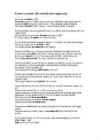
Exercises 1. Use the Present Simple of the verb be or have. ( 10 points ) Mary........blue eyes and blond hair, but her brother ........dark hair. He ........in his late twenties. He........married and........two sons. I........short, but my sister........tall. We........a dog and a cat. Our uncle........two dogs. They........brown. 2. Choose the correct item. ( 5 points ) e.g. The residents were made...D....their homes by the authorities. A leave B leaving C left D to leave 1) Ann is my best friend! We........each other for years A know B knew C knows D have known 2) Nicky........to San Francisco when the accident happened. A flies B has flown C was flying D has been flying 3) Why don`t you let her........her story? A finish B to finish C finishing D have finished 4) Tim........in a cafe at present, but he has already applied for a
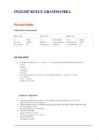
Book 1 BASIC ENGLISH BASIC ENGLISH GRAMMAR GRAMMAR BASIC ENGLISH GRAMMAR Book 1 Book 1 Younger students at beginning to intermediate levels will greatly benefit from this step-by-step approach to English grammar basics. This is the ideal supplement to your language arts program whether your students are native English speakers or beginning English language learners. Skill-specific lessons make it easy to locate and prescribe instant reinforcement or intervention. · Illustrated lessons a
Tests Superstar 1 Luke Prodromou Test 1 Name____________________ Class_______ Use your English 1 Complete these sentences using the correct form (present simple or present continuous) of the verb in brackets. _ 1 She is in a band and she _________________________________ (record) a CD at the moment. _ 2 She is an actress and often _________________________________ (appear) on television. _ 3 At the moment she _________________________________ (have) a rest because she is tired. _ 4 Mike is a doctor and he _________________________________ (live) in Manchester. _ 5 I _________________________________ (start) work at 8.30 every morning. _ 6 He is a good cook but she _________________________________ (prefer) to eat out. _ 7 English tests _________________________________ (get) more and more interesting. _ 8 They _________________________________ (have) a party because it's her birthday. _ 9 I sometimes ____________
Passive (=passiiv ehk umbisikuline tegumood) This house was built in 1935. Was built on passiiv. Võrdle isikulist (active) ja umbisikulist tegumoodi (passive): Somebody built this house in 1935. (aktiiv house on lauses sihitis (=object)) This house was built in 1935. (passiiv house on lause aluseks (=subject)) Kui me kasutame isikulist tegumoodi (aktiiv), siis ütleme, mida lause aluseks olev isik (subject) teeb: My grandfather was a builder. He built this house in 1935. It's a big company. It employs two hundred people. Kui kasutame umbisikulist tegumoodi (passiiv), siis ütleme, mis juhtub lause alusega: This house is quite old. It was built in 1935. Two hundred people are employed by the company. Passiivi kasutatakse siis, kui tegija on teadmata, ebaoluline või selgub kontekstist: A lot of money was stolen in the robbery. (Keegi varastas selle, kuid me ei tea, kes) Is this room cleaned every day? (Kas keegi seda koristab? pole oluline, kes) The thief has been arrested
I/we will ask I/we will not ask Will I ask? He/she/it will go He/she/it will not go Will he/she/it go? You/they will make You/they will not make Will we/you/they make? Pane tähele! Üldtuleviku moodustamiseks kasutatakse abiverbe will/shall. Traditsiooniliselt esineb shall ainsuse ja mitmuse 1. pöördes ( I, we ). Kaasaegses inglise keeles kasutatakse will kõigis pööretes ning shall, et küsida kellegi arvamust, kuid tendents on kasutada abiverbi will kõigis pööretes. Will/shalltuleviku asemel saab kasutada mitmetel juhtudel going totulevikku. Üldtulevik väljendab: · Ühekordset, korduvat või harjumuspärast tegevust tulevikus. I will meet John in the station. My birthday will come again. · Tegevust või situatsiooni, mis kestab tulevikus.
50 9.15 10.45 19.05 6.15 7.45 20.15 19.40 14.30 16.29 23.25 5.49 8.02 13.55 17.09 18.22 Addresses Aadressidest rääkides kasutatakse eessõna at, kui öeldakse ka korteri või maja number, ning eessõna in, kui öeldakse ainult tänava nimi. They live at 5 Oxford Street. She got a job in Weston Road. Ameerika inglise keeles kasutatakse tänavatest rääkides eessõna on. He lives on Penn Street. What's the address? Do you know the address? Practise asking and saying addresses: Süda 1, 10118 Tallinn Akadeemia tee 311 Kentmanni 25-91 Saue, Harjumaa, 76402 Jõgisoo MODULE 5 Word order A Verb + object I like children very much. Did you see your friends yesterday? Ann often plays tennis.
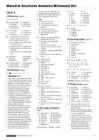
Maturita Solutions Advanced Workbook Key stand bananas and coffee! It's a bit 3 1 to 8 of Unit 1 uncanny really. Is it something she's 2 about 9 century passed on to me genetically, or is it 3 like 10 assumed / 1A Memories page 3 learned behaviour? Who knows? 4 of thought / 1 See exercise 2 2 5 6 any fought
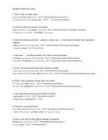
Golden Grammar rules 1. Don't use an with own. Sue needs her own room. (NOT Sue needs an own room.) I'd like a phone line of my own. (NOT ... an own phone line.) 2. Use or rather to correct yourself. She's German or rather, Austrian. (NOT She's German or better, Austrian.) I'll see you on Friday or rather, Saturday. 3. Use the simple present play(s), rain(s) etc to talk about habits and repeated actions. I play tennis every Saturday. (NOT I am playing tennis every Saturday.) It usually rains a lot in November. 4. Use will ..., not the present, for offers and promises. I'll cook you supper this evening. (NOT I cook you supper this evening.) I promise I'll phone you tomorrow. (NOT I promise I phone you tomorrow.) 5. Don't drop prepositions with passive verbs. I don't like to be shouted at. (NOT I don't like to be shouted.) This needs to be thought about some more. (NOT This needs to be thought some more.) 6. Don't use a present tense after It's time. It's t
 annaabi.ee









Kõik kommentaarid