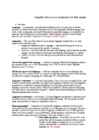
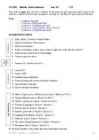
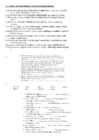
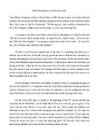
Review questions English lexicology Size of English vocabulary. Average speaker 45,000-60,000 words, a total of about 200,000. Core and periphery. English has been heavily influenced by other languages. 31.8 % comes from Old English, 45% comes from French, 16,7% comes from Latin, 4,2% other germanic languages and 2,3 other languages. The very core is mono-syllabic (93 of the first 100 words and the other seven are two-syllabic). The core vocabulary is predominantly germanic. Native and foreign element. Native words belong to very important semantic group (modal verbs-shall, will, can, may; pronouns- I, you, he, my, his; preps- in, out, under; numerals and conjunctions::but, till, as. Native words are head, arms, back; mother, brother, son, wife; snow, rain, wind, sun; cat, sheep, cow; old, young, cold, hot, dark; do, make, go, come, see. Many native words have developed many meanings (nt, hand, man, head). Most native words have become ...
Leixcology revision questions 1) Composition of english vocabulary Vobabulary is the sum of a total of words used in a language by speekers or used in a dictionary. English vocabulary cosists of six units: Simple words- fall Complex words- prefall Phrasal word- face up to Compound word- face lift Multiword expression- face the music Shortened forms- prefab (prefabely?) 2) Core and pherifery English has been heavily influenced by other languages. 31.8 % comes from old english, 45% comes from french, 16,7% comes from latin, 4,2% other germanic languages and 2,3 other languages. The very core is mono-syllabic (93 of the first 100 words nad the other seven are two-syllabic). The core vocabulary is predominantly germanic. 3) Native and foreign elements Native vocabulary: INDO-EUROPEAN- mother, foot, heart, father, sea, night etc GERMANIC- friend, bidge, ship, life, heaven OLD-ENGLISH- bad, bird, woman, lady and gospel LATIN- ch...
LEXICOLOGY 1. Size of English vocabulary 1) Old English – 50,000 to 60,000 words Vocabulary of Shakespeare OE – homogeneous; 1/3 of the vocabulary has survived • 884,647 words of running text About 450 Latin loans (Amosova) • 29,000 different words (incl. work, working, Viking invasions added 2,000 worked, which are counted here as separate 2) Middle English – 100,000 – 125,000 words) English becomes heterogeneous (Norman French, • 21,000 words English, Latin), hybrid of Germanic and Romance languages Norman French influence – about 10,000 words, 75 % are still in use (Baugh) Latin influence continues 3) Early Modern English – 200,000 – 250,000 English becomes a polycentric language; polyglot, cosmopolitan lang...
1.Lexicology as a science L. studies the voc of lg as a system. Word-learning, lexis-logos. The task of L is to establish the general features of modern Engl voc. Theoretical L. gives a complete picture of voc. Practical value lies in using and appretiating the lg more conciously. There is diachronic (historical) L that studies origin and development; syncronic studies voc at a given historical period. There are general L (studies words disregarding particular features of any particular lg); special L (studies specific features of a separate lg, there is Engl that bases on general L); contrastive (compares vocabularys in different languages). 2. Connection of L with other linguistic disciplines a) the word performes a certain grammatical function (nt, he always misses the class, how many misses are there; the girl powders her nose, soliders face powder)In speech words are combined according to grammatical rules. The plural of nouns m...
English lexicology 1. Size of English vocabulary Vocabulary is a sum total of words used in a language by speakers or for dictionary-making. Active and passive vocabulary. The Old English vocabulary was homogenous. There were about 50 000 – 60 000 words, 1/3 of which have survived. o About 450 loans from Latin o About 2000 from the Viking invasions. The Middle-English vocabulary became a heterogeneous hybrid of Germanic and Romanic languages. 100 000 to 125 000 words. o About 10 000 loans from Norman French, 75% are still in use o Continuing Latin influence Early Modern English. 200 000 – 250 000 words o English becomes a pluricentric language. o Polyglot. Cosmopolitan language Modern English. 500 000 words o At present at least 1 billion lexical units 2....
LEXICAL STYLISTIC DEVICES Based on: interaction of lexical and interaction of denotational interaction of primary circumlocution other cases contextual meaning and emotional meaning and secondary meaning 1. EPITHET 1. METAPHOR indicates individual 1. ZEUGMA 1. PERIPHRASIS 1. BATHOS based on similarity of 2 evaluation of sth. Logical "to join" w-d is use of longer spoiling the lofty effect. Function notions, hidden comparison at...
LEL 2E Notes on Vocabulary One of the key facts about the lexicon of any language is that it reflects in various ways the physical and cultural environment in which the language is spoken. A people unfamiliar with, say, horses is unlikely to have a word for `horse'; similarly with ploughs, printing presses, and internet porn sites. For the most part this is trivial it's hard to imagine how it could be otherwise, given the general nature of human language. People tend to make a great deal of the alleged fact (see Pullum 1989) that "the Eskimos have lots of words for snow", but it doesn't take much thought to realise that any language spoken in a given physical and cultural environment is likely to have efficient ways of referring to distinctions that are important in that environment. That doesn't mean that you can read very much into individual words and individual facts about the lexicon of a given language (this topic has already c...
1. STYLE The term "style" is polysemantic (has many meanings): a Latin word "stilus" originally meant a writing instrument used by ancient people. Already in classical Latin the meaning was extended to denote the manner of expressing one's ideas in written or oral form. Jonathan Swift defined style as "proper words in proper places". In present day English the word "style" is used in about a dozen of principle meanings: 1. the characteristic manner in which a writer expresses his/her ideas (e.g. style of Byron) 2. the manner of expressing ideas, characteristic of a literary movement or period 3. the use of language typical of a literary genre (e.g. the style of a comedy, drama, novel). 4. the selective use of language that depends on spheres / areas of human activity (e.g. style of fiction, scientific prose, newspapers, business correspondence, etc.). STYLISTICS Stylistics is the study of s...
STYLISTICS 1. Style, stylistics, a survey of stylistic studies The term ,,style" is polysemantic. Latin ,,stilus"--a writing instrument used by the ancients for writing on waxed tablets. Soon, the meaning was extended to denote the manner of expressing one's ideas in written or oral form. Jonathan Swift said: ,, Style is proper words in proper places" Present day--half a dozen meanings: · the characteristic manner in which a writer expresses his ideas (Style of Byron) · the manner of expressing ideas characteristic of a literary movement or period (symbolism, romanticism) · the use of lg. typical of a literary genre (comedy, drama, novel) · the selective use of lg that depends on spheres of human activity. These are called functional styles or registers (fiction, newspaper) Stylist...
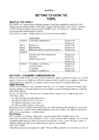
CHAPTER 1 GETTING TO KNOW THE TOEFL WHAT IS THE TOEFL? The TOEFL is a comprehensive English language examination required by more than 3,000 colleges and universities in the United States, Canada, and other parts of the world. In addition, foreign born professionals frequently need a TOEFL score for certification to practice their profession in the United States or Canada. The TOEFL is a timed test that consists of the three sections listed here. THE TOEFL Section 1 Listening Comprehension 50 questions 35 minutes Part A Statements 20 questions Part B Short Dialogs 15 questions ...
English structure revision for the exam 1. Terms Language → A systematic, conventional (tavakohane) use of sounds, signs or written symbols in a human society for communication and self-expression. Human language at all levels is rule- or principle- governed (valitsema) meaning that language corresponds to the grammar. Natural language is usually spoken, while language can also be encoded into symbols (such as letters, morse etc) For example: Estonian, English. Linguistics → The scientific study of human natural language. Broadly, there are three aspects to the study which are Pragmatics (studies the use of language → interested in the gap between the sentence’s meaning and the speaker’s meaning). Semantics (concerned with the meaning of the language aspects and the way they change, also how objects and language and thinking and language are related). ...
Style The term style is a polysemantic one. The latin word ,,stilus" meant a writing instrument used by the ancients for writing on waxed tablets. Already, in classical latin the meaning of style was extended to denote the manner of expressing one's ideas in written or oral form. One of the abts/the best was given by Jonathan Swift: ,,Proper words in proper places." In present- day english, the world style is used in about half a dozen basic meanings. 1. the characteristic manner in which a writer expresses his ideas. Some speak about the style of Hemingway, Dickens etc. 2. the manner of expressing ideas, characteristic of a literary movement or period. Style of symbolism, romanticism 3. the use of language to pick a literary genre-comedy, novel, drama, O.D (poetic form) etc. 4. the selective use of language that depends on spheres of human activity fiction, scientific prose, newspape...
1 Grammatical Terminology PRACTICAL ENGLISH GRAMMAR FLGR.01.042 Grammatical Terminology analytic analüütiline (= uninflected - grammar is focused in the sentence , e.g. English) synthetic sünteetiline (= inflected - grammar is focused in the word, e.g. Estonian, Latin, Russian, Old English) ending lõpp (käände- ja pöördelõpud) marker tunnus (mitmuse, oleviku, lihtmineviku, tingiva kõneviisi, käskiva kõneviisi, kaudse kõneviisi, umbisikulise tegumoe, ma- tegevusnime, oleviku kesksõna, mineviku kesksõna) derivational affix liide, tuletusliide, tuletusafiks (e.g. postwar, anti-American, wiser, greenish) parts of speech sõnaliigid English Estonian ...
FGI 1081 Stilistika (Irina Ladusseva) Kab. 420 2 AP Ends with an exam; lasts only for 1 semester. At the exam you get 2 questions and an exercise (50 sentences: establish the device used, recognize it, and name it). Care about the pronunciation of the terms. Books: - I. Galperin "Stylistics" - I. Ladusseva "Rhythm and Text" - I. Ladusseva "Vocabulary and Style" - I. Ladusseva "Stylistic practice: Book I, Book II" - I. Ladusseva "A Guide to Punctuation" EXAMINATION TOPICS: 1. Style, stylistics, a survey of stylistic studies ...
1)Which elements does alchemy combine? Alchemy combines elements of chemistry, physics, astrology, art, semiotics, metallurgy, medicine, mysticism and religion. 2) 3 goals of alchemy 1.transmutation of any metal into gold or silver 2.creating universal panacea, remedy what would cure all diseases and prolong life indefinetely. – philospher´s stone was the key in these goals 3. creating human life 3) Idea of making gold and silver. Where does it originate and / how to Western Europe? The idea of transmutation arose among the Alexandrian Greeks in the early centuries of the Christian era, then it passed to Arabs and then from Arabs to Western Europe. Since then realization was very important to all chemical workers down to the time of Paracelus and even later. 4)narrow and wider meaning of alchemy Narrow sense of the word, alchemy is pretended art of making gold and silver, or transmuting the base metals into the noble ones. Wid...
What is the origin of the names of the months? A lot of languages, including English, use month names based on Latin. Their meaning is listed below. However, some languages (Czech and Polish, for example) use quite different names. Month / Latin /Origin January Januarius Named after the god Janus. February Februarius Named after Februa, the purification festival. March Martinus Named after the god Mars. April Aprilis Named either after the goddess Aphrodite or the Latin word aperire, to open. May Maius robably named after the goddess Maia. June Junius Probably named after the goddess Juno. July Julius Named after Julius Caesar in 44 B.C.E. Prior to that time its name was Quintilis from the word quintus, fifth, because it was the 5th month in the old Roman calendar. August Agustus Named after emperor Augustus in 8 B.C.E. Prior to...
Teaching the Vocabulary of the Text The Summary is based on the text taken from the Journal `The News letter' written by David Cranmer. Principal among the reasons is the obvious one that once the extensive context is understood, it is easier to concentrate on the detail of individual words. Large-scale vocabulary building is, in general terms, therefore better done after the text has been presented. (Cranmer 1986:60) Another important reason is that it is possible at this stage to exploit the new lexis in its own right, not just as a means comprehension, If we are to bring new vocabulary into active use and not just passive understanding, it is not sufficient for us just to teach it. It should be done in a way, so that teachers should be sure that it is learnt and used. If the words are taught after the target text, then the meaning of the words will be more understandable. In this case, the `matching' is...
What I Think of Homereading? I think that homereading is important and a good way to educate. Finding a good book to read is not only interesting entertainment but a good way to learn. I think that homereading is necessary for those who want to learn English. Everyone should read books if they have free time. Reading is one of the best things to do in your free time. It is very exciting to read a good book. There are many categories of books: fantasy, romantic, fiction, nonfiction, action, adventure, historical, children's and teen's books, biography, educating books, cooking books. The genre of the book depends what the reader likes to read about. I think that everyone can find something interesting for themselves, they just need to search. These days it is easy to find books, the library is full of books and there are many webpages where reader can read e-books online. Reading is not only fun ...
ENGLISH IDIOMS Nõmmik Vilian Apprentice 10 "A" class Ahtme Gymnasium Kohtla-Järve Relevance of the topic Ø The English language becomes the means of international communication, the language of trade, education, politics, and economics. People have to communicate with each other. It is very important for them to understand foreigners and be understood by them. Goal of my research work Ø Goal of my research work is to prove that idioms in the English language are integral part of it, which make our speech more colorful and authentically native. Tasks I like to achieve the following tasks: 1. To classify idioms; 2. To study the problem of the translation of idioms; 3. To understand the aim of the modern usage of idioms; 4. To distinguish different kinds of idioms; 5. To...
Creole Culture Report Table of contents INTRODUCTION.........................................................................................................................................................2 FAMILY LIFE..............................................................................................................................................................3 HISTORICAL CREOLE GENDER ROLE...............................................................................................................4 CREOLE CUSTOMS.......................................................................................................................................................5 CREOLE CULTURE...................................................................................................................................................5 PEOPLE.......................
1.The Authorized Version, commonly known as the King James Version, King James Bible or KJV. English translation of Christian Bible. Translation began by the church of england in 1604 and completed in 1611. It was the third official translation into english. The first was the great bible which was made during the reign of kind henry VIII and the second was bishops bible. They started making the new version in 1604 because the puritans(a factino within the church of england) perceived (detected)problems with earlier translations. 2.The translation was done by 47 scholars, all of who were members of the Church of England. The New Testament was translated from Greek, the Old Testament was translated from Hebrew text, while the Apocrypha were translated from the Greek and Latin. Over the course of the 18th century, the Authorized Version supplanted the Latin Vulgate as the standard version of scripture for English speaking scholars. Person ...
Apologies · We have probably all been in a situation when we know have behaved badly towards someone, but pride has made us slow to apologise. As the British pop singer Elton John put it on one of his songs, it is often the case that ,,sorry seems to be the hardest word." Of course when we do manage to make a sincere apology-it can quickly reduce the hurt or resestment felt by the person we have behaved badly towards. In the words of the Canadian cartoonist Lynn Johnston "An apology is the superglue of life-it can repair just about anything". However a recent survey suggests that in Britain the word ,,sorry" is being used in various situations where it doesn't have the traditional purpose of expressing regret for something a person has said or done. Arguably, the word is now being overused and might even be in danger of losing its meaning. Based on a sample...
1 SYNTACTIC STYLISTIC DEVICES SYNTACTIC STYLISTIC DEVICES are based on a peculiar place of the word or phrase in the utterance (text, sentence, etc).This special place creates emphasis irrespective of the lexical meaning of the words used. Categories: syntactic stylistic devises based on: SDD: based on ABSENCE OF LOGICALLY REQUIRED ELEMENTS OF SPEECH ELLIPSIS ELLIPSIS or ELLIPTICAL SENTENCES means leaving out one or both principle members of the sentence that is the subject or predicate. NT: Where is the man I'm going to marry? - Out in the garden. (no subject) What is he doing out there? - Annoying father. Here, in the dialogue, ellipsis creates the colloquial tone of the utterance. It also renders realistically the way the characters speak. The elliptical sentences convoy/render carelessness, familiarity, harshness. It...
English download B2 workbook lk 10 harjutus 1 vastused (Listening) 1. Frustrated 2. Symbols 3. Unclear 4. Stop using 5. Parents 6. Classes 7. Clues to the meaning of the word 8. Under five years old 9. Makaton-friendly
Respect for Other People I would definite the word respect as esteem and as excellence of a person, a personal quality and ability. In human cultures there are varied ways of showing respect by bodily actions. In many European cultures, people shake hands. In others, such as in Japan people bow at the waist when meeting. Frequently, gender is a factor in how respect I displayed in bodily behavior. For example, woman in many Western cultures traditionally curtsy, whereas men bow. As a sign of respect in almost any form of the military is a salute. A salute is used by enlistees to show respect to the position held by officers and by officers to those of higher rank. The 21-gun salute is done within the military for funerals of military members and for high-ranking civilians such as the President. Sometimes the word respect can mean also toleration and tolerance. It means that we accept people who- and lik...
Suppletion Present in languages of different families. Present in Old, Middle and Modern English, though the general tendency is towards more regularity/iconicity so the number of suppletive forms has decreased.In the text: goon to go wenden - to turn Gan was suppletive in Old English, past form: eode.Eode was supplanted by went (past form of wenden) at the end of the Middle English period.To wend has survived in Modern English in phrases such as to wend one's way, we wended homewards (ironic usage). Thus: suppletivity- suppletion different parts of one and the same paradigm come from what were originally different paradigms (different words with close meanings or words in different but close dialects).Suppletion embraces verbs, adjectives, nouns. Be was/were been (Old English beon/wesan) (am, art, is, are); in Old English some suppletive forms were used parallel to one another) Good better best Bad worse worst Much more...
1. What does the word “philosophy” mean? The study of proper behaviour and the search for wisdom, in greek means love for wisdom 2. Is philosophy a science? Why? What kind of science it is? Yes it is. It tries to understand the meaning of reality. It’s the science of truth. Science, as it exists today, happens within the framework of philosophy. Philosophy, however, is bigger than science. It is also a form of art and discipline…... 3. Name three characteristics of Classical philosophy? deeply rooted in religious traditions ; believes that inferior was created by superior ; more positive ; seeks the real truth ; about intelligence ; reaalsuse üle mõtisklus ; believes that god is truth 4. Name three characteristics of Modern philosophy. believes that superior was created by inferior (!) ; more negative ; about will ; power ; domain of reality ; believes that knowledge is truth ; man is god 5. What was the problem that the first philo...
Marriage is an outdated institution Is marriage a wonderful institution nowadays, when the meaning of this word is totally different from the meaning that expanded many years ago? Is this document which indicate the union of two people who have given a permission to love each other in sickness and in health, until the death do they part is the evidence of everlasting love? I think the answer for these questions is No and I would talk about my opinions why i think so. First of all, i think everyone know that the rate of divorces is quite high. For example, 50% percent of first marriages, 67% of second and 74% of third marriages end in divorce in America. There are many reasons why this happen and people get divorced. Infidelity, poor communication, change in priorities and cte. Nobody can't say that it does no happen to us, because we love each other so much. but never say never, because if your marriage ...
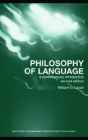
Philosophy of Language Philosophy of Language: a Contemporary Introduction introduces the student to the main issues and theories in twentieth and twenty-first-century phi- losophy of language, focusing specifically on linguistic phenomena. Topics are structured in four parts in the book. Part I, Reference and Referring, includes topics such as Russell's Theory of Descriptions, Donnellan's distinction, problems of anaphora, the description theory of proper names, Searle's cluster theory, and the causalhistorical theory. Part II, Theories of Meaning, surveys the competing theories of linguistic mean- ing and compares their various advantages and liabilities. Part III, Pragmatics and Speech Acts, introduces the basic concepts of linguistic pragmatics, includes a detailed discussion of the problem of indirect force and surveys approaches to metaphor. Part IV, new to this edition, examines the four theories of metaphor. Features...
Memoirs of a Geisha While reading the book I was quite impressed about the lifestyle and the hard work, which comes along with becoming a geisha. It was not only a good book to read, it was also like a schoolbook for history. It took place in Japan in the beginning of 19th century and at the World War I. It explained the thought of a geisha: why have many misused the word geisha, and misunderstood the reality. The book itself is about a girl, who was sold to a family by her own father. She worked there as a maid, but as time went by she grew up and a famous and loved geisha decided to train her to become a geisha too. She worked hard, but succeeded well - she was one of the most valued geishas. The book takes us to a tour where any detail of a great and merry Japanese village cannot be left out, where every little flower or Japanese cherry tree is blossomed, where geishas are highly valued and respected, until t...
Marriage is/is not an outdated institution Dear audience, I am here to discuss about marriage. I would like you to ask yourself: ,,Is marriage an outdated institution?" I would say that it is, but I would prefer a word ,,special". Marriage is a rare sight, you don´t see the whole package every day: bachelor party, wedding ceremony, big fluffy white dress, bridesmaids, wedding march ,,Here comes the bride" and afterwards big celebration party. But why is marriage such a rare occasion? Firstly, women are more independant. It is not the time where women sit at home doing housework, cooking or taking care of the children anymore. Nowadays most of the women have gone out from home to build a career and discover the world. There are a lot of women who are famous or on top of their career. For example Birgit Õigemeel, who doesn´t know her, she is not married, but she is really successful in her singing career . Thi...
ELT Methodology (FLGR.01.041) 27.12.2012 Home Assignments. I Youtube clips: · A vision of K-12 students I personally think that Estonian learners are also digital learners. They spend more time at the computers or laptops or iPads etc. than read books or move outside. And another thing is that teachers are less capable in using technological appliances. But the latter mentioned fact is an advantage for us teachers as well. It gives us an opportunity to provide our students to experience success. They can help and assist us if we need some technological help. Another thing is that in schools, in classes generally students are not allowed to use their appliances, so it means they have to communicate verbally as well. I think that teachers ...
Phonetics and Phonology. Mid-term 1. Terminology. Testi tuleb kindlasti see tabel! Nasal, Bilabial: m Nasal, Alveolar: n Nasal Velar: Plosive, Bilabial: p; b Plosive, Alveolar: t; d Plosive, Velar: k; Affricate, Post-Alveolar: t; d Fricative, Labio-dental: f; v Fricative, Dental: ; Fricative, Alveolar: s; z Fricative, Post-Alveolar: ; Fricative, Velar: x Fricative, Glottal: h Approximant, Alveolar ja Post-Alveolar: Approximant, Palatal: j Approximant, Velar: w Lateral, Alveolar: l Phonetics and Phonology. Mid-term 1. Phonetics the general study of the characteristics of speech sounds: how they may be "strung" together to form meaningful units how they are produced It studies: how to describe the speech sounds in the languages of the world what these sounds are how they fall into patterns how they change in different circumstances Acoustic phonetics the study of the physical properties of the ...
The value of things VS the price of things A value can be much more than simple numbers, a value can show what memories, connections and contact people have with a thing. But what exactly is a thing? Well a thing is something lifeless, an item for a certain purpose, it’s something for certain use. When we take a look at the word named „price“, what does it mean? A price usually is seen as a number, as how much something costs. Things can be „overpriced“, but never „overvalued“. An item of high value could have no price, but at the same time an high priced item, could have no value. It’s this way because people see differently, people have different memories and emotions to remember. But as in this world today, price matters. People can’t afford anything, price means something as well, it can show how wealthy you are, how much someone can mean to you. Price is just a number, it shows how much something pays...
Tiger HannaHelene Hang Naming The word "tiger" is taken from the Greek word "tigris", which is possibly derived from a Persian source meaning "arrow", a reference to the animal's speed and also the origin for the name of the Tigris river. Physical characteristics Tigers are easy to recognise. They typically have rustyreddish to brownrusty coats, a whitish medial and ventral area, a white "fringe" that surrounds the face, and stripes that vary from brown or gray to pure black. The form and density of stripes differs between subspecies, but most tigers have over 100 stripes. Subspecies There are nine recent subspecies of tiger, three of which are extinct. The surviving subspecies, in descending order of wild population, are: The Bengal tiger or the Royal Bengal tiger; The Indochinese Tiger, also called Corbett's ...
Ecology and Environment I Word formation Noun Verb Adjective Eruption Protection Pollution - Penetration Contamination Emission - Depletion - Prediction Reduction Consumption Campaign/campaigner Disaster - Radiation Destruction - II Give the opposite ... Renewable resources Use Protect Admissibly Predicted III Fill in the correct word 1. The polar bear's .......................... is the icy waste...
CITATION FORM The citation form of the lexeme is the form that is employed to refer to the lexeme; it is also the form that is used for the alphabetical listing of lexemes in a conventional dictionary. In English, the citation form of a noun is the singular: e.g., mouse rather than mice. For multi-word lexemes which contain possessive adjectives or reflexive pronouns, the citation form uses a form of the indefinite pronoun one: e.g., do one's best, perjure oneself. In many languages, the citation form of a verb is the infinitive: French aller, German gehen, Spanish ir. In English it usually is the full infinitive (to go) although alphabetized without 'to' (go); the present tense is used for some defective verbs (shall, can, and must have only the one form). In Latin, Ancient Greek, and Modern Greek (which has no infinitive), however, the first person singular present tense is normally used, though occasionally the infinitive may also ...
Summary • Early history of translation studies – Cicero and St. Jerome (what did they do/how/why are they relevant to translation studies?) St. Jerome – Greek scholar, did some translation work. Lived during the 4th century. Jerome is best known as the translator of the Bible into Latin. A previous version (now called the Old Latin) existed, but Jerome's version far surpassed it in scholarship and in literary quality. Jerome was well versed in classical Latin (as well as Greek and Hebrew), but deliberately translated the Bible into the style of Latin that was actually spoken and written by the majority of persons in his own time. This kind of Latin is known as Vulgate Latin (meaning the Latin of the common people), and accordingly Jerome's translation is called the Vulgate. Cicero – Lived during the 1st century BC. Roman politician, philosopher & translator. Theory ‘‘word-for-word’’ & ‘‘sense-for-sen...
American English Take-home exam 1) Discuss the significance of American English in the English-speaking world. English is one the most widely used languages in the world and globally acknowledged as the lingua franca. It is also the dominant business language. For these facts already, English has a great importance in the today’s world. As the United States of America is one of the leading countries of the world, American English has a certain authority as well. It is now an inescapable fact that America, through its worldwide influence and massive entertainment industry is the mighty power-house that drives the English language. Although British English is considered to be more sophisticated and prestigious than American English, the latter is clearly more featured in television, music, video games and internet, naturally appealing more to English learners than Brit...
CHARACTERISTIC FEATURES OF OLD ENGLISH - 15 monophtongs, (7 long, 7 short, 1 central), 4 diphtongs, 17 consonants. Free variaton of R, and it was pronounced everywhere. Very much Germanic in character. Quite some special consonants that no longer exist. About morphology: synthetic with numerous aglutinating tendencies. System of tenses Germanic, but with a reduction of tenses. Paradigmatic leveling; Stress shift; Word order; Loan words (Old Norse, Old French). Dual pronouns. Determiners - no separate definite article. Strong and weak verbs. Word order relatively free with tendencies towards SVO. SVO, SOV, VSO most common. Adposition and podposition were both possible (eesliide ja tagaliide). About syntax: clauses were joined much simpler than nowadays, using and, then etc. Because of case syncretion the word order in a sentence became much more important to be able to tell the difference between words. FIRST CONSONANT SHIFT (GRIMM'S L...
1) Standard and non-standard varieties of English Standard varieties of English are the varieties of the English language that are considered to be a norm and are spoken and written by the minority (educated people). This is the optimum for educational purposes. The standard varieties of English are: BrEng (British), EngEng (English), NAmEng (North-America), USEng (United States), CanEng (Canada), AusEng (Australia), NZEng (New Zealand). Standard English (British English) is the most widely accepted and understood among native speakers, learned by foreigners. It is used in broadcasting, TV, news etc. It doesn't concern pronounciation (accent), but grammar and vocabulary. It includes formal and informal styles. British Standard English grammar and vocabulary, together with the RP accent should be called English English. RP (Received Pronounciation) is an accent that originates from South-East of England. A social accent, associated o...
wELDING TECHNIQUES USED LITERATURE 1. http:// www.aga.com/international/web/lg/aga/like35agacom.nsf (24.03.2014) 2. Larry F. Jeffus: ,,Welding: Principles and Application" WORD LIST WORD MEANING IN ESTONIAN electrode elektrood arc spark created by electron kaarleek flow slag protects the weld seam räbu nozzle device designed to control otsik the direction of a flow porosity Void fraction poorsus tungsten a material of which volfram electrodes are made inductance induktiivsus electrical current flow of electric charge elektrivool shielding Protecting something kaitse conductive ha...
THAILAND Anneli Davel *The Kingdom of Thailand is a country in Southeast Asia. *Its capital and largest city is Bangkok. *The population is 64 million *Thailand covers an area of 514,000 square kilometres in the centre of the South- East Asian peninsula Symbols · Thailand Flag · Sawadi (Sawadi, meaning hello or goodbye, is likely to be the first Thai word you pick up during your travels to Thailand.) · Stupa · Muay Thai Boxing · Tuk Tuks · Asian Elephants · The national symbol of Thailand is Garuda, a half bird, half human figure · The Thai language is Thailand's national language, written in its own alphabet but many areas have their own local dialects. Facts · It is the year 2551 there.The date in Thailand is based on Buddha's death. Although Thai New Year is in ...
Marriage The word marriage has a different meaning for everyone. Some people think that marriage is a beautiful thing but the others want to live alone forever. Every little girl has dreamed of a white stunning wedding dress, and so have I. Marriage is a social union that connects people forever. People marry for many reasons. Some people just want to make their love official but for the others it is just a family tradition and a part of life. Married people have always count to their partner's opinion and share everything they have. Although, living alone has also some advantages. You can make plans on your own and do not have to make any agreements. You can listen music you like and enjoy your own company in your own space. On the other hand, you might feel lonely and bored sometimes. You have to do all the housework on your own and living alone is usually more expensive than livi...
FLRG.01.193 Heidi Järvpõld 01.01.2015 Puritanism in A model of Christian Charity A modell of Christian charity, also known as A City on a Hill, is the kind of Puritan literature example that can fade the suspicious reader’s doubts in the Puritan main ideology and beliefs. At least, this is how it seemed to me. This sermon can be seen as a gateway to the Puritan society’s attitude and mindset as it is one of the most classical examples of the Puritan era literature. Although John Winthrop was the leader of the Massachusetts Bay Colony which was filled with corrupted chiefs, he vigorously emphasizes in his writings the unity of community, love of othe...
Estonian Language Estonian laguage(previously called ,,ground language" by estonians in old days) belongs into Finno-Ugric language group. It is spoken by about 1.1 million people, mostly in Estonia. Some people have said Estonian reminds them of the sound of babbling water. Some non-Estonian people I know just say it sounds weird. Estonian language is closely related to Finnish. Originally they were a single language but they parted about 5000 years ago. Most of Estonian vocabulary is borrowed from other languages like German ang English. Very few of Estonian words are originally Estonian. For example, suu (mouth), vesi (water) and ema (mother). One thing that features Estonian is that unlike any other language, Estonian has three degrees of phoneme lenght: short, long and overlong. Pronouncing the phoneme differently can change the meaning of the word. There are many different dialects in Estonian langu...
Walk in London Introduction ● You can travel very fast in London using buses or the Underground, but the best way to explore the city is walk. ● You will need: *A street map *Camera *Good walking shoes Piccadilly Circus Piccadilly Circus is a road junction. In this context, a circus, from the Latin word meaning "circle", is a round open space at a street junction. It is popular meeting place and there is a saying that if you wait enough at Piccadilly Circus, you’ll meet everyone in the world. Trafalgar Square Trafalgar Square was created in 1830-41 and was named in honour of Lord Nelson’s victory at the Battle of Trafagar in 1805. Nelson’s Column is in the centre of the Square. Trafalgar Square used to be be famous for its thousand of pigenos. Now feeding the pegenous is banned. Leicester Square In the middle of the garden there is a statue of William Shakespeare. In 1981 a life-size statue of Charlie Chaplin w...
WALES GREAT BRITAIN Cymru am byth GENERAL OVERVIEW Territory:20,779 sq km Population:2.9 million(2002) Languages:English and Welsh Capital:Cardiff(since 1955) Anthem:Hen Wlad Fy Nhadau (Land Of My Fathers) Main religions: anglicanism,methodism National holiday:St David`s day,1 March National instrument:The harp Highest point: Snowdon 1085 metres Longest river:Towy (Tywi) 103 km Largest lake: Bala (4.4 sq km) CYMRU Wales is a mountainous country on the western side of Great Britain. Wales is bordered by England to the east, the Bristol Channel to the south, St George's Channel in the west, and the Irish Sea to the north. Wales is one of the four parts of the United Kingdom (along with England, Scotland, and Northern Ireland). FLAG Red dragon may have been the battle standard of the early Britons af...
1.- Choose the most suitable verb form in each sentence. a) If only Peter doesn't live / didn't live / wouldn't live so far away from the town centre. We'll have to take a taxi. b) I feel rather cold. I wish I brought / had brought my pullover with me. c) What a pity. I wish we don't have to / didn't have to / wouldn't have to leave. d) If only you tell / told / had told me about the test. I haven't done any revision. e) I wish the people next door hadn't made / wouldn't make / couldn't make so much noise. I can't hear myself think! f) Darling, I love you so much! I wish we are / had been / would be / could be together always! g) I'm sorry I missed your birthday party. I really wish I come / came / had come / would come. h) I like my new boss but I wish she gave / would give / could give me some more responsibility. i) Having a lovely time in Brighton. I wish you are / were / had been ...
Ernest Hemingway as a short-story writer. Ernest Miller Hemingway is born in United States in 1899. He was novelist, short-story writer and journalist. He was the part of 1920s expatriate community in Paris and one of the veterans of World War I later known as ,,the Lost Generation". The Hemingway's style could be characterised like this: a lot of dialogues, hidden morals and messanges in stories and interesting titles. I am going to write about short-stories written by Ernest Hemingway. It is based on the book ,,The cat in the rain" which includes stories ,,A canary for one", ,,Indian camp", ,,Cat in the rain" and ,,Hills like white elephants". I am going to analyse three stories of this book - ,,A canary for one, ,,Cat in the rain" and ,,Hills like white elephants" The title is one of the most important part of the story. It is something that attracts you to read the story or the b...
 annaabi.ee