 100 punkti
Autor soovib selle materjali allalaadimise eest saada 100 punkti.
100 punkti
Autor soovib selle materjali allalaadimise eest saada 100 punkti.
 ~ 2 lehte
Lehekülgede arv dokumendis
~ 2 lehte
Lehekülgede arv dokumendis
 2015-03-04
Kuupäev, millal dokument üles laeti
2015-03-04
Kuupäev, millal dokument üles laeti
 2 laadimist
Kokku alla laetud
2 laadimist
Kokku alla laetud
 0 arvamust
Teiste kasutajate poolt lisatud kommentaarid
0 arvamust
Teiste kasutajate poolt lisatud kommentaarid
 AnnaAbi
Õppematerjali autor
AnnaAbi
Õppematerjali autor
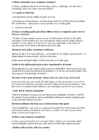
that photographic plates stored in the dark near uranium were blackened like X-ray plates, which had been just recently discovered at the time 1895. It is energy released by the splitting (fission) or merging together (fusion) of the nuclei of atoms. The conversion of nuclear mass to energy is consistent with the mass-energy equivalence formula E = m.c², in which E = energy release, m = mass defect, and c = the speed of light in a vacuum. Nuclear chemistry can be used as a form of alchemy to turn lead into gold or change any atom to any other atom (albeit through many steps). Radionuclide (radioisotope) production often involves irradiation of another isotope (or more precisely a nuclide), with alpha particles, beta particles, or gamma rays. Iron has the highest binding energy per nucleon of any atom. If an atom of lower average binding energy is changed into an atom of higher average binding energy, energy is given off. What is nuclear fusion?
As a child, Newton was never shown much love or affection. This may explain why he was always so isolated, detached and unemotional. Between 1660 and 1690, Newton devoted himself to an academic life at Cambridge. As the Lucasian Chair of Mathematics he was expected to lecture on a weekly basis, lectures which he frequently delivered to empty classrooms. He embraced a number of academic interests but the ones which interested him most were alchemy, theology, optics and mathematics. No field of study took precedence over another and he so he devoted as much of his energy and intellect to alchemy as he did to theology and mathematics. Like most scholars of the period, Newton had an amanuensis, a young student named Humphrey Newton, who served him as an assistant who provided Newton with meals as well as transcriptions of his lecture notes. Newton was an absentminded man. Stories of Newton's behavior are, of course, well known
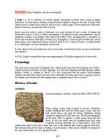
BOOKS (From Wikipedia, the free encyclopedia) A book is a set or collection of written, printed, illustrated, or blank sheets, made of paper, parchment, or other various material, usually fastened together to hinge at one side. A single sheet within a book is called a leaf, and each side of a leaf is called a page. A book produced in electronic format is known as an electronic book (e-book). Books may also refer to works of literature, or a main division of such a work. In library and information science, a book is called a monograph, to distinguish it from serial periodicals such as magazines, journals or newspaper. The body of all written works including books is literature. In novels and sometimes other types of books (e.g. biographies), a book may be divided into several large sections, also called books (Book 1, Book 2, Book 3, etc.). A lover of books is usually referred to as a bibliophile, or, more informally, a bookworm. A store where books are bought and sold is a bookstore
The making of a new nation. The Enlightenment in America. The emergence of the notion of the American Dream. The great Enlighteners: Crèvecoeur, Jefferson, Paine, Franklin. The American Enlightenment is the intellectual thriving period in the United States in the midtolate 18th century (17151789), especially as it relates to American Revolution on the one hand and the European Enlightenment on the other. Influenced by the scientific revolution of the 17th century and the humanist period during the Renaissance, the Enlightenment took scientific reasoning and applied it to human nature, society, and religion. American Enlightenment a gradual but powerful awakening that established the ideals of democracy, liberty, and religious tolerance in the people of America. If there were just one development that directly caused the American Revolution and uplifted the intellectual culture of the continent while it was only a British colony, it would be the American Enlightenment. Broadly
Australia Australia is the smallest continent in the world. It is 7.6 million square kilometres big. It is often called the island continent because it is rather small for a continent and very big for an island. There are only five countries bigger than Australia in the World. There are five states in the mainland. Tasmania is also considered as a state so there are six states. The Northern Territory and Canberra are also independent but they are not states. Canberra is the capital of Australia and it is situated between Sydney and Melbourne because both of these cities wanted to be the capital. The population is about 19 million people and growing. New South Wales is the most populated state and Victoria is the most densely populated state. The national language is English. It is English because British settlers came to live in Australia in the past and they brought convicts with them who were also British. S
Homereading 4 Changing world Religions Islam Islam is a monotheistic Abrahamic religion originating with the teachings of Muhammad, a 7th century Arab religious and political figure. The word Islam means "submission", or the total surrender of oneself to God An adherent of Islam is known as a Muslim, meaning "one who submits (to God)". There are between 1.1 billion and 1.8 billion Muslims, making Islam the secondlargest religion in the world, after Christianity. Muslims believe that God revealed the Qur'an to Muhammad, God's final prophet, and regard the Qur'an and the Sunnah (words and deeds of Muhammad) as the fundamental sources of Islam.They do not regard Muhammad as the founder of a new religion, but as the restorer of the original monotheistic faith of Abraham, Moses, Jesus, and other prophets. Islamic tradition holds that Jews and Christians distorted the revelations
feng shui, ginseng, gung-ho, kaolin, ketchup/catsup, kowtow, kung fu, lychee, loquat, mahjong, pekoe, sampan, tai chi, taipan, Tao, tea, yang, yen, yin. Japanese: aikido, banzai, bonsai, bushido, futon, geisha, haiku, hara-kiri, judo, jujitsu, Kabuki, kamikaze, kimono, koan, mikado, sake, samisen, samurai, sayonara, Shinto, shogun, soy(a), sushi, teriyaki, tofu, tycoon, yen, Zen Arabic: artichoke, alcohol, sugar, camel, alchemy, algebra, elixir, 13. Etymological doublets Two (or more) words derived from the same source, but having a different meaning. Fashion/faction Dialect based: Road/raid Seek/beseech Old English, Old Norse Skirt/shirt Rear/raise Anglo Norman, French Guarantee, warranty, quaranty Latin/Greek, French Thesaurus/treasure Abbreviation/abridge
Ameerika Kirjandus 30.01.13 Naturalism · France, Emile Zola · Put down his theory in 1879: Le Roman Experimental, attempt to explain the development of human society throuch biological laws · Outlook is deterministic, pessimistic, fatalistic (fate or biology) · Man as an animal-clever than other beasts, still explainable within the framework · Man is not a free agent, is govern by something · Unable to determine his own faith · Hereditary · Naturalists tried to apply in fiction the processes of natural sciences · Writers task is to record facts, systems of behaviour, living conditions, never revealing any natural unbiased (completely natural) · Point of view: amoral-outside the category of morality, neither good or bad · Naturalist find it absurd to blame the wicked. These criminals are doing what nature, environment, their unconscious tells them to do. Naturalists do not judge their characters, they sim
 annaabi.ee







Kõik kommentaarid