Leidsid 33 sarnast õppematerjali, mis on seotud failiga "Weed Management Handbook". Need materjalid aitavad sul teemat sügavamalt mõista.
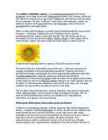
weed, crop, seed, crops, plant, control, advantage, management, resistance, different, ways, seeds, kill, rotationadvantages, emerge, effect, reduce, tolerant, improved, through, hand, handbook, bank, plants, yield, such, quality, delay, soil, managed, fields, specific, rate, prevention, cultural, likely, student, introduction, older, beauty, whoseThe sunflower (Helianthus annuus) is an annual(iga aastane) plant in the family Asteraceae, with a large flower head (inflorescence(õiekobar, õisik, õitseaeg, õidumine)). The stem(tüvi) of the flower can grow up to 3 metres tall, with the flower head reaching 30 cm in diameter. The term "sunflower" is also used to refer(nimetama, viitama, üle andma) to all plants of the genus(perekond, sugu) Helianthus, many of which are perennial(alaline, aastaringne) plants. What is usually called the flower is actually a head (formally(ametlikult) composite(liit-,
with several types of biomes. Savannas are frequently seen as a transitional zone, occurring between forest and desert or prairie. Although the term savanna is believed to have originally come from a Native American word describing "land which is without trees but with much grass either tall or short", by the late 1800s it was used to mean "land with both grass and trees". It now refers to land with grass and either scattered trees or an open canopy of trees. Changes in fire management Savannas are subject to regular fires and the ecosystem appears to be the result of human use of fire. For example Native Americans created subtropical savannas by periodic burning in some areas of the US southeastern coast where
switched on; 8 AVP; e.g. production of lactose permease / production of beta- galactosidase; max 5 [5] 4. a change in the genetic material; unpredictable / AW; extra detail; e.g. addition / substitution / deletion / frame shift / small part of chromosome / may code for different protein / may code for no protein [2] 5. 1 mark max for general effect of mutations: mutation may give different, amino acid / primary structure; A ref stop codon some mutations alter, molecular shape / tertiary structure / binding; max 3 for explaining data in Table: -
2013): 1. Bacteria a) Heterotrophic bacteria, eg. symbiotic and non - symbiotic N2 fixers, ammonifier, cellulose decomposers, denitrifiers b) Autrotrophic bacteria, eg. nitrosomonas, nitrobacter, sulphur oxidizers, etc; 2. Fungus; 3. Viruses 4. Actinomycetes and stretomyces; 5. Algae eg. BGA, yellow gree algae, golden brown algae. The soil microflora largely depends on the type of soil, temperature, moisture, plant growth, nutrients, pH, and many other factors which may vary between locations but also within a single plot and over very small distances (OECD, 2007). Nevertheless of the quantity of microflora, biomass of all microorganisms living in soil play an important role in the functioning of entire soil ecosystems because their enormous biochemical activity (Barabasz et al. 2002). Soil microflora cycles carbon, nitrogen, phosphorus, and sulfur, plays a role in soil structure
combustible in addition to having a strong smell which makes them stand out to the human nose. Methane leaks from landfills are an ongoing problem, as is the production of biogas in poorly maintained compost piles, manure lagoons, and outhouses. Spontaneous fires and explosions caused by build-ups of gas have been recorded in many regions of the world, illustrating a major problem which needs to be confronted by waste management companies. When this gas is trapped, however, it can be made useful, instead of just being a nuisance. Trapped biogas can be used to power stoves for cooking and heating, in addition to other applications. By trapping the gases, people can prevent methane from reaching the atmosphere, thereby reducing degradation caused by methane gas. The ability to turn waste products into something which can be utilized is also
The World Wildlife Fund says that every minute, 25 to 50 acres are cut or burned to the ground. The world's growing population has been a primary cause of rain forest destruction. More people need land to live on and wood products to consume. Limiting population growth may be the first in a series of steps that would limit the destruction of the rain forests. Intensive farming Advantages ✔ One of the major advantages of this farming technique is that the crop yield is high. ✔ It helps the farmer to easily supervise and monitor the land and protect his livestock from being hurt or hounded by dangerous wild animals. ✔ With the introduction of intensive farming, farm produce, such as vegetables, fruits, and poultry products have become less expensive. It also aids in solving the worldwide hunger problems to a great extent. This means that common people can now afford a balanced and nutritious diet.
There are many reasons why biofuels are necessary, but at the same time, they are controversial for a number of reasons. 2.2. Biofuels' feedstock and future projections There are mainly two types of liquid biofuels, which have significantly grown in the last decade: that is bioethanol and biodiesel. Bioethanol is based on sugar, extracted from sugarcane and beet, or starch, which mainly comes from maize, wheat or cassava. Starch- based crops must be first converted into sugars in the saccarification process, which requires substantial volumes of enzymes to turn starch into sugars (Soetaert, W. 2008). The starchy products represent only a small percentage of the total plant mass. Other plants' building blocks like cellulose and lignin are currently not being used to make biofuels as there is not a commercial viable production method for making ethanol form cellulosic biomass (FAO, 2008).
density rural areas which results in spreading of city over more and more rural land. Urban sprawl results in land degradation, increased traffic, environmental issues and health issues. FIND OUT 5 WAYS HOW TO FIX URBAN SPRAWL. 10. Genetic Engineering: Genetic modification of food using biotechnology is called genetic engineering. Genetic modification of food results in increased toxins and diseases as genes from an allergic plant can transfer to target plant. Genetically modified crops can cause serious environmental problems as an engineered gene may prove toxic to wildlife. Another drawback is that increased use of toxins to make insect resistant plant can cause resultant organisms to become resistant to antibiotics. FIND OUT 5 REASONS TO AVOID GM FOOD. If humans continue moving forward in such a harmful way towards the future, then there will be no future to consider. Although it’s true that we cannot physically stop our ozone layer from thinning there are
......................................................................................................4 USES OF ENERGY............................................................................................................. 4 2.1 Uses of energy in homes...............................................................................................5 2.2 Types of energy used in homes.................................................................................... 6 2.3 Energy use in different types of homes........................................................................ 6 2.4 Commercial Energy Use...............................................................................................9 2.5 Industrial and Manufacturing Energy Use..................................................................11 2.6 Transportation Energy Use.........................................................................................12 RENEWABLE ENERGY...............................
vi Contents 12. Smoking 231 Zdzisław E. Sikorski and Edward Kol ´ akowski 13. Meat Packaging 247 Maurice G. O’Sullivan and Joseph P. Kerry 14. Novel Technologies for Microbial Spoilage Prevention 263 Oleksandr Tokarskyy and Douglas L. Marshall 15. Plant Cleaning and Sanitation 287 Stefania Quintavalla PART II. Products 299 16. Cooked Ham 301 Fidel Toldrá, Leticia Mora, and Mónica Flores 17. Cooked Sausages 313 Eero Puolanne 18. Bacon 327
Most smokers need to smoke regularly to feel normal and to prevent nicotine withdrawal symptoms. So once you start smoking it is very hard to quit. But why is smoking so harmful? Cigarettes have tar in them which contains many chemicals. These deposit in the lungs and can get into the blood vessels and are carried to other parts of the body. Cigarette smoke contains over 4,000 chemicals, including over 50 known carcinogens (causes of cancer) and other poisons. In addition to different kinds of cancer (mouth, nose, throat, larynx, gullet, pancreas, bladder, cervix, blood, and kidney) it also may cause heart diseases, rheumatoid arthritis, fasten your ageing and have impact on your fertility. There are also other conditions where smoking often causes worse symptoms. For example: asthma, flu, chest infections, tuberculosis, chronic rhinitis, diabetic retinopathy, hyperthyroidism, multiple sclerosis, optic neuritis, and Crohn's disease
semi-solid state in room temperature and long shelf-life • It is in a lot of everyday products – makeup, shampoo, soap, biodiesel. Also in food – sweet treats (chocolate, biscuits etc), margarine, nut butters, crisps. The Two kinds of palm oil • Palm oil comes from palm fruit. It is rich in vitamin E and it has a red colour due to beta-caroten in it. High in saturated fats. Used mostly in food industry • Palm kernel oil comes from palm fruit seed. Also high in saturated fats. Used mostly in products such as shampoos, makeup, biofuel etc Ingridient list • Vegetable Oil, Vegetable Fat, Palm Kernel, Palm Kernel Oil, Palm Fruit Oil, Palmate, Palmitate, Palmolein, Glyceryl, Stearate, Stearic Acid, Elaeis Guineensis, Palmitic Acid, Palm Stearine, Palmitoyl Oxostearamide, Palmitoyl Tetrapeptide-3, Sodium Laureth Sulfate, Sodium Lauryl Sulfate, Sodium Kernelate, Sodium Palm Kernelate, Sodium
Different types of forests and their forms of usage TARTU 2010 Forest A forest (also called a wood, woodland, wold, weald, holt, frith) is an area with a high density of trees. Forests cover approximately 30% of land and 9.4% of all the planet earth. They are also responsible for regulating our planet's climate and act as large purifiers of airs, by absorbing carbon dioxide, and giving out oxygen. Different types of forests Forests are divided into following main types: o Tropical forest o Subtropical forest o Plantations o Boreal forest o Temperate forest o Seasonal or monsoon forest Tropical and Subtropical Forests Tropical and subtropical forests, also known as rainforests or tropical rainforests, are lavish and ample forests with broad leave tree. They are mostly found at lowlands near the equator - Asia, Africa, South & Central America
oData transparency: In bit and byte oriented protocols, there is a problem if a control character (for ETX (End of Text) ·Same as ETB, only no more blocks will follow. ITB (End of > Differences with HDLC length of protocol field (1B or 2B) byte-oriented protocols) or the start-of-frame flag (for bit-oriented protocols) appears in the actual data
Thus a multinational corporation might work on a project 24 hours a day, with teams waking and working with the advance of the sun across the globe; such projects might be in software development or in the development of an integrated circuit. The help desks of a multinational corporation might thus employ, successively, teams in Kenya, Brazil, the Philippines, or India, with the only requirement fluency in the mother tongue, be it Spanish, Portuguese or English. OECD has two different approaches: sector and product (industry) approaches. High-tech sectors The sector approach classifies industries according their technology intensity, product approach according to finished products. · Aerospace technology · Biotechnology · Information technology · Nanotechnology · Robotics · Aerospace technology -In most industrial countries, the aerospace industry is a cooperation of public and private industries
Negative aspects of wind energy Wind turbines make noise. Slowly rotating blades can kill birds and bats. Wind is variable: if it's not blowing , there's no electricity generated. Wind turbines are expensive. Hydroelectric power Hydropower is electricity generated using the energy of moving water. Hydropower is the cheapest way to generate electricity today. It's a clean fuel source that is renewable yearly by snow and rainfall. Hydropower is readily available; engineers can control the flow of water through the turbines to produce electricity on demand. In addition, reservoirs may offer recreational opportunities, such as swimming and boating. A typical hydro plant is a system with three parts: an electric plant where the electricity is produced; a dam that can be opened or closed to control water flow; and a reservoir where water can be stored. Hydroelectric power provides almost onefifth of the world's electricity.
Caspar F. van den Berg ! ! ! ! ! ! Tallinn 2015 ! ! ! ! ! Pay-for performance: necessary or unsuitable way to increase efficiency in the public sector Through history civil service has meant and cited many different forms of serving a country. Raadschelders and Rutgers (1996) have brought out five phases in their article “Evolution of Civil Service systems” that describes how civil service has evolved and become one of the most important part of governing. In different times civil service has supported monarchs, kings, presidents and governments in their work reigning, ruling and leading people. Role of civil service has increased by every age- becoming more and
of these can vary considerably. Some technologies are already mature and economically competitive (e.g. geothermal and hydropower), others need additional development to become competitive without subsidies. This can be helped by improvements to sub-components, such as electric generators. The table shows an overview of costs of various renewable energy technologies. For comparison with the prices in the table, electricity production from a conventional coal-fired plant costs about 4¢/kWh. Though in some G8 nations the cost can be significantly higher at 7.88p (~15¢/kWh).Achieving further cost reductions as indicated in the table below requires further technology development, market deployment, an increase in production capacities to mass production levels,and of the establishment of an emissions trading scheme and/or carbon tax which would attribute a cost to each unit of carbon emitted; thus reflecting the true cost of energy
Center in New York City, killing everyone on board and many others working in the buildings. Both buildings collapsed within two hours, destroying at least two nearby buildings and damaging others. The hijackers crashed a third airliner into the Pentagon. The fourth plane crashed into a field near Shanksville in rural Somerset County, Pennsylvania, after some of its passengers and flight crew attempted to retake control of the plane, which the hijackers had redirected toward Washington, D.C. There are no survivors from any of the flights.Excluding the 19 hijackers, 2,974 people died in the attacks. What is agroterrorism and what can I do to protect myself and my family? Terrorist attacks aimed at reducing the food supply by destroying crops using natural pests such as the potato beetle, animal diseases such as hoof and mouth disease and anthrax, molds
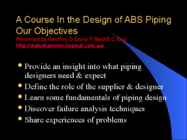
Insist on client drawings the design risk!!! design assistance required Advise that inspections do NOT infer responsibility ABS Material Properties Modulus Temperature Hoop stress Variation Ring Bending Strain Design Life Creep Toxicity & Taint Stiffness Abrasion Resistance Chemical Resistance Ultraviolet Resistance Modulus Published as Strain rate & loading 2200MPa at 20ºC changes modulus (instantaneous) values Resin properties Value determined change modulus values by ASTM test Modulus affects Standard dog wavespeed in surge bone test events specimen Modulus important in
shampoo, cosmetics, cleaning agents, washing detergents and toothpaste. A large proportion of palm oil expansion occurs at the expense of biodiversity and ecosystems in the countries it is produced. Currently, a third of all mammal species in Indonesia are considered to be critically endangered as a consequence of this unsustainable development that is rapidly encroaching on their habitat. There are over 300,000 different animals found throughout the jungles of Borneo and Sumatra, many of which are injured, killed and displaced during deforestation. In addition, palm oil development increases accessibility of animals to poachers and wildlife smugglers who capture and sell wildlife as pets, use them for medicinal purposes or kill them for their body parts. The destruction of rainforests in Borneo and Sumatra is therefore not only a conservation emergency, but a major animal welfare crisis as well.
v 3 Sensors 47 Temperature Sensors 47 Optical Sensors 59 CCDs 72 Magnetic Sensors 82 Motion/Acceleration Sensors 86 Strain Gauge 90 4 Time-Based Measurements 93 Measuring Period versus Frequency 95 Mixing 97 Voltage-to-Frequency Converters 99 Clock Resolution 102 5 Output Control Methods 103 Open-Loop Control 103 Negative Feedback and Control 103 Microprocessor-Based Systems 104 On-Off Control 105 Proportional Control 108 PID Control 110 Motor Control 123 Measuring and Analyzing Control Loops 130 6 Solenoids, Relays, and Other Analog Outputs 137 Solenoids 137 Heaters 143 Coolers 148 Fans 149 LEDs 151
•Objects that are created from a given class are called instances of that class •Encapsulation means that the properties and methods of an object are not directly accessible to the outside world. •Inheritance is the ability to create new classes based on an existing class. The new class inherits all the properties and methods and events of the base class, and can be customized with additional properties and methods. •Polymorphism is the ability of different classes to define properties or methods with the same name. Polymorphism is essential to object-oriented programming because it allows you to call methods with the same names, no matter what type of object is in use at the moment. 2. COMPONENT TECHNOLOGY – THE PROBLEM The Problem •Today, anything and anyone must be net-enabled. •Automated business processes, products, and software systems need to evolve in „e-Time“. •Everything must be changeable, extensible, adaptable.
Given that the construction industry does not have a particularly good reputation among the public, the first part of this thesis focuses mainly on this problem and its sources. It is the reason why we need new and better business models, like LC and BIM, or even an integration of the two models. Both LC and BIM have been shown to have a profound impact on improving construction processes and therefore, project outcomes, as discussed in the third and the fourth chapters. Different studies and practical experience show that a combination of these originally independent approaches can ensure even better processes. Integrated Project Delivery (IPD), which is discussed in the fifth chapter, is an example of this. In conclusion, a recommendation supported by research is made for improving the Estonian construction industrys performance. Key words: Lean Construction (LC), Building Information Modelling (BIM), Integrated Project
prevention, transmission, and treatment, which animal handlers should be aware of to minimize the harm caused by IBK. Vaccination does not ensure lifelong immunity and not prevent a primary and reinfection of the cattle. Therefore, it is necessary to keep the cattle in a healthy body condition to assure a high immunity level, which helps the body to defend itself against the disease. This study is based on scientific articles from different magazines. The purpose of the research is to learn more about IBK and how to handle it. IBK seems to be hardly avoidable, but with right herding techniques it is possible to prevent huge outbreaks of the disease. Introduction Infectious bovine keratoconjunctivitis (IBK) is one of the most common eye diseases of cattle. Colloquially also known as pinkeye. It is contagious to all cattle breeds, but there are reported that it is more common in lighter-colored breeds, such as Hereford
3. History Great Britain has a long and interesting history stretching back millennia's. The Iberians brought their metal working skills and the first real civilization to Britain in the 3rd millennium B.C. And were then overrun by the various Celtic tribes that begun in the 8th century B.C. The Celts introduced the tribal organization and an early form of agriculture before they were forced westwards to Cornwall, where the Celtic language still exists in different forms, by the Roman invasion begun in 43. AD. The Romans ruled Britain for over two hundred years and left behind three things of importance: their roads, the sights of important cities notably London, and the seeds of Christianity. The Latin way of life villas, arts, language and political organization all vanished, however after the invasions from Northern Europe by the Anglo-Saxons and Jutes from the 5th century onwards. These pagan peoples' were easily converted to
and technological environments associated with countries and survey populations in countries. This chapter is about solving these common problems that we described as the cornerstones of surveying. When understood and responded to, the cornerstone challenges will assure precision in the pursuit of one’s survey objectives. 1.2 What is a survey? A quick review of the literature will reveal many different definitions of what constitutes a survey. Some handbooks on survey methodology immediately describe the major components of surveys and of survey error instead of giving a definition (e.g., Fowler, Gallagher, Stringfellow, Zalavsky Thompson & Cleary, 2002, p. 4; Groves, 1989, p. 1), others provide definitions, ranging from concise definitions (e.g., Czaja & Blair, 2005, p. 3; Groves, Fowler, Couper, Lepkowski, Singer & Tourangeau, 2004, p. 2; Statistics Canada, 2003, p
All utility-scale reactors heat water to produce steam, which is then converted into mechanical work for the purpose of generating electricity or propulsion. In 2007, 14% of the world's electricity came from nuclear power. More than 150 nuclear-powered naval vessels have been built, and a few radioisotope rockets have been produced. Nuclear life cycle The Nuclear Fuel Cycle begins when uranium is mined, enriched, and manufactured into nuclear fuel, which is delivered to a nuclear power plant. After usage in the power plant, the spent fuel is delivered to a reprocessing plant or to a final repository for geological disposition. In reprocessing 95% of spent fuel can be recycled to be returned to usage in a power plant. What is nuclear energy? Nuclear energy was first discovered by French physicist Henri Becquerel in 1896, when he found that photographic plates stored in the dark near uranium were blackened like X-ray plates, which
SISUKORD 2 ABSTRACT Pilling is an undesired defect of textile fabrics, consisting of a surface characterized by a number of roughly spherical masses made of entangled fibers. Mainly caused by the abrasion of fabric surface occurring during washing and wearing of fabrics, this defect needs to be accurately controlled and measured by companies working in the textile industry. Pilling measurement is traditionally performed using manual procedures involving visual control of fabric surface by human experts. Since the early nineties, great efforts in developing automatic and non-intrusive methods for pilling measurement have been made all around the world with the final aim of overcoming traditional, visual-based and subjective, procedures. Machine Vision proved to be among the best options to perform such defect assessment since it provided increasingly performing measurement equipment and tools, serving the purpose of automatic control
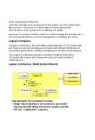
1.The Conceptual Architecture identifies the high-level components of the system, and the relationships among them. Its purpose is to direct attention at an appropriate decomposition other system without delving into details. Moreover, it provides a useful vehicle for communicating the architecture to non-technical audiences, such as management, marketing, and users. Logical Architecture In Logical Architecture, the externally visible properties of the components are made precise and unambiguous through well-defined interfaces and component specifications, and key architectural mechanisms are detailed. The Logical Architecture provides a detailed "blueprint" from which component developers and component users can work in relative independence. Logical Architecture. Model System Behavior Execution Architecture
commerce (over 14%) and estate, rental and letting, as well as business services (about 16.5%). Agriculture amounts to slightly less than 3% of the overall production, construction approximately 7% and government, education and health care to more than 13%. Agriculture:Nowadays only about 4% of the workforce is engaged in agriculture and the sector yields just slightly less than 3% of the overall production. Milk cattle, also pigs and poultry are the main farm animals raised in Estonia. Field crops include cereal crops, potatoes and vegetables. Plant products are mostly for internal use, a considerable amount of meat is imported. Some dairy products and some specific products e.g. cultivated and wild berries, mushrooms, ecologically pure produce etc -are for export. The figures of productivity of the Estonian agriculture are surpassed by those of many climatically better situated countries, but the local produce contain considerably less
Purpose: To communicate the solution to a problem. Audience: Anyone who has to implement your design, understand your design, or reference your design to solve their own problem. Typically, this is the project client. While the client may be familiar with the project, the report is still written as though the client is new to the project because that is the best way to tell the whole story. A design report is different than a lab report that you might be familiar with. A lab report describes an experiment and its conclusions and has four main parts: Introduction, Methods, Results and Discussion. The major difference between design and lab reports is that design reports do not include a methods section (other than when describing the evaluation plan.) When performing an experiment, the method that you use to obtain an answer must be presented for someone else to validate the results. For
The network of artesian wells provides cattle with water. Natural zones The wet forests also called the rainforests occupy the narrow coastal region in the east. In the west they give place to grasslands with some trees called savannas. Farther west the trees disappear and the savannas give place to the bushlands. The real desert occupies the centre of the Western Plateau. In the very southwest there are thin forests of evergreen trees. Plants A rich variety of plant can be found in the natural landscapes of Australia. A lot of species can be found in wet tropical forests in the north and in temperate rainforests in the south. The biggest family of the native plants is the myrties. They include more than 500 species of eucalyptus, or gum trees. Only the big river red gum is seen everywhere. These can be found beside rivers and dry riverbeds. Some gum trees are valuable timber species and have been cut down for many years
 annaabi.ee