Infectious bovine keratoconjunctivitis 2019 (0)
Infectious bovine keratoconjunctivitis
Kristjan Rannaäär
Veterinary medicine, 2. year, 2. group
Abstract
Infectious bovine keratoconjunctivitis (IBK) is a highly contagious ocular disease and big
problem in cattle farms worldwide. It is the most common ocular disease of cattle caused by
bacteria Moraxella bovis. This study focuses on IBK despite having low mortality rate and
complete recovery, it causes significant loss of productivity in the herds affected due to the
costs of treatment and considerable impact on afflicted animals, including blindness. This
research is focused on the details, such as risk factors, pathogenesis, etiology, clinical signs
prevention, transmission, and treatment, which animal handlers should be aware of to
minimize the harm caused by IBK. Vaccination does not ensure lifelong immunity and not
prevent a primary and reinfection of the cattle. Therefore, it is necessary to keep the cattle in a
healthy body condition to assure a high immunity level, which helps the body to defend itself
against the disease. This study is based on scientific articles from different magazines. The
purpose of the research is to learn more about IBK and how to handle it. IBK seems to be
hardly avoidable, but with right herding techniques it is possible to prevent huge outbreaks of
the disease.
Introduction
Infectious bovine keratoconjunctivitis (IBK) is one of the most common eye diseases of
cattle. Colloquially also known as pinkeye. It is contagious to all cattle breeds, but there are
reported that it is more common in lighter-colored breeds, such as Hereford. IBK is a disease
affecting cattle eye caused by the bacteria Moraxella bovis, which is a Gram-negative, rod-
shaped bacterium and spread rapidly by direct contact or by insect vectors (Angelos, 2015).
The disease has high morbidity rate, but it is rarely fatal. It causes a lot of pain and even
1
blindness to the animal, also considerable financial losses in the herds because of the
decreased weight gain, milk discard and costs of therapy (Postma et al., 2007). IBK can occur
without clinical signs and bacteria can be cultured on the healthy cattle (Angelos, 2015).
Problem is the resistance of Moraxella bovis in bovine herds and the establishment of
biofilms in the nasal cavity and eyes of ruminants without any sings of infection (Ely et al.,
2017).
Pathogenesis
Moraxella bovis is a gram-negative bacillus causes IBK in cattle. The occurrence and clinical
signs depend on environment, season concurrent pathogens, host immune system and
Moraxella bovis strain. The disease is highly contagious and can easily spread in the farm.
Moraxella bovis is not capable to move but can cause the destruction of red blood cells (M.H.
Brown et al. 1998). All Moraxella isolates of veterinary importance, including Moraxella
ovis, Moraxella bovis, and Moraxella bovoculi, have the ability to form biofilms. Researches
have shown that biofilms are related to the chronicity because of the increased antimicrobial
resistance and it is considerable defence mechanism for being washed away or destroyed by
bovine tear secretions. One of the main defence factors in the bovine tear is lysozyme. Studies
have shown that lysozyme have ability to reduce the production of biofilms, but do not have
the capacity to destroy the preformed biofilms (Ely et al., 2017). In addition to the tear film
there are other protection factors such as epithelium, phagocytic cells, local secretory
antibody. Cornea and conjunctiva epithelial surface are an effective barrier against bacteria
invasion. Due to the regeneration of epithelial cells take place every 5-7 days, therefore
microorganism must stick to cells in order to infect them, and this continuous turnover of
epithelial cells slows down bacterial adhesion (Postma et al., 2007). In conclusion tear films
are likely one of the most essential mechanisms to avoid fixation and colonization by
microorganisms in nature (Ely et al., 2017).
Etiology
Moraxella bovis is the most common etiological agent isolated in chronic and severe instance
of IBK. Some of the bacteria characteristics are responsible for taking crucial part to evolve
the disease. Especially the components such as pili, discharge of cytotoxin and hemolysin,
2
also outer membrane proteins and lipopolysaccharides. The different virulence strains of the
disease are associated with capsular pili. Pili is important structural attributes that helps the
bacteria to adhere to the corneal surface. Attachment keeps bacteria safe from blinking
activity of the eyelids and being washed off by the lachrymal secretions (Postma et al., 2007).
The pilated strain of Moraxella bovis is the only form able to cause infection and clinical
signs. Nonpilated forms do not cause infections. Moraxella bovis has some factors associated
with fibroblasts, neutrophils and collagenase release from epithelial cells. One of these
factors are hydrolytic enzymes which have the ability to degrade lipids, matrix proteins,
mucopolysaccharides may cause corneal ulcerations. There are also necrotizing and cytotoxic
factors released by bacteria, that exterminates corneal epithelial cells. Moraxella bovis has
ability to produce hemolysin and it is essential virulence factor of bacteria. Nonhemolytic
strains are not so capable to cause IBK. The source of hemolytic isolates can be recovered
when there is enough UV radiation (Brown et al., 1998).
Clinical signs
The clinical occurrence, stability of infection, animal condition and rate of progression of the
disease will be different from individual to individual (Postma et al., 2007). The disease
usually is acute and tends to spread rapidly in all species, specially Hereford or Hereford-
crossbred cattle are more sensitive to the disease (Angelos, 2015). Earliest references of the
disease are involuntary tight closure of the eyelids also known as blepharospasm, extreme
sensitivity to light (photophobia) and copious watery ocular discharge, what soon becomes
purulent. There also may be present abnormally large amount of blood in conjunctiva besides
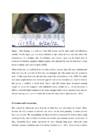
edematous and blepharitis may be present. These sings are also visible on the figure 1. During
24–48 h after the beginning of clinical signs, then there develops cloudiness, usually in the
centre of the cornea and continues
to spread over the whole cornea (Postma et al., 2007).
3
Figure 1 IBK damage in a calf eye. Early IBK lesions can be quite small and difficult to
identify. On the figure you can notice fluorescein dye uptake at 6 o`clock, this shows the
characteristic of a foreign body. In addition, other clinical signs can be found such as
excessive lacrimation, epiphora, blepharospasm, also photophobia may be beneficial to look
for to recognize such cases (Angelos, 2018)
.
Often at first one eye is affected, but nevertheless there can take place the cross-infection and
both eyes may be involved. If both eyes are damaged, then the animal may be hesitant to
move. At this stage there may also develop corneal ulceration (Brown et al., 1998). The cattle
lose some weight because the decreased appetite and ocular discomfort or visual disturbance
that results in inability to locate food. Calves with IBK lesions have decreased weaning
weight by 15–30 lb compared with unaffected calves (Cullen et al., 2016). Recovery is
different and individual variation occurs. Some stronger cattle recover spontaneously from the
disease, leaving a scar, while in others the disease becomes chronic (Postma et al., 2007).
Prevention and transmission.
IBK caused by Moraxella bovis depends on both host and environmental factors. These
bacteria are very resistant, so bacteria can remain on the farm probably in carrier animals
from year to year. The susceptibility of Moraxella bovis is increased by factors such as high
stocking density, close confinement of animals in barns, host immune system, the presence of
flies, Moraxella bovis strain, movement of stock through long grass, ultraviolet solar
radiation, pasture conditions and stress factors (Postma et al., 2007). Research have shown
4
that Moraxella bovis infection is growing step by step in spring and summer, when the there
are highest values of ultraviolet radiation. The only known reservoir for Moraxella bovis are
cattle (Brown et al., 1998). The bacteria are mainly transmitted by farm works or by direct
animal-to-animal contact with fomites, nasal and ocular secretion, but most often by
mechanical vectors (Postma et al., 2007). One of the most active vectors are face fly, barn fly
and the house fly, who can transport the bacteria to the cattle. The organism may live on the
insect for up to 3 days. Therefore, it is recommended to use face dust bags, back rubbers and
insecticide-impregnated ear tags (Brown et al., 1998). Some breeds are more susceptible than
others. For example, Hereford cattle have noticeably higher risk to get infected compared with
other breeds. The reason is about the eyelid pigmentation and decreased antibacterial efficacy
of the tear (Postma et al., 2007). Study shows that younger animals were more susceptible to
the disease than adults, it is also easily noticeable on the table 1. This research was performed
in 11 dairy farms and one cattle cross-breeding farm in different parts of Aris region, south-
east Ethiopia. Most cases of morbidity were observed among under one-year old animals
shown on the table 1. This is probably because young animals do not have so effective
immune system and they do not have previous exposure with this disease (Takele and
Zerihun, 2000).
Table 1 The severity of infectious keratoconjunctivitis in various age groups of dairy cattle in
south-east Ethiopia (Takele and Zerihun, 2000).
IBK-Affected age group (years)
Disease servity
Number of animals
<1
1-2
2-3
>3
Mild
39
21
8
5
5
Moderate
43
18
12
9
4
Severe
28
12
10
4
2
Total
110
51
30
18
11
To control bacteria spreading, there are some resort such as mowing high pasture grass, a
durable and clean shelter, fly control programs, controlling dust and sources of other
mechanical trauma, healthy and infected animals must be separately (Peek and Divers, 2018).
There is opportunity to decrease severity, incidence and increase host immunity via the use of
vaccination against the disease. It is known that only pilated strains of Moraxella bovis can
cause IBK in cattle. These are used killed Moraxella bovis cells as component in vaccine and
it have been shown to be antigenetic and immunogenic. Vaccine efficacy against pinkeye is
5
very different. The effectiveness of the vaccines depends on the vaccine type, the similarity of
the vaccine organism to the challenge organism, bacteria strains and other components to
formulate the vaccine. Efforts to develop perfect vaccine is laborious due to the loss of pili
during the cultivation. Lipopolysaccharides, outer membrane proteins, lipolytic enzymes and
proteases in are also important components in the development of effective acellular vaccines
against IBK (Prietoa et al., 2008).
Treatment
Thorough examination of the cattle`s eye preferably should take place with restrained in a
chute with halter to get proper animal head position. During such examination of the eye look
for the existence of foreign bodies, clinical signs and anything unusual. To avoid bacteria
spreading, then it is important to stick to biosafety rules. It is hardly recommended to wear
nonabsorbing protective clothes and gloves, because it is hard to avoid contact with ocular
secretions and epiphora harbouring bacteria, when handlers and veterinarians are doing close-
up examination. Moraxella bovis can easily infuse into the clothing of farmers performing
such check-ups. Hands, clothing and tools used to examine the eye should be disinfected after
next research of the animal (Angelos, 2018). Cattle can recover without treatment, but it is
different individually. Some more stronger cattle recover spontaneously from the disease,
while in others the disease becomes chronic (Postma et al., 2007). However, animals with no
clinical signs can infect healthy animals, therefore animal handlers should be careful and take
it into account. To avoid spreading over the farm then it is important to focus on the recovery
and animal welfare (Angelos, 2018). Powders and dyes are not recommended to cure IBK
because of the crystal structure, what cause irritation and lacrimation. As well oral drugs are
not eligible if infected animals are not separated. Most often are used subconjunctival,
intramuscular, intravenous and subcutaneous antibiotics (Brown et al., 1998). Studies show
that most effective and best for healing time are antibiotics such as penicillin, florfenicol and
cloxacillin indicate active treatment reduces healing time compared with placebo. Two
cloxacillin dosages of 20 mg/kg should be administered via intramuscular or subcutaneous 72
hours apart. Florfenicol, given once subcutaneously (40 mg/kg) or twice 2 days apart
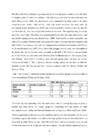
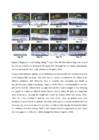
intramuscularly (20 mg/kg) to experimentally infected calves. On the figure 2 are shown the
recovery processes, when the florfenicol is used to heal the pink eye (Angelos, 2015).
6
Figure 2 Progression of eye healing during 77-days. When the first clinical sings were noticed
the calf was treated with florfenicol (40 mg/kg SC). Although the eye healed, unfortunately
calf was permanently blind in the affected eye (Angelos, 2018).
Using several antibiotics together in the treatment is not recommended for economic reason to
avoid antimicrobial resistance. Moraxella bovis is usually considered to be influenced by
different antibiotics. IBK Moraxella bovis is normally very susceptible and should be
disturbed by every single-drug therapy (Angelos, 2018). Also, it is recommended to use eye-
patches to avoid the irritation from sunlight, dust and flies. Direct sunlight is very annoying
and painful to a pink-eye affected animal. Patches help to reduce the pain, so animals feel
more comfortable, reducing the weight loss caused by pinkeye (Peek and Divers, 2018).
When the ocular secretion is increased and other clinical signs are getting worse, then
treatment failure should be considered. Therefore, if the specific antibiotic treatment does not
show any sign of recovery then it is necessary to collect ocular samples for bacterial culture
and antibiotic sensitivity testing. There is also surgical treatment opportunity in cases which
ulceration appears or if the eye is badly damaged by disease (Angelos, 2018).
7
Conclusion
Infectious bovine keratoconjunctivitis (IBK) should be considered a serious disease, because
despite having quite low mortality rate among cattle worldwide, it has quite high morbidity
rate. The disease causes discomfort to the cattle and considerable financial losses to dairy
industries because of decreased weight gain and milk production. Farmers should consider all
the risk factors which cause cattle poor body condition and low immunity level, such as poor-
quality nutrition and contamined shelter. Moraxella bovis being an extremely resistant and
possibly remaining many years in farm, then IBK becomes a hardly avoidable disease and
strong immunity helps the body to resist. To avoid spreading over the farm then it is important
to focus on the biosafety, animal recovery and welfare. There are many opportunities for
cattle breeders to avoid and reduce exposure with Moraxella bovis. For example, they should
separate affected animals from healthy cattle and face flies should be controlled using
insecticides. However, it the signs of the disease is discovered, such as eye irritation with
tears, severe inflammation, blood in eye, cloudiness, then it is important to start with the
treatment process as soon as possible to avoid the worse.
8
References
Angelos, J. A. Infectious Bovine Keratoconjunctivitis (Pinkeye). Veterinary Clinics of North
America: Food Animal Practice, 2015, 31, 61-79.
Brown, M. H., Brightman, A. H., Fenwick, B. W., Rider, M. A. Infectious bovine
keratoconjunctivitis: a review. Journal of Veterinary Internal Medicine, 1998, 12, 259–266.
Cullen, J. N., Yuan, C., Totton, S., Dzikamunhenga, R., Coetzee, J. F., da Silva, N., Wang, C.,
O’Connor, A. M. A systematic review and meta-analysis of the antibiotic treatment for
infectious bovine keratoconjunctivitis: an Update. Animal Health Research Reviews, 2016,
17, 60–75.
Ely, V. L., Vargas, A. C., Costa, M. M., Oliveira, H. P., Potter, L., Reghelin, M. A.,
Fernandes, A. W., Pereira, D. I. B., Sangioni, L. A., Botton, S. A. Moraxella bovis, Moraxella
ovis and Moraxella bovoculi: biofilm formation and lysozyme activity. Journal of Applied
Microbiology, 2018, 126, 369-376.
Peek, F. S., Divers, J. T. Ocular Diseases. Rebhun's Diseases of Dairy Cattle: Third Edition.
Saint Louis: Elsevier, 2018, 668-712.
Postma, G. C., Carfagnini, J. C., Minatel, L. Moraxella bovis pathogenicity: An Update.
Comparative Immunology, Microbiology and Infectious Diseases, 2008, 31, 449–458.
Prietoa, C. I., Boscha, A., Zielinski, G., Cúneoa, J., Yantornoa, O. M. Vaccine against
infectious bovine keratoconjunctivitis: A new approach to optimize the production of highly
piliated Moraxella bovis cells. Vaccine, 2008, 26, 6542–6549.
Takele, G., Zerihun, A. Epidemiology of Infectious Keratoconjunctivitis in Cattle in South-
east Ethiopia. Journal of Veterinary Medicine, 2000, 47, 169–173.
9
Sarnased õppematerjalid
![Liha töötlemine]()
1168
pdf
Liha töötlemine
�� Handbook of
Meat Processing
�� Handbook of
Meat Processing
Fidel Toldrá
EDITOR
A John Wiley & Sons, Inc., Publication
�Edition first published 2010
© 2010 Blackwell Publishing
Blackwell Publishing was acquired by John Wiley & Sons in February 2007. Blackwell’s publishing
program has been merged with Wiley’s global Scientific, Technical, and Medical business to form
Wiley-Blackwell.
Editorial Office
2121 State Avenue, Ames, Iowa 50014-8300, USA
For details of our global editorial offices, for customer services, and for information about how to apply
for permission to reuse the copyright material in this book, please see our website at www.wiley.com/
wiley-blackwell.
Authorization to photocopy items for internal or personal use, or the internal or personal use of specific
clients, is granted by Blackwell Publishing, provided that the base fee is paid directly to the Copyright
Clearance Center, 222 Rosewood Drive, Danvers, MA 01923. F
![Health]()
5
doc
Health
in the medical school and hospital, for a dentist 4 years at a dental school.
4. Diseases
Today many diseases are well known and can be cured. Such diseases are flu,
pneumonia, bronchitis, quinsy, measles and many others. But besides falling ill with
one of those diseases, you may hurt yourself in many other ways. You may sprain
your ankle, break your leg, cut your finger of graze your knee. You may also have a
nosebleed or a heart attack
Quite a number of diseases are infectious. We can get these diseases from people
already ill with the disease or infected food or animals. Most common infectious
diseases are such children's diseases as measles, mumps, scarlet fever and chicken
pox. Some diseases have become more rare because children and grown-ups can be
vaccinated against them for example polio, diphtheria, smallpox. Tuberculosis (TB)
was almost stamped out, but now it is returning, having become resistant to many
medicines that were used to cure it years ago
![Topic - Health]()
5
doc
Topic - Health
In broader sense, it
sometimes includes injuries, disabilities, disorders, syndromes and infections.
Many different factors may cause disease. Examples of such are genetic defects or
nutritional deficiencies. The reasons that may cause disease can be broadly categorized
into the following categories like social, psychological, chemical and biological. Some of
them may fall into more than one category. Some diseases are contagious or infectious.
Infectious diseases can be transmitted by any of a variety of mechanisms, including
aerosols produced by coughs and sneezes, bybites of insects or other carriers of the
disease, and from contaminated water or food.
5. First aid
There are three main aims of first aid and they are:
· preserve life
· prevent further injury
· promote recovery
In addition, some may add a 4 th 'P' protect yourself, although this is not an aim of
![Extended essay-To what extent does a plant-based diet lower the risk of coronary artery disease]()
48
pdf
Extended essay: To what extent does a plant-based diet lower the risk of coronary artery disease?
Extended Essay
Research Question: To What Extent Does a Plant Based Diet Lower the
Risk of Coronary Artery Disease?
Subject: Biology
Word Count: 3482
�Abstract:
Because there has been much debate over whether plant based diets are beneficial or
not, I’m willing to learn more about it and since there’s eligible data available on the effects
of vegetarian/vegan diets on cardiovascular diseases, my research question is formed
accordingly: To what extent does a plant based diet lower the risk of coronary artery
disease? The importance of this study lies in my own curiosity and my desire to acquire
further knowledge on the prevention and treatment of coronary artery disease.
In this investigation I will study two similar prospective studies on plant based diets and
cardiovascular diseases, mainly coronary artery disease, to find out if the outcomes of one
have anything common
![A short overview of veganism]()
18
pptx
A short overview of veganism
A short overview of
veganism
� Veganism is both the practice of abstaining from
What is the use of animal products, particularly in diet,
and an associated philosophy that rejects the
veganism? commodity status of animals.
� Eating vegan has a number of benifits that include:
Why do Improving one`s health
people go Helping the environment
vegan? Saving the animals
� Our planeet is tumoil, humans are ailing in health,
and animals are suffering everyday, but that can
be fixed by simply going vegan, if you should be
interested in contrbuting.
So what? A vegan diet benifits everything and everyone on
? our planeet
Simple changes in your diet and lifestyle can make
a huge impact for yourself and the planeet we live
on.
� Processed meat was rightfully demonized as
contributing to rising cancer rates by the world
![Rational Use of Diagnostic Tests]()
3
docx
Rational Use of Diagnostic Tests
Rational Use of Diagnostic Tests
Screening tests
Diagnostic tests are often used to screen asymptomatic patients and identify risk factors for
occult disease. Screening tests should be generally noninvasive, inexpensive, and of minimal
risk to the patient. Screening tests should have high diagnostic sensitivity, which means few
false negative results would be expected, as the goal of testing is to rule out the presence of
disease. Screening tests should be used to screen for diseases that (1) have serious
consequences if left undetected, (2) are reasonably prevalent within the population, and (3)
have treatment options readily available. Should a positive result be obtained, a more
accurate, confirmatory test should then be performed.
One example of a screening test would be the urine cortisol-to-creatinine ratio (Cort:Crt)u,
which is used to screen symptomatic patients for canine hyperadrenocorticism.[1,2] The
(Cort:Crt)u ratio tests for the presence or absence of u
![Biogas – The source of future energy]()
26
docx
Biogas – The source of future energy
Tartu Miina Härma gymnasium
Biogas The source of future
energy
Report
Tartu 2010
�Table of Contents
Introduction.........................................................................................................
What is biogas?...................................................................................................
Producing process...............................................................................................
Nowadays............................................................................................................
Areas where biogas is used in.............................................................................
Biogas as replacement of fuel..........................................................................
Other benefits.....................................................................................................
Healt
![MRSA]()
10
doc
MRSA
MRSA: Understand your risk and how to prevent infection
James Steckelberg, M.D.
MRSA - or methicillin-resistant Staphylococcus aureus - has been a problem in hospital and
health care settings for years. But this highly drug-resistant bacterium has gained attention in
recent years for its role in several deaths among otherwise healthy school-age athletes. Are
MRSA infections on the rise? What are the real risks of MRSA infection for you or your
child? And what can you do to protect against MRSA infection? James Steckelberg, M.D., an
infectious disease specialist at Mayo Clinic, Rochester, Minn., answers these and other
common questions about MRSA.
What is MRSA, and why is it sometimes referred to as a "superbug"?
· MRSA in hospitals. MRSA infection is caused by Staphylococcus aureus bacteria -
often called "staph." Many years ago, a strain of staph emerged in hospitals that was
resistant to the broad-spectrum antibiotics commonly used to treat it. Dubbed
Meedia
Kommentaarid (0)
 Tasuta
Faili alla laadimine on tasuta
Tasuta
Faili alla laadimine on tasuta
 ~ 9 lehte
Lehekülgede arv dokumendis
~ 9 lehte
Lehekülgede arv dokumendis
 2020-10-04
Kuupäev, millal dokument üles laeti
2020-10-04
Kuupäev, millal dokument üles laeti
 1 laadimist
Kokku alla laetud
1 laadimist
Kokku alla laetud
 0 arvamust
Teiste kasutajate poolt lisatud kommentaarid
0 arvamust
Teiste kasutajate poolt lisatud kommentaarid
 Kristjan8991
Õppematerjali autor
Kristjan8991
Õppematerjali autor
 annaabi.ee











Kõik kommentaarid