Leidsid 33 sarnast õppematerjali, mis on seotud failiga "Verb Types". Need materjalid aitavad sul teemat sügavamalt mõista.
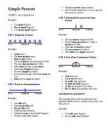
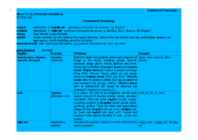
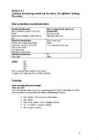
verb, verbs, continuous, feel, hear, meaning, having, these, look, weigh, ears, smell, usually, correct, mixed, favorite, coffee, good, taste, today, examples, cannot, seem, other, miss, there, seeing, night, rude, formal, notice, feeling, doing, tenses, dinner, rarely, drink, behave, donna, seems, singer, jazz, club, tonight, dollar, something, others· Cats like milk. still, just, etc. · Birds do not like milk. · Do pigs like milk? Examples: · California is in America. · California is not in the United Kingdom. · You only speak English. · Windows are made of glass. · Do you only speak English? I am not reading any books right now. Present Continuous · · Are you working on any special projects at work? [am/is/are + present participle] · Aren't you teaching at the university now? Examples: USE 3 Near Future · You are watching TV. · Are you watching TV? · You are not watching TV.
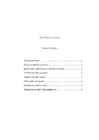
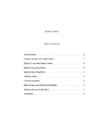
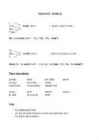
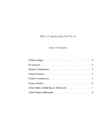
Present Simple and Continuous Table of Contents Present Simple ..................................................................... 2 The spelling of endings in the Present Simple ....................... 2 When to use the Present Simple ........................................... 3 The verb 'be' ......................................................................... 4 Present Continuous.............................................................. 5 The spelling of endings in the Present Continuous................ 5 When to use the Present Continuous.................................... 6 State verbs and event (action or dynamic) verbs ................... 7 Present Simple In the Present Simple we use the verb without an ending. I work you live we think they dance NB
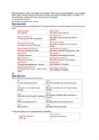
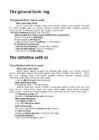
NON-Continuous Verbs Verbs It is important to understand that English verbs are divided into three groups: Normal Verbs, NON-Continuous Verbs and Mixed verbs. Today we're going to talk about NON-Continuous verbs. These Verbs are usually things you cannot see somebody doing. Non-Continuos Verbs include: Abstract Verbs. Possession Verbs. Communication Verbs. Sense Verbs. Emotion Verbs. Abstract Verbs examples: Click to edit Master text styles · I now realize that using the Second level internet is more useful. Third level Fourth level He loves her. ·
words; syntax. Language: a systematic, conventional use of sounds, signs or written symbols in a human society for communication and self-expression. - human language at all levels is rule- or principle-governed. Linguistics: the scientific study of human natural language Synchronic approach to language: Diachronic approach to language: Linguistic competence: Linguistic performance: What is grammar?: "The sounds and sound patterns, the basic units of meaning, such as words, and the rules to combine them to form new sentences constitute the grammar of a language" Prescriptive grammar vs. Descriptive garmmar: Descriptive grammar: the systematic study and description of a language. Descriptive grammar refers to the structure of a language as it is actually used by speakers and writers. Prescriptive grammar: a set of rules and examples dealing with the syntax and word
All rights reserved. No part of this book may be reproduced in any form or by any means, electronic or mechanical, including photocopying, recording, or by any information storage and retrieval system, without the written permission of the publisher. ISBN 1-59905-201-6 Printed in the United States of America 13 12 11 10 09 08 07 9 8 7 6 5 4 3 2 1 Introduction Grammar is a very old field of study. Did you know that the sentence was first divided into subject and verb by Plato, the famed philosopher from ancient Greece? That was about 2,400 years ago! Ever since then, students all over the world have found it worthwhile to study the structure of words and sentences. Why? Because skill in speaking and writing is the hallmark of all educated people. Lesson by lesson, this book provides basic instruction in the eight parts of speech--nouns, pronouns, verbs, adjectives, adverbs, prepositions, conjunctions, and
PRESENT CONTINUOUS Klaarika Kaljula 9a Use 1.Present actions 2.Temporary actions 3.Longer actions in progress 4.Future (personal) arrangements and plans 5.Trends 6.Irritation 1.Present Actions Happening at the moment of speaking Most often, we use the Present Continuous tense to talk about actions happening at the moment of speaking. Ex. He is eating a dinner. Mary is talking with her friends. They are swimming in the pool. Stative Verbs There is a certain group of verbs that usually does not appear in the Continuous form. They are called Stative Verbs, and if used in the Continuous form, they have a different meaning. Ex. I think you look pretty today. Meaning: Opinion I'm thinking of moving to San Francisco. Meaning: Act of thinking
Moved to Cali 2005 Was Born Traveled to Europe Husband 1978 School graduates @ Oxford 1999 Started Got married School 1983 2008 2 The Six English Verb Tenses Three Simple Tenses Simple continuous Present You walk. You are walking I run. I am running. Past You Walked You were walking. I ran. I was running. Future You will walk. You will be walking. I will run. I will be running. Three Perfect Tenses Perfect continuous
English structure revision for the exam 1. Terms Language → A systematic, conventional (tavakohane) use of sounds, signs or written symbols in a human society for communication and self-expression. Human language at all levels is rule- or principle- governed (valitsema) meaning that language corresponds to the grammar. Natural language is usually spoken, while language can also be encoded into symbols (such as letters, morse etc) For example: Estonian, English. Linguistics → The scientific study of human natural language. Broadly, there are three aspects to the study which are Pragmatics (studies the use of language → interested in the gap between the sentence’s meaning and the speaker’s meaning).
The Present Simple is the most basic tense in the English language. It is an interesting tense because it can be used Present Simple to express the future. Generally, though, we use it to Basic form describe the present activities or to talk about routines or Subject + Verb + -s (present form) John lives in New York. We play football every day. You are really kind. The meeting starts at 3 PM. Use the Present Simple: with state verbs. to talk about situations in life that last a relatively long time. when an event is certain to happen in the future. to talk about events that we can't change (for example, an official meeting or a train departure).
adjective + preposition omadussõna + eessõna proud of, good at, married to adverb particle Some verbs are followed by adverb particles. Examples are: put on, take off, give away, bring up, call in. Sometimes the particle is detached from the verb and put after the object. •He took his boots off. •They called the doctor in. apposition a grammatical construction in which two usually adjacent nouns having the same referent stand in the same syntactical relation to the rest of a sentence (as the poet and Burns in “a biography of the poet Burns”) back-reference In grammatical analysis, the term reference is often used to state a relationship of identity which exists between grammatical units, e.g. a pronoun 'refers' to a noun or noun phrase. When the reference is to an earlier part of the discourse, it may be called a 'back-reference' (or anaphora); collective noun
) How much is the dress? ◦ HOW MANY – (kui mitu?) How many rackets do you have? PRESENT SIMPLE ◦ That's the way to express habits, facts, thoughts and feelings. It is used with general statements and actions that happen sometimes, always, usually,... ◦ Key words: often, always, never, every day, month,..., usually, sometimes, generally, normally, rarely, seldom, whenever, on Mondays, Tuesdays,... I, YOU + PLURAL DON'T (do not) + VERB TO BE, CAN, MUST --> VERB + NOT They go to school. They don't go to school. They are not (aren't) at home. I like oranges. I don't like oranges. The boys are not (aren't) in the park. We hate peppermint. We don't hate peppermint. I am not (I'm not) hungry.
The Passive Voice Table of Contents The Passive Voice................................................................................. 2 Tenses in the Passive Voice ................................................................ 2 Modal Verbs and Future in the Passive Voice ................................. 3 The Passive with ’get/have’ ................................................................ 4 When to use the Passive ..................................................................... 5 Verbs with two objects ........................................................................ 5 The Passive with ’by/with’ .................................................................. 6
Concrete nouns refer to physical entities that can be observed and measured (cat, garage, soldier). Abstract nouns refer to abstractions that cannot be observed and measured (competition, conscience). verb tegusõna, In a clause, the verb is an obligatory and the most walk, put, do, be, must pöördsõna, verb central element. It denotes actions, events, processes and states. Verbs are either regular (cough, coughs, coughing, coughed) or irregular (speak, speaks, spoke, speaking, spoken). There are three main grammatical
1. Active/Passive Active - the professor teaches the students. Passive - The students are taught by the professor 2. Present Simple [VERB] + s/es in third person. Tegevus on korduv või tavapärane. You speak English. I play tennis. Cats like milk. The train leaves tonight at 6 PM. I am here now. Active= Once a week, Tom cleans the car. Passive= Once a week, the car is cleaned by Tom. 3. Present Continuous [am/is/are + present participle]. Tegevus toimub/ei toimu praegusel hetkel. You are watching TV. You are learning English now. I am studying to become a doctor. I am meeting some friends after work. Active= Right now, Tom is writing the letter. Passive= Right now, the letter is being written by Tom. 4. Past Simple [VERB+ed] or irregular verbs. Tegevus algas/lõppes minevikus täpsel ajal. . You called Debbie. I saw a movie yesterday. I finished work, walked to the beach, and found a
/ On top of the world, thanks. · OK, thanks · Not so bad, thanks. / Can't complain, thanks. · So so, thanks. / So and so, thanks. · Not so good, actually 1 The English alphabet Spelling Work with your partner and spell out first your name and then some names of places. Write down each letter as you hear it, and then say the word. The English alphabet on the phone: You might find the following alphabet (used by international airlines) useful when trying to spell a word on the telephone. A Alpha O Oscar Ä Alpha-Echo Ö Oscar-Echo B Bravo P Papa C Charlie Q Quebec D Delta R Romeo
Modal Verbs Table of Contents Introduction ......................................................................... 2 Characteristics of Modal Verbs ............................................. 2 When to use the Modal Verbs ............................................... 3 Expressing permission.......................................................... 3 Expressing obligation ........................................................... 3 Making offers........................................................................ 5 Making requests ................................................................... 6 Expressing possibility/probability......................................... 7
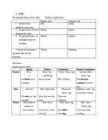
.. It Does she / he work here? Yes, she / he does. / No, she / he doesn't. Time expressions always often not often never usually normally rarely sometimes occasionally hardly ever when after before unless in case as soon as until Uses - for permanent facts - for actions and situations which are generally true - for habits and routines PRESENT CONTINUOUS bebe++ ing ing I am (I'm) You are (you're) She/He/It is (she's/he's/it's) (not) + working here. We are (we're) They are (they're) Are you working here? Yes, I am. / No, I'm not. Is he working here? Yes, he is. / No, he isn't. Time expressions now currently at the moment these days nowadays right now Uses
The verbs therefore usually have to be in the past too. For example: "I'm going to the cinema". He said he was going to the cinema. Basic tense chart The tenses generally move backwards in this way (the tense on the left changes to the tense on the right): present simple past simple I'm a teacher. He said he was a teacher past continuous. present continuous He said he was having lunch with his I'm having lunch with my parents. parents. past perfect simple present perfect simple He said he had been to France three I've been to France three times. times.
The gerund form -ing The gerund form -ing is used: After some main verbs. (admit, appreciate, consider, delay, deny, detest, dislike, enjoy, escape, face, feel like, finish, forgive, give up, imagine, involve, mention, mind, miss, postpone, practise, prefer, put off, recommend, resent, risk, suggest, understand) I do not recommend going to that restaurant. After an adjective, verb or noun followed by a preposition. She is really good at swimming. He apologised to arriving late. I quite like the thought of working in a travel agency. In some fixed expressions I can not bear listening to people who complain. I can not help feeling that he is cheating us. That book is not worth reading. The infinitive with to The infinitive with to is used: After some main verbs
7. Verb: The principal forms of the verbs: Verbil on 4 põhivormi: Regular verb Irregular verb 1. the base form Talk Speak üldoleviku tüvivorm 2. the past form/ -ed form Talked Spoke üldmineviku vorm 3. the past participle (-ed Talked Spoken participle) mineviku kesksõna 4. the present participle (- Talking Speaking ing participle) oleviku kesksõna The tenses: Expressing the future:
The present continuous We use the present continuous to talk about: 1. Something which is happening at the moment of speaking. I'm reading the Grammar referance page. 2. Something which is happening around now but not necessarily at the moment of speaking. I'm reading a lot of detective novels these days. 3. A changing situation. Computers are getting faster and faster. 4. Something which happens often and annoys us. My boss is always asking me to stay late. The present simple We use the present simple to talk about: 1. A routine or a habit. Jim always sets the alarm for 7.30. 2. Facts which stay the same for a long time. I have a friend who lives in London. She works in a museum. 3. Something which is always true.
Tests Superstar 1 Luke Prodromou Test 1 Name____________________ Class_______ Use your English 1 Complete these sentences using the correct form (present simple or present continuous) of the verb in brackets. _ 1 She is in a band and she _________________________________ (record) a CD at the moment. _ 2 She is an actress and often _________________________________ (appear) on television. _ 3 At the moment she _________________________________ (have) a rest because she is tired. _ 4 Mike is a doctor and he _________________________________ (live) in Manchester. _ 5 I _________________________________ (start) work at 8.30 every morning.
3. Use the simple present play(s), rain(s) etc to talk about habits and repeated actions. I play tennis every Saturday. (NOT I am playing tennis every Saturday.) It usually rains a lot in November. 4. Use will ..., not the present, for offers and promises. I'll cook you supper this evening. (NOT I cook you supper this evening.) I promise I'll phone you tomorrow. (NOT I promise I phone you tomorrow.) 5. Don't drop prepositions with passive verbs. I don't like to be shouted at. (NOT I don't like to be shouted.) This needs to be thought about some more. (NOT This needs to be thought some more.) 6. Don't use a present tense after It's time. It's time you went home. (NOT It's time you go home.) It's time we invited Bill and Sonia. (NOT It's time we invite Bill and Sonia.) 7. Use was/were born to give dates of birth. I was born in 1975. (NOT I am born in 1975.) Shakespeare was born in 1564. 8. Police is a plural noun.
1 First conditional If-clause present simple; Main clause future tense (or: can, must, may, etc., + bare infinitive) Used to talk about the consequences of a possible action (a real or very probable situation in the present or future). E.g., If I write my essay this afternoon, I will have time to go out tonight. (or: I might go out tonight). (It is still morning, and it is quite possible that I will do this.) NOTE: With type 1 conditionals we can use unless + affirmative verb (= if + negative verb). E.g., I will not be able to come unless Joe gives me a lift. (= If Joe does not give me a lift, ...) Provided that/providing that are synonyms for if that can be used with type 1 conditionals. 2 Second conditional (unreal present) If-clause past simple/past continuous; Main clause conditional tense (would, could, might + present bare infinitive) Used to talk about the consequences of a hypothetical action (imaginary situations that are contrary
Ways of expressing the Future Table of Contents Future Simple ...................................................................... 2 Be going to ........................................................................... 3 Present Continuous .............................................................. 3 Present Simple ..................................................................... 4 Future Continuous ............................................................... 4 Future Perfect....................................................................... 6 Other ways of referring to the future ..................................... 7 Other future references......................................................... 8 Future Simple In Future Simple we use the modal verb will + the verb. It is the same in all persons. I will work I’ll work
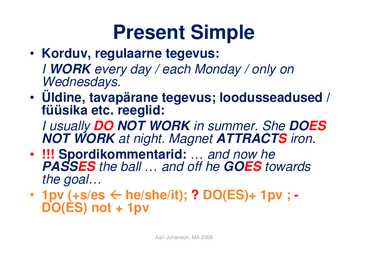
.) · Repeated and habitual actions, routines (She usually goes..) · Laws of nature and general truths (The sun sets in the west) · Timetables and programmes · Sporting commentaries, rewiews (Beckham wins the ball, crosses and Owen scores) · Feelings and emotions (I love Tallinn..) TIME EXPRESSIONS USED WITH PRESENT SIMPLE: usually, often, always, every day/week etc, in the morning/evening etc, at night/the weekend, on Fridays etc. Present Continuous · Actions taking place at or arount the moment of speaking (The kids are watching TV..) · Fixed arrangements in the near future (I'm going to the dentist tomorrow) · Currently changing ang developing situations (The number of burgularies is increasing) · With ,,Always" to express anger or irritation at a repeated action (You're always forgetting..) TIME EXPRESSIONS USED WITH PRESENT CONTINUOUS: now, at the moment, at present, these days, nowadays, still,
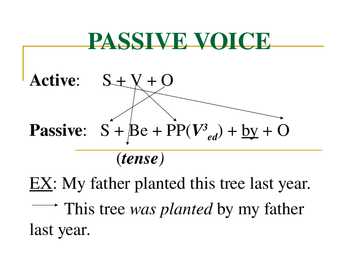
PASSIVE VOICE Active: S + V + O Passive: S + Be + PP(V3ed) + by + O (tense) EX: My father planted this tree last year. This tree was planted by my father last year. TABLE OF ENGLISH TENSES IN PASSIVE VOICE The Simple Present Tense Active: S + V(s/es) + O Passive: S + am/is/are + PP + by + O EX: He reads books every day. Books are read (by him) every day. TABLE OF ENGLISH TENSES IN PASSIVE VOICE The Present Continuous Tense Active: S + am/is/are + Ving + O Passive: S + am/is/are + being +PP + by + O EX: He is writing a novel at the moment. A novel is being written (by him) at the moment. TABLE OF ENGLISH TENSES IN PASSIVE VOICE The Present Perfect Tense Active: S + Has/Have + V3ed + O Passive: S + has/have + been +PP + by + O EX: He has just finished a novel. A novel has just been finished (by him). TABLE OF ENGLISH TENSES IN PASSIVE VOICE The Simple Past Tense
Past Simple and Continuous Table of Contents Past Simple .......................................................................... 2 The spelling of endings in the Past Simple ............................ 3 When to use the Past Simple ................................................ 3 Past Continuous .................................................................. 4 When to use the Past Continuous......................................... 4 Used to & would................................................................... 5 Unfulfilled past events.......................................................... 5 Past Simple Regular Past Simple forms end in -ed. I worked he danced we apologized Some verbs have an irregular past form. I left he wrote The Past Simple is the same in all persons except in the past tense of be.
Bless you! Congratulations! Good luck! Te toca a ti. ¡Callate! Te amo. teh toh-kah ah tee kah-yah-teh tay ah-moh It's your turn. (informal) Shut up! I love you. (informal and singular) Notice that Spanish has informal and formal ways of speaking. This is because there is more than one meaning to "you" in Spanish (as well as in many other languages.) The informal you is used when talking to close friends, relatives, animals or children. The formal you is used when talking to someone you just met, do not know well, or someone for whom you would like to show respect (a professor, for example.) Encantado, cansado, enfermo, and aburrido are the masculine forms of the words. If the words refer to a woman or are spoken by a woman, then the final o changes to a: encantada, cansada,
Simple Present Present Progressive/Continious (99%) infinitive form of 'be' and verb + ing (3rd person singular: infinitive + 's') I speak I am speaking you speak you are speaking he / she / it speaks he / she / it is speaking we speak we are speaking they speak they are speaking
1.A decision at the moment of 1.Future plans made before the speaking: moment of speaking: A: 'I'm cold'. A: 'We've run out of milk.' B: 'I'll close the window'. B: 'I know, I'm going to buy some.' 2.Prediction based on opinion: 2.Prediction based on present I think the Conservatives will win the evidence: next election. Look at those boys playing football! 3.A future fact: They're going to break the window. He will be ten next year. 4.Promises / requests / refusal / willingness: I'll help you with your homework. Will you give me a hand? 5.In the same way as the future continuous, but with state verbs: I'll be at the station when you arrive. 'Shall' is used mainly in the forms 'shall I ?' and 'shall we?' in British English. These forms are used when you want to get someone's opinion,
ACTIVE TENSES Active form You use an active verb when you want to say that the subject of a sentence does something. · [Thing doing action] + [verb] + · +[thing receiving action] · Examples The professor (subject doing action) teaches (verb) · the students (object receiving action). · Mary (subject doing action) · washes (verb) · the dishes ( object receiving action). The tenses of the verb 1.Present (olevik) 2.Past (minevik) 3.Future (tulevik) 4.Future in the past (kaudne tulevik) Iga aeg võib esineda neljas eri rühmas 1.IndefiniteTenses (üldajad) 2.Continious Tenses (kestvad ajad) 3.Perfect Tenses (perfekti ajad) 4.Perfect Continious Tenses (perfekti kestvad ajad) Indefinite Tenses (üldajad) used to describe actions but do not state whether the action is completed or on- going märgivad tegevuse sooritamise fakti Peter visits us every day.
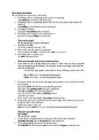
Aari Juhanson, MA 2008 Present Perfect Progressive · Tegevuse protsessi/kestvuse rõhutamine, lõpetamata: I have been WORKing on this project since morning! (I'm sick & tired of it!) · Äsja lõppenud tegevuse nähtavate tagajärgede kirjeldus: It has been RAINing. (Ground still wet.) S/he has been CRYing. (Eyes red) · have/has (s/he, it) BEEN + 1pv-ing Aari Juhanson, MA 2008 Non-progressive verbs Senses Emotions Mind Possession Existence ache** amaze = astonish believe belong appear* feel** appreciate desire = want* depend* be* hear* care* (dis)agree have* consist of hurt** (dis)like doubt* own contain
 annaabi.ee