Leidsid 33 sarnast õppematerjali, mis on seotud failiga "Types of higer education". Need materjalid aitavad sul teemat sügavamalt mõista.
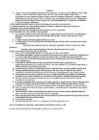
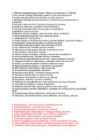
exam, subjects, study, department, university, degree, establishment, applied, credit, train, staff, vice, dean, room, dorm, practical, prelim, types, sciences, studies, points, service, training, full, distance, learning, professor, instructor, places, building, assembly, reading, cafeteria, student, hostel, residence, tenement, lodgings, compulsoryeesmärk on pakkuda kaupu ja teenuseid tarbijale vajalikul hetkel vajalikus kohas to be situated/to be located paiknema lecture to found/to establish/ to set up asutama, rajama to attend lectures loengutel käima applied (professional) higher education rakenduslik kõrgharidus a curriculum õppekava in the field of engineering/technology tehnikavaldkonnas compulsory subjects to train applied engineers ette valmistama rakendusinsenere elective subjects valikained in -service training täiendkoolitus general subjects üldained full-time study special subjects erialaained distance learning, to study by correspondence theoretical knowledge teoreetilised teadmised a fresher/freshman, a first-year student practical skills praktilised oskused
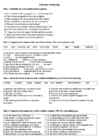
a) Jack decided to take a course/lesson in hotel management. b) Sheila always got good marks/points in algebra. c) After leaving school, Ann studied/trained as a teacher. d) Peter decided not to go in/enter for the examination. e) My sister learned/taught me how to draw. f) I can't come to the cinema. I have to read/study for a test. g) In history we had to learn a lot of dates by hand/heart. h) I hope your work will improve by the end of course/term. i) Martin failed/missed his maths exam and had to sit it again. j) If you have any questions, raise/rise your hand. Task 2. Complete each sentence with a word from the box. Use each word once only. cheat copy memorise pay revise concentrate divide pass punish underline a) Our teachers used to punish us by making us stay behind after school. b) If you…….twenty-seven by nine, the answer is three. c) Try to……. the most important rules. d) It is difficult to ……
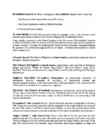
Act (1988). Notwithstanding its name, it does not apply to independent schools.Academies and free schools may also set their own curricula, though many choose to follow the National Curriculum. The purpose of the National Curriculum was to standardise the content taught across schools to enable assessment, which in turn enabled the compilation of league tables detailing the assessment statistics for each school. These league tables, together with the provision to parents of some degree of choice in assignment of the school for their child (also legislated in the same act) were intended to encourage a 'free market' by allowing parents to choose schools based on their measured ability to teach the National Curriculum. Whilst only certain subjects were included at first, in subsequent years the curriculum grew to fill the entire teaching time of most state schools. The requirement for state schools to teach Religious Education predates the National Curriculum
comprehensive schools were introduced. Most local education authorities were have now completely changed over to comprehensive schooling. At the age of 16 pupils take school-leaving examinations in several subjects at the Ordinary level. The exam used to be conducted by eight independent examining boards, most of them connected with the university. This examination could also be taken by candidates at a further education establishment. This exam was called the General Certificate of Education (GCE). Pupils of comprehensive school had taken the examination called the Certificate of Secondary Education either with or instead of the GCE.
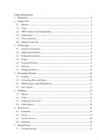
.............................................10 4. Development Program............................................................................................................10 4.1. Expenses .........................................................................................................................10 4.2. Outstanding Tasks and Projects ......................................................................................10 4.3. SWOT Analysis of the IT Department ...........................................................................11 4.4. Risk Analysis ..................................................................................................................12 5. IT Strategy..............................................................................................................................14 5.1. Mission...............................................................................................................
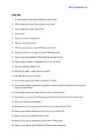
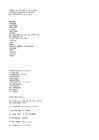
Bears Habe Moustache Vuntsid Tattoo tätoveering EDUCATION 1. Did you go to kindergarten before you entered school? Did you enjoy it? 2. How old were you when you started school? 3. What do you remember about your first year at school? 4. What do you like about your school and what do you not like? 5. What do you usually do during the breaks? 6. What are your favourite subjects at school? Do you hate any subjects? Why? 7. How many exams have you taken? In which subjects are you going to have exams in spring? 8. Which of them will be most difficult to pass? 9. Have you ever failed an exam? 10. If it is not secret, what are you planning to do after you finish the ninth form? What are your plans for the future? Was it easy or difficult to decide? 11. At what age do children enter school in Estonia? 12. How many forms does elementary school include? 13. What subjects are taught at elementary school? 14
today is the 6th of November. rakvere vocational school my speciality is a cook monday tuesday wendsday thursday friday saturday sunday my birthday is on the 27th dec my address is i was born in 1996 country city town parish cummune municipal village flat avenue street road kindergarten(nursery) to decide vocational school profession education speciality construction of cars to establish restuarant to continue to mend to repair 1.In the future 2.i have to stay in my new school do practical work 3.i entered vocational school. 4.at the age of seven 5.i was born in 23.10.1984 6.during my session 7.for almost four years 8.i want to be weiter 1. i was born in 3 nev 1984 2.i went to school at the age of seven 3.i have to studie almost four years 4.in september i went to vocational school 5.im interested in cars 6.in school we do practical work too 7.in the future im going to keep the family resourant school final certifacate 1. vocational 2.certificate 3.resta
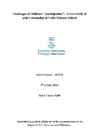
Challenges of children`s “participation”: A Case Study of active citizenship in Cadle Primary School Gerli Orumaa – 662974 9th of May 2014 Word Count: 8,800 `Submitted in partial fulfilment of the requirements for the degree of B.A. International Relations` Table of Contents Abstract 3 Introduction 4 Chapter 1: Citizenship, Children`s Rights and Participation: from the UN to the UK 6 Chapter 2: Citizenship Education in Wales………………………………………………14 Active Citizenship in Cadle Primary School: A Case Study 20 Conclusion 29 Bibliography 32 Appendices Appendix 1: The United Convention of the Rights of the Child
An overview of integrated care in the NHS What is integrated care? Research report Sara Shaw, Rebecca Rosen and Benedict Rumbold June 2011 Nuffield Trust work on integrated care This report is part of the Nuffield Trust's extensive programme of work on integrated care, which is examining the potential of new forms of care that are intended to benefit patients and taxpayers. Other related projects include: ·Integration in action: four international case studies. A study of four international organisations that have attempted to improve integration between health and care services. Interviews, documentary analysis and literature review are used to identify the main stimuli for integration and the issues that help or hinder progress; drawing out lessons for the NHS. ·Towards integrated care in Trafford. A project that looks at the process of change and lessons learned to date in Trafford, where NHS organisations have been working on
com Copyright © 2009, 2001 Pearson Education, Inc. All rights reserved. No part of the material protected by this copyright notice may be reproduced or utilized in any form or by any means, electronic or mechanical, including photocopying, recording, or by any information storage and retrieval system, without written permiSSion from the copyright owner. To obtain permission(s) to use material from this work, please submit a written request to Pearson/Allyn and Bacon, Permissions Department, 501 Boylston Street, Suite 900, Boston, MA 02116 or fax your request to 617-671-229°. Between the time website information is gathered and then published, it is not unusual for some sites to have closed. Also, the transcription of URLs can result in typographical errors. The publisher would appreciate notification where these errors occur so that they may be corrected in subsequent editions. Library of Congress Cataloging-in-Publication Data Cialdini, Robert B.
11.Kaabu pähe pannud, lahkus ta toast Having put his hat on, he left the room 12.Saanud kaks korda hammustada, ta kartis koeri Having been bitten twice, she was afraid of dogs 13.Ma tunnen tüdrukut, kes tõlgib seda raamatut I know the girl translating this book 14.Raamatu ära tõlkinud, viis ta selle kirjastajale Having translated the book, she took it to the publisher 15.Teda kuuldi klaverit mängimas She was heard playing the piano 16.Ülikooli minnes ma kohtasin sõpra When going to the University, I met a friend 17. Olles sale tüdruk, näis ta pikem, kui ta oli Being a slender girl, she looked taller than she was 18.Ta kergitas kulme, nagu tahaks ta midagi küsida She raised her eyebrows as if wanting to ask something 19. Üldiselt öeldes, mulle ei meeldinud see film Generally speaking, I did not like the film 20.Väga erutatult, läksid lapsed koju The children went home, greatly excited 21.Ta ei rääkinud, kui teda ei kõnetatud She did not speak unless spoken to 22
illiterate janitor with an easy-going, friendly disposition. Hence, I value what we might call character more than specialist knowledge from an antisocial person. God knows we want everyone to be a well-mannered genius. But humans are not cut out to be happy like pigs in a pen. We instead have insatiable brains, with mental appetites. So our goal is to balance the brainwork with hearts and smiles. "Facts served with sauce." Where does common sense fit on? Is it teachable? To a degree, what we mean by common sense is simply learned experience. Something more exists, though. Those who we praise for common sense may be quick-witted, steady-nerved, and efficient at practical decision-making. It is likely some of those traits depend on genetic brain makeup. In any case, for purposes of an essay on education, I propose to say no more about common sense. Similarly, where do concentration, reflection, analysis and criticism enter? Are they best
...... 28 4.3.1. The procedure for bringing the work of highly skilled professionals (VKS) ...................... 30 4.3.2. Your work permits for foreign citizens arriving in Russia in the visa-free regime ............ 33 4.4. Responsibility for violation of immigration laws................................................................... 34 5. BANKRUPTCY/ CLOSING DOWN THE COMPANY ....................................................................... 39 5.1. The procedures applied in the bankruptcy ................................................................................ 39 5.2. Fictitious or deliberate bankruptcy............................................................................................ 42 5.3. Criminal code......................................................................................................................... 42 6. ALLOWANCES/ PERMISSIONS NEEDED, PROCEDURES TO ACQUIRE ........................................ 43 6.1
knowledge construction and group knowledge sharing. I became interested in the field since I realised that nowadays in order to be an effective teacher one must know the `key' to the new generation of learners falling, to a category of `digital natives'. The research aims to determine the meaning of `blogs' and evaluate the extent to which they might be useful for the teaching of English. The primary purpose of this study is to collect evidence from numerous reviews of practices and summarize findings that will reflect on the ways in which social computing applications change learning patterns, give rise to new learning opportunities. This research project will sort out the best resources most suitable for the use in EFL classroom. It will firstly draw on diverse opinions, experiences, approaches on the use of communication technologies in a language classroom; however, it is also planned to try the method
Psychology 1 It is generally assumed that: Differential Psychology · People vary on a range of psychological attributes Ian Deary · It is possible to measure and study these individual differences · Individual differences are useful for explaining and predicting behaviour and performance Differential psychology reading Human Human · General
For readers who want more detail on these methods, I recommend, in the rear of this book, some other works and membership in the American Cryptogram Association. In my writing, I have tried to adhere to two principles. One was to use primary sources as much as possible. Often it could not be done any other way, since nothing had been published on a particular matter. The other principle was to try to make certain that I did not give cryptology sole and total credit for winning a battle or making possible a diplomatic coup or whatever happened if, as was usual, other factors played a role. Narratives which make it appear as if every event in history turned upon the subject under discussion are not history but journalism. They are especially prevalent in spy stories, and cryptology is not immune. The only other book-length attempt to survey the history of cryptology, the late Fletcher Pratt's
interests of students. But certainly the most numerous is the Scout Association, founded in 1908 for boys and in 1910 for girls by Lord Baden-Powel. The Scout movement is to encourage a sense of adventure and of responsibility for others among young people. The programme of training is planned to develop intelligence and practical skills, to promote health and a sense of service. Scout training is complementary to the ordinary education. Scouts train in mapping, signalling, first aid and all the skills that arise from camping and similar outdoor activities. British scouts take part in international scout meetings, which are held approximately every four years. The membership in this or that youth organization is not compulsory in Great Britain. But everyone can find the activity he likes most. Climate in Great Britain The British Isles which are surrounded by the ocean have an insular climate.
Introduction This chapter documents the advent and rise of automated essay scoring (AES) as a means of both assessment and instruction. The first section discusses what AES is, how it works, and who the major purveyors of the technology are. The second section describes outgrowths of the technology as it applies to on-going projects in measurement and education. In 1973, the late Ellis Page and colleagues at the University of Connecticut programmed the first successful automated essay scoring engine, "Project Essay Grade (PEG)" (1973). The technology was foretold some six years earlier in a landmark Phi Delta Kappan article entitled, "The Imminence of Grading Essays by Computer" (Page, 1966). At the time the article was provocative and a bit outrageous, though in hindsight, it can only be deemed prophetic. As a former high school English teacher , Page was
*-tor - person, doer, masculine form. The suffix is attached to the stem: victor (`winner', from the verb vincere `to win'), spectator (spectare). *-orium - place, where the activity marked with the verb occurs: dormitorium (dormire `to sleep'). In English the suffix is -ory: dormitory. *tas - it denotes an abstract notion, derives from the adjective: celebritas (celeber), libertas (liber), universitas (universus). In English the suffix is -ty: celebrity, liberty, university. *-tudo - characteristic or condition, derives from the adjective: longitudo (longus), fortitudo (fortis). In English -tude: longitude, fortitude. 5. The Angles, Saxons and Jutes. The Angles were one of the main groups that settled in Britain in the post-Roman period, founding several of the kingdoms of Anglo-Saxon England, and their name is the root of the name "England". The Saxons were a confederation of Old Germanic tribes. Their modern-day descendants are generally
2. In semi-formal and informal letters the recipient's address is not included in the letter. In a semi-formal letter showing respect for the recipient with whom you are on friendly terms, begin the letter with Dear Mr/Mrs Smith and end with Love/Regards/Best Wishes/Yours, Anna. 3. In an informal letter, begin with Dear John and end with Love/Regards/Best wishes/Yours, Mike. 4. Remember that it is not necessary to write addresses in the exam. Style in formal and informal letters Formal letters Greeting: Dear Sir/Madam / Mr bobbins, Informal letters · impersonal style Greeting: Dear Julie, · complex sentence structure - frequent · personal, short, zappy style use of Passive Voice - single word · use of slang or colloquial English use of verbs - non-colloquial English -- formal idioms/phrasal verbs
provide exemplifications and notarial copies, and perform certain other official acts depending on the jurisdiction REQUIREMENTS – Be EU citizen A citizen who: A citizen: Be competent WHO CAN BE? Have a Has master’s at least 21 years (teovõimeline) master’s degree in degree in law old science of law Has proficiency Has master’s Live in (oskus) in the degree in law Estonia or be EU Have a clean Estonian at the Has proficiency citizen record (no criminal advanced level (oskus) in the
Discusses domestic matters with the Master of the Household. Towards the end of the day, there is always another pile of official papers and reports waiting to be read or acted upon. The business on constitutional monarchy never ends. 3. Who is the present heir to the throne? Speak about his education. Who are the 2nd and 3rd in line? Present heir is Prince Charles, The Prince of Wales. Has been an exchange student in Australia. Graduated from the university of Cambridge with BA (honors). 2nd and 3rd in line are Prince William of Wales and Prince Henry of Wales, respectively. 4. Make up your list of 5 top British people. Give your motivation. The Queen, Adele, Elton John, Shakespeare, JK Rowling. 5. Which 5 places attract visitors in Wales and Scotland? Edinburgh, Loch Ness, The Highlands, Snowdonia, Cardiff. 6. Name 6 islands, 5 rivers, 3 lakes, 3 mountains in UK.
attorney (advokaat) - someone who is legally qualified to prosecute and defend actions in court prosecutor (prokurör) - an official in charge of prosecutinh important cases judge (kohtunik) - a public officer chosen or elected to administer law barrister - counselor who is learned in law and who has been accepted into Bar solicitor (vandeadvokaat) - lawyer who handles primary office work Bar (advokatuur) - collective of lawyers working in legal field applicable (kohaldatav) - capable of being applied, relevant or appropriate distinguish (eristama) - to argue that the rule in one appeals court decision does not apply to particular case although there is an appearant simalarity cite (viitama) - to make reference to a decision in another case to make a legal point in argument Procedual law (menetlusõigus) - the body of law that prescribes formal steps to be taken in enforcing legal rights.
This causes a distortion of the image, known as chromatic aberration. In cameras, sharp images are obtained by arranging two or more lenses so that the aberration of one cancels out the aberration of another. Such an arrangement of lenses is called an achromatic lens. QUESTION: According to the passage, what is focal length? (A) A curved surface that refracts light. (B) The distance from the focal plane to the lens. (C) Adjustment by the muscles that alters lens curvature. (D) The degree that light rays of different colors are bent by the lens. This is a factual question. The information needed to answer this question is directly stated in the text. Choice (B) is the correct answer. Some questions will ask you to draw conclusions based on material in the passage, other will ask about the main idea of a selection. Some may even ask what information does not appear in the passage. THE TEST OF WRITTEN ENGLISH Most TOEFL test sessions now require the Test of Written English
Kingdom. The references and interpretation of the international regulations in this compendium and the actual implementation as shown in Annex VI have been verified by: • The Danish Maritime Administration; • The Finnish Maritime Administration, Maritime Safety Department; • The France Maritime Administration, Ministry of Infrastructure, Transport, Housing, Tourism and the Sea, Department of Maritime Affairs and Seafarers; • The German Ministry of Transport, Building and Housing; • The Norwegian Maritime Directorate; • The Swedish Maritime Adminstration, Department for Maritime Policy and Public Affairs; and • The United Kingdom Maritime and Coastguard Agency. This document does not replace or amend national or international rules and regulations.
Common law is a law system which developed in England and has been adopted by most of the United States and other countries colonized by England. Common law consists of rules created by the judicial decisions and statutes. Essential to common law are the hierarchy of courts and the principle of binding precedent. This means, that the decision made by a higher court is binding on a lower court – the decision must be followed, and a rule set by that court must be applied in relevant cases. If a similar dispute has been resolved in the past, the court is bound to follow the reasoning and reach the same decision. Sometimes governments make new laws which are called statutes to modify or clarify the common law, or to make rules where none existed before. There are several different types of law in the world today. For example continental law, common law, Islamic law. Common law is used in almost every country which has been
First write term paper, and choose a topic right now (theme of term paper later will be developed into graduation paper). Rights: we have a right to have a supervisor. Supervisor writes on the front page "Lubatud kaitsmisele". You need time to: 1. read the theory 2. collect material 3. regularity (1-2 hours a day deal with your paper) The first draft of term paper should be ready by March. Supervisors are: 1. Suliko Liiv (country study, grammar, contrastive studies, methodology) 2. Liliana Skopinskaja (methodology) 3. Jaanika Marley (foneetika, methods) 4. Ene Alas (translation, methods) 5. Paul Rüsse (literature (Am.,Br.), methods) 6. Annika Namme (American literature, methods) 7. Irina Ladusseva (lexicology, methods, stylistics) Choose your topic and find a supervisor. Language needs to be very transparent, but do not use colloquial elements and abbreviations (e.g. I'll, you're)
inefficient construction process, but also opens the door for designing new geometric shapes, which until recently have been considered unbuildable. Steel has been extensively used to build some of the most challenging architectural icons of the 21st century, due to its low weight and high strength in both compression and tension. Therefore, the steel design and construction industry has been on the forefront of technical innovation. The purpose of this study is to determine how 3D and BIM are changing the design, fabrication and construction of complex steel structures. The thesis is qualitative in nature, in that it tries to determine the effects of virtual design and construction based on in-depth analysis of two case studies. Data were collected during 5 interviews with people who were intimately involved in the projects. Background information was obtained from professional journals, engineering articles and conference papers
Ergo Pikas Integration of Lean Construction and Building Information Modelling DISSERTATION Tallinn 2010 2 UNIVERSITY OF APPLIED SCIENCES Author: Ergo Pikas- Civil Engineering student, Faculty of Construction, Tallinn University of Applied Sciences Supervisor: Rafael Sacks- Associate Professor, Faculty of Civil and Env. Engineering, Technion Israel Institute of Technology Consultant: Roode Liias- Professor and Dean, Faculty of Civil Engineering, Tallinn University of Technology Title: Integration of Lean Construction and Building Information Modelling Archived: University of Applied Sciences, Faculty of Construction ABSTRACT
exhibition. Building sales team. Organizing trainings to sales team. VOLUNTARY WORK: Fundraiser, RECOVERY Charity, April 2012 Jan 2017 Regional Coordinator and Partner of Let's Do It!, Let's Do It! World, Nov 2011 Dec 2015 Duties: Coordinating Leicester and Leicestershire. Sharing information, building a team. Partner of Let's Do It. DSU VOLUNTEER SILVER AWARD April 2013: Carnival Helper, Leicester Caribbean Carnival Ltd 2012/2013 Square Mile Project, De Montfort University 2012/2013 Summer Sundae Steward, De Montfort Hall 2012/2013 Business Expert/Guest Speaker, Peter Jones Enterprise Academy, Jun 2012 Jun 2013 Duties: Giving FREE business advice and guidance to students at New College Nottingham. Helping students to launch their new business ideas and sharing my own business experience. Business Expert, The Working Knowledge Group, Nottingham Trent University, Jun 2012 Duties: The pitch judging is the Dragons Den role! Also giving business advice to
Russians and Westerners alike--mostly out of the game. The major exception was the financial system; several banks both from the West and the East have entered Ukrainian markets. Crucially for Ukraine's survival, between 2001 and 2008, as metals and chemicals prices boomed on the back of fast international economic growth while the price of gas imported from Russia remained low, terms of trade improved by 50 percent. Monetization also helped to drive this boom, as the ratio of credit to GDP grew extremely fast--from 7 to almost 80 percent over just several years. 7 In less than a decade, Ukraine leaped from an economy not based on money to having a banking sector comparable in relative size to that of many well-established market economies. Credit was at last available, and not only from state-controlled and other politically connected banks, but from reputable foreign banks channeling easy international
29. dependants sõltuvad/ülalpeetavad 30. be loyal to the state riigile lojaalne 31. take the following oath annab järgneva vande 32. swear vanduma 33. renounce any former citizenship loobuma kõigist senistest/olemasolevatest kodakondsustest 34. simplified procedure lihtsustatud protseduur 35. for special services rendered vastutasuks osutatud eriliste teenete eest 36. may not applied võib mitte rakendada 37. a minor alaealine 1 38. loss of millegi kaotus 39. through release läbi loovutamise/vabastamise 40. through revocation läbi tühistamise/tagasivõtmise 41. upon acceptance of the citizenship of another state pärast teise riigi kodakondsuse vastuvõtmist 42. restrictions kitsendused/piirangud 43. be refused keelduma 44
subscription information: http://www.tandfonline.com/loi/rmps20 When `we' are `the other'. Travel books on Romania as exercises in intercultural communication a Rodica Dimitriu a Department of English , Alexandru Ioan Cuza University of Iaþi , Romania Published online: 06 Aug 2012. To cite this article: Rodica Dimitriu (2012) When `we' are `the other'. Travel books on Romania as exercises in intercultural communication, Perspectives: Studies in Translatology, 20:3, 313-327, DOI: 10.1080/0907676X.2012.702400 To link to this article: http://dx.doi.org/10.1080/0907676X.2012.702400 PLEASE SCROLL DOWN FOR ARTICLE
 annaabi.ee