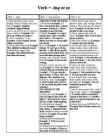
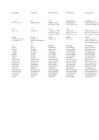
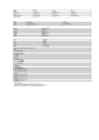
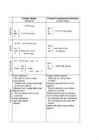
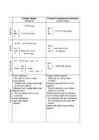
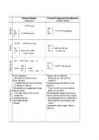
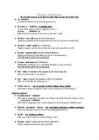
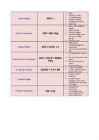
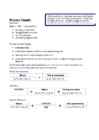
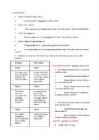
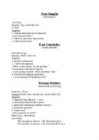
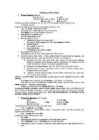
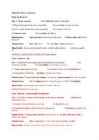
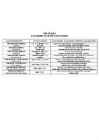
Verb + -ing or to Verb + -ing Verb + -ing and to Verb + to 1) Stop, postpone, admit, avoid, CHANGE IN THE MEANING: 1) Offer, decide, hope, deserve, imagine, finish, consider, deny, risk, 1) Remember Example: 1. I promise, agree, plan, manage, afford, fancy. Example: Suddenly know I locked the door. I clearly threaten, refuse, arrange, fail, forget, everybody stopped talking. remember locking it. 2. Please learn. Example: It was late, so we 2) Give up, put off, go on / carry on, remember to post the letter. decided to take a taxi home. keep or keep on. Example: I've 2) Regret Example: 1. I regret 2) Seem, appear, tend, pretend, given up reading newspapers. saying what I said. I shouldn't claim. Example: They seem to have 3) ...
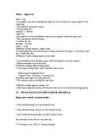
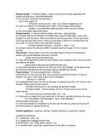
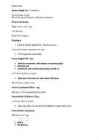
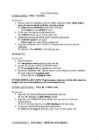
Verb + -ing or to... Verb + -ing 1) Kasutame -ing vormi kirjeldamaks tegevust, mis toimub enne esimest tegevust või samal ajal · They denied stealing the money. · I enjoy going out. stealing <-- denied Verb + to... 1)Kasutame to vormi kirjeldamaks tegevust mis järgneb esimesele tegevusele · They decided to steal the money. · I want to go out. decided -> to steal want -->to go 3)Mäletan millegi tegemist. (peale seda) I'm absolutely sure I locked the door. I clearly remember locking it. (=I locked it, and now I remember this) 4)Mäletan et pidin midagi tegema (enne seda) · I remembered to lock the door when I left but I forgot to shut the windows. · Please remember to post the letter. 5)Kahetsen millegi tegemist(tegin juba) · I now regret saying what I said. I shouldn't have said it. Kahetsusega teatama(olevikus) I regret to say / to tell you / to inform you 6)Jätkama sama tegevust, mida juba teen · The minister went on talking ...
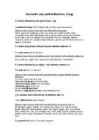
Gerunds (to) and infinitives (-ing) 7.1 Verbs followed by the gerund form ing. I considered buying a flat in Monte Carlo, but they were too expensive. Here are some common verbs which are followed by the gerund: Admit, appreciate (hindama), avoid, can´t help, can´t stand, consider, delay (viivitama), deny, detest (jälestama), dislike, enjoy, escape, excuse, face, feel like, finish, forgive, give up, imagine (ette kujutama), involve (sisaldama), mention (mainima), mind, miss, postpone (edasi lükkama), practise, put off, recall, resent, risk, suggest, understand 7.2 Verbs and phrases followed by the infinitive without ´to´ You must answer all the questions. Here are some common verbs/phrases which are followed by the infinitive without to: Can, could, may, might, must, need, must, need, had better, would rather 7.3 Verbs followed by an object + the infinitive without ´to´ She made me do it. ( sundima ) Here are some ...
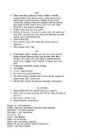
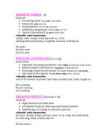
-ING · Admit, anticipate, appreciate, avoid, complete, consider, continue, delay, deny, discuss, enjoy, escape, excuse, fancy, finish, forgive, go (for activities), imagine, involve, keep (=continue), mention, mind, miss, postpone, practise, prevent, quit, recall, recollect, report, resent, resist, risk, save, stand, SUGGEST, stop, tolerant, understand · Dislike, enjoy, hate, like, love, prefer · Be busy, it's no use, it's good, it's worth, what's the use of, can't help, there's no point (in), can't stand, have difficulty (in), have trouble, have a hard/difficult time · Spend, waste, lose · Hear, listen to, notice, see, watch, feel- ainult mingi osa tegevusest · Need, require, want + ing TO · Afford, agree, appear, arrange, ask, beg, care, claim, consent, decide, demand...
Neti Habakuk Margit Mölder Forming: infinitive+ ing (I+ing) USING: 1) In some fixed expressions (As well as I+ing.., It is no good I+ing.., It is no use I+ing.., can not bear I+ing.., can not help I+ing.., worth I+ing..) 2) After prepositions (before I+ing.., of I+ing.., for I+ing.., by I+ing.., at I+ing..) 3) After verbs (enjoy, admit, consider, can`t stand/ help/ bear, deny, avoid, mind, suggest, understand) 4) With from and to with some verbs (He prevented her from leaving. Look forward to I+ing.., Get used to I+ing..) Forming: to+ verb I (to+v) USING: 1) After some adjectives (happy to+v.., wrong to+v..) 2) To express purpose (She went to Spain to meet her friend.) 3) After some nouns ( decision to+v.., time to+v.., wish to+v..) 4) After some main verbs ( appear, agree, ask, begin, choose, decide, expect, happen, help, hope, learn, like, love, mean, offer, prepare, promise,...
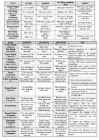
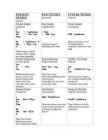
Present Simple Past Simple Present Continuous Past Continuous Going To Future I pv IIpv I AM I was/where +ing I am + going to + I pv (he,she,it) I pv +S (õpiku taga! ED) He/She/it is + ing He/she/is was +ing He/she/it is+ going to +I pv We /they ARE +ING You/we/they were +ing You/we/they are+ going to +I Eitus: Eitus: Eitus: Eitus: Eitus: Don't +I pv DIDn't +Ipv I AM not + I + ING I was not +ing I am not + going to + I pv He/She/it isn't + ing He/she/it wasn't + ing He/she/it is not+ going to +I p ...
Active Present Past Future Simple I work II (-ed) Will + I usually Don’t work Didn’t work Will not work Continuous am/is/are + V-ing Was/were + V-ing Will+be+V-ing Продолжитель. Isn’t working now Wasn’t working Won’t be working Perfect Have/has + III Had + III ...
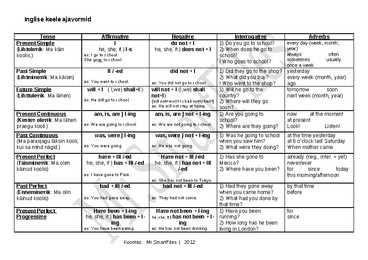
Inglise keele ajavormid Tense Affirmative Negative Interrogative Adverbs Present Simple I do not + I 1) Do you go to school? every day (week, month, (Lihtolevik: Ma käin he, she, it } I-s he, she, it } does not + I 2) When does he go to year) koolis.) ex: I go to school. school? always often She goes to school. ! Who goes to school? sometimes usually once a week Past Simple ...
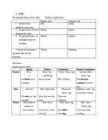
7. Verb: The principal forms of the verbs: Verbil on 4 põhivormi: Regular verb Irregular verb 1. the base form Talk Speak üldoleviku tüvivorm 2. the past form/ -ed form Talked Spoke üldmineviku vorm 3. the past participle (-ed Talked Spoken participle) mineviku kesksõna 4. the present participle (- Talking Speaking ing participle) oleviku kesksõna The tenses: Expressing the future: Simple Perfect Continuous Perfect Continuous Present Base Have / has + to be + base+ ing has/ have been +s + pariticiple base+ -ing He drinks tea at ...
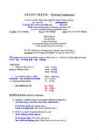
PRESENT CONTINUOUS Klaarika Kaljula 9a Use 1.Present actions 2.Temporary actions 3.Longer actions in progress 4.Future (personal) arrangements and plans 5.Trends 6.Irritation 1.Present Actions Happening at the moment of speaking Most often, we use the Present Continuous tense to talk about actions happening at the moment of speaking. Ex. He is eating a dinner. Mary is talking with her friends. They are swimming in the pool. Stative Verbs There is a certain group of verbs that usually does not appear in the Continuous form. They are called Stative Verbs, and if used in the Continuous form, they have a different meaning. Ex. I think you look pretty today. Meaning: Opinion I'm thinking of moving to San Francisco. Meaning: Act of thinking 2.Temporary Actions Activities continuing only for a limited period of time This tense is also used fo...
Ing Present Simple Present Progressive/Continuous (lihtolevik) (kestev olevik) I vorm (play) am JAATAV he is I vorm+ing (playing) she I vorm+s (plays) are it do not I vorm (don't play) am EITAV he is not I vorm+ing she does not I vorm are (not playing) it (doesn't play) Do I vorm (Do ... play ... ?) KÜSILAUSE ...
Ing Present Simple Present Progressive/Continuous (lihtolevik) (kestev olevik) I vorm (play) am JAATAV he is I vorm+ing (playing) she I vorm+s (plays) are it do not I vorm (don't play) am EITAV he is not I vorm+ing she does not I vorm are (not playing) it (doesn't play) Do I vorm (Do ... play ... ?) KÜSILAUSE ...
Ing Present Simple Present Progressive/Continuous (lihtolevik) (kestev olevik) I vorm (play) am JAATAV he is I vorm+ing (playing) she I vorm+s (plays) are it do not I vorm (don't play) am EITAV he is not I vorm+ing she does not I vorm are (not playing) it (doesn't play) Do I vorm (Do ... play ... ?) KÜSILAUSE ...
Clauses of Purpose To, in order to/so as to, so that/ in order that, in case, for, with a view To- infinitive (I called mu brother to tell him the good news.) In order to + infinitive et (midagi teha) (I went to the bank in order to apply for a loan.) so as to + infinitive et (She attended a catering course so as to become a chef.) So that + can/ will (present/ future references) (Tommy has moved to the countryside so that he can have more relaxed life.) So that + could/ would (past references) (Sophia bought a sailing boat so that she could sail around the world.) In case + present tense (present/ future references) (Bring an umbrella in case there is a storm in the afternoon.) NEVER USED WITH WILL/WOULD In case + past tense (past references) (We booked a table for six in case Peter brought his wife with him.) NEVER USED WITH ...
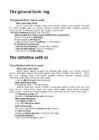
The gerund form -ing The gerund form -ing is used: After some main verbs. (admit, appreciate, consider, delay, deny, detest, dislike, enjoy, escape, face, feel like, finish, forgive, give up, imagine, involve, mention, mind, miss, postpone, practise, prefer, put off, recommend, resent, risk, suggest, understand) I do not recommend going to that restaurant. After an adjective, verb or noun followed by a preposition. She is really good at swimming. He apologised to arriving late. I quite like the thought of working in a travel agency. In some fixed expressions I can not bear listening to people who complain. I can not help feeling that he is cheating us. That book is not worth reading. The infinitive with to The infinitive with to is used: After some main verbs (afford, agree, appear, arrange, ask, attempt, bear, begin, care, choose, consen...
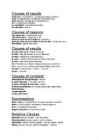
Clauses of results Such a/an + omadussõna + ainsuses loendatav nimisõna Such + omadussõna + loendamatu nimisõna/mitmus Such a lot of + loendamatu nimisõna/mitmus So + omadussõna/määrsõna So much/little + loendamatu nimisõna So many/few + mitmus Clauses of reasons The reason for + nimisõna/-ing vorm The reason why + clause (he verb) Because of/on account of/due to + nimisõna Because of/on account of/due to the fact that + clause (he verb) Now (that) + clause (they verb) Clauses of results In order to/so as to + infinitive (formal) So that + can/will (present or future reference) So that + could/would (past reference) In case + present tense (present or future reference) In case + past tense (past reference) For + nimisõna (kui tahame väljendada tegevuse eesmärki) For + -ing vorm (kui tahame väljendada millegi funktsiooni) Prevent + noun/pronoun + (from) + -ing vorm Avoid + -ing vorm Clauses of contrast Although/even though/though + cl...
Present tenses : 1) Present simple regular actions and routines especially with frequency(kordumine ) adverbs(määrsõna) N: Do you go to school by car every day ? I don't often watch TV. 2)Present continuousbe + verb + ing. Actions happening now N; Look! It's snowing. I'm meeting Jane tonight. You're always losing things. 3)keep + ingto describe habitual actions which may be irritating. N: my uncle keeps making silly jokes. Present perfect: 1) Present perfect simple: have/has + past participle. N: I've been here for ten minutes .The phone has rung ten times today. Look at this cheque,'I've won first prize. They have made a new star wars film. I've just got home. How long have you been here ? Have you ever been to Paris? It's the best book I've ever read. It's the first time I have ever been abroad. 2)Present perfect continious : have/has + been + ing. N:I'v...
Simple Continious Perfect to be + ing to have + III pv/ -ed I pv. is/am/are + ing Present -s (3 pööre) have/has + III pv/ -ed -/? Do, Does II pv. / -ed Past was/were + ing had -/? Did + I pv. Future Will + I pv. will be + ing will have
· Plans · Promises, threat · Formal language Future simple Will + I · Weather forecast · Conditional sentence · Expecting · Action what definitely happen · Polite (asking) · Waiting progress Future Continuous Will + BE +ing · Describe activity what will cover all future activity · Rele...
Future tenses Present Simple I pv. (Timetables) My bus leaves at 6 am. We are leaving at 6 tomorrow (Present continuous) Present Continuous Tegija + am, is, are + ing I am learning. Kindel tulevikuplaan Be going to 1. Kindlate tõendite põhjal tehtav tulevikuennustus Look at the clouds, its going to rain soon. 2. Tulevikuplaanid (mittekindel) Future Simple Will + I pv. · Tuleviku ennustused, mida tehakse arvamuste põhjal. · Hetkeotsused · Lubadused, ähvardused, pakkumised, palved etc. I will never speak to you again · Tegevused, mis toimuvad meie tahtest sõltumata. She will have a baby in June. Future Continuous Will be + ing Next year I will be graduating from school.' Future Perfect Will have +III pv. I will have eaten my dinner. · Tegevuste puhul, mis saavad olema lõpetatud, mingiks teatud ajaks. Future Perfect Continuous Will have been + ing · Due to - · Be about to -
INGLISE KEELE PÕHITÕED C.K 2017 A – AN – SOME Singular: a or an Use some for things you can't count ◦ *a banana *a car *a monkey *a football ◦ *some milk *some water *some coffee ◦ *an egg*an accident *an umbrella *an *some sugar eagle ◦ *some tea *some juice*some money *some butter Plural: some Exercises: 1. http://www.english-4u.de/a_an_some_ex1.htm ◦ *some bananas *some cats *some monkeys *some 2. http://www.english-4u.de/a_an_some_ex3.htm balls ◦ *some eggs*some oranges *some umbrellas *some 3. http://www.english-4u.de/a_an_some_ex6.htm eagles We us the ...
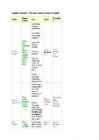
englisch-hilfen.de LEARNING ENGLISH ONLINE Examples Examples Examples Tense Signal words Use Form affirmative negative interrogative every day something happens repeatedly sometimes how often something happens always I work. I don't work. Do I work? one action follows another often Infinitive He works. He doesn't work. Does he work? Sim...
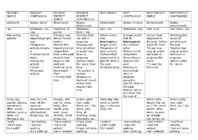
PRESENT PRESENT PRESENT PRESENT PAST SIMPLE PAST PAST PERFECT PAST PERFECT SIMPLE CONTINIOUS PERFECT PERFECT CONTINUOUS SIMPLE CONTINUOUS SIMPLE CONTINUOUS Lihtolevik Kestev olevik Täisminevik Kestev Lihtminevik Kestev minevik Enneminevik Kestev täisminevik enneminevik I pv Am/is/are, I pv, Has/have, III Has/have, II pv, -ed Was/were, -ing Had, III pv Had, been, -ing -ing pv/-ed been, -ing *Recurring *Action *(Giving new *Acti...
PRESENT SIMPLE [s] lihtolevik · kestvad tegevused. Tom works in the market. · rutiinid. He works every day. · loodusseadused. The sun sets in the west. · ajatabelid ja programmid. The buss leaves at 7 am. · (spordi) kommentaarid. Ben passes ball to Tom. väljendid, mida kasutatakse: usually, often, always, every day/week etc, in the morning/afternoon/evening, at night/the weekend, on Friday etc. He works He don't work Does he work PRESENT CONTINUOUS [ is + ing] kestev olevik · tegevused, mis praegu leiavad aset. Karl is doing his homework at the moment. · plaanitud tegevus lähitulevikus. I am going to school tomorrow. · kui midagi toimub/muutub praegu. The number of burglaries is increasing. · alati sama korduv tegevus. You are always eating, when i wake up. väljendid, mida kasutatakse: now, at the moment, at present, these days, nowdays, still, today, tonight etc. He is working He isn't ...
The Present Simple is the most basic tense in the English language. It is an interesting tense because it can be used Present Simple to express the future. Generally, though, we use it to Basic form describe the present activities or to talk about routines or Subject + Verb + -s (present form) John lives in New York. We play football every day. You are really kind. The meeting starts at 3 PM. Use the Present Simple: with state verbs. to talk about situations in life that last a relatively long time. when an event is certain to happen in the future. to talk about events that we can't change (for example, an official meeting or a train departure). The Present Simple is also used in narration...
Will+lihtolevik (help,come jne) kindle tegevus If you help me I will help you You won’t pass your exam if you don’t start working harder I’m,are,is+ing (plaanid, kokkulepitud kohtumised) I’m playing football tomorrow. We are having a party tomorrow Lihtolevik (kindel aeg, kuupäev jne) The holidays start next week The train arrives at 6 in the morning (Be) going to (plaanid, kokkulepitud kohtumised, midagi võib juhtuda) I’m going to drive to work today I think its going to rain. Will be+ing (tegevus mis juhtub täpselt samal ajal nt nädala pärast) (tegevus mis on rutiinne) This time next week I will be sun –bathing. You will be seeing John in the office tomorrow, wont you? Will have+3 vorm (nähes ennast tulevikus ja vaadates tagasi lõpetatud tegevusele) ps: tavaliselt lause ees on month, year, week jne A month from now he will have finished all his exams. I...
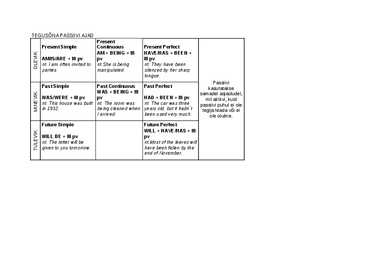
TEGUSÕNA PASSIIVI AJAD Present Present Simple Continuous Present Perfect AM + BEING + III HAVE/HAS + BEEN + OLEVIK AM/IS/ARE + III pv pv III pv nt. I am often invited to nt.She is being nt. They have been parties. manipulated. silenced by her sharp tongue. Passiivi Past Simple Past Continuous Past Perfect kasutatakse WAS + BEING + III samadel asjaoludel, MINEVIK WAS/WERE + III pv pv HAD + BEEN + III pv mil akti...
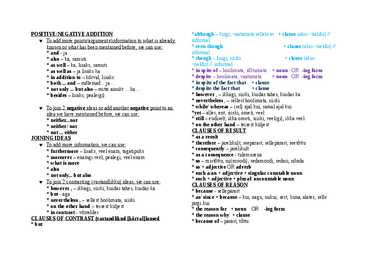
POSITIVE/NEGATIVE ADDITION *although kuigi, vaatamata sellele et + clause (alus->öeldis) // To add more points/arguments/information to what is already informal known or what has been mentioned before, we can use: * even though + clause (alus->öeldis) // * and - ja informal * also ka, samuti * though kuigi, siiski + clause (alus- * as well ka, lisaks, samuti >öeldis) // informal * as well as ja lisaks ka * in spite of hoolimata, sõltumata + noun OR -ing form * in addition to kõrval, lisaks * despite hoolimata, vaatamata + noun OR -ing form * both ... and mõlemad .. ja ... ...
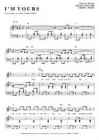
VOCAL + PIANO GESANG + KLAVIER I'M YOURS CHANT + PIANO Words & Music by JASON THOMAS MRAZ q=150 B¨ F ©2008 digitalsheetmusic.eu ...
CONDITIONALS · Type 0 Present Simple if + I, I o If you boil water, it evaporates.(Loodusseadus) · Type 1 if + I , will + I o If you study more, you will get better marks. (Kui õpid rohkem, saad paremaid hindeid.) · Type 2 if II, would + I o do If you studied more, you would get better marks. (Kui õpiksid, saaksid) · Type 3 if had + III, would have + III o if I had studied more, I wouldn't have had that many mistakes. o If you had studied more, you would have got better marks. (Kui oleksid õppinud, oleksid saanud) · Kasutusel ka variant kus kõik tüübid segi, sellisel juhul tõlgi endajaoks lause ära ja mõtle loogiliselt. If-Clause Main Clause SUPPOSE/SUPPOSING (peaaegu sama, mis if) Type 2 Type 1 ...
Get/ Have something TENSE ACTIVE PASSIVE WHEN? done Present Simple Am/is/are + Every day, year, often, I pv + do/does Have/ get + sth+ III pv Lihtolevik III pv usually, always Past Simple Yesterday, last year, II pv(-ed)+ did Was/ were + III pv Had/got + sth + III pv Lihtminevik ...
English Grammar - The most common tenses in English Signal Example Tense Use Form words s something happens repeatedly how often something happens every one action day follows sometim another es I work always infinitive Present things in he/she/it he works often Simple general + s I go usually he goes seldom ...
Affirmative tense Use Signal Words /Negative/Question · always · action in the present taking place Simple Present A: He speaks. · every ... once, never or several times N: He does not speak. tegevus, mis toimub ühe korra, mitte · never Lihtolevik Q: Does he speak? · normally kunagi või mitu korda · ...
Past Simple (lihtminevik) -ed / II pv. Kasutus: Ago, yesterday, last. ?/- Did Tegevus: 1. Toimus minevikus ja on lõppenud. ,,I met him yesterday" 2. Used To, mineviku harjumused. ,,I used to play tennis." Past Continius (kestev minevik) was/were + ing Kasutus: When, while, as Tegevus: 1. ajutised sündmused. 2. 2 või enam tegevust ,,While i was reading, he was garding." 3. minevikus katkestatud tegevus ,,I was having a shower, when the phone rang." 4. konktreetne kellaaeg minevikus ,, I was watching TV yesterday at 5!" Present Perfect (täisminevik,olevikuaeg) have/has + III pv. Kasutus: Never, ever, already, yet, before, since, for. Tegevus: 1. tegevused alg. Minevik -> now ,,I have been a teacher for 5 years." 2. mineviku situatsiooni resultaat olevikus ,,I...
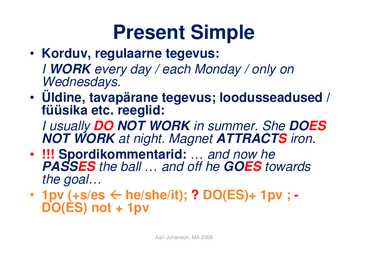
Present Simple · Korduv, regulaarne tegevus: I WORK every day / each Monday / only on Wednesdays. · Üldine, tavapärane tegevus; loodusseadused / füüsika etc. reeglid: I usually DO NOT WORK in summer. She DOES NOT WORK at night. Magnet ATTRACTS iron. · !!! Spordikommentarid: ... and now he PASSES the ball ... and off he GOES towards the goal... · 1pv (+s/es Å he/she/it); ? DO(ES)+ 1pv ; - DO(ES) not + 1pv Aari Juhanson, MA 2008 Present Progressive · Hetkel toimuv, pooleliolev tegevus: S/he IS TALKing on the phone now. I AM READing an interesting book. · Ajutine, regulaarsele ja tavapärasele vastanduv tegevus (tulevikku viitav): This summer they ARE not GROWing cucumbers as usual. They'RE GROWing tomatoes instead. · !!! Halvakspanu väljendus harjumuspärase tegevuse kohta: He IS always COMPLAINing! · BE (am/is/are) + 1pv-ing Aari Juhanson, MA 2008 ...
TENSES. ACTIVE VOICE. 1. Present Simple (üldolevik) I (he, she, it s) he works Eitav,küsiv do (I, you, we, they) he does not work does (he, she, it) does he work? Verbidele, mis lõpevad infinitiivis ss, -sh, -ch, -x või o, lisatakse ainsuse 3. pöördes es he touches, she goes Verbidel, mis lõpevad y-ga, mille ees on konsonant, muutub y->ies carry - he carries Vrdl: play he plays 1. Harjumuspärane, korduv tegevus või seisund olevikus. Tom drinks tea every day. He lives in Brussels. 2. Üldtuntud tõed, loodusseadused The earth goes round the sun. 3. Tulevikus toimuv tegevus a) Sõiduplaanid, planeeritud programmid. The train for Tallinn leaves at 10. The course begins on Monday. ...
Steven Anthony Ballmer Steve Anthony Ballmer on Microsofti Korporatsiooni juhatuse esimees. Peale selle on ta 31 rikkaima inimese seas maailmas. Mis on tema edu saladus? Mida temalt õppida, mida kadestada? Kas ta sündis edukaks või õppis? Kas on tegemist veidriku,lihtsameelse, psühhopaadi või lihtsalt eduka ärimehega? Uurime seda meest lähemalt. Elulugu ja perekond Steven Anthony Ballmer sündis 24. märtsil 1956 aastal. Kasvas üles Detroidi lähedal Michigani osariigis. Tema isa, Frederick Ballmer, töötas juhtival kohal Ford Motorsis. Tema isa emigreerus Ühendriikidesse Sveitsist Lausenist 23 aastaselt. 1973 lõpetas Detroit Country Päevakooli.Ta lõpetas Harvardi Ülikooli bakalaureuse kraadiga majanduses ja matemaatikas. Ta juhendas kolledzhi ajal jalgpalli meeskonda, töötas Harvard Crimsoni ja Harvard Advocate ajalehes ning ülikooli kirjanduspoes, elas lähestiku kaas...
Future Tenses Will-future and going to-future Andrea Terasväli Future forms Will-future Going to- Simple Present Future Future future presen progressi progressi perfect t ve ve • • Planned Future Planned Action Sth. Will Prediction, action in action action in will already assumptio the future is fixed the near definitely have n (assur future happen happene • logical ed/de (it d before • conseque ffinite) usually a certain spontaneo nce (sth. happens) time in us action Is goint to the happen) future Form Will-future Goi...
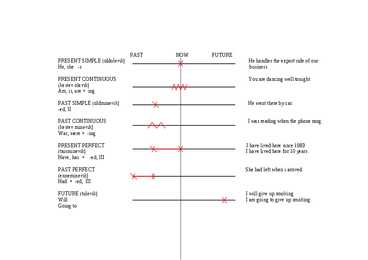
PAST NOW FUTURE PRESENT SIMPLE (üldolevik) He handles the export side of our He, she -s business. PRESENT CONTINUOUS You are dancing well tonight. (kestev olevik) Am, is, are + ing PAST SIMPLE (üldminevik) He went there by car. -ed, II PAST CONTINUOUS I was reading when the phone rang. (kestev minevik) Was, were + -ing PRESENT PERFECT I have lived here since 1983. (täisminevik) I have lived here for 10 years. Have, has + -ed, III PAST PERFECT She had left when i arrived. (enneminevik) Had + -ed, III FUTURE (tulevik) I will give up smoking. Will I am goi...
The Present Continuous What is Present Continuous The present continuous tense is formed from the present tense of the verb be and the present participle (-ing form) of a verb. Form am/is/are + verb + “ing” Examples: I am watching TV. He/she/it is watching TV. They/we/you are watching TV. How to use Present Countinuous When we use Present Continuous Use We use the present continuous tense to talk about the present: ● for something that is happening at the moment ● for something which is happening before and after a given time NB! Words what ends with -e: Make Making Invite Inviting
KESTEV OLEVIK Present Continuous Kestev olevik väljendab tegevust mis toimub praegu. ,,be" olevikus + põhitegusõna / I am;he, she, it is;we, you they are / -ing vorm Küsiv vorm moodustatakse sõnajärje muutumise teel ja eitav vorm not lisamisega peale BE vormi: N: Jaatav- He is reading. Küsiv- Is he reading? Eitav- He is not (isn't) reading. Märksõnad: now (paregu) at present (praegu) at the present moment (käesoleval tehtkel) at the moment (käesoleval hetkel) N : The children are sleeping now. (Lapsed magavad praegu.) At present h...
AJAD Simple Present: (olevik. Kui midagi toimub iga päev. every day.) EXAMPLES: I play tennis. She does not play tennis. The train leaves every morning at 8 am. The train does not leave at 9am. She always forgets her purse. (Ta alati unustab oma koti) He never forgets his wallet. Every twelve months, the Earth circles the sun. The sun does not circle the Earth. Past Simple: (midagi on tehtud. Tegusõna tuleb panna minevikku ehk II põhivormi. Seda aega tuleb kasutada siis, kui lause väljendab tegevust, mis minevikus tehti ja ka ära lõpetati!) EXAMPLES: I saw a movie yesterday. (Ma nägin eile filmi. Nägin filmi lõpuni.) I didn't see a movie yesterday. Last year, I traveled to Japan. (Sõitsin Jaapanini välja, mitte ei jäänud reisi peal kuhugi toppama) Last year, I didn't travel to Japan. She washed her car. (Ta pesi auto ära! Mitte ei pesnud natuke ja jooksis siis tuppa multikaid vaatama, vaid lõpetas töö ära ja siis tegi m...
PRESENT SIMPLE (lihtolevik) Form: 1st form (+s) Use: 1. Things in general. Nurses look after patients in hospitals. 2. Things that happen all the time or repeatedly. She usually goes away at weekends. 3. Laws of nature (things that are true in general). The sun rises in the east. 4. Timetable events. The train leaves at 6.50 p.m. Negative form: I don't (do not) normally eat my lunch here. He doesn't (does not) like this film at all. Question form: Do you live here? How often does it rain around here? Signal words: always, every day/month, never, normally, often, seldom, sometimes, usually etc. PRESENT CONTINUOUS/PROGRESSIVE (kestev olevik) Form: am/is/are + ing Use: 1. Unfinished actions happening at or around the time of speaking. Listen! Somebody is crying. They are building a new bridge in our town....
FUTURE FORMS FUTURE SIMPLE WILL + OLEVIK Kasutan, kui.. · Ennustus tulevikust, põhineb arvamusel, tundel, uskumusel. Sõnad: think, believe, expect, be sure, be afraid, probably, certainly, perhaps Nt: I think Debbie will become a great artist some day. She is afraid her son will fail his exams. · On-the-spot otsus (rääkimise ajal tehtud otsus) Nt: I will buy the blue jacket, not the yellow one. · Lubadused, hoiatused, ähvardused, palve, lootused, pakkumised Nt: I will never speak to you again! Will you give me a hand with the washing-up? · Tegevused/sündmused, mis KINDLASTI toimuvad tulevikus, me ei saa neid kontrollida Nt: Valentine's Day will fall on a Saturday this year. BE GOING TO Kasutan, kui... · plaanid tulevikuks Nt: I am going to travel around the world one day. · otsused, mis on juba LÄHITULEVIKUKS tehtud ...
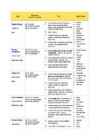
PRESENT PAST TENSES FUTURE TENSES TENSES minevik tulevik olevik Present Simple Past Simple Future Simple lihtolevik Lihtminevik Lihttulevik I You + I põhivorm + II pv We ? , - Do + I pv. ?, - Did + I pv Will + I põhivorm They He + I põhivorm + S Tegevus tulevikus, mis ei She ?,- Does + I pv Lõpetatud tegevus ole ettekavatsetud It (yesterday, last week) (tomorrow, next week, next year) Korduv tegevus, faktid (always, often, usually, every day, normally) Present Continuous Past Continuous GOING-TO Future Kestev olevik Kestev minevik ...
Simple Present Present Progressive/Continious (99%) infinitive form of 'be' and verb + ing (3rd person singular: infinitive + 's') I speak I am speaking you speak you are speaking he / she / it speaks he / she / it is speaking we speak we are speaking they speak they are speaking Signal words: always, every, often, normally, usually, Signal words: at the moment, at this moment, today, sometimes, seldom, never, first, then now, right now, Listen!, Look! Rules · in general (regularly, often, never) · right now e...
THE TENSES AJAVORMID JA NENDE KASUTAMINE AJAVORMI NIMETUS MOODUSTAMINE KASUTAMINE; SAGEDAMINI ESINEVAD AJAMÄÄRUSED THE PRESENT SIMPLE I pv. (+ s); do/does + I pv. Tegevus toimub korduvalt, on harjumuspärane. püsiv olukord, ajagraafikutega seotud tulevik Lihtolevik live, goes every day, usually, often, sometimes, always THE PAST SIMPLE II pv.; did + I pv. Tegevus toimub minevikus. Lihtminevik lived, went yesterday, last week two years ago, in 1998 THE FUTURE SIMPLE be going to/ will + I pv. Tegevus toimub tulevikus. Lihttulevik will go/ won´t tomorrow, next week, soon, later, in 2012 TH...
Require qualifications - nõuavad kvalifitsiooni, pädevust Have career prospects - on karjääri väljavaateid, võimalusi tulevikuks Offer perks and bonuses - pakuvad eeliseid ja boonuseid Are well-paid - on hästi tasustatud Are poorly-paid - on madalalt tasustatud Need the most training - vajavad kõige rohkem treeningut, väljaõpet, koolitust Is the hardest - on kõige raskem Have flexible hours - on paindlikke tundidega Need a degreee - vajavad kraadi Rewarding - tulutoov, tasuv Dead-end - tupik, kogu aeg sama, muutumatu UNVARIED Secure - kindel, turvaline, kindlustatud Repetitive - korduv, rutiinne Creative - loominguline Stressful - pingeline, närvesööv, stressirohke Personal satisfaction - isiklik rahulolu Opportunity to travel - võimalus reisida Using your initiative - enda initsiatiivi/algatust kasutama Chance to meet a lot of people - võimalus kohtuda paljude inimestega Long-term career prospects - pikaajalised karjäärivõimalused/välj...
Verbs! Verb forms Review of tenses Chapter 12, Pg 215 1 Timeline Draw a timeline of your life. List 810 events on the time line. Make sure you list your future graduation date! Moved to Cali 2005 Was Born Traveled to Europe Husband 1978 School graduates @ Oxford 1999 Started Got married School 1983 2008 2 The Six English Verb Tenses Three Simple Tenses Simple continuous Present You walk. You are walking I run. I am running. Past You Walked You w...
AJAVORMID JA NENDE MOODUSTAMINE AJAVORMI NIMETUS MOODUSTAMINE KASUTAMINE, SAGEDAMINI ESINEVAD AJAMÄÄRUSED THE PRESENT I pv; do/does + I Tegevus toimub korduvalt, on harjumuspärane SIMPLE live, goes twice a week, every day, usually, often, sometimes, always THE PAST (+) II pv; did + I Tegevus toimub minevikus SIMPLE lived, went yesterday, last week, two years ago, in 1996 THE FUTURE (shall)/will + I Tegevus toimub tulevikus, on üksteisele järgnev SIMPLE pv tomorrow, next week, soon, later, in 2025 be going to + I pv THE FUTURE IN (shou...
 annaabi.ee