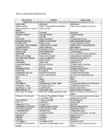
1919 The Winnipeg General Strike 192939 The Great Depression 193945 World War II 1949 Newfoundland joins Canada 195053 Korean War 1959 St. Lawrence Seaway (major transportation route) officially opens 1960 Québec's Quiet Revolution begins; Native Canadians given the vote 1967 Canada's 100th birthday; Expo 67 World's Fair in Montréal 1970 October Crisis: political kidnappings, Ottawa suspends civil rights 1980 Québec referendum on "sovereignty-association" defeated 60% to 40% 1982 Constitution comes home -- with a Charter of Rights and Freedoms 198790 Meech Lake Accord is put forward -- and collapses 1992 Charlottetown Accord is rejected by a national referendum 1995 Québec referendum on sovereignty is narrowly defeated 1999 The new Arctic territory of Nunavut is created 2000 Clarity Bill outlines the terms of Québec separation 2003 Canada says "no" to joining the war in Iraq
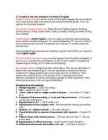
* Christian utopia * Covenant of grace - John Winthrop (1587-1649) - William Bradford „Of Plymouth Plantation“ (1630) - conflict between the ideal and the real - literacy and plain style • Edward Taylor (1642-1729) - meditative writing deeply grounded in faith • Captivity narrative: *Enemies inside and outside *Satanic darkness outside Puritan settlement *Lived allegory of salvation *The Sovereignty and Goodness of GOD, Together with the Faithfulness of His promises displayed: Being a Narrative of the Captivity and Restauration of Mrs. Mary Rowlandson
There is no question that the United Kingdom leaving the European Union or Brexit as we all know it, is a big hit for the EU and the UK. It’s by no means an easy process and a lot of people are against it, but today nothing can be done to stop it. Even though Brexit is seen by its leaders as a positive change, it will also have quite a negative effect on Britain and play a big role in reshaping European Union. Most British people were voting for Brexit to regain sovereignty, to ‘take back control’ and regulate their laws. At first glance, it may seem that they would be in charge of their actions which would mean that nobody on the outside can manipulate them. Although nowadays countries depend on each other a lot and the UK is no exception. Everything is more connected than ever and because of that existing completely on your own is quite an impossible task. For that matter, giving up a little bit of sovereignty can be beneficial
constitutional institutions. The early political history of the British Isles is the story of four independent countries (England, Scotland, Wales and Ireland), but a dominant English political and military expansionism over the century. Near the end of the Middle Ages, the role of government in England underwent many changes. From the Magna Carta to the creation of the English Parliament, England laid the foundation for representative government and regulated sovereignty. The Magna Carta clearly defined the ancient rights and privileges of the people 1. It established the principle that the king no longer had absolute control, and prevented English rulers from taking advantage of their subjects. Later, England would institute a Parliament to allow British nobles the opportunity to voice their opinions in political matters. This entire process moved the world one step closer to the types of governments that are seen today. 3.12.2012
UK Parliament Parliament of the United Kingdom The Parliament of the United Kingdom is the highest legislative body in the United Kingdom and British overseas territories. It alone has parliamentary sovereignty over all other political bodies. At its head is the Queen Elizabeth II. The parliament has an upper house, the House of Lords, and a lower house, the House of Commons. The House of Lords plays an important role in checking and challenging the decisions and actions of the government through questions and debates. A House of Commons evolved at some point in England during the 14th century, becoming the House of Commons of Great Britain after the political union with Scotland in 1707.
Washington also ranks high in the production of grapes, apricots, asparagus, peppermint oil and potatoes State. Washington state flower is Coast Rhododendron. Washington state bird is American Goldfinch. · Washington was named after George Washington, the first President of the United States, and is the only U.S. state named after a president. · Depicted above is the state flag of Washington. The flag of the state of Washington is a symbol of the authority and sovereignty of the state and is a valuable asset of its people. The Washington flag is flown over all state buildings just below the country flag of the United States of America. · Fort Canby State Park- One of the state's most scenic parks. You can see the mouth of the Columbia River and two lighthouses, Cape Disappointment Lighthouse (built 1856) and the North Head, Lighthouse (built 1898). Available activities include
Võru, Viljandi, Pärnu and Saaremaa with Estonia. For the first time an Estonian, Jaan Poska was appointed as a Provincial Commissioner of Estonia. A six-member Provisional National Council, the Maapäev, was formed. The Maapäev appointed a national executive that began to organise and modernise local government and educational institutions. Prior to its forceful dissolution by Bolshevik authorities, and the foreseeable invasion by German forces, the Maapäev took a decisive step toward sovereignty by declaring itself the supreme authority in Estonia on November 15, 1917. Independence Proclaimed The elections to the Estonian Constituent Assembly were held on February 3-4, 1918. Parties which supported the idea of national independence, gained two-thirds of the popular vote. With Soviet forces hastily retreating and German forces advancing, the Maapäev elected a three-member Salvation Committee, Päästekomitee, and granted it full decision-making powers to ensure the
S. cavalrymen at Wounded Knee and South Dakota, in a final spasm of ferocity. A stupefying record of greed and treachery, of heroism and pain, had come to an end, a record forever staining the immense history of the westward movement, which in its drama and tragedy is also distinctively and unforgettably American. Native Americans today have a special relationship with the United States of America. They can be found as members of nations, tribes, or bands of Native Americans who have sovereignty or independence from the government of the United States. Their societies and cultures still flourish amidst a larger immigrated American populace of African, Asian, European and Middle Eastern people. Native Americans, who were not already U.S. citizens, were granted citizenship in 1924 by the Congress of the United States..
GIF Gaining back Click to edit Master text styles independence Second level Third level · 1987 First public Fourth level demonstrations in Hirvepark. · 1988 Singing Revolution. Fifth level · 1988 Declaration of sovereignty. · 1991 Coup d état in Soviet Union. · 20 August 1991 Estonia declares itself an independent republic. http://leisi.oesel.ee/~toni/1988_lauluvaljak ul.jpg http:// www.youtube.com/watch?v=Pgks-CcNI European Union Click to edit Master text styles ·
sphere of interaction which is shaped by the actors' identities and practices and influenced by constantly changing normative institutional structures. For all theories of international relations, the world is in anarchy, and because of this it is helpful to start with a definition of anarchy and what it implies. Anarchy, for theories that deal with international relations, refers to the world as a whole having no government. There are individual states that have varying degrees of power and sovereignty in their own land, but clearly there is no single state that makes laws for the whole world. This presents problems and dangers for entities operating in the anarchic world and a need for a system that will guide the actions of these entities. While for neorealists "anarchy" is a determining condition of international system that by itself interprets competition and conflict as endless strong possibilities, and thus the international system a more conflictual than peaceful
It becomes more unusual because he married 21 years old bride when he was 49. 5. National Holidays There are ten official national holidays in the United States. Those are New Year's Day, Martin Luther King's Day, Memorial Day, Easter, Thanksgiving, Fourth of July or the Independence Day, President's Day, Labor Day, Veterans Day and also Columbus Day. 6. 50 state in one country America has so many states in their country. There are 50 states in The USA. All 50 states in America share sovereignty with federal government. However, there are four states are called commonwealth rather than state. The smallest state in America is Rhode Island and the largest state is Alaska. Both have area about 1545 square miles and 663268 square miles respectively. 7. Longest coastline Alaksa coastline America is very famous with its coast. If you love hip hop you know two mainstream of hip hop culture in America which are East Coast and West Coast. Talking about coast, the longest
of the regime more generally which constitutes the crisis. At most it seems a vague and often suspiciously arbitrary composite of associations with other concepts, a great many of which havebeen invoked in attempts to "explain" it. These include consent (Brighouse, 1998: 720-1); authority (Hurd, 1999); justice (Steffek, 2006); the `moral basis for social interaction' (Kelman, 2001: 55); normative belief that a rule or institution must be obeyed (Grafstein, 1981:; popular sovereignty (Beetham, 1991); democracy (Beetham, 1991; Buchanan, and "right" or rightfulness Rousseau, 1968 · Key myth: "international anarchy is the permissive [or underlying] cause of war" (Waltz 1959: 232) orealism: Behaviour of actors in a system dictated by its character hierarchy or anarchy,. Features of anarchy:Security Dilemma + Balance of Power. Realism: Attempt to impose hierarchy fails because no `orderer' Conflict thus breaks out. Liberalism Key myth:
People have additional obligations (military obligation, paying taxes) and additional rights. For states it's difficult to trace criminals etc. A defined territory Government Capacity to enter into relations with other states (def from the convention) if states can enter into relations with other states ,it means that the state is recognized by other surrounding states or by the states which have relationship with the specific state. Sovereignty: internal and external Lecture 3 A defined territory 3 types of territories: Territory under the full sovereignty of the state territory within the state borders. Borders are established by two stages: 1) delimitation establishing of the borders on paper, treaties with annexes, which have maps where the border is shown and the description of the border etc; 2) demarcation establishing the border on the ground
• tramped – matkas, kõmpis • seized – konfiskeeriti, võeti ära • savage interior – maagiline/võimas • contrivance – abinõu sisustus • a criminal imbecile – kriminaalne • hair-breadth – juuste laius imbetsill • surveyed – plaanitud • shrugged – õlgu kehitama • collision – kokkupõrge • filthy – räpane • sovereignty – suveräänsus • bid – pakkuma • eventually – lõpuks • farewell – hüvastijätt • pearling luggers – purjelaevad • twinkled – sirama, sädelema • fleet – laevastik • nobleman - aadlik
have supreme power, Observations, p. 245. I have been fain to trouble my reader with these several quotations in our author's own words, that in them might be seen his own description of his fatherly authority, as it lies scattered up and down in his writings, which he supposes was first vested in Adam, and by right belongs to all princes ever since. This fatherly authority then, or right of fatherhood,in our author's sense, is a divine unalterable right of sovereignty, whereby a father or a prince hath an absolute, arbitrary, unlimited, and unlimitable power over the lives, liberties, and estates of his children and subjects; so that he may take or alienate their estates, sell, castrate, or use their persons as he pleases, they being all his slaves, and he lord or proprietor of every thing, and his unbounded will their law. Our author having placed such a mighty power in Adam, and upon that supposition sounded all government, and all power of princes,
in 1139, claiming to be the oldest European nation-state. In the 15th and 16th centuries, as the result of pioneering the Age of Discovery, Portugal expanded western influence and established the first global empire, becoming one of the world's major economic, political and military powers. In addition, the Portuguese Empire was the longest-lived of the modern European colonial empires, spanning almost 600 years, from the capture of Ceuta in 1415 to the handover of Macau in 1999 and grant of sovereignty to East Timor in 2002. The empire spread throughout a vast number of territories that are now part of 53 different sovereign states. However, the country's international status was greatly reduced during the 19th century, especially following the Independence of Brazil, its largest colony. After the 1910 revolution deposed the monarchy, the democratic but unstable Portuguese First Republic was established, itself being superseded by the "Estado Novo" authoritarian regime. Democracy
significantgovernance capacity. Creates a dangerous distance between the governors and governed - External projection of federalist logic results in reproduction on the inerregonal level Monnet and neo-functionalism - Develop a Eruopean scale economy - Control Germany - Ensuring coal for French steal industry Assumptions of neo-functionalism - Integration would undermine state sovereignty - States are not unified actors - Interest groups are important international actors - Integration would spill-over beyond power of the states Role of national institutions - National parlaments no longer losers – Lisbon treaty Proposing legislation Legal tools: - Regulations – binding legislative acts, applied in their entirety across the EU, directly applicable
From 1585 to 1587 English troops were sent overseas to aid the insurgent cause, and in 1588 the English destroyed the great Spanish Armada, a victory that drastically curtailed the ability of Spain to wage war abroad. The seven provinces in the Union of Utrecht were cleared of Spanish troops by 1600. (3) From 1609 to 1621 a truce was in effect between the Spanish and the Dutch, but the war subsequently dragged on until 1648, when the Spanish signed the Treaty of Münster, by which the sovereignty of the Dutch Republic of the United Provinces was recognized. The republic thus severed all theoretical ties with Spain and the Holy Roman Empire and became one of the great powers on the Continent, a republic in the midst of monarchies. (3) 2.6 The Golden Age In the early 17th century, when eventual Dutch independence was assured, an era of great commercial prosperity opened, as did the so-called Golden Age of Dutch art, with such painters as Rembrandt and Jan Vermeer
by the fact that all nations, in order to be accepted internationally, must have a certain number of characteristics. The nation is usually known by six essential elements: a name, a capital city, clearly defined borders, a national flag, a national anthem and a national day. (Scott, 2000) Every nation needs a main sign to represent it. The national flag is for this reason not only a piece of cloth fluttering in the wind, it is a sign of self-expression, and a claim of sovereignty or the wish to attain sovereignty. Flags, generally overlooked in the nation formation process, are also essential symbols to rally around. National anthems, much like flags, symbolise the nation and its collective self-celebration and unisonance. National days are occasions when national symbols are activated. They are the 5
Mõni aasta hiljem EK siiski jaatas liidu pädevust tubakatoodete reklaami keelustamiseks, vt ühendatud kohtuasju C-465/00, C-138/01 ja C-139/01, Österreichischer Rundfunk ja teised. – ECR 2003, lk I-4989. 17 A. Arnull. Protecting Fundamental Rights in Europe’s New Constitutional Order. – European Union Law for the Twenty-First Century. Vol 1. T. Tridimas, P. Nebbia (eds.). Oxford and Portland, Oregon: Hart Publishing 2004, lk 106. 18 M. Koskenniemi. Conclusion: vocabularies of sovereignty – the powers of a paradox. – Sovereignty in Fragments. The Past, Present and Future of a Contested Concept. H. Kalmo, Q. Skinner (eds.). Cambridge University Press 2010, lk 240. 19 Lissabon (viide 7), p 221, 226. JURIDICA V/2010 325 Kes peaks kaitsma Eesti põhiseadust?
As war became inevitable, the representatives had to meet for the second time in Philadelphia, in 1776,and made George Washington their commander-in- chief. The formal Declaration of Independence was made on 4 July 1776 and gave people Life, Liberty and pursuit of happiness. The American War of Independence, that lasted over six years, ended when Washington, aided by French army and navy, surrounded the British forces at Yorktown in 1781. Thirteen colonies recognized the independence, sovereignty and freedom two years later, by signing the peace settlement. Population With approximately 300 mln inhabitants is the U.S fourth country in terms of population. More than three-fourths of the population live in urban states and tehere are 170 cities with huge population. Most of urban cities are located along the Atlantic and Pacific coasts, the Gulf of Mexico and the Great Lakes. The vast majority of the population make White-Anglo-Saxon-
New Zealand 1. The two large islands of New Zealand are the North Island (a lot of volcanoes) and The South Island (Alps, Mount Cook, and Fjord land). 2. The Native people of New Zealand are known as Maoris. They originate from Polynesian islands. They arrived in New Zealand circa 1200 AD. 3. In 1642, Abel Tasman was the first European to explore New Zealand. In 1789, James Cook arrived and explored the coastline and claimed it. 4. Maoris gave up the sovereignty of New Zealand to Britain by the Waitangi Treaty in 1840. 5. Maori language and culture: Maori culture has greatly changed over the years and has become to resemble the "Pakeha" culture. Maori language is one of the official languages of New Zealand. It is also taught in preschools and in Maori schools. 6. New Zealand's plant and animal life is rather different from other countries as it was isolated from the rest of the world. It has a unique wildlife
What the structure does not show is that decision- making within the UN system is not as easy as in many other organizations. The UN is not an independent, homogeneous organization; it is made up of sovereign states, so actions by the UN depend on the will of Member States, to accept, fund or carry them out. Especially in matters of peace-keeping and international politics, it requires a complex, often slow, process of consensus-building that must take into account national sovereignty as well as global needs. The organization won the 2001 Nobel Peace Prize, and a number of its officers and agencies have also been awarded the prize. Other evaluations of the UN's effectiveness have been mixed. Some commentators believe the organization to be an important force for peace and human development, while others have called the organization ineffective, corrupt, or biased. 2. General knowledge on your delegation COUNTRY: Syrian Arab Republic POPULATION: Over 13 million
Pikaajaline pakkumine Supply in long run Предложение в долгосрочном рассмотрении Eesti keeles Inglise keeles Vene keeles Tarbija ratsionaalne käitumine. Consumer theory. Терия поведения потребителя Tarbija suveräänsus Consumer Sovereignty Суверинитет потребителя Ratsionaalne käitumine Rational behaviour Рациональное потребление Eelistused Preferences предпочтения kasulikkus Utility полезность kogukasulikkus Total utility, TU Общая полезность
international institutions lies in transnational cooperation. Liberalists belive that international relations are based on collaborative work. Liberalism also belives that humans are naturally good. This theory is mostly influenced by Locke, Bentham and Kant (Jackson, 2010). Liberals want to remove the influence of the state in commercial relations between businesses and individuals, and the decline of national economic sovereignty is an indication that the corrupting influence of the state is rapidly diminishing (Burchill, 2005, lk 82). According to realism in life there is a zeo-sum gam but liberalits say that life is a plus- sum game and in the end everyone wins. That’s rather naive but again liberalis tries to see the good. International Monetary Fund and World Bank IMF(International Monetary Fund) With its near-global membership of 188 countries, the IMF is uniquely placed to help member
Next day, Tallinn was invaded by German troops. Urged on by the Baltic German upper classes, the occupying forces attempted to turn the conquered Latvian and Estonian areas into a Baltic Dutchy in personal union with Germany. The attempts failed. In May 1918, Great Britain, France and Italy recognised the independence of Estonia de facto. On the basis of the Brest-Litovsk Peace Treaty's supplementary Berlin Treaty of 27 August 1918, Soviet Russia renounced its state sovereignty over Estonia. With the collapse of the German occupying regime, the Estonian Provisional Government started work on 19 November 1918. On the pretext of supporting the local bolsheviks, the Soviet Russian army, having tried to establish communist power within the tsarist empire, marched into Estonia on 28 November. The Estonian War of Independence broke out. On 29 November, the Estonian bolsheviks declared regional local government in Narva under the name of the Estonian Workers' Commune
A litigant a person who is fighting a legal case Personal injury case accident or event related to bodily harm. Court reform Courts have been reformed because as time goes on, different situations gain different meanings and thus new way to solve a problem are needed. 1990 to the Present The restitution of Estonia's independence has been a long process of political and legal steps, of which one of the most significant with respect to the judiciary has been the Declaration of Sovereignty on 16 November 1988. According to the declaration, the sovereignty of "the Estonian SSR" meant that the highest authority within its territory was the states own legislative, governmental and judicial institutions. On 30 March 1990, the Supreme Council of the Estonian SSR, acting at that time as the de facto representative of the people, stated its will to restore Estonian independence and declared the rule of the Soviet Union in Estonia illegal from its inception
to be used between the English traders and the people living there. One by one the East African countries were declared independent, but in some of them English still remains. If it is not the official, it is the 2nd language to be learnt. · From 1850s Many East African countries were settled by English colonies. There were many expeditions and explorers · 18th century English was introduced in the subcontinent of South Asia. · 1765-1947 British sovereignty in India. (the Raj) · 1803 Louisiana, was bought from the French. · 1890 Florida was bought from Spain. · 1835 English educational system was introduced in India · Hindi, the official language, has influenced English spoken in India and it now has a distinctive national character. · Late 18th century more English influence was seen in Asia and in the South Pacific. · Beginning of 19th century - English had spread to virtually every corner of the world.
When did they arrive in New Zealand? Maori are the indigenous Polynesian people who settled on New Zealand aroun 1300 AD. They did not have a word to refer to themselves. They adopted maori, which means 'normal, natural, ordinary', when they encountered the colonizers, or pakeha, which means 'people of European descent'. 3. Discovery of New Zealand by Europeans. In 1769-70 James Cook sailed around New Zealand, charting its entire coastline. 4. By which treaty did the Maoris cede their sovereignty? By the treaty of Waitangi. 5. The status of the Maori language and Maori culture at present. Maori became an official language in 1987, New Zealand Sign language became an official language in 2006. 6. The peculiarities of New Zealand’s plant and animal life. The national bird of New Zealand. 7. The political system of New Zealand. New Zealand is a unitary constitutional monarchy. The Parliament is comprised only of the House of Representative. The British monarch is the head of state.
Northwest Indian War-> to stop white expropriation (sundkoormis) · Indian Removal Act of 1830 Destructive to tribes. Many died when travelled to the other side of Missisippi. Signed on May 28 by Andrew Jackson "Trade" land with the tribes Resolve the Georgia crisis (dispute with Cherokee) Move of over 70,000 natives (vabatahtlik-sunniviisiline) Reservations (kaitsealad)1851- the Indian Appropriations Act About 310 reservations 55,7 million acres Unevenly distributed Tribal sovereignty (iseseisvus) Poverty and unemployment · Indian citizenship Act of 1924 Granted citizenship to 300,000 indigenous people, to friendly tribes State support was limited Absorb Indians into the mainstream Didn't have the right to vote · Trail of Broken Treaties of 1972 Took place in 1972 Cross-country protest by American Indian organizations Intended to bring attention to American Indian issues such as treaty rights, living standards, and inadequate housing. Huge media coverage
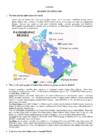
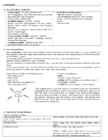
Referendums for separation from Canada. The separatist movements in Quebec seeked independence from Canada for the province of Quebec. It spawned a variety of political parties, such as the Parti Québécois and the Bloc Québécois. There have also been terrorist organizations that used violence to promote independence for Quebec but their violent tactics were denounced by the Parti Québécois. Justifications for Quebec's sovereignty claim that the unique culture and French-speaking majority are threatened with assimilation by either the rest of Canada and that the best way to preserve language, identity and culture is via the creation of an independent political entity. Religious differences (given the Catholic majority in Québec), are also used to justify separation. The 1980 referendum took place on May 20 and the proposal was defeated by a 59% to 40 %. The 1995 Quebec
colonial governments, set up the Second Continental Congress, and formed a Continental Army. The following year, they formally declared their independence as a new nation, the United States of America. Throughout the war, the British were able to use their naval superiority to occupy coastal cities, but control of the countryside largely failed due to their relatively small land army. In 1783, the Treaty of Paris ended the war and recognized the sovereignty of the United States. *Canada as a British colony It was discovered by John Cabot. With the union of three British North American colonies Canada was formed as a federal dominion of four provinces. This began a process of increasing autonomy from the United Kingdom culminating in the Canada Act. The English established fishing outposts in Newfoundland and colonized the Thirteen Colonies to the south. The Treaty of Paris ceded Canada and most of New France to
A word or phrase designating a concept of a specific domain or semantic field used to designate another aspect of the same domain on the basis of contiguity. Metonymy is based on a semantic link established by association, e.g. Fleet Street for ‘the British press’ (the place, for the institution located there). = a figure of speech that consists of the use of the name of one object or concept for that of another to which it is related, or of which it is a part, as “scepter” for “sovereignty,” or “the bottle” for “strong drink,” or “count heads (or noses)” for “count people.”. arena – the central part of an amphitheatre, bullring, stadium, etc., in which the action occurs; the building as a whole. budget – a pouch or wallet OR financial plans (kept in a bag) Hollywood – the American film industry or it products. Bollywood – the centre of Hindi film industry, which is maingly in the Indian city of Mumbai.
7. 17th century philosophical writing (Burton, Browne, Hobbes) Thomas Hobbes: Leviathan – developed his political philosophy. Man by nature selfishly individualistic animal, constant war with other men. Fear of violent deat principle motive causes them to create state and submite to sovereign, whose power, though derived from people, is absolute and not subject to law. Though he favoured monarchy as the most effective form of sovereignty, theory could apply to parliament also. Led to investigations by other political theorists. Robert Burton: The Anatomy of Melancholy – on surface medical textbook, Burton applies his large and varied learning in the scholastic manner to the subject of melancholia. A philosophical text. Part of medical treatise, part a commonplace book. Anatomy as lens through which all human emotion and thought may be scrutinised
- Meetmed ** Mittesõjalised ** Sõjalised -> JN on seda teinud mõned korrad, nt Korea sõda, I Lahesõda. An Agenda for Peace ● Boutros Boutros-Ghali, 1992 ● Julgeolekunõukogu palvel ● Olulisemad punktid: - Ennetav diplomaatia - Peace enforcement (võiks tagada) -> peace making, peace keeping - Konfliktijärgne ülesehitus Vastutus kaitsta (R2P) ● 2001 - ICISS -> International Commission on Intervention and State Sovereignty - Vastab Annani küsimusele sekkumisest ● 2005 - World Summit: - Riigil kohustus kaitsta: ** Genotsiid, sõjakuriteod, kuriteod inimsuse vastu, etniline puhastus - Rahvusvaheline kogukond aitab - Kui riik ei suuda, rahvusvaheline sekkumine Rahvusvaheline kogukond on kõik teised riigid pmst. Millennium Development Goals (2000) ● Väärtused ja printsiibid ● Rahu, julgeolek ja desarmeerimine ● Areng ja vaesuse vähendamine
Those who idealise the empire mostly discard any actual analysis of the national issue, instead eulogising the unprecedented burgeoning of nations under the Soviet regime and socialism as such. These memoirs demonstrate that the liberation movements of the Baltic peoples played a very important, in some aspect even pioneering role in the annihilation of the Soviet Union, whereas the principal underlying reason was Russia’s own pursuit of sovereignty. Some derzhavniks’ writings on the Baltic issue are over- flowing with blatant fabrications and propaganda lies. However, a shift has occurred in the attitudes of the democratic wing of the Russian elite towards the Baltic states. The former allies in the anti-communist struggle are now seen as “ungrateful nationalists” discriminating against Russians with their language and citizenship policies. Neither derzhavniks nor democrats
felons there, established a penal colony Merino sheep, gold Transportation of convicts ended in 1840 to east Australia but continued in tasmania and western Australia Sep colonies set up their governemnts in 19 C Established the Commonwealth of Australia with capital in Canberra New Zealand as british colony 18 C captain Cook visited the islands Missionary conquest in 19 C First permanent european settlement in Wellington Maories recognised british sovereignty for guaranteed posession of the land. New Zealand became a separate colony, from Australian Several wars between settlers and Maoris Gold was discovered In 20 C New Zealand was given dominion status, 1947 full independence The British expansion in South Africa In late 15 C Portuguese reached the Cape of Good Hope In 17 C permanent colony, Cape colony, by the Dutch 1814 British annexation was formalized. Slave
origins to his reign. Early years Named after the apostle, and described as a newborn as "with good health, his mother's black, vaguely Tatar eyes, and a tuft of auburn hair", from an early age Peter's education (commissioned by his father, Tsar Alexis of Russia) was put in the hands of several tutors, most notably Nikita Zotov, Patrick Gordon, and Paul Menesius. On 29 January 1676, Tsar Alexis died, leaving the sovereignty to Peter's elder half-brother, the weak and sickly Feodor III of Russia. Throughout this period, the government was largely run by Artamon Matveev, an enlightened friend of Alexis, the political head of the Naryshkin family and one of Peter's greatest childhood benefactors. This position changed when Feodor died in 1682. As Feodor did not leave any children, a dispute arose between the Miloslavsky family (Maria Miloslavskaya was the first wife of
Kirj andus Einzelwissenschaft unter Bezug auf Nietzche, Zeitschrift für Derrida, J. 2003. The "World" of the Enlightenment to Pädagogik 40 (4): 627-645. Popper, K. R. 1999. Come Normal Science and its Dangers. Rmt: (Exception, Calculation, Sovereignty), Research Criticism and the Growth of Knowledge, toim. I. in Lakatos Phenomenology 33: 9-52. Fuller, S. 2005. Is STS and A. Musgrave, 51-58. Cambridge: Truly revolutionary or Merely Revolting? Cambridge Science Studies 18 (1): 75-83. Hämäläinen, J. 2001. University Press. Esmatrükki970. Reyer, J. 2001.
HORATIO Do not, my lord. 35 HAMLET Why, what should be the fear? I do not set my life in a pin's fee; And for my soul, what can it do to that, Being a thing immortal as itself? It waves me forth again: I'll follow it. HORATIO What if it tempt you toward the flood, my lord, Or to the dreadful summit of the cliff That beetles o'er his base into the sea, And there assume some other horrible form, Which might deprive your sovereignty of reason And draw you into madness? think of it: The very place puts toys of desperation, Without more motive, into every brain That looks so many fathoms to the sea And hears it roar beneath. HAMLET It waves me still. Go on; I'll follow thee. MARCELLUS You shall not go, my lord. HAMLET Hold off your hands. HORATIO Be ruled; you shall not go. HAMLET 36 My fate cries out, And makes each petty artery in this body
The next day Wilson permitted the German government to send messages in its own code between Washington and Berlin under American diplomatic auspices—an arrangement that was, at best, simpleminded, and that, furthermore, contravened the accepted international practice of requiring the messages to be submitted in clear for transmission in American code. Germany availed herself of this arrangement to make America seal her own doom by letters she herself bore. Under the aegis of American sovereignty, Zimmermann sent his message striking at that sovereignty. It was delivered to the American embassy in Berlin at 3 p.m. January 16. It could not go direct to Washington, but had to be sent first to Copenhagen—and then to London. Only from there could it go to Washington. Consequently Britain seized this copy as well. Room 40 was "highly entertained" at the sight of the German code in an American cable, but again did not protest.
The young Estonian family is our painful problem. In the year 1986 Soviet migrants occupied 67 per cent of all the new apartments with modern conveniences. This is nothing other than the discrimination of the native people. 2 In the summer of 1988 Rahvarinne (People’s Front)3 was formed and became the first popular national movement. At the end of 1988 the Estonian Supreme Soviet passed the Declaration of Sovereignty of the ESSR. In the spring of 1990 the designation “The Republic of Estonia” was restored and Soviet state symbols were abolished. 1 Reede 21 July 1988. 2 Reede 21 July 1988. 3 Also known as the Popular Font. The number of active composers did not increase at the beginning of the Eighties, while the output of symphonic music had fallen remarkably. In the Seventies a novel means of expression, the electronic sound, found its
 annaabi.ee