 50 punkti
Autor soovib selle materjali allalaadimise eest saada 50 punkti.
50 punkti
Autor soovib selle materjali allalaadimise eest saada 50 punkti.
 ~ 2 lehte
Lehekülgede arv dokumendis
~ 2 lehte
Lehekülgede arv dokumendis
 2020-12-10
Kuupäev, millal dokument üles laeti
2020-12-10
Kuupäev, millal dokument üles laeti
 5 laadimist
Kokku alla laetud
5 laadimist
Kokku alla laetud
 0 arvamust
Teiste kasutajate poolt lisatud kommentaarid
0 arvamust
Teiste kasutajate poolt lisatud kommentaarid
 Arabellabella
Õppematerjali autor
Arabellabella
Õppematerjali autor
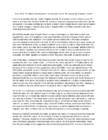
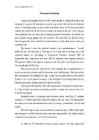
Kati-Liis Karu 03.01.2011 The euro in Estonia Joining the European Union in 2004 made people in Estonia think about the changing of currency. We had almost six years to get used to the fact that the Estonian kroon is eventually going to end. In that time there was a lot of discussion about whether we should stick to the kroon or change our money to the euro. Lots of people were afraid that they lose their money during the period of transition - this belief was quite popular among people who still remember the time when the Russian rubles were changed into kroons and did lose much money. Luckily there haven't been any complaints yet. The reason I chose this political concern is its contradictoriness. I myself dislike the fact that the kroon is "leaving us" but I hope that in the long run it will seriously benefit us. According to Conjuncture Institute's research 39% of respondents don't care about this issue. 34% of responses w
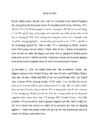
Policy of 2016 Brexit, which means „British“ and „exit“ is referendum to the United Kingdom for leaving from the European Union. Referendum was held on 23rd June 2016. About 52% of the British people voted for leaving the EU. Brexit turned things in the EU upside down and people were amazed, especially people who voted for not leaving the EU. After voting and seeing the results, a lot of people who voted for leaving regretted it, because they just wanted to see if UK is capable to do something big like this. That is why UK is extending the Brexit, because most of the people do not want it. I think when Brexit is finally accomplished, then we will see what will happen and what will be changed in British people
TRADERUN MOODUL TRADERUN MODULE BUSINESS PECULIARITIES IN THE EU, RUSSIA AND EASTERN PARTNERSHIP COUNTRIES ÄRI ERIPÄRAD EUROOPA LIIDUS, VENEMAAL JA IDAPARTNERLUSRIIKIDES Lecturers: Ryhor Nizhnikau (responsible) Giorgi Gaganidze, Sergei Proskura, Andres Assor P2EC.00.202 (UT code), RIE 7044 (TLU code) Reading materials: Business peculiarities in Ukraine and Belarus Lugemismatejal: Äri eripärad Ukrainas ja Valgenenes Created by Andres Assor Tartu 2013 TABLE OF CONTENTS INTRODUCTION ................................................................................................................... 4 1. UKRAINE ...................................................................................................................... 5 1.1. General information .......
European Union economic 9th May 1951, six Western-Europe countries (Belgium, Italy, Luxembourg, Netherlands, France and Germany) signed a treaty to run their heavy industries coal and steel under a common management. From this economic cooperation agreement, European Union has grown up. For today, the aim of this union has made 180º turn but the reason why more and more countries are joining it is still same to rise the economy. So how does it work? European Union is functioning like an independent country. It collects taxes to reach its objectives. Taxes are collected mainly from member countries GDP (1,1% of countries budget) but as well the import duties on good bought into EU. Also, every member country is paying 0,1%-0,33% of their VAT (value added tax). It is the way how EU gets its budget which is about 120 billion per year. This money is spent mainly to improve agriculture (direct aid, export refunds, storage, rural development and other) but also to
European Union Research Compose: x X School 2009/10 What is European Union? The European Union (EU) is an economic and political partnership between 27 democratic European countries. EU population is almost a half milliard European union stands for caring and fair community. All EU members are devoted to peace, democracy, human rights respecting and working together to spread these values all the world. History The beginning of EU might consider the year 1951, when European Coal and Steel Community (ECSC) was constitute. Six countries joined with it for peace: Belgium, Netherlands, Luxembourg, Italy, France and Germany. With that move, coal and steel industry were put under one organisation, so war was almost impossible between these six country. Cooperation in different areas improved, when in 25. March 1957 Treaties of Rom , European Economic Community and European Atomic Energy Community memorandum of association were signed. These were sundry
http://www.whitehouse.gov/news/releases/2001/06/20010611-2.html *I also call on Congress to work with my administration to achieve the significant emission reductions made possible by implementing the clean energy technologies proposed in our energy plan. Our working group study has made it clear that we need to know a lot more. *The United States has spent $18 billion on climate research since 1990 -- three times as much as any other country, and more than Japan and all 15 nations of the EU combined. http://www.guardian.co.uk/environment/2004/feb/22/usnews.theobserver *Jeremy Symons, a former whistleblower at the Environmental Protection Agency (EPA), said that suppression of the report for four months was a further example of the White House trying to bury the threat of climate change. *Senior climatologists, however, believe that their verdicts could prove the catalyst in forcing Bush to accept climate change as a real and happening phenomenon. They also hope it will convince the
Tallinna Mustamäe Humanitargümnaasium Valeria Jefremenkova ENGLISH AS A GLOBAL LANGUAGE INGLISE KEEL KUI ÜLEMAAILMNE KEEL Research work Supervisor: Jevgenija Kozlova Tallinn 2016 1 Table of Contents СONTENT…………………………………………………………………………………...2 INTRODUCTION…………………………………………………………………………...3 CHAPTER I……………………………………………………………………………….....5 1.1. A Brief History of the English Language…………………………………………...…..5 1.2. Origins of English as the Global Language……………………………………..……....6 1.3. Necessity of a Global Language...……………………………………………………....8 1.4. Critici
THE CAPITALIST NIGER Chika Onyeani ………………………Every African must internalise this book - period….DAA INTRODUCTION In October 1960, Nigeria received its independence from Britain. By then, Ghana the former Gold Coast had been independent for three years under the great Osagyefo Kwame Nkumah. It was a time for celebrating Africa’s coming of age, as more and more African countries received their independence either from Britain or France. It was especially a poignant time for Africa, as then British Prime Minister Harold McMillan articulated his now famous “winds of change” sweeping Africa. We had high hopes for Africa, for the Black race, that the insidious imposition of foreign rule on us, the looting of Africa’s natural resources by our colonial masters accorded us would be things of history. That is more than forty years ago. Unfortunately, the promise of independence has not been fulfilled. Today, Africa has become more desolate; there is more starvation
 annaabi.ee








Kõik kommentaarid