Leidsid 33 sarnast õppematerjali, mis on seotud failiga "Sissejuhatus infotehnoloogiasse". Need materjalid aitavad sul teemat sügavamalt mõista.
program, language, work, programme, process, soft, first, java, machine, turing, develop, base, network, code, bait, able, user, protocol, call, apple, release, other, wide, javascript, create, communication, super, linux, arch, format, programming, algoritm, memory, internet, rakendus, programmeerimiskeel, turingi, circuit, developed, found, baititõesed järeldused. Deduktsiooniks nimetatakse ka deduktiivse arutluse esitamist või arutlemist, mida vaadeldakse deduktiivset arutlust järgivana. 5 3. 1947 Bell Telephone Laboratories, William Shockley, Walter Brattain, and John Bardeen demonstrate their new invention of the point-contact transistor amplifier. Punkt-kontakt transistor võimendi. 1949 Maurice Wilkes assembled the EDSAC, the first practical stored-program computer, at Cambridge University. 1950 Engineering Research Associates of Minneapolis built the ERA 1101, the first commercially produced computer; the company's first customer was the U.S. Navy. 1951 The UNIVAC I delivered to the U.S. Census Bureau was the first commercial computer to attract widespread public attention. Although manufactured by Remington Rand, the machine often was mistakenly referred to as the "IBM UNIVAC." Remington Rand eventually sold 46
Sissejuhatus infotehnoloogiasse 1. Loeng Algoritm on täpne samm-sammuline, kuid mitte tingimata formaalne juhend millegi tegemiseks. Näited: a. Toiduretsept. b. Juhend ruutvõrrandi lahendamiseks Algoritmiline probleem - probleem, mille lahenduse saab kirja panna täidetavate juhendite loeteluna. Programm on formaalses, üheselt mõistetavas keeles kirja pandud algoritm. Arvutid suudavad täita ainult programme. Analoogsüsteem andmeid salvestatakse (peegeldatakse) proportsionaalselt Näit: termomeeter, vinüülplaat, foto Digitaalsüsteem (pidevad) andmed lõhutakse üksikuteks tükkideks, mis salvestatakse eraldi Näit: CD, arvutiprogramm, kiri tähtede ja bittidena Ühelt teisele: digitaliseerimine The three major comparisons of computers are: Electronic computers versus Mechanical computers
Aristoteles (470-399 e.m.a) : väidete struktuur kui iseseisev uurimisobjekt 1967- IBM builds the first floppy disk Süllogism (Aristoteles): 1967 - Seymour Papert designed LOGO as a computer language for children. 1. eeldus: iga x on y. 1968 - Robert Noyce and Gordon Moore found Intel Corporation 2. eeldus: mõni z on x. 1968 - Douglas C. Engelbart, of the Stanford Research Institute, demonstrates järeldus: mõni z on y. his system of keyboard, keypad, mouse, and windows at the Joint Computer
Bit Eksam/ EksamBitt 1 or 0 Byte Eksam/ EksamBait 8 Bits Kilobait Eksam(KB) 1 024 Bytes Megabait Eksam(MB) 1 024 KB kuidas Eksamtähti Eksamkodeeritakse: ASCII (American Standard Code for Information Interchain) 8bit = 16 * 8 = 128 märki EBCDIC (Extended Binary Coded Decimal Interchange Code) 8bit, IBM UNICODE (Extended ASCII) (utf-8), 1Byte for first 128, up to 4B for the rest~143 859 märki algoritm Eksam- Eksamtäpne samm-sammuline juhend millegi tegemiseks programm Eksam- Eksamformaalses üheselt mõistetavas keeles kirja pandud algoritm Ajaloost: Kreeka Eksamloogikud Parmenides (5 sajand e.m.a.) : kasutas pikki loogilisi põhjendusi. Zenon EksamEleast (5 sajand e.m.a.) -apooriad/paradoksid Sofistid -Sokrates (470-399 e.m.a) -Platon (428/427 -348/347 e.m.a)
kodeerimise, Info otsimise algoritmid. Atanasoff’i arvuti - John Vincent Atanasoff, 1939-1942: esimene elektronarvuti? Zuse arvuti - Konrad Zuse; 1941-1944: Z3, Z4; Releedega digitaalarvuti. 1936-1938 Z1 Esimene programmeeritav, kahendarvudega masin. Mehaaniline arvuti: metall-lehed, hoovad, elektrimootor. Colossus vs Geheimfernschreiber Londonis 1943: saksa allveelaevade salakirja dekodeerimiseks: 1800 elektronlampi Ideoloogia ja matemaatika töötas välja Alan Turing, kes varem juhtis lihtsama ENIGMA dekodeerimist. Mark I - Howard Aiken, IBM’i elektriline (releed) digitaalne arvuti MARK I, 1939-1944, 750.000 komponenti, 5 tonni. Loeng 3 Ludwig Wittgenstein 1889-1951, Analüütilise filosoofia juhtkuju Innustas loogilise positivismi ja Viini ringi teket: Mõtestatud tekst koosneb kas (a) loogika ja matemaatika formaalsetest väidetest või (b) konkreetsete teadusharude fakte esitavatest lausetest. Igasugusel fakti esitaval väitel on sisu ainult
ABC computer 1939-1942 , Atanasoff-Berry esimene elektronarvuti Esimene transistor - 1947 EDSAC 1949, esimene praktiline stored-program arvuti, programmid olid aukudega peberiribadel ERA 1101 1950 ESIMENE KOMMERTS-TOOTMISES ARVUTI, hoidis bitte magneetilises trumlis, lõpuks suutsid kuni 4000 sõna hoida UNIVAC I 1951 Esimene kommerts-tootmises arvutis, mis äratas suurt tähelepanu, 46 masinat müüdi, 1 million dollarit tükk, Remington Rand tootis Prinz´s chess program -1951 Stratchey checkers program 1952 IBM saadab välja oma esimese elektroonilise arvuti 1953, nimi: (IBM) 701 Texas Instruments alustab silikon-transistoride kommerts-tootmist 1954 Shockley Semiconductor 1955 asutati Arthur Samuel 1955, õpetas Stratchey programmi põhjal tehtud programmi ise õppima, 1962 võitis see programm Connecticuti tsempionit ühe korra ja siis sai 6 korda järjest pähe. IBM toodab/arendab esimese kõvaketta 1956, 5MB mälu FORTRAN 1957, IBM
1616-11 I6 Leibniz Lcibnizi anlrli(167 l)liiris. lrhuras. kormtas_ .jagas nUgaVaID: Usp, Ada, ML, Java, Python I VSimaldada kasutajal aryutis ohtmoodi ja harjumusparasell tegutseda, s6ltumatuli 6ellest. mis Kompilerimirer masinkoodis programm nimega kompilaator programmid lal arvutis on. I 7 1.1 Kir.itrtusnilsin. Hcnn, Mill.
A... AA Auto Answer AAA Authentication, Authorization and Accounting AAB All-to-All Broadcast AAC Advanced Audio Coding AACS Advanced Access Control System AAL Asynchronous Transfer Mode Adaption Layer AAM Automatic Acoustic Management AAP Applications Access Point [DEC] AARP AppleTalk Address Resolution Protocol AAS All-to-All Scatter AASP ASCII Asynchronous Support Package AAT Average Access Time AATP Authorized Academic Training Program [Microsoft] .ABA Address Book Archive (file name extension) [Palm] ABAP Advanced Business Application Programming [SAP] ABC * Atanasoff-Berry Computer (First digital calculating machine that used vacuum tubes) ABEND Abnormal End ABI Application Binary Interface ABIOS Advanced BIOS ABIST Automatic Built-In Self-Test [IBM] ABLE Adaptive Battery Life Extender + Agent Building and Learning Environment [IBM] ABM Asynchronous Balanced Mode ABR Available Bit Rate
provide enterprise resource planning (ERP), customer relationship management (CRM), supply chain management (SCM), tax accounting, and general accounting for the small and medium-size enterprise. - Kõigile kättesaadav populaarne tarkvara, mis võimaldab luua ettevõtte ressurssi plaane, klientide suhete haldamist, varustuse haldamist, maksude üleskirjutamist ja muid võimalusi keskmisele ettevõttele. Concurrent Versions System (CVS) – Concurrent Versions System (CVS) is a program that lets a code developer save and retrieve different development versions of source code . - Programm, mis võimaldab koodikirjutajal salvestada ja saada erinevaid arendus versioone põhikoodist. CoreOS Linux – CoreOS Linux is an open source operating system (OS) that provides the functionality required to deploy and manage applications within software containers. Based on the Linux kernel. - Kõigile kättesaadav operatsioonisüsteem, mis võimaldab hallata tarkvararakendusi
– Näiteks turvalisus – Arendajad keskenduda äriprobleemidele. VEEBITEENUS o A Web service is a service offered by an electronic device to another electronic device, communicating with each other via the World wide web. In a web service, web technology such as the HTTP, originally designed for human-to-machine communication, is utilized for machine-to-machine communication, more specifically for transferring machine readable file formats such as XML and JSON. In practice, the web service typically provides an object- oriented web based interface to a database server, utilized for example by another web server, or by a mobile application, that provides a user interface to the end user. Another common application offered to the end user may be a mashup, where a web server consumes several web services at different machines, and compiles the content into one user interface.
Games Programming with Java and Java 3D Andrew Davison Dept. of Computer Engineering Prince of Songkla University HatYai, Songkhla 90112 E-mail: [email protected] Draft: 14th January 2003, #2 Abstract This article looks at the advantages and disadvantages of using Java and Java 3D for games programming. It assumes the reader is familiar with Java, but presents short overviews of gaming, the low-level APIs OpenGL and DirectX, and Java 3D. No programming examples are included here, although links to online code are supplied. 1. Background to Gaming Giving a definition for `computer game' is problematic, due to the wide range of game types. For example, the ArcadePod site (http://www.arcadePod.com) divides its
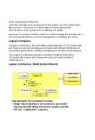
Moreover, it provides a useful vehicle for communicating the architecture to non-technical audiences, such as management, marketing, and users. Logical Architecture In Logical Architecture, the externally visible properties of the components are made precise and unambiguous through well-defined interfaces and component specifications, and key architectural mechanisms are detailed. The Logical Architecture provides a detailed "blueprint" from which component developers and component users can work in relative independence. Logical Architecture. Model System Behavior Execution Architecture An Execution Architecture is created for distributed or concurrent systems. The process view shows the mapping of components onto the processes of the physical system, with attention being focused on such concerns as throughput and scalability. The deployment view shows the mapping of (physical) components in the executing system onto the nodes of the physical system. Architecture views 2
Konrad Zuse Programmeeritavate arvutite pioneer saksamaalt 1936-38: Z1: puhtmehaaniline 1938: Z2: rehkendus releedega 1941: Z3 maailma esimene programmeeritav digitaalarvuti 1944-50: Z4: kommertsiaalne digitaalarvuti John Vincent Atanasoff 1939-1942: esimene elektronarvuti Enigma: alates 1920 aastatest Lorenz SZ 40 and SZ 42 ja eheimfernschreiber: Saksa lennu ja merevägi Colossus Londonis 1943: saksa allveelaevade salakirja dekodeerimiseks,Alan Turing. Lorenz-sakslaste krüpteerimismasin Howard Aiken IBM'i elektriline (releed) digitaalne arvuti MARK I 1939-1944 Viis esimest operatiivset digiarvutit: Zuse 1941 mai, AtanasoffBerry Computer Summer 1941, Colossus 1934/1944, Harvard Mark I IBM 1944, ENIAC 1944 1947 William Shockley, Walter Brattain, John Bardeen Bell Telephone Laboratories-st leiutasid point-contact transistor võimendi 1949 Maurice Wilkes EDSAC esimene praktiline
Õpperühm: IATM Matrikli nr: 050829 Õppejõud: Avo Ots Tallinn 2008 Author's word This project is written to show some interesting aspects of working with VoIP (Voice over Internet Protocol) service. The project briefly describes the process of finding a solution for based VoIP problem and its realization. -2- Contents Introduction .............................................................................................................................. - 4 - Mission....................................................................................................................................... - 5 - Solution..............................................................
1. OBJECT-ORIENTED PARADIGM The Model •The model defines an abstract view to the problem. This implies that the model focuses only on problem related stuff and that you try to define properties of the problem. These properties include: 1 •the data which are affected and 2 •the operations which are identified by the problem. Object-oriented Paradigm •Everything is an object •A program is a bunch of objects telling each other what to do by sending messages •Each object has its own memory made up of other objects •Every object has a type •All objects of a particular type can receive the same messages Domain Model •A domain model does not represent the entire domain as it is in the real world. It includes only the concepts that are needed to support the application. Object •Is a partitioned area of memory where object code is stored •The area of memory is protected
Most modern PCs also come with external cache memory, called Level 2 (L2) caches. These caches sit between the CPU and the DRAM. Like L1 caches, L2 caches are composed of SRAM but they are much larger. Disk caching works under the same principle as memory caching, but instead of using high- speed SRAM, a disk cache uses conventional main memory. The most recently accessed data from the disk (as well as adjacent sectors) is stored in a memory buffer. When a program needs to access data from the disk, it first checks the disk cache to see if the data is there. Disk caching can dramatically improve the performance of applications, because accessing a byte of data in RAM can be thousands of times faster than accessing a byte on a hard disk. When data is found in the cache, it is called a cache hit, and the effectiveness of a cache is judged by its hit rate. Many cache systems use a technique known as smart caching, in which
There are two manuals describing the setup and operation of the CPM1A: the CPM1A Operation Manual (this manual) and the CPM1/CPM1A/CPM2A/ CPM2C/SRM1(-V2) Programming Manual (W353). This manual describes the system configuration and installation of the CPM1A and provides a basic explanation of operating procedures for the Programming Consoles. It also introduces the capabilities of the SYSMAC Support Software (SSS). Read this manual first to acquaint yourself with the CPM1A. The CPM1/CPM1A/CPM2A/CPM2C/SRM1(-V2) Programming Manual (W353) provides detailed descriptions of the CPM1A’s programming functions. The SYSMAC Support Software Operation Manu- als: Basics and C-series PCs (W247 and W248) provide descriptions of SSS operations for the CPM1A and other SYSMAC C-series PCs. The SYSMAC-CPT Support Software Quick Start Guide (W332) and
microchips tiny pieces of silicon containing complex electronic circuits design to make or draw plans for something financial relating to money or how money is managed electronic involving the use of electric current in devices such as TV sets or computers Internet the large system of connected computers around the world print to produce text and pictures using a printer unformatted a disk that is completely blank, so information can't be recorded onto it Extranet a network that allows communication between a company and the people it deals with transmission the process of sending data over a communication channel reboot to restart the computer, without switching it off completely microbrowser a web browser designed for small screens on handheld devices software engineer a person who designs and maint
.....................................................................................................8-9 Conclusion.........................................................................................................................10 2 Introduction This chapter documents the advent and rise of automated essay scoring (AES) as a means of both assessment and instruction. The first section discusses what AES is, how it works, and who the major purveyors of the technology are. The second section describes outgrowths of the technology as it applies to on-going projects in measurement and education. In 1973, the late Ellis Page and colleagues at the University of Connecticut programmed the first successful automated essay scoring engine, "Project Essay Grade (PEG)" (1973). The technology was foretold some six years earlier in a landmark Phi
Eriala: Informaatika Inglise keel Referaat «Trojan horse » Lektor S.Remmelg Üliõpilane A.Parts Rühm RDIR23 Kood 103373 Introduction Trojan (also - troyamn, troyamnets, troyamnsky horse Troma) - a program used by an attacker to gather information, its destruction or modification of, computer malfunction or use of its resources in the wrong purposes. According to the principle of distribution and of the Trojans is not a virus because it does not spread by self-reproduction. This Trojan is run by the user manually or automatically - the program or part of the operating system running on a victim computer (as a module or utility). For this program file (the name,
C o clou o l d I T opportu I 0 Academic essay (ITI0103) 2019 spring Introduction “Data is Everything and Everyone is Data. “[1] The ability to collect, organize, structure and analyse data on a large scale is probably the most significant trait that sets us, humans, apart from our primate friends. [1] To comprehend the opportunities and threats regarding big data located within the cloud, one must first realize the essence of them. Big data is not only what its name says, but it is also so much more. What is Big data? Big data is a term, which is used to describe a broad spectrum of concepts: from the technological ability to collect, aggregate, and process data, to the cultural shift that is pervasively invading industry and society, both drowning in information overload. [2] Big data can be described by the following properties: - Volume
technologies. History of the Internet 1957:The United States Department of Defense formed a small agency called ARPA (Advanced Research Projects Agency) to develop military science and technology. 1961-1965:The Massachusetts Institute of Technology (MIT) started to research sharing information in small, phone-linked networks. ARPA is one of their main sponsors. 1966: The first ARPANET plan is unveiled by Larry Roberts of MIT. Packet switching technology is getting off the ground, and small university networks are beginning to be developed. # 1969:The Department of Defense commissions the fledgling ARPAnet for network research. The first official network nodes were UCLA, Standford Research Institute,UCSB, and the University of Utah. The first node to node message was sent from UCLA to SRI.
receiver has to re-synchronize at each byte: uses additional bits bytes are encapsulated in between start issuing commands and receiving responses from secondary stations. It has the the DSAP, and specifies the Service Access Point (SAP) of bit & stop bit. bit synchronization uses start bit & stop bit for each byte. Internally , nodes store, ability to hold separate sessions with different stations(on multipoint line) 2. the sending process. process, & transfer data in parallel Transmission control circuit - interface between node & link: · PISO Secondary Station - can only communicate with the In order to specify that this is a SNAP frame, the DSAP/SSAP shift register: parallel->serial conv. for transmission · SIPO shift register: serial->parallel conv. for primary station. Secondary stations only talk to each other via a Primary station: is set to AA hex.
järgmise ruuterini. Kiirus sõltub edastusmeediast ja jääb vahemikku 2*10^8 – 3*10^8 m/s. Kui d on kahe ruuteri vaheline kaugus ja s edastuskiirus, siis viide on d/s. Millisekundites. 14. Arvutivõrkude ja interneti ajalugu * 1961 – 1972 – the development of packet switching. 1961 – Kleinrock – queuing theory shows effectiveness of packet-switching 1964 – Baran – packet-switching in military nets 1967 – ARPAnet conceived by Advanced Research Projects Agency 1969 – first ARPAnet node operational 1972 – ARPAnet demonstrated publicly, first e-mail program * 1972 – 1980 – Internetworking, new and proprietary nets 1970 – ALOHAnet satellite network in Hawaii 1973 – Metcalfe’s PhD thesis proposes Ethernet 1974 – Cerf and Kahn – architecture for interconnecting networks * 1980 – 1990 – new protocols, a poliferation of networks 5
Abstract How are 3D and BIM Changing the Design, Fabrication and Construction of Complex Steel Structures? The adoption of three-dimensional (3D) design and construction tools have created a remarkable shift in the building industry. Intelligent 3D technology in the form of Building Information Modeling (BIM) not only promises to improve the notoriously inefficient construction process, but also opens the door for designing new geometric shapes, which until recently have been considered unbuildable. Steel has been extensively used to build some of the most challenging architectural icons of the 21st century, due to its low weight and high strength in both compression and tension. Therefore, the steel design and construction industry has been on the forefront of technical innovation. The purpose of this study is to determine how 3D and BIM are changing the design,
• Beneficial modelling reasons (– Insight: in the design and operation of a system – Completeness: detection of missing parts for simulation and a better understanding of the system requirements – Correctness: errors and flaws are usually detected, problematic scenarios can be reproduced, systematic error investigation) 2 Introduction CPN • CPN is a graphical language for concurrent system design and analysis and also general-purpose modelling environment and also applicable for industrial projects and high level programming. • Petri nets provide(– graphical notation– modelling concurrency, communication, synchronisation) • CPN application domains that are typical(– communication protocols, data networks, distributed algorithms)
Erialane inglisekeel 2 semester. Software engineering Tarkvara tehnika. Sub.discliplines of software engineering. 1. Software requirements 2. Software design 3. Software develompment 4. Software testing 5. Software maintenance 6. Software configuration managment 7. Software engineering managment 8. Software development process 9. Software qengineering tools 10. Software quality Ex 1 1. analysing and defining the problem to be solved. 2. Desiging the program. 3. Coding. 4. Testing. 5. Training the users. 6. Dockumenting. 7. Obtaining feedback from user UML- united modeling language Algoritm- eeskiri mis tleb kuidas seda prorgammi kirjutada. Teine tund. protsessori- keskmine keel on assemble languages. Interpreted languages- tlgendamine.
move the data in software but that has some kind of block-move instruction in the hardware will probably be faster than one that has to have a series of instructions to construct a loop. Similarly, if the CPU has an on-chip FPU (floating point coprocessor), then floating point operations will be much faster than if they have to be executed in software. Processing Requirements If you are working on an imaging application, having a processor move the data from one process (such as the camera interface logic) to another (such as filtering logic) takes some degree of processing. If the processor has to actu- ally implement the filtering algorithm in software, this takes a lot more pro- cessing horsepower. It is amazing how often systems are designed with little or no analysis of the amount of processing the CPU actually has to do. Operating System Requirements If you use an operating system (OS), how long will interrupts be turned off?
parts: Part 1: OpenDocument Schema, Part 2: Recalculated Formula (OpenFormula) Format and Part 3: Packages. Version 1.2 of the specification was approved as an OASIS Standard on 29 September 2011.[19] It has been submitted to the relevant ISO commitee under the Publicly Available Specification (PAS) procedure in March 2014. [20] As of October 2014, it has been unanimously approved as a Draft International Standard, some comments have been raised in process that need to be addressed before OpenDocument 1.2 can proceed to become an International Standard. [21] Future[edit] OpenDocument 1.3 (a.k.a. "ODF-Next") As of January, 2014, the current state of a possible future version of OpenDocument specification is a working draft (a preliminary unapproved sketch, outline, or version of the specification). The OASIS Advanced Document Collaboration subcommittee (created in December, 2010) is
otherwise. == 7. (A and B) or ((not A) and (not B)) == 8. You have two strings stored in variables S1 and S2. Both strings are stored in ASCII format and contain 8 bits per character and 20 characters per string. Write pseudocode that will compare the strings without case sensitivity and return a Boolean result in variable Y indicating whether the strings match or not. == 8. Y = true for i from 1 to 20 for j from 1 to 8, excluding 3 // first bit is spared (omitted) and the second (third) bit for upper bitindex = j + (i-1)*8 if S1[bitindex] ≠ S2[bitindex] Y = false Exit loop end end end == CPU architecture 9. Suppose a microprocessor adds the numbers shown below respectively. In each instance explain the influence of the computation on the flag register in terms of each of the flag bits Z, N, C, and V. Assume the processor can handle 8-bit binary values using a two’s compliment representation. a) 60 + 80 b) 60 – 80 ==
......................................8 3.4. Projects..............................................................................................................................9 3.5. Outsourced Services .........................................................................................................9 3.6. Structure............................................................................................................................9 3.7. Management Process ......................................................................................................10 4. Development Program............................................................................................................10 4.1. Expenses .........................................................................................................................10 4.2. Outstanding Tasks and Projects ....................................................................
Engineering, Technion Israel Institute of Technology Consultant: Roode Liias- Professor and Dean, Faculty of Civil Engineering, Tallinn University of Technology Title: Integration of Lean Construction and Building Information Modelling Archived: University of Applied Sciences, Faculty of Construction ABSTRACT This research can be divided into two. The first part investigates the current state of the construction industry, while the second part looks at new emerging business models in particular, Lean Construction (LC) and Building Information Modelling (BIM), as well as an integration of these two. Given that the construction industry does not have a particularly good reputation among the public, the first part of this thesis focuses mainly on this problem and its sources. It is the reason why we need
as all costs ultimately will make way to the final market place to be reflected in the price paid by the end user. Therefore, the leading edge companies seek to make the supply chain as a hole more competitive through the value it adds and the cost it reduces overall. Thus today the real competition is not the companies against the companies but rather supply chain against supply chain. DEFINITIONS Supply Chain Management (SCM) is the process of planning, implementing, and controlling the operations of the supply chain with the purpose to satisfy customer requirements as efficiently as possible. Supply chain management spans all movement and storage of raw materials, work-in-process inventory, and finished goods from point-of-origin to point-of-consumption. According to the Council of Supply Chain Management Professionals (CSCMP),
 annaabi.ee