Leidsid 33 sarnast õppematerjali, mis on seotud failiga "Sir Lencelot du Lac". Need materjalid aitavad sul teemat sügavamalt mõista.
king, knight, round, arthur, lancelot, queen, never, lady, court, honour, sword, elaine, foster, mother, first, became, loyal, companion, friend, brought, look, failed, courage, willing, serve, others, greatest, fighter, taken, amazed, skill, combat, accept, thanksHistory of English literature Periods: 1. Anglo-saxon or early literature (499 - 1066) 2. Second or Norman or late Medieval period (1066 - 13/14 century) 3. Renaissance or Modern period (13-14 century present) Anglo-Saxon period · All of the literature had its roots in folklore · Texts were orally transmitted, the anglosaxons had no written language · Two types of singers: 1) scop (attached to the royal court, wrote poetry and songs, performed them); 2) gleeman (travelled, mostly sang other peoples' songs, not their own songs; performers of scop songs) · The oldest known song Widsith (The Far Traveller/Wonderer); tells of a gleeman who travels in Europe, of his love of noble deeds, speaks of the shortness of life http://en.wikipedia.org/wiki/Widsith · The other known song Deor's Lament. Can be called the first English lyrics, about 40 lines
a `providentia' and the monster Grendel is an embodiment of evil fighting against Christian militant. This contrast corresponds to the poem itself. The poet is looking back from his own Christian times to an old society with different customs and beliefs. The poem is set, as it is announced in the very first line: `in days gone by'. For instance, the poet and his fellow Christians who can know that Grendel belongs to the race of monsters descended from Cain. For the Danish king he is the only a mysterious creature, for he doesn't know the Bibel. Again, when aged B. is killed by the dragon, the poet observes that his soul departs from the body. Yet the hero's people, the Geats, in the pagan manner burn his body and bury his ashes with much treasure. This is what commanded in a dying speech of a pagan who cannot hope for anything more than earthly remembrance after death. Important thing about is that
· The Grail is a symbol of rebirth · Perhaps even reincarnation--the passage from life to death and beyond. The Holy Grail · The quest for the Grail represented the most important spiritual pursuit one could undertake because the Grail itself possessed holy significance · The Holy Grail possessed the ability to heal the sick and wounded, restore youth, and provide unlimited amounts of divine food. The Round Table · The table became the place where Arthur's Knights gathered, symbolizing equality, unity, and oneness. Legend says... · ... when the knights gathered, those who sat at the head of table were over the others. As time progressed, the knights started to feel envy of those of higher rank. Sometimes, the knights fought over the seats. · The Round Table was given to Arthur as Guinevere's dowry when they were married.
Years 1154-1485 Henry I was the first unquestioned ruler. One of the most important kings in the Middle Ages. He had lands in Britain & France. Then the government was the monarch, a person, not a place. He had more land than any pervious king. After his marriage to Eleanor of Aquitaine, he also ruled the lands south of Anjou. His empire stretched from the Scottish border to the Pyrenees. England provided most of its wealth, but the heart was Anjou. Henry II began to regain royal control. During the war some barons had become very powerful. He pulled down some of their castles. He tried to restore law & order. He wanted the same kind of justice to be used everywhere. He appointed his own judges to travel around the country
Few records of Shakespeare's private life survive, and there has been considerable speculation about such matters as his sexuality, religious beliefs, and whether the works attributed to him were written by others. Shakespeare produced most of his known work between 1590 and 1613. His early plays were mainly comedies and histories, genres he raised to the peak of sophistication and artistry by the end of the sixteenth century. Next he wrote mainly tragedies until about 1608, including Hamlet, King Lear, and Macbeth, con- sidered some of the finest examples in the English language. In his last phase, he wrote tragicomedies, also known as ro- mances, and collaborated with other playwrights. Many of his plays were published in editions of varying quality and accur- acy during his lifetime, and in 1623 two of his former theatrical colleagues published the First Folio, a collected edition of his dramatic works that included all but two of the plays now re- cognised as Shakespeare's
*Caesar in Britain - Britain was very rich in minerals but that wasn't the main reason Caesar wanted to defeat it. He could clearly see that Britain was a threat to his latest and greatest conquest - France. He invaded Britain twice, in 55 and 54 BC. The first invasion was unsuccessful - it gained a beachhead on the coast of Kent but achieved little else. The second was more successful, the Celts asked for truce. However it wasn't a victory he had imagined and Julius Caesar never returned to Britain after that. The island was left undisturbed for nearly a century. *The Roman occupation of Britain 43-410 and its legacy Britain was conquered by Emperor Claudius, the Roman rule in England lasted up to 410. The Romans left behind a huge legacy: many types of animals and plants were brought to Britain in Roman times. Roman introduced theire measurements, Christianity, reading and writing. Also, many words in English and Welsh have been borrowed from the Latin language
урожай a record crop of wheat рекордный урожай пшеницы 2. с.-х. культура Wheat is a widely grown crop in Britain. 27. it is not surprising неудивительно 28. much / more / the most большая/'большая/наибольшая власть power 29. shape (n) форма; состояние What shape is the table, round or square? The team is in very good shape. shape (v) формировать 30. more than once не раз, неоднократно 31. invade (v) вторгаться invader захватчик invasion вторжение 32. se'curity безопасность; уверенность 33. ice age (the Ice Age) ледниковый период
towns,organised in tribes with a king/queen as a leader,intertribal wars were very common,the Ancient Britons:one of the Celtic tribes living in Britain 4thBC,believed in different gods,governed by a class of priests-druids who had great power. Romans in Britain:55BC came to conquer Britain(Julius Caesar),brought their own civilization,taught Britons to build roads,bridges,houses,baths,temples,protected Britain for several hundred years,4thBC Romans left Britain,43AD Queen Boadicea of Iceni tribe lost their battle with Romans. Who were the next invaders and where did they come from? Anglo-Saxons came from northern Germany,Denmark and northern Holland. What was their lifestyle like?Anglo-Saxons liked fighting,drinking,gambling,life expectancy not very long(famine,epidemics,unhealthy living conditions,climate- cold,damp) How did Britain become Christian?Britain was Christian under Romans.Pope Gregory I sent Augustine to bring Christianity back to England
You do the opposite of my instructions; You've no respect for anything; each one Must have his say; it's perfect pandemonium. DORINE If . . . MADAME PERNELLE You're a servant wench, my girl, and much Too full of gab, and too impertinent And free with your advice on all occasions. DAMIS But . . . MADAME PERNELLE You're a fool, my boy--f, o, o, l Just spells your name. Let grandma tell you that I've said a hundred times to my poor son, Your father, that you'd never come to good Or give him anything but plague and torment. MARIANE I think . . . MADAME PERNELLE O dearie me, his little sister! You're all demureness, butter wouldn't melt In your mouth, one would think to look at you. Still waters, though, they say . . . you know the proverb; And I don't like your doings on the sly. ELMIRE But, mother . . . MADAME PERNELLE Daughter, by your leave, your conduct In everything is altogether wrong; You ought to set a good example for 'em;
He joined the National Convention, staged Republic marches and attacked the Royal Academy. His actions almost ended with him being guillotined but fortunately he was only sentenced a time in prison. Thereupon, with the rise of Napoleon, David was released from the prison and became the Emperors new personal painter. (Graham-Dixon, 2008, p.268) With regard to the French artists in general, in the 18th century they were dependent on the Academy and therefore very restricted by formalities. King Louis XIV had forced painters to be extremely classical in their style and keep the paintings as clear and formal as possible. (Friedlaender, 1952, p.5) By the second half of the century political changes allowed art to be freer and therefore classicism started to bear a rather political note. Political art, various pamphlets, literature and the Enlightenment laid the foundations of the soon coming French Revolution. (Friedlander, 1952, p.7) Analysis
monarchies based on nationality were estabilished. The Renaessance started in Italy In the 14th century. Then it spread all over Europe, reached England in 16th century. The struggle for power culminated in a war called The War of Roses. It was a civil war between two dynasties, families. They had different emblems on one side the Yorks (white rose) other Lancasters (red). They couldn't decide who gets the throne. War ended 1485. A new dynasty came to throne, Tudor, the first king in this dynasty was Henry Vll. When he came to throne a period of stability followed because he built a nation based state. He was good at diplomacy.He could avoid quarrels and wars with neigbouring countries. France, Spain - greatest enemies.So he could save much money and thus laid a good economic basis for his state. Besides that he built a merchant fleet (kaubalaevastik) England begun to dominate in international trade. Unfortunately the king got old and died.
Legacy- new types of animals, plants; miles, feet, inches-roman measurements;christianity; Roman basilica in curches; reading, writing; buildings, roads Christianity in Roman Britain Until 4th C christians were persecuted 313 AD Emperor Constantine legalised christianity 380 AD Emperor Theodosius I made it the official religion of the empire Paganism had been eclipsed but continued to pose a political, religious challenge Boudicca Queen of Iceni people of Eastern England, led an uprising against Roman forces Prasutagus(ruler) was first allowed to rule when romans conquered England, after his death, romans decided to rule Iceni and flogged Boudicca and raped her daughters 60-62 AD Iceni rebelled, Boudicca´s warriors defeated Roman Ninth Legion, destroied capital-Colchester Finally Boudicca was defetated, she poisoned herself to avoid capture Hadrian´s wall
in Sussex, Cerdic / Cynric in Wessex. So the first ,,English" became mainly from Northern Germany & Denmark. The resistance of the Celts was long. They were free at the time, not like other Roman provinces on the Continent. Around 500, the Britons seem to have won several victories. One of their leaders was Ambrosius Aurelianus and one of their victories was at the place called Mount Badon. The main leader of the Britons at this time may have been the warrior later called King Arthur. By the 7th cent. the invaders managed to conquer the greater part of the land. The invaders came from 3 powerful tribes: · The Saxons settled from the Thames Estuary westwards, in the south of England; they formed the kingdoms of Sussex, Wessex, Essex & Middlesex · The Angles settled in East Anglia, the Midlands & Northumbria · The Jutes settled mainly in Kent, Hampshire & the Isle of Wight
A.D. Romans occupied Britain for four centuries. The Roman way of life all vanished after the invasions from Northern Europe by the Angles, Saxons and Jutes from the 5th century onwards. They ruined Londinium, but they were easily turned into Christianity and religion became more and more important. The Vikings, who came in the 9th century, first raided England to plunder it, but then they decided to stay. In the 10th century England fell under Danish Rule, with King Canute finally managing to unite the Anglo-Saxons and Danes at the beginning of 11th century. Medieval England After defeating the Anglo-Saxon King Harold at the Battle of Hastings in 1066, William of Normandy (who became William I, also called William the Conqueror) introduced the Norman feudal system, rewarding his French-speaking followers with land in return for their continued support. French remained the language of the upper classes and administration until the 14th century.
century. The author is unknown and the manuscript is kept in the British Museum (near Trafalgar Square). The story is very important as it allows us to lear about the way of life in the 4th century. The characters can be divided into two groups fictitious and historical. The epic deploys many metaphors - e.g. the sea = the swan's road, body = a house for bones and alliteration. It is structured as two parts. In the first part King Hroghtgar, king of Danes built a palace Hereot near a lake. He disturbed the lake monsters sleep with his racuous parties. Grendel then goes to the castle every night and kidnaps a man. This went on for 12 years. Beowulf, a young viking, decides to put an end to it. He chooses 14 men to join him and sails across the strait with no weapns, mind you, because Grendel fought unarmed and Beowulf was an idiot however according to the rules of fiction he defeats Grendel
Richborough landing, on the river Medway, the second on the Thames. One of the Catuvellaunian leaders, Togodumnus, was killed, but his brother Caratacus survived to continue resistance elsewhere. Plautius halted at the Thames and sent for Claudius, who arrived with reinforcements, including artillery and elephants, for the final march to the Catuvellaunian capital, Camulodunum . The future emperor Vespasian subdued the southwest,Cogidubnus was set up as a friendly king of several territories, and treaties were made with tribes outside the area under direct Roman control.Romans built many roads and also many great bulidings like the Hadrians wall. Anglo-Saxons and Normans The history of Anglo-Saxon England broadly covers early medieval England from the end of Roman rule and the establishment of Anglo-Saxon kingdoms in the 5th century until the Conquest by the Normans in 1066.
When and where was he born? He was born somewhere around 1343 in London. What occupations did he have during his life? He was trained for knighthood, he also worked as a courtier, a diplomat, and a civil servant, as well as working for the king, collecting and inventorying scrap metal How many periods are his works divided into? What are they called? What are the main works of each period? What/who are they inspired by? His poetry is generally divided into three periods the French period ("The romance of the rose"), the Italian period ("Troilus and Criseyde", inspired by his own trip to Italy) and the English period ("The Canterbury Tales") What type of a work is The Canterbury Tales
Jacob, son of Issac, stole his brother's birthmark. Jacob was a partiarch who brought up his twelve sons to be partiarchs, but they did not take to it. One of Jacob's sons, Joseph, gave refuse to the Israelites. Pharaoh forced the Hebrew slaves to make bread without straw. Moses led them to the Red Sea, where they made unleavened bread, which is bread made without any ingredients. Afterwards, Moses went up on Mount Cyanide to get the ten commandments. David was a Hebrew king skilled at playing the liar. He fougth with the Philatelists, a race of people who lived in Biblical times. Solomon, one of David's sons, had 500 wives and 500 porcupines. Without the Greeks, we wouldn't have history. The Greeks invented three kinds of columns - Corinthian, Doric and Ironic. They also had myths. A myth is a female moth. One myth says that the mother of Achilles dipped him in the River Stynx until he became intolerable. Achilles appears in "The Illiad", by Homer. Homer also
Scotland, Ireland, Wales. The Angles settled in Northumberland, East Anglia, Mercia; The Saxons in Essex, Sussex, Wessex and the Jutes in Kent. 569 AD Pope Gregory the great sends missionaries led by St. Augustine to Britain. The Benedictines establish a chain of monasteries; Britain is linked to the Latin civilization of the roman Church and Christian cultures of Western Europe. Aethelbert 1 of Kent becomes the first Christian King of England. By the end of the 7 th century all the kingdoms of the Anglo-Saxon Britain accepted the Christian faith. 3.) Describe Old English Poetry in terms of form and content. Old English poetry is highly formal. Each line of it is divides into two halves, separated by a caesura, or pause, and is often represented by a gap on the page. The verse form contains complicated rules for alliteration designed to help scops, or poets, remember
Edward the Confessor (1003-1066) Edward was the oldest son of Ethelred II (Ethelred the Unready http://en.wikipedia.org/wiki/Ethelred_the_Unready) and Emma of Normandy (http://en.wikipedia.org/wiki/Emma_of_Normandy). He wast he penultimate Anglo-Saxon king of England. The family was exiled in Normandy after the Danish invasion of 1013 so Edward spent the first part of his life in Normandy. He grew up in deep religious views and gained the nickname ''Confessor''. As Edward was seperated from his family and grew up in a strange land, it is said that his childhood wasn't a happy one.
Chapter 1 It is a truth universally acknowledged, that a single man in possession of a good fortune, must be in want of a wife. However little known the feelings or views of such a man may be on his first entering a neighbourhood, this truth is so well fixed in the minds of the surrounding families, that he is considered the rightful property of some one or other of their daughters. "My dear Mr. Bennet," said his lady to him one day, "have you heard that Netherfield Park is let at last?" Mr. Bennet replied that he had not. "But it is," returned she; "for Mrs. Long has just been here, and she told me all about it." Mr. Bennet made no answer. "Do you not want to know who has taken it?" cried his wife impatiently. "You want to tell me, and I have no objection to hearing it." This was invitation enough. "Why, my dear, you must know, Mrs. Long says that Netherfield is taken by a young
religion became very important. The Vikings settled mainly in Scotland and Ireland, the Danes in the north and east of England. Local Anglo-Saxons lost their power in 1066 to Norman conqueror William the Conqueror. Medieval Britain Centralised / 'sentrlazd / tsentraliseeritud, kesestatud Administration / dmn'stren / valitsus, juhtkond The Normans introduced the feudal system, strengthened the power of the King and the Church. England became a strong country under military rule. The Normans enjoyed absolute power: they built castles and destroyed villages. The main language spoken was Norman French which influenced the development of English. Main Events of the Period Canonised / 'kænnasd / pühakuks kuulutatud Charter / 't:t / üürima, harta Latter / 'læt / viimane, lõpupoolne
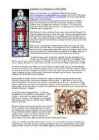
Romans developed a number of towns and introduced schools, new language Latin large farms, baths. In AD 410 they had to leave. 11. The battle of hastings. Bayeux Tapestry. On I 4 October 1066 an invading army from Normandy defeated the English at the Battle of Hastings. The battle was close and extremely bloody. At the end of it, most of the best warriors in England were dead , including their leader, King Harold. On Christmas day that year the Norman leader, Duke William of Normandy, was crowned king of England. He is known in popular history as 'William the Conqueror'. The date is remembered for being the last time that England was successfully invaded. The Bayeux Tapestry is technically not a tapestry, but a huge band of embroidered linen, which describes the Norman invasion of England and the events that led up to it. The Tapestry contains
· The father of English poetry · The creator of English versification · The first poet to use various metres · Laid the foundation of the new literary English language · Wrote in Middle English · An active man of affairs, who belonged to the middle class · Spoke Latin, French, Italian the important languages of the time · Worked as a diplomat for a time · Translated works into English (from Latin, French, Italian) · Favourite of the royal court · At the time of his death was regarded as a great poet and was buried in Westminster · As a writer he was very prolific · His early works show a strong influence of French and Italian poets, especially the great Italian Renaissance geniuses Boccaccio, Dante, Petrarch · His masterpiece "The Canterbury Tales": o He imitates what Boccaccio does in Decameron. Introduces frame story/narrative
16th century (Tudors) 1. Henry VII - avoided wars, careful with money, didnt have expensive parties, was a rather shadowy figure 2. Henry VIII- brilliant scholar, excellent knight, good-looking, ambitious, self- centered, loved expensive clothes and parties. Wasted his fathers money very quickly and had 6 wives. His first wife couldnt give birth to a baby boy and they only had a daughter. His next wife only gave birth to a girl too. His next wife gave birth to a boy but died after the labor. He didnt like his 4th wife so he sent her back. His fifth wife was young and beautiful but had many lovers and Henry didnt like it so she was
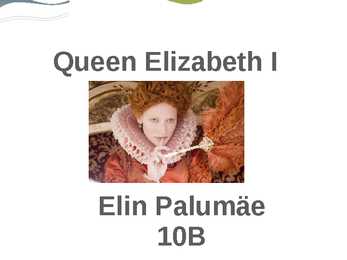
Queen Elizabeth I Elin Palumäe 10B Elizabeth I Reign - 17 Nov. 1558 24 March 1603 (44 years) Coronation - 15 January 1559(25 years) Predecessor - Mary I Successor - James I House - House of Tudor Father - Henry VIII Mother - Anne Boleyn Born - 7 September 1533 Greenwich, England Died - 24 March 1603 (aged 69) Burial - Westminster Abbey Anne Boleyn Queen consort of England Mother of Elizabeth I Tenure - 28 May 1533 17 May 1536 Coronation 1 June 1533 Anne Boleyn was Queen of England from 1533 to 1536 as the second wife of Henry VIII of England and the 1st Marquess of Pembroke in her own right for herself and her descendants. House - House of Tudor Father - Thomas Boleyn, 1st Earl of Wiltshire Mother - Lady Elizabeth Howard Born c.1501/1507 Blickling Hall/ Hever Castle, England Died 19 May 1536 (aged 29-35)Tower of London Religion - Anglican, formerly Roman Catholic King of England Henry VIII Reign - 21 April 1509 28 January House - House of Tudor
Kordamine inglise keele eksamiks A 1.1 Read the text and answer the questions below. Dear Mary-Alice, It's been ages since I last wrote to you, isn't it weird? Yes, so it is, but, I do have a certain reason. Do you remember Sir Thom of the Minquettes'? That fine young man with fascinating blue eyes... Oh, my sweet Mary, you will never guess what happened yesterday! It was about seven o'clock in the evening when Lillian called me out for a walk you know I can't say `no' to my little sis. Anyway we went to the forest near the Swan Lake and, believe it or not, got lost! Awful! I was so scared... We walked and walked, not even knowing the direction we were heading to, until we reached a huge mansion. And the garden around it was so extraordinary... That is something you just must see! But neither the trees nor flowers
Tristan & Isolde is set in Britain and Ireland, in the Early Middle Ages, after the fall of the Roman Empire in the 5th century. The scattered British settlements are in the process of becoming unified under Lord Marke (Rufus Sewell), who wishes to fortify England against attacks by the Irish king Donnchadh (David O'Hara). The Cornish knight Tristan of Aerygone (James Franco) engages in combat with Morholt, leader of Donnchadh's army and to whom Princess Isolde (Sophia Myles) has been promised in marriage. Though he kills Morholt and Donnchadh's army is overrun, Tristan is severely wounded in the fight and believed dead, though he is in fact only suffering the effects of having been sliced in the abdomen by Morholt's poisoned sword. Tristan's body is put out to sea on a funeral boat which eventually washes up along the
QUEEN VICTORIA & HER TIME Project Mari Murakas Class 11A 2011 Early life of Queen Victoria Victoria was born in London on 24 May 1819, the only child of Edward, Duke of Kent, and Victoria Maria Louisa of Saxe-Coburg. [1] The Duke of Kent was the fourth son of George III and Victoria Maria Louisa was the sister of King Leopold of Belgium. The Duke and Duchess of Kent selected the name Victoria but her uncle, George IV, insisted that she be named Alexandrina after her godfather, Tsar Alexander II of Russia. [2] Victoria's father died when she was eight months old. The Duchess of Kent developed a close relationship with Sir John Conroy, an ambitious Irish officer. Conroy acted as if Victoria
names and faces, the line of succession to the throne, and even the family's rarely- used last name. But let's start from the beginning. The House of Windsor is the reigning royal house of the United Kingdom and the other Commonwealth realms. The dynasty is of German paternal descent and was originally a branch of the House of Saxe-Coburg and Gotha, itself derived from the House of Wettin, which succeeded the House of Hanover to the British monarchy following the death of Queen Victoria, wife of Albert, Prince Consort. The name was changed from Saxe-Coburg and Gotha to the English Windsor (from "Windsor Castle"[1]) in 1917 because of anti-German sentiment in the British Empire during World War I.[2] There have been four British monarchs of the house of Windsor to date: three kings and the present queen, Elizabeth II. During the reign of the Windsors, major changes took place in British society. The British Empire participated
The Norman Conquest William I (the Conqueror) (1066 - 1087) On October 14, in the fateful Battle of Hastings, William defeated and killed Harold and seized the English throne. Two months after the Battle of Hastings, William I was crowned king in Westminster Abbey. The service was held on Christmas Day 1066, with all the traditional ceremonies associated with the coronation of English kings since the time of Edgar. William had gained his throne by accepting the English form of coronation, William emphasised his claim to be legitimate successor to Edward the Confessor. William I was a strong king and a man of immense determination. He was stern to people who opposed his will, but kindly disposed to those who did not.
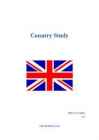
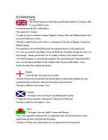
in turn are divided into counties * the flag is called the Union Jack which is a combination of the flags of England, Scotland and Northern Ireland * the population is about 60,000,000 people, the population density is 242 people/sq km * its coasts are washed by the Atlantic Ocean, the North Sea, the English Channel, the Celtic Sea, Saint George's Channel, and the Irish Sea. It is linked to France by the Channel Tunnel * the United Kingdom is a constitutional monarchy. The current monarch is Queen Elizabeth II, who is also the Queen and Head of State of fifteen other Commonwealth Realms, such as Canada, Australia, New Zealand and Jamaica. England: * it has 50 cities, the capital city is London * despite of the density of population and the high degree of urbanisation, England has many unspoilt rural and coastal areas which have been placed under protection * the flag is called the Saint George's Cross Scotland:
Margus Maasik G1a SANDRINGHAM HOUSE The Queen and other members of the Royal Family regularly spend Christmas at Sandringham and make it their official base until February each year. When The Queen or members of the Royal Family are not in residence, the house is open to the public. The Estate is run commercially by the Land Agent, on The Queen's behalf. Over half of the Estate is let to farm tenants, the remainder being farmed in hand or used for forestry (the Estate has its own sawmill). There are also two studs, a fruit farm and a country park. These, together with the house's gardens, employ over 100 full-time staff.
 annaabi.ee