Leidsid 33 sarnast õppematerjali, mis on seotud failiga "Second Generation Poets". Need materjalid aitavad sul teemat sügavamalt mõista.
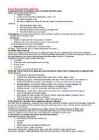
poet, shelley, work, byron, poets, percy, bysshe, gordon, keats, theme, romantic, poems, famous, through, revolution, social, issues, ideal, questions, revolutionary, period, britain, highly, field, place, heath, idealist, ideas, address, political, best, remembered, west, 1824, street, ways, contemporary, effect, popular, childe, harold, juan, 1821Romantic ideal is the organic world. Romanticism: · Returns to nature and belief in the goodness of mankind · Exaltation of the senses and emotion overcome reason and intellect is the time when novels became more important · Imagination is very important, it is a God-like creator (W. Blake: "I know that this world is a World of Imagination and Vision") 3. Romantic image of the poet The poet was a learned man who also knew how to appreciate nature. He was in spiritual marriage between the mind and the external world. Poets believed that emotions were universal and almost inexpressible. They were always looking for smth. new, but also fought against previous literary styles and argued with philosophers from the 18th c and earlier. Romantic poet keeps the image of a nation alive and is: · A visionary · A free spirit whose most important sense was seeing
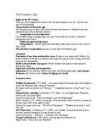
The Romantic Age. Began in the 18th century. There are some disagreements about when the period began so we can't say the exact year of the beginning. Characteristics of Romantic age: The Romantic Age is a term used to describe life and literature in England in the late eighteenth and early nineteenth centuries. -Imagination was very important Like William Blake an English poet has said "I know that this world is a World of Imagination and Vision" -Belief and appreciating nature -Independency Writers placed the individual, rather than society, at the center of their vision. The assertion of nationalism became a central theme of Romantic age. Literature Emergence of new ideas and positive voices. Emphasis was women and children, the heroic isolation of the artist or narrator, and respect for nature. Some writings were also based on the supernatural.
English literature is one of the oldest literatures in Europe; dates back to the 6th century AD. Oral literature, i.e. not written down, spread from person to person. In 449 AD Anglo-‐Saxon tribes invaded England – beginning of the Anglo-‐Saxon period in English literature. The first form of literature was folklore, carried by scops and gleemen, who sang in alliterative verse (a kind of simple poetry). Prose developed much later. The first form of recorded English literature was the epic Beowulf, which was produced sometime near the end of the 7th and beginning �
The early years of colonisation produced a mass of utilitarian writings including biographies, accounts of voyages, diaries, sermons, pamphlets. Much of the material addressed the problems of Church and State. There were few examples of fiction, poetry or drama. Anne Bradstreet of Massachusetts published some lyrical poems of high literary quality (1650) and Edward Taylor, who was born in England but lived in Boston, wrote some poetry in the style of John Donne and the metaphysical poets. All 17 th cent Am writings were, both in content and form, similar to English lit of the same period. The great literary figures of the 18th cent were Benjamin Franklin (1706-1790), Thomas Paine (1737-1809) and Thomas Jefferson (1743-1826). The common sense and witty aphorisms of Franklin's popular Poor Richard's Almanac series appealed to colonial readers. Franklin also wrote effectively on the
British authors from the United Kingdom, which includes England, Scotland, Northern Ireland, Wales, the Channel Islands, and Isle of Man Includes early works written in Gaelic, Welsh, and Latin, works in Old, Middle, and Modern English, each of which represents a different period Full of great works British works in Latin Venerable Bede He lived between 673 and 735 AD The greatest of all the AngloSaxon scholars He's the earliest English historian, whose work has shed light on a period of English history that would have otherwise been unknown ,,The Father of English History" Wrote / translated about 40 books on almost every area of knowledge, i.e. nature, astronomy, and poetry His best known work is "The Ecclesiastical History of the English People" Starting with the Roman invasion in the 5th century, he recorded the history of the English up to his own day Old English Cædmon ,,The Father of English Hymn"
especially by Thomas Paine in "The Age of Reason" and by Thomas Jefferson in his short Jefferson Bible from which all supernatural aspects were removed. Benjamin Franklin was influential in America, England, Scotland, and France, for his political activism and for his advances in physics. The American Dream is a national ethos of the United States, a set of ideals in which freedom includes the opportunity for prosperity and success, and an upward social mobility achieved through hard work. In the definition of the American Dream by James Truslow Adams in 1931, "life should be better and richer and fuller for everyone, with opportunity for each according to ability or achievement" regardless of social class or circumstances of birth. The idea of the American Dream is rooted in the United States Declaration of Independence which proclaims that "all men are created equal"
The French period (up to 1370). early works were based mostly on French models. The Italian period (up to c. 1387). Was influenced by Italian literature, especially Dante and Bocaccio. The English period. Wrote Canterbury tales. CANTERBURY TALES This unfinished poem of about 17,000 lines was written mostly after 1387. The poem introduces a group of pilgrims who are journeying from London to the shrine of Thomas à Becket at Canterbury. Chaucer originally planned that the work should contain 120 tales, four for each pilgrim, but at the time of his death he had only written twenty-four and some of them were not complete. The Prologue. The pilgrims are described in the General Prologue; together, they represent a wide cross-section of fourteenth-cent. English life, although the nobility and the poor are missing as they would not have taken part in this type of group pilgrimage. Why masterpiece: It is written in English in a period when it
Philip Larkin’s Poetry: Themes, Form, Style, Imagery and Symbolism Author: Sandra Olivares González Tutor: Jesús Marín Calvarro Degree in English Studies, English Department, Faculty of Philosophy and Letters, University of Extremadura Cáceres, 29th January 2016 Philip Larkin’s Poetry: Themes, Form, Style, Imagery and Symbolism The aim of this work is to obtain some characteristics of the poetry of Philip Larkin, such us the origin of his themes, the way in which he writes his poems and the symbolism he uses (which is a very controversial topic because some assume that he does use it, while some others say that he uses it in an ironic way). In this work we tried to make a revision on the vision of Larkin through the studies that had been made on him, and on the basis of it we can say, that the voice of Larkin still clearly contemporary
Change in attitude to learning. Charles I: virtuoso king, connoisseur and collector of pictures, best collection in Europe. 5. The Caroline court culture and Cavalier poetry (Carew, Suckling, Lovelace, Waller, Cowley, Herrick) 17th C, from classes supporting Charles I in Civil War. Much of poetry light in style, on secular subjects. Most were courtiers (except Herrick). English country life, rural country estate – man made paradise, arcadia, ancient hospitality. Poets spoke with the voice of celebrating the king and queen. King and court retreated into a self-perpetuating arcadia of their own. Civil War. Sense that past would never return. 1640s. Metaphysical poets were fond of imagery difficult to understand and complicated metaphors, Cavaliers preferred more straightforward expression. Valued elegance, were part of refined, courtly culture, but poetry often frankly erotic. Short lyric poem, favourite theme carpe diem. Very decent, like Charles’s court.
He is best known, however, as the first American to make a living solely from writing. Initially, he wrote under pen names; one was "Diedrich Knickerbocker." In 1809, using this pen name, Irving wrote A History of New-York that describes and pokes fun at the lives of the early Dutch settlers of Manhattan. Letters of Jonathan Oldstyle 1802 Salmagundi 1807-1808 A History of New York 1809 Emily Elizabeth Dickinson Emily Elizabeth Dickinson (December 10, 1830 May 15, 1886) was an American poet. Born in Amherst, Massachusetts to a successful family with strong community ties, she lived a mostly introverted and reclusive life. After she studied at the Amherst Academy for seven years in her youth, she spent a short time at Mount Holyoke Female Seminary before returning to her family's house in Amherst. Thought of as an eccentric by the locals, she became known for her penchant for white clothing and her reluctance to greet guests or, later in life, even leave her room.
Trust and National Arts Collections Fund and Society for the Protection of Ancient Buildings); conservation movement · What were their aims/concerns? Main aims were to restore old things; make new things more like Gothic (old); displaying old things etc. · What was the ides behind the creation of the public park? In towns there was a need for "green lungs"; air of the city was problematic; people had a place to go on a free day (people started to work 6 days in a week- 1 day off); a place for different classes to mingle and mix (Georgian/landscape park with Romantic/pleasure garden etc.) 3) Lord Tennyson and Victorian poetry · What was his main source of inspiration? He was inspired by romantic authors, especially Keats; another source was King Arthur and Arthurian Tales; (also inspired by nature many descriptions of nature, in many works discussed the role of man and woman in society; morbid themes/deaths etc.); · His works:
Russian philology The meaning of the word "philology" is "love for word". This is love that unites teachers and researchers of modern and Classical languages and literature, interpreters and diplomats, journalists and publishers, writers and poets. Russian philologis are highly demanded in various spheres of scholarly research and education, in the mass media, in civil service at the Ministry of Foreign Affairs, in archives, libraries, museums, in travel agencies, as well as Russian and international companies. Curriculum within in philological faculty includes courses of Russian and European languages and literature, courses of Linguistics and Theory of Literature for students to
well as a vigorous social campaigner. Considered one of the English language's greatest writers, he was acclaimed for his rich storytelling and memorable characters, and achieved massive worldwide popularity in his lifetime. Charles Dickens was born in Landport, Portsmouth in Hampshire, the second of eight children to John Dickens n 7 February 1812. The 12-year-old Dickens began working ten hour days in a Warren's boot-blacking factory. In May 1827, Dickens began work in the office of Ellis and Blackmore as a law clerk. At the age of seventeen, he became a court stenographer and, in 1830, met his first love, Maria Beadnell. Maria's parents disapproved of the courtship and effectively ended the relationship when they sent her to school in Paris. In 1834, Dickens became a political journalist, reporting on parliamentary debate and traveling across Britain by stagecoach to cover election campaigns for the Morning Chronice.
The Life of Dante, the Inferno of Dante Dante Alighieri, one of the greatest poets of the Middle Ages, was born in Florence, Italy on June 5, 1265. He was born to a middle-class Florentine family. At an early age he began to write poetry and became fascinated with lyrics. During his adolescence, Dante fell in love with a beautiful girl named Beatrice Portinari. He saw her only twice but she provided much inspiration for his literary masterpieces. Her death at a young age left him grief-stricken. His first book, La Vita Nuova, was written about her
it had suddenly become something remote and far from everyday life, somewhat a luxury. The utmost way this luxury manifests in romantic poetry is nature's ability to help whoever takes the time to value its divinity get in touch with themselves and get away from everything that might influence their way of acting. Nature provides the ideal atmosphere and surroundings to do this in the opinion of romantic poets, it is the very best place to come to when in need of solitude or an answer to personal or social conflicts. It is far from civilization, everything is pure, primitive, simple, untouched by man. This can be seen in Coleridge's "To Nature" (see below), where the author "builds his altar in the fields and the blue sky shall be his fretted dome". Romantic poets often expand upon this idea of nature providing a tranquil environment by
1. Beowulf. The dating of Beowulf is still controversial. The poem is one of the earliest and greatest monuments of the Germanic literatures. The main stories of the poem (the fights of B.) are versions of common folk-tales, but the poet also introduces many incidental stories, some of which belong to the world of ancient Germanic legend. He writes his folk-tales and legends in a web of other events, mainly set in the Baltic Kingdoms. He shows a very rich and leisurely portrayal of this Baltic world, providing many customs like the close relationship between lord and man in the war-band and others. All this encouraged the supposition that the unknown author of the poem was himself a bard of the ancient type
and lived at Wem, in Shropshire Education Hazlitt was educated at home and at a local school At age 13 one of his letters was first published In 1793 his father sent him to a Unitarian seminary at Hackney College He suffered a loss of faith and left Hackney At puberty he became unapproachable and introverted He read a lot, laying the foundation of his education He turned to painting and in 1802 traveled to Paris to work in the Louvre In 1805 he turned to metaphysics and the study of philosophy, publishing his first book: On the Principles of Human Action Marriage In 1808 he married Sarah Stoddart, They went to live at Winterslow on Salisbury Plain Critic, journalist and essayist By the end of 1811 Hazlitt was penniless He then gave a course of lectures in philosophy in London Began reporting for the Morning Chronicle,
This great number serves as motivation to confine myself to orchestral works. Moreover, this number may be somewhat larger if we take into account that I have no exact information about the activities of all Estonian composers living outside Estonia. From this uneven and variegated whole I had to choose works worthy of attention. Thus I have had to treat the symphonists in the same manner. I apologise if a colleague does not find his name mentioned. The volume for this extensive work is limited. As the manifold activity of several elder composers still has deep significance today, I have, for the sake of completeness, discussed their other spheres of operation. Symphonic music is divided into two large subsections: instrumental and choral (oratorio and cantata) works. The latter has been severely cut from this work; some examples from momentous stage and oratorical works constitute an exception. The
When jordan joins the war agains facist, he wants to fight all tyrannia and improve social conditions, he has all the typical features of Hemingway heroe, tough, competent, brave. Seems to be against all forms of governments, comes to conclusion that the republicans way is the best. He finds communism helpful. The question is wheter bloodshed is justified and humane. Unlike earlier hemingway heroes Jordan is an intellectual. Jordan is against suicide, which is major theme in the novel, because Jordan's father commited suicide. Falls in love with Maria, daughter of republican mayor. Three days of love bring him back to life. Maria was raped by facists and her father was killed by facists, disturbed girl. Secondary characters are rememorable. Men and women act differently to war. Men are carried away by war propaganda, women are shown to be wised and appreciate life more than political parties. Men think on taking sides but women value life more. Jordan is an
Literature of the 14th century The highpoint of medieval literature, the best writer of late medieval lived then. William Langland 1332-1376 the last important poet of alliterative verse. His masterpiece "The Vision of Piers Ploughman" how important working hard is, the labour of peasants is the base of the welfare of the people. A passionate protest against social injustice. A time when peasants were slowly rising against their feudal lords. Descriptions of different social classes. Religious mysticism. Two great principles: 1) all men are equal before God; 2) honest labour is dignified. It is a dream allegory
Revision questions for the test on Old English and Medieval Literature. 1.) How is literature analysed and studied? What is the difference between the diachronic and synchronic view? Literature is studied and analysed by reading the piece of work profoundly and work on all the aspects of the piece. Diachronic is development in history Synchronic is particular state at any given moment 2.) Give a general overview of Celtic Britain, Roman invasion in 55-54 BC, Anglo-Saxon invasion and the second Roman "invasion" of Great Britain, who were the leaders, what influence did they leave on the culture of Great Britain? Celtic Britain was during the Bronze Age, there were many small tribal kingdoms fighting one another
He first met John Ruskin in 1857 and became friendly with him. He developed a close relationship with Dante Gabriel Rossetti and his family, and also knew William Holman Hunt, John Everett Millais, and Arthur Hughes, among other artists. He also knew the fairytale author George MacDonald well it was the enthusiastic reception of Alice by the young MacDonald children that convinced him to submit the work for publication. Talent J From a young age, Dodgson wrote poetry and short stories, both contributing heavily to the family magazine Mischmasch and later sending them to various magazines, enjoying moderate success. Between 1854 and 1856, his work appeared in the national publications, The Comic Times and The Train, as well as smaller magazines like the Whitby Gazette and the Oxford Critic
prominently in many of the stories Kipling was writing for the Gazette. Kipling describes this time: "My month's leave at Simla, or whatever Hill Station my people went to, was pure joy--every golden hour counted. It began in heat and discomfort, by rail and road. It ended in the cool evening, with a wood fire in one's bedroom, and next morn--thirty more of them ahead!--the early cup of tea, the Mother who brought it in, and the long talks of us all together again. One had leisure to work, too, at whatever play- work was in one's head, and that was usually full." Back in Lahore, some thirty-nine stories appeared in the Gazette between November 1886 and June 1887. Most of these stories were included in Plain Tales from the Hills, Kipling's first prose collection, which was published in Calcutta in January 1888, a month after his 22nd birthday. Kipling's time in Lahore, however, had come to an end. In
ENGLISH LITERATURE Ancient Britain Lived on the British Isles in the 1st millenium. They most probably came from Eastern Europe and belonged to the Celtic race and also spoke Celtic. They were primitive hunters- gatherers, farmers. Some Celtic words are still used in modern English, however they are used mostly in place names. For example: · avon river · cumb valley · ford shallow place in the river Ancient Britons had their own religion and priests or druids and temples. In the year 55 BC Britain became a Roman province. Romans were highly developed and had their own language latin, which has also greatly influenced English. The military occupation of the Isles ended in 410 AD. The Romans eventually brought Christianity to Britain. Hadrian's wall on the border of Scotland and England. It began construction in 122 AD. An Anglo-Saxon att
Guy painted city life, Birch painted the seascape. The "Peale formula" was adhered to: objects along tableware against a dark background. Also, trompe-l'oeil persisted via Charles Willson's Peale's sons. Artists: Ralph Earl, Francis Guy, Thomas Birch, James Peale, Raphaelle Peale. Mid-C19 Landscape. In C19, landscape painting became dominant and provided many unexplored subjects. The tradition of landscape art emerged in the 1820s through the work of the so-called Hudson River School. The school of "luminism" is also distinguished, it is interested in the phenomenon of light. Exemplary artists. Thomas Cole (early-C19). He painted more in the Romantic mold than his contemporaries. He was inspired by the valleys of Catskill Mountains. He depicted lonely wilderness and apocalyptic visions. Albert Bierstadt (late-C19). He painted the last frontier, the heroic landscape of the country. He compiled a
Guy painted city life, Birch painted the seascape. The "Peale formula" was adhered to: objects along tableware against a dark background. Also, trompe-l'oeil persisted via Charles Willson's Peale's sons. Artists: Ralph Earl, Francis Guy, Thomas Birch, James Peale, Raphaelle Peale. Mid-C19 Landscape. In C19, landscape painting became dominant and provided many unexplored subjects. The tradition of landscape art emerged in the 1820s through the work of the so-called Hudson River School. The school of "luminism" is also distinguished, it is interested in the phenomenon of light. Exemplary artists. Thomas Cole (early-C19). He painted more in the Romantic mold than his contemporaries. He was inspired by the valleys of Catskill Mountains. He depicted lonely wilderness and apocalyptic visions. Albert Bierstadt (late-C19). He painted the last frontier, the heroic landscape of the country. He compiled a
4. James Joyce as a master of European Modernism. Joyce's background. Joyce and Ireland. A Portrait of the Artist as a Young Man. Stephen's and Joyce's spiritual searchings. Portrait as a modernist Bildungsroman. Revolution in style and composition. James Joyce as a master of European Modernism. Self-consciously modernist-new ways to express, quite difficult to read. Himself encouraged diversity of opinions concerning his art. ,, Ulysses will give universities something to work on well into the next century". Joyce's background. Ireland, till 1904. Education was standard, middle class. He had quite prestigious start on education, Jesuit university college, Dublin. Ended up in rebellion. Against inhibiting(keelama) forces of family, church, school. Moved to the continent, Paris, Ulysses-Zürich and Paris. Joyce and Ireland. ,,Cultic twalette", left in 1904, couldn't help returning in every page he
Handel was half German, half Italian and half English. He was very large. Bach died from 1750 to the present. Beethoven wrote music even though he was deaf. He was so deaf he wrote loud music. He took long walks in the forest even when everyone was calling for him. Beethoven expired in 1827 and later died for this. France was in a very serious state. The French Revolution was accomplished before it happened. The Marseillaise was the theme song of the French Revolution, and it catapulted into Napoleon. During the Napoleonic Wars, the crowned heads of Europe were trembling in their shoes. Then the Spanish gorrilas came down from the hills and nipped at Napoleon's flanks. Napoleon became ill with bladder problems and was very tense and unrestrained. He wanted an heir to inheret his power, but since Josephine was a baroness, she couldn't bear him any children.
World War I (1914-1918) was a war in Europe fought between France, the UK and the British Empire, Russia and the US (`the Allies') on one side and Germany, Austria-Hungary and Turkey on the other side. As for voting, the Reform Act of 1832 gave the vote to all men who owned a house. Later, in 1928, all men and women over 21 had the right to vote. The General Strike on 04.05.1926 was started by the people who worked in the mines. Many people stopped work in support of the men who worked in the mines. Edward VIII wanted to marry a divorced American woman, Mrs Wallis Simpson. He married her and later his brother, George VI, became the new king. During World War II, they continued to live in London (while it was being bombed) and accepted the same food restrictions as ordinary people. The British Commonwealth of Nations was created during his reign. World War II (1939-1945) was started by Adolf Hitler.
3) JAMES WATT He was born in the small port of Greenock on the river Clyde in Scotland in 1736. His father was a mathematical-instrument maker and also kept a shop to supply ships with goods for their voyages. James was a delicate boy and often suffered from headaches. That is why he could not go to school at the age when other children did. His mother taught him to read and his father taught him writing and arithmetic. He had very good memory and a natural love of work. He liked mathematics and was also fond of designing and making things. James was an observant and thoughtful boy. When James was able to go to school, he was sent to a private school. He learnt many subjects there. In his spare time James began to make experiments. He built a small electrical apparatus with which he gave his friends shocks that made them jump. When James was 18 he decided to become a professional instrument- maker. He could not find anyone to teach him, so he went to London
Irish and Scottish missionaries were spreading Christianity in Anglo-Saxon England during the 6th centurie. The Latin term Scotti refers to the Gaelic-speaking people of Ireland and the Irish who settled in western Scotland. *The Venerable Bede Bede was a Christian monk, he was the most learned man in Europe at that time. He is remembered mainly for his "Ecclesiastical History of the English People." This five volume work records events in Britain from the raids by Julius Caesar to the arrival of the first missionary from Rome. Bede's writings are considered the best summary of this period of history ever prepared. Some have called it "the finest historical work of the early Middle Ages." *The coming ofe the Angles, Saxons, Jutes, Frisians to Britain Very little is known about the first several hundred years of the Anglo-Saxon era, primarily because the invaders were an illiterate people
languages, especially popular in 19th century. The book is authors imiginary conversation with Raphael Hythody who was a traveller. I part describes what R.H. thought of England and points to vices that he had seen. Enclosure and after effects. II part H. visits an unknown land called Utopia and he states that Utopia is an ideal republic because: 1. The Government is elected 2. No private property- everybody gets as much they need 3. Everybody works 4. After work people enjoy music, art and sport. 5. The most difficult vwork is done by slaves 6. All schooling is free 7. Old peaple are honoured and the oldest becomes the governor 8. Utopians think that a man must be healthy and wise but not rich William Shakespeare 23. April 1574- 23. April 1616. Born in Stratford-Upon-Avon. His father was a merchant and for some time was one of the leading citizens of the town. S.-s mother
across England and were independently updated. In one case, the chronicle was still being actively updated in 1154. Nine manuscripts survive in whole or in part, though not all are of equal historical value and none of them are the original version. 8. Beowulf Beowulf is the most famous heroic poem (written down 8-9cc) Beowulf is a war-leader from Scandinavia.He rescued the land of the Danes from a man-like monster Grendel. The monster kills the hero.The poet describes the funeral and how warriors mourned their king. 9. The Vikings, their way of life. Sutton Hoo In 789 three ships carrying Northmen (Vikings vikingr = pirate, raider in the old Norwegian) landed on the coast of the kingdom of the West Saxon. Many were sailors who sailed looking for plunder, trade and land for new settlements. Their craftworkers made beautiful objects. Most of the written evidence about the Vikings in England comes from ANGLO-SAXON
 annaabi.ee