 50 punkti
Autor soovib selle materjali allalaadimise eest saada 50 punkti.
50 punkti
Autor soovib selle materjali allalaadimise eest saada 50 punkti.
 ~ 8 lehte
Lehekülgede arv dokumendis
~ 8 lehte
Lehekülgede arv dokumendis
 2010-04-16
Kuupäev, millal dokument üles laeti
2010-04-16
Kuupäev, millal dokument üles laeti
 5 laadimist
Kokku alla laetud
5 laadimist
Kokku alla laetud
 0 arvamust
Teiste kasutajate poolt lisatud kommentaarid
0 arvamust
Teiste kasutajate poolt lisatud kommentaarid
 VndaG
Õppematerjali autor
VndaG
Õppematerjali autor
Test on Romantic Poetry and Prose 1. Approximate dates of romanticism: in the second half of the 18th century. Major events on world history at that time: · Industrial revolution · In America the Declaration of Independence, July 4, 1776 · The French Revolution, 1789 · The King of England was George III, after him George IV and then Queen Victoria Outcomes: · Revolution did not bring welfare · Lives of the lower-classes worsened · Extended the distance between the lower and upper class
The Romantic Age. Began in the 18th century. There are some disagreements about when the period began so we can't say the exact year of the beginning. Characteristics of Romantic age: The Romantic Age is a term used to describe life and literature in England in the late eighteenth and early nineteenth centuries. -Imagination was very important Like William Blake an English poet has said "I know that this world is a World of Imagination and Vision" -Belief and appreciating nature -Independency Writers placed the individual, rather than society, at the center of their vision. The assertion of nationalism became a central theme of Romantic age. Literature Emergence of new ideas and positive voices. Emphasis was women and children, the heroic isolation of the artist or narrator, and respect for nature. Some writings were also based on the supernatural.
English literature from the Baroque to the Romanticism 1. The Jacobean Masque The development of the cultural scene in England brought about the Jacobean masque. The courtly culture became gradually more distant and isolated from the public. Ben Jonson was to become the poet who would write masques for the court. He would, in his masques, try to represent the idea of kingship as it resided in the Platonic realm, and not its reality. Jonson’s aim was also to be educative. Inigo Jones, Jonson’s collaborator, was the one to revolutionize in the field of visual perception, also adding moving machinery and a manipulation of artificial light to the scenery. Jones also viewed the masque as something to be used in educating people. This idea
English literature is one of the oldest literatures in Europe; dates back to the 6th century AD. Oral literature, i.e. not written down, spread from person to person. In 449 AD Anglo-‐Saxon tribes invaded England – beginning of the Anglo-‐Saxon period in English literature. The first form of literature was folklore, carried by scops and gleemen, who sang in alliterative verse (a kind of simple poetry). Prose developed much later. The first form of recorded English literature was the epic Beowulf, which was produced sometime near the end of the 7th and beginning ?
The early years of colonisation produced a mass of utilitarian writings including biographies, accounts of voyages, diaries, sermons, pamphlets. Much of the material addressed the problems of Church and State. There were few examples of fiction, poetry or drama. Anne Bradstreet of Massachusetts published some lyrical poems of high literary quality (1650) and Edward Taylor, who was born in England but lived in Boston, wrote some poetry in the style of John Donne and the metaphysical poets. All 17 th cent Am writings were, both in content and form, similar to English lit of the same period. The great literary figures of the 18th cent were Benjamin Franklin (1706-1790), Thomas Paine (1737-1809) and Thomas Jefferson (1743-1826). The common sense and witty aphorisms of Franklin's popular Poor Richard's Almanac series appealed to colonial readers. Franklin also wrote effectively on the
the English up to his own day Old English Cædmon ,,The Father of English Hymn" Cædmon's Hymn is the oldest recorded Old English poem, and also one of the oldest surviving samples of Germanic alliterative verse The Hymn itself was composed between 658 and 680, recorded in the earlier part of the 8th century Middle English Geoffrey Chaucer 13431400 Known as the ,,Father of English literature", the greatest English poet of the Middle Ages An author, philosopher, alchemist and astronomer, diplomat Wrote The Book of the Duchess, the House of Fame, the Legend of Good Women and Troilus and Criseyde Best known today for "The Canterbury Tales" Crucial figure in developing the legitimacy of the vernacular, Middle English, at a time when the dominant literary languages in England were French Modern English William Shakespeare 26 April 1564 23 April 1616 The Elizabethan Era
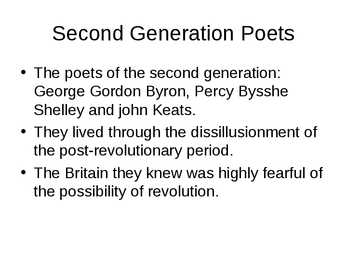
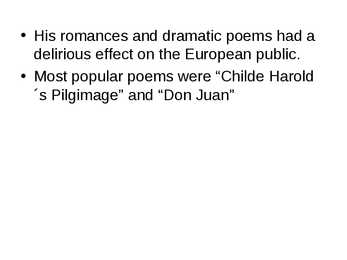
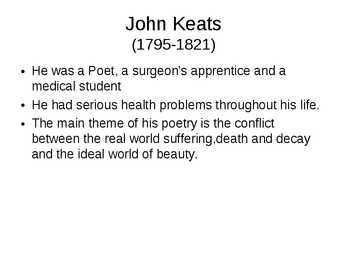
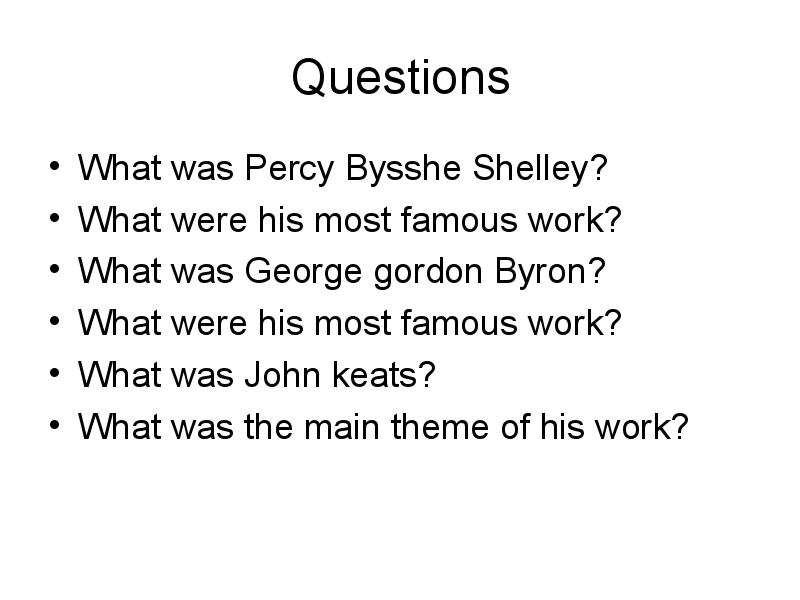
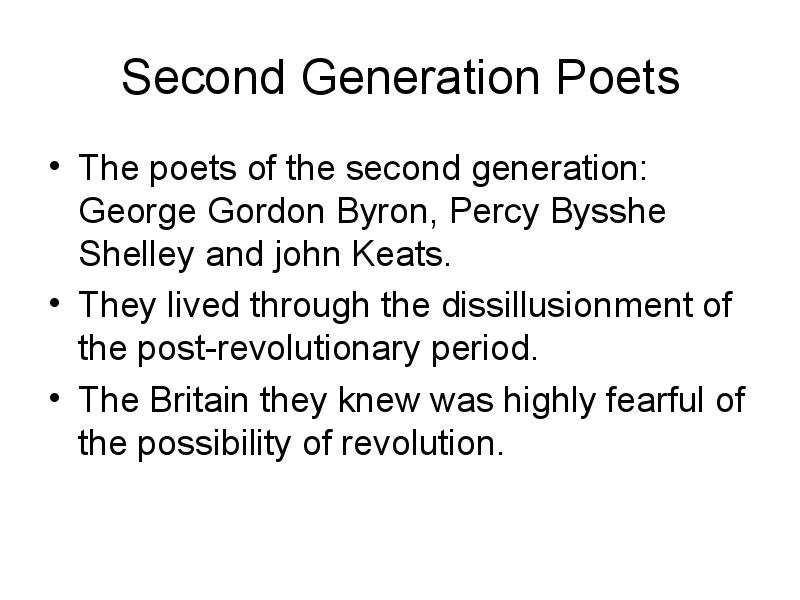
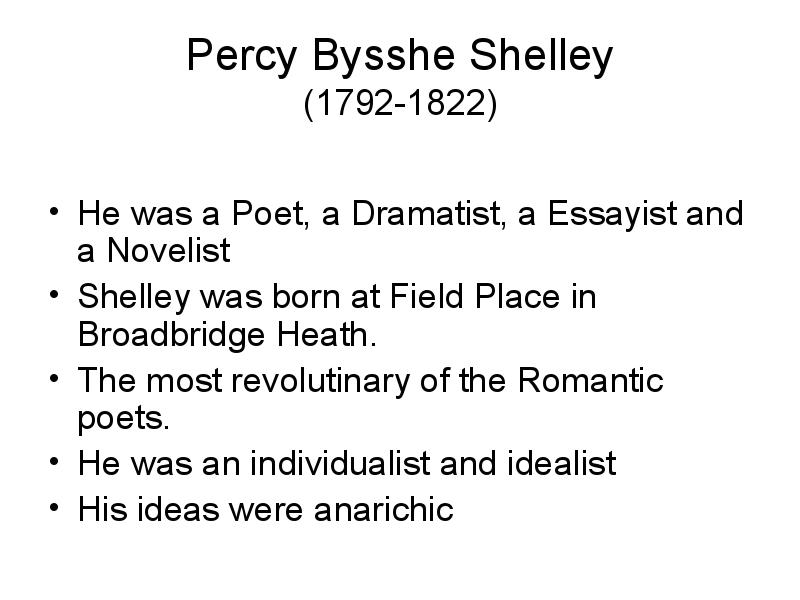
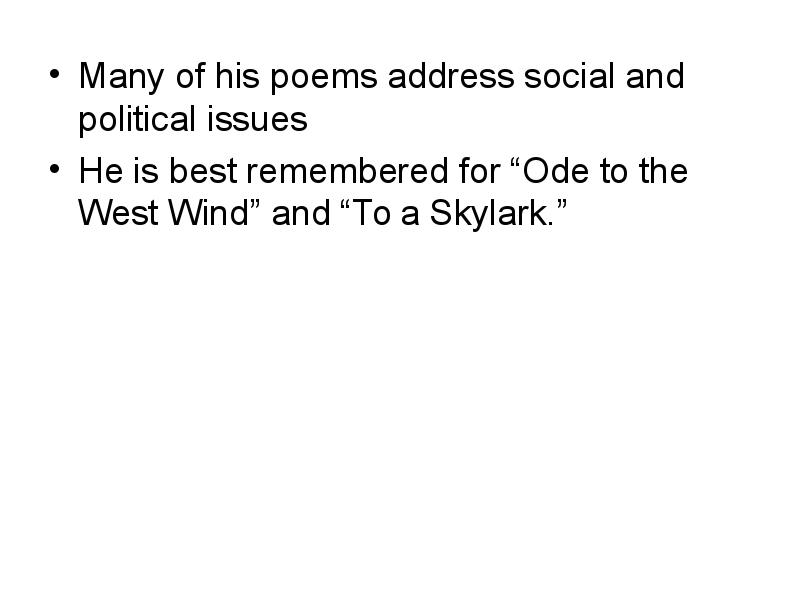
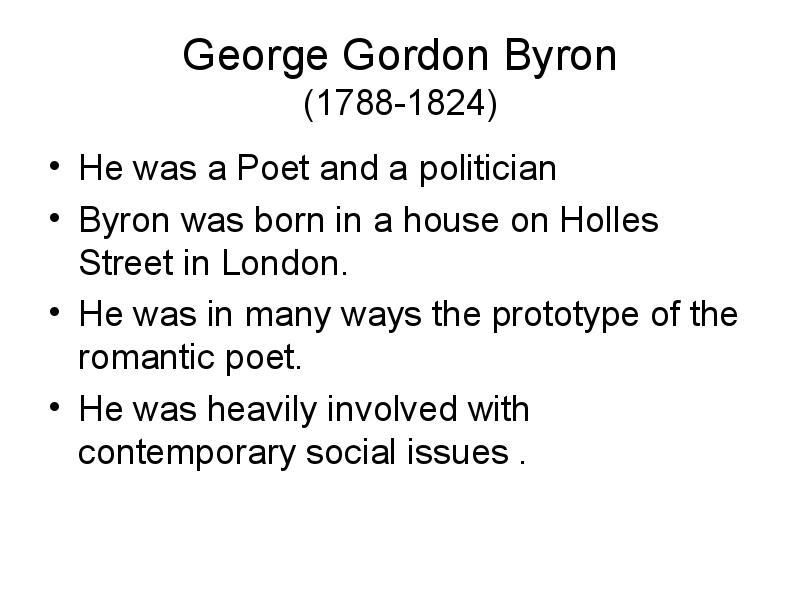
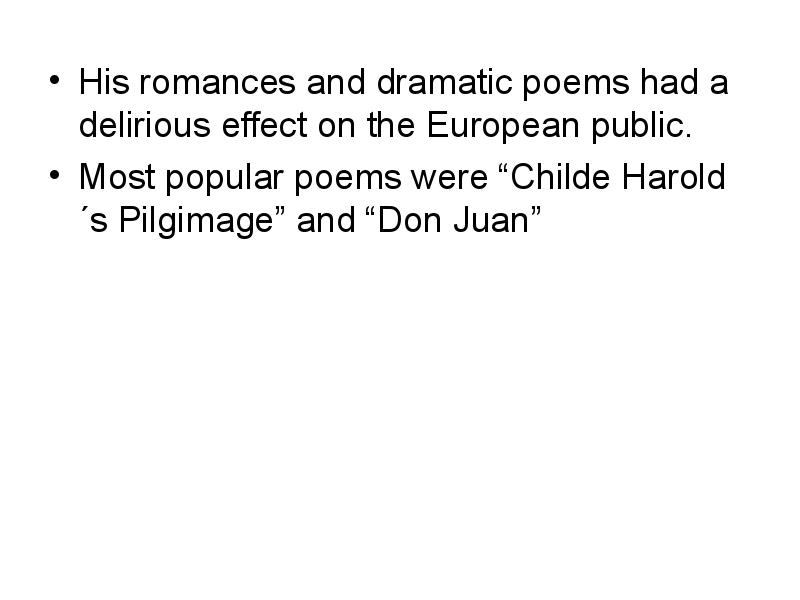
and detective stories. Many of the late Romantic writers only began writing after the most prominent early Romantics (Wackenroder and Hardenberg) had died. Thus the 'decay' Huch laments in late Romanticism renouncing the balance between mind and nature, giving up the spiritual side in favour of indulging in natural drives, leaning towards simplistic folklore and myth, demonstrating lack of receptivity and selfdestructive tendencies is the culturally mediated difference in approach of a new generation of writers. John Keats, Percy Bysshe, Shelley Lord Byron. Poe the literary critic and theoretician. The southern literary messenger the best magazine of its kind. He was very independent, perceptive and articulate (was able to express himself very well), wasn't afraid to criticize. Poe objected to narrow nationalism. The poverty of the arts in America was a direct result of the national preoccupation with money. He was rather harsh on minor authors. Longfellow hated him
Spencer 88. . Spenser's belief that poetry should deal with subjects far removed from everyday life and should be written in refined language unlike that which was used by common people became the basic principle for poetry throughout much of the Elizabethan period. CHRISTOPHER MARLOWE 1564-1593, born in Canterbury, was working for the government. Also wrote plays where he was successful. In the end got stabbed to death. SHAKESPEARE (1564-1616) he was an actor, poet, playwright and the best dramatist in writing. 37 plays, he used many sources for his plays including the classical Greek and Latin writings. Shakespeare did not publish his plays, two former actors and friends of him did, after he died. From 1600 to 1608 Shakespeare wrote his great tragedies. These plays have given world theatre unforgettable characters such as Hamlet, King Lear, Othello and Macbeth. The comedies that were written in this period no longer have the bright, optimistic
 annaabi.ee








Kõik kommentaarid