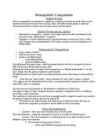
Eclipse Chapter 3-Motives Edward and Bella are returning from their trip to Florida as Bella recounts one pointed conversation she had with her mother, Renee, during their visit. Upon arrival at home Charlie expresses missing Bella while she was away, especially her cooking, and tells her to call Jacob as soon as possible. Jacob, who had apparently been calling frequently that day, called again. Confused at the strange conversation she just had with Jacob, Bella begins to cook for Charlie and try to decipher the meaning behind Jacobs words. Moments later, Bella theorizes that Jacob was checking up on her to see if she had run off to be "changed". The following day Bella is met with a surprise visitor at school. Jacob has come to relay a message to the Cullen family. In doing so, Edward is forced to reveal his real reason for taking Bella away for the weekend; Victoria is back. With that frightening information, along with the news t...
Because of her husband death, se got the tribe 2. Compare the Roman and the Iceni women. In Rome women dress in white linen, wash their hair with soap and dress it in elaborate patterns and thread it witd ribbons and shrick at the sight of a spider. Iceni womens are very angry, they mark their bodies with woad, their warriors wouldn't step into steam bath, in their opinion they are not savages. 3. What are Boadicea's motives for going into the battle? She wants vengeance for Romans, because they killed her husband and come straight to her village, flog her and rape her daughters and she also ta figting for her lost freedom and robbed home. 4. Wht does she lose battle? They lose the battle because they had a better statecy and they were stronger than the Iceni. Romans had also a lot of dicipline and drilling. Romans fight for the glory not the vengeance and they also have more pawer
Dear Mrs. Antia Luik January 23th We had a lecture on suicideterrorism and motives for suicide. It was a very instructive lecture, because I got a lot of new information about terrorism. Such information, which I did not yet know or have heard. I can use that information in our bibliographical and if lucky, the English language examination. Such lectures could be more, because terrorism is a situation which can be found in almost every country. Still the subject of terrorism, I would like to know more. I would like to know more
physical and mental. 2. What do young soldiers soon find out about themselves? Some young soldiers find out that killing comes easily to them, even too easily. Others recoil from acts of blood. 3. What feelings do stories about teenage soldiers evoke in people? The stories about teenage soldiers evoke a particular sadness, resonant as they are of the destruction of youth and possibility 4. What were the volunteers’ motives for joining the army (emotional and other)? The volunteers’ motives varied and often overlapped as many were gripped by patriotic fervour, sought escape from grim conditions at home or wanted adventure. 5. Why did the children of immigrants rally to the flag? The children of immigrants rallied to the flag because it was proof of loyalty to their new country. 6. Was there anything to prevent the 14-year-olds and upwards from joining?
Girli Vasiljev HAAGAHELIA University of Applied Sciences RB1X 12.12.2011 · Moscardo et al. An ActivitiesBased Model of Destination Choice (Cooper & Gilbert, 2008, p. 5661) Moscardo et al. model 1996 Moscardo et al. provides a bit different approach to consumer behavior than the other researchers. He argues that motives can be seen as providing travellers with expectations for activities and destinations seen as offering activities... Existing destination choice models can be both more destinationspecific and bring travel motives more clearly into the choice process by including activities as attributes of destinations (Pearce, 2005, p. 106). Basically he is emphasizing
tend to be alcoholics. German serial killers tend to have lower-than-average intelligence. That being said, here are some commonalities: Serial killers tend to be people of average intelligence from troubled homes. They have been subject to psychiatric evaluation, but only 20% received psychiatric treatment. Many of them are employed in stable jobs. One thing that is not consistent is motive. The most common motives are theft, revenge, and sex, but the range within those motives is vast. CONCLUSION Serial killing is surprisingly common, and unsurprisingly disturbing. Popular media 2 has sensationalized and glorified the killers themselves, giving them yet another motive: fame. One of the reasons I didn't go into depth or detail about all of the various serial killers is for this reason - to keep your eyes on how horrible and tragic it is. We shouldn't romanticize serial killers, or their victims
Konrad Mägi Konrad Mägi was born at Hellenurme, Tartu on November 1, 1878. He was an Estonian landscape painter and a teacher. He has also participated in the foundation of the art association and school "Pallas". He was one of the most colour-sensitive Estonian painters of the first decades of the 20th century, and Mägi's works on motives of the island of Saaremaa are the first modern Estonian nature paintings. As well as nature paintings, he also painted flowers and portraits. He always used sky in his paintings. His favourite colour was cadmium red, which is quite light and warm red tone. Mägi received his elementary art education from the drawing courses of the German Artisans' Society of Tartu. Mägi continued his art education in Saint Petersburg, where he was expelled due to his participation in revolutionary activities
people into their home, Mr. Henry and Pecola. Pecola is a troubled young girl with a hard life. Her parents are constantly fighting, both physically and verbally. Pecola is continually being told and reminded of what an "ugly" girl she is and that's why she thinks that if her eyes were blue, things would be different, she would be pretty. Pecola eventually moves back in with her family. One day, as her father returns home and finds Pecola washing dishes, he rapes her. His motives are unclear and confusing, seemingly a combination of both love and hate. After that Pecola discovers that she is pregnant. The entire town of Lorain turns against her, except Claudia and Frieda. In the end Pecola's child is born prematurely and dies. The language was a little hard for me. There was lot of expressions and I got many new words. I think the main message of a book is that people discriminate those who are different and this is wrong
01.12.14 The Priorities of Estonian Historical Research As a result of multiple nations having ruled over Estonian lands, Estonian history has been written from multiple perspectives. Often, religion, politics, and personal motives have fashioned history into what its authors wanted it to be. People have written from a multiplicity of perspectives. It should be one Estonian historical research's greatest priorities to distance itself from this, to seek after holistic, balanced accounts of the past. Early chronicles of Estonian history illustrate this diversity of perspective. Johann Renner, a Baltic German, held his own people in high esteem, deeming them the people of God. He implied this when he wrote
She is a wise and loyal figure. Christophine introduces Antoinette to the black culture of the Caribbean and instills in her a sensitivity to nature and belief in the practices of obeah. She is an outsider because she dresses and speaks differently from the Jamaican blacks. She is a servant, but, unlike the other black servants who live at Coulibri, she remains loyal to the Cosway women. She provides a contrast to Annette because she exercises complete independence from men and distrusts their motives. Although she has three children by three different fathers, Christophine remains unmarried, saying “I thank my God. I keep my money. I don´t give it to no worthless man“. Times and rules change and in consequence, women change too. This novel is the evidence that after the Emancipation Act, black women and ex-slaves started to find and explore themselves and became confident and independent, althought some of them were rude and unrealible.
Masque of Red Death") In the ,,ratiocinative" the effect comes from the use of rational analysis in reconstructing a series of events ("Murders in the Rue Morgue", "The Gold Bug") · The economy (tobacco had exhausted the soil) and also the spiritual life in Virginia was deteriorating (the democratic touch was disappearing, Virginia became a forgotten land). Apathetic, decadent moods took the place of daring theories and noble ideas. The motives of death, decay, destruction that permeate Poe's work present a strong contrast to the general spirit of American national life in the first half of the 19th century but in keeping the decadent atmosphere of Virginia · His stories and poems usually deal with love, beauty and death. He was concerned with the literary effect he could produce. In every genre, he explores the psyche. His heroes are tortured solitaries, often addicted to drink or drugs. He
book. I want to emphasize this book topic about non-polluting agricultural alternatives to chemicals, because it is a big problem nowadays. About the author Birth Date: 1947 Wojtkowski, with over 25 years of experience in many corners of the world, is uniquely qualified to deal with landscape agroecology. Having observed agriculture in six continents and over 70 countries, Dr. Wojtkowski has seen what works and what doesn't. His six previous books have affirmed the underlying motives, theories, and concepts. They have also proposed a large tally of quintessentially nature-friendly, farming practices. As a trained economist with advanced degrees in both agricultural and forest economics, he is able to take the next step; that of presenting agroecology as a fully-fledged science complete with its own economic underpinnings. And so he wrote book called ,,Agroecological Economics", which I think is his life-work. Book review
· Society 7 8 The Affect-Trauma THE THEORY Model (1885-1899) Fonagy and Higgitt (1984) review Outcomes Freud's theory in relation to 3 · Identification of unconscious motives phases: repression and psychological determinism · The Affect-Trauma Model · Development of the `talking cure'- (1885-1899) central feature of psychoanalysis. · Topographical Model of the Mind · Power of sex (1900-1920) · `Studies on Hysteria' published (1885)
Well you might as well argue that the government should subsidize all shops. I'm saying that it's the British tax-payer who pays the bill. What I'm saying is that we are too interdependent. Perhaps our populations are too big. That's why I'm advocating self-sufficiency as a goal. What I'm saying is that older people have been there before. They've had the problems and found the solutions. What are you trying to say? To come to the point, there are so many different motives for marriage that it's impossible to generalize about why people prefer married to single status. That may be so, but for most people the whole point of marriage is to live together and possibly to raise a family. That's what this discussion's about. To come back to the main point, this isn't only about contemporary, experimental art. I'm talking about the appreciation of great masterpieces which have been acknowledged for centuries.
The main difference between religion and morality is that morality is more reasonal while religion relies on beliefs. Morality is a big part of religion. Belief guides people towards morality, as religious people think that God sees and judges all our actions. Law is related to morality as well as religion. In the perfect word morality should be the basis of law. But in real world there are unjust laws and immoral acts that cannot be legally enforced. The law cannot judge human motives and intentions as well and that is why the law is much more shallower. One can be morally evil, intending to do evil things, but as long as he won't do them, he is legally innocent. The relationship between morality and etiquette is that etiquette varies greatly in different cultures and is usually morally neutral. For example one culture eats with chop-sticks, other with forks and knives, but it does not make neither of them less moral.
x Huvid x Kognitiivne dissonants 2.5. McGuire'i psühholoogilised motiivid 16 kategooriat; 2 kriteeriumi määrab 4 peamist kategooriat: x Kas motivatsioon on kognitiivne või afektiivne? x Kas motiiv on fokuseeritud stabiilsusele või kasvule? 4 kategooria alamkategooriad: x Kas käitumine on aktiivne või passiivne? x Kas käitumine on sisemine või välimine? McGuire'i kognitiivsed motiivid: x Cognitive Preservation Motives o Need for Consistency (active, internal) o Need for Attribution (active, external) o Need to Categorize (passive, internal) o Need for Objectification(passive, external) 6 x Cognitive Growth Motives o Need for Autonomy (active, internal) o Need for Stimulation (active, external) o Teleological Need (passive, internal) o Utilitarian Need (passive, external)
Conclusion In conclusion, Jacques-Louis David paved the way for Revolution with his historical, mythological and philosophical narrations. His greatest masterpieces like Marat, The Tennis Court Oath and The oath of Horatii are true historical representations of the French Revolution. People of the 18th century looked at his work to get inspired and to better understand contemporary occurrences. Same can be said about art historians and various history interpreters, who examine the ideas, motives and style of David to get a better understanding of the French revolution. Without the contribution of Jacques-Louis David in the French Revolution, there would be much less sources to rely on while trying to recreate the culture, ideas, motives, events and everyday life in the 18th century France.
, who are the writers Beowulf has influenced=, how many parts does the epic have?, what is its format?, what are the main ideas the epic stresses? Describe the heroic code of the Anglo Saxons, how does it contradict the Christian value system? Beowulf was composed by an unknown Anglo-Saxon poet around 700 A.D The action of the poem takes place around 500 A.D The storyteller is a Christian poet, we know it, because he is often at pains to attribute Christian thoughts and motives to his characters, who frequently behave in un-Christian ways. Beowulf describes Saxon society. Beowulf was re-discovered in 19th century, when the interest in the poem was primarily historical. In 1936, Oxford scholar J.R.R.Tolkien discovered the literaturistic side of the epic. Beowulf has influenced Tolkien and all the other writers after him. The epic has 3 parts, each focusing on Beowulf's fight with a particular monster. The mains ideas of the epic is:
south once they are freed. In spite of a passionate speech from Frankenstein, encouraging the crew to push further north, Walton realizes that he must relent to his men's demands and agrees to head for home. Frankenstein dies shortly thereafter, not before imploring Captain Walton to carry his mission of vengeance to its completion. "The task of his destruction was mine, but I have failed. When actuated by selfish and vicious motives, I asked you to take up my unfinished work; and I renew this request now, when I am only induced by reason and virtue." Walton discovers the monster on his ship, mourning over Frankenstein's body. Walton hears the monster's adamant justification for its vengeance as well as expressions of remorse. Frankenstein's death has not brought it peace. Rather, its crimes have increased its misery and alienation; it has found only its own emotional ruin in the destruction of its creator
TURKEY WAITING ON THE DOORSTEPS OF EUROPE While some oppose Turkey's full membership on cultural-religious grounds, others view Turkey as a ,,poor and populous country, waiting on the doorsteps of Europe, trying to push in". It is a fact. One of the most important reasons for Turkey's desire for membership is economic. Turkey wants to enter the EU in order to become wealthier, more developed and more stable. Turkey is not alone in that sense. All members came into this Union with the same motives. Britain, France, Germany, Spain, Czech Republic, Malta... Regardless of how big and powerful, prosperity and stability are the most important reasons. There is nothing strange in Turkey's aspiration for membership. However, Turkey offers a remarkable difference than other members. Turkey has certain qualities that no other member has. It does have material expectations from the EU, on the other hand, it has so much to offer to European civilization that other members cannot offer
Practicing Price Discrimination The firm that practices price discrimination must be able to distinguish between two or more separate groups of buyers Price discriminators must also be able to prevent buyers from reselling the product or service For example, if a fifteen-year-old could resell his youth fare seat to an adult who could then use it, the price discrimination effort would fail Motives for Price Discrimination · In most cases, price discrimination is basically a mechanism for rationing goods and services The main motivation for price discrimination is to raise profits The greater the price discrimination, the greater the profits because buyers lose some of their "consumer surplus" If price discrimination were carried to its logical conclusion, we would have perfect price discrimination
saavutamise viis d) vajadus (need) - internaalne jõud, mis suunab käitumist e) surve (press) - eksternaalne jõud ehk tingimused, mis reguleerivad vajaduste väljendamist f) teema (thema) - vajaduse ja surve interaktsioonis kirjeldatav toiming g) tervikteema (unity-theme) - seotud vajaduste ja survete muster, mis kirjeldab suurt osa indiviidi elust; lapsepõlvest kompleks (complex) · käitumise juhtimine vajadused (needs) motiivid (motives) (mõtted, kujutlused, toimingud) II Vajadused · olemasolu kriteeriumid tüüpilised käitumise tulemused spetsiifiline käitumismuster selektiivne tähelepanu ja suunatud käitumine teatud stiimulite klassile seos spetsiifiliste emotsioonidega rahulolu/rahulolematus tulemusega · vajadused - taju, tunnetust ja käitumist reguleeriv jõud; rahuldus 39 vajadust (12+27) primaarsed e. vistserogeensed (viscerogenic) füsioloogilised sekundaarsed e
saavutamise viis d) vajadus (need) - internaalne jõud, mis suunab käitumist e) surve (press) - eksternaalne jõud ehk tingimused, mis reguleerivad vajaduste väljendamist f) teema (thema) - vajaduse ja surve interaktsioonis kirjeldatav toiming g) tervikteema (unity-theme) - seotud vajaduste ja survete muster, mis kirjeldab suurt osa indiviidi elust; lapsepõlvest kompleks (complex) · käitumise juhtimine vajadused (needs) motiivid (motives) (mõtted, kujutlused, toimingud) II Vajadused · olemasolu kriteeriumid tüüpilised käitumise tulemused spetsiifiline käitumismuster selektiivne tähelepanu ja suunatud käitumine teatud stiimulite klassile seos spetsiifiliste emotsioonidega rahulolu/rahulolematus tulemusega · vajadused - taju, tunnetust ja käitumist reguleeriv jõud; rahuldus 39 vajadust (12+27) primaarsed e. vistserogeensed (viscerogenic) füsioloogilised sekundaarsed e
Southern Viljandimaa and in the past years people have started to pay more attention to learning and developing the dialect. The mulgi inhabitants have always been characterised by strong connection to their old-established traditions and customs. At the same time, the way of life of the local people is characterised by strong families, marriage, children and respect and love for fellow men. The local cultural heritage offers as much variety as the nature. Many rare work and mythological motives are retained in folk songs. The flax-growing that spread rapidly in the beginning of the 19th century was the basis of the prosperous Mulgi family farms in Southern Viljandimaa. 19. The second half of the 19th century and the beginning of the 20th century constituted the golden age for many local families. The mulgi inhabitants were actually the first farmers in Estonia who bought the farms for their families after being released from the servitude. The
mother had intended to harm her child through unnecessary medical procedures. In this case the child abuse can be seen as (1) factitious disorder by proxy or Munchhausen Syndrome by proxy (MSBP); or (2) malingering by proxy. An individual who intentionally produces or feigns injury of illness may either be malingering or have a factitious disorder, in which the distinction is made on motivation behind the behavior. A malingering person has external motives (avoiding work or military service, obtaining money or drugs). A patient with a factitious disorder seeks secondary gain in assuming a sick patient role. Vahendatud münchauseni sündroom
· Describe their works in general: Influenced by Romanticism, all the works had sth dramatic and "dark", escaping from the industrial ugliness into unspoilt beauty; poetry maintained sensuousness and imagination of the Romantic times; the great problems of the day; Tennyson's favourite themes were conflict of religion and science; wrote much about death and other morbid themes; Browning's works were full on monologues, psychological insight into man's motives and passions; Rossetti's works have medieval subjects and forms (like ballad) and dreamy melancholy; Hopkins focused on relationships with God 4. The Victorian novel and Charles Dickens · What kind of trend is literary realism? Literary realism is the accurate observation of individual problems and social relationships. · What were the main issues that the Victorian novel dealt with?
Description of needs Maslow (19081970) · Self-actualisation · Other schemes emphasise deficiency needs - Becoming fully self; learning who that is behaviour/personality as escape from `deficiency' · Aesthetic D motives - Symmetry, order, beauty · But humans do things for positive purposes · Cognitive humans seek positive, enriching experiences - knowing, understanding, exploring curiosity, unselfish giving of love · Esteem
oneself that gives a coherence and meaning to one's experience, including one's relations to other people. It organize's past experinece and helps us to recognize and interpret relevant stimuli in the social environment. Üldistatud pilt iseendast. · Teadmine endast (self-knowledge): knowledge about one's own characteristics, abilities, opinions, thoughts, feelings, motives etc. Teadmine enda kohta. spetsiifilised, üksikud omadused. · Eneseteadvustamine, enesereflektsioon (self-awareness): a psychological state in which one is aware of oneself as an object, just as one is aware of other objects such as buildings or other people. Enesest mõtlemine, analüüsimine, reflekteerimine - inimese tähelepanu pööramine endale, enda tegevustele.
In Iran-Iraq war the U.S was so obsessed with the idea that Iran should lost the conflict, they left Iraq unsupervised. Iraq got great help from the leading country of the world and thanks to that it grew stronger, to the point where it became dangerous. When the United States felt the threat, it just showed some power and invaded Iraq. Because the invasion was not planned well, the conflict wore on and due to that it caused a lot of casualties and big financial expenditure. Although the motives and the consequences of the war have been reflected a lot, I think they are still quite fuzzy and some details are still unpublished. Despite all this I hope that Iraqis are strong enough to get over the terrorism and are able to built up their own, democratic country. Resources Internet: · http://www.globalsecurity.org/military/world/war/iran-iraq.htm · http://www.mideastweb.org/iraq.htm · http://www.scn.org/wwfor/iraqhist.html
knighthood are honour, courage, hardiness, truthfulness, loyalty, generosity. Later, as the warrior rose on the social seal, nobility, courtesy and his role as the protector of the community became pronounced. First duty was to defend the faith of Christ against unbelievers, second to protect his temporal lord and the territories entrusted to him. Had to be wise, able to see justice, administer his estates. He had to be in constant training, motives for seeking knighthood should be pure. Honour had to be prized over everything. A knight should be without blemish, avoid pride, false-swearing, treason- the darkest crime. Slaying one's lord, adultery with his wife or surrendering his castle. Cowardness in the field, like treason, was punished by death. Another crimes-dishonourable conduct toward women, beating, raping. No robber, pirate, murder, violater of church could be knight. 7. Courtly love
concept): a cognitive represenation of oneself that gives a coherence and meaning to one's experience, including one's relations to other people. It organize's past experinece and helps us to recognize and interpret relevant stimuli in the social environment. Üldistatud pilt iseendast. Teadmine endast (self-knowledge): knowledge about one's own characteristics, abilities, opinions, thoughts, feelings, motives etc. Teadmine enda kohta. Eneseteadvustamine, enesereflektsioon (self-awareness): a psychological state in which one is aware of oneself as an object, just as one is aware of other objects such as buildings or other people. Enesest mõtlemine, analüüsimine, reflekteerimine Kust tuleb teadmine iseendast? William James: "Mina on kõik see, mida inimene võib pidada omaks keha, psüühika, riided, maja, naine ja lapsed, esivanemad ja sõbrad,
Othello, chosen over Iago for promotion and thus drawing his ire. His natural charm and kindness lead him to trust Iago in requesting Desdemona’s help and eventually lead to his implication in an affair that twists Othello’s mind against his former friend. Emilia - The wife of Iago and servant of Desdemona, Emilia is a carefully thinking wife and lady-in-waiting and one of the few who has suspicions of her husband’s activities. She realizes too late his true motives and pays for those suspicions when he stabs her. Roderigo - A former suitor of Desdemona, Roderigo is a Venetian nobleman who continues to pay freely to win her hand. He trusts Iago as his go between man and pays him liberally to help win her hand. Iago takes his money and uses Roderigo to instigate his plans for revenge against Cassio and Othello. Bianca - A courtesan in love with Cassio who is approached to help recreate the handkerchief he finds
Eneseteadvus: mõisteaparaat Eneseteadvus, mina-kontseptsioon (self conciousness, self concept): a cognitive represenation of oneself that gives a coherence and meaning to one's experience, including one's relations to other people. It organize's past experinece and helps us to recognize and interpret relevant stimuli in the social environment. Üldistatud/suur pilt iseendast. Teadmine endast (self-knowledge): knowledge about one's own characteristics, abilities, opinions, thoughts, feelings, motives etc. Teadmine enda kohta (teatud joonte teadmine) Eneseteadvustamine, enesereflektsioon (self-awareness): a psychological state in which one is aware of oneself as an object, just as one is aware of other objects such as buildings or other people. Enesest mõtlemine, analüüsimine, reflekteerimine Enesehinnang (self-evaluation): evaluation of one's own behaviors, physical appearance abilities or other personal attributes against internalized standards or social norms. Mitte ainult iseenda
self concept): a cognitive represenation of oneself that gives a coherence and meaning to one’s experience, including one’s relations to other people. It organize’s past experinece and helps us to recognize and interpret relevant stimuli in the social environment. Üldistatud pilt iseendast. • Teadmine endast (self-knowledge): knowledge about one’s own characteristics, abilities, opinions, thoughts, feelings, motives etc. Teadmine enda kohta. • Eneseteadvustamine, enesereflektsioon (self-awareness): a psychological state in which one is aware of oneself as an object, just as one is aware of other objects such as buildings or other people. Enesest mõtlemine, analüüsimine, reflekteerimine Kust tuleb teadmine iseendast? • William James: “Mina on kõik see, mida inimene võib pidada omaks – keha, psüühika, riided, maja, naine ja lapsed,
that direction. But in any case of injustice it makes a vast deal of difference whether the wrong is done as a result of some impulse of passion, which is usually brief and transient, or whether it is committed wilfully and with premeditation; for offences that come through some sudden impulse are less culpable than those committed designedly and with malice aforethought. But enough has been said on the subject of inflicting injury. The motives for failure to prevent injury and so for slighting duty are likely to be various: people either are reluctant to incur enmity or trouble or expense; or through indifference, indolence, or incompetence, or through some preoccupation or self- interest they are so absorbed that they suffer those to be neglected whom it is their duty to protect. And so there is reason to fear that what Plato declares of the
in the second I compared writer’s books’ society’s backround to the real life 19th century’s England, the third and the fourth chapter is about “Pride and prejudices” and “Persuasions” themes and characterizations. In the fifth chapter I brought similar parallels between the characters and in the sixth part I prepared final analysis based on similar character-pairs. It emerged, that the two author novels have common motives, for example the main character pairs are each other’s contrast, balancing one another with it and creating a perfect harmony, which was Jane Austen’s idea of perfect marriage. There were many similar characters to compare. As an hypochondriac, Mary Musgrove (from “Persuasion”) and mrs. Bennet (from “Pride and prejudice”) had a lot in common, also the similarities came across between lady Catherine (from “Pride and prejudice”) and sir Walter Elliot (from “Persuasion) who both
Directions. The Guilford Press, New York, NY, pp. 3881. Ochsner K.N, Ray R.D., Cooper J.C., Robertson E.R., Chopra S., Gabrieli John D.E. & Gross J.J. (2004) For better or for worse: neural systems supporting the cognitive down- and up- regulation of negative emotion. Neuroimage 23: 483 499 Pariante C.M., & Miller A.H. (2001) Glucocorticoid receptors in major depression: relevance to pathophysiology and treatment. Biological Psychiatry 49: 391404. Parrott W. G. (1993) Beyond hedonism: Motives for inhibiting good moods and for maintaining bad moods. In D. W. Wegner & J. W. Pennebaker (Eds.), Handbook of mental control (pp. 278-305). Englewood Cliffs, NJ: Prentice Hall. Polk D. E., Cohen S., Doyle W. J., Skoner D. P., Kirschbaum C. (2005) State and trait affect as predictors of salivary cortisol in healthy adults. Psychoneuroendocrinology 30, 261272 Pruessner J.C., Kirschbaum C., Meinlschmid G., Hellhammer D.H.(2003) Two formulas for
g. Conseco, Worldcom, AOL, ABB). x Academic research on acquisitions finds that the acquired company's shareholders tend to benefit while the wealth effects to acquirer's shareholders are either neutral or slightly negative. x Different potential drivers of value destruction have been identified o Problems of post-acquisition integration, cultural clashes o Managerial overconfidence o Managerial motives, hubris o Empire building Aquisition and Greenfiled pros & cons Aquisition: x Pro: o Quick to execute o Preempt competitors o Possibly less risky x Con: o Disappointing results o Overpay for firm optimism about value creation (hubris) o Culture clash. o Problems with proposed synergies Greenfiled: x Pro: o Can build subsidiary it wants
Of Heaven, many a time; till now, in vain. ELMIRE All that I wish, is just a word from you, Quite frank and open, hiding nothing from me. (DAMIS, without their seeing him, opens the closet door halfway.) TARTUFFE I too could wish, as Heaven's especial favour, To lay my soul quite open to your eyes, And swear to you, the trouble that I made About those visits which your charms attract, Does not result from any hatred toward you, But rather from a passionate devotion, And purest motives . . . ELMIRE That is how I take it, I think 'tis my salvation that concerns you. TARTUFFE (pressing her finger tips) Madam, 'tis so; and such is my devotion . . . ELMIRE Ouch! but you squeeze too hard. TARTUFFE Excess of zeal. In no way could I ever mean to hurt you, And I'd as soon . . . (He puts his hand on her knee.) ELMIRE What's your hand doing there? TARTUFFE Feeling your gown; the stuff is very soft. ELMIRE Let be, I beg you; I am very ticklish.
Faulkner traces the actual thought perseption and memory processes. His fairly confusing inner monologue reflects the irrationality of people's thinking. Very often the monologues of his characters merge into his as the narrators. Sometimes it's difficult to draw the line between the characters monologue and the authors. His style reminds us labyrinth, which is very appropriate to his vision of the world, world where despair and doom are typical motives and where such events as civil war, suicide, murder, storms are rather typical and characteristic events. Man is faced with destruction. The fates of his characters are mostly tragic, it doesn't matter which persons they are, how high or low society or race. Apocalyptic landscape of the south. The defeated nature of southern history, it's great, rural and broken. He shows that all the traditions are broken, theres no continuity of the tradition. Faulkner expses the transformation of the land,
· Ian McEwan has written plays for television and film screenplays · wrote the libretto to Michael Berkeley's music for the oratorio Or Shall We Die? · author of a children's book, The Daydreamer (1994). · Many film adaptions · Many awards McEwan's psychological fiction. Psychological novel, also called psychological realism, is a work of prose fiction which places more than the usual amount of emphasis on interior characterization, and on the motives, circumstances, and internal action which springs from, and develops, external action. The psychological novel is not content to state what happens but goes on to explain the motivation of this action. In this type of writing character and characterization are more than usually important, and they often delve deeper into the mind of a character than novels of other genres. Violence and alienation as part of Zeitgeist. In McEwan's early fiction, in his strange, experimental
room. I assure you it is very refreshing after sitting so long in one attitude." Elizabeth was surprised, but agreed to it immediately. Miss Bingley succeeded no less in the real object of her civility; Mr. Darcy looked up. He was as much awake to the novelty of attention in that quarter as Elizabeth herself could be, and unconsciously closed his book. He was directly invited to join their party, but he declined it, observing that he could imagine but two motives for their choosing to walk up and down the room together, with either of which motives his joining them would interfere. "What could he mean? She was dying to know what could be his meaning?"--and asked Elizabeth whether she could at all understand him? "Not at all," was her answer; "but depend upon it, he means to be severe on us, and our surest way of disappointing him will be to ask nothing about it." Miss Bingley, however, was incapable of disappointing Mr. Darcy in anything, and
korrastavaid mudeleid. Mõned kultuurimudelid põhinevad kergesti märgatavatel ja kirjeldatavatel reeglitel (nt jõulude tähistamine), paljud on aga vähem teadvustatud, nö nähtamatud reeglid, mille järgi sotsiaalses suhtluses toimitakse. Soovituslikku lugemist: Berry, John; Ype Poortinga, Marshall Segall, Pierre Dasen (2002). Cross-cultural psychology: Research and applications (2nd ed.). Cambridge University Press. D'Andrade, Roy; Strauss, Claudia 1992. Human Motives and Cultural Models. Cambridge University Press. Lonner, W. J., & Malpass, R. 1994. Psychology and culture. Boston: Allyn & Bacon. Shore, Bradd 1996. Culture in Mind: Cognition, Culture, and the Problem of Meaning. Oxford University Press. Masing, Uku 2004. Keelest ja meelest. Taevapõdra rahvaste meelest, ehk juttu boreaalsest hoiakust. Ilmunud Tartu : Ilmamaa. Matsumoto, David, & Juang, Linda 2004. Culture and psychology: People around the world (3rd ed.). Wadsworth. Shweder, Richard A. 1991
cialdini@ asu.edu. Finally, more influence-relevant information can be obtained at www.lnfluenceatwork.com. R.B.C. Introduction I can admit it freely now. All my life I've been a patsy. For as long as I can recall, I've been an easy mark for the pitches of peddlers, fund-raisers, and operators of one sort or another. True, only some of these people have had dishonorable motives. The others-representatives of certain charitable agencies, for instance-have had the best of intentions. No matter. With personally disquieting frequency, I have al- ways found myself in possession of unwanted magazine subscriptions or tickets to the sanitation workers' ball. Probably this long-standing status as sucker accounts for my interest in the study of compliance: Just what are the factors that cause one person to say yes to another person? And which techniques most effectively use
They became so attuned to French procedure in regard to a multiplicity of codes—at one time the French had eleven in simultaneous use—that they could tell when the French regarded them as compromised (after about four years) and began sending material in them that they wanted others to read. Usually this tried to implant the idea that the French were acting only out of the most moral considerations in a given situation, probably to distract attention from their real motives. Many phrases from the messages in these compromised codes later showed up in the French Yellow Books, the official governmental statements of their positions. The Swedes also solved an American-British code in which U-boat warnings were transmitted—probably the same that Germany's B-Dienst read—and thus got a free ride in safeguarding their own merchantmen. Quiet possibly the finest feat of cryptanalysis performed by the
You are then like an apparently poor person who does not know he has a bank account with $100 million in it and so his wealth remains an unexpressed potential. ABUNDANCE Who you think you are is also intimately connected with how you see yourself treated by others. Many people complain that others do not treat them well enough. “I don't get any respect, attention, recognition, acknowledgment,” they say. “I'm being taken for granted.” When people are kind, they suspect hidden motives. “Others want to manipulate me, take advantage of me. Nobody loves me.” Who they think they are is this: “I am a needy 'little me' whose needs are not being met.” This basic misperception of who they are creates dysfunction in all their relationships. They believe they have nothing to give and that the world or other people are withholding from them what they need. Their entire reality is based on an illusory sense of who they are. It sabotages situations, mar all relationships
T h e Shapeshifter serves the dramatic function of bringing doubt and suspense into a story. W h e n heroes keep asking, "Is he faithful to me? Is she going to betray me? Does he truly love me? Is he an ally or an enemy?" a Shapeshifter is generally present. Shapeshifters appear with great frequency and variety in the film noir and thriller genres. The Big Sleep, The Maltese Falcon, and Chinatown feature detectives con fronting Shapeshifting women whose loyalty and motives are in doubt. In other stories such as Hitchcock's Suspicion or Shadow of a Doubt, a good woman must figure out if a Shapeshifting man is worthy of her trust. A common type of Shapeshifter is called the femme fatale, the woman as temptress or destroyer. T h e idea is as old as the Bible, with its stories of Eve in the 61 T H E W R I T E R ' S JOURNEY ~ T H I R D EDITION
You have to stay away from Christopher." "Why do you keep saying that? He seems very nice." Gideon pulled back, sifting my hair through his fingers. His eyes stayed fiercely locked to mine. "He takes sibling rivalry to the extreme, and he's unstable enough to make him dangerous. He's reaching out to you because he knows he can hurt me through you. You have to trust me on this." Why was Gideon so suspicious of his half-brother's motives? He had to have a good reason. It was yet another thing he didn't fully share with me. "I do trust you. Of course I do. I'll keep my distance." "Thank you." Catching me by the waist, he lifted me off the counter and set me on my feet. "Let's grab Cary and get the hell out of here." We made our way back outside with my hand in his. I was uncomfortably aware that we'd been gone a very long time. The sun was going down. And I was panty-less. My ruined boy shorts
 annaabi.ee