Leidsid 33 sarnast õppematerjali, mis on seotud failiga "Kirjade kirjutamine". Need materjalid aitavad sul teemat sügavamalt mõista.
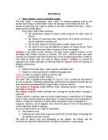
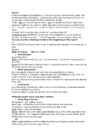
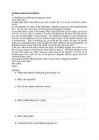
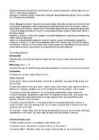
letter, formal, farewell, letters, dear, know, first, informal, yours, paragraph, wide, same, proofread, structure, grammar, again, best, verbs, english, adjectives, forms, pronouns, institutions, acquaintances, friends, layout, space, finger, rows, left, tips, check, revised, keep, recipient, easily, understand, abbreviated, dates, respectful, evenLetters Letters FORMAL, INFORMAL, TRANSACTIONAL TASK 1 Read the extracts and answer the questions. · Where are the extracts from? · What is the purpose of each letter? · How do they differ? · Which extracts are examples of formal letters? · How is the reader addressed in a formal letter? · What are the closing remarks for formal letters? · What is the salutation in a friendly letter? · How would you end extracts 1,2,3 ? · How would you begin the extracts 4 and 5? 1. Dear Mr Miller, I received your kind invitation to the reception. Unfortunately, owing to other commitments. I will be unable to attend ... 2. Dear Ralph, l just got your invitation to the company's event. l `m afraid I can't make it because I've a/ready made plans which l can "t change ... 3. Dear Sirs,
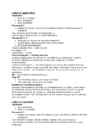
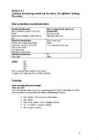
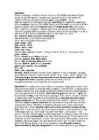
Letter of application Salutation Dear Sir or Madam Dear Sir/Madam Dear Mr/Mrs/Ms Paragraph 1 Reason for writing, name of the available position (+add the source, if available) I am writing to apply for the post advertised in... I am writing in response to your advertisement in... Paragraph 2, 3 What are you doing now, previous experience Qualifications (also personality traits, if necessary) NB! Relevant information I have graduated from... (with honors) My degree is in... I attended a.... course
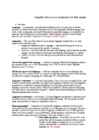
Writing letters Main rules !!!Always write something on the "Subject" line (university emails: e.g. name or code of the course, then issue, topic etc) If the matter is urgent, you may write so on the "Subject" line Start and end your email properly (also making sure the other person knows who you are) "you" is spelled with a capital letter only at the beginning of a sentence, NEVER in the middle In official emails do not abbreviate (e.g., "I am" instead of "I'm", "do not" instead of "don't", "cannot" instead of "can't" etc). Also, do not use colloquial expressions such as "fyi" etc. Pay attention to punctuation and spelling use spell check. Specifics beginning a letter If you don't know the name of the recipient: Dear Sir/Madam, To whom it may concern, If you know the name of the recipient:
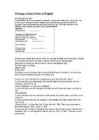
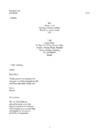
Writing a formal letter in English An example of a task: You are trying to find accommodation for yourself in London while studying at a college there. You have the task of writing to Mr Sabir Siddique who has put the following advertisement in the newspaper. Read the advertisement and the notes you have made. Then write your letter to Mr. Siddique. Write a letter of 120 words. Do not write any addrsses. Flat to let Finsbury Park how far from central London? 10 minutes from Manor House tube Self-contained ground floor flat big enough for two? Bedroom, living room, study room Fully furnished what furniture? 90 pounds per week any extras to pay like electricity? Ideal for student 36 Stewart Street does it have a phone? available how soon? London N4 2PP 0181 809 7985
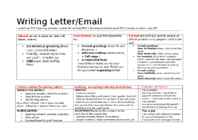
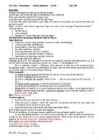
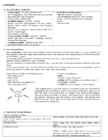
Writing Letter/Email [ greeting- PH1 Opening remarks, reason for writing-PH2,3 developments(arengud)-PH4 closing remarks- sign off] Informal- are sent to people you know well. Semi-formal- to your friend parents Formal-are normally sent to people an (friends, relatives) ect.. official position or to people u dont know well An informal greeting (Dear Formal greetings (Dear Mr and Formal greetings: Dear Sir/Madam-when u dont know the Lucy, Uncle Bill,Mum) Mrs Jones, )
........................................................................................................................................ 3 Formal letter ..................................................................................................................................
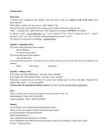
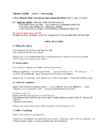
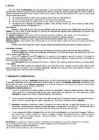
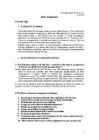
FORMAL LETTER 120 (+/-10%) words I It is a formal letter. Do not use any contracted forms (don’t, can’t, I’m etc.)! II * Dear Mr. Smith / Dear Ms. Smith (No first name!!!) * Kui teame nime, siis lõpp – Yours sincerely ja ülesandes antud nimi * Kui nime pole öeldud, siis – Dear Sir or Madam * Kui nime ei tea, siis lõpus Yours faithfully ja ülesandes antud nimi Do not use your own name!!! Te olete kas Jürid või Marid, Urved või Urmased jne. Enamasti Mart Mets või Mari Mets TYPES OF LETTERS 1) Asking for advice I am writing to ask if you could help me with … I am writing to ask for your advice … Closing line: I would appreciate if you could give me your advice as soon as possible. I look forward to receiving your advice … 2) Giving advice
g. big tremendous "tremendous" has emotional colouring; interesting amazing; good marvelous, etc.). The expressive use of language depends on the ability to choose the proper word among those that denote the same thing. 4. IC may comprise the stylistic colouring of the word that is the word belonging to a certain style of language. Words are then either neutral formal informal (or: neutral colloquial literary). This colouring (formal informal) is always present in a word (e.g. "drink" (neutral) "beverage" (literary) "pull" (colloquial); "home" (neutral) "residence" (literary) "digs" (colloquial). Phonestheme is a subtype of IC. This is a repeated combination of sounds that has a more or less clearly perceived meaning. E.g. "fl" combination of sounds conveys the idea of airiness, brightness with the implication of insecurity;
Copyright ©2007 by Saddleback Educational Publishing. All rights reserved. No part of this book may be reproduced in any form or by any means, electronic or mechanical, including photocopying, recording, or by any information storage and retrieval system, without the written permission of the publisher. ISBN 1-59905-201-6 Printed in the United States of America 13 12 11 10 09 08 07 9 8 7 6 5 4 3 2 1 Introduction Grammar is a very old field of study. Did you know that the sentence was first divided into subject and verb by Plato, the famed philosopher from ancient Greece? That was about 2,400 years ago! Ever since then, students all over the world have found it worthwhile to study the structure of words and sentences. Why? Because skill in speaking and writing is the hallmark of all educated people. Lesson by lesson, this book provides basic instruction in the eight parts of speech--nouns, pronouns, verbs,
of fiction, scientific prose, newspapers, business correspondence, etc.). These are called functional styles or registers. Stylistics is the study of style. In spite of the variety of styles English Stylistics has not been discussed on the same scale as French or German stylistics; it has not been discussed thoroughly. The very term "stylistics" came in more common use in English only some 45 years ago. However, it was recorded for the first time much earlier in 1882, meaning "the study of literary style, the study of stylistic features" (Oxford Dictionary). Stylist is a writer / speaker skilled in a literary style (e.g. Hemingway is considered a peculiar stylist used a lot of repetitions). Stylistician is a scholar (a student). Style is applied to many things: clothing, architecture, hairstyles, etc. A linguistic style
high). Emphatic stress is suggested graphically by the Italics, exclamation marks, dots and dashes. · Accompanying means of emphasis can be the prolongation of vowels. Vowels are prolonged to express positive emotions (glad). Consonants are prolonged to express negative feelings (lousy, monotonous) Pauses: · Logical pauses divide the utterance into meaningful parts--sense groups--and are marked by punctuation. (I didn't know him then, but I do now.) · Emotional pauses are introduced to draw attention to the words or phrases that follow, and thus, emphasize this word or phrase. (She is so gentle, so / gently cruel (pause is acted). Pauses may be marked in a text and may be introduced by the speaker. Both, oral and written speech are characterized by orchestration--the choice of words with respect to the acoustic properties of sound. Due to their acoustic features sound may
Term paper should be printed (20-25 pages long). Graduation paper should be printed (50-60 pages long). First write term paper, and choose a topic right now (theme of term paper later will be developed into graduation paper). Rights: we have a right to have a supervisor. Supervisor writes on the front page "Lubatud kaitsmisele". You need time to: 1. read the theory 2. collect material 3. regularity (1-2 hours a day deal with your paper) The first draft of term paper should be ready by March. Supervisors are: 1. Suliko Liiv (country study, grammar, contrastive studies, methodology) 2. Liliana Skopinskaja (methodology) 3. Jaanika Marley (foneetika, methods) 4. Ene Alas (translation, methods) 5. Paul Rüsse (literature (Am.,Br.), methods) 6. Annika Namme (American literature, methods) 7. Irina Ladusseva (lexicology, methods, stylistics) Choose your topic and find a supervisor.
you can express how you really are without complaining too much. · Fine, thanks. / On top of the world, thanks. · OK, thanks · Not so bad, thanks. / Can't complain, thanks. · So so, thanks. / So and so, thanks. · Not so good, actually 1 The English alphabet Spelling Work with your partner and spell out first your name and then some names of places. Write down each letter as you hear it, and then say the word. The English alphabet on the phone: You might find the following alphabet (used by international airlines) useful when trying to spell a word on the telephone. A Alpha O Oscar Ä Alpha-Echo Ö Oscar-Echo B Bravo P Papa
LETTER OF ENQUIRY An enquiry letter is what we send to a person or a company when we need more information about a product or service offered by that person or company. These letters are often written in response to an advertisement. 1. What is the intended purpose of the inquiry that I intend to write? 2. Who is the intended recipient? 3. How can I let my recipient know that I am seriously interested in their product/service/job offer? General Rules to Follow: Be polite. Be clear and organized about what you want/need to know. Express thankfulness for time and effort. The K.I.S.S. principle keep it short and simple SAMPLE LETTER Dear Ms Smith I am writing in response to your advertisement to enquire about the pub and restaurant placement in England. /I am writing to enquire about the pub and restaurant placement in England, as
A report is based on facts/data etc. The writer knows more than the reader. The reader needs the information. A report should be clear and easy to follow. The person who reads it should find the information quickly. THINK: why you are writing the report, why the reader needs your report and what she might be interested in. Think about the best way to present the facts. If it’s a report of events (e.g. a traffic accident), describe them in chronological order. It should NOT be written like a letter! NO salutation/sign-off. Impersonal style (PASSIVE!), unless you make suggestions or give personal opinion – then you can use “I”. Formal language –no contractions, slang, etc. You can use the following format at the beginning of the report: To: From: (DO NOT write your own name. A member of the student committee etc. is fine) Subject: Basic structure 200 (+/- 10%) Introduction: Aim of the report
Kordamine inglise keele eksamiks A 1.1 Read the text and answer the questions below. Dear Mary-Alice, It's been ages since I last wrote to you, isn't it weird? Yes, so it is, but, I do have a certain reason. Do you remember Sir Thom of the Minquettes'? That fine young man with fascinating blue eyes... Oh, my sweet Mary, you will never guess what happened yesterday! It was about seven o'clock in the evening when Lillian called me out for a walk you know I can't say `no' to my little sis. Anyway we went to the forest near the Swan Lake and, believe it or not, got lost! Awful! I was so scared... We walked and walked, not even knowing the direction we were heading to, until we reached a huge mansion. And the garden around it was so extraordinary... That is something you just must see! But neither the trees nor flowers could be as wonderful as the owner himself! Sir Thom treated us tea and sandwiches, not
I only wish I could share more of it with you guys. I miss you all so much. Lots of love and kisses to everyone! Love Regina 3. Descriptions a) an object My bed in the dormitory is a bunk bed. It is a huge old light brown wooden piece of furniture. It squeaks when I switch sides or when I climb into it. I sleep on the second level and sometimes I am truly scared for my life. It is not as sturdy as I would like it to be. The bottom step on the ladder is loose and I know that one night I am going to fall thanks to that. It has carvings, but they are all scribbles made by previous sleepers. The mattress is worn out and needs to be replaced. It is stained beyond sense. At least it has not fallen apart, yet. b) a place Lausanne is a city in Switzerland which took my breath away, literally. It is one of the most beautiful places I have seen and it is simply filled with history.
English structure revision for the exam 1. Terms Language → A systematic, conventional (tavakohane) use of sounds, signs or written symbols in a human society for communication and self-expression. Human language at all levels is rule- or principle- governed (valitsema) meaning that language corresponds to the grammar. Natural language is usually spoken, while language can also be encoded into symbols (such as letters, morse etc) For example: Estonian, English. Linguistics → The scientific study of human natural language. Broadly, there are three aspects to the study which are Pragmatics (studies the use of language → interested in the gap between the sentence’s meaning and the speaker’s meaning). Semantics (concerned with the meaning of the language aspects and the way they change, also how objects and language and thinking and language are related)
and also twice trucks have break down inside of 3 days of Autocheck servicing them. These are some of the examples of the problems we've been having though before this the work they did on our vehicles was always quite OK. We've made lots of compleints to the Autocheck Manager about the work Autocheck is doing just now and he's had more than enough chance to tell us why things have got worse but he hasn't replied any of our letters (I've attached copies) and every time one of our reps tries to get in touch with him either persinnaly face to face or in the phone, he's out. Bearing all these things in mind, you must have a look at the contract with Autocheck as soon as possible and ask the legal dept. about it. TO: Michael Jones, Transport Manager FROM: Peter Blackburn, Transport Supervisor (Field Services) SUBJECT: Deterioration in Services Provided by the Autocheck Maintenance Company DATE: 6 April 2001
Manners in Estonia Kevin Pillau Hierarchy in Estonian Society Estonia is a hierarchical society. Age, experience and position earn respect. Older people are generally viewed as wiser and as a result revered and honoured. Elders are introduced first and in general are treated much like royalty. Those in senior positions bear the responsibility to make decisions in the interest of the group. Due to seniority titles are very important when addressing people. It is expected that you will use a person's title and their surname until invited to use their first name. Cultural Traditions Estonian culture as an identity is very strong. Oral traditions especially have played a key role in preserving traditions, stories and
adjectives. "A set of words like dog, child, cat, man, bird where the individual words are mutually substitutable is known as a word class..." Definitions a) A noun is the name of a person, place or thing. b) A verb expresses an action, process or state. c) An adjective is a describing word which modifies a noun. "Although such definitions will identify many members of a word class, linguists generally agree that they need to be supplemented by formal tests. e.g. sincerity Sincerity can be frightening misery Lee is misery itself. Such miseries are uncommon Distribution: - a distribution test Kim is an engine driver. an adjective or a noun? *Kim seems engine. cf. Kim seems happy. *Kim's as engine as Chris. cf. Kim's as happy as Chris. Kim is an electric engine driver. *Kim is an electrically engine driver
H-Helen, J - Julia 1.Receiving a money order H: - Hello, I would like to cash a money order. J: - Hello! You should present your identity card. H: - But, you know, I'd like to receive money order for my sister. How do I go about it? J: - Your identity card and letter of attorney, please. H: - Here you are. J: - Well...Unfortunately, I can't cash your money order your signature is not witnessed. H: - Ok. Than, please, I'd like to cash my money order. J: - Take this form and fill it in. May I see your passport? H: - Yes. Please. So...Should I write my full name, my passport number and the sum of money that has been sent to me, right? J: - Certainly. How would you like the money? H: - I prefer one hundred rouble notes, if you don't mind.
Determiners are either specific or general Specific determiners: The specific determiners are: •the definite article: the •possessives: my, your, his, her, its; our, their, whose •demonstratives: this, that, these, those •interrogatives: which We use a specific determiner when we believe the listener/reader knows exactly what we are referring to: Can you pass me the salt please? Look at those lovely flowers. Thank you very much for your letter. Whose coat is this? General determiners: The general determiners are: •a; an; any; another; other; what When we are talking about things in general and the listener/reader does not know exactly what we are referring to, we can use an uncount noun or a plural noun with no determiner: Milk is very good for you. (= uncount noun) Health and education are very important. (= 2 uncount nouns) Girls normally do better in school than boys. (= plural nouns with no determiner)
Do you speak English? Do you speak Spanish? (formal) I (don't) speak... (informal) ¿Entiende usted? / ¿Entiendes? (No) Entiendo. Yo (no lo) se. ehn-tyen-deh oo-sted / ehn-tyen- noh ehn-tyen-doh yoh noh loh seh dehs I (don't) understand. I (don't) know. Do you understand? (formal / informal) ¿Puede ayudarme? Claro / Claro que sí ¿Cómo? pweh-deh ah-yoo-dar-meh klah-roh / klah-roh keh see koh-moh Can you help me? (formal) Sure / Of course What? Pardon me? ¿Dónde está / Dónde están... ? Aquí / Ahí Hay / Había... dohn-deh eh-stah / dohn-deh eh-
Chapter 18 Chapter 39 Chapter 59 Chapter 19 Chapter 40 Chapter 60 Chapter 20 Chapter 41 Chapter 61 Chapter 21 Chapter 42 Chapter 1 It is a truth universally acknowledged, that a single man in possession of a good fortune, must be in want of a wife. However little known the feelings or views of such a man may be on his first entering a neighbourhood, this truth is so well fixed in the minds of the surrounding families, that he is considered the rightful property of some one or other of their daughters. "My dear Mr. Bennet," said his lady to him one day, "have you heard that Netherfield Park is let at last?" Mr. Bennet replied that he had not. "But it is," returned she; "for Mrs. Long has just been here, and she told me all about it." Mr. Bennet made no answer. "Do you not want to know who has taken it
Roman politician, philosopher & translator. Theory ‘‘word-for-word’’ & ‘‘sense-for-sense’’. • Martin Luther – his role in the history of translation studies. Lived during the 15th century. He was a priest, theologian & translator. During that time, the Bible’s were only available in either Latin or Hebrew, which made it very difficult for common people to understand. He came out with a radical plan to translate the Bible into local languages (the first language was German – translated by Martin Luther). This inspired many other translators during that period. • What happened in the 19th and 20th century in translation studies? When and who created the term ‘translation studies’? Translation Studies – James S. Holmes - 1972 Ferdinand de Saussure – Lived during the 19th and 20th century. He was a Swiss linguist and a semiotician. He is widely considered one of the
evidence). Oluline on, et igas lõigusräägitakse ainult ühel teemal, ega hüpata ühelt argum endiltteisele. Viimane lõik moodustab kokkuvõtte ja peaks esimeseslauses võtma eelpoolt oodud arutluse kokku ning seejärel lisamasellest tuleneva lõpumärkuse. · Expressing opinions Introduction State the topic and your own opinion clearly without using too many personal opinion words Main body (para. 2 - 4) Give the first, second and third argument and examples or reasons to support your opinion Conclusion Re-state your opinion, using different words Useful language To list points firstly, in the first place, first of all, to start with, secondly, thirdly, finally, last but not least To add more points to the same topic what is more, furthermore, also, apart from this, in addition to, moreover, besides, too, not to mention the fact that, another major reason
Metathesis-Two sounds, at least one of which is a consonant, change places inside a word. When one of the sounds is a vowel,the other is usually /r/. Fyrst/first/frist a typical case of metathesis.Another case in the passage: beorht/briht.Metathesis present in many languages, a universal phenomenon. For Instance, Proto-Indo-European had tworoots *spek- and the metathetical *skep-, both with the basic meaning of "look, observe, examine". The first is behind Latin words that produced such English loans as spectacle, spectator, expect, inspect, perspective, etc. The second is behind the Greek word for "examine" with the derivatives sceptic, sceptical, scepticism (one who examines things inevitably becomes sceptical about them!). Metathesis, essentially in the same sense, is also a term used in psycholinguistics. People assemble whole words in the brain,before actually uttering them
1. Set and agree the house rules and class regulations with the class. 2. Choose class activities that encourage any good relationships. 3. Be dedicated and care for your students. 4. Accept and even celebrate individual differences. 5. Realise that people learn in different ways 6. Create more student-centred activities. 7. Provide a diverse lesson with a variety of activities 8. Be always prepared for the lesson. 9. Let learners know about your teaching style, the course content and your reasons for doing some activities.... 10. Offer feedback after oral or written assignments or pair-, group work. 1 References: Kahny, Jim. Classroom dynamics: An interview with Jill Hadfield. Available at http://ltprofessionals.com/journalpdfs/vol1no1/features/winter2000kahny.pdf accessed 27.12.2012 ESOL Teaching Skills TaskBook
English becomes a polycentric language; polyglot, cosmopolitan language 4) Modern English – 500,000 words (OED) At present at least 1 billion lexical units 2. Core and periphery Core vocabulary – often short (monosyllabic) words of Germanic and Old Norse origin = ie core vocabulary of most frequent words, and vague fuzzy peripherial words. Core meaning is the meaning which is at the centre of the word.periphery – vague. Formal usage (often polysyllabic words) from Norman French (rank, courtliness,refinement). Learning, science, abstraction: Latin, and Greek. The core vocabulary is predominantly Germanic (the, I, you, etc.) Only 4 of the topranked one hundred words in the Brown Corpus are of foreign origin. 93 of the first one hundred words in the Brown Corpus are monosyllabic, and the remaining have two syllables (only, about, other, also, many even people)
People loved. People hated. Some were sad. Others gay. Others with friends. Others lonely. NT: He yawned, put on his shirt, slammed the door, patted the dog, opened the mailbox, yawned, went back, wound the clock, yawned. APOKOINU CONSTRUCTION APOKOINU CONSTRUCTIONS mean a combination of two clauses into one at the expense of omitting the connecting world (usually who or that). This is regarded bad grammar and this is characteristic of irregular oral speech (dialogue). NT: I am the first one saw her. 1 2 The main effect is to suggest the careless or uneducated nature of somebody's speech. NT: It was I was a father to you. NT: It is your unfairness disgusts me. NT: There is no one enjoys good food than he does. THE GAP-SENTENCE LINK
Some people are interested, but the majority don't care. (NOT ... but the majority doesn't care.) The majority of these people are very poor. (NOT The majority of these people is very poor.) 23. Use too much/many before (adjective +) noun; use too before an adjective with no noun. There's too much noise. I bought too much red paint. Those shoes are too expensive. (NOT Those shoes are too much expensive.) 24. Use that, not what, after all. I've told you all that I know. (NOT I've told you all what I know.) He gave her all that he had. 25. Don't say according to me to give your opinion. I think it's a good film. (NOT According to me, it's a good film.) In my opinion, you're making a serious mistake. (NOT According to me, you're making a serious mistake.) 26. Don't ask about possibilities with May you ...? etc. Do you think you'll go camping this summer? (NOT May you go camping this summer?) Is Joan likely to be here tomorrow? (NOT May Joan be here tomorrow?)
abilities that form his style. This approach is best illustrated in the well-known victum of the french poet Georges-Louis de Buffon ,,Style is the man himself." Stylistics English stylistics or the study of style has not been discussed on the same scale as french stylistics, german or russian. The very term stylistics came into more common use in english only some 30-40 years ago. It was however recorded much earlier that is in 1882 for the first time, meaning ,,The Study of literary style, the study of stylistic features." A short history of the development of stylistics Stylistics is regarded a relatively new branch of philology, yet its roots go back as far as ancient Greece and Rome, where the rhetoricians (retoorikud) cultivated the art of clear and elegant use of language by developing and polishing stylistic devices. In the 18th century, an individualistic-psychological view on style and stylistics emerges. The
 annaabi.ee