 50 punkti
Autor soovib selle materjali allalaadimise eest saada 50 punkti.
50 punkti
Autor soovib selle materjali allalaadimise eest saada 50 punkti.
 ~ 11 lehte
Lehekülgede arv dokumendis
~ 11 lehte
Lehekülgede arv dokumendis
 2011-11-01
Kuupäev, millal dokument üles laeti
2011-11-01
Kuupäev, millal dokument üles laeti
 43 laadimist
Kokku alla laetud
43 laadimist
Kokku alla laetud
 1 arvamus
Teiste kasutajate poolt lisatud kommentaarid
1 arvamus
Teiste kasutajate poolt lisatud kommentaarid
 Alina Semjonova
Õppematerjali autor
Alina Semjonova
Õppematerjali autor
Letters Letters FORMAL, INFORMAL, TRANSACTIONAL TASK 1 Read the extracts and answer the questions. · Where are the extracts from? · What is the purpose of each letter? · How do they differ? · Which extracts are examples of formal letters? · How is the reader addressed in a formal letter? · What are the closing remarks for formal letters? · What is the salutation in a friendly letter? · How would you end extracts 1,2,3 ? · How would you begin the extracts 4 and 5? 1. Dear Mr Miller, I received your kind invitation to the reception. Unfortunately, owing to other commitments. I will be unable to attend ... 2. Dear Ralph, l just got your invitation to the company's event. l `m afraid I can't make it because I've a/ready made plans which l can "t change ... 3. Dear Sirs, I am writing to complain about the poor quality of the items which I received from your co
Letter of application Salutation Dear Sir or Madam Dear Sir/Madam Dear Mr/Mrs/Ms Paragraph 1 Reason for writing, name of the available position (+add the source, if available) I am writing to apply for the post advertised in... I am writing in response to your advertisement in... Paragraph 2, 3 What are you doing now, previous experience Qualifications (also personality traits, if necessary) NB! Relevant information I have graduated from... (with honors) My degree is in... I attended a.... course Final paragraph + closing sentence Closing remarks: thank the person for considering your application, ask the person to consider you for the job, mention the possibility of further communication. I have enclosed my CV... I am enclosing my curriculum vitae together with two references, I would be happy to provide any further information, if you wish me to attend an interview, I am available at any time, Thank you for c
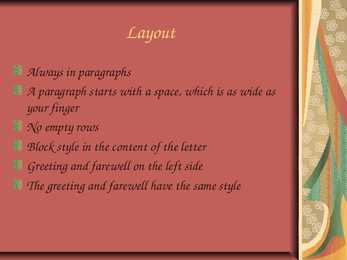
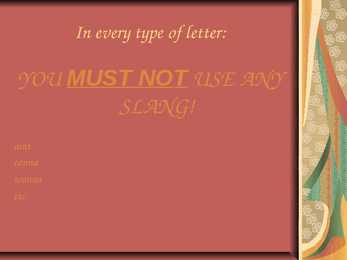
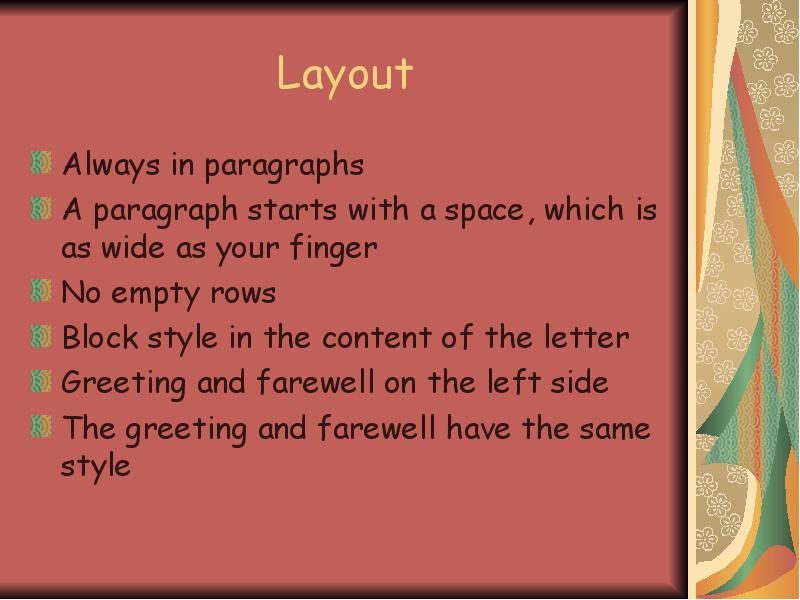
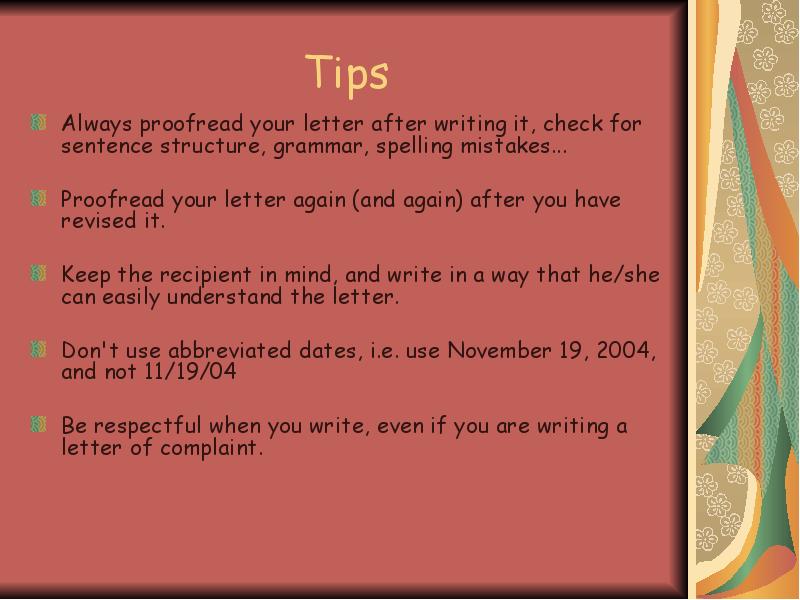
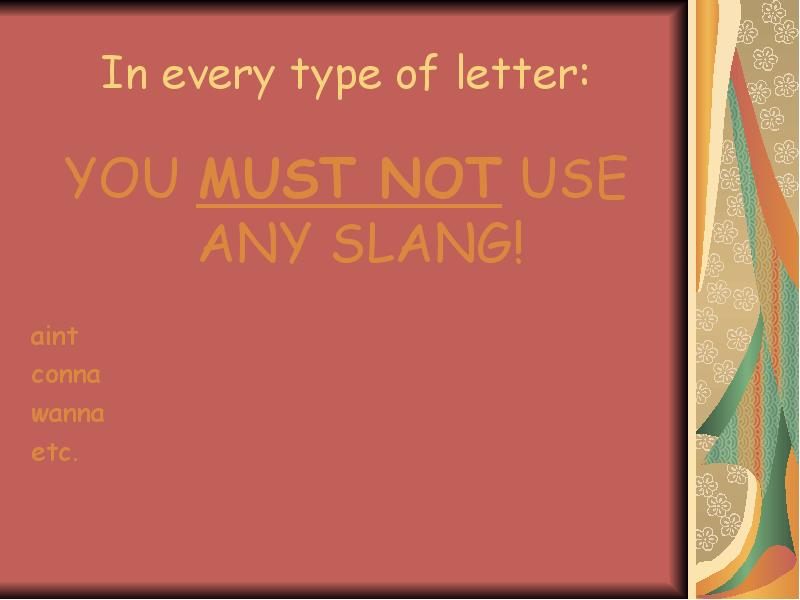
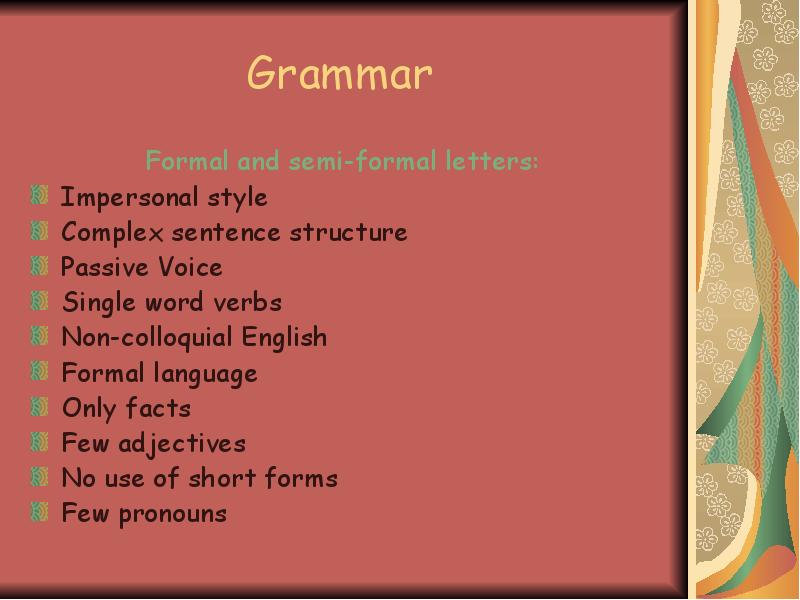
Writing letters Main rules !!!Always write something on the "Subject" line (university emails: e.g. name or code of the course, then issue, topic etc) If the matter is urgent, you may write so on the "Subject" line Start and end your email properly (also making sure the other person knows who you are) "you" is spelled with a capital letter only at the beginning of a sentence, NEVER in the middle In official emails do not abbreviate (e.g., "I am" instead of "I'm", "do not" instead of "don't", "cannot" instead of "can't" etc). Also, do not use colloquial expressions such as "fyi" etc. Pay attention to punctuation and spelling use spell check. Specifics beginning a letter If you don't know the name of the recipient: Dear Sir/Madam, To whom it may concern, If you know the name of the recipient: Dear Mr/Ms Jones, If you know the name and it's informal (or you have been writing emails to each other back and forth quite a lot already):
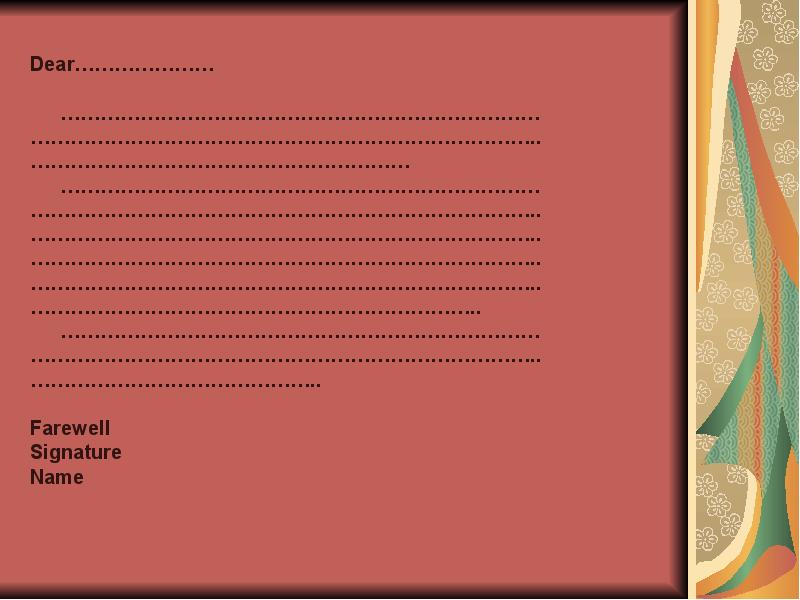
Writing a formal letter in English An example of a task: You are trying to find accommodation for yourself in London while studying at a college there. You have the task of writing to Mr Sabir Siddique who has put the following advertisement in the newspaper. Read the advertisement and the notes you have made. Then write your letter to Mr. Siddique. Write a letter of 120 words. Do not write any addrsses. Flat to let Finsbury Park how far from central London? 10 minutes from Manor House tube Self-contained ground floor flat big enough for two? Bedroom, living room, study room Fully furnished what furniture? 90 pounds per week any extras to pay like electricity? Ideal for student 36 Stewart Street does it have a phone? available how soon? London N4 2PP 0181 809 7985 A letter starts with a date, except when it is said that the date is not necessary. Usually on national examination, the date is already written on the writin
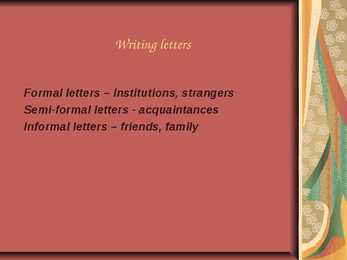
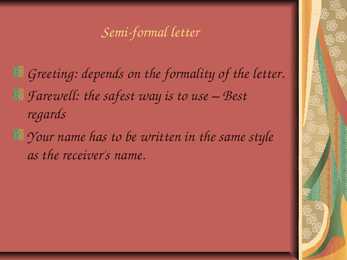
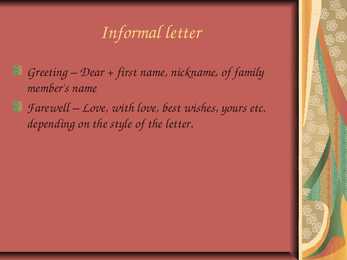
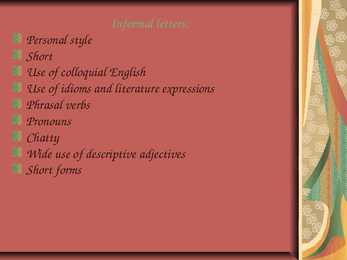
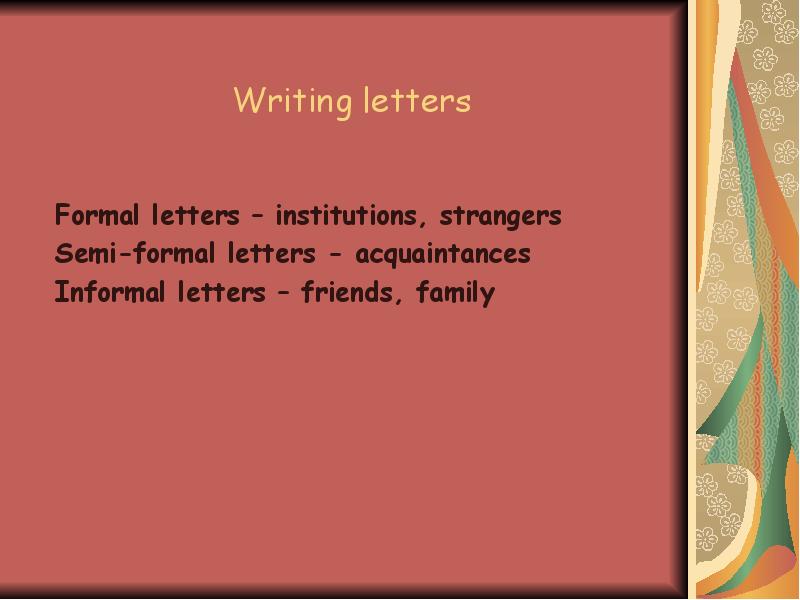
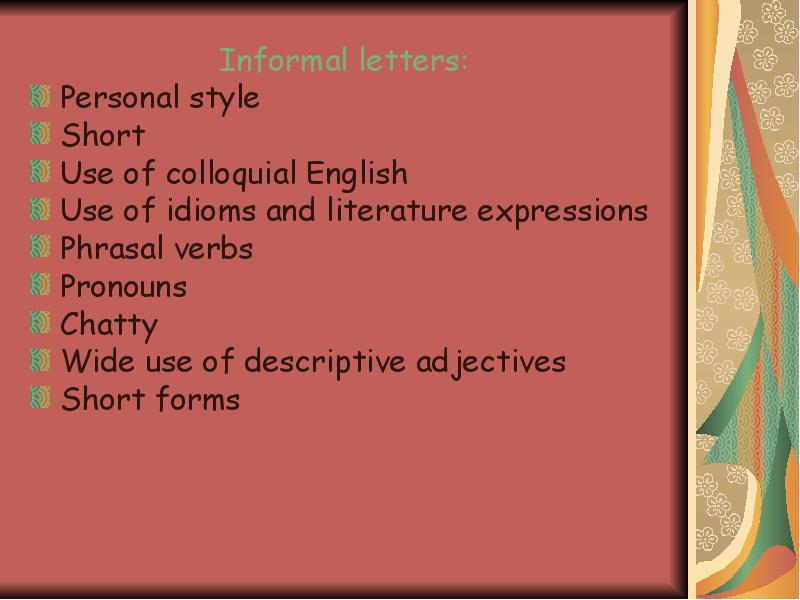
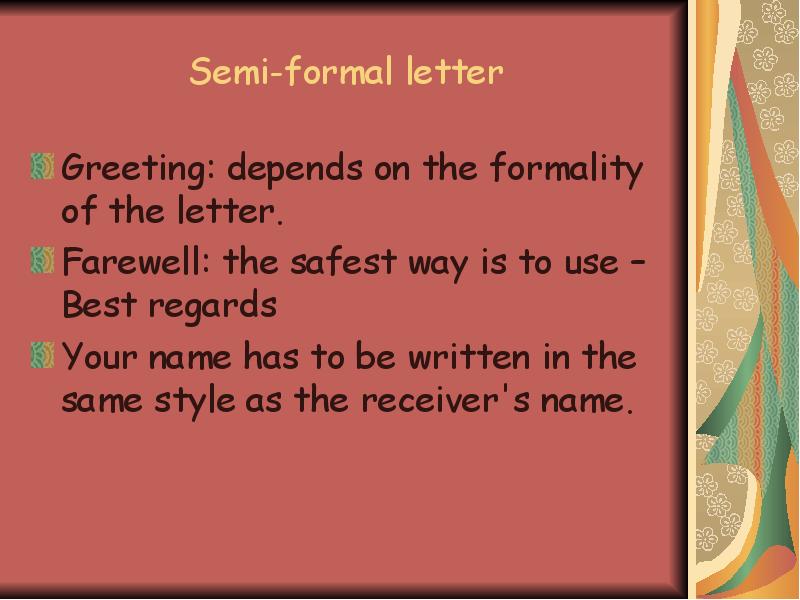
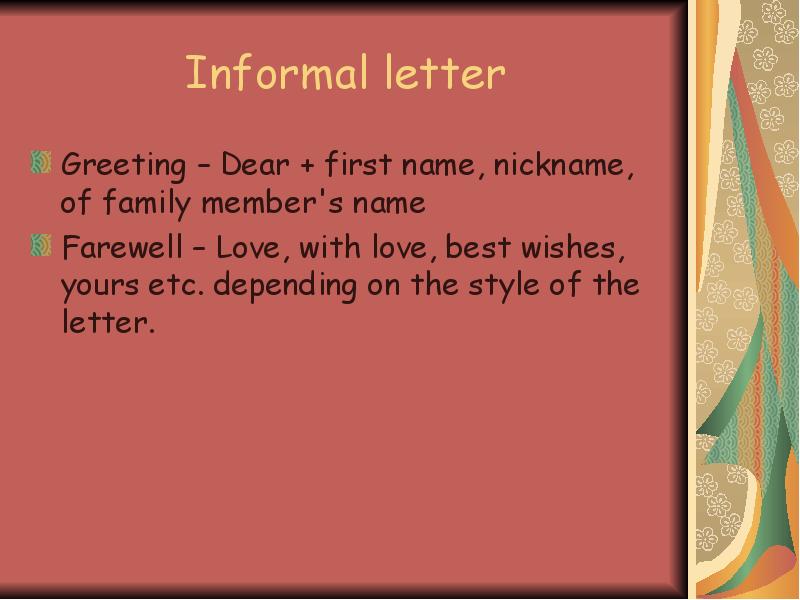
Writing Letter/Email [ greeting- PH1 Opening remarks, reason for writing-PH2,3 developments(arengud)-PH4 closing remarks- sign off] Informal- are sent to people you know well. Semi-formal- to your friend parents Formal-are normally sent to people an (friends, relatives) ect.. official position or to people u dont know well An informal greeting (Dear Formal greetings (Dear Mr and Formal greetings: Dear Sir/Madam-when u dont know the Lucy, Uncle Bill,Mum) Mrs Jones, ) name. Friendly, relaxed style (How
INGLISE KEELE EKSAMI KONSPEKT Sisukord Sisukord ......................................................................................................................................... 1 Ajavormid .......................................................................................................................................
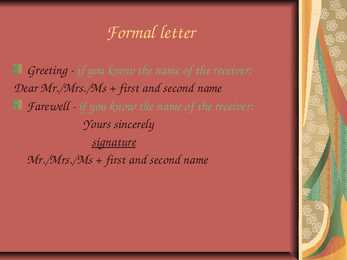
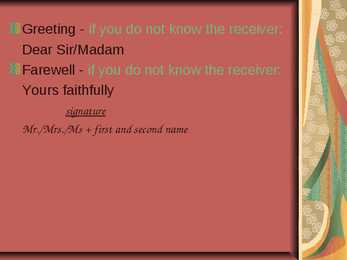
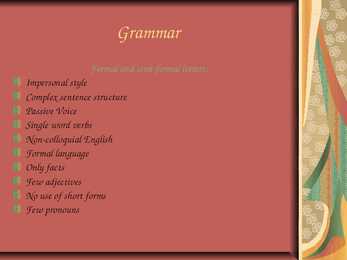
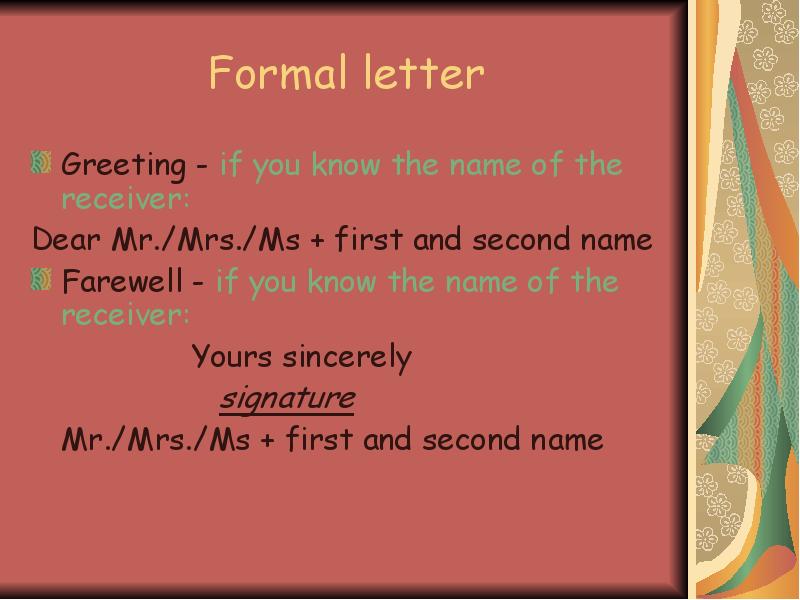
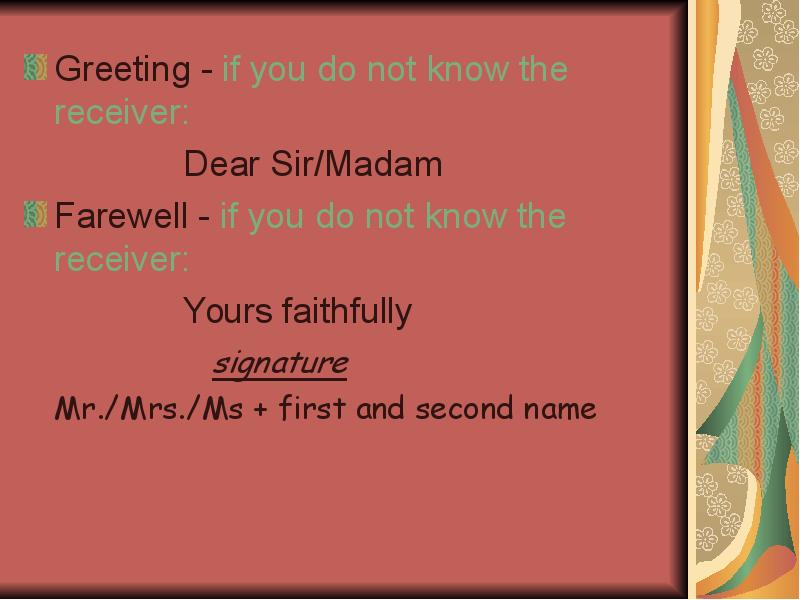
FORMAL LETTER 120 (+/-10%) words I It is a formal letter. Do not use any contracted forms (don’t, can’t, I’m etc.)! II * Dear Mr. Smith / Dear Ms. Smith (No first name!!!) * Kui teame nime, siis lõpp – Yours sincerely ja ülesandes antud nimi * Kui nime pole öeldud, siis – Dear Sir or Madam * Kui nime ei tea, siis lõpus Yours faithfully ja ülesandes antud nimi Do not use your own name!!! Te olete kas Jürid või Marid, Urved või Urmased jne. Enamasti Mart Mets või Mari Mets TYPES OF LETTERS 1) Asking for advice I am writing to ask if you could help me with … I am writing to ask for your advice … Closing line: I would appreciate if you could give me your advice as soon as possible. I look forward to receiving your advice … 2) Giving advice I am writing in reply to your letter asking advice about …. Making suggestions: I would suggest that ..., I would advise you to … If I were you ..., I
1. STYLE The term "style" is polysemantic (has many meanings): a Latin word "stilus" originally meant a writing instrument used by ancient people. Already in classical Latin the meaning was extended to denote the manner of expressing one's ideas in written or oral form. Jonathan Swift defined style as "proper words in proper places". In present day English the word "style" is used in about a dozen of principle meanings: 1. the characteristic manner in which a writer expresses his/her ideas (e.g. style of Byron) 2. the manner of expressing ideas, characteristic of a literary movement or period 3. the use of language typical of a literary genre (e.g. the style of a comedy, drama, novel). 4. the selective use of language that depends on spheres / areas of human activity (e.g. style of fiction, scientific prose, newspapers, business correspondence, etc.). STYLISTICS Stylistics is the study of style. The very term "stylistics" came in more com
 annaabi.ee







Kõik kommentaarid