Leidsid 33 sarnast õppematerjali, mis on seotud failiga "Horatio Nelson slide show". Need materjalid aitavad sul teemat sügavamalt mõista.
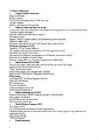
nelson, battle, horatio, trafalgar, england, vice, place, cape, service, admiral, famous, duty, words, memory, 1758, birth, burnham, thorpe, death, spain, britain, ireland, branch, royal, years, 1771, rank, these, before, during, battles, nile, santa, tenerife, ancient, sailing, vessel, ships, british, naval, greatest, sailor, best, known, hero, done1. About Horatio Nelson 2. The Victory 3. Emma and Horatia 4. Battles 5. Used material Nelson's Column in Trafalgar Square Born: 29 September 1758 Birthplace: Burnham Thorpe, Norfolk, England Died: 21 October 1805 (killed in battle) Best Known As: The hero of the Battle of Trafalgar Lord Nelson's full title, at the time of his death, was Vice Admiral of the White The Right Honourable Horatio, Viscount Nelson, Knight of the Most Honourable Order of the Bath. Horatio Nelson HMS Victory is a 100 gun ship of the line of the Royal Navy, built in the 1760s and currently a museum in dry dock in Portsmouth. She is the oldest ship still in commission. Nelsons most famous ship, his flagship at the Battle of Trafalgar, 21 October 1805. The Victory Nelsons Flagship The two people he hold most dear in the world his beloved Emma and their daughter Horatia.
2009/2010 Horatio Nelson Early life Horatio Nelson was born in England on September 29, 1758, along the Norfolk shore at Burnham Thorpe His mother died when he was nine At the age of 12, Nelson joined the Royal Navy as a midshipman His naval career began on January 1, 1771, when he reported to the third-rate Raisonnable as an Ordinary Seaman and coxswain Early life Shortly after reporting aboard, Nelson was appointed a midshipman and began officer training By 1777 he had risen to the rank of lieutenant In 1779 he became a captain Mediterranean His early years of service were in the West Indies but in 1793 took the helm of HMS Agamemnon patrolling the Mediterranean In 1794 he was shot in the face during a joint operation at Calvi, Corsica, which cost him both half of his right eyebrow and the sight in his right eye Battles 1797- the Battle of Cape St Vincent
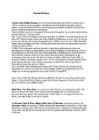
History exam *Stonehenge - is a monument located in England. It is one of the most famous prehistoric sites in the world and is composed of earthworks surrounding a circular setting of large standing stones. The surrounding circular, earth bank and ditch, have been dated to about 3100 BC. Stonehenge was produced by a culture with no written language. Many aspects of Stonehenge remain subject to debate. There is little or no direct evidence for the construction techniques used by the Stonehenge builders.
Topic London Tallinn English College Tallinn 2007 1. Introduction London is the capital city of the United Kingdom and the largest urban area in England. The ancient City of London, to which the name originally belonged, still maintains its medieval boundaries, but the name "London" has long applied more to the whole metropolis that has grown up around it. London has been an important settlement for over two millenniums. It is also one of the world's leading business, financial and cultural centres and its influence in politics, education, entertainment and even fashion contribute to its status as a major global city
arrived with reinforcements, including artillery and elephants, for the final march to the Catuvellaunian capital, Camulodunum . The future emperor Vespasian subdued the southwest,Cogidubnus was set up as a friendly king of several territories, and treaties were made with tribes outside the area under direct Roman control.Romans built many roads and also many great bulidings like the Hadrians wall. Anglo-Saxons and Normans The history of Anglo-Saxon England broadly covers early medieval England from the end of Roman rule and the establishment of Anglo-Saxon kingdoms in the 5th century until the Conquest by the Normans in 1066. Christianisation of the Anglo-Saxon Kingdoms began around 600 and was essentially complete by the mid 8th century. Throughout the 7th and 8th centuries, power fluctuated between the larger kingdoms. Bede records Aethelbert of Kent as being dominant at the
feet, inches-roman measurements;christianity; Roman basilica in curches; reading, writing; buildings, roads Christianity in Roman Britain Until 4th C christians were persecuted 313 AD Emperor Constantine legalised christianity 380 AD Emperor Theodosius I made it the official religion of the empire Paganism had been eclipsed but continued to pose a political, religious challenge Boudicca Queen of Iceni people of Eastern England, led an uprising against Roman forces Prasutagus(ruler) was first allowed to rule when romans conquered England, after his death, romans decided to rule Iceni and flogged Boudicca and raped her daughters 60-62 AD Iceni rebelled, Boudicca´s warriors defeated Roman Ninth Legion, destroied capital-Colchester Finally Boudicca was defetated, she poisoned herself to avoid capture Hadrian´s wall A defensive barrier builtin 122 AD by Roman
relations and defence. Great Britain Across / 'krs / risti, läbi, põiki Locality / l'kælt / asukoht, paikkond Inland body / 'nlænd 'bd / sisemaine osa Inlet / 'nlet / merekäär, laht Headland / 'hedlnd / neem Scour / 'ska / küürima Foreshore / 'f:: / tõusu ja mõõna vaheline rand Recreational / rekr'enl / lõõgastumis-, vabaaja- Scenery / 'si:nr / maastik Juxtaposition / dkstpz'in / kõrvuti asetsev GB consists of England, Scotland and Wales. GB is only a dot on the world map. It offers a great variety and scenic contrasts are often within easy reach. The coastline is washed by the tidal system twice a day. Britain´s speciality is the man-made scenery. Each part of the country has its peculiar geographical features. England Indented / n'dentd / sakiline Estuary / 'estjr / suudmelaht
law, Roman baths, language and advanced civilization. They also built Hadrian's Wall in 122 A.D. Romans occupied Britain for four centuries. The Roman way of life all vanished after the invasions from Northern Europe by the Angles, Saxons and Jutes from the 5th century onwards. They ruined Londinium, but they were easily turned into Christianity and religion became more and more important. The Vikings, who came in the 9th century, first raided England to plunder it, but then they decided to stay. In the 10th century England fell under Danish Rule, with King Canute finally managing to unite the Anglo-Saxons and Danes at the beginning of 11th century. Medieval England After defeating the Anglo-Saxon King Harold at the Battle of Hastings in 1066, William of Normandy (who became William I, also called William the Conqueror) introduced the Norman feudal system, rewarding his French-speaking followers with land in return for
Paul's Cathedral in 604. The Vikings 8th and 9th century By the 9th century, London was a very prosperous trading centre, and its wealth attracted the attention of Danish Vikings. The Danes periodically sailed up the Thames and attacked London. In 851 some 350 longboats full of Danes attacked and burned London to the ground. King Alfred the Great totally defeated the Danes in 878 and they split the country between them. The Danes took eastern England including London while Alfred took the South and West. Alfred's men took London in 886 and repaired the walls of the old Roman city. In 1016 the Vikings attacked London again but the Saxons fought them off. The attacks ceased when the Danish king Cnut came to power in 1017. Cnut managed to unite the Danes with the Anglo-Saxons, and invited Danish merchants to settle in the city. London prospered under Cnut, but on his death the city reverted to Anglo-Saxon control under Edward the Confessor
laws to a new province of the Roman Empire and started to build good roads. Officials were appointed (governors, procurators to collect taxes, look after the estates and mines and se that the gold, silver, iron and lead were exported back to Rome). Introduced schools,a new language Latin, large farms (villas), baths. In AD 410 they had to leave . roman occupation lasted nearly 400 years. They left behind very little. Roman province of Britannia covered most of present-day England and Wales. 4. Latin influence on English *The influence of Latin is noticeable also in the names of European cities: the Latin noun colonia (settlement, colony) may be found in numerous place-names: Lincoln, Colchester, Cologne ; from Latin word castrum (military camp) were derived English affixes -chester and -castle: Manchester, Lancaster, Newcastle; Latin word portus (seaport) in Portsmouth *-tor - person, doer, masculine form
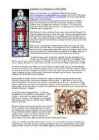
Edward the Confessor (1003-1066) Edward was the oldest son of Ethelred II (Ethelred the Unready http://en.wikipedia.org/wiki/Ethelred_the_Unready) and Emma of Normandy (http://en.wikipedia.org/wiki/Emma_of_Normandy). He wast he penultimate Anglo-Saxon king of England. The family was exiled in Normandy after the Danish invasion of 1013 so Edward spent the first part of his life in Normandy. He grew up in deep religious views and gained the nickname ''Confessor''. As Edward was seperated from his family and grew up in a strange land, it is said that his childhood wasn't a happy one.
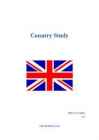
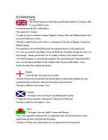
1) General facts The UK: * the United Kingdom of Great Britain and Northern Ireland was formed in 1801 * it covers 243,610 sq km * everybody from the UK is called British * the capital city is London * is made up of four constituent countries: England, Scotland, Wales and Northern Ireland which in turn are divided into counties * the flag is called the Union Jack which is a combination of the flags of England, Scotland and Northern Ireland * the population is about 60,000,000 people, the population density is 242 people/sq km * its coasts are washed by the Atlantic Ocean, the North Sea, the English Channel, the Celtic Sea, Saint George's Channel, and the Irish Sea. It is linked to France by the Channel Tunnel * the United Kingdom is a constitutional monarchy. The current monarch is Queen Elizabeth II, who is also the Queen and Head of State of fifteen other Commonwealth Realms, such as
60.0 million people in mid-2009, it is the third most populous island in the world, after Java and Honsh. Great Britain is surrounded by over 1,000 smaller islands and islets. The island of Ireland lies to its west. Politically, Great Britain may also refer to the island itself together with a number of surrounding islands which comprise the territory of England, Scotland and Wales. All of the island is territory of the sovereign state of the United Kingdom of Great Britain and Northern Ireland, and most of the United Kingdom's territory is in Great Britain. Most of England, Scotland, and Wales are on the island of Great Britain, as are their respective capital cities: London, Edinburgh, and Cardiff. The Kingdom of Great Britain resulted from the political union of the kingdoms of England
5. Which 5 places attract visitors in Wales and Scotland? Edinburgh, Loch Ness, The Highlands, Snowdonia, Cardiff. 6. Name 6 islands, 5 rivers, 3 lakes, 3 mountains in UK. Isle of Man, Isle of Wight, Isle of Lewis, Island of Mull, Island of Arran, Anglesey Island Severn, Thames, Tweed, Avon, Trent, Dove Ben Nevis, Snowdon, Ben Macdui 7. Stonehenge. Stonehenge was produced by a culture that left no written records. Built on Salisbury Plain, in Wiltshire, England some time between 5,000-4,300 years ago. One of the most famous megaliths in the world, dating from prehistoric times. Stonehenge consists of circles of stone arranged in complex patterns, and their origin is still being explored. Some of the stones come from over 200 miles away in Wales. There is little or no direct evidence revealing the construction techniques used by the Stonehenge builders. It was probably associated with sun-worship and
1. BRITISH NATIONAL SYMBOLS 1.1 Great Britain and British story Great Britain is an island in the North Atlantic off the north-west coast of continental Europe. With an area of 229,848 km2, it is the largest island of the British Isles, the largest island in Europe and the ninth-largest in the world. It is surrounded by over 1,000 smaller islands. The island is part of the United Kingdom of Great Britain and Northern Ireland, constituting most of its territory: most of England, Scotland, and Wales are on the island, with their respective capital cities, London, Edinburgh, and Cardiff. (wikipedia, 2015) The Kingdom of Great Britain resulted from the Union of Scotland and England in 1707. More than a hundred years before, in 1603, King James VI, King of Scots, had inherited the throne of England, but it was not until 1707 that the Parliaments of the two countries agreed to form a single kingdom
Britain has not always been an island. It became one only after the end of the last ice age, by about 5000 BC. The temperature rose and the ice sheet melted, flooding the lower-lying land that is now under the North Sea and the English Channel. The improving climate changed the environment. Vast forests covered most of the lowlands and highlands, which were rich in various animals. Rivers teemed with fish. The island became a very comfortable place to live in. Albion The most ancient name for Britain was Albion which was first used by a Greek author in the 6th century BC. Though Celtic in origin, it was supposed by the Romans to come from Lat. albus (white), with reference to the chalk cliffs at Dover. White cliffs are the first and last sight of land for visitors who come to Britain by sea. Notes 1
Some of the things you will learn in THE CODEBREAKERS • How secret Japanese messages were decoded in Washington hours before Pearl Harbor. • How German codebreakers helped usher in the Russian Revolution. • How John F. Kennedy escaped capture in the Pacific because the Japanese failed to solve a simple cipher. • How codebreaking determined a presidential election, convicted an underworld syndicate head, won the battle of Midway, led to cruel Allied defeats in North Africa, and broke up a vast Nazi spy ring. • How one American became the world's most famous codebreaker, and another became the world's greatest. • How codes and codebreakers operate today within the secret agencies of the U.S. and Russia. • And incredibly much more. "For many evenings of gripping reading, no better choice can be made than this book." —Christian Science Monitor
It is a towering tree, at one moment covered in gold and jewels, at the next soaked in blood. But then the Cross begins to address the dreamer as an ordinary tree which got involved long ago in events which passed its own comprehension. This narrative of the Crucifixition is even more forceful and the death is also a victory. Using the old language of heroic poetry, The Cross represents itself as the loyal follower of a lord who inexplicably wills his own death. In a normal battle to obey your leader's command is to help defend his life, but for this follower it is to serve his lord's absolute will for death by remaining rigidly upright (to stand fast). The Cross speaks for the bewildered humanity of the dreamer, but also for the suffering humanity of Christ. The Cross himself participates in Christ's sufferings and it can also participate in his glory. After the Crucifixion he is first buried and then raised up and honored (like Christ)
Russian philology The meaning of the word "philology" is "love for word". This is love that unites teachers and researchers of modern and Classical languages and literature, interpreters and diplomats, journalists and publishers, writers and poets. Russian philologis are highly demanded in various spheres of scholarly research and education, in the mass media, in civil service at the Ministry of Foreign Affairs, in archives, libraries, museums, in travel agencies, as well as Russian and international companies. Curriculum within in philological faculty includes courses of Russian and European languages and literature, courses of Linguistics and Theory of Literature for students to familiarize themselves with various schools and trends of Russian and foreign philology. The core curriculum also includes a number of Liberal Arts courses (Philosophy, History,
western Iberia. Rome sent numerous legions and its best generals to Lusitania to quell the rebellion, but to no avail -- the Lusitanians kept conquering territory. The Roman leaders decided to change their strategy. They bribed Viriathus's allies to kill him. In 139 BC, Viriathus was assassinated, and Tautalus became leader. Rome installed a colonial regime. The complete Romanization of Lusitania only took place in the Visigothic era. In 27 BC, Lusitania gained the status of Roman province, the Lusitanians lost their freedom and became opressed. Later, a northern province of Lusitania was formed, known as Gallaecia, with capital in Bracara Augusta, today's Braga. There are still many ruins of castros (Hill fort) all over modern Portugal and remains of Castro culture. Numerous Roman sites are scattered around present-day Portugal, some urban remains are quite large, like Conimbriga and Mirobriga
Outstanding figures in British literature Eva Martina Põder 11.b British literature Refers to all literature produced by British authors from the United Kingdom, which includes England, Scotland, Northern Ireland, Wales, the Channel Islands, and Isle of Man Includes early works written in Gaelic, Welsh, and Latin, works in Old, Middle, and Modern English, each of which represents a different period Full of great works British works in Latin Venerable Bede He lived between 673 and 735 AD The greatest of all the AngloSaxon scholars He's the earliest English historian, whose work has shed light on a period of English history that would have otherwise been unknown
BERNARDO Long live the king! FRANCISCO Bernardo? BERNARDO He. FRANCISCO You come most carefully upon your hour. BERNARDO 'Tis now struck twelve; get thee to bed, Francisco. FRANCISCO For this relief much thanks: 'tis bitter cold, And I am sick at heart. BERNARDO 4 Have you had quiet guard? FRANCISCO Not a mouse stirring. BERNARDO Well, good night. If you do meet Horatio and Marcellus, The rivals of my watch, bid them make haste. FRANCISCO I think I hear them. Stand, ho! Who's there? Enter HORATIO and MARCELLUS HORATIO Friends to this ground. MARCELLUS And liegemen to the Dane. FRANCISCO Give you good night. MARCELLUS O, farewell, honest soldier: Who hath relieved you? FRANCISCO Bernardo has my place. Give you good night. Exit MARCELLUS 5 Holla! Bernardo! BERNARDO Say, What, is Horatio there?
Years 1154-1485 Henry I was the first unquestioned ruler. One of the most important kings in the Middle Ages. He had lands in Britain & France. Then the government was the monarch, a person, not a place. He had more land than any pervious king. After his marriage to Eleanor of Aquitaine, he also ruled the lands south of Anjou. His empire stretched from the Scottish border to the Pyrenees. England provided most of its wealth, but the heart was Anjou. Henry II began to regain royal control. During the war some barons had become very powerful. He pulled down some of their castles. He tried to restore law & order. He wanted the same kind of justice to be used everywhere. He appointed his own judges to travel around the country. They dealt with crimes & disagreements over poverty. Serious offences were tried in the king's court. At first they had no special knowledge or training
other European countries. English boys play it at school, and in public parks. When they grow up, they play as members of important amateur teams or as a professional in teams competing in football ,,leagues". Professional football is as much a business as a sport. Rugby football was first played in 1823. In rugby every player is allowed to carry the ball. The ball is oval, not round. Each team contains 15 players. The oldest game of football in England is probably the football match which takes place at Ashburn on Shrove Tuesday every year. The game starts in the centre of the town, and the distance between two goals is two miles. The only rule is not to use motorcycles, cars and lorries in the game. In 1958 one team buried the ball. The other team didn't know and ran after them. Later first team took the ball and won. 3) JAMES WATT He was born in the small port of Greenock on the river Clyde in Scotland in 1736. His
process. Consequently, they were attracted to the idea of democracy, where the government is "of the people, by the people, for the people," as Lincoln later expressed in his Gettysburg Address. Religious Tolerance: Much impetus for the ideas of religious tolerance came from the rule of King George II, who was a staunch Catholic and did not allow freedom of religion to Protestants in New England. Voltaire was among the first to denounce Christianity and other organized religions as mere ploys to support monarchy. What emerged was Deism, which was more or less a new religion that considered reason its foundation. In Deism, there is no interference by a deity, and man controls his own destiny. These ideas stirred the masses into action, as the people dreamed of carving their own futures. Adopted by the Founding Fathers, Enlightenment
example of Am lit. The early years of colonisation produced a mass of utilitarian writings including biographies, accounts of voyages, diaries, sermons, pamphlets. Much of the material addressed the problems of Church and State. There were few examples of fiction, poetry or drama. Anne Bradstreet of Massachusetts published some lyrical poems of high literary quality (1650) and Edward Taylor, who was born in England but lived in Boston, wrote some poetry in the style of John Donne and the metaphysical poets. All 17 th cent Am writings were, both in content and form, similar to English lit of the same period. The great literary figures of the 18th cent were Benjamin Franklin (1706-1790), Thomas Paine (1737-1809) and Thomas Jefferson (1743-1826). The common sense and witty aphorisms of Franklin's popular Poor Richard's Almanac series appealed to colonial readers
341/sq mi. Calling code +420. HISTORY The recent past Despite the city's turbulent history, Prague's progress in recent years has been more stately than revolutionary. The booming tourism sector and a solid industrial base have left its citizens in better economic shape than the rest of the country. Unemployment is minimal, the shops are full, and façades that were crumbling a decade ago have been given face-lifts. Big new shopping malls and multiplex cinemas are popping up all over the place, there's a huge new sporting and events arena, the metro system is being extended and a new floodprotection system has been installed. There are downsides, of course. Rumours of corruption in City Hall are rife, affordable 6 housing remains in short supply, the health system is under strain, and traffic congestion and crime rates are up. Despite this, the mood of the city remains buoyant.
between Douglass and Garrison. Douglass further angered Garrison by saying that the Constitution could and should be used as an instrument in the fight against slavery. With this, Douglass began to assert his independence from the Garrisonians. Garrison saw the North Star as being in competition with the National Anti-Slavery Standard and Marius Robinson's Anti-Slavery Bugle. In March 1860, Annie, Douglass' youngest daughter, died in Rochester, New York, while he was still in England. Douglass returned from England the following month, taking the route through Canada to avoid detection. By the time of the Civil War, Douglass was one of the most famous black men in the country, known for his oratories on the condition of the black race, and other issues such as women's rights. Lincoln's death At Abraham Lincoln's memorial, Douglass was in the audience while a tribute to Lincoln was being given by a prominent lawyer. The tribute was not as successful as some of the
abandon polytheism. Although some converted to Islam, Muhammad and his followers were persecuted by the leading Meccan authorities. After 13 years of preaching, Muhammad and the Muslims performed the Hijra ("emigration") to the city of Medina (formerly known as Yathrib) in 622. There, with the Medinan converts (Ansar) and the Meccan migrants (Muhajirun), Muhammad established his political and religious authority. Within years, two battles had been fought against Meccan forces: the Battle of Badr in 624, which was a Muslim victory, and the Battle of Uhud in 625, which ended inconclusively. Conflict with Medinan Jewish clans who opposed the Muslims led to their exile, enslavement or death, and the Jewish enclave of Khaybar was subdued. At the same time, Meccan trade routes were cut off as Muhammad brought surrounding desert tribes under his control. By 629 Muhammad was victorious in the nearly bloodless Conquest of Mecca, and by the time of his
........... 8 Population and Ethnicity..............................................................................................9 3 Introduction The official name of the country is the United Kingdom. The United Kingdom is an island country. It consists of the island of Great Britain and Northern Ireland. Great Britain can be divided into three parts England, Wales and Scotland. Each of them has their own capital city. Glasgow in Scotland, Cardiff in Wales and London in England. The country is situated in the north-western Europe. The territory of the United Kingdom is about 244,000 square kilometres and about 60 million people live there. The UK contains a number of small islands. The largest islands that belong to the United Kingdom are the Isle of Man in the Irish Sea and the Isle of Wight which lies off of England's southern coast
Move of over 70,000 natives (vabatahtlik-sunniviisiline) Reservations (kaitsealad)1851- the Indian Appropriations Act About 310 reservations 55,7 million acres Unevenly distributed Tribal sovereignty (iseseisvus) Poverty and unemployment · Indian citizenship Act of 1924 Granted citizenship to 300,000 indigenous people, to friendly tribes State support was limited Absorb Indians into the mainstream Didn't have the right to vote · Trail of Broken Treaties of 1972 Took place in 1972 Cross-country protest by American Indian organizations Intended to bring attention to American Indian issues such as treaty rights, living standards, and inadequate housing. Huge media coverage "20-Point Program" · Present situation 1 Reservations situated west of the Mississippi 1% of the population Minority group, less privileged Social problems Self-awareness Mixture of old and new HOW GOVERNMENT ACTS NOW- gives natives money and near Las Vegas the right to own
He discovered America in 1492. I Indian sun, they pray for fan. J we hate Jews, they are fools. K Bush is okey, because he is not gay. L Americans are large, they eat much. M Mc`Donalds is good, there is a lot of food. N is for Nigga who pulled the trigger. O is for Osama who wears pyjamas. P is for Pamela who likes camera. Puritans The Puritans were a group of people who grew discontent in the Church of England and worked towards religious, moral and societal reforms. The writings and ideas of John Calvin, a leader in the Reformation, gave rise to Protestantism and were pivotal to the Christian revolt. They contended that The Church of England had become a product of political struggles and man-made doctrines. The Puritans were one branch of dissenters who decided that the Church of England was beyond reform. Escaping persecution from church leadership and the King, they came to America.
of all time. William Makepeace Thackeray William Makepeace Thackeray was an English novelist of the 19th century. He was famous for his satirical works, particularly Vanity Fair, a panoramic portrait of English society. Thackeray, an only child, was born in Calcutta, India, where his father, Richmond Thackeray (1 September 1781 13 September 1815), held the high rank of secretary to the board of revenue in the British East India Company. William had been sent to England earlier, at the age of five, with a short stopover at St. Helena where the imprisoned Napoleon was pointed out to him. He was educated at schools in Southampton and Chiswick and then at Charterhouse School, where he was a close friend of John Leech. He disliked Charterhouse, parodying it in his later fiction as "Slaughterhouse." Illness in his last year there (during which he reportedly grew to his full height of 6'3")
 annaabi.ee