 100 punkti
Autor soovib selle materjali allalaadimise eest saada 100 punkti.
100 punkti
Autor soovib selle materjali allalaadimise eest saada 100 punkti.
 ~ 2 lehte
Lehekülgede arv dokumendis
~ 2 lehte
Lehekülgede arv dokumendis
 2015-04-12
Kuupäev, millal dokument üles laeti
2015-04-12
Kuupäev, millal dokument üles laeti
 4 laadimist
Kokku alla laetud
4 laadimist
Kokku alla laetud
 0 arvamust
Teiste kasutajate poolt lisatud kommentaarid
0 arvamust
Teiste kasutajate poolt lisatud kommentaarid
 huvijuhe
Õppematerjali autor
huvijuhe
Õppematerjali autor
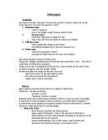
Questions for the First Philosophy Test a. Introduction 1. How would you characterize Modern philosophy? Commanding outlook, power, will, Man is God. 2. How would you characterize Classical philosophy? Contemplative outlook, truth, intelligence, God is truth. b. Descartes 3. What is the main question that Descartes is trying to answer? How can I be certain [sure] that I am in the truth? 4. Which are precepts of Descartes' method? Only accept what is self-evident. Analysis. Synthesis. Enumeration. 5. Descartes will only accept one specific kind of ideas: which and why? He will only accept clear and distinct ideas that are indubitable. Because the complex ideas could then be constructed using the simple ideas. 6. How does Descartes call his method and why is it not skeptical? Methodic doubt. Because the goal of this doubt is not to be skeptical but to prove that some things can not be doubted. 7. “I think, therefore I am”. What does this phras
Education Education is so multifaceted that it is difficult for me to know where to begin discussing it, or how to prioritize the many factors. Relaying my own experience is easy: I had a standard classroom approach, supplemented by inordinate reading. In only the briefest and least memorable instances did I receive any individual tutoring. Education is commonly thought of as the job of schools. Adults cry "educate our children!" Everyone has opinions about the best way to do the job. It is of urgent importance, and all the numerous factors are much studied, debated, and new (or old) ideas continually tested or retested. Some people say "it's as simple as . . . " and then name their pet peeve or passion. My view is not of an education specialist, but of one who loves sharing what I learn, and owes much to educators. Since I don't have an educational theory neatly worked-out, nor an outline of my perceptions, my intent is to address each educational ingredient that comes to my m
ELT Methodology (FLGR.01.041) 27.12.2012 Home Assignments. I Youtube clips: · A vision of K-12 students I personally think that Estonian learners are also digital learners. They spend more time at the computers or laptops or iPads etc. than read books or move outside. And another thing is that teachers are less capable in using technological appliances. But the latter mentioned fact is an advantage for us teachers as well. It gives us an opportunity to provide our students to experience success. They can help and assist us if we need some technological help. Another thing is that in schools, in classes generally students are not allowed to use their appliances, so it means they have to communicate verbally as well. I think that teachers should be creative to blend so-called digital le
Philosophy Aristotle - four causes or better "becauses" because they are the 4 ways in which we use the word "because" or answer the question "why?" 1. Material cause: - what it is made of - why is the bridge strong? because made of steel 2. Formal cause: - what form, definition or property it has - why is this salt? because made of sodium and chloride 3. Efficient cause: - what initiated the change or movement - why did the baseball move? because someone hit it 4. Final cause: - what end or goal does it have? - why does he walk? because he wants to be healthy - also nature operates in terms of final causes - things don't happen spontaneously, every action that nature takes is for the sake of something, everything has a purpose - where a series has a completion, all th
Assessing writing for Cambridge English Qualifications: A guide for teachers Contents Who this guide is for Contents Who this guide is for................................................................................................................................. 3 Just like official examiners, teachers also spend many hours evaluating learners’ writing. This guide
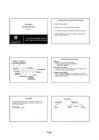
Individual Differences (Differential Psychology) Psychology 1 It is generally assumed that: Differential Psychology · People vary on a range of psychological attributes Ian Deary · It is possible to measure and study these individual differences · Individual differences are useful for explaining and predicting behaviour and performance Differential psychology reading Human Human
UNIVERSITY OF TARTU DEPARTMENT OF ENGLISH Using Blogs as a Platform in the Teaching of English as a Foreign Language Research paper Tartu 2010 ABSTRACT This work analyses the usefulness of blogging in teaching English as a foreign language. The definition of the term `blog' is provided along with the advantages and disadvantages of blogs' usage in practice. The analysis of language skills developed by students throughout the use of blogs for learning purposes is given in the paper with possible limitations that blogs have. Author of this paper also shares personal comments about the experience in the field. In this paper it is also described which research methods are planned to be employed for the conduction of research project. 2 ABSTRACT.........................
Kujutlus linnast Kevin Lynch Peatükk 1: Kujutlus keskkonnast Esimene peatükk selgitab linna mõistet ja tutvustab linnakeskkonna kogemisega seotud mõisteid nagu loetavus, struktuur ja identiteet, kujuteldavus ning kujutluse loomist, samuti tutvustab ülejäänud raamatut. Linn on suuremõõtmeline konstruktsioon ruumis, mida on võimalik vaadelda vaid aja möödudes. Ehkki see on ajas võrdlemisi stabiilne, on see samal ajal igavesti muutuv detailides. Linna muutumise üle on võimalik omada vaid osalist kontrolli ja on oluline arvestada, et sel ei ole konkreetset lõpptulemust. Samuti on oluline mõista et linnapildis on liikuvatel objektidel, nagu inimesed ning nende tegevus, sama oluline tähtsus kui liikumatutel. Keeruline on linnakeskkonna puhul saavutada ühtselt head kvaliteeti ning ehkki enamusele linna elanikest on selge, millises inetus, räpases, kaootilise
 annaabi.ee







Kõik kommentaarid