Leidsid 33 sarnast õppematerjali, mis on seotud failiga "GOTH SUBCULTURE". Need materjalid aitavad sul teemat sügavamalt mõista.
goth, gothic, cult, subculture, wave, cross, origin, real, part, late, first, death, club, 1990s, fashion, britain, german, suviste, century, based, punk, movement, development, dates, back, 1970s, bauhaus, southern, important, considered, famous, mainstream, popularity, half, 1980s, emergence, advent, established, current, constant, really, integral1. Feminism movement, ideology to defend women’s rights Suffrage – right to vote 2. Feminism isn’t a unitary movement because it represents different women and different experiences for them in different parts of the world. Different ideologies 3. Three waves of feminism • 1st wave – early 19th century – early 20th century (Political rights, suffrageright to vote) • 2nd wave – 1960s1980s (Social inequalities, gender norms, Women's Liberation Movement) • 3rd wave – 1990s2000s (ideas are the same, but they wanted to get rid of things the second wave had failed to do); feminisms, expansion, multiplicity, postcolonialism. 4. Anne Bradstreet the first feminist 17th century; the most prominent of early English poets of North America and first female writer in the British North Amer
English literature is one of the oldest literatures in Europe; dates back to the 6th century AD. Oral literature, i.e. not written down, spread from person to person. In 449 AD Anglo-‐Saxon tribes invaded England – beginning of the Anglo-‐Saxon period in English literature. The first form of literature was folklore, carried by scops and gleemen, who sang in alliterative verse (a kind of simple poetry). Prose developed much later. The first form of recorded English literature was the epic Beowulf, which was produced sometime near the end of the 7th and beginning �
Vltava River in the middle of Bohemia that is one of the three historic Czech territories; the others being Moravia and Silesia. The city has seven "Chapter Divisions" or districts. 3 I read one girl blog and she described Prague so beautifuly. She talked about her adventures. When i was reading that it seemed so real, that i was there to. The city's charms can occasionally be obscured by too many tourists, congested traffic and tacky commercialism. Packed in among thousands of other visitors, trying like crazy to see the city in three days and worrying about getting ripped off, it's not surprising, may think the city is overrated. Just relax, take a deep breath. While the city centre is a mélange of stunning architecture, from Gothic, Renaissance and baroque to
Island Severn, Thames, Tweed, Avon, Trent, Dove Ben Nevis, Snowdon, Ben Macdui 7. Stonehenge. Stonehenge was produced by a culture that left no written records. Built on Salisbury Plain, in Wiltshire, England some time between 5,000-4,300 years ago. One of the most famous megaliths in the world, dating from prehistoric times. Stonehenge consists of circles of stone arranged in complex patterns, and their origin is still being explored. Some of the stones come from over 200 miles away in Wales. There is little or no direct evidence revealing the construction techniques used by the Stonehenge builders. It was probably associated with sun-worship and other rites of prehistoric people. It appears to function as a kind of astronomical clock. Conceivable reports and implications about a secret government conspiracy, which
the two countries under one king. In 1642 the Civil War broke out between supporters of the king and parliamentary forces, led by Oliver Cromwell. King Charles I lost the war and was beheaded in London in 1649. Britain became a republic known as the Commonwealth. In 1660 London welcomed the restoration of the monarchy. The second half of the century was even more devastating. Two Disasters stroke London. The Great Plague and the Great Fire. The Great Plague in 1665, killed a significant part of the population, but it was not until after the Great Fire in 1666 that London became safe again. The Great Fire was even more catastrophic to the buildings of London. It destroyed almost four fifths of London in the raging inferno, including St Paul's Cathedral. Christopher Wren was appointed to oversee the rebuilding of London. Wren was given the task of rebuilding the churches, including St. Paul's Cathedral. Georgian London 1714-1837 In 1714, George I became king
(O’Reilly, 2006). Although Vogt’s (1976) ‘wanderer’ and Riley’s (1988) ‘international long- term budget travellers’ represent similar attempts to cast a terminological net around this type of tourist, it is the drifter concept that inspires ‘one of the prevalent trends of contemporary tourism’ (Cohen, 1973, p. 90), backpacker tourism. The succinct and less pejorative epithet ‘backpacker’ gained momentum from the late 1990s (O’Reilly, 2006) as a descriptor for predominantly young, budget tourists on extended holiday (Loker-Murphy & Pearce, 1995). More recently, Maoz and Bekerman (2010, p. 426) describe backpackers as ‘relatively young tourists who tend to gather in ghettos or enclaves: places where large numbers congregate to experience home comforts and the company of tourists of similar interests.’ This latter enclavic focus reflects an institutionalisation of the
considered ethnic Germans, Dutch or English.. Saxons participated in the Germanic settlement of Britain during and after the 5th century The Jutes were a Germanic people who were one of the three most powerful Germanic peoples of their time. They are believed to have originated from Jutland in modern Denmark. Were associated with the Saxons. The Jutes, along with some Angles, Saxons and Frisians, sailed across the North Sea to raid and eventually invade Great Britain from the late 4th century onwards, either displacing, absorbing, or destroying the native Celtic peoples there. 6. The Anglo-Saxon invasion Germanic invasions 410-1066 5th cent. A-S soon had the s-east of the country in their grasp. A-S were pagan when they came to br. A-S had little use for towns and cities but had great effect on the countryside, where thay introduced new farming methods and founded thousand self-sufficient villages.
physical objects to mental images. Pop Art. Pop Art emerged as an original and irreverent parody of the vulgar imagery and artifacts of the commercial culture. It grew from Action Painting towards objectivity. Use of repetition and the elimination of dramatic climax were favored by the composer John Cage. Rauschenberg and Johns introduced "popular" materials into their art by depicting them or actually incorporating real objects. Pop Art debuted in 1962. The works spanned painting, sculpture and objects of daily use. "Happenings" (improvised semi-dramatic visual spectacles with audience participation) contributed to the Pop culture of the 1960s. The art form is based on the anonymous, mechanized and mass-produced images of advertisements, billboards, comic books and TV. Mass culture is the source of inspiration but it is neither critical nor sympathetic
physical objects to mental images. Pop Art. Pop Art emerged as an original and irreverent parody of the vulgar imagery and artifacts of the commercial culture. It grew from Action Painting towards objectivity. Use of repetition and the elimination of dramatic climax were favored by the composer John Cage. Rauschenberg and Johns introduced "popular" materials into their art by depicting them or actually incorporating real objects. Pop Art debuted in 1962. The works spanned painting, sculpture and objects of daily use. "Happenings" (improvised semi-dramatic visual spectacles with audience participation) contributed to the Pop culture of the 1960s. The art form is based on the anonymous, mechanized and mass-produced images of advertisements, billboards, comic books and TV. Mass culture is the source of inspiration but it is neither critical nor sympathetic
A self- conscious break with traditional aesthetic forms. Rejecting the sentiment and discursiveness typical of Romanticism and Victorian literature for poetry that instead favored precision (täppis) of imagery and clear, sharp language. Modernist writers embraced the unconscious fears of a darker humanity. Sub movements: surrealism, formalism, avant-garde, symbolism, imagism Structuralism: Writers used myth and music as a part of the books structure. J. Joyce "Ulysses". Deep structure is the same as in "odyssey" and T.S. Elliot "the fisher king"-more complicated experiment. Aldous Huxley ,,point counter point"-builds his chapters on principles of music. R. Aldington ,,death of a hero"-a jazz novel. Polyphony-harmony. Cacophony Virginia Woolf ,,the waves"-symphony. Psychoanalysis: The greatest influence of psychoanalysis on literary production has
......................32 CONCLUSION..............................................................................................................................34 BIBLIOGRAPHY..........................................................................................................................36 2 INTRODUCTION Language is an important and prominent part of culture, so to learn the language well, it is necessary to understand cultural backgrounds of the language. The level of our learning cannot be judged just from the mastery of the vocabulary and grammar, it should also be judged from the point of view of country studies knowledge. This paper will try to explore the British National Symbols which is one of the themes in the school curriculum. The importance and choice of my research paper is explained by the following reasons:
Prasutagus(ruler) was first allowed to rule when romans conquered England, after his death, romans decided to rule Iceni and flogged Boudicca and raped her daughters 60-62 AD Iceni rebelled, Boudicca´s warriors defeated Roman Ninth Legion, destroied capital-Colchester Finally Boudicca was defetated, she poisoned herself to avoid capture Hadrian´s wall A defensive barrier builtin 122 AD by Roman emperor Hadrian to guard the northern part of Britain against barbarian invaders Most imposing frontier of Roman Empire, controlling peoples mobements Building took several years, builders kept changing minds about the size 119 km lenght, 5m high, 3m deep The Picts, Caledonia The painted ones, northern tribes, part of the Scots Inhabited an area known as eastern and th western Scotland, until 10 c Mysteriously disappeared Constantly fought with Romans
For this reason the early Christians were regarded as dangerous enemies of the Empire. That ceased when the emperor Constantine converted to Christianity. Christianity became the official state religion of the Roman Empire in the early fourth century A.D. As the century progressed Christianity spread very quickly. Despite official recognition there was no mass conversion to Christianity; worship of the pagan gods and goddesses was not even formally banned until late in the fourth century. *Boadicea/Boudica At his death bed, Boudica's husband left half his possession to the emperor, expecting that this would protect his family. However, his property was confiscated. When Boudica, the queen of the Celts, protested, she was flogged and her daughters were raped. She swept trough Southern Britain with her tribe and tortured every Roman she met. A women having power seemed unnatural to the Romans. She fought back for 2 years, but finally took poison and died
12th century during the reign of Jayavarman VII. With more than twenty narrow arches spanning 246ft (75m), this is the longest corbeled stone-arch bridge in the world. Institute of Asian Culture, Sophia University, Tokyo, Japan Bridge building in Asia extends back earlier in time than in Europe. Because structural concepts of suspension, cantilever, and arch were first developed there with great sophistication, every effort should be made to identify surviving examples (Figure 2). China was the origin of many bridge forms: Marco Polo told of 12,000 bridges built of wood, stone, and iron near the ancient city of Kin- sai. The first chain-link suspension bridge, the Panhogiao or Panho Bridge (c 206 BC), was built by General Panceng during the Han Dynasty. In 1665, a missionary named Kircher described another chain-link suspension bridge of 200ft (61m) made up of twenty iron links, a common bridge type
music and culture. Its aim is to bring together all the traditional songs and singers from across the country, as well as guest singers from other countries. The first AllEstonian Song Festival was held in 1869 in the town of Tartu , near the centre of Estonia. Around 870 singers took part, along with 76 musicians. Things have changed a lot, and today, the average festival gathering involves 25,000 participants, including large, joint choirs from all over Estonia. Festivals often close with choirs of around 25,000 taking part in an electrifying finale, in front of an openair audience of about 100,000. The festival takes place at the beginning of July, and it's common for many Estonians to take the week off work and travel to Tallinn to join in the celebrations
Persian from England (Lynchard Silver Shadow) was exported to Australia and also turned golden. Shadow had a few golden hairs on his paw, but did not turn golden until he was a year old when his coat turned to pale beige. By 3 years old he was entirely pale golden. Shadow was bred to a genetically golden female, but the pairing only produced silver offspring. However, at least one of his silver offspring later turned pale golden. Other descendents of Contessa also went through the late colour change. During the 1980s, several other breeders of Shaded Silver and Chinchilla Persians came forward to report that their cats had developed reddish, brownish or golden-coloured fur along their spines as they aged. Many of the cats had no golden in their ancestry. At first it was dismissed as an unavoidable genetic fault where silver was incompletely dominant and did not hide the recessive golden colour.
Kadriorg Art Museum The Kadriorg palace and park were founded by the Russian czar Peter I. According to the designs of the architect Niccolo Michetti, invited from Rome, the palace was built after the Italian villas, consisting of a main building and of two annexes. The well-preserved great hall is one of the best examples of Baroque architecture not only in Estonia but also in the whole Northern Europe. Besides Russian and Italian artists, masters from Stockholm, Riga and Tallinn took part in its building work. The two-storied hall is decorated with rich stucco work and ceiling paintings. The vestibule and some other rooms in the main building, as well as some of the stoves have retained their 18th-century appearance. The park was named Kadriorg (Catherine's Valley) after the empress Catherine I. Most of the Russian rulers, from Peter's daughter Elizabeth, to the last Romanov emperor Nicholas II, have visited this imperial summer residence.
he did publish a French revision of Letters (1787) and a final book on his American experiences: Voyage dans la Haute Pensylvanie et dans l'état de NewYork (1801). Letters from an American Farmer is an excellent example of how a New World American thinks about the many changes occurring and that have occurred during the era of Enlightenment. Crevecoeur's essay is an enlightened perspective that shows how the people of that time are feeling about being a part of the new world and its current workings. Although the writer is originally from Normandy, and later Canada, he seems to truly grasp the changes in American society and how vastly different it is from Europe. Crevecoeur explains that America is a literal melting pot for people of all religions. He states that "the Americans become as to religion what they are as a country, allied to all". When Crevecoeur describes the
An Anatomy of the World; The Flea; Love’s Alchemy; Elegy XIX To His Mistress Going To Bed; Holy Sonnets (9, X, XIV); Hymn To God My God, in My Sickness. Francis Quarles: emblem poems Canticle George Herbert: courtly urbanity of language, certain neatness and point, his wit „homely” (simple), sometimes queer, conceits in title. The Dawning; The Altar; The Collar; The Pilgrimage Richard Crashaw: paradoxes, sensuous warmth, conceit as isolated ornament rather than integral part of poem’s meaning To the Noblest & best of Ladyes, the Countesse of Denbigh Henry Vaughan: many obvious borrowings, striking opening lines. The World Andrew Marvell: many strands of 17thC thought, feeling and style, created the tradition of garden poems The Definition of Love, To His Coy Mistress, The Garden Ben Jonson: IX: Song: To Celia, II: To Penshurst; Hymn to Cynthia. 4. The arrival of classicism in England. The impact of the art collections of the Earl of Arundel and Charles I
War is hostile to the artist. And destructive of his art. This novel is written in more or less anti war. ,,Manhattan transfer"- truly modernist novel. Ruinous effect of capitalism on human lives. The scene of action is New York. The city itself becomes the central character, the whole novel is an attempt to show the complex nature of the novel metropolis-huge city. It is a truly modernist level in any sense, tries to imitate devices used by cinema. Late 1920's the cinema was already very popular and two great directiors-Griffith and Eisenstein. The greatest innovators of the cinema and they used the devices of montage and collage. He also uses a lot of fragmentation and rapid cutting. The novel is dominated by the high rise city, by the crowds, by the masses of people, passing by the skyscrapers, mechanisation and destructiveness. There is a multitude of characters
representation. The first section analyses in detail the cultural translations of Romania that the two authors provide for their (Western) readers. Consequently, it brings to the fore intricate acts of mediation and cultural filtering that are part of the travel experiences and entail the blend of several cultural identities: the authors' complex ones, that of their audiences, as well as that of the characters in their narratives. The second section suggests interlingual translation scenarios
president of the US from 193345. · Hans Rebane = 1897 founded the first Estonian-language newspaper in the US Eesti Ameerika Postimees (published in NY until 1911) · 1898 founded an Estonian Lutheran congregation in NY (still exists today) 2. Signficant waves of migration from Estonia to the US in the 20th century, their reasons. *The failure of the 1905 Revolution: The first significant wave of immigration · Brought a strong Socialist contingent to the United States; led to the formation of many Estonian American Socialist and Communist organizations. * The 1920s30s: · Establishment of independent Estonia · Tightening of American immigration laws · Estonian immigration to the United States slowed down dramatically 1924 The Estonian quota fixed at 116; even this small annual quota was not used up
like/want, prisoners · Life in southern colonies- Large plantations- tobacco, rice, cotton Cheap labour Slaves Primary seaports in Charleston and South Carolina · Westward expansion 1803 President Thomas Jefferson sent a secret message to Congress calling for a expedition in the west. (Mississippi River to the Pacific Ocean) France owned the territory Bought for 15,000,000 Dollars ´´Free Land´´ to attract people there Gangs robbed travellers. Mexiacan origin California Gold Rush of 1849 (80,000) · Manifest Destiny is a term that was used in the 19th century to designate the belief that the United States was destined, even divinely ordained, to expand across the North American continent, from the Atlantic seaboard to the Pacific Ocean. · The influence of frontier on the development of American character Thanksgiving Religious freedom Obsession with business and wealth Green cards ´´No´´ discrimination
Russian philology was not studied as an independent academic discipline until 1945, yet from the very beginning of the faculty's existence there were courses in Russian studies on offer for students of Slavic studies. In the 1922/1923 academic year, an independent Section of Russian Language and Literature was founded within the School of Slavic Studies. The section was, from its foundation until 1945, headed by Valerij Alexandrovic Pogorielov. In 1945 another member of the post-revolutionary wave of Russian emigrants, Prof. Alexander Vasilievic Isacenko, was appointed Professor in Russian Philology. In 1946 Prof. A. V. Isacenko became the director of the newly established School of Russian, which transformed itself into the Department of Russian Literature and Modern Language Studies in 1948. Prof. Isacenko was still holding the leading post in 1950 when the Department of Russian Language and Literature came into being. In 1955, when Prof. A. V
стран мира. 6 INTRODUCTION Aspects of British History presents a brief outline of the most significant milestones in the long and eventful history of Great Britain, such as the five successful invasions of the island, the birth of Parliament and transformation of an absolute monarchy into a constitutional monarchy, the origin of the English language, the rise and fall of the British Empire. The units contain an informative reading text on an important issue, preceded by preparatory discussion questions and followed by notes offering some additional information, and a vocabulary with relevant language notes. The main reading text is accompanied by comprehension, vocabulary and grammar exercises and discussion activities. Some of the units include reading passages.
By DAVID KAHN (abridged by the author) A SIGNET BOOK from NEW AMERICAN LIBRARV TIMES MIRROR Copyright © 1967, 1973 by David Kahn All rights reserved. No part of this book may be reproduced or transmitted in any form or by any means, electronic or mechanical, including photocopying, recording or by any information storage and retrieval system, without permission in writing from the publisher. For information address The Macmillan Company, 866 Third Avenue, New York, New York 10022. Library of Congress Catalog Card Number: 63-16109 Crown copyright is acknowledged for the following illustrations from Great Britain's Public Record Office: S.P. 53/18, no
musical field in a single book. Several questions connected with creativity, both of the musician (inducements, scope of ideas, intentions) and the listener-auditor (traditionalism, novelty, subjective wishes), can be answered most effectively by the music itself. Thus many unanswered questions remain. Therefore, this book should be considered as an attempt to convey a general picture. Moreover, I had to set limits in the treatment of the historical-cultural status forming an integral part of the whole. A book on this subject may be conceived in two different ways: 1) Laying the main emphasis on symphonism as the creative method and demonstrating how different composers in different periods have applied it individually. In this case the creative method would be the “axis” with the composer “spinning” around it. This is a deductive form of research. 2) Observing Estonian symphonic output both in an exact and broad sense and
7 In less than a decade, Ukraine leaped from an economy not based on money to having a banking sector comparable in relative size to that of many well-established market economies. Credit was at last available, and not only from state-controlled and other politically connected banks, but from reputable foreign banks channeling easy international liquidity to Ukraine as they did to other emerging economies. From 2000 to 2007, Ukraine's real growth averaged 7.4 percent and was thus very similar to Russia's. In both countries, this growth was driven by domestic demand: orientation toward consumption, other structural change, and financial development. In Ukraine, domestic demand grew in constant prices by almost 15 percent annually. It was supported by expansionary--pro-cyclical--fiscal policy generally driven by populism for perceived short- term political gain.
Until I do more teaching children, I can't say I've developed any insights or made any guidelines, except I know all students respond to enthusiasm and like to become fascinated. Educational systems of European and American types Being exposed to educational systems of both European and American types, I would point out the following positive trends in higher education of the USA in comparison to European style: 1. Link between the needs of real life and higher education which manifests itself in existence of Career Service, Job Fairs, study plus work possibilities ( Co-op system). Good students get well-paid jobs after graduating; 2. Support system . Psychological and academical ( Student Service Center). Fraternity and Sorority Organizations. International House with Center for International Education for foreign students; 3. Small number of subjects studied during the year. It helps the student have an insight in to the subject; 4
Compound Inversion Sonnet: Eye-rhyme Detachment Italian Internal Antithesis Shakespearean Head r. Chiasmus Blank verse Couplet r. Anaphora Limerick Cross r. Epiphora Accented verse Frame r. Climax Monometer Lexical SD Anticlimax Dimeter Metaphor: Suspense Trimeter Trite Rhetorical q. Pentameter Genuine Exclamation Hexameter
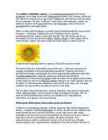
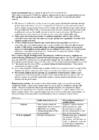
(Table 1). Crude protein level of sunflower silage is similar to grass hay and higher than corn silage. Generally, crude protein of sunflower decreases and lignin percentage increases after the flowering stage. High plant populations increases fiber and lignin percentage. Seed size does not seem to affect yield or quality. Table 1: Nutritional quality of sunflower, immature corn, and mature corn silage, alfalfa hay (harvested in early bloom) and timothy bay (harvested in late vegetative stage).1 Silage Hay Sunflower Immature corn Mature corn Alfalfa Ti % of dry matter Total digestible nutrients 67.0 60.0 69.0 58.0 Crude protein 11-12 8.2 7
conduct of states and intergovernmental international organizations. Also known as International Law, but called PIL to distinguish from private international law, i.e. solution for conflict of laws. Only intergovernmental organizations are also subject of PIL, non-governmental organizations are not. There can be specific cases of PIL, e.g. nations fighting for their independence. These can be considered to be subjects of PIL. Also, some exceptions: International Committee of Red Cross, formerly it wasn't covered by PIL, but due to its unique status (covered by Geneva conventions etc), then it is a subject of PIL. PIL directly regulates private persons, e.g. punishment of international crimes (crimes against peace=crime of aggression, genocide, crimes against humanity, war crimes). This is if specific countries do not want to punish the criminals, specific international tribunals etc are created to do the job for them.
1 How do you usually start/are you usually starting your day? _____________________________________ 2 What time do you go/are you going to bed at weekends? _____________________________________ 3 This Girlzone CD is belonging/belongs to Alan. _____________________________________ 4 I understand/am understanding English, but not Spanish. _____________________________________ 5 Why does she run/is she running? Because she's late for work. __________________________________ 6 She doesn't enjoy/is not enjoying the film. _____________________________________ 7 This milk is tasting/tastes horrible. _____________________________________ 8 The Spice Girls are making/make a new CD at the moment. _____________________________________ 9 I am thinking/think it's a good idea for you to study biology. _____________________________________ 10 We want to go for a walk but it's raining/it rains outside
 annaabi.ee