Leidsid 33 sarnast õppematerjali, mis on seotud failiga "Geoffrey Chaucer". Need materjalid aitavad sul teemat sügavamalt mõista.
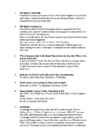
tales, chaucer, canterbury, period, early, works, poetry, divided, english, travel, geoffrey, wine, merchant, royal, while, married, queen, worked, controller, customs, peace, kent, clerk, king, buried, westminster, abbey, french, rose, italian, middle, managed, april, fifty, miles, cathedral, visit, thomas, becket, groups, feudal, church, thought, wentWhen and where was he born? He was born somewhere around 1343 in London. What occupations did he have during his life? He was trained for knighthood, he also worked as a courtier, a diplomat, and a civil servant, as well as working for the king, collecting and inventorying scrap metal How many periods are his works divided into? What are they called? What are the main works of each period? What/who are they inspired by? His poetry is generally divided into three periods the French period ("The romance of the rose"), the Italian period ("Troilus and Criseyde", inspired by his own trip to Italy) and the English period ("The Canterbury Tales") What type of a work is The Canterbury Tales ? Poetry (two tales are in prose: the Tale of Melibee and the Parson's Tale) When did Chaucer die? Where is he buried
Medieval literature Religious literature- mostly written in church languages(Latin, Greek, Old Slavic) Secular literature- written in vernacular languages as well 6th -15th century Anonymity Religious writing Liturgical writing-hymns, psalms Theological writing-aquinas, abelard etc Religious poetry Mystery plays-reenactment of bible stories Secular writing Troubadour writing:"courtly love", romance Epic poem(song of roland) Travel writing History writing-chronicles Allegory The use of symbols and analogy to convey a certain meaning /message Literary output of medieval English Anglo-saxon or Old English literature(7th century-1066) Middle english literature(12th century-15th century) End of the period:1470s chancery standard(regulating english) and onset of renaissance
THE ANGLO-SAXON PERIOD English literature came when the Angles, the Saxons, the Jutes and the Frisians invaded Britain. During this time English was called Anglo- Saxon or Old English. In the chronicles of Roman history (composed in Latin) is said that Britain makes its first appearance in written language when Romans invade the England. BEOWULF most important poem, surviving in a 10th-cent manuscript. The historical period of the poem's events can be dated in the 6th to 8th century. Much of the material of the poem is legendary and paralleled in other Germanic historical-mythological literature in Norse, Old English, and German.
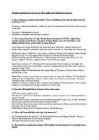
1.Who were the Normans and what did they bring with them? The normans were the people who in the 10th and 11th centuries gave their name to Normandy, a region in France. 2.How long did the Norman period last in the British Isles? 1066-1154 3.How did the Norman Conquest take place and what were the events leading to this? Edward the Confessor died and the throne was seized by his leading aristocrat, Harold Godwinson, who was crowned. Almost immediately, Harold faced two invasions - one from the king of Norway, Harald Hardrada, who was supported by Harold Godwinson's brother Tostig, and the other from William, Duke of Normandy.
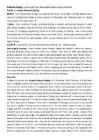
"The Vision of Piers Ploughman" how important working hard is, the labour of peasants is the base of the welfare of the people. A passionate protest against social injustice. A time when peasants were slowly rising against their feudal lords. Descriptions of different social classes. Religious mysticism. Two great principles: 1) all men are equal before God; 2) honest labour is dignified. It is a dream allegory. A young maiden named Youth, Greed is an old witch. The greatest writer of this period and the whole of medieval times Geoffrey Chaucer (1340?-1400): · The father of English poetry · The creator of English versification · The first poet to use various metres · Laid the foundation of the new literary English language · Wrote in Middle English · An active man of affairs, who belonged to the middle class · Spoke Latin, French, Italian the important languages of the time · Worked as a diplomat for a time
The Medieval period The Middle Ages began in 1066, when the Normans defeated Anglo-saxons at the Battle of Hastings. Now England had a Norman king William the Conquer. Norman kings ruled in England less than 100 years, during that time Normans brought England closer to the mainstream of European society. William introduced the feudalism. Under it, land was divided among noble overlords, or barons. Knights pledged their wealth and services to the overlords. In return overlords let them use their land. At the lowest end of the social scale were the serfs, peasants bound to the land. In 1154 the Norman time was at the end. In 1154 Henry II started to reign. Henry II was the king who increased royal power at the expense of nobles. His desire to control the Roman Catholic Church in England led to the murder of T. Becket. Richard I has
Outstanding figures in British literature Eva Martina Põder 11.b British literature Refers to all literature produced by British authors from the United Kingdom, which includes England, Scotland, Northern Ireland, Wales, the Channel Islands, and Isle of Man Includes early works written in Gaelic, Welsh, and Latin, works in Old, Middle, and Modern English, each of which represents a different period Full of great works British works in Latin Venerable Bede He lived between 673 and 735 AD The greatest of all the AngloSaxon scholars He's the earliest English historian, whose work has shed light on a period of English history that would have otherwise been unknown ,,The Father of English History" Wrote / translated about 40 books on almost every area of knowledge, i.e. nature, astronomy, and poetry His best known work is "The Ecclesiastical History of the English People"
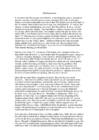
(teach right from wrong) or ecclesiastical (biblical subject). Middle ages – English becomes a literary language. Geoffrey Chaucer (1343–1400) – Father of English literature, The Canterbury Tales in English, increased the prestige of the language, provided a standardised form. The Canterbury Tales: frame story. Majority in verse, some prose. Intended to contain 124 stories, only finished 24. Story: a pilgrimage to Canterbury Cathedral, where archbishop Thomas Becket had been murdered
Charles Dickens Charles John Huffam Dickens was the foremost English novelist of the Victorian era, as well as a vigorous social campaigner. Considered one of the English language's greatest writers, he was acclaimed for his rich storytelling and memorable characters, and achieved massive worldwide popularity in his lifetime. Charles Dickens was born in Landport, Portsmouth in Hampshire, the second of eight children to John Dickens n 7 February 1812. The 12-year-old Dickens began working ten hour days in a Warren's boot-blacking factory. In May 1827, Dickens began work in the office of Ellis and Blackmore as a law clerk. At the age
After his marriage to Eleanor of Aquitaine, he also ruled the lands south of Anjou. His empire stretched from the Scottish border to the Pyrenees. England provided most of its wealth, but the heart was Anjou. Henry II began to regain royal control. During the war some barons had become very powerful. He pulled down some of their castles. He tried to restore law & order. He wanted the same kind of justice to be used everywhere. He appointed his own judges to travel around the country. They dealt with crimes & disagreements over poverty. Serious offences were tried in the king's court. At first they had no special knowledge or training. They were trusted to use common sense. By the end of the 12th cent. They had real knowledge & experience of the law which became known as ,,common law", based on custom, comparison, previous cases & decisions. It was unlike in the rest of Europe. In England trial by ,,ordeal" was replaced with trial by jury
It seems that the Celts, who had been arriving from Europe from the 8th cent BC onward, intermingled with the peoples who were already there. The Celts were extremely talented people, creative and artistic. More than 1 Celtic tribe invaded Br. The descendants of ancient Celts live in Wales, Scotland, Cornwall and Ireland. They lived in primitive society. Druids priests, more powerful than chiefs. Acted like prophets. 2. Stonehenge From prehistoric period. Was built on Salisbury plain between 2500 and 1500 bc. One of the most famous and mysterious archaeological sites in the world. One of the mysteries is how it was built at all with the technology of the time. Another is its purpose. It appears to function as a kind on astronomical clock and we know it was used by the Druids for ceremonies marking the passing of the seasons. It appears in number of novels. These days it is not only the interest of tourists but is also a
Suppletion Present in languages of different families. Present in Old, Middle and Modern English, though the general tendency is towards more regularity/iconicity so the number of suppletive forms has decreased.In the text: goon to go wenden - to turn Gan was suppletive in Old English, past form: eode.Eode was supplanted by went (past form of wenden) at the end of the Middle English period.To wend has survived in Modern English in phrases such as to wend one's way, we wended homewards (ironic usage). Thus: suppletivity- suppletion different parts of one and the same paradigm come from what were originally different paradigms (different words with close meanings or words in different but close dialects).Suppletion embraces verbs, adjectives, nouns. Be was/were been (Old English beon/wesan) (am, art, is, are); in Old English some suppletive
revolt. They contended that The Church of England had become a product of political struggles and man-made doctrines. The Puritans were one branch of dissenters who decided that the Church of England was beyond reform. Escaping persecution from church leadership and the King, they came to America. Of Plymouth Plantation Of Plymouth Plantation is the single most complete authority for the story of the Pilgrims and the early years of the Colony they founded. Written between 1620 and 1647, the journal describes the story of the Pilgrims from 1608, when they settled in the Netherlands, through the 1620 Mayflower voyage, until the year 1647. The book ends with a list, written in 1650, of Mayflower passengers and what happened to them. The Age of Reason The Age of Reason: Being an Investigation of True and Fabulous Theology , a deistic treatise
ENGLISH LITERATURE Ancient Britain Lived on the British Isles in the 1st millenium. They most probably came from Eastern Europe and belonged to the Celtic race and also spoke Celtic. They were primitive hunters- gatherers, farmers. Some Celtic words are still used in modern English, however they are used mostly in place names. For example: · avon river · cumb valley · ford shallow place in the river Ancient Britons had their own religion and priests or druids and temples. In the year 55 BC Britain became a Roman province. Romans were highly developed and had their own language latin, which has also greatly influenced English. The military occupation of the Isles ended in 410 AD
The Middle Ages The Middle Ages are one of the most turbulent periods in English history. The Middle Ages are so called as the middle period between the decline of the Roman Empire and the Renaissance. The Middle Ages started in 1066. with the Battle of Hastings and the Norman Conquest. William the Conqueror took all the lands from the Saxon English and gave these to French nobles. Normans were known as great builders. This is assured by the fact that many great castles and other buildings, including the Tower of London, were built during the Norman Conquest. In 1086. Domesday Book was compiled. It is a detailed survey of England ordered by William the Conqueror. The reign of King William Rufus who was the son of William started in 1087 and lasted until 1100. Next king was Henry I who was the brother of William Rufus. His reign
The Saxons & Vikings Fragmentary knowledge of England in the 5th & 6th centuries comes from the British writer Gildas, the Anglo-Saxon Chronicle, saints' lives, poetry, archaelogical findings and place- name studies. British landlords ruled small, unstable kingdoms and continued some Roman traditions of governance. In the mid-5th cent, Vertigern, a British leader, hired Germanic mercenaries to help defend against peoples of the north (Picts & Scots). In the end they revolted & the process of invasion and settlement began. The first Saxon ,,kings" were Hengist & Horsa in Kent, Aelle in Sussex, Cerdic / Cynric in Wessex
The making of a new nation. The Enlightenment in America. The emergence of the notion of the American Dream. The great Enlighteners: Crèvecoeur, Jefferson, Paine, Franklin. The American Enlightenment is the intellectual thriving period in the United States in the midtolate 18th century (17151789), especially as it relates to American Revolution on the one hand and the European Enlightenment on the other. Influenced by the scientific revolution of the 17th century and the humanist period during the Renaissance, the Enlightenment took scientific reasoning and applied it to human nature, society, and religion. American Enlightenment a gradual but powerful awakening that established the ideals of democracy, liberty, and religious tolerance in the people of America. If there were just one development that directly caused the American Revolution and uplifted the intellectual culture of the continent while it was only a British colony, it would be the American Enlightenment
was halted when they were defeated by King Alfred of the Saxon kingdom of Wessex. As a result, the settlement was confined mostly to the north and east of the country. 11. The Norman Conquest. The successful Norman invasion of England in 1066 brought Britain into the mainstream of western European culture. Unlike the German invasions, the Norman invasion was small-scale. On 14 October 1066, an invading army from Normandy defeated the English at the Battle of Hastings. The battle was close and extremely bloody. At the end of it, most of the best warriors in England were dead, including their leader, King Harold. On Christmas Day that year, the Norman leader, Duke William of Normandy, was crowned king of England. He is known in popular history as “William the Conqueror” and the date is remembered as the last time that England was successfully invaded.
The Renaissance In the history the Middle Ages were followed by the Renassance period. During this period a new class called bourgeoeisie came into being. This is the period when monarchies based on nationality were estabilished. The Renaessance started in Italy In the 14th century. Then it spread all over Europe, reached England in 16th century. The struggle for power culminated in a war called The War of Roses. It was a civil war between two dynasties, families. They had different emblems on one side the Yorks (white rose) other Lancasters (red). They couldn't decide who gets the throne. War ended 1485
and the Jutes in Kent. 569 AD Pope Gregory the great sends missionaries led by St. Augustine to Britain. The Benedictines establish a chain of monasteries; Britain is linked to the Latin civilization of the roman Church and Christian cultures of Western Europe. Aethelbert 1 of Kent becomes the first Christian King of England. By the end of the 7 th century all the kingdoms of the Anglo-Saxon Britain accepted the Christian faith. 3.) Describe Old English Poetry in terms of form and content. Old English poetry is highly formal. Each line of it is divides into two halves, separated by a caesura, or pause, and is often represented by a gap on the page. The verse form contains complicated rules for alliteration designed to help scops, or poets, remember the many thousands lines they were required to know ny heart. Each of the two halves of an Anglo-Saxon line contains two stressed syllables, and an alliterative must be carried over across the caesura.
vivacious woman about whom a future Viceroy of India would say, "Dullness and Mrs. Kipling cannot exist in the same room."[3] Father - John Lockwood Kipling. Lockwood Kipling, a sculptor, an illustrator, museum curator and pottery designer, was the principal and professor of architectural sculpture at the newly- founded Sir Jamsetjee Jeejeebhoy School of Art and Industry in Bombay. Later in life Kipling illustrated many of Rudyard Kipling's books, and other works. Kipling also remained editor of the Journal of Indian Art and Industry, which carried drawing works from the students of the Mayo School. COUPLE named their son after the place they had first met Rudyard Lake. Alice Kipling Fleming - Sister of British author Rudyard Kipling who became a well-known psychic, producing automatic writing under the name "Mrs. Holland." Born June 11, 1868, Alice Kipling was privately educated
Russian philology The meaning of the word "philology" is "love for word". This is love that unites teachers and researchers of modern and Classical languages and literature, interpreters and diplomats, journalists and publishers, writers and poets. Russian philologis are highly demanded in various spheres of scholarly research and education, in the mass media, in civil service at the Ministry of Foreign Affairs, in archives, libraries, museums, in travel agencies, as well as Russian and international companies. Curriculum within in philological faculty includes courses of Russian and European languages and literature, courses of Linguistics and Theory of Literature for students to familiarize themselves with various schools and trends of Russian and foreign philology. The core curriculum also includes a number of Liberal Arts courses (Philosophy, History,
techniques used by the Stonehenge builders. *The Celts in Britain and their legacy The Cets lived in Britain in The Iron Age. They were warring tribes who were battleful amongst themselves as well as inter-tribal war. They were not centrally governed. The Celts brought iron working, iron ploughs and metal swords, horses, wheels and chariots - all these things gave them an instant superiority over the native tribes. The Celts built a number of hill forts throughout the region. The society was divided into warrior aristocracy, agricultural commons and the priests, the druids. *Caesar in Britain - Britain was very rich in minerals but that wasn't the main reason Caesar wanted to defeat it. He could clearly see that Britain was a threat to his latest and greatest conquest - France. He invaded Britain twice, in 55 and 54 BC. The first invasion was unsuccessful - it gained a beachhead on the coast of Kent but achieved little else. The second was more successful, the Celts asked for truce
The origins of American literature The first Americans were explorers and settlers, adventurers and idealists who crossed the ocean in search of new opportunities or to escape the poverty and intolerance. Their writings were matter-of-fact accounts of life in America, which explained colonisation to Englishmen back in the homeland. An example of this form of writing is John Smith's A True Relation of Virginia, which is widely recognized to be the first example of Am lit. The early years of colonisation produced a mass of utilitarian writings including biographies, accounts of voyages, diaries, sermons, pamphlets. Much of the material addressed the problems of Church and State. There were few examples of fiction, poetry or drama. Anne Bradstreet of Massachusetts published some lyrical poems of high literary quality (1650) and Edward Taylor, who was born in England but lived in Boston, wrote some poetry in the style of John Donne and the metaphysical poets. All 17 th cent
symbol and narrator are performed by the rood, Christ's Cross. It first appears as a visionary symbol of overpowering mystery. It is a towering tree, at one moment covered in gold and jewels, at the next soaked in blood. But then the Cross begins to address the dreamer as an ordinary tree which got involved long ago in events which passed its own comprehension. This narrative of the Crucifixition is even more forceful and the death is also a victory. Using the old language of heroic poetry, The Cross represents itself as the loyal follower of a lord who inexplicably wills his own death. In a normal battle to obey your leader's command is to help defend his life, but for this follower it is to serve his lord's absolute will for death by remaining rigidly upright (to stand fast). The Cross speaks for the bewildered humanity of the dreamer, but also for the suffering humanity of Christ. The Cross himself participates in
History of English literature Periods: 1. Anglo-saxon or early literature (499 - 1066) 2. Second or Norman or late Medieval period (1066 - 13/14 century) 3. Renaissance or Modern period (13-14 century present) Anglo-Saxon period · All of the literature had its roots in folklore · Texts were orally transmitted, the anglosaxons had no written language · Two types of singers: 1) scop (attached to the royal court, wrote poetry and songs, performed them); 2) gleeman (travelled, mostly sang other peoples' songs, not their own songs; performers of scop songs) · The oldest known song Widsith (The Far Traveller/Wonderer); tells of a gleeman who travels in Europe, of his love of noble deeds, speaks of the shortness of life http://en.wikipedia.org/wiki/Widsith · The other known song Deor's Lament. Can be called the first English lyrics, about 40 lines
· The end of the Anglo-Saxon era · The Bayeux Tapestry · Depicts the events before and during the battle · Weaving organised by William's wife · William = William the Conqueror Trilingual culture · For roughly 300 years after the conquest, three languages were used in Britain. · Anglo-Norman (Norman French) · The Norman nobility · The language of the state, the court and law · Middle English · 90% of the population · Latin · The language of the Church · Trilingual culture: folklore in Anglo-Saxon, romances in French, religious writings in Latin. Language and social class · French-speaking Normans · The lords and the barons · English-speaking Saxons · The peasants · Cow, pig, sheep the living animals · Anglo-Saxon origin · Beef, pork, mutton the animal you eat
mediterraneans during 3000-1600 BC Circular structure, large standing stones, aligned with rising sun at teh solstice Attlers and bones were sued to dig pits that hold the stones The Celts in Britain and their legacy 700-200 BC celts invade Britain Gaels or Goehls(Ireland and Scotland),Cymri(Wales) and Brythons(gave name to Brittany) Fierce fighters,superb horsemen.Most of them farmers, lived in thatched houses Good at art, craftmanship, used iron Divided into tribes, ruled by kings, only in face of danger would they choose a single leader Legacy- hill-forts, farms, churches, field system, woodland, pasture, weapons, iron objects, langugae, culture Caesar in Britain The great Roman Emperor Firts came 55 BC to gather information, celts were doing agriculturally well,so romans wanted to get some food too In 54BC Caesar defeated Cassivelaunus Actual reasons why he made expeditions are
There are Beefeaters, who are the tour guides now but used to be the guards. They keep the royal jewels there. It's one of the most visited sight in London and also one with the most fascinating history. 10. If going back in time was possible, which decade in British history would you choose to live in? Why? I'd like to be in the Victorian age. Simply because the architecture changed and also the industry was developed. All in all it looks like an interesting time period to try. 11. Make a list of things / people / events that you associate with Scotland. Bloody Mary, Loch Ness, Scottish fought for their independence a lot, "Braveheart", Sean Connery, bagpipes, kilts, 12. Where are the British monarchs crowned? What else do you know about this building? They are all, since William the Conqueror, crowned in Westminster Abbey. They tribute British heroes there and also bury them. 13
been painted over, spoilt with knives, even used for target practice. The American Rock Art Research Association protects rock-art sites. 2) THE FAVOURITE SPORT IN BRITAIN The most popular sport is probably football. Two kinds of football is played in Great Britain. One of them, which is called association football, is played all over Europe. The other kind: rugby football is also very popular in New Zealand, France, and some other European countries. English boys play it at school, and in public parks. When they grow up, they play as members of important amateur teams or as a professional in teams competing in football ,,leagues". Professional football is as much a business as a sport. Rugby football was first played in 1823. In rugby every player is allowed to carry the ball. The ball is oval, not round. Each team contains 15 players. The oldest game of football in England is probably the football match which takes place at
In 1801, under a new Act of Union, this kingdom merged with the Kingdom of Ireland to create the United Kingdom of Great Britain and Ireland. After the Irish War of Independence most of Ireland seceded from the Union, which then became the United Kingdom of Great Britain and Northern Ireland. The relatively limited variety of fauna and flora on the island is due to its size and the fact that wildlife has had little time to develop since the last glacial period. The high level of urbanisation on the island has contributed to a species extinction rate that is about 100 times greater than the background species extinction rate. 2 The History of the Great Britain The island was first inhabited by people who crossed over the land bridge from the European mainland. Traces of early humans have been found (at Boxgrove Quarry, Sussex) from some
of Mexico. The northern part of the island in average 5'C cooler and it's mountainous or hilly and that's why the south has been more populated.. Britain became an island only 5000 years BC after the Ice Age ended. Britain's prehistory The first evidence of human life on the island are dated back to 250 000 BC. 50 000 BC in a milder Ice Age period Britain became habitable again. People from that time were the ancestors of the modern British. 10 000 BC ige age ended and Britain became inhabited by small groups of hunters who probably followed herds of deer. 5000BC Britain became an island and deer died out. 3000BC the Neolithic people came (probably from Spanish peninsula or even North African coast). They may be the forefathers of the people from Cornwall and Wales. The building of Stonehenge started around that time
Many other Christians agreed that the church was in need of change. Luther and others founded new religions and split away from the Roman Catholic church. Although changes took place everywhere in Europe, Florence was the centre of the Renaissance. Fifteenth century Florence was an exciting place to be. At that time the city was independent and had a population of about 60,000 . Leonardo da Vinci (1452--1519) was one of the most famous people of the Renaissance period. He was not only a famous painter but also studied science, designed machines and drew plans for new inventions. Young Leonardo grew up near Florence and studied painting with the great painters of the city. After a few years in Milan, where he painted for a famous duke ,he came back to Florence and painted a new hall for the city council. In his paintings da Vinci experimented with many techniques that artists hadn't used before. For example, he started to use perspective in his paintings
 annaabi.ee