Leidsid 33 sarnast õppematerjali, mis on seotud failiga "Floods and Tsunamis". Need materjalid aitavad sul teemat sügavamalt mõista.
tsunami, flood, cause, floods, occur, even, land, areas, earthquakes, suddenly, wipe, away, lying, before, potential, caused, could, detect, wave, danger, piece, usually, gets, others, days, months, build, happen, live, along, houses, bridges, farms, trees, heavy, items, irregular, vary, size, affected, important, note, flows, means, begins, higherTSUNAMI Kristjan Sillaots G1R2 WHAT IS TSUNAMI? A tsunami is a series of ocean waves that sends surges of water, sometimes reaching heights of over 100 feet (30.5 meters), onto land. These walls of water can cause widespread destruction when they crash ashore. WHAT CAUSES A TSUNAMI? These awe-inspiring waves are typically caused by large, undersea earthquakes at tectonic plate boundaries. When the ocean floor at a plate boundary rises or falls suddenly, it displaces the water above it and launches the rolling waves that will become a tsunami. WHAT CAUSES A TSUNAMI? Tsunamis may also be caused by underwater landslides or volcanic eruptions. They may even be launched, as they frequently were in Earth’s ancient past, by the impact of a large meteorite plunging into an ocean.
majorly caused by industrial waste that deprives soil from essential nutrients. FIND OUT 5 WAYS HOW TO STOP POLLUTION. 2. Global Warming: Climate changes like global warming is the result of human practices like emission of Greenhouse gases. Global warming leads to rising temperatures of the oceans and the earth surface causing melting of polar ice caps, rise in sea levels and also flash floods, excessive snow or desertification. FIND OUT 5 WAYS HOW TO STOP GLOBAL WARMING. 3. Overpopulation: The population of the planet is reaching unsustainable levels as it faces shortage of resources like water, fuel and food. Population explosion in less developed and developing countries is straining the already scarce resources. Intensive agriculture practiced to produce food, damages the environment through use of chemical fertilizers and pesticides. FIND OUT 5 WAYS HOW TO STOP OVERPOPULATION
bigger with a lot of energy inside them. Physics of wave energy To have a better understanding of the technical possibilities to harvest the energy out of waves to convert it into electric energy it may be helpful to have a look onto the physics of wave formation, the forces which attack and the characteristics of water waves. Wave formation There are three different momentum responsible for the formation of waves. The moon, earthquakes and wind in variable intensities. Energy of waves vs. period and responsible momentum 2 Three forces to attack the waves There are three forces that are responsible for wave formation. Two of them (gravitational force and Coriolis force) are supporting the formation, one of them (surface tension) reduces the high of waves. At first the gravitational force: This one out of four forces in physics is dominant for wave generation
g) There are few jobs here and many people are away from work/unemployed. h) The train was in a/an accident/collision with a bus on a level crossing. i) The driver of the bus admitted that he had done/made an error. j) No ships are sailing today because of the high/storm winds. 2 Complete each sentence with a word from the box. Use each word once only. disaster emergency hooliganism living disease injuries rubbish earthquake floods invasion slums a) Food has been sent to areas in Africa suffering from …........................... b) Many people live in overcrowded…........................... on the edge of the city. c) The cost of…........................... has risen steadily this year. d) Thousands of buildings fell down during a severe …........................... e)…........................... at football matches has been reduced this year. f) The…..........................
Water pollution Attention for water pollution exploded in the 1980s. The oil spill of the Exxon Valdez showed many around the world just how horrible the effects of water pollution could be. However, even the Exxon Valdez spill barely touched the surface of the problem of water pollution. The ship spilt only 5% of the oil spilt that year, and oil is just one of many pollutants that people dump into the water every year. Every year, 14 billions pounds of sewage, sludge, and garbage are dumped into the world's oceans. 19 trillion gallons of waste also enter the water annually. The problem of ocean pollution affects every nation around the world. This is especially true
...................................................................60 17.3 How Does Oil Impact The Environment?................................................................60 3 ENERGY STORY Once upon a time, in a town not far away, there was an 8th grader who was afraid of the dark. Her name was Jules. She was also afraid of the quiet, and of the cold. So she always left on the lights, the TV, and stereo even when she had her I-Pod earbuds on. She took lots of very long, hot showers. She never walked anywhere, but got rides from her mom in a big SUV. She couldn't be happy unless she was using all the energy she possibly could for all the stuff around her. Her friend, Les, didn't like to use any energy at all. He walked to school, read books instead of watching TV, played the trumpet instead of Guitar Hero, and turned off the lights anytime he left a room. Then one evening, there was a power outage
air that we breathe, becomes dangerous to our health. The ozone layer around the Earth, there is a special type of oxygen called ,,ozone". Ozone is important because it stops ultraviolett radiation from the sun. Many aerosol sprays and factories destroy ozone and they have made a very big hole in the ozone layer. This means that too much ultraviolet radiation now enters the Earth. This is very dangerous because it can cause cancer. Poisonous chemicals also cause acid rain, that destroyes plants, rivers, lakes and buildings. Acid rain can travel thousands of miles, so pollution in one country can become acid rain for another country. So how to avoid the worst? Lets talk about cars, which are the main means of transport in our everyday life, they are useful and take us to the place, where we want to go. But lets be honest, they have also negative aspects. Like heavy traffic in the morning, while you are
Hydroelectricity was the next largest renewable source, providing 3% (15% of global electricity generation),followed by solar hot water/heating, which contributed 1.3%. Modern technologies, such as geothermal energy, wind power, solar power, and ocean energy together provided some 0.8% of final energy consumption. While there are many large-scale renewable energy projects and production, renewable technologies are also suited to small off-grid applications, sometimes in rural and remote areas, where energy is often crucial in human development.Kenya has the world's highest household solar ownership rate with roughly 30,000 small (20100 watt) solar power systems sold per year. Some renewable energy technologies are criticised for being intermittent or unsightly, yet the market is growing for many forms of renewable energy. Climate change concerns coupled with high oil prices, peak oil and increasing government support are driving increasing renewable energy
Topic Australia Introduction Many people know Australia as the land down under because it is the only continent except for Antarctica that is all on the southern hemisphere. Its name means ,,Southland". The official name of the country is the Commonwealth of Australia. It's capital is Canberra. Australia is the sixth largest country in the world but the smallest continent. Australia has 6 states and 2 territories (New South Wales, Victoria, Tasmania, Queensland, Western Australia , South Australia, The Australian Capital Territory and the Northern Territory).
Acid rain is any precipitation that is unusually acidic. It possesses elevated levels of hydrogen ions(it has low pH level). Acid rain is caused by emissions of carbon dioxide, sulfur dioxide and nitrogen oxides, which react with water molecules. Distilled water(doesn't contain CO 2), has pH level 7. Liquids with pH level less than 7 are acidic, liquids with pH level greater than 7 are alkaline. Unpolluted rain has a pH level over 5.7, so it is slightly acidic. Affected areas Places significantly impacted by acid rain around the globe include most of eastern Europe from Poland northward into Scandinavia, the eastern third of the United States and southeastern Canada. Other affected areas include the southeastern coast of China and Taiwan Causes · It is caused when sulfur dioxide and nitrogen oxides are released into the air. In the atmosphere they react with water, oxygen and other chemicals to form more acidic pollutants, known as acid rain
and on this day every year Australia day is celebrated. In all, about 160 000 en and women were brouth to Australia as convicts. The transportation was ended in 1868. by this time many settlements were established. In 1901 all the separate parts of Australia were united into one country. In 1851 gold was discovered in eastern Australia. This brought along the great gold rush. Thousands of people went to the new land to find fortune. Forty years later the gold was found in the west. The miners of the east had a very hard time, the water was scarce and the roads were bad. But then the railway was built. Many of people who came to Australia to find gold stayed on to do other kinds of work. The found that Australia has other riches too, such as coal, copper, ironore, nickel, natural gas and more. The forests had good timber. Along seashorepearls and tortoise shells could be gathered. Some
The only real limits on what you can be, do, or have are the limits you place on yourself by your own thinking.Your future is virtually unlimited. ■ GET REAL! How did you react to the preceding three paragraphs? You probably had two responses. First, you liked what they said, and your fondest wish was for them to be true for you. But your second response was probably one of skepticism and disbelief. Even though you deeply xiii ccc_tracy_fm_i-xviii.qxd 7/7/03 3:23 PM Page xiv xiv ➤ INTRODUCTION desire to live a wonderfully healthy, happy, prosperous life, when you read those words, your doubts and fears arose immediately to remind you of reasons why these dreams and goals may not be pos- sible for you. Well, join the crowd!
Monsoon winds bring moist air during summer. This is the time of high rainfall. It’s known as “the wet “season. High temperature also means hat a lot of moisture evaporates or is used by plants. In the southern two thirds of the country the climate is temperate to cool. Winter temperatures can be low but not freezing. There are four seasons. The seasons are the opposite of our seasons. When we have summer then in Australia is winter. In Australia droughts and floods are pretty usual. The draught is caused by El Nino, a weather pattern which happens when the Southern Pacific Ocean heats up. This causes the wind direction to reverse. An El Nino occurs every four or five years, causing drought and bushfires. Droughts are followed by floods. Australia has three time zones. In Western Australia is equal to Greenwich Mean Time plus 8 hours. In New South Wales, Victoria, Queensland, and Tasmania and in Australian
known to the local pollinating insects. While many sunflower species may begin blooming in July, they are not as noticeable then as later on when they have grown up and over the surrounding vegetation. There are eleven species of sunflower recorded from Kansas. Most of them are perennials. Only the common sunflower and H. petiolaris, the Prairie Sunflower, are annuals. Identification of sunflowers can be very complicated because they frequently hybridize and even within species there is a high degree of variability. With a little practice, however, the most common species can be readily recognized. The Common Sunflower has a long history of association with people. Nearly 3,000 years ago it was domesticated for food production by the Native Americans. The seeds of the wild type of sunflower are only about 5 mm. long. It was only through careful selection for the largest size seeds over hundreds of years that the cultivated sunflower was produced
It is important for you to know that if similar sounding words or the same words appear in an answer choice, that answer choice is seldom correct. Short Dialogs Part B contains short dialogs followed by a question about what the people said in their conversation. Generally, key information is found in the second speaker's sentence. You will need to understand the meaning of the conversation and also the context , such as the time or place in which it could occur. The correct choice directly answers the question. YOU WILL HERE: (Man Did you get to go shopping last night'? (Woman) They'd already locked the doors by the time I got there. (Man) What does the woman mean? YOU WILL SEE: (A) She arrived in time to shop. (B) She was too late. (C) She locked the doors. (D) She had to buy the door. The correct choice is. Since the doors were locked when she arrived, she could not have gone shopping
the majority of rainfall being confined to one season of the year. Savannas can be associated with several types of biomes. Savannas are frequently seen as a transitional zone, occurring between forest and desert or prairie. Although the term savanna is believed to have originally come from a Native American word describing "land which is without trees but with much grass either tall or short", by the late 1800s it was used to mean "land with both grass and trees". It now refers to land with grass and either scattered trees or an open canopy of trees. Changes in fire management Savannas are subject to regular fires and the ecosystem appears to be the result of human use of fire. For example Native Americans created subtropical savannas by periodic burning in
ever to appear on the planet opens up to receive the rays of the sun. Prior to this momentous event that heralds an evolutionary transformation in the life of plants, the planet had already been covered in vegetation for millions of years. The first flower probably did not survive for long, and flowers must have remained rare and isolated phenomena, since conditions were most likely not yet favorable for a widespread flowering to occur. One day, however, a critical threshold was reached, and suddenly there would have been an explosion of color and scent all over the planet – if a perceiving consciousness had been there to witness it. Much later, those delicate and fragrant beings we call flowers would come to play an essential part in the evolution of consciousness of another species. Humans would increasingly be drawn to and fascinated by them. As the consciousness of human beings developed, flowers were most likely the
Formaldehyde Formaldehyde is a colorless, flammable gas at room temperature. It has a pungent, distinct odor and may cause a burning sensation to the eyes, nose, and lungs at high concentrations. Formaldehyde is also known as methanal, methylene oxide, oxymethylene, methylaldehyde, and oxomethane. Formaldehyde can react with many other chemicals, and it will break down into methanol (wood alcohol) and carbon monoxide at very high temperatures. Formaldehyde is naturally produced in very small amounts in our bodies as a part of our normal, everyday metabolism and causes us no harm
But why is smoking so harmful? Cigarettes have tar in them which contains many chemicals. These deposit in the lungs and can get into the blood vessels and are carried to other parts of the body. Cigarette smoke contains over 4,000 chemicals, including over 50 known carcinogens (causes of cancer) and other poisons. In addition to different kinds of cancer (mouth, nose, throat, larynx, gullet, pancreas, bladder, cervix, blood, and kidney) it also may cause heart diseases, rheumatoid arthritis, fasten your ageing and have impact on your fertility. There are also other conditions where smoking often causes worse symptoms. For example: asthma, flu, chest infections, tuberculosis, chronic rhinitis, diabetic retinopathy, hyperthyroidism, multiple sclerosis, optic neuritis, and Crohn's disease. What makes matters worse is the fact that smoking doesn't harm only the smokers but also people around them. Those people are called passive smokers.
To obtain permission(s) to use material from this work, please submit a written request to Pearson/Allyn and Bacon, Permissions Department, 501 Boylston Street, Suite 900, Boston, MA 02116 or fax your request to 617-671-229°. Between the time website information is gathered and then published, it is not unusual for some sites to have closed. Also, the transcription of URLs can result in typographical errors. The publisher would appreciate notification where these errors occur so that they may be corrected in subsequent editions. Library of Congress Cataloging-in-Publication Data Cialdini, Robert B. Influence: science and practice / Robert B. Cialdini.-sth ed. p.cm. Includes bibliographical references (p. ) and index. ISBN-13: 978-0-205-6°999-4 ISBN -10: 0-205-6°999-6 1. Influence (Psychology) 2. Persuasion (Psychology) 3. Compliance. 1. Title. BF774.CS3 2009 153.8 'S2-dc22 Printed in the United States of America
The carbon in our cells, the oxygen in the air, the silicon in rocks and computer chips, the iron in our blood and our machines--just about every atom heavier than hydrogen and helium--was forged inside ancient stars and strewn across the universe when they exploded billions of years ago. Eager to understand our origins and, in some cases, simply wild about things that go bang, astronomers have been struggling for decades to understand why stars that shine peacefully for millions of years suddenly blow up. Lately they've had two big breaks. One is a revelation about potent blasts of high-energy gamma rays that come from distant points in the heavens. For decades astronomers have puzzled over their origins, but space probes recently clinched the answer, which Woosley proposed more than a decade ago: Many gamma-ray bursts are the early warning signals from supernovas, emitted minutes before the explosion.
Captain James Cook set the colonization of Australia into motion by exploring and mapping the fertile eastern coast of Australia, but he was not the first to visit Australia. There is evidence suggesting Aborigines in northern Australia maintained trade with some of the Indonesian islands closest to the coast. Chinese and Arab's may have had contact with the Aborigines in the 15th century. When British people came to live in Australia, they decided that the land was empty, that there were no people living there. This was called "Terra nullius", Latin words for "empty land".Under British law, all land belongs to the king,who is then able to sell it to other people. The sacred sites and other land which had belonged to aboriginal people for thousands of years were simply taken from them. If they did not leave peacefully then the new settlers used force to get them to leave. Many aboriginal people were killed during the settlement of Australia
Margit Tepner k0848752 Sustainability aspects of biofuels 1. Introduction The literature review will discuss the sustainability aspects of biofuels. Food production will be the main concern as it is the most debated issue, but other aspects, such as land use change and water consumption will be also considered as they are essential aspects in the biofuels sustainability criteria. The review will discuss the viability of biofuels based on the current technologies. Second-generation biofuels are not yet commercially viable and therefore will not be discussed; although they could significantly improve the sustainability of biofuels when they break through to the industrial scale. 2. The scale of biofuels production 2.1
Topic Australia Tallinn English College 2006 Australia 1 . Introduction The name Australia is derived from the Latin Australis, meaning of the south. In land area, Australia is the sixth largest nation, its territory is 7,686,850 sq km and its population reaches today over 20,5 million people. It is the only nation to govern an entire continent and its outlying islands. Australia's capital is Canberra, the only city with its own territory. It was built in the early 1900s just to be the capital. The official language is English and the official name of Australia is the Commonwealth of Australia.
The polity is constitutional monarchy, but in practice, parliamentary democracy. The Head of the government is the Prime minister, who right now is John Howard. People Today Australians are mostly white, but before the first fleet reached Australia in 1788, there were only black people. Most of them live near coasts as the climate there is more fertile and human-friendly. Still there are people who like to live in the country, as there is much land and peace. However, because schools are thousands of kilometers away, children have to learn using special programs on the TV and radio. People living in big cities do not all use cars for moving. Getting to work with a bicycle or with even a sailing boat is not strange in Australia. Aborigines are described in the History topic History Aborigines Anthropologists say that the Aborigines were the first humans in the world. Even the word "aboriginal" means "the first" or "earliest known"
the Senate (77 members) and the House of Representatives(148 members). Australia's Flag and Coat of Arms. Australia's flag has a Brittish flag, five stars that represent the constellation Southern Cross and a large star for the country's states and territories. The coat of arms features a kangaroo and an emu, golden whattle blossoms, a shield with the coats of arms of the six states of Australia and a star for the states and territories. Landforms Only 5% of the land is above 600 meters. Most of the land is empty. Most of the people live in the south and in east. 2/3 of Australia is a desert with hills and big saltlakes. The biggest deserts are the Great Sandy Desert, the Gibson Desert, the Simpson Desert, The Great Victoria Desert. The biggest mountain ranges are the Great Divining Range, the Australian Alps, the Blue Mountains and the New England Range. The outback is flat and hot centre of Australia. The nearest neighbor may be a hundred kilometers away
possible to stumble upon simple and unusual solutions to long-standing problems. Overfat? Try timed protein and pre-meal lemon juice. Undermuscled? Try ginger and sauerkraut. Can't sleep? Try upping your saturated fat or using cold exposure. This book includes the ndings of more than 100 PhDs, NASA scientists, medical doctors, Olympic athletes, professional sports trainers (from the NFL to MLB), world-record holders, Super Bowl rehabilitation specialists, and even former Eastern Bloc coaches. You'll meet some of the most incredible specimens, including before-and-after transformations, you've ever seen. I don't have a publish-or-perish academic career to preserve, and this is a good thing. As one MD from a well-known Ivy League university said to me over lunch: We're trained for 20 years to be risk-averse. I'd like to do the experimentation, but I'd risk everything I've built over two decades of schooling and training by doing so. I'd need an
seasons: a growing season and a dormant season. Deciduos forest The average annual temperature in a deciduous forest is 50° F. The average rainfall is 30 to 60 inches a year. In deciduous forests there are five different zones. The deciduous forest has four distinct seasons, spring, summer, autumn, and winter. In the autumn the leaves change color. During the winter months the trees lose their leaves. The animals adapt to the climate by hibernating in the winter and living off the land in the other three seasons. DesertDeserts cover about one fifth of the Earth's land surface. Deserts temperature ranges from 20 to 25° C. The extreme maximum temperature ranges from 43.5 to 49°. Hot and Dry Deserts usually have very little rainfall and concentrated rainfall in short periods between long rainless periods. Most Hot and Dry Deserts don't have very many plants. The only animals they have that can survive have the ability to burrow under ground. They
Ralph has thrown the bell into the water, such words as "gurgling" and "burst" also have a negative undertone and add to the feeling of the approaching danger. We are then told that Sir Ralph then went scouring for treasure, and became a very rich man. He then wants to return to Scotland, and sets his course towards the homeland shore. In the mean time, however, the weather has changed there is such a thick fog the sailors can not see even the sun and the wind had also died away, so they were at the mercy of the sea. The Rover stands on the deck of the ship, worrying. It is now a very dark night - there are no stars, nor the moon to give them light. He hopes the moon will soon rise, so they would be able to know where they are. Then one of sailors says that he can hear the sound of the waves breaking and he believes they are near a shore. Sir Ralph answers him that he is not sure where they are, but
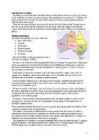
Australia Fact file: Australia comprises a land area of 7 686 850 square kilometres. Its population is about 21,3 million people. Australia's capital is Canberra. The national language is English. The official name of it is the Commonwealth of Australia. It's divided into six states and two territories: New South Wales, Queensland, South Australia, Western Australia, Tasmania, Victoria, Australian Capital Territory (ACT) and Northern Territory. Symbols:
Nordic invaders to be united in the 9th century. The Vikings first raided England to plunder it, then in the days of Alfred of Wessex. They began to win wide lands `to plow and rule'. In the 10 th century England fell under Danish rule with King Canute finally managing to unite the Anglo-Saxons and Danes at the beginning of the 11 th century. After defeating the Anglo-Saxon king Harold at the battle of Hastings in 1066, William of Normandy introduced the Norman feudal system, with land in return for the continued support, and French remained the language of the upper classes and administration until the 14 th century. The origins of Parliament are to be found in the region of John's successor, Henry III. It was a meeting of the king and his barons and servants at which various administrative and financial problems were discussed. In order to make it easier to put the decisions taken into practice, each
MIINA HÄRMA GYMNASIUM Deserts Saudi-Arabia Tartu 2007 Deserts In geography, a desert is a landscape form or region that receives very little precipitation. Generally, deserts are defined as areas that receive an average annual precipitation of less than 250 mm (10 inches). Deserts cover at least one-fourth of the Earth's land surface. Desert biomes can be classified according to several characteristics. There are four major types of deserts: · Hot and dry · Semiarid · Coastal · Cold Location The four major North American deserts of hot and dry deserts are the Chihuahuan, Sonoran, Mojave and Great Basin. Others outside the U.S. include the Southern Asian realm, Neotropical (South and Central America), Ethiopian (Africa) and Australian.
from each state and 2 from each territory. The executive power in Australia is in the hands of the Prime Minister. Today the Prime Minister is John Howard. History. The first inhabitants in Australia are the Aborigines who came there about 60000 years ago. The first known Europeans to arrive in Australia were the Dutch. William Jaanzsoon tried to reach the East Indies, but landed in western Australia in 1611. The Dutch gave a poor account of Australia considering it to be and arid land inhabited by fierce savages. Abel Tasman was also a Dutch sailor and he discovered Tasmania. Captain James Cook discovered the fertile eastern coast in 1770 and had a more favourable outlook. He explored the coast and named some most important features, such as Botany Bay, for instance. Australia was called Terra Australis Incognita before 1770 and it means `southland'. After the disgraceful loss in the American War of Independence, Britain
 annaabi.ee