 100 punkti
Autor soovib selle materjali allalaadimise eest saada 100 punkti.
100 punkti
Autor soovib selle materjali allalaadimise eest saada 100 punkti.
 ~ 2 lehte
Lehekülgede arv dokumendis
~ 2 lehte
Lehekülgede arv dokumendis
 2014-04-07
Kuupäev, millal dokument üles laeti
2014-04-07
Kuupäev, millal dokument üles laeti
 19 laadimist
Kokku alla laetud
19 laadimist
Kokku alla laetud
 0 arvamust
Teiste kasutajate poolt lisatud kommentaarid
0 arvamust
Teiste kasutajate poolt lisatud kommentaarid
 KairiTeder95
Õppematerjali autor
KairiTeder95
Õppematerjali autor
European level (*) Listening Reading Spoken Spoken interaction production English C2 Proficient user C2 Proficient user C2 Proficient user C1 Proficient user C1 Proficient user Page 1 / 3 - Curriculum vitae of For more information on Europass go to http://europass.cedefop.europa.eu Katherin Mayfair © European Communities, 2003 20060628 Russian B2 Independent B2 Independent B1
MARTIN POLD 12 Carlisle Street, Leicester, LE3 6AF Mobile: 07762877920 E-mail: [email protected] PERSONAL PROFILE: I am highly motivated person currently running my own small businesses. I have over 10 years experience in customer service setting, enabling me to develop high levels of communication and attention to detail. I am reliable and responsible having previously been entrusted with cash handling and dealing with financial transactions. I also have experience of training other members of staff. KEY SKILLS: Excellent communication and customer service skills Excellent IT skills Accurate and numerate Can work well as part of a team or own initiative Highly motivated and enthusiastic Flexible and adaptable Language skills: Estonian, English, German, Russian, Latin EMPLOYMENT HISTORY: Student Check-In Helper, Pertemps, Sep 2018 Duties: Working for Unite Students, helping to park over 600 cars over 3 days at The Filbert Village (Student Accommodation) in
BUSINESS PLAN MP CANNED FOOD LIMITED 2018 Business and owner details Business name MP CANNED FOOD LIMITED Owner(s) name MARTIN PÕLD Business address and postcode 12 CARLISLE STREET LEICESTER LE3 6AF Business telephone number +447726779223 Business email address [email protected] Home address and postcode (if different from the above) Executive summary 1.1 Business summary: My business idea is simple: MP CANNED FOOD LIMITED is importing canned food (meat products and ready meals) from Estonia to the United Kingdom. Unique products like "Wild Boar In Its Own Juice", "Elk In Its Own Juice" and "Venison In Its Own Juice" are hard to find in the United Kingdom. We are selling Rannarootsi and Frank Pott brands and sell them online, http://www.mpwildgame.co.uk Future plans are to start trading also in Leicester Market in November/December as a Market Stall, supplying deli shops (including North European and International), wholesalers and supermarkets (including Tesc
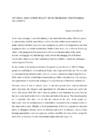
ESTONIAN EDUCATION POLICY. MAIN PROBLEMS AND POSSIBLE SOLUTIONS Hanna-Loora Bobrov Since I was a teenager, I remember thinking of the school education quality. How to improve it, where teacher could be more efficient and how to make a better environment for the pupils. And now all these years later I am a young teacher and it is still important for me what is going on within my society in education. I believe I have some kind of advance of knowing what is really going on in Estonian schools and how the education policy really works. Because not long ago I finished the high school, before that changing a lot of different schools and I think I can say that I superficially know how different schools are working in various regions of Estonia. Being a student at the faculty of education has opened my eyes for a lot of different things, perspectives and helped a lot to understand deeper, why things are like they are.
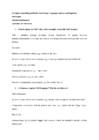
Estonian in multilingual Baltic-Sea Europe: language contacts and linguistic landscapes. Kordamisküsimused Questions for the exam 1. What is meant by SAE? Give a few examples of possible SAE features. SAE – Standard Average European. Martin Haspelmath: 12 typical structural features (concentrated in Europe, rare outside of Europe) and some other possible common features. Examples: Definite and indefinite articles, e.g., a book vs. the book Relative clauses with relative pronouns, e.g., I woke up a student who had nodded off ‘have’-perfect, e.g., has done Nominative experiencers, e.g., I like, I need Participial passive, e.g., you are invited Particles in comparative constructions, e.g. She is older than me 2. Is Estonian a typical SAE language? Why do you think so? SAE in Estonian: Relative clauses with relative pronouns, e.g., raamat, mida ma lugesin ‘the book that I read’ Comparative construction with the particle kui ‘than’, e.g
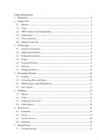
Table of Contents 1. Background ..............................................................................................................................2 2. Business Plan............................................................................................................................2 2.1. Mission..............................................................................................................................2 2.2. Values ...............................................................................................................................2 2.3. SWOT Analysis of the Organization ................................................................................2 2.4. Opportunities ....................................................................................................................3 2.5. Primary Processes ........................................................................................
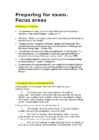
Preparing for exam. Focus areas Defining innovation ● “An innovation is an idea, practice, or object that is perceived as new by an individual or other unit of adoption.” (Rogers 1952) ● CIS survey: “Product innovations must be new to your enterprise, but they do not need to be new to your market”. ● “Companies achieve competitive advantage through acts of innovation. They approach innovation in its broadest sense, including both new technologies and new ways of doing things” – (Porter 1990) ● “An innovative business is one which lives and breathes “outside the box”. It is not just good ideas, it is a combination of good ideas, motivated staff and an instinctive understanding of what your customer wants” – (Branson 1998) ● “...novel implementation of an invention, discovery, new or existing knowledge in economic process” (Joseph A. Schumpeter) ● An innovation is the implementation of a new or significantl
Education Education is so multifaceted that it is difficult for me to know where to begin discussing it, or how to prioritize the many factors. Relaying my own experience is easy: I had a standard classroom approach, supplemented by inordinate reading. In only the briefest and least memorable instances did I receive any individual tutoring. Education is commonly thought of as the job of schools. Adults cry "educate our children!" Everyone has opinions about the best way to do the job. It is of urgent importance, and all the numerous factors are much studied, debated, and new (or old) ideas continually tested or retested. Some people say "it's as simple as . . . " and then name their pet peeve or passion. My view is not of an education specialist, but of one who loves sharing what I learn, and owes much to educators. Since I don't have an educational theory neatly worked-out, nor an outline of my perceptions, my intent is to address each educational ingredient that comes to my m
 annaabi.ee






Kõik kommentaarid