Are mistakes necessary for discovery and progress? It is often questioned whether making mistakes help people to progress and make discoveries. I personally think that there is no need to make mistakes in order to develop themselves, but it is often an efficient way of finding out something new which can help people to make progress on whatever that is worked on. It is often the mistake that tell us what is wrong or what needs to be corrected. Through correcting any mistakes that are made and learning from those errors, deffinitely help to make progress
many gained living from patrons. 8)which methods did they use to turn metals into gold? They thought that lead could be improved into gold, they tried to speed up this process by heating and refininf the metal in a varietu of chemical processes, most of which were kept secret. 9)where was alchemy practiced? Alchemy was practiced from China and India to Greece, it migrated to egypt during hellenistic period and was later revived in the 12th-century Europe 10)which discoveries did they make? Alchemists made some useful discoveries- mineral acids, alcohol, their experimentations led to the development of pharamacology and the rise of modern chemistry.
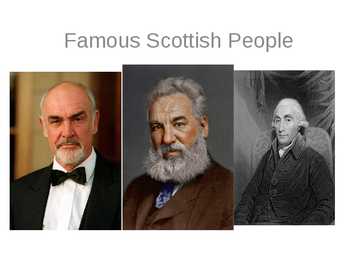
He was born in Edinghburg Scotland in August 30th 1930 Alexander Grahm Bell Born March 3rd 1847 Very famous engineer, scientist and inventor Became a master pianist with no formal trainig as a child and also learned sing language when his mother started going deaf He is most famous for inventing the telephone in 1847 Joseph Black Born on April 16th 1728 Attended Glasgow University Famous physician and chemist and is credited for very significant discoveries such as latent heat, which is when heat is released and absorbed through the body specific heat, which is the amount of heat required to change the temperture of a substance, and also discovered the gas known as carbon dioxide.
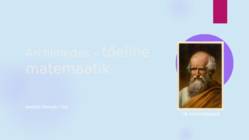
Avastused ja leiutised 2 Archimedese spiraal Archimedese printsiip Ligikaudne arvutusviis ringjoone jaoks Koonuse, poolkera ja silindri ruumalad suhtuvad 1:2:3 Kang, mis lennutas 250kg kive õhku Pii ehk Archimedese konstant on võrdne tasandil paikneva ringjoone pikkuse ja diameetri suhtega 3,14159 3 = Archimedese pii arvutamine Kasutatud kirjandus Vikipeedia Famous scientists Discoveries of Archimedes Archimedes Video Archimedese elust Pilt 1 Pilt 2 Aitäh kuulamast!
Western Australia Mihkel Hallen 8b Introduction · Western Australia is the largest state of Australia · It's population is 2,1 million inhabitants (10% of the national total) · The state's capital city is Perth The flag History · The first inhabitants of Australia arrived from the north approximately 40,000 to 60,000 years ago · The first European visited W.A. in 1616 · Population growth was very slow until the significant discoveries of gold were made in the 1890s Geography · Western Australia is bounded by South Australia and the Northern Territory to the east, and the Indian Ocean to the west and north · It's highest peak is the Mt Meharry (1249m) Climate · The southwest costal area is relatively temperate and was originally heavily forested, including large stands of the karri · Average annual rainfall varies from 300 1500 mm (in Estonia 550 880 mm)
The aim of this report is to describe social and economic situation in Estonia. Estonia is well known because for it's highly developed IT-sector. IT-sector is the fastest growing area. In the words of stat.ee about two-thirds of households have a broadband Internet connection. Due to more people go online to vote and do their business with the banks. As time goes by, more and more discoveries are made in the IT field. However, the income of estonians is one of the lowest in the European Union, therefore there is a big gap between different social layers. Estonians average monthly wage is 792 EUR, which means that the average monthly wage is bigger only than in Latvia. Other European Union countries have higher average monthly wages. Small salary is accompanie by aging. That is because families with smaller
What were the major changes in technology, education, government, social areas, etc and how did they change the mindset of the British people? 2. Why is the Victorian period often compared to the Elizabethan period? In terms of size how would you describe the British Empire? Why was such an enormity needed at all? 3. Why did the Victorian's develop a doubt in religious matters? What were the new discoveries that triggered the questioning in religious faith? Who were David Livingston and Charles Darwin? What were their ideas like? 4. Describe the main social issues of Victorian Britain? How were they depicted in literature? (workhouses, slums, child labour, disease, etc) 5. What ideas and reforms were behind the 'woman question'? Describe the three types of the Victorian women, their roles and development throughout time? 6. Self-help books and the ideology behind them
Mikk Hödemann 12.d klass English Parliament What can I say about the English history at all? I think that this is the most interesting history I had to study. During this subject (British civilization), I discovered some exciting facts, occasions which took place in the British history. One of these "discoveries" was the English Parliament. I was amazed how fast it grew within the centuries, from eleventh to seventeenth centuries. The political history of British Isles over the past 800 years has been largely one of reducing the power of the monarchy and transferring authority to a London-based Parliament as the sovereign legislative body for all of Britain. This development has resulted in political, social and religious conflicts, as well as evolving governmental and constitutional institutions.
of the researches on Mars for us. Furthermore I think that in the future our spacerockets will be so hi-tech that we`re able to travel to ohter solar systems. Right now it would take a whole lifetime to get to the ohter solar systems, who would want to lay down their life for that? There will need to be many advances in technology, but we will get there eventually. We have gain incredible knowledge with the first 50 years on space. We can only speculate what kind of discoveries will the next 50 years bring. Prediction is difficult, especially the future. I think that space is a place where we will be looking scientific answers infinitely.
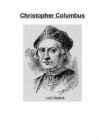
· 1478- Columbus and his wife lived in Madeira · In 1479- Columbus got married to Portuguese Felipa Moniz Perestrello · By the 1480- they returned back to Lisbon, where their son was born. · While he was in Lisbon, he used his father-in-law power and researched materials and voyages of Atlantic Sea · Columbus examined maps thoroughly and also he became a cosmographer, so he began to produce and sell marine charts, also he was interested in new discoveries and settlements. · He travelled a lot till he approached the king, offering to find India and Cipangu, in 1483, 1484, but king sent the vessel to test Columbus theory and the vessel didn't reach any shore. · 1480- Christopher's wife died and he abandoned his career in merchant-navigator. · In 1485 he gave her son to his wife sister. · 1488- Columbus and his lover Beatriz Enriquez de Arana got child called Ferdinand.
workout. Although photography is an old hobby, modern technology has changed the whole idea of it. In addition because of modern breakthrough blogging as a hobbie is also possible. It is actually writing but you can write anything you want and publish it to many blogging sites. A good writing skill may lead to fame for a blogger and become a major earning source. As shown above, technology has changed leisure and hobbies. If there would not be such technological discoveries there would not be that kind of hobbies and people would be more relaxed in their free time. Improvement in technology overall has been positivie, because it gives much more to the people than takes awat. In short, technology has a lot of effects on free-time activities. We can not live without it, so it is best to keep the good technology and use it wisely, have fun, instead of playing games every day. It can do lots of amazing things we cannot do.
He completed his doctorate at the University of Tartu. 2. After 4 years at Moscow Observatory he became Director of the Astronomy Department. From 1921-1944 he was an Associate Professor at Tartu University, and from 1930-34 visiting scientist at Harvard University. 3. Öpik was one of the most outstanding astrophysicists of his generation, with wide- ranging interests in the physical sciences. Among his many pioneering discoveries were:the first computation of the density of a degenerate body, named the white dwarf; the first accurate determination of the distance of an extragalactic object (Andromeda Nebula;the prediction of the existence of a cloud of cometary bodies encircling the Solar System, later known as the "Oort Cloud";the first composite theoretical models of dwarf stars like the Sun which showed how they evolve into giants;a new theory of the origin of the Ice Ages. 4
because scientific knowledge is mainly discovered and not everything will be discovered at once. First theories are formed based off of existing facts and information and then scientists look for evidence to support their theories. Sometimes they succeed and sometimes they don’t. In the case of the discovery of DNA structure and function it took countless trials and errors before Watson and Crick were able to propose the double helix. To accomplish that they relied heavily on the discoveries that other scientists had made 1 before them. Mainly on Rosalind Franklin’s X-ray diffraction images of DNA.1 The knowledge obtained took a lot of effort from many different scientists along with a lot of time to produce. The information is very useful and it is found to be very valuable, without the hardship and dedication from those scientists we would not have this knowledge.
The clouds are blown by constant winds that reach speeds up to one thousand miles per hour at the equator of the planet ("Great Space Place"). The rings of Saturn are more spectacular than those of any other planet. Although this planet's rings are very wide, extending from the top of its atmosphere to well beyond the orbits of its closest moons, they are very thin, measuring no more than a few kilometers (about a mile) in thickness ("Great Space Place"). The Pioneer 11 flyby made several discoveries about the rings. The rings are made of particles that are dust-sized up to large mountain-sized masses, with the average size being in the marble to basketball range - about 10 centimeters (four inches). These particles are extremely cold and are possibly composed of frozen water and other ices. An extensive cloud of hydrogen was also discovered around the rings. The rings might have resulted when a moon or a passing body ventured too close to Saturn
The long earth & Fight club Julia Shashkina, 11D The Long Earth Authors: Terry Pratchett and Stephen Baxter A sophisticated plot Philosophical Parallel worlds that are similar to Earth Device called a "Stepper" Travelling through all the worlds New discoveries A lot of fantasy Science Fight club Chuck Palahniuk Muutke teksti laade Teine tase The book Kolmas tase Neljas tase
His 13-year-old son, Ferdinand went with him on the fourth voyage. Columbus did not become rich as he had hoped. At the end of his life he only had a pension the king and queen had given him because he was the first to reach the New World. He spent the last few months of his life in bed because of the pain of arthritis. Columbus not only discovered a New World, but he led the way for other explorers. Since his death, Columbus has been heralded as a hero for his discoveries but has also become a figure of controversy for the disastrous effects of his explorations on native peoples in the Americas. Christopher's accomplishments are recognized in different countries and in different ways. The United States celebrates Columbus' first voyage to the Americas with a holiday on the second Monday in October. This holiday is called Columbus Day. It has also been called Discovery Day and Landing Day. Some cities, like New York
importance in life. Throughout the story it stands to reason that she is trying to establish her true self, even though she is steadily influenced by her family, especially by her mother. On account of her constant questionings she finally evolves into an individual, who is capable of distinguishing essential truths of life from unimportant ones, however she still remains to be uncertain, which may indicate that her discoveries are not all-encompassing in nature and may fade away from the memory. From the very beginning it is evident that Laura is a young lady, who tries to learn how to establish herself. During that process she has to step out of her comfort zone for several times. She is often afraid of looking silly or simply weird. As well as, she constantly questions how she should behave. Therefore, she often imitates her mother or somebody else to be taken seriously
When Alice calls Edward, Bella nervously guesses that she's going to warn him about her intention of sneaking off to join the Cullens in battle. But Edward has all ready guessed it from things she said in her sleep and insists it's out of the question. When she suggests that Seth will help her defy him, he retorts that Jake will forbid it -- and Seth will have to obey, because Jake is Sam's second-in-command. This is news to Bella. To distract her, Edward talks about the discoveries he's made while listening to the pack mind last night. For one thing, one of the wolves isn't a Quileute boy at all -- it's Leah Clearwater. Bella reflects how painful it must be for her and Sam to be in such intimate mental contact. Edward unsympathetically replies that Leah is making life as difficult as she can for the rest of them. But Bella persists: if Edward is going into danger, she refuses to be left behind. She considers asking him to stay safely with her instead
organisatsioonid ise ei ole enamikus riikides usuühingutena registreerimiseks kvalifitseerunud. Kasutatud kirjandus põhineb: 1.Eesti Evangeelse Luterliku Kiriku kodulehelt http://www.eelk.ee/ 2. Saientoloogia ametlikult kodulehelt http://www.scientology.org/ Raamatutest saadud informatsioon: 3. "What is scientology? : a guidebook to the world's fastest growing religion" Los Angeles(Cal.), Bridge Publications, 1993a. 4. "The dynamics of life: an introduction to dianetics discoveries" L.Ron Hubbard, Copenhagen, 1989a. 5. "A description of the Scientology religion: from the scientology handbook." Los Angeles, Bridge Publications, 2001a. Jakob Westholmi Gümnaasium Referaat:Saientoloogia Grete Sillis 10A TALLINN 2009
beyond the Azores and the Cape Verde Islands, by a line passing from pole to pole, and you gave me wide power over this and over all that I might further discover. The document states this very fully. The other most important matter, which calls aloud for redress. remains inexplicable to this moment. Seven years I was at your royal court, where all to whom this undertaking was mentioned, unanimously declared it to be a delusion. Now all, down to the very tailors, seek permission to make discoveries. It can be believed that they go forth to plunder, and it is granted to them to do so, so that they greatly prejudice my honor and do very great damage to the enterprise. It is well to give to God that which is His due and to Caesar that which belongs to him. This is a just sentiment and based on justice. The lands which here obey Your Highnesses are more extensive and richer than all other Christian lands. After I, by the divine will, had placed them under your royal and
the human spirit, a realization of the human potential for development. 4. What kind of ideas and beliefs did the Renaissance develop? Stimulated by the discovery that the men and women of ancient Greece and Rome were intelligent, cultured, and creative, the Renaissance gradually became also the rebirth of the human spirit, a realization of the human potential for development. This realization led eventually to many discoveries geographical, religious, and scientific, as well as artistic and philosophical. Both the Age of Discovery and the Protestant Reformation had their origins in the Renaissance spirit. Renaissance belief: life in this world was not merely a preparation for the next world but that, on the contrary and active life in this world had value in itself. 5. How did the Renaissance in England differ from the Renaissance in Europe? Why?
Born at Pisa in 1564, Galileo studied medicine and mathematics and became a professor at Pisa in the late 1580s. But because the largely Aristotelian faculty [ õpetajaskond ] was hostile to him, Galileo decided to move on to Florence. Eventually he settled at Padua and between 1592 and 1610 his mathematics lectures at the university attracted students from across the Continent. The key to all of Galileo's discoveries was the accurate measurement of time. Accurate measurement of time was essential if the mechanics of motion were to be explained. By 1600, there were no accurate clocks or time keeping devices. There were clocks, of course, but none of them were at all precise. Medieval clocks were convenient for dividing the day but not for keeping precise time. Galileo was fascinated with time. As the story goes, Galileo was attending a religious service at Pisa in 1583
Early History The first inhabitants of Canada were native Indian people who were called as Inuits. They are believed to be in Canada since about 10000 BC. The Inuits came to Canada from Asia crossing the Bering land bridge. The earliest discoveries in Canada were made by the Vikings. In AD 985 Vikings sailing from Iceland to Greenland were blown westward off their course and the Vikings sighted the coast of Labrador peninsula. The report of forested areas encouraged further exploration because the colonies in Greenland which belonged to the Vikings lacked lumber. In AD 1000 Leif Ericson became the first European to land in North America. The first colony was established what was described as Vinland by the Vikings.
The relative absence of academic attention to the future may stem from several causes. Neglect of the future may also arise as a byproduct of a newly strengthened focus on spatial analysis. Space and time are two essential dimensions for describing the world, but it is difficult to focus on both at once. As opposed to the needed focus on time, recent developments in urban theory have emphasized spatiality, contributing significant new discoveries about the importance of spatial context for regional development. Simultaneously, the rise of a new technical mode of data analysis and display, geographic information systems (GIS), has intensified emphasis on spatial patterns at fixed points in time. Toward Planning Intelligent Futures The recent calls for planning to strengthen its special claim to a future orientation point up the fact that neither practitioners nor academics are adequately equipped to effectively address the future.
Nowadays watchung TV takes up much of oru time.Many people spend their free time in fornt of a TV set.However, watching TV has many advantages and disadvantages. The main advantage of watching Tv is the source of information.We can watch many educational programmes about animals, discoveries, history, physics and many other domains of science.Thank to TV we can get to knowabout the coulture of other countries. We can also do shopping via TV shpping channels. On the other hand, there are a lot of disadvantages. TV absorbsus much time, which could bring many ilness. TV programmes show violence in fairy-tales, cartoons andprogrammes for children. Watching TV can limit children's imagination. In conclusion, I think that people should limit watching TVand start spending their
tahagi meid endi hulka võtta. Võttes arvesse, et Galaktika läbimõõt on hinnanguliselt 100-120 kilovalgusaastat ja meie oleme jõudnud kõigest 0,0019 valgusaasta kaugusele, siis meil kulub aasta tuhandeid kui mitte miljoneid, et jõuda läbi otsida see ruum. Teine asi, kas meid nii kauaks jätkub. Viited [1] - Wikipedia ,,Voyager 1" [2] - NASA. Voyager, The Interstellar Mission [3] SETI.org [4] - NASA. Kepler Discoveries [5] NASA. Kepler News [6] Discovery News Täpsustavad märkused 1 valgusaasta on 9 460 730 472 580 800 meetrit. 1 astronoomiline ühik on Maa keskmine kaugus päikesest 149 597 870 kilomeetrit. Kepler on saanud oma nime Johannes Kelperi järg, kes oli saksa astroloog, astronoom, optik, matemaatik ja natuurfilosoof. Ta elas 16.-17. sajandil. Panspermia on teooria, elu Maal sai alguse tänu kosmoses lendavale nn. Seemnele, mis maandus Maale
Another tale tells of William Tell, who shot an arrow through an apple while standing on his son's head. The Renaissance was an age in which more individuals felt the value of their human being. Martin Luther was nailed to the church door at Wittenberg for selling papal indulgences. He died a horrible death, being excommunicated by a bull. It was the painter Donatello's interest in the female nude that made him the father of the Renaissance. It was an age of great inventions and discoveries. Gutenberg invented the Bible. Sir Walter Raleigh is a historical figure because he invented cigarettes. Another important invention was the circulation of blood. Sir Francis Drake circumcised the world with a 100-foot clipper. The government of England was a limited mockery. Henry VIII found walking difficult because he had an abbess on his knee. Queen Elizabeth was the "Virgin Queen." As a queen she was a success. When Elizabeth exposed herself before her troops, they all shouted "hurrah
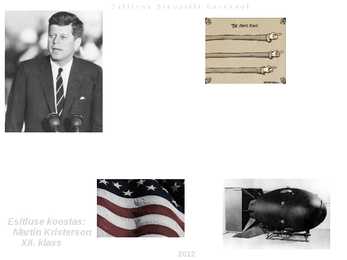
johndclare.net/cold_war16.htm&docid=wWyeMfBh43ZNSM&imgurl=http:/ www.johndclare.net/images/Armwrestling.gif&w=589&h=418&ei=eYRBTu0MMP34QS3n7SdCA&zoom=1&iact=hc&vpx=1463&vpy=151&dur=1901&hovh=189&hovw=267&tx=189&ty=143&sig=100109145053015485557&pag http://www.google.ee/imgres?q=first+presidential+debate+tv&um=1&hl=et&sa=X&biw=1920&bih=922&tbm=isch&tbnid=BdnDYqLrAnNnIM:&imgrefurl=http://www.wired.com/science/discoveries/news/2008/09/dayintech_0926 www.wired.com/images/article/full/2008/09/kennedy_nikon_debate_630px.jpg&w=630&h=427&ei=xoRBTGnJNKP4gSh17m2CA&zoom=1&iact=hc&vpx=173&vpy=153&dur=3172&hovh=185&hovw=273&tx=111&ty=81&sig=1 http://www.google.ee/imgres?q=african+americans+kennedy&um=1&hl=et&sa=N&biw=1920&bih=922&tbm=isch&tbnid=fOMG5U1q_tPIvM:&imgrefurl=http://www.dipity.com/mbearman/AmericanRevolution/&docid=5USuTiL cdn.dipity.com/uploads/events/cd57530f354e8056054d3e177c334ca6_1M
In a sense, then, the synthesists focus of one's attention. The philosopher should be interested in discovering the have been more pragmatic in their aims than the analysts. Although, because their sorts of things that scientists typically do. So one would raise questions like, How immediate goals have been so different, the two schools have found little to talk about, are scientific discoveries made? and, How are theories established or discredited? / recent efforts by Anglo-Americans to investigate the evaluative and ethical implications .../ of science suggest that there may be more opportunities for dialogue in the future. /.../. Alternatively, one might focus on science as a set of results that are 4. Descriptive and Prescriptive
All life, including men came from fish. First humans came full-grown from fish's belly. Anaximenes All is aer (spirit or mist) - all things come from spirit or mist. Spirit is distilled liquor. From cloud- air, water, earth, fire- all comes from aer. Connection between spirit, mind and world 08.02.2012 Pythagoras (570-495 BC) and the Pythagoreans · Studied Mathematics (Pythagorean Theorem) · Made discoveries about music (sympathy of the strings, musical theory providing that there are hidden mathematical relations governing harmony) Political Theory: A Pythagorean was asked how one could give one's son the best possible education, to which he replied that one should make him citizen of a state with good laws (cited in Hegel) · Something of a mystery cult, with special rituals, diet (no beans) and claiming to have access to hidden knowledge. (early form of brain washing)
Evil is not absolute, but relative. The guy learned how to write complexly. 1. What does the term RENAISSANCE mean in literature and art? When and where did the renaissance start? Compare how man was depicted during the Renaissance and Medieval Times. When did the Renaissance reach England? 2. The historical background of the Renaissance. The War of Roses, the monarchs of this period. 3. Cultural background. Discoveries, grammar schools, the first playwrites. 4. Emigration to America. Why, when, how + Thanksgiving. 5. Thomas Moore and utopia. 6. The development of drama. Mysteries and mirscles, morality plays, etc. Who were the actors? Where were thet performed? Subject? 7. Shakespeare and his three periods. Sonnets, R/J etc. 8. Hamlet's soliloqui. Civil War and Restoration
Old models favored coherence with the ‘uniform circular motion’ piece of the puzzle. Kepler rejected that piece and designed a model basically similar to our model. His system is simpler than his predecessors and offers accurate descriptions and predictions. However, he failed to explain why planets moved that way. Few years after Kepler, the telescope was invented. Galileo used throroughly his telescope and made important discoveries (new pieces to the puzzle): Description of the moon, The moon of Jupiter Sunspots The phases of Venus. Galileo’s discoveries gave strong evidence for the heliocentric view of the world. His discoveries led him to troubles with the Church (‘Yet it turns…’) Later, Newton (1687) introduced his laws of motion to explain the movement of the planets. A New (Newtonian) Worldview (and its variations) will dominate until around 1900. Scientific Revolutions
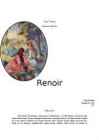
made their discovery that shadows are not brown or black but are coloured by their surroundings, and that the 'local colour' of an object is modified by the light in which it is seen, by reflections from other objects and by contrast with juxtaposed [placed side by side] colours." The styles of Renoir and Monet were almost identical at this time, a sign of the dedication with which they pursued and shared their new discoveries. During the 1870s they continued to work together at times, although their styles generally developed in more personal directions. In 1874 Renoir participated in the first impressionist exhibition; his works included the Opera Box. Of all the impressionists, Renoir most thoroughly adapted the new style to the great tradition of figure painting. Although the impressionist exhibitions were the targets of much public scorn during the
Vikings. It is said that in 985 AD Norse seamen sailing from Iceland to Greenland were blown far westward off their course and sighted the coast of what must have been Labrador. The report of forested areas on the strange new coast encouraged further explorations by Norse colonists from Greenland, whose settlements lacked lumber. In Anno Domini 1000 Leif Ericson became the first European to land in North America. A colony was established in what the Vikings described as Vinland. Discoveries of "Norse" relics in that area have been exposed by scholars as hoaxes. The Greenland colony died out during the 14th and 15th centuries, and the Norse adventures in Canada must have come to an end well before that time. The first permanent European settlements were established by the French king Louis XIV, who made a deal with a fur trading company so that only they would be allowed to trade beaver pelts, which were in fashion that time and they would settle
intrusions created during the Caledonian mountain building period (the Caledonian orogeny), commercially important coal, oil and iron bearing carboniferous deposits and the remains of substantial tertiary volcanoes. During their formation, tectonic movements created climatic conditions ranging from polar to desert to tropical and a resultant diversity of fossil remains. Scotland has also had a role to play in many significant discoveries such as plate tectonics and the development of theories about the formation of rocks and was the home of important figures in the development of the science including James Hutton, (the "father of modern geology") Hugh Miller and Archibald Geikie. Various locations such as 'Hutton's Unconformity' at Siccar Point in Berwickshire and the Moine Thrust in the north west were also important in the development of geological science. Climate of Scotland !
it. So it was called Terra Australis Incognita - the Unknown South Land. The first recorded European to see Australia was a Dutch - Captain William Jansz who entered the Gulf of Carpentaria in 1606. Another Dutch - Abel Tasman sailed to the south and discovered Tasmania in 1642. By the middle of the seventeenth century most of the north, west and south coasts had been charted. But the Dutch were disappointed with their new discoveries. The first British captain who saw the new continent was William Dampier who visited the north western coast in 1688 and 1689. In 1770 the British sailor Captain James Cook landed on the east coast at Botany bay, and said Australia now belonged to Britain. Of course nobody asked the Aborigines about this - it was the beginning of a terrible time for them. Narrowly escaping shipwreck on the Great Barrier Reef, Cook sailed home to England. He reported a land with abundant fresh water and
heritage. Creoles are among a rich cultural heritage of people. For many centuries, the word Creole has had as many as 30 known definitions. It is a fact that the word Creole had its origin in Africa, citing the countries of Senegal and Mali. In these areas, it is believed that in the 11th century is when Creolism began. In search of new lands, ideas, riches, knowledge and to dispute the philosophers and historians, men became brave explorers. It is through their discoveries that these varying cultures co-existed in harmony to form the structure of Creolism. It is documented in the records of history that Creoles of Senegal, whether as freemen or as slaves, traveled directly from Senegal and Mali to Louisiana. People The term Creole and its cognates in other languages -- such as crioulo, criollo, créole, kriolu, criol, kreyol, kriulo, kriol, krio, kreol, etc. -- have been applied to people in different countries and epochs, with rather different meanings
Eesti sillad=Brücken in Estland=Bridges in Estonia. Tallinn:Tänapäev. Ryan, V. 2009. The Akashi-Kaikyo Suspension Bridge Japan. http://www.technologystudent.com/culture1/akashi1.htm 05.04.2014 Structurae. Akashi Kaikyo Bridge. http://structurae.net/structures/data/index.cfm? ID=s0000001 05.04.2014 Sumitomo Group Public Affairs Committee. 2014. Akashi kaikyo Bridge and Advanced Technology: Dream Becomes Reality in the World´s Longest Suspension Bridge. http://www.sumitomo.gr.jp/english/discoveries/special/74_02.html 05.04.2014 Suviste, M. 1999. Võru Sillaskandaal. Sõnumileht, 27. jaanuar (nr 21). Tohver, T. 2009. Tee Roosisaarele. http://nagi.ee/photos/sas41/13249449 05.04.2014 Tootsen, Ü. 1998 a. Roosisaare sild vana lõpp ja uue algus. Võrumaa Teataja, 27. juuni (nr 71). Tootsen, Ü. 1998 b. Roosisaare sild võtab ilmet. Võrumaa Teataja, 14. november (nr 130). Washington State Department of Transportation (WSDOT). 2005. Suspension Brodge Basics. http://www.wsdot.wa
young children's clay productions. Children as young as 3 years of age who perform in nonintrusive self- exploration environments tend to be much more limited in subject matter, scale, detail, and stylistic diversity in their clay productions than are those who benefit from appropriate instruction (Kindler, 1997). But perhaps most important, sensitive teaching that relies on constructivist approaches and actively guides children toward important discoveries that support their pictorial efforts translates into sense of accomplishment and pride that sustains children's interest in creative endeavors and encourages them to continue to use and further master this medium of representation. These recommended forms of adult intervention and teaching can be easily integrated into the play format, and skillful and sensitive teachers can make a tremendous difference in children's artistic growth without compromising the child- centered
Enhanced Oil Recovery (EOR) techniques (example: DaQing, China) will continue to play a major role in increasing the world's recoverable oil. Peak oil Peak Oil is the projection that future petroleum production (whether for individual oil wells, entire oil fields, whole countries, or worldwide production) will eventually peak and then decline at a similar rate to the rate of increase before the peak as these reserves are exhausted. The peak of oil discoveries was in 1965, and oil production per year has surpassed oil discoveries every year since 1980. Hubbert applied his theory to accurately predict the peak of U.S. oil production at a date between 1966 and 1970. This prediction was based on data available at the time of his publication in 1956. In the same paper, Hubbert predicts world peak oil in "half a century" after his publication, which would be 2006. It is difficult to predict the oil peak in any given region, due to the lack of knowledge
that first thanksgiving celebration more than 300 years ago. People eat squash, corn, turkey, Indian pudding and pumpkin pie. Thanksgiving is a four-day holiday. Schools are closed on thanksgiving, and grownups don't work. People spend the holiday among family. 5) MICHAEL FARADAY Michael Faraday was a physics and chemist. he was born in 1791. He was a son of blacksmith. He invented many things, which are used nowadays. He made important discoveries. Young Faraday was apprenticed to a bookbinder was allowed to read books there. Once a customer gave faraday tickets to attend the lectures of Humphrey Davy. He took careful notes which he sent to president of the Royal Society in the hope of getting a job. The president offered the young man the job. Almost at once Davy left for his tour and took faraday with him. In 1833 he became a professor of chemistry. Faraday was also director of laboratory. During his life he
Water has to be carried to another important mining centre on the edge of the desert in western New South Wales. This is Broken Hill where there are great silver; lead and zinc mines. These metals are now more valuable than gold. They are sent by train to be smelted in Port Pirie. Much zinc is then sent to Tasmania for refining. Afterwards the zinc is used for making iron sheeting for roofs, building and water storage tanks. The latest scientific discoveries in Australia are copper, tin, tungsten, bauxite, `rare earths' and uranium. Oil has also been found in Western Australia. Iron and steel are still the basic metals. People. The first inhabitants in Australia were the Aborigines. They came to Australia from Indonesia. Aborigines were nomads. They like to be called the indigenous Australians. The white people discovered Australia much, much later. Now there are almost 20 million Australians, but more than half of the continent is
Since religious change has never previously been projected on this scale, some cautionary words are in order. Population projections are estimates built on current population data and assumptions about demographic trends, such as declining birth rates and rising life expectancies in particular countries. The projections are what will occur if the current data are accurate and current trends continue. But many events – scientific discoveries, armed conflicts, social movements, political upheavals, natural disasters and changing economic conditions, to name just a few – can shift demographic trends in unforeseen ways. That is why the projections are limited to a 40-year time frame, and subsequent chapters of this report try to give a sense of how much difference it could make if key assumptions were different. For example, China’s 1.3 billion people (as of 2010) loom very large in global trends
htm (Alla laetud 30.10.2011.) [8] History of plastics. Cannon-Sandretto Plastics Museum.. http://museo.cannon.com/museonew/UKmuseo/storia/storia2UK.asp?decenpass= (Alla laetud 30.10.2011.) [9] Atsetaat. Swicofil AG textile services. http://www.swicofil.com/products/204acetate.html (Alla laetud 30.10.2011.) [10] Candy Bags, Cellophane Bags, Cello bags. (foto) http://www.boxandwrap.com/cello.html (Alla laetud 9.11.2011.) [11] Carlisle, R. Scientific American Inventions and Discoveries. John Wiley & Songs, Inc., New Jersey. 2004. [12] Harris, R. Life before plastics. 2008. http://scienceray.com/technology/applied-science/life-before- plastic/ (Alla laetud 30.10.2011.) [13] Early jewelery plastics & testing for bakelite. http://www.thethriftshopper.com/sections/magazine/2007/mayimages/Galalith%20buttons.jpg (Alla laetud 9.11.2011.) [14] Kulu, P., Kübarsepp, J., Hendre, E., Metusala, T., Tapupere, O. Materjalid. (Loengukonspekt) Tallinna Tehnikaülikool, Tallinn, 2001
it promotes natural religion and argues for a creator-God. Benjamin Franklin Benjamin Franklin (January 17, 1706 April 17, 1790) was one of the Founding Fathers of the United States of America. A noted polymath, Franklin was a leading author and printer, satirist, political theorist, politician, scientist, inventor, civic activist, statesman, and diplomat. As a scientist, he was a major figure in the Enlightenment and the history of physics for his discoveries and theories regarding electricity. He invented the lightning rod, bifocals, the Franklin stove, a carriage odometer, and the glass 'armonica'. He formed both the first public lending library in America and first fire department in Pennsylvania. He was an early proponent of colonial unity, and as a political writer and activist he supported the idea of an American nation.As a diplomat during the American Revolution he secured the French
All beliefs and knowledge subjected to a rational examination based on the evidence of fact as supported by the senses. Mathematical methods. Universe as great machine. God’s beneficence. An Omnisient, infinitely wise and divine presence superintended the world. Old belief of care-taking good Providence could now be proved as based on demonstrable fact – moral assurance. Away medieval superstition. Clarification and rational conviction based on fact. Till then life was mysterious. Discoveries. God’s law were shown directing things according to its natre and divine order. Dawn of enlightenment. Scientists revealed a sysematic universe – God in Nature as the greatest of artists. Isaac Newton: coupling of empirical observation with mathematical method. Principle of gravitation (Proof of the old concept of unity). The calculus method. Theory of light (prism). Lot of fear and superstition removed, more confidence in intellect, better understanding of Nature, science
contradictions i.e. double standard: rich/poor, empire/colonies, wealth/exploitation, family/law, personal expression/social criteria, great expectations/failure. Conflict between religious beliefs and science, e.g. Darwin’s theory of evolution, discoveries in geology and biology disprove the Bible. Early Victorians – boundless optimism, mid-‐Victorians – confident but conservative, late Victorians – anti-‐Victorian. Spiritual and religious issues, the woman question, conflict between art and reality and the double standard
the Cape of Good Hope, discovered Brazil, explored the Indian Ocean and established trading routes throughout most of southern Asia, and sent the first direct European maritime trade and diplomatic missions to China and Japan. In 1415, Portugal acquired the first of its overseas colonies by conquering Ceuta. It was the first prosperous Islamic trade center in North Africa. There followed the first discoveries in the Atlantic: Madeira and the Azores, which led to the first colonization movements. Throughout the 15th century, Portuguese explorers sailed the coast of Africa, establishing trading posts for several common types of tradable commodities at the time, ranging from gold to slaves, as they looked for a route to India and its spices, which were coveted in Europe. The Treaty of Tordesillas, intended to resolve the dispute that had been created following the
põhjusel, et massilise patenteerimise tulemusel tekkinud patendipadrikus olevate patentide kaitseta jätmise korral oleks tegu õiguskindluse teatava riivega ning tooks kahtlemata kaasa tohutul hulgal kohtuvaidlusi. 32 SUMMARY Nanotechnological Inventions in Patent Law: Challenges and Solutions Nanotechnology is one of the most society-embracing technologies during the last decade. Its discoveries shift development of science revolutionary, giving opportunity to make us all healthy and wealthy, ending myriad diseases and even old age. Nanotechnology is bottom-up: aggregating individual atoms and molecules to make a desired object. It is known as the fastest developing field, demanding billons dollars of investments into growth. The study was divided into three sections, in first part author explored the term of
Kuhn in his book The Structure of Scientific Revolutions. Writing primarily to the scientific community, Kuhn asks: "How do scientists [and I would add preachers, professors, politicians or people in general] proceed when aware only that something has gone fundamentally wrong at a level with which their training has not equipped them to deal?" Kuhn suggests there are four responses to the stage of crisis: An immediate change to the new paradigm. A "wait-and-see" attitude. A seeing of "new discoveries" upon examining anomalies. A refusal to accept change-the new. Thus the type of response one takes depends on how much one has invested in the old paradigm (Kuhn, p. 86ff). The Structure Must Change: If schools are to undergo a paradigm shift toward equity, then the prevailing structures must be broken up, to be replaced by more egalitarian, inclusive ones. Our present exclusive structures, with a
 annaabi.ee