Leidsid 33 sarnast õppematerjali, mis on seotud failiga "ASPECTS OF BRITISH HISTORY". Need materjalid aitavad sul teemat sügavamalt mõista.
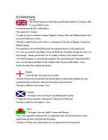
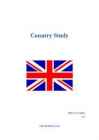
land, brit, king, britain, english, england, roman, british, count, saxon, came, parliament, century, north, first, settle, island, became, lord, year, here, them, ward, language, country, arch, late, french, these, romans, empire, come, saxons, other, sent, follow, europe, west, church, henry, years, class, even, celtic, scot, following, monarch, there1) General facts The UK: * the United Kingdom of Great Britain and Northern Ireland was formed in 1801 * it covers 243,610 sq km * everybody from the UK is called British * the capital city is London * is made up of four constituent countries: England, Scotland, Wales and Northern Ireland which in turn are divided into counties * the flag is called the Union Jack which is a combination of the flags of England, Scotland and Northern Ireland * the population is about 60,000,000 people, the population density is 242 people/sq km * its coasts are washed by the Atlantic Ocean, the North Sea, the English Channel, the Celtic Sea, Saint George's Channel, and the Irish Sea. It is linked to France by the Channel Tunnel * the United Kingdom is a constitutional monarchy. The current monarch is Queen Elizabeth II, who is also the Queen and Head of State of fifteen other Commonwealth Realms, such as
o The Celtic language survives in the names of many places in England- Dover, Kent, Thames o The Celts are best known for their art- many bronze objects with elaborate designs; brooches; pins; mirrors; Celtic stone crosses o The Celts had 3 social orders: warriors, druids(priests) ordinary people 2) The Romans o (55 BC-Caesar) 43 AD- 410 AD- Claudius o From present-day Italy o Southern Britain became Britannia and was ruled by a roman governor o The Romans built over 20 towns: Colchester, Londinium, Winchester etc. They were good engineers and built roads and villas that had central heating, glass windows and mosaic floors o 122 AD- Hadrian's Wall; 138 AD- Antonine Wall o Druids(celtic priests) were banned and Britain was influenced by christianity 3) The Germanic Invasions I
History exam *Stonehenge - is a monument located in England. It is one of the most famous prehistoric sites in the world and is composed of earthworks surrounding a circular setting of large standing stones. The surrounding circular, earth bank and ditch, have been dated to about 3100 BC. Stonehenge was produced by a culture with no written language. Many aspects of Stonehenge remain subject to debate. There is little or no direct evidence for the construction techniques used by the Stonehenge builders.
One of the mysteries is how it was built at all with the technology of the time. Another is its purpose. It appears to function as a kind on astronomical clock and we know it was used by the Druids for ceremonies marking the passing of the seasons. It appears in number of novels. These days it is not only the interest of tourists but is also a gathering point of certain minority groups. It is now fenced off to protect it from damage. 3. The Roman conquest Julius Caesar's first raid was in 55 BC but the romans left. Ad 43- the Romans came to stay. The army established Roman rule in the south and SW of the country. The Romans started to introduce their laws to a new province of the Roman Empire and started to build good roads. Officials were appointed (governors, procurators to collect taxes, look after the estates and mines and se that the gold, silver, iron and lead were exported back to Rome). Introduced schools,a new language
The United Kingdom The United Kingdom consists of England, Scotland, Wales and North Ireland and it is situated in the Atlantic Ocean near the mainland of Europe. The population of the UK is 58.6 million and area is 244,110 sq km. Britain has a temperate humid climate. Its characteristic features are mild winters, warm summer, no temperature extremes, abundant rain all year round and frequent changes of weather. The mild climate is partly due to the warm Gulf Stream and partly to the south westerly winds. Occasional winds from the east in winter may bring cold and dry weather. The distribution of rainfall is influenced by the Atlantic Stream. The mountainous areas of the north and west have more rain than the
Stonehenge One of the best known ancient wonders of the world, 5000 years old Megalith monument, built by western mediterraneans during 3000-1600 BC Circular structure, large standing stones, aligned with rising sun at teh solstice Attlers and bones were sued to dig pits that hold the stones The Celts in Britain and their legacy 700-200 BC celts invade Britain Gaels or Goehls(Ireland and Scotland),Cymri(Wales) and Brythons(gave name to Brittany) Fierce fighters,superb horsemen.Most of them farmers, lived in thatched houses Good at art, craftmanship, used iron Divided into tribes, ruled by kings, only in face of danger would they choose a single leader Legacy- hill-forts, farms, churches, field system, woodland, pasture, weapons, iron objects, langugae, culture Caesar in Britain The great Roman Emperor
Britain History Pre-Norman Britain The Iberians brought their metal-working skills and the first real civilization to Britain in the third millennium B.C and were overrun by various Celtic invasions that began in the 8th century. The Celts introduced their tribal organization and an early form of agriculture before they were forced westward by the Roman invasion. Forms of Celtic language are still spoken in Britain. Romans (with Julius Caesar in the head of them) first tried to occupy Britain in 55 B.C., but there was a rebellion in Gaul so they had to leave to fight against it. Next time they came in 43 A.D. and their leader was Emperor Claudius. Romans brought a lot with them. Their brought paved roads, the sites of important cities, the seeds of Christianity, the Roman law, Roman baths, language and advanced civilization. They also built Hadrian's Wall in 122 A.D
The Saxons & Vikings Fragmentary knowledge of England in the 5th & 6th centuries comes from the British writer Gildas, the Anglo-Saxon Chronicle, saints' lives, poetry, archaelogical findings and place- name studies. British landlords ruled small, unstable kingdoms and continued some Roman traditions of governance. In the mid-5th cent, Vertigern, a British leader, hired Germanic mercenaries to help defend against peoples of the north (Picts & Scots). In the end they revolted & the process of invasion and settlement began. The first Saxon ,,kings" were Hengist & Horsa in Kent, Aelle in Sussex, Cerdic / Cynric in Wessex. So the first ,,English" became mainly from Northern Germany & Denmark. The resistance of the Celts was long. They were free at the time, not like other Roman provinces on the Continent.
The foundation stones The Island Britain has a mild climate due to the Gulf Stream which brings warm waters from the Gulf of Mexico. The northern part of the island in average 5'C cooler and it's mountainous or hilly and that's why the south has been more populated.. Britain became an island only 5000 years BC after the Ice Age ended. Britain's prehistory The first evidence of human life on the island are dated back to 250 000 BC. 50 000 BC in a milder Ice Age period Britain became habitable again. People from that time were the ancestors of the modern British. 10 000 BC ige age ended and Britain became inhabited by small
.......................................................................................... 8 Population and Ethnicity..............................................................................................9 3 Introduction The official name of the country is the United Kingdom. The United Kingdom is an island country. It consists of the island of Great Britain and Northern Ireland. Great Britain can be divided into three parts England, Wales and Scotland. Each of them has their own capital city. Glasgow in Scotland, Cardiff in Wales and London in England. The country is situated in the north-western Europe. The territory of the United Kingdom is about 244,000 square kilometres and about 60 million people live there. The UK contains a number of small islands. The largest islands that belong to the United
ENGLISH LITERATURE Ancient Britain Lived on the British Isles in the 1st millenium. They most probably came from Eastern Europe and belonged to the Celtic race and also spoke Celtic. They were primitive hunters- gatherers, farmers. Some Celtic words are still used in modern English, however they are used mostly in place names. For example: · avon river · cumb valley · ford shallow place in the river Ancient Britons had their own religion and priests or druids and temples. In the year 55 BC Britain became a Roman province. Romans were highly developed and had their own language latin, which has also greatly influenced English. The military occupation of the Isles ended in 410 AD
1. The Queen’s official title. Elizabeth the Second, by the Grace of God, of the United Kingdom of Great Britain and Northern Ireland and of Her other Realms and Territories Queen, Head of the Commonwealth, Defender of the Faith. 2. The Queen’s working day. Starts after breakfast. Reads the newspapers which are prepared by the Press Secretary, and a report on the previous day’s proceedings in the Parliament and the letters she receives. Also phone calls. Once a month she attends the Privy Council in order to give Royal Assent to various
Country Study Mari-Liis Luukas 11c The British Isles Administrative / d'mnstrtv / haldus- Self-governing / self'gvn / isemajandav, iseseisev Legislative assembly/ 'ledsltv 'sembl/ seadusandlik kogu
British history Roman Britain Roman Britain was those parts of the island of Great Britain controlled by the Roman Empire between 43 and about 410. The Romans referred to their province as Britannia. Prior to the Roman invasion, Iron Age Britain already had cultural and economic links with Continental Europe, but the invaders introduced new developments in agriculture, urbanization, industry and architecture, leaving a legacy that is still apparent today. Historical records beyond the initial invasion are sparse, although many Roman historians mention the province in passing. Most of the knowledge of the period stems from archaeological investigations and especially epigraphic evidence.
THE U.K Different Parts The United Kingdom is a short way of saying the United Kingdom of Great Britain and Northern Ireland. The UK is the political name for those countries which share a parliament in London. All of them were at one time independent kingdoms with their own monarch. Now they are all part of the same kingdom and share the same monarch. The UK consists of Northern Ireland, Scotland, England and Wales. The peoples of these countries are British subjects; they hold British passports and therefore their nationality is British. The british Isles is the geographical name for all the islands off the west coast of Europe. These islands also include The Republic of Ireland, which is politically independent of the Britsh government. Many people refer to the inhabitants of the British isles as 'the English', but England is only one of the countries
Revision questions for the test on Old English and Medieval Literature. 1.) How is literature analysed and studied? What is the difference between the diachronic and synchronic view? Literature is studied and analysed by reading the piece of work profoundly and work on all the aspects of the piece. Diachronic is development in history Synchronic is particular state at any given moment 2.) Give a general overview of Celtic Britain, Roman invasion in 55-54 BC, Anglo-Saxon invasion and the second Roman "invasion" of Great Britain, who were the leaders, what influence did they leave on the culture of Great Britain? Celtic Britain was during the Bronze Age, there were many small tribal kingdoms fighting one another. Many megalithic monuments were built around that time, e.g. Stonehenge, the Avebury ring. The Roman Invasion 55-54 BC, Julius Caesar ruled Rome, Rome built the Hadrian's wall (73 miles
Tallinn English College Topic Great Britain 2007 1. Introduction The official name of Great Britain is `the United Kingdom of Great Britain and Northern Ireland (or short United Kingdom)' The population is about 60.4 million. The capital is London. Other biggest cities include Birmingham, Bristol, Portsmouth, Glasgow and Swansea. English is the main language of Great Britain, but Welsh is officially recognized in Wales and Gaelic in Scotland. 2. Geographical position The British Isles is the geographical term for a group of about 5000 islands off the coast of mainland Europe. The largest island is Great Britain, which is also the largest island in Europe. It consists of England, Wales and Scotland. The next largest island is Ireland, which is made up of Northern Ireland and the Irish Republic. Britain and Northern Island together form the United Kingdom
1. What are the capitals of the 4 constituent countries? England- London; Northen Ireland- Belfast; Scotland- Edinburgh; Wales- Cardiff 2. Order the invaders in correct chronological order: Anglo-Saxons, Normans, Romans, Celts. Romans Anglusaxons , Norman 3. How did the Celts influence Britain? Language. Wars. Engand and Scotland eventually became 1 contry 4. How many people approximately speak English? Approximately 600 million 5. Who (which tribes) gave the base of the English language?Germanic tribes- Anglo-Saxons. 6. Describe Wales.- Wales is a mountainous country on the western side of Great Britain. The national game of Wales is Rugby. Flag- Red dragon on a green and white field. They have their own language Cymraeg ( Welsh) . Anthem- Land Of My Fathers. Official animal- Dragon. There used to be a lot of coalmines. 7
Years 1154-1485 Henry I was the first unquestioned ruler. One of the most important kings in the Middle Ages. He had lands in Britain & France. Then the government was the monarch, a person, not a place. He had more land than any pervious king. After his marriage to Eleanor of Aquitaine, he also ruled the lands south of Anjou. His empire stretched from the Scottish border to the Pyrenees. England provided most of its wealth, but the heart was Anjou. Henry II began to regain royal control. During the war some barons had become very powerful. He pulled down some of their castles. He tried to restore law & order. He wanted the same kind of justice to be used everywhere. He appointed his own judges to travel around the country. They dealt with crimes & disagreements over poverty. Serious offences were tried in the king's court. At first they had no special knowledge or training
BRITISH HISTORY 17TH-19TH CENTURY SEVENTEENTH-CENTURY ☄ When James I became the first English king of the Stuart dynasty, he was already king of Scotland, so the crowns of these two countries were united. ☄ The kind of Middle English spoken in lowland Scotland had developed into a written language known as Scots ☄ The Scottish Protestant church adopted English rather than Scots bibles ☄ Religion and politics are inextricably linked ☄ Some people tried to kill the king because he wasn't Catholic enough and another king had been killed, partly because he seemed too Catholic ☄ Anger grew in the country at the way that the Stuart monarchs raised money ☄ Puritanism- ideological Protestantism ☄ Some of them thought the luxurious lifestyle of the king and his followers was immoral
Anglo-norman period (1066-1300) The normans · The name derives from "the Northmen" · Descendants of the Vikings · Seized the north-western part of France · The area known as Normandy · Adopted French customs and Christianity · Norman-French (their version of French). 1066 · Edward the Confessor dies in January · Harold Godwinson crowned as king in Westminster Abbey on the same day · Another candidate for the throne William, Duke of Normandy · Gathered an army · Invasion delayed (bad weather) · Harald, king of Norway, invades England from the North · A battle at Stamford Bridge · Harald's army defeated, leaders killed · The end of the Viking Age · The Normans land in Britain (a few days after Stamford Bridge)
REVISION QUESTIONS 1. What do you know about Margaret Thatcher? Winston Churchill? Margaret Thatcher was the first female Prime Minister in Europe. She was a member of the conservative party. She died recently. Winston Churchill was the Prime Minister during WW II. He was excellent in making speeches, but he was a heavy drinker and also smoker. 2. What are the main countries of the UK and their capitals? There are 4: England with London as the capital; Wales with Cardiff as the capital; Scotland with Edinburgh as the capital; and Northern Ireland with Belfast as the capital. 3. What is Remembrance Day all about and why is it celebrated at that time? It is about the men (and women) who lost their lives fighting in the World Wars. It's celebrated then, because that's the day WWI was ended with a treaty. 4. Which powers does the Queen of the UK have? The Queen has to sign all the bills for them to pass
facts. This report is describing one of most the most beautiful countries in the Europe - Netherlands. Netherlands is famous for its windmills and flowers. Netherlands is also known unofficially as Holland. Government is constitutional monarchy of north-western Europe. Netherlands is bordered on the north and west by the North Sea, on the east by Germany and on the south by Belgium. The European portion of the Netherlands has a total area of 41,528 sq km of which 33,939 sq km is land surface. Country's capital and largest city is Amsterdam. Population is about 16 million. 3 Chapter 1 The Netherlands 1.1 Mainly about the Netherlands Netherlands is also known unofficially as Holland. Netherlands is bordered on the north and west by the North Sea, on the east by Germany and on the south by Belgium. With Belgium and
London History The Romans AD 43- AD 410 The Romans finally invaded Britain in AD 43 from Kent. The Romans lead by Julius Caesar attempted to invade Britain twice before that in 55 and 54 BC but the invasions were unsuccessful. They made their way to the river Thames and sailed up it. The Romans knew it was important to control a crossing point at the river Thames, so they decided to build a settlement on the north bank. Although small settlements had been built on the banks of the Thames, the Romans were the ones who built the first city. They called their city Londinium.
Country Studies The United Kingdom Test revision questions Form 11 1. What are the capitals of the 4 constituent countries? England London; Wales Cardiff; N-Ireland Belfast; Scotland - Edinburgh 2. Order the invaders in correct chronological order: Anglo-Saxons, Normans, Romans, Celts, Vikings. Celts > Romans > Anglo-Saxons > Vikings > Normans 3. How did the Celts influence Britain? The Celts were in Britain long before the English language existed. Celtic influence on English is minimal. There are more Amerindian words in English than Celtic ones. 4. How many people approximately speak English? 300million as mother tongue, 470million as 2nd language. 5. Who (which tribes) gave the base of the English language? Anglo-Saxons 6. Describe Wales. Part of the United Kingdom and the island of Great Britain, population: 3,064,000, Wales has a distinctive culture including its own language,
Tallinna Mustamäe Humanitargümnaasium Valeria Jefremenkova ENGLISH AS A GLOBAL LANGUAGE INGLISE KEEL KUI ÜLEMAAILMNE KEEL Research work Supervisor: Jevgenija Kozlova Tallinn 2016 1 Table of Contents СONTENT…………………………………………………………………………………...2 INTRODUCTION…………………………………………………………………………...3
His fifth wife was young and beautiful but had many lovers and Henry didnt like it so she was sent to the Tower and was beheaded. HIs 6th wife survived. 3. Edward- was sickly and ruled only for a few years and then he died 4. Mary Tudor/Bloody Mary- was catholic and killed many protesntants. Ruled only for a few years and then died 5. Elizabeth I - very clever and educated,she was fluent in several languages. She wanted to unite England and make it a very important force in Europe. She never married and was called the "Virgin Queen". It was a very peaceful time, she loved theatre and plays. People had good lives and were entertained. Mary (catholic), The queen of Scots, was executed by Elizabeth I. Elizabeth had no heir. The power of the English monarch increased in this period. Bubonic plaguse killed one third of the population in England during its first
SOCIETY AND CULTURE OF ENGLISH-SPEAKING COUNTRIES Introduction 1. Nowadays, English is so widely spoken that it can hardly be considered "a one nation's" language. The main countries where English is spoken are: the U.K, the U.S, Canada, Australia, the Republic of Ireland, New Zealand, West Indies 2. There are approx. 300-400 million speakers of English in the world. English occupies the 3rd place by its number of speakers; it is right behind Mandarin and Spanish. 3. ESL (English as a Second Language) used in your own country (e.g. India) EFL (English as a Foreign Language) used in a foreign country ESP (English for Specific Purposes) used in business, airlines, hotels etc. 4. Settlement colonies people migrated into them from Britain and started their own
performed them); 2) gleeman (travelled, mostly sang other peoples' songs, not their own songs; performers of scop songs) · The oldest known song Widsith (The Far Traveller/Wonderer); tells of a gleeman who travels in Europe, of his love of noble deeds, speaks of the shortness of life http://en.wikipedia.org/wiki/Widsith · The other known song Deor's Lament. Can be called the first English lyrics, about 40 lines. Talks about a scop who is not happy with his life. · A-S poetry was fatalistic in its nature (fate controls you, not you it) · The greatest known A-S song, the epic Beowulf. The oldest epic poem in Europe. Composed at the end of the 7th century, the only manuscript that has survived is from the 10th century. Contains references to real people and real events. Scene of the poem: Denmark, southern Sweden (the A-S tribes came from these places)
Anglo-Saxon period Celts-came from Germany,2000-1200BC began to migrate to Britain,spoke Celtic language,were known as Britons,lived in small villages,round wooden huts-mainly farmers-no towns,organised in tribes with a king/queen as a leader,intertribal wars were very common,the Ancient Britons:one of the Celtic tribes living in Britain 4thBC,believed in different gods,governed by a class of priests-druids who had great power. Romans in Britain:55BC came to conquer Britain(Julius Caesar),brought their own civilization,taught Britons to build roads,bridges,houses,baths,temples,protected Britain for several hundred years,4thBC Romans left Britain,43AD Queen Boadicea of Iceni tribe lost their battle with Romans. Who were the next invaders and where did they come from? Anglo-Saxons came from northern Germany,Denmark and northern Holland. What was their lifestyle like?Anglo-Saxons liked fighting,drinking,gambling,life expectancy not very
The early middle ages The Norman Conquest Since William was crowned king, there were many rebellions against the Normans. A small Norman army marched from village to village and destroyed the ones it couldn't control. The Normans took away the Saxon lords' land. Only a few Saxons who supported William could keep their land. Feudalism William gave parts of his conquered land to his captains around the country to avoid rebellions and uprisings. He also kept some land to himself to make sure his was much stronger than his nobles. Of all the farmland half went to his nobles, quarter to church and fifth he kept to himself. William organised the English kingdom according to feudal system. The main purpose of using that system was economic. King gave the land to "vassals" in return of army services and goods. When a noble dies, his son took over the estate. When there was no family, the
that go back that far. Many scientists now believe that some of the First Peoples may have been here for much longer than that. For a long time, scientists believed that the ancestors of all North American First Nations people crossed over on foot to North America from Asia at the end of the last ice age, about 12,000 years ago. At that time Asia and North America were joined, and what is now the bottom of the Bering Sea between Russia and Alaska was dry land, (a "land bridge) because sea levels were much lower than they are now. The earliest man-made artifacts tools or ornaments that archaeologists have found date from that time. The theory is that nomadic hunting people followed the big animals (moose, deer, elk, buffalo) for food, and eventually moved south and spread out as the ice sheets melted back. Then they evolved different cultures to suit different environments.
The Norman Conquest William I (the Conqueror) (1066 - 1087) On October 14, in the fateful Battle of Hastings, William defeated and killed Harold and seized the English throne. Two months after the Battle of Hastings, William I was crowned king in Westminster Abbey. The service was held on Christmas Day 1066, with all the traditional ceremonies associated with the coronation of English kings since the time of Edgar. William had gained his throne by accepting the English form of coronation, William emphasised his claim to be legitimate successor to Edward the Confessor. William I was a strong king and a man of immense determination. He was stern to people who opposed his will, but kindly disposed to those who did not. William saw England as an extension of his French domains. He dispossessed nearly all the Anglo-Saxon nobles of their lands, and put Normans in their places. These men
 annaabi.ee