Leidsid 33 sarnast õppematerjali, mis on seotud failiga "Wars involving the UK". Need materjalid aitavad sul teemat sügavamalt mõista.
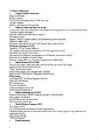
england, rose, allied, wars, roman, aulus, fort, french, english, during, henry, tudor, civil, soldiers, british, winston, churchill, axis, bomb, military, invasion, evidence, near, hadrian, wall, battle, hastings, hundred, years, 1337, france, joan, welsh, jeanne, famous, weapon, siege, roses, lancaster, york, 1651, king, commonwealth, 1853, 1856Stonehenge One of the best known ancient wonders of the world, 5000 years old Megalith monument, built by western mediterraneans during 3000-1600 BC Circular structure, large standing stones, aligned with rising sun at teh solstice Attlers and bones were sued to dig pits that hold the stones The Celts in Britain and their legacy 700-200 BC celts invade Britain Gaels or Goehls(Ireland and Scotland),Cymri(Wales) and Brythons(gave name to Brittany) Fierce fighters,superb horsemen.Most of them farmers, lived in thatched houses Good at art, craftmanship, used iron
History exam *Stonehenge - is a monument located in England. It is one of the most famous prehistoric sites in the world and is composed of earthworks surrounding a circular setting of large standing stones. The surrounding circular, earth bank and ditch, have been dated to about 3100 BC. Stonehenge was produced by a culture with no written language. Many aspects of Stonehenge remain subject to debate. There is little or no direct evidence for the construction techniques used by the Stonehenge builders.
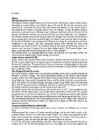
8th century = raids by the Vikings and the Danes 1016 1042 : Under Danish rule ( York was the capital ) 1042 : local AngloSaxons regain their rule 1066 : Normans arrive ( the Norman conquest ) Medieval Britain (106615th c.) the Battle of Hastings William the Conqueror a new AngloNorman state the feudal system introduced the rule of the king and church strengthened centralised country, military rule Scotland, Wales and Ireland conquered Norman castles built spoke Norman French 1170 the murder of Archbischop Thomas a Becket in Canterbury Cathedral ( the religious centre of England & the Anglican church of the whole world ) late 12th century : Robin Hood 1215 the Magna Carta ( personal and political liberty, signed by the king & the barons ) The first legal document! 1337 : the Hundred Year's War 1348 the Black Death 14551485 : the Wars of the Roses for the throne of England, fought by two parts of the Royal family: House of Lancaster(red rose) and the House of
Britain History Pre-Norman Britain The Iberians brought their metal-working skills and the first real civilization to Britain in the third millennium B.C and were overrun by various Celtic invasions that began in the 8th century. The Celts introduced their tribal organization and an early form of agriculture before they were forced westward by the Roman invasion. Forms of Celtic language are still spoken in Britain. Romans (with Julius Caesar in the head of them) first tried to occupy Britain in 55 B.C., but there was a rebellion in Gaul so they had to leave to fight against it. Next time they came in 43 A.D. and their leader was Emperor Claudius. Romans brought a lot with them. Their brought paved roads, the sites of important cities, the seeds of Christianity, the Roman law, Roman baths, language and advanced civilization
The Middle Ages The Middle Ages are one of the most turbulent periods in English history. The Middle Ages are so called as the middle period between the decline of the Roman Empire and the Renaissance. The Middle Ages started in 1066. with the Battle of Hastings and the Norman Conquest. William the Conqueror took all the lands from the Saxon English and gave these to French nobles. Normans were known as great builders. This is assured by the fact that many great castles and other buildings, including the Tower of London, were built during the Norman Conquest. In 1086. Domesday Book was compiled. It is a detailed survey of England ordered by William the Conqueror. The reign of King William Rufus who was the son of William started in 1087 and lasted until 1100. Next king was Henry I who was the brother of William Rufus. His reign was from 1100-1135
One of the mysteries is how it was built at all with the technology of the time. Another is its purpose. It appears to function as a kind on astronomical clock and we know it was used by the Druids for ceremonies marking the passing of the seasons. It appears in number of novels. These days it is not only the interest of tourists but is also a gathering point of certain minority groups. It is now fenced off to protect it from damage. 3. The Roman conquest Julius Caesar's first raid was in 55 BC but the romans left. Ad 43- the Romans came to stay. The army established Roman rule in the south and SW of the country. The Romans started to introduce their laws to a new province of the Roman Empire and started to build good roads. Officials were appointed (governors, procurators to collect taxes, look after the estates and mines and se that the gold, silver, iron and lead were exported back to Rome). Introduced schools,a new language
British history Roman Britain Roman Britain was those parts of the island of Great Britain controlled by the Roman Empire between 43 and about 410. The Romans referred to their province as Britannia. Prior to the Roman invasion, Iron Age Britain already had cultural and economic links with Continental Europe, but the invaders introduced new developments in agriculture, urbanization, industry and architecture, leaving a legacy that is still apparent today. Historical records beyond the initial invasion are sparse, although many Roman historians mention the province in passing. Most of the knowledge of the period stems from archaeological investigations and especially epigraphic evidence.
o The Celts are best known for their art- many bronze objects with elaborate designs; brooches; pins; mirrors; Celtic stone crosses o The Celts had 3 social orders: warriors, druids(priests) ordinary people 2) The Romans o (55 BC-Caesar) 43 AD- 410 AD- Claudius o From present-day Italy o Southern Britain became Britannia and was ruled by a roman governor o The Romans built over 20 towns: Colchester, Londinium, Winchester etc. They were good engineers and built roads and villas that had central heating, glass windows and mosaic floors o 122 AD- Hadrian's Wall; 138 AD- Antonine Wall o Druids(celtic priests) were banned and Britain was influenced by christianity 3) The Germanic Invasions I. The Anglo-Saxons
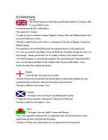
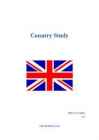
1) General facts The UK: * the United Kingdom of Great Britain and Northern Ireland was formed in 1801 * it covers 243,610 sq km * everybody from the UK is called British * the capital city is London * is made up of four constituent countries: England, Scotland, Wales and Northern Ireland which in turn are divided into counties * the flag is called the Union Jack which is a combination of the flags of England, Scotland and Northern Ireland * the population is about 60,000,000 people, the population density is 242 people/sq km * its coasts are washed by the Atlantic Ocean, the North Sea, the English Channel, the Celtic Sea, Saint George's Channel, and the Irish Sea. It is linked to France by the Channel Tunnel * the United Kingdom is a constitutional monarchy. The current monarch is Queen Elizabeth II, who is also the Queen and Head of State of fifteen other Commonwealth Realms, such as
........................................3 2.2. 1980s...................................................................................................................3 2.3. 1990s...................................................................................................................4 2.4. 2000s...................................................................................................................4-5 3. United States support for Iraq 3.1. During the Iran-Iraq war.....................................................................................5 3.2. After the Iraq war................................................................................................5-6 4. The Iraq war 4.1. Preparations.........................................................................................................6 4.2. Invasion.............................................................................................
relations and defence. Great Britain Across / 'krs / risti, läbi, põiki Locality / l'kælt / asukoht, paikkond Inland body / 'nlænd 'bd / sisemaine osa Inlet / 'nlet / merekäär, laht Headland / 'hedlnd / neem Scour / 'ska / küürima Foreshore / 'f:: / tõusu ja mõõna vaheline rand Recreational / rekr'enl / lõõgastumis-, vabaaja- Scenery / 'si:nr / maastik Juxtaposition / dkstpz'in / kõrvuti asetsev GB consists of England, Scotland and Wales. GB is only a dot on the world map. It offers a great variety and scenic contrasts are often within easy reach. The coastline is washed by the tidal system twice a day. Britain´s speciality is the man-made scenery. Each part of the country has its peculiar geographical features. England Indented / n'dentd / sakiline Estuary / 'estjr / suudmelaht
5. Which 5 places attract visitors in Wales and Scotland? Edinburgh, Loch Ness, The Highlands, Snowdonia, Cardiff. 6. Name 6 islands, 5 rivers, 3 lakes, 3 mountains in UK. Isle of Man, Isle of Wight, Isle of Lewis, Island of Mull, Island of Arran, Anglesey Island Severn, Thames, Tweed, Avon, Trent, Dove Ben Nevis, Snowdon, Ben Macdui 7. Stonehenge. Stonehenge was produced by a culture that left no written records. Built on Salisbury Plain, in Wiltshire, England some time between 5,000-4,300 years ago. One of the most famous megaliths in the world, dating from prehistoric times. Stonehenge consists of circles of stone arranged in complex patterns, and their origin is still being explored. Some of the stones come from over 200 miles away in Wales. There is little or no direct evidence revealing the construction techniques used by the Stonehenge builders. It was probably associated with sun-worship and
The United Kingdom The United Kingdom consists of England, Scotland, Wales and North Ireland and it is situated in the Atlantic Ocean near the mainland of Europe. The population of the UK is 58.6 million and area is 244,110 sq km. Britain has a temperate humid climate. Its characteristic features are mild winters, warm summer, no temperature extremes, abundant rain all year round and frequent changes of weather. The mild climate is partly due to the warm Gulf Stream and partly to the south westerly winds
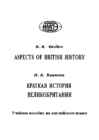
стран мира. 6 INTRODUCTION Aspects of British History presents a brief outline of the most significant milestones in the long and eventful history of Great Britain, such as the five successful invasions of the island, the birth of Parliament and transformation of an absolute monarchy into a constitutional monarchy, the origin of the English language, the rise and fall of the British Empire. The units contain an informative reading text on an important issue, preceded by preparatory discussion questions and followed by notes offering some additional information, and a vocabulary with relevant language notes. The main reading text is accompanied by comprehension, vocabulary and grammar exercises and discussion activities. Some of the units include reading passages.
Huge media coverage "20-Point Program" · Present situation 1 Reservations situated west of the Mississippi 1% of the population Minority group, less privileged Social problems Self-awareness Mixture of old and new HOW GOVERNMENT ACTS NOW- gives natives money and near Las Vegas the right to own casinos to compensate injustice and taking away land. II First Settlements · Jamestown Colony (living conditions, population, plantations, import of slaves) First permanent English colony in North-America 214 settlers Searching for gold (none found) Strategically good location, James River Quite poor conditions. Starvation, diseases, lack of water, attacks of natives , fierce weather Tobacco plantations African slaves, working in tobacco harvest 1620 by Dutch boat. Also Englishmen (convicts and poor people) Mayflower and Pilgrim Fathers Mayflower- cargo ship In 1620 one hundred Puritans boarded the Mayflower
The Romans lead by Julius Caesar attempted to invade Britain twice before that in 55 and 54 BC but the invasions were unsuccessful. They made their way to the river Thames and sailed up it. The Romans knew it was important to control a crossing point at the river Thames, so they decided to build a settlement on the north bank. Although small settlements had been built on the banks of the Thames, the Romans were the ones who built the first city. They called their city Londinium. The Roman engineers noticed that the point where the swampy river narrowed would make an ideal crossing point, they built London Bridge. Less than 20 years later the native Iceni tribe, led by Queen Boudicca, rose up against the Romans in revenge for mistreatment and burnt Londinium to the ground. The well disciplined Roman army defeated her forces and Londinium was rebuilt. By AD 100 it had also become the capital of the Roman province. A massive wall was built to protect the city from further attacks
Some of the things you will learn in THE CODEBREAKERS • How secret Japanese messages were decoded in Washington hours before Pearl Harbor. • How German codebreakers helped usher in the Russian Revolution. • How John F. Kennedy escaped capture in the Pacific because the Japanese failed to solve a simple cipher. • How codebreaking determined a presidential election, convicted an underworld syndicate head, won the battle of Midway, led to cruel Allied defeats in North Africa, and broke up a vast Nazi spy ring. • How one American became the world's most famous codebreaker, and another became the world's greatest. • How codes and codebreakers operate today within the secret agencies of the U.S. and Russia. • And incredibly much more. "For many evenings of gripping reading, no better choice can be made than this book." —Christian Science Monitor THE
Portuguese territory as well. The country is named after its second largest city, Porto, whose Latin name was Portus Cale. SETTLEMENT The land within the borders of the current Portuguese Republic has been continuously settled since prehistoric times. In the 8th century most of the Iberian Peninsula was conquered by Moorish invaders professing Islam, who were later expelled by the Knights Templar. During the Christian Reconquista, Portugal established itself as an independent kingdom from León in 1139, claiming to be the oldest European nation-state. In the 15th and 16th centuries, as the result of pioneering the Age of Discovery, Portugal expanded western influence and established the first global empire, becoming one of the world's major economic, political and military powers. In addition, the Portuguese Empire was the longest-lived of the modern
......................................................................................16 2.1 The questionnaire 1...............................................................................................................16 2.2 Analysis of the questionnaire 1.............................................................................................18 2.3 Results of the questionnaire 1...............................................................................................23 During the first questionnaire 30 students of the 9th and 10th class of Gymnasium were questioned about the British national symbols...........................................................................23 Surprisingly, according to the results, more than 50 percent of students are aware of the national flags of Great Britain, Scotland, Northern Ireland and Wales. As can be seen, quite a lot of children also know the name of the Great Britain flag. However, almost all of the
to emulate Muhammad's actions in their daily lives. The Sunnah is seen as crucial to guiding interpretation of the Qur'an. Resurrection and judgment Belief in the "Day of Resurrection", yawm alQiymah (also known as yawm addn, "Day of Judgment" and ass`a, "the Last Hour") is also crucial for Muslims. They believe that the time of Qiymah is preordained by God but unknown to man. The trials and tribulations preceding and during the Qiymah are described in the Qur'an and the hadith, and also in the commentaries of Islamic scholars. The Qur'an emphasizes bodily resurrection, a break from the preIslamic Arabian understanding of death. It states that resurrection will be followed by the gathering of mankind, culminating in their judgment by God. The Qur'an lists several sins that can condemn a person to hell, such as disbelief, usury and dishonesty
g. exchange of ambassadors or diplomatic missions, visit of the head of state etc. De facto could be tricky, can be the first stage for recognition (e.g. US recognized Finland as de facto at first, then de jure), or de jure recognition by implication could be treated as de facto. Recognizing by international treaty. After the II WW in 1955, Austria was established as an independent state. It was re-established in an international treaty signed by the allied powers, it was automatically de jure recognition. Usually recognition cannot be withdrawn, unless country somehow was divided or re- organized etc. One example when it happened, e.g. Japan against China in Two theories Constitutive theory says that countries or government don't exist until they are officially recognized Declaratory theory countries or governments exist objectively and recognition only confirms their existing situation.
the Slavic languages. It is also the largest native language in Europe, with 144 million native speakers in Russia, Ukraine and Belarus. Russian is the eighth most spoken language in the world by number of native speakers and the seventh by total number of speakers. The language is one of the six official languages of the United Nations. Russian is also the second most widespread language on the Internet after English. Russian distinguishes between consonant phonemes with palatal secondary articulation and those without, the so-called soft and hard sounds. Almost every consonant has a hard or a soft counterpart, and the distinction is a prominent feature of the language. Another important aspect is the reduction of unstressed vowels. Stress, which is unpredictable, is not normally indicated orthographically. though an optional acute accent ( , znak udareniya)
Ameerika Kirjandus 30.01.13 Naturalism · France, Emile Zola · Put down his theory in 1879: Le Roman Experimental, attempt to explain the development of human society throuch biological laws · Outlook is deterministic, pessimistic, fatalistic (fate or biology) · Man as an animal-clever than other beasts, still explainable within the framework · Man is not a free agent, is govern by something · Unable to determine his own faith · Hereditary · Naturalists tried to apply in fiction the processes of natural sciences
build. The three principal types - beam, arch, and suspension - often were combined in a variety of ways to form composite structures, the type selected depending on the nature of the crossing, the span required, the materials at hand, and the type of load anticipated - pedestrian, vehicular, railroad, or a channel of water as in aqueducts. Primitive bridges Other than the clapper bridges of England and similar spans surviving in other countries, bridges dating from prehistoric periods are rare. Bridges of twisted vines and creepers found in India, Africa, and South America, the ancient cantilevers of China, Kashmir, and Japan, if any survive, or the wooden arches of Japan may be candidates for World Heritage listing because they perpetuate primitive ingenuity and craft technology that is important to recognize. Since some of their materials
The making of a new nation. The Enlightenment in America. The emergence of the notion of the American Dream. The great Enlighteners: Crèvecoeur, Jefferson, Paine, Franklin. The American Enlightenment is the intellectual thriving period in the United States in the midtolate 18th century (17151789), especially as it relates to American Revolution on the one hand and the European Enlightenment on the other. Influenced by the scientific revolution of the 17th century and the humanist period during the Renaissance, the Enlightenment took scientific reasoning and applied it to human nature, society, and religion. American Enlightenment a gradual but powerful awakening that established the ideals of democracy, liberty, and religious tolerance in the people of America. If there were just one development that directly caused the American Revolution and uplifted the intellectual culture of the continent while it was only a British colony, it would be the American Enlightenment
We had high hopes for Africa, for the Black race, that the insidious imposition of foreign rule on us, the looting of Africa’s natural resources by our colonial masters accorded us would be things of history. That is more than forty years ago. Unfortunately, the promise of independence has not been fulfilled. Today, Africa has become more desolate; there is more starvation, diseases and non-provision of essential services than when we got our independence. There are all kinds of wars in Africa than the rest of world put together. The majority of so-called Africans leaders want to stay in power until the day their bodies are put in the grave. Through buffoonery, utter mismanagement and downright stealing of the wealth of the masses, these leaders have so impoverished Africa that we are now nothing but a beggar continent. We beg for everything; we are more dependent on our colonial masters than when we received our independence from them
THE RISE OF ATTENTION TO HISTORY AND FOLKLORE: JUHAN AAVIK, EDUARD TUBIN, EUGEN KAPP. VII. FURTHER MATURING OF SYMPHONIC MUSIC: HEINO ELLER, EVALD AAV, EDUARD TUBIN. THE FIRST ESTONIAN BALLET. SUMMARY OF THE REPUBLICAN PERIOD. HALF A CENTURY UNDER SOVIET OCCUPATION. IDEOLOGY OVER MUSIC. EXTENSIVE INFLUX OF CONTEMPORARY TRENDS. VIII. THE FORTIES. TRANSFORMATION OF ESTONIAN LIFE. THE WAR-TIME SYMPHONIC OUTPUT. IX. THE PLANTING OF NEW CREATIVE PRINCIPLES DURING THE POST-WAR YEARS. X. THE SECOND HALF OF THE FIFTIES. TOWARDS A MODERN IDIOM: EINO TAMBERG AND VELJO TORMIS. XI. THE NEOCLASSICISM AND CONSTRUCTIVE THINKING OF JAAN RÄÄTS. XII. THE FIRST HALF OF THE SIXTIES. DODECAPHONY OF ARVO PÄRT. XIII. THE DRAMATIC PHILOSOPHICAL OUTPUT OF HELMUT ROSENVALD. XIV. THE ELEMENTS OF JAZZ, FOLK MUSIC AND DODECAPHONY IN THE SYMPHONISM OF ANTI MARGUSTE. XV. HEIMAR ILVES AND HIS MUSIC – DEEP IN THOUGHT AND FEELING. XVI
_PREFACE A second, larger group provided helpful suggestions for selected chapters or groups of chapters: Todd Anderson, Sandy Braver, Catherine Chambers, Judi Cial- dini, Nancy Eisenberg, Larry Ettkin, Joanne Gersten, Jeff Goldstein, Betsy Hans, Va- lerie Hans, Joe Hepworth, Holly Hunt, Ann Inskeep, Barry Leshowitz, Darwyn Linder, Debbie Littler, John Mowen, Igor Pavlov, Janis Posner, Trish Puryear, Mari- lyn Rall, John Reich, Peter Reingen, Diane Ruble, Phyllis Sensenig, Roman Sherman, and Henry Wellman. Certain people were instrumental at the beginning stages. John Staley was the first publishing professional to recognize the project's potential. Jim Sherman, Al Goethals, John Keating, Dan Wagner, Dalmas Taylor, Wendy Wood, and David Wat- son provided early, positive reviews that encouraged author and editors alike. My editors at Allyn and Bacon, Michelle Limoges and Liz Napolitano, were consistently congenial, helpful, and insightful
Based on the work of Joseph Campbell, The Writers Journey is a must for all writers interested in further developing their craft. This updated and revised Third Edition provides new insights and observations from Vogler's ongoing work on mythology's influence on stories, movies, and man himself. In revealing new material, he explores key principles like polarity and catharsis, plus: • A revised chapter which looks back at the Star Wars phenomenon and analyzes the six feature films as an epic on the theme of father-son relationships • New illustrations and diagrams that give additional depth to the mythic principles • A final chapter, "Trust the Path," an inspiring call to adventure for those who want to discover themselves through writing "This book is like having the smartest person in the story meeting come home with you and
22. Semidry and Dry Fermented Sausages 379 Graciela Vignolo, Cecilia Fontana, and Silvina Fadda 23. Restructured Whole-Tissue Meats 399 Mustafa M. Farouk 24. Functional Meat Products 423 Keizo Arihara and Motoko Ohata PART III. Controls 441 25. Physical Sensors for Quality Control during Processing 443 Marta Castro-Giráldez, Pedro José Fito, Fidel Toldrá, and Pedro Fito 26. Sensory Evaluation of Meat Products 457 Geoffrey R. Nute 27. Detection of Chemical Hazards 469 Milagro Reig and Fidel Toldrá 28. Microbial Hazards in Foods: Food-Borne Infections and Intoxications 481 Daniel Y. C. Fung
In particular, I doubt that any of the objections to any of the theories is fatal; champions of theories are remarkably good at avoiding or refuting objec- tions. The real theorizing begins where this book leaves off. x Preface I have used some notation of formal logic, specifically the predicate calcu- lus, for those who are familiar with it and will find points made clearer by it. But in each case I have also explained the meaning in English. Many of the writings to be discussed in this book can be found in the following anthologies: T. Olshewsky (ed.), Problems in the Philosophy of Language (Austin, TX: Holt, Rinehart and Winston, 1969); J. F. Rosenberg and C. Travis (eds.) Readings in the Philosophy of Language (Englewood Cliffs, NJ: Prentice-Hall, 1971); D. Davidson and G. Harman (eds.), The Logic of Grammar (Encino, CA: Dickenson, 1975); R. M. Harnish (ed.) Basic
Backstage, there was more unusual entertainment. "Dude, I go into the stall to take care of business, and I look over and see the top of Tim's head popping above the divider. He was doing f*cking air squats in the men's room in complete silence." Glenn, a videographer and friend, burst out laughing as he reenacted my technique. To be honest, he needed to get his thighs closer to parallel. "Forty air squats, to be exact," I offered. Kevin Rose, founder of Digg, one of the top-500 most popular websites in the world, joined in the laughter and raised a beer to toast the incident. I, on the other hand, was eager to move on to the main event. In the next 45 minutes, I consumed almost two full-size barbecue chicken pizzas and three handfuls of mixed nuts, for a cumulative total of about 4,400 calories. It was my fourth meal of the day, breakfast having consisted of two glasses of grapefruit juice, a large cup of co ee with
I would like to thank my editor, Matthew Holt of John Wiley & Sons, for his unflinching support of this book, and his constant en- couragement over the many months that it has taken to write and edit. Not least, I thank my wonderful wife Barbara and my fabulous children—Christina, Michael, David, and Catherine—for their sup- port and patience during the long hours away from them to finish this book. xi ccc_tracy_fm_i-xviii.qxd 7/7/03 3:23 PM Page xii ccc_tracy_fm_i-xviii.qxd 7/7/03 3:23 PM Page xiii Introduction There is nothing on earth that you cannot have once you have mentally accepted the fact that you can have it.
 annaabi.ee