Leidsid 33 sarnast õppematerjali, mis on seotud failiga "Titanic". Need materjalid aitavad sul teemat sügavamalt mõista.
titanic, sail, april, board, year, diana, michelson, details, built, west, star, wide, tons, setting, 2223, left, ireland, york, captain, disaster, sunday, first, sank, comes, hours, souls, ballard, miles, living, dean, months, mother, older, brother, bertram, sources, thanksRMS Titanic Kaspar Kitsnik VLE-11 Why was Titanic built? Although Titanic is best known for carrying the rich and famous between Europe and the United States, the Ship actually had several purposes: 1. To carry British and US mail--hence the full name of the ship is Royal Mail Ship (RMS) Titanic. 2. To carry general cargo and frozen meat since at that time Europe could not produce enough livestock to meet its own needs. 3. To carry first-class passengers in great luxury, second-class passengers in great comfort and third-class passengers with great economy. 4. To fly the flag of Great Britain and uphold national honor. Even though Titanic was ultimately owned by American business
When they grow up, they play as members of important amateur teams or as a professional in teams competing in football ,,leagues". Professional football is as much a business as a sport. Rugby football was first played in 1823. In rugby every player is allowed to carry the ball. The ball is oval, not round. Each team contains 15 players. The oldest game of football in England is probably the football match which takes place at Ashburn on Shrove Tuesday every year. The game starts in the centre of the town, and the distance between two goals is two miles. The only rule is not to use motorcycles, cars and lorries in the game. In 1958 one team buried the ball. The other team didn't know and ran after them. Later first team took the ball and won. 3) JAMES WATT He was born in the small port of Greenock on the river Clyde in Scotland in 1736. His father was a mathematical-instrument maker and also kept a shop to supply ships with goods for their voyages
Her father died, when she was a child. At sixteen she was sent to school in Paris where she studied singing and piano. Christie was an accomplished pianist but her stage fright and shyness prevented her from pursuing a career in music. She never attended school. Dame Agatha Christie was an English crime writer of novels, short stories and plays. She also wrote romances under the name Mary Westmacott, but is best remembered for her 80 detective novels and her successful West End theatre plays. On the Christmas Eve in 1914, Agatha married an aviator, Archibald Christie. their daughter, Rosalind, was born in 1919. On discovering extramarital affair, she divorced him in 1928. In the same year Christie's beloved mother died. During World War I she worked in a Red Cross Hospital in Torquayas a hospital dispenser, which gave her a knowledge of poisons. It was to be useful when she started writing mysteries.
It seems that the Celts, who had been arriving from Europe from the 8th cent BC onward, intermingled with the peoples who were already there. The Celts were extremely talented people, creative and artistic. More than 1 Celtic tribe invaded Br. The descendants of ancient Celts live in Wales, Scotland, Cornwall and Ireland. They lived in primitive society. Druids priests, more powerful than chiefs. Acted like prophets. 2. Stonehenge From prehistoric period. Was built on Salisbury plain between 2500 and 1500 bc. One of the most famous and mysterious archaeological sites in the world. One of the mysteries is how it was built at all with the technology of the time. Another is its purpose. It appears to function as a kind on astronomical clock and we know it was used by the Druids for ceremonies marking the passing of the seasons. It appears in number of novels. These days it is not only the interest of tourists but is also a
or Holland Park Flower Show, or even the Wembley Flower Show had events worked out differently. The first Royal Horticultural Society (RHS) Great Spring Flower Show at Chelsea opened in May 1913, although, confusingly, there was another May flower show the Royal International Horticultural Exhibition held at the Royal Hospital in 1912. This one off event was backed but not run by the RHS, which cancelled its own Great Spring Show for that year. The RHS Great Spring Flower Show had normally been based at the Inner Temple in the hart of London, but in 1913 RHS had idea of moving the Show to Holland Park. They thought that the Show was becoming too big for the Inner Temple site. Anyway it stayed in first place. July 1912 the RHS President Sir Trevor Lawrence had met Major General Crutchley Of the Royal Hospital at Chelsea, and the two began to talk about a 14-day reservation of the gardens and a 14-year agreement
the 14th century. Then it spread all over Europe, reached England in 16th century. The struggle for power culminated in a war called The War of Roses. It was a civil war between two dynasties, families. They had different emblems on one side the Yorks (white rose) other Lancasters (red). They couldn't decide who gets the throne. War ended 1485. A new dynasty came to throne, Tudor, the first king in this dynasty was Henry Vll. When he came to throne a period of stability followed because he built a nation based state. He was good at diplomacy.He could avoid quarrels and wars with neigbouring countries. France, Spain - greatest enemies.So he could save much money and thus laid a good economic basis for his state. Besides that he built a merchant fleet (kaubalaevastik) England begun to dominate in international trade. Unfortunately the king got old and died. Next king was Henry Vlll, second son of the family, wasn't prepared to become a king. Had to take the role as his elder brother died
Kadrina Secondary School Princess Diana Report Mattias Suurkivi 8.a Class Instructor: Katrin Mägi Kadrina 2009Contents Introduction I chose Princess Diana, because I wanted to know about her and I like the British royal family and she was a part of the family, too. She is dead and if somebody reads it, he or she can learn about her and will know what she was like. The purpose of the work is to introduce Diana and get to know her better. Diana Facts about Diana Main Facts Her full name is Diana Frances Spencer and she was the Princess of Wales. Diana was called people's Princess. She was born on 1
Rivers The biggest river is the Murray. The other biggest rivers are the Mitchel and the Flinders. Other rivers are short and have water only after rains. The Climate Australia stretches from the tropics to the temperature region. It is a hot and dry country. The northern part has a hot tropical climate with heavy rainfall. It has two seasons - wet summer and dry winter. The south and the east of Australia have warm summers and winters. The southeastern coast gets rains all year around. The southwest area has hot, dry summers and mild moist winters. In the west and in the outback the temperature is often 35 degrees in the summer months. The outback receives almost no rainfall. Tasmania is cooler and wetter than the rest of Australia. The only places where snow falls are in the southeast and Tasmania. History Sixty million years ago Australia and its nearby islands were separated from the rest of the world by a great upheaval
Forms of Celtic language are still spoken in Britain. Romans (with Julius Caesar in the head of them) first tried to occupy Britain in 55 B.C., but there was a rebellion in Gaul so they had to leave to fight against it. Next time they came in 43 A.D. and their leader was Emperor Claudius. Romans brought a lot with them. Their brought paved roads, the sites of important cities, the seeds of Christianity, the Roman law, Roman baths, language and advanced civilization. They also built Hadrian's Wall in 122 A.D. Romans occupied Britain for four centuries. The Roman way of life all vanished after the invasions from Northern Europe by the Angles, Saxons and Jutes from the 5th century onwards. They ruined Londinium, but they were easily turned into Christianity and religion became more and more important. The Vikings, who came in the 9th century, first raided England to plunder it, but then they decided to stay
eventual destruction fighting in the East, likely during the Bar Kochba Revolt. The invasion was delayed by a mutiny of the troops, who were eventually persuaded by an imperial freedman to overcome their fear of crossing the Ocean and campaigning beyond the limits of the known world. They sailed in three divisions, and probably landed at Richborough in Kent, although some suggest that at least part of the invasion force landed on the south coast, in the Fishbourne area of West Sussex. The Romans defeated the Catuvellauni and their allies in two battles: the first, assuming a Richborough landing, on the river Medway, the second on the Thames. One of the Catuvellaunian leaders, Togodumnus, was killed, but his brother Caratacus survived to continue resistance elsewhere. Plautius halted at the Thames and sent for Claudius, who arrived with reinforcements, including artillery and elephants, for the final march to the Catuvellaunian capital, Camulodunum
Lived on the British Isles in the 1st millenium. They most probably came from Eastern Europe and belonged to the Celtic race and also spoke Celtic. They were primitive hunters- gatherers, farmers. Some Celtic words are still used in modern English, however they are used mostly in place names. For example: · avon river · cumb valley · ford shallow place in the river Ancient Britons had their own religion and priests or druids and temples. In the year 55 BC Britain became a Roman province. Romans were highly developed and had their own language latin, which has also greatly influenced English. The military occupation of the Isles ended in 410 AD. The Romans eventually brought Christianity to Britain. Hadrian's wall on the border of Scotland and England. It began construction in 122 AD. An Anglo-Saxon attack on Rome forced the Romans to leave The British Isles. They were
Stonehenge One of the best known ancient wonders of the world, 5000 years old Megalith monument, built by western mediterraneans during 3000-1600 BC Circular structure, large standing stones, aligned with rising sun at teh solstice Attlers and bones were sued to dig pits that hold the stones The Celts in Britain and their legacy 700-200 BC celts invade Britain Gaels or Goehls(Ireland and Scotland),Cymri(Wales) and Brythons(gave name to Brittany) Fierce fighters,superb horsemen.Most of them farmers, lived in thatched houses Good at art, craftmanship, used iron
Permanent communities were established around 4000 BC in the northwestern parts of Prague, and the area was inhabited continuously by various Germanic and Celtic tribes before the arrival of the Slavs. The name Bohemia came from a Celtic tribe called Boii, and is still used today for the western part of the Czech Republic. Foundation of Prague In the 6th century, two Slav tribes settled on opposite sides of a particularly appealing stretch of the Vltava River. The Czechs built a wooden fortress where the residential area Hradcany stands today, and the Zlícani built theirs upstream at what is now Vysehrad. They had barely dug in when nomadic Avars thundered in, to rule until the Frankish trader Samo united the Slav tribes and drove the Avars out. Samo held on for 35 years before the Slavs reverted to squabbling. In the 9th century Prague was part of the short-lived Great Moravian Empire. Under its
Alice Kipling Fleming - Sister of British author Rudyard Kipling who became a well-known psychic, producing automatic writing under the name "Mrs. Holland." Born June 11, 1868, Alice Kipling was privately educated. She went to India at age 16 and married British army officer John Fleming. While in India she wrote a number of poems, and in 1893 initially experimented with automatic writing. After a long illness she returned to England in 1902 and in the following year read the classic study Human Personality and Its Survival of Bodily Death, by F. W. H. Myers. As a result she contacted the secretary of the Society for Psychical Research (SPR), London, regarding her own automatic writing. She was one of the seven principal mediums involved in the famous cross-correspondences cases. Fleming continued to do automatic writing until 1910, when she suffered a nervous breakdown. Early Life
N: He had not been speaking. · sometimes interchangeable Q: Had he been with past perfect simple speaking? · putting emphasis on the duration or course of an action Future Simple A: He will speak. · action in the future that in a year, N: He will not speak. cannot be influenced next ..., Q: Will he speak? tomorrow · spontaneous decision assumption: I · assumption with regard to the think, probably, future perhaps A: He will be speaking
glaciation. Groups of settlers began building the first known permanent houses on Scottish soil around 9,500 years ago, and the first villages around 6,000 years ago. The well-preserved village of Skara Brae on the Mainland of Orkney dates from this period. Neolithic habitation, burial and ritual sites are particularly common and well-preserved in the Northern Isles and Western Isles, where lack of trees led to most structures being built of local stone. Roman influence The written protohistory of Scotland began with the arrival of the Roman Empire in southern and central Great Britain, when the Romans occupied what is now England and Wales, administering it as a province called Britannia. Roman invasions and occupations of southern Scotland were a series of brief interludes. In 834 AD the general Gnaeus Julius Agricola defeated the Caledonians at the battle of Mons Graupius, and
disarray would guarantee a quick victory. The U.S., having decided that an Iranian victory would not serve its interests, began supporting Iraq. In 1984 the U.S restored full diplomatic relations with Iraq. At same time U.S. began sharing intelligence and selling weapons to Iran. In 1986 the USA increased the aid to Iraq. In early 1988, Iraq's relations with the United States were generally friendly. In the end of 1988 the Center for Strategic and International Studies began a 2 year study predicting the outcome of a war between U.S and Iraq, at the same time Saddam Hussein announced $40 billion plan to peacefully rebuild Iraq. By October 1989, when all international banks had cut off loans to Iraq, the president of the U.S. George H. W. Bush signed National Security Directive (NSD) 26, mandating closer links with Iraq and $1 billion in agricultural loan guarantees. These guarantees freed for Iraq hard cash to continue buying and developing the weapons of mass destruction.
5. Which 5 places attract visitors in Wales and Scotland? Edinburgh, Loch Ness, The Highlands, Snowdonia, Cardiff. 6. Name 6 islands, 5 rivers, 3 lakes, 3 mountains in UK. Isle of Man, Isle of Wight, Isle of Lewis, Island of Mull, Island of Arran, Anglesey Island Severn, Thames, Tweed, Avon, Trent, Dove Ben Nevis, Snowdon, Ben Macdui 7. Stonehenge. Stonehenge was produced by a culture that left no written records. Built on Salisbury Plain, in Wiltshire, England some time between 5,000-4,300 years ago. One of the most famous megaliths in the world, dating from prehistoric times. Stonehenge consists of circles of stone arranged in complex patterns, and their origin is still being explored. Some of the stones come from over 200 miles away in Wales. There is little or no direct evidence revealing the construction techniques used by the Stonehenge builders
order to sneak into the castle. But, alas, the lord of the manor's son discovers the deception. He is overcome by jealous rage and orders his men to seal the girl inside the thick stone walls while still alive. Turned into an incarnation of undying love, the White Lady now appears every August, on the night of the full moon, in the Dome Church chapel window. Haapsalu is seven-and-a- quarter centuries old this year, and the townsfolk intend to make it a celebration to remember. The annual dance and light show dedicated to the Lady alone involves over 100 performers - and you'll have several chances to catch it over the four days of the event. Musical shows, dances and contests of strength and skill will be held all over town. This festival is held in August and it is said that Haapsalu, Estonia's most famous ghost, appears during this festival Black nights film festival http://www.tourism.tallinn
sent her to school in Paris. In 1834, Dickens became a political journalist, reporting on parliamentary debate and traveling across Britain by stagecoach to cover election campaigns for the Morning Chronice. His journalism, in the form of sketches which appeared in periodicals from 1833, formed his first collection of pieces Sketches by Boz which were published in 1836 and led to the serialization of his first novel, The Pickwick Papers, in March 1836. On 2 April 1836, he married Catherine Thompson Hogarth (1816 1879), the daughter of George Hogarth, editor of the Evening Chronice. After a brief honeymoon in Chalk, Kent, they set up home in Bloomsbury, where they had ten children. On 9 June 1865, while returning from France with Ternan, Dickens was involved in the Staplehurst rail crash in which the first seven carriages of the train plunged off a cast iron bridge that was being repaired.Because of that he died.( 9 June1870)
that the Church of England was beyond reform. Escaping persecution from church leadership and the King, they came to America. Of Plymouth Plantation Of Plymouth Plantation is the single most complete authority for the story of the Pilgrims and the early years of the Colony they founded. Written between 1620 and 1647, the journal describes the story of the Pilgrims from 1608, when they settled in the Netherlands, through the 1620 Mayflower voyage, until the year 1647. The book ends with a list, written in 1650, of Mayflower passengers and what happened to them. The Age of Reason The Age of Reason: Being an Investigation of True and Fabulous Theology , a deistic treatise written by eighteenth-century British radical and American revolutionary Thomas Paine, critiques institutionalized religion and challenges the inerrancy of the Bible. Published in
coast in 1606. Then Abel Tasman visited an island off the southern coast of Australia in 1642 and the island was named Tasmania after him. In 1770 British sailor James Cook came to Australia and landed in Botany Bay. He declared that Australia was very suitable for settlers. Britain had to send their convicts to the new country after loss in the American War of Independence to replace the North Atlantic colonies. In 1788 the First Fleet with eleven ships, with 1500 people on board were sent to Australia with Captain Phillip. They landed in Port Jackson on January 26th in 1788 and that day is now called Australia Day. It is the biggest day of celebration in the country and in observed as a public holiday in all the states and territories of Australia. During the 1850s, settlement was boosted by gold rushes. Gold was first found at Bayhurst in 1851. The idea of unifying all the states first came to Earl Grey in 1847. On the 1st of
designated. Introduction The first bridges were natural, such as the huge rock arch that spans the Ardèche in France, or Natural Bridge in Virginia (USA). The first man-made bridges were tree trunks laid across streams in girder fashion, flat stones, such as the clapper bridges of Dartmoor in Devon (UK), or festoons of vegetation, twisted or braided and hung in suspension. These three types - beam, arch, and suspension - have been known and built since ancient times and are the origins from which engineers and builders derived various combinations such as the truss, cantilever, cable-stayed, tied- arch, and moveable spans. The essential difference among types is the way they bear their own weight - the "dead load" and the "live load" - a person, the railway train, wind, or snow that is applied to the bridge. The weight of beam, truss, and girder bridges bears directly downwards from their ends on the ground, piers, or abutments
He did a huge work. He traces the history of usa to the very end of the 19th century, the american-spanish war-to 1927, the execution of Sacco and Vanzetti. He shows history as a great operative force, wants to recreate history, wants to show that the causes of what is happening now has to be found somewhere in the history. Unlike other modernists Dos Passos is interested in the average man, more than other modernist authors. Geography of the novel extends from east coast to west coast. It is also international because part of it takes place in france. Organization of LEIVA??, industrial interest, war and ??, art, expluatation, standardisation, dehumanistaion, degradation of ethical and cultural values. He is fascinated with outcasts, the alienated, the outsiders, people who have been beated with life, the descenters-those who don't agree with the majority are the descenters, they are interested in those people. The book follows the lives of nine characters
are published by The New American Library, Inc., 1301 Avenue of the Americas, New York, New York 10019 FIRST PRINTING, FEBRUARY, 1973 PRINTED IN THE UNITED STATES OF AMERICA To my Parents and my Grandmother Contents A Note on the Abridged Version Preface A Few Words 1. One Day of Magic: I 2. One Day of Magic: II 3. The First 3,000 Years 4. The Rise of the West 5. On the Origin of a Species 6. The Era of the Black Chambers 7. The Contribution of the Dilettantes 8. Room 40 9. A War of Intercepts 10. Two Americans 11. Secrecy for Sale 12. Duel in the Ether: I 13. Duel in the Ether: II 14. Censors, Scramblers, and Spies 15. The Scrutable Orientals 16. PYCCKAJI Kranrojioras 17. N.S.A. 18. Heterogeneous Impulses 19. Ciphers in the Past Tense 20. The Anatomy of Cryptology Suggestions for Further Reading Index A Note on the Abridged Version
bining the two. I learned new principles and gave the old theories a good workout. T h e process of editing seemed to me to be a lot like making a wooden boat, like one of those sleek dragon-ships the Vikings made. T h e spine of the story is like the keel, the major plot points are the ribs, and the individual scenes and lines of dialogue are the planks and rigging that complete the vessel, a vehicle for your vision that you hope will sail on the seas of public attention. Another insight from the editing room was a greater appreciation of the i m portance of focus. I realized that focused attention is one of the rarest things in the world, and that an audience is giving a lot when they devote their full attention to your work for two hours. There is only so much focus available in a given work, and it seems the more elements you take out of a composition, the more focus is poured into those that remain
Living Forever: Vaccines, Bleeding, and Other Fun CLOSING THOUGHTS Closing Thoughts: The Trojan Horse APPENDICES AND EXTRAS Helpful Measurements and Conversions Getting Tested--From Nutrients to Muscle Fibers Muscles of the Body (Partial) The Value of Self-Experimentation Spotting Bad Science 101: How Not to Trick Yourself Spotting Bad Science 102: So You Have a Pill ... The Slow-Carb Diet--194 People The Slow-Carb Diet--194 People Sex Machine II: Details and Dangers The Meatless Machine I: Reasons to Try a Plant-Based Diet for Two Weeks The Meatless Machine II: A 28-Day Experiment BONUS MATERIAL Spot Reduction Revisited: Removing Stubborn Thigh Fat Becoming Brad Pitt: Uses and Abuses of DNA The China Study: A Well-Intentioned Critique Heavy Metal: Your Personal Toxin Map The Top 10 Reasons Why BMI Is Bogus Hyperclocking and Related Mischief: How to Increase Strength 10% in One Workout
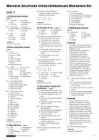
e 3 make a killing 2 1 B 2 C 3 D f 8 tighten your belt 3 1 T 2 F 3 F 4 T 5 F 2F Discussing pros and cons g 1 put aside page 17 h 7 be well off 4 1 500,000 Britons live abroad for part of the year. 1 1 You have to admit that ... i 10 splash out (on something) 2 But wouldn't you admit that ... j 9 be hard up 2 There are 1,300,000 Britons living in Australia. 3 Well, look at it this way. 4 1 The skiing holiday was great but 3 There are 750,000 Britons living 4 Just think about ...
4Use a capital letter for the first letter in a sentence: The dog is barking. Come here! 4Always use a capital letter for the word I : I am eight years old. Tom and I are good friends. 4Use a capital letter for the names of people: Alice, Tom, James, Kim, Snow White 4Use a capital letter for the names of places: National Museum, Bronx Zoo, London, Sacramento 4Use a capital letter for festivals, holidays, days of the week, months of the year: New Year's Day, Christmas, Labor Day, Mother's Day, Sunday, Monday, Friday, January, May, July, October Exercise 1 Circle the letters that should be CAPITALS. Then write the correct letter in the space above them. 1 peter and i are good friends. we are going to chicago during our summer 2 vacation. 3 there is an interesting football game on sunday. 4 jason lives on thomson avenue.
in the forecourt of Grauman's Chinese Theatre. In How to Marry a Millionaire, Monroe was teamed up with Lauren Bacall and Betty Grable. She played a short-sighted dumb blonde, and though the role was stereotypical, critics took note of her comedic timing.[28] Her next two films, the western River of No Return and the musical There's No Business Like Show Business, were not successful. Monroe eventually got tired of the roles that Zanuck assigned her. After completing work on The Seven Year Itch in early 1955, she broke her contract and fled Hollywood to study acting with Lee Strasberg at the Actors Studio in New York.[5] Fox would not accede to her contract demands and insisted she return to work on productions she considered inappropriate, such as The Girl in Pink Tights (which was never filmed), The Girl in the Red Velvet Swing, and How to Be Very, Very Popular. Marilyn Monroe Productions Main article: Marilyn Monroe filmography
· Disillusionment (silmade avamine, illusioone purustama) · Rejection of history and the substitution of a mythical past, borrowed without chronology · Product of the metropolis, of cities and urbanscapes · Stream of consciousness · Overwhelming technological changes of the 20th Century Stream of consciousness: The flow of thought in the waking mind. The continuous flow of character's mental process. In traditional books, descriptions are built on artificial, life is not like this, an ordinary mind does not think that now I'm going to think thought a or thought b. Ordinary mind can't control itself, they just form itself. Allusiveness-reference to previous literature text. Those fact, names , hints are hided in modern text. They are expected to be recognized by readers. Everything is interconnected. Virginia Woolf-manifesto ,,modern fiction". 1925, by that time major names had established themselves
history of the Native Americans. It was a primary transportation route during the westward expansion of the early U.S. It flows through or along the border of six states, and its watershed encompasses 14 states, including many of the states of the south eastern U.S. through its largest tributary, the Tennessee River. During the eighteenth century, it was the southern boundary of the Northwest Territory, thus serving as the border between free and slave territory. Other The Great Plains is the board expanse of prairie and steppe which lies east of the Rocky Mountains in the United States and Canada. Grand Canyon created by Colorado River cutting a channel over millions of years, is about 227 miles long, and attains a depth of more than a mile. Nearly two billion years of Earth's history has been exposed as the Colorado River and its tributaries cut through layer after of sediment as the Colorado Plateaus have uplifted. 5. Climate
It extends about 2000 km along the coast of Queensland. Made of coral, it is the world’s largest structure created by living organism. . 4 Climate & Time Zones Australia is the driest continent in the world except Antarctica. It has low average rainfalls. About 70 per cent of the country is arid or semi arid and cannot support agriculture. The north part of the country gets about 300 mm of rain a year. Much of the rain soaks into the ground and does not form any rivers or lakes. Monsoon winds bring moist air during summer. This is the time of high rainfall. It’s known as “the wet “season. High temperature also means hat a lot of moisture evaporates or is used by plants. In the southern two thirds of the country the climate is temperate to cool. Winter temperatures can be low but not freezing. There are four seasons. The seasons are the opposite of our seasons. When we
 annaabi.ee