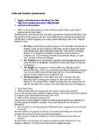
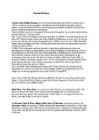
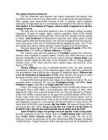
Plays Hugh H. Brackenridge (17481816) The Battle of Bunker Hill Royall Tyler (17571826) The Contrast William Dunlap (17661839) The Father, or American Shandyism Novels Sarah Wentworth Susanna H. Rowson Morton (17621824) (17591846) Charlotte Temple, a The Power of Tale of Truth Sympathy Hannah W. Foster Hugh H. Brackenridge (17581840) (17481816) The Coquette; or, The Modern Chivalry; or, History of Eliza The Adventures of Captain Farrago and Wharton, a Novel Teague O' Regan, his Founded on Fact Servant Charles Brockden Brown (17711810) Jane Talbot Edgar Huntley Thank you for listening!
Charlie put on old baggy trousers, a tight jacket, enormously large shoes and a small bowler hat. He also had a small mustache and a cane. His success was immediate and he remained true to his funny costume all through his career. In 1918 he formed his own company and started producing films. He produced 80 films and in 79 of them he played the central character. Many have said that he was the greatest comic genius of all time. What made his comedy so popular was the sympathy for human beings of the oddest sorts as well as for the ordinary people. The life of his characters was full of misfortunes, but the always overcame their despair with courage and determination. Although he denied any social meaning in his films he ridiculed the values of society mercilessly. In "Modern Times" he showed the terrible working conditions at the production line in a giant US factory. His first full length talkie "The Great Dictator" was an anti-fascist masterpiece ridiculing Hitler
Everything About You", "Home", "Scared", "Let You Down", "Now or Never", "Born Like This", "Drown", "Wake Up", "Take Me Under" and "Overrated". The extra track on the deluxe version is named "Are You Ready?" and the two acoustic versions are of "I Hate Everything About You" and "Drown". When I first listened to this album, I didn't like it as much as I enjoyed listening to "One- X". But as I listened to the songs repeatedly, my sympathy for this particular album grew and soon I knew that it would be my favourite collection of songs for a long time. I like all of the tracks, which is very unusual for me, as I usually like only one song while I am able to despise all the rest of the tracks on the CD. The songs don't give you the feeling when you're listening to love songs or tracks about strong positive feelings. These musical pieces concentrate more on the negative feelings a
Prometheus and Zeus in Shelley's narrative. Instead, Zeus is overthrown, which allows Prometheus to be released. 1821 A Defence of Poetry is an essay, first published posthumously in 1840. It was written in response to his friend Thomas Love Peacock's article The Four Ages of Poetry, where Peacock claimed that poetry though beautiful is utterly useless. Shelley argues that poetry brings about moral good, exercises and expands the imagination, and the imagination is the source of sympathy, compassion, and love, which rest on the ability to project oneself into the position of another person. 1822 The triumph of Life an elegy, unfinished, published in 1824 after Shelley died. Characteristics of Shelley's poetry: Themes: beauty, the passions, nature, political liberty, creativity, and the sanctity of the imagination Idealism belief in the goodness of mankind Revolutionary ides about politics, marriage, women Atheism Philosophical relationships Metaphorical language
This is the foundation upon which her loyalty to Rome was laid. When her father died, she was second in line to the throne, after her half-brother Edward, who was physically weak. 3.SLAID In 1533 when Edward died another rival was put forward- her cousin Lady Jane Grey who supported Protestantism. Public sympathy remained with Mary, and she soon overcame resistance to her accession. . Mary first began to earn her unofficial title of "Bloody Mary" when she had her cousin executed to prevent any possible power struggle Mary tried to turn England back to Roman Catholicism. This effort was carried out by force, and hundreds of Protestant leaders were executed.
any though he was always short of money. His work was inspired by pure patriotism and love for his people and their poetry. For the last six years of his life he served as a tax collector. Burns died when he was only 37 years old. His early death was due to the fact all his life he had lived in poverty. In his lifetime Burns published several volumes of poetry. He wrote all kind of poems beautiful and tender songs in which he showed sympathy for the poor and angry verses which he expressed his dislike for the rich and made fun of the church. His poems were composed while he was walking along behind the plough. His poems touched the heart of every reader. He is one of the most popular song writers in english literature. A few years after his death, the greatest english authors began to appreciate his poetry. Now Robert Burns is considered the bational poet of Scotland and the 25th of January- the date of his birth
· Kasvas ülesse Yiewsleys. · Woodil on neli last Jesse, Jo. Tyrone & Jamie. · Tal on olnud kõvasti probleeme alkoholiga ja ta on käinud ka võõrutusravil. · Ta viimane naine nõudis temalt alkoholi pärast lahutust ja praegu kaalutletakse tema £70 miljoni suuruse varanduse jagamist, nende vahel. Tuntuimad lood · Satisfaction · Paint It Black · Angie · Brown Sugar · Anybody Seen My Baby · Sympathy for the Devil · Gimme Shelter · You Can't Always Get What You Want · Midnight Rambler · Ruby Tuesday
Ülikud on kõikjal tuntud oma kitsiduse poolest (mitte midagi ei ole topelt, e.g. ei mingit topelt eitust)! Pikk ajalugu on lihvinud keelt ja tulemuseks on lihtne loogika ja käändelõppude puudumine! Mitmekesine ajalugu on aidanud kaasa eri päritolu sõnavarale ning ka hääldusmuredele. Väidetavalt on üle poole inglise keele sõnavarast mitte anglo- saksi päritolu, ehk siis laenatud – kontrolli hoolega, kas ‘sympathy’ ikka tähendab ‘sümpaatiat! kaastunne Aari Juhanson, MA 2009 Tenses – Tegusõna ajad • Olevik (Present) • Minevik (Past) • Tulevik (Future) • Kaudne tulevik (Future-in-the-Past) Aari Juhanson, MA 2009 Present Tenses • Lihtolevik (Present Simple / Present Indefinite) – regulaarne, korduv tegevus • Kestev olevik (Present Progressive / Present Continuous) – pooleliolev, ühes
m'lord, more satisfactory results might be obtained." "Eh? Cap? Is there a cap? So there is. Take it off, Beach." "Very good, m'lord." "Ah!" 2) "It's Aggie. My wife, you know." "Well?" "She's left me." "Left you!" "Absolutely flat." 3) "Why did you let him go? You must have known I would want to see him." "What good would that have done?" "I could at least have assured him of my sympathy," said Lady Constance stiffly. "Yes, I suppose you could," said Lord Emsworth, having considered the point. "Not that he deserves any sympathy. The man's an ass." "Nothing of the kind. A most intelligent young man, as young men go." "Young? Would you call him young? Fifty, I should have said, if a day." "Are you out of your senses? Heacham fifty?" "Not Heacham. Smithers." 4) "Are you employed on a farm?" "I was employed on a farm." "Pigs
300 000 to one or two million Jews were killed in ghettos and camps. The master plan: the deniers say the Nazi's didn't have an intention to exterminate European Jewry, but to deport the Jews out of the Reich (regime or empire). They say that the Holocaust was the invention of the Jews and that the concentration camps were `'inventions of the Jewish mind''. WHY DENY IT? Holocaust deniers deny the happenings of the holocaust to reduce perceived sympathy to Jews; to plant seeds of doubt about Jews and the Holocaust; to undermine the legitimacy of the State of Israel; and to draw attention to particular issues or viewpoints. To innate hatred towards the Jewish: Mark Weber generalises the Jews into a unified whole and suggests that they present a unified threat to American and world culture. Money as a motive: David Irving is said to earn his living by lecturing
old Mr.Darcy's death in arguings over money, power and honour (which one Wicham- had less in tons). · Mr. Darcy seemed to be an utterly arrogant, cold- and careless-natured man to strangers. Once you got to know his true nature, you got to know one honest, loyal and fair man, who expressed his disgust for "false pearls" by keeping distance. Even though he so tended to escape from those worthy of his sympathy, too. Still, everything wonderful fascinated him deeply, as a pure soul he didn't lie about his feelings. · Mr. Wickham hid an irresponsible, ungrateful and advantage-taking persona under the mask of a gentleman. A pretty face with a rotten heart, but nothing extraordinary... · Mr. Bingley was one positive character all the way. Nobody could've believed bad things of him
Women's Social and Political Union (WSPU). The WSPU was quite radical in their behaviour, as they wanted to get the right to vote as quickly as possible. To illustrate their more militant stance, they adopted the slogan "Deeds, not words". Many of the suffragettes were imprisoned for their violent and vandalizing actions. In prison, they started a hunger strike and were force fed by the guards. The authorities' policy of force feeding won the suffragettes great sympathy from the public. The government passed a law that allowed the release of prisoners who were about to die from malnourishment. A new suffrage bill was introduced in 1910, but growing impatient, the WSPU launched a heightened campaign of protest in 1912 on the basis of targeting property and avoiding violence against any person. Initially this involved smashing shop windows, but ultimately escalated to burning stately homes and bombing public buildings including Westminster Abbey
.i about...?What do u advice? What can i do? this weekend?we have decided to do a party and we would love it if you could come. look forward to hearing from you. GIVING ADVICE: ACCEPTING(Thanks for the invitation to the For a job Opening remarks, express sympathy party.Sound like a great idea i am writing with reference(viidates) Give advice --opening remarks, thanks for invitation to your advertisement in the Express hope thing will impove --accept invitation, make comments about event, ask Evening News for teenagers to help If i were you, i would...You should/shouldnt ... questions ect
well-researched news and instead uses eye-catching headlines to sell more newspapers. Frank Luther Mott (1941) defines yellow journalism in terms of five characteristics: Scare headlines in huge print, often of minor news Lavish use of pictures, or imaginary drawings Use of faked interviews, misleading headlines, pseudoscience, and a parade of false learning from so-called experts Emphasis on full-color Sunday supplements, usually with comic strips Dramatic sympathy with the "underdog" against the system. Frank Luther Mott (April 4, 1886 October 23, 1964) was an American historian and journalist of Quaker descent. FAMOUS JOURNALIST Grantland Rice 1880-1954 One of America's best-known and respected sports writers. Rice saw sports as life. His column "Sportslight" appeared in more than 100 newspapers. He estimated that he wrote 1 million words
☄ Some people tried to kill the king because he wasn't Catholic enough and another king had been killed, partly because he seemed too Catholic ☄ Anger grew in the country at the way that the Stuart monarchs raised money ☄ Puritanism- ideological Protestantism ☄ Some of them thought the luxurious lifestyle of the king and his followers was immoral. They were also fiercely anti-Catholic and suspicious of the apparent sympathy towards Catholicism of the Stuart monarchs. ☄ This led to The Civil War ☄ Victory for the parliamentary force ☄ The king (Charles I) was captured and became the first monarch in Europe to be executed after a formal trial for crimes against his people. 1649 Charles I is executed. For the first and only time, Britain briefly becomes a republic and is called the Common wealth. 1660 The monarchy and the Anglican religion are restored. ☾ The church was restored
Each story has its own prologue and epilogue. There are numerous interruptions, characterised by the pilgrims' own actions. The whole tales are a broad panorama of human nature including everything that is noble and base (the opposite of noble). · GC was in a transitional stage into the Renaissance. There is humanity and humanism in his works and it is why he has sympathy for people. · GC decided to break free from Italian and French literature. His vocabulary is very informal, easy, he doesn't use alliteration and his verse is musical. He uses lines of 10 syllables with 5 stresses each. His lines run in rhyming couplets. · GC was a forerunner of the Renaissance. Literature of the 15th century · The barren century · Ethnic groups in England had become a more or less unified nation
Social contrackt represents the general will and is in the public interest. Because everyone give away the same amount of freedom to the sovereign, everyone is therefore equal in their freeedom. The best way to govern big territories is not a direct democracy, because it loses too much of its power on it's burocracy. Small citys like hes Geneva, are efficient. Monarchy and aristocracy are a good thing, if not hereditary and democratic. Rousseaus dialectics. Natural man is: in sympathy with others; free from restrictions. Present man is: in conflict with fellow man; in a state of inequality; has a developing reason. To develop, it is necessary to move bact to the previous state, while keeping the virtues of the present. The man of the future will be: reasonable; equal; free; in sympathy with others. Montesquieu - The Spirit of the Laws In this political treatise Montesquieu advocates constitutionalism and the separation of powers,
students they were also very young- the oldest one, Hunt, was 21. They were soon joined by William Rossetti(critic), James Collison(painter), Frederic Stephens (critic), Thomas Woolner(sculptor). The three youthful Pre-Raphaelites deliberately challenged the established view of art, drawing up a manifesto of their intentions and publishing them in the four issues of a periodical called "The Germ". They would paint direct from nature, with objective truthfulness and genuine ideas in sympathy with what was direct and heartfelt in the art of the past. The brotherhoods techniques came from the early Flemish art- especially Van Eyck. To imitate the work of great Italian artists the PRB-s studied the colours in nature. To have the effect of glowing colours they invented a new method called "wet white". It was very difficult and wasn't used a lot (except Hunt). The technique was to apply colour on a wet brilliant white ground.
First humans came full-grown from fish's belly. Anaximenes All is aer (spirit or mist) - all things come from spirit or mist. Spirit is distilled liquor. From cloud- air, water, earth, fire- all comes from aer. Connection between spirit, mind and world 08.02.2012 Pythagoras (570-495 BC) and the Pythagoreans · Studied Mathematics (Pythagorean Theorem) · Made discoveries about music (sympathy of the strings, musical theory providing that there are hidden mathematical relations governing harmony) Political Theory: A Pythagorean was asked how one could give one's son the best possible education, to which he replied that one should make him citizen of a state with good laws (cited in Hegel) · Something of a mystery cult, with special rituals, diet (no beans) and claiming to have access to hidden knowledge. (early form of brain washing) a c b
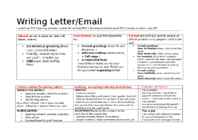
Par.3 ask for help/advice, closing remarks Opening: I am writing to ask for your advice, could you possibly offer your advice, I would be grateful if you could offer your advice, could you please give me your advice Closing: I would appreciate it if you could give me your advice as soon as possible, I look forward to receiving your advice, it would be of great help if you could advise me Letters giving advice Par.1 opening remarks ,express sympathy Par.2 give advice supported by expected results Par.3 express hope things will improve, closing remarks Opening: I strongly recommend that, I would suggest that, I believe the best course of action is, I would advise you to Closing: I trust you will accept this advice, I hope this will be of help, I would very much like to know if this was helpful Letters expressing thanks Par.1 opening remarks, thank the person Par.2 explain in detail why you are thankful Par
situation. Focusing on ownership instead of blame, enables people to bring to the process several qualities: Commitment-this is my concern also; Community-since it is everyone¹s concern, we are all in this together; Creativity-because it affects me, let me give it my best effort; Cooperation-since we are all involved it can only be resolved through group effort; Compassion-in taking the role of the other, I act in order to bring change that may relieve pain. What is the difference between sympathy, empathy and compassion? These three concepts tend to be confused in the minds of many as similar or even the same, but they are not. They are vastly different and elicit from the respondent three different types of behavior. These three behaviors can best be illustrated with the following graphics. 1. In Sympathy there is sorrow for the other in need. But with sorrow there is also a sense of distance, separation from the other, an "I'm not like you" type of response
Real political and social world, the influence of the environment and history on characters. Nature is an anemey in his tragedies. Othello, The Moor of Venice love's fight against racial discrimination. Othello is a talented, intelligent military leader; Iago is his jealous enemy; Desdemano is O's wife. King Lear a tragedy of family and politics, take splace during the late feudalism period; Goneril, Regan, Cornelia. Lear's kind of an asshole. Ill, gains sympathy for the poor and oppressed, on his deathbed only Codelia and the fool care for him. Macbeth The Romantic Period Cymbeline, The Tempest, The Winter's Tale. Evil is not absolute, but relative. The guy learned how to write complexly. 1. What does the term RENAISSANCE mean in literature and art? When and where did the renaissance start? Compare how man was depicted during the Renaissance and Medieval Times
The Decay Of Lying (First published in 1889, republished in Intentions 1891) Lord Arthur Savile's Crime and Other Stories Edward Morgan Forster Edward Morgan Forster (1 January 18797 June 1970), was an English novelist, short story writer, and essayist. He is known best for his ironic and well-plotted novels examining class difference and hypocrisy in early 20th-century British society. Forster's humanistic impulse toward understanding and sympathy may be aptly summed up in the epigraph to his 1910 novel Howards End: "Only connect". Forster was homosexual, but this fact was not widely made public during his lifetime. His posthumously-published novel Maurie tells of the coming of age of an explicitly homosexual male character. Forster was born at 6 Melcombe Place, Dorset Square, London. He attended Tonbridge School in Kent as a day boy. The theatre at the school is named after him. King's College,
Twain, who grew up in Missouri along the banks of the Mississippi, wrote about cowboys, stagecoach drivers and low-life criminals people living in the West. In The Adventures of Tom Sawyer (1876), he paints a realistic picture of the life of two young boys growing up in the Mississippi area. The themes of childhood and nature recur in his masterpiece The Adventures of Huckleberry Finn (1885). In both these works Mark Twain shows his deep distrust of `respectable' society and his sympathy for social outcasts and the common man. He uses humour to criticise the practice of slavery and the hypocrisy and prejudices of his times. In his characterisations he displays a penetrating insight into human psychology. Mark Twain's use of language is also strikingly original. The stories of Tom Sawyer and Huckleberry Finn are told from the point of view of the young protagonists and contain slang, regional dialect and illogical sentence constructions that make the dialogue come to life
Ryder, Ralph A. Blakelock. Impressionism. Direct reaction to Impressionism occurred during the 1880s. Hassam painted urban scenes which were an innovation in American painting. An informal alliance, "The Ten", emerged who by way of Impressionistic paintings that refreshed the image of America (cityscapes, gardens, parades, society, landscapes). Artists: Theodore Robinson, Frederick C. Hassam. C20 till WWI General Trends. In early-C20, national consciousness started to develop. Sympathy was expressed for the oppressed workers. Before photography became preeminent, there was a brief period of newspaper illustrators and artist- reporters. By 1908, a new generation of artists had emerged who were not afraid to dabble in abstact art, Fauvism, Cubism, Futurism, Der Blaue Reiter and Orphism. The Armory Show of 1913 is the general birthdate of American modernism. "The Eight"/"The Aschan School". These artists explored the everyday life of ordinary people in large cities. They
Ryder, Ralph A. Blakelock. Impressionism. Direct reaction to Impressionism occurred during the 1880s. Hassam painted urban scenes which were an innovation in American painting. An informal alliance, "The Ten", emerged who by way of Impressionistic paintings that refreshed the image of America (cityscapes, gardens, parades, society, landscapes). Artists: Theodore Robinson, Frederick C. Hassam. C20 till WWI General Trends. In early-C20, national consciousness started to develop. Sympathy was expressed for the oppressed workers. Before photography became preeminent, there was a brief period of newspaper illustrators and artist- reporters. By 1908, a new generation of artists had emerged who were not afraid to dabble in abstact art, Fauvism, Cubism, Futurism, Der Blaue Reiter and Orphism. The Armory Show of 1913 is the general birthdate of American modernism. "The Eight"/"The Aschan School". These artists explored the everyday life of ordinary people in large cities. They
16. The Civil War. 1642-1651.During the century, Parliament had established its supremacy over the monarchy. Anger grew in the country at the way the Stuart monarchs raised money without getting the agreement of the House of Commons first. In addition, Puritanism had grown in England. Puritans regarded the luxurious lifestyle of the king and his followers immoral. They were also anti-Catholic and suspicious of the apparent sympathy towards Catholicism of the Stuart monarchs. The conflict between the Parliament and the kings over power increased and led the country into the Civil War during the reign of Charles I. The king believed that the monarch had been appointed by God to rule and to have absolute power, but the elected English Parliament disagreed. The two sides in the war were those of Charles I and the Parliamentarians, led by Oliver Cromwell.
quite opaque to later generations…” Examples: 1. Disc – can be a flat round form OR a data-storage device OR a form of something like sun or moon 2. Panic – fear and sudden unreasoning BUT it came from greek god Pan Extension of meaning (widening,generalization) <> specialization of meaning (narrowing) thing /θɪŋ/ noun PERSON/ANIMAL --- used after an adjective to refer to a person or animal with love or sympathy • The poor things were kept in small cages without room to move. • [ as form of address ] You lucky thing winninga car. A special case of extension --- “…generalization of a proper name to a whole class of people, things, or events…” Example: Duns was a man. John Duns. Before it used to mean a scholastic sect memeber who followed him. Later dunce came from his name and it means a pedant and dull person who reads books a lot. Specialization (narrowing): deer, fowl, meat, engine
To which the person can answer: 1 I've got a terrible pain in my back 2 I've just lost my wallet. 3 My flat has been burgled. 4 I can't get into the house. I have lost my key. 5 I have lost my pet crocodile. 6 I've got a terrible pain in my chest. 7 My car has caught fire. 8 My cat is in the tree and can't get down. 9 I've cut into my finger. 10 I've been mugged. 11 I can't find my dog. 12 I have lost my passport. How to express sympathy Oh, I'm sorry to hear that. Oh, what a pity! Oh, no! How awful/dreadful! Oh, dear! That's terrible! How to give advice Why don't you (go and see a doctor). If I were you I'd .................................. I'd advise you to .................................... I think you should ................................... I think you'd better .................................. Perhaps you ought to (see a doctor) Maybe you should .............................................
Yet he thought he belonged to upper class of society. Southern chivalrick idea the famous southern myth (the southerners believed that they're somehow superior to the northerners, Yankees.) 1. His admiration for human intellect on the one hand and a sense of its tragic impedance 2. The highly logical structure of his works and a desire to create an emotional effect. His stories are very logical, yet emotional (crash) 3. Sympathy with the individual but contempt for the mob 4. The motifs of decay, death and destruction present a sharp contrast to the general optimistic spirit of American national life but they are in keeping with the decadent atmosphere of Virginia. Poe was hurt by American reality. Money worship and hostility towards the art and culture. Criticises the dull routine of the American philistine (an ordinary person who doesn't care about anything intellectual, cultural). Poe's heroes
And he returns your love, apparently? MARIANE I think so. DORINE And you both alike are eager To be well married to each other? MARIANE Surely. DORINE Then what's your plan about this other match? MARIANE To kill myself, if it is forced upon me. DORINE Good! That's a remedy I hadn't thought of. Just die, and everything will be all right. This medicine is marvellous, indeed! It drives me mad to hear folk talk such nonsense. MARIANE Oh dear, Dorine you get in such a temper! You have no sympathy for people's troubles. DORINE I have no sympathy when folk talk nonsense, And flatten out as you do, at a pinch. MARIANE But what can you expect?--if one is timid?-- DORINE But what is love worth, if it has no courage? MARIANE Am I not constant in my love for him? Is't not his place to win me from my father? DORINE But if your father is a crazy fool, And quite bewitched with his Tartuffe? And breaks His bounden word? Is that your lover's fault? MARIANE
What? viruses 6 serve 13 by comparing / contrasting them Example: If you get one, just rather than just describing them. 7 comes 14 sharp when you need a lot of sympathy, If necessary, in a weaker class, a contact lenses everyone avoids you. brainstorm ideas about both b an avocado Speaker 2 pictures before starting. Students
the adventure after some necessary motivation has been supplied. ANTI-HEROES Anti-hero is a slippery term that can cause a lot of confusion. Simply stated, an Anti-hero is not the opposite of a Hero, but a specialized kind of Hero, one who 34 HERO may be an outlaw or a villain from the point of view of society, but with whom the audience is basically in sympathy. W e identify with these outsiders because we have all felt like outsiders at one time or another. Anti-Heroes may be of two types: I ) characters who behave much like conven tional Heroes, but are given a strong touch of cynicism or have a wounded quality, like Bogart's characters in The Big Sleep and Casablanca, or 2 ) tragic Heroes, central figures of a story who may not be likeable or admirable, whose actions we may even deplore,
3 a) In this letter there are three paragraphs which consist of only one fairly short sentence. Look at each one carefully and select the one which could be included in another paragraph. Put brackets around the sentence and use an arrow to indicate which paragraph it could go to. b) Which paragraph could make use of the expressions Furthermore ... or As well as ...? 4 Highlight the two occasions where the writer uses flattery to attract the store manager's sympathy and put a tick next to them. 5 Make the following corrections: Which change should be made to ........without any doubts........? Which verb normally collocates with .............(someone) a refund.....? What preposition comes after .....compensate....(something) ? Useful Language for Letters of Complaint Opening Remarks: (Mild) I am writing to complain about/ regarding/on account of/because of/on the subject of .../I am writing to draw your attention to .../I am writing
After I completed an elevator ride up to the twentieth floor, I'd have a general time frame for the whole route from door to door. Score. I was walking toward the bank of elevators when a svelte, beautifully groomed brunette caught her purse on a turnstile and upended it, spilling a deluge of change. Coins rained onto the marble and rolled merrily away, and I watched people dodge the chaos and keep going as if they didn't see it. I winced in sympathy and crouched to help the woman collect her money, as did one of the guards. "Thank you," she said, shooting me a quick harried smile. I smiled back. "No problem. I've been there." I'd just squatted to reach a nickel lying near the entrance when I ran into a pair of luxurious black oxfords draped in tailored black slacks. I waited a beat for the man to move out of my way and when he didn't, I arched my neck back to allow my line of sight to rise. The custom three -piece
miss send dismiss mit send submit multi many multiply nom name nominate nym name synonym pater father paternal pathy feeling, suffering sympathy patri father patriarch ped foot pedal port carry transport scend climb ascend scrib write scribble script written language postscript secut follow consecutive
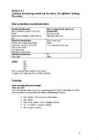
[ portusatifutint'flif,!)el,ro rockhouse note-taking; giving information about a house; startrnga conversation; expressing sympathy; on theroof,small .impractical rentinga house;requesting services ilii;;sjorev iuiol<, 'fli,i,:,
[ portusatifutint'flif,!)el,ro rockhouse note-taking; giving information about a house; startrnga conversation; expressing sympathy; on theroof,small .impractical rentinga house;requesting services ilii;;sjorev iuiol<, 'fli,i,:,
[ portusatifutint'flif,!)el,ro rockhouse note-taking; giving information about a house; startrnga conversation; expressing sympathy; on theroof,small .impractical rentinga house;requesting services ilii;;sjorev iuiol<, 'fli,i,:,
[ portusatifutint'flif,!)el,ro rockhouse note-taking; giving information about a house; startrnga conversation; expressing sympathy; on theroof,small .impractical rentinga house;requesting services ilii;;sjorev iuiol<, 'fli,i,:,
"I'm going to Seattle that Saturday," I explained. I needed to get out of town anyway -- it was suddenly the perfect time to go. "Can't you go some other weekend?" "Sorry, no," I said. "So you shouldn't make Jess wait any longer -- it's rude." "Yeah, you're right," he mumbled, and turned, dejected, to walk back to his seat. I closed my eyes and pressed my fingers to my temples, trying to push the guilt and sympathy out of my head. Mr. Banner began talking. I sighed and opened my eyes. And Edward was staring at me curiously, that same, familiar edge of frustration even more distinct now in his black eyes. I stared back, surprised, expecting him to look quickly away. But instead he continued to gaze with probing intensity into my eyes. There was no question of me looking away. My hands started to shake. "Mr. Cullen?" the teacher called, seeking the answer to a question that I hadn't heard.
Repertuaari pilt hakkas mitmekesisemaks muutuma 1930. aastate teisel poolel, kui kasvas peale uus põlvkond arranžeerimisvõimelisi džässmuusikuid, nagu Priit Veebel, Hans Speek, Boris Kõrver jt. Võrdlusena 1920. aastatele vaadakem meie džässorkestrite repertuaari 1930. aastate lõpul ehk siis kümmekond aastat hiljem. A. Mutsu (1991, 9: 70) andmeil olid enammängitavad: “Close your eyes”, “Night and day”, “June in January”, “Moonlight and shadows”, “My sympathy”, “Smoke gets in your eyes”, “Alexander’s ragtime band”, “Body and soul”, “All of me”, “Stormy weather”, “Caravan”, “Sweet and lovely” jt. Seoses helifilmi tulekuga muutus üli- populaarseks F. Churchilli “One day my prince will come”, svingseades said uuesti tuntuks mitmed džässi algaastate lood: S. Brooksi “Some of these days” (1910), I. Berlini “Alexander’s ragtime band” (1911). Kõik see on üsnagi svingilik repertuaar, millest enamik
pain-body, that is to say, emotional pain from the past that wants to renew itself through experiencing more pain. Some egos perpetrate crimes in their search for fame. They seek attention through notoriety and other people's condemnation. “Please tell me that I exist, that I am not insignificant,” they seem to say. Such pathological forms of ego are only more extreme versions of normal egos. A very common role is the one of victim, and the form of attention it seeks is sympathy or pity or others' interest in my problems, “me and my story.” Seeing oneself as a victim is an element in many egoic patterns, such as complaining, being offended, outraged, and so on. Of course, once I am identified with a story in which I assigned myself the role of victim, I don't want it to end, and so, as every therapist knows, the ego does not want an end to its “problems” because they are part of its identity. If no one will
 annaabi.ee