 10 punkti
Autor soovib selle materjali allalaadimise eest saada 10 punkti.
10 punkti
Autor soovib selle materjali allalaadimise eest saada 10 punkti.
 ~ 11 lehte
Lehekülgede arv dokumendis
~ 11 lehte
Lehekülgede arv dokumendis
 2010-10-28
Kuupäev, millal dokument üles laeti
2010-10-28
Kuupäev, millal dokument üles laeti
 6 laadimist
Kokku alla laetud
6 laadimist
Kokku alla laetud
 0 arvamust
Teiste kasutajate poolt lisatud kommentaarid
0 arvamust
Teiste kasutajate poolt lisatud kommentaarid
 Liis Kivirand
Õppematerjali autor
Liis Kivirand
Õppematerjali autor
scrutinised. Covered many areas of life of man: science, history, and political and social reform. Thomas Browne: Religio Medici – tried to reconcile (sobitada) science and religion. Writes as physician who has found his religious faith confirmed by scientific awe. Poses more as a moralist than as a diagnostician. Demonstrates an exemplaru toleration of both Christian dissent and diversity. 8. The political prose of the Civil War period Turbulent years in mid 17thC, Charles I, then Commonwealth and Protectorate, flourish of political literature. Pamphlets (brošüürid) from supporters of every faction in Civil War, personal attacks and polemics, many forms of propaganda, high-minded schemes to reform the nation. Revolutionary times. In late 1640s and 50s debate over the shape and authority of the rapidly changing constitution of England intense. Charles I off throne, Commonwealth, power to gentlemen landowners. No
The making of a new nation. The Enlightenment in America. The emergence of the notion of the American Dream. The great Enlighteners: Crèvecoeur, Jefferson, Paine, Franklin. The American Enlightenment is the intellectual thriving period in the United States in the midtolate 18th century (17151789), especially as it relates to American Revolution on the one hand and the European Enlightenment on the other. Influenced by the scientific revolution of the 17th century and the humanist period during the Renaissance, the Enlightenment took scientific reasoning and applied it to human nature, society, and religion. American Enlightenment a gradual but powerful awakening that established the ideals of democracy, liberty, and religious tolerance in the people of America. If there were just one development that directly caused the American Revolution and uplifted the intellectual culture of the continent while it was only a British colony, it would be the American Enlightenment
CONTENTS ESTONIA AND THE ESTONIANS FOREWORD IN THE FOLD OF TSARIST RUSSIA. EMERGENCE AND FIRST STEPS ON THE CLASSICAL-ROMANTIC PATH. HISTORICAL INTRODUCTION I. MUSICAL LIFE IN TARTU AT THE TURN OF THE CENTURY. TRAILBLAZERS: ALEKSANDER LÄTE, RUDOLF TOBIAS, ARTUR KAPP. II. THE FIRST DECADE OF THE 20TH CENTURY. ARTUR LEMBA: THE BEGINNING OF ESTONIAN SYMPHONY AND OPERA. III. NEW DEVELOPMENTS IN CULTURAL AND MUSICAL LIFE: THE END OF THE TSARIST PERIOD. THE INDEPENDENT REPUBLIC OF ESTONIA: THE INTRODUCTION OF INNOVATIONS FROM WESTERN ART AND THE EVOLUTION OF NATIONALLY ORIENTED MUSICAL TRENDS. IV. THE TWENTIES. ARTUR KAPP: ROMANTICIST AND DRAMATIST. V. THE INFLUENCE OF NEW WESTERN MUSICAL TRENDS. HEINO ELLER: A PROGRAMME PAINTER. VI. THE THIRTIES. THE WIDENING OF NATIONAL SYMPHONISM. THE RISE OF ATTENTION TO HISTORY AND FOLKLORE: JUHAN AAVIK, EDUARD TUBIN, EUGEN KAPP. VII
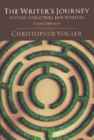
means without permission in writing from the publisher, except for the inclusion of brief quotations in a review. Library of Congress Cataloging-in-Publication Data Vogler, Christopher, 1 9 4 9 - T h e writer's journey : mythic structure for writers / Christopher Vogler. ~ 3rd ed. p. cm. Includes bibliographical references and index. ISBN 9 7 8 - 1 - 9 3 2 9 0 7 - 3 6 - 0 I. M o t i o n picture authorship. 2 . Narration ( R h e t o r i c ) 3. M y t h in literature. 4. Creative writing. I. Title. PNI996.V64 2007 808.2'3-dc22 2007026844 IV for Mom and Dad TABLE OF CONTENTS I N T R O D U C T I O N : T h i r d Edition ix PREFACE: Second Edition xiii INTRODUCTION: Second Edition ~ Preparing for the Journey xxvii BOOK ONE: M a p p i n g the Journey I
For 450 years, from about 1400 to about 1850, a system that was half a code and half a cipher dominated cryptography. It usually had a separate cipher alphabet with homophones and a codelike list of names, words, and syllables. This list, originally just of names, gave the system its name: nomenclator. Even though late in its life some nomenclators grew larger than some modern codes, such systems are still called "nomenclators" if they fall within this historical period. An odd characteristic is that nomenclators were always written on large folded sheets of paper, whereas modern codes are almost invariably in book or booklet form. The commercial code is a code used in business primarily to save on cable tolls; though some are compiled for private firms, many others are sold to the public and therefore provide no real secrecy. Most ciphers employ a key, which specifies such things as the arrangement of letters within a cipher
Domestic Networks 98 Appendix A: AFDC Case History Survey 133 D: Kin-Structured Domestic Neworks 99 Appendix B: Outline of Interview Topics 146 Notes 155 TABLES I! Bibliography: Literature Cited 160 1. Frequency of Child-Keeping, AFDC Data 68 I1 Index 169 2. Frequency of Child-Keeping, AFDC Data 69 ~ 3. Status and Location of Biological Mother 70 4. Patterns of Child-Keeping, AFDC Data 71
Using sim- ilar but not identical approaches, I was able to penetrate advertising, public rela- tions, and fund-raising agencies to examine their techniques. Much of the evidence presented in this book, then, comes from my experience posing as a compliance professional, or aspiring professional, in a large variety of organizations dedicated to getting us to say yes. One aspect of what I learned in this three-year period of participant observa- tion was most instructive. Although there are thousands of different tactics that compliance practitioners employ to produce yes, the majority fall within six basic categories. Each of these categories is governed by a fundamental psycholog- ical principle that directs human behavior and, in so doing, gives the tactics their power. This book is organized around these six principles. The principles-
Greek in which the New Testament was written, to sin means to miss the mark, as an archer who misses the target, so to sin means to miss the point of human existence. It means to live unskillfully, blindly, and thus to suffer and cause suffering. Again, the term, stripped of its cultural baggage and misinterpretations, points to the dysfunction inherent in the human condition. The achievements of humanity are impressive and undeniable. We have created sublime works of music, literature, painting, architecture, and sculpture. More recently, science and technology have brought about radical changes in the way we live and have enabled us to do and create things that would have been considered miraculous even two hundred years ago. No doubt: The human mind is highly intelligent. Yet its very intelligence is tainted by madness. Science and technology have magnified the destructive impact that the dysfunction of the human mind has upon the planet, other
 annaabi.ee















Kõik kommentaarid