Leidsid 33 sarnast õppematerjali, mis on seotud failiga "Should the monarchy be abolished". Need materjalid aitavad sul teemat sügavamalt mõista.
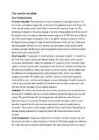
monarch, nation, power, government, forms, retain, commonwealth, other, through, accept, oldest, leadership, chiefsndividual, actual, nominal, supreme, often, until, since, recent, nepal, became, republic, year, elizabeth, there, types, such, morocco, moved, although, among, states, claimed, full, both, brunei, arabia, support, throughout, either, warsCountry study test # 3 1. Why was it often said that ,,the sun never sets on the British Empire"? ... is used to describe an empire of such a large extent that, at any one time, at least part of its territory is in daylight. This was a saying refering to the fact that Britian had colonies all around the world. 2. What is the Commonwealth? The Commonwealth is an association of sovereign nations that support each other and work together towards international goals. 3. When was it founded? 1931 4. Who were the founder members? Great Britain, the Irish Free State (now the Republic of Ireland), Canada, Newfoundland (since 1949 part of Canada), Australia, New Zealand, and South Africa. 5. Are they still members? Why? Irish Free State left in 1949 with the republic of ireland acts, Newfoundland (since 1949 part of Canada), 6
1. The Queen’s official title. Elizabeth the Second, by the Grace of God, of the United Kingdom of Great Britain and Northern Ireland and of Her other Realms and Territories Queen, Head of the Commonwealth, Defender of the Faith. 2. The Queen’s working day. Starts after breakfast. Reads the newspapers which are prepared by the Press Secretary, and a report on the previous day’s proceedings in the Parliament and the letters she receives. Also phone calls. Once a month she attends the Privy Council in order to give Royal Assent to various items of government legislation. Discusses domestic matters with the Master of the Household.
House of Winsdor. Their influence on modern society, key personalities. People all over the world are obsessed with the British royal family. Most fans know all the royal names and faces, the line of succession to the throne, and even the family's rarely- used last name. But let's start from the beginning. The House of Windsor is the reigning royal house of the United Kingdom and the other Commonwealth realms. The dynasty is of German paternal descent and was originally a branch of the House of Saxe-Coburg and Gotha, itself derived from the House of Wettin, which succeeded the House of Hanover to the British monarchy following the death of Queen Victoria, wife of Albert, Prince Consort. The name was changed from Saxe-Coburg and Gotha to the English Windsor (from "Windsor Castle"[1]) in 1917 because of anti-German sentiment in the British Empire during World War I
Established church The Church of England is the established church, which means that: 1.)the Monarch is the Supreme Governor of the church, 2.)the Church performs a number of official functions, 3.)Church and State are linked. To disestablish Disestablishmentarianism refers to campaigns to sever links between church and state, particularly in relation to the Church of England as an established church. It was initially a movement in the United Kingdom in the 18th century. The established churches
Romans built many roads and also many great bulidings like the Hadrians wall. Anglo-Saxons and Normans The history of Anglo-Saxon England broadly covers early medieval England from the end of Roman rule and the establishment of Anglo-Saxon kingdoms in the 5th century until the Conquest by the Normans in 1066. Christianisation of the Anglo-Saxon Kingdoms began around 600 and was essentially complete by the mid 8th century. Throughout the 7th and 8th centuries, power fluctuated between the larger kingdoms. Bede records Aethelbert of Kent as being dominant at the close of the 6th century, but power seems to have shifted northwards to the kingdoms of Mercia and Northumbria. Aethelbert and some of the later kings of the other kingdoms were recognised by their fellow kings as Bretwalda. The so-called 'Mercian Supremacy' dominated the 8th century, though again it was not constant. Aethelbald and Offa, the two most powerful kings, achieved high status
....................................................................18 2 Introduction The aim of this research is to get know more about the Netherlands history and its geographical facts. This report is describing one of most the most beautiful countries in the Europe - Netherlands. Netherlands is famous for its windmills and flowers. Netherlands is also known unofficially as Holland. Government is constitutional monarchy of north-western Europe. Netherlands is bordered on the north and west by the North Sea, on the east by Germany and on the south by Belgium. The European portion of the Netherlands has a total area of 41,528 sq km of which 33,939 sq km is land surface. Country's capital and largest city is Amsterdam. Population is about 16 million. 3 Chapter 1
banned until late in the fourth century. *Boadicea/Boudica At his death bed, Boudica's husband left half his possession to the emperor, expecting that this would protect his family. However, his property was confiscated. When Boudica, the queen of the Celts, protested, she was flogged and her daughters were raped. She swept trough Southern Britain with her tribe and tortured every Roman she met. A women having power seemed unnatural to the Romans. She fought back for 2 years, but finally took poison and died. *Hadrian's Wall It was built by the emperor Hadrian and it marked the Northen border of the Roman empire. Hadrian's Wall was built, beginning in 122, to keep Roman Britain safe from hostile attacks from the Picts. The wall stretched from the North Sea to the Irish Sea. In addition to the wall, the Romans built a system of small forts called milecastles. Sixteen larger
1. Society- people who interact in such a way as to share a common culture. The cultural bond may be ethnic or racial or geographical, based on gender, or due to shared beliefs, values, and activities. 2. Culture- beliefs, behaviors, objects, and other characteristics common to the members of a particular group or society. 3. A unitary state- a state governed as one single power in which the central government is ultimately supreme and any administrative divisions (subnational units) exercise only powers that their central government chooses to delegate. The majority of states in the world have a unitary system of government. 4. A federal state-- a political entity characterized by a union of partially self- governing states or regions under a central (federal) government. 5. A multinational state- A multinational state is a sovereign state which is viewed as comprising two or more nations
-All Member States must obey the Charter. -Countries must try to settle their differences by peaceful means. -Countries must avoid using force or threatening to use force. -The UN may not interfere in the domestic affairs of any country. -Countries should try to assist the United Nations. The basic structure of the United Nations is outlined in an organizational chart. What the structure does not show is that decision- making within the UN system is not as easy as in many other organizations. The UN is not an independent, homogeneous organization; it is made up of sovereign states, so actions by the UN depend on the will of Member States, to accept, fund or carry them out. Especially in matters of peace-keeping and international politics, it requires a complex, often slow, process of consensus-building that must take into account national sovereignty as well as global needs. The organization won the 2001 Nobel Peace Prize, and a number of its
· Hobbes leviathan · Locke second treatise of government · Rousseau - social contract · Montesquieu - The Spirit of the Laws · Kant idea for a universal history from a cosmopolitan point of view · Hegel - philosophy of right Key dates 1603 Shakespear's King Lear , Death of the Queen Elizabeth 1. 1618-48 The Thirty Year's War 1649 Execution of Charels 1 of England, Establishment of Oliver Cromwell's Prodecorate 1651 Hobbes' Leviathan(1588-1679) 1660 The Restoration of Charels 2. as king of England
Phoenicians and Carthaginians, incorporated in the Roman Republic dominions as Lusitania and part of Gallaecia (both part of Hispania), after 45 BC until 298 AD, settled again by Suebi, Buri, and Visigoths, and conquered by Moors. Other minor influences include some 5th century vestiges of Alan settlement, which were found in Alenquer, Coimbra and even Lisbon. THE PRE-ROMAN TRIBES OF ANCIENT PORTUGAL AND THEIR EXPANSION PATTERNS. The region of present-day Portugal was inhabited by
Argumentative essay Should monarchy be abolished in Britain?! The monarch's power over the nation has fallen so drastically that nowadays Britain's political system is described as constitutional monarchy. In fact the power is reduced so much that it is argued weather monarchy is needed at all. Firstly, kings and queens have been a part of Britain for centuries so the idea that royal families should no longer exist just does not seem right. I strongly believe that abolishing monarchy will cause more problems than it solves. The biggest impact will be the major fall in truism. Nearly everyone I know who have been to England have gone there to visit some part of the monarchy related attractions.
hunted animals, birds, fish. Vikings were great traders in town markets. JORVIK typical Viking town 9th c. V. moved to the islands of Shetland, Orkneys, the Hebrides, Ireland Sutton Hoo near Woodbridge, Suffolk, England, is the Anglo-Saxon burial place from the 6th century and early 7th century, which was found in 1939. The wooden ship, which was buried there, contained lots of armour, weapons, jewellery, symbols of power and other treasures, but no bodies were found. 10. Roman conquest In the 1st c. BC the Roman Empire began to make contact with Britain (wine, pottery, small bronze statues) Julius Caesar's first raid was in 55 BC (the troops were afraid of the sea crossing) In the following year he invaded again, this time he marched inland In AD 43 the Emperor Claudius decided the full-scale invasion (army of 40,000 men) The Roman occupation lasted nearly 400 years.
,,public" schools) to provide each new generation with the manners and habits of ruling class; the clubs and social life of London; the columns of ,,Society" gossip in the newspapers and the differences of clothing and accent by which members of the ,,classes" can instantly recognise one another. We should respect our fellow creatures because they are good or clever, gifted or wise not because they happen to possess advantages of wealth or power. In so far as we accept these false standards (of wealth and class) we make ourselves less than free men. We deny the eqality of our common humanity. Vandalism. The worsest vice, because the most senseless, peculiar to our own time has been the destructive vandalism with which we have treated our physical heritage in our town and country. The period between the two European wars will stand out as one of the most destructive epochs in our history. The land is strewn with the wreckage of what was once beautiful
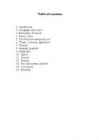
Mari-Liis Pakats Tallinn 2008 2 Table of Contents Introduction..................................................................................................................4 Geographical Position .................................................................................................4 History .........................................................................................................................4 Government..................................................................................................................5 Queen Victoria.............................................................................................................5 Relief............................................................................................................................6 Climate ...............................................................................................................
became dominions and independent. Dependencies were regions in the world that became trading partners and where English became a second language. 5. Which British colonies became dominions? What was their status? Is the name dominion used for these countries nowadays? The first dominions were Canada (1867), Australia (1901), and New Zealand (1907) The name "dominion" is not used anymore. 6. Which organisation unites Britain and most of its former colonies nowadays? The Commonwealth unites Britain with its former colonies. Ireland 1. Who were the early inhabitants of Ireland? Seafarers, fisheremen and hunter-gatherers from mainland Europe arrived around 8000 BC 2. When was Christianity established in Ireland? 432 AD Saint Patrick arrived in Ireland and began converting the Irish to Christianity. Who is Ireland's patron saint? Saint Patrick is Ireland's patron saint. When is his feast day? His feast day is on 17 March 3. When did the English conquest of Ireland begin
British Parliament Structure and Functioning of the British Parliament today Britain is a parliamentary monarchy . The British Parliament is a bicameral parliament , that is to say that it is made up of two chambers, or two "Houses"; above the two Houses, but in an essentially formal role , there is the Sovereign - king or queen - also known as "the crown." Role of the Sovereign The British monarch has all authority, but no power. The Sovereign appoints the Prime Minister, and every year opens the sessions of parliament, in a historical and ritual ceremony called the State Opening of Parliament . Historically, this ceremony used to take place in the Autumn; but since 2012, it has been brought forward to May. This is the only regular time when the members of both Houses come together. During the ceremony, the Sovereign reads out the government's intended programme. The "Queen 's Speech" is a summary of the
1. What were the two institutions that Henry VII establised? Explain. Henry VII established the Court of Star Chamber to make the barons give up their private armies and overall restored finances by collecting taxes. Also Henry VII extended royal control over local government through the local magistrates called justice of peace. 2. What was the idea of the Act of supremacy? With passing the Act of Supremacy, Henry VIII was made the head of the Church of England and he was now free to divorce Catherine and marry Anne Boleyn. 3. Why did Henry VIII get the title Fidei Defensor? The title was given to him by the pope because Henry VIII was against Protestantism and other religious reforms by J. Calvin and M. Luther. For that,
!!!!!!!!!!! HOMEWORK - Academic writing Title Introduction Body conclusion Lõikude vahele 1 rida, taandrida ei jäeta! Argumendid millegi poolt, argumendid millegi vastu. Väldime I-vormi, vaid kasutame passive-vormi. Lõhikesi vorme ei kasutata! (don't) 150 sõna Teema "should mery-killing be punished?" HOMEWORK Terms to explain: Nation - a country, especially when thought of as a large group of people living in one area with their own government, language, traditions, etc: Stranger someone whom you do not know Citizen - a person who is a member of a particular country and who has rights and obligations because of being born there or because of being given them Penalty - a punishment for doing something that is against a law Government - the group of people who officially control a country System of courts - a set of connected positions which operate together to ensure ... ? To commit a crime to do sth that is forbidden by law
of Union and so unite the two kingdoms • The term "United Kingdom" became official in 1801 when the parliaments of Britain and Ireland each passed an Act of Union, uniting the two kingdoms and creating the United Kingdom of Great Britain and Ireland Late history • After the defeat of France at the end of the Revolutionary and Napoleonic Wars (1792–1815), the UK emerged as the principal naval and imperial power of the 19th century • UK had the industrial monopoly World War I • The UK fought with France, Russia and (after 1917) the US, against Germany and its allies in World War I • The British Empire reached its greatest extent, covering a fifth of the world's land surface and a quarter of its population • However, the UK had suffered 2.5 million casualties and finished the war with a huge national debt World War II
Britain History Pre-Norman Britain The Iberians brought their metal-working skills and the first real civilization to Britain in the third millennium B.C and were overrun by various Celtic invasions that began in the 8th century. The Celts introduced their tribal organization and an early form of agriculture before they were forced westward by the Roman invasion. Forms of Celtic language are still spoken in Britain. Romans (with Julius Caesar in the head of them) first tried to occupy Britain in 55 B.C., but there was a rebellion in Gaul so they had to leave to fight against it. Next time they came in 43 A.D. and their leader was Emperor Claudius. Romans brought a lot with them. Their brought paved roads, the sites of important cities, the seeds of Christianity, the Roman law, Roman baths, language and advanced civilization
power is exercised by the Cabinet of New Zealand. Some Quick facts Capital: Wellington Government: Representative parliamentary democracy and Constitutional monarchy Currency: New Zealand dollar (NZD) Area: 270,534 sq km Population: 4,347,000 (February 2009 est.) Language: English, Maori, and New Zealand sign language Religion: unspecified/none 43%, Anglican 17%, Roman Catholic 14%, Presbyterian 11%, Methodist 3%, Pentecostal 1.7%, Baptist 1.3%, other Christian 9%, other 3% Culture New Zealanders have made a profound impact in the areas of art, poetry, music, film, and architecture. Not only have the artists reached local recognition, but also gained worldwide apperception. New Kiwi self-confidence is revealed intensely in literature, film and theater. Opera diva Kiri Te Kanawa performs regularly nationally and internationally. Writers such as Witi Ihimaera, Albert Wendt, Patricia Grace, and Keri Hulme are also international figures. Fine Arts
RUNNING HEAD: RUSSIA Russia Throughout the History U.S Government Table of Contents 1. Introduction 2. History of Russia 3. Russia nowadays 4. Important people in Russia throughout the history 5. Conclusion 6. References Introduction- Russia Throughout the History Russia is a one of the biggest countries is the world. The first clues about Russian history are from as early as the 9th century. Russia has suffered through rough times in war, mad leaders
winter. More moderate temperatures are the norm in spring and fall. Summers can be hot and dry on the prairies, humid in central Canada, and milder on the coasts. Spring is generally pleasant across the country. Autumns are often crisp and cool, but brightened by rich orange and red leaves on trees. Winters are generally cold with periods of snow, although southern Alberta enjoys the occasional "Chinook", a warm dry wind from the Rocky Mountains that gusts through and melts the snow. Winters are mild and wet on the west coast, in cities such as Vancouver and Victoria. Territories and provinces Canada consists of 3 territories and 10 provinces. Very few people live in the territories, but it has more power on deciding important questions. Newest territoy is Nunawut, it became a territory in 1999. It was created from the eastern part od North- West territories. Quebec and Ontario are the biggest provinces
the continent by a strip of low marsh to what is now Denmark and the Netherlands. Britain in the reign of Elizabeth 3 Elizabeth II (Elizabeth Alexandra Mary; born 21 April 1926) is the constitutional monarch of 16 sovereign states known as the Commonwealth realms, and head of the 54-member Commonwealth of Nations. In her specific role as the monarch of the United
Snowdonia and include Snowdon, which at 1085 m (3,560 ft) is the highest peak in Wales. Welsh flag has a red dragon on a white and green background. It is not represented on the Union Jack. England is 130 000 square kilometres. Its capital is London. The population is about 50 million people and growing because of immigration. England is bordered to the north by Scotland and to the west by Wales. It is closer to continental Europe than any other part of Britain, divided from France only by a 38 km sea gap. The Channel Tunnel, near Folkestone, directly links England to the European mainland. The English/French border is halfway along the tunnel. London is by far the largest English city and one of the largest and busiest cities in the world. Birmingham is the second largest. A number of other cities, mainly in central and northern England, are of substantial size and influence. These
☄ Anger grew in the country at the way that the Stuart monarchs raised money ☄ Puritanism- ideological Protestantism ☄ Some of them thought the luxurious lifestyle of the king and his followers was immoral. They were also fiercely anti-Catholic and suspicious of the apparent sympathy towards Catholicism of the Stuart monarchs. ☄ This led to The Civil War ☄ Victory for the parliamentary force ☄ The king (Charles I) was captured and became the first monarch in Europe to be executed after a formal trial for crimes against his people. 1649 Charles I is executed. For the first and only time, Britain briefly becomes a republic and is called the Common wealth. 1660 The monarchy and the Anglican religion are restored. ☾ The church was restored. However, the conflict between monarch and Parliament soon re-emerged ☾ Prince William and Mary became the king and the queen so this way it was
Impose The word law can have several meanings, it can be divided into prescriptive and descriptive law. Descriptive law – describes the way people or natural phenomena behave, e. g. law of gravity Prescriptive law – prescribe how people ought to behave e.g. speed limits In all societies relations between people are regulated by prescriptive law; customs (informal rules of social and moral behaviour); rules we accept if we belong to a particular institution (religion, organization); laws imposed on people by a government Penalties for breaking the rules are different. For not following the customs there may not be a punishment, or a person may be criticized by the society; rules of a social institution tend to carry precise penalties but they are not enforceable by any political authority; however governments use a system of courts backed by the power of the police to enforce the laws they have made.
national colours are the colours of its flag red, white and blue. Head of state Head of state is Queen Elizabeth II, who is queen of United Kingdom and also queen is Australia. In practice, Governor General performs her functions in queen's absence. Since 1989 Bill Hayden has been the Governor General Government Australia is constitutional monarchy, based on liberal democratic tradition. In practice Australia is parliamentary democracy. The power in the country is put to life by Parliament. Parliament is consists of The House Of Representatives and The Senat. The House of Representatives consists of 150 members. The party with the majority provides the Prime Minister, who also forms the Government. Today the power is divided by three parties: The Australian Labour Party, the Liberal Party and National Party. The Senat's membership is wider, it comprises 12 senators from each state and 2 from each territory
An analysis of the problem of Political Power Written by: Katre Kikkas Introduction It is said that in the political philosophy there are only two questions: ,,Who can have what?" and ,,Who will decide over it?". It is not exactly like that but it is quite close to the trough, to begin with. The first question includes material amenity's, and dividing rights and liberties.(Wolff, 1996) What is power? It is ability to influence others to do something they otherwise would not. Also, others can be affected with threats and force. (Kilp, 2010) Political power includes also right to force the others and to punish them if they disobey. Who should have that kind of power? Actually the political power is quite mysterious by itself. If someone has legitimate political power over me then he or she has a right to force me to do things that they want.(Wolff, 1996) But how can other person
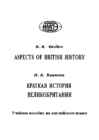
the rise and fall of the British Empire. The units contain an informative reading text on an important issue, preceded by preparatory discussion questions and followed by notes offering some additional information, and a vocabulary with relevant language notes. The main reading text is accompanied by comprehension, vocabulary and grammar exercises and discussion activities. Some of the units include reading passages. The book is intended for university and school students as well as other English learners wishing to acquire more knowledge about the country whose tongue became the world’s leading language, and which is considered as the Mother of Parliaments. 7 UNIT 1 THE ISLAND Pre-reading questions What is the name of the island group Britain belongs to? Where is it situated? What seas surround it? What kind of climate do you think Britain has? What is its surface like?
Lawrence lowlands. Canada's highest peak is Mount Logan (5,959 m) in Yukon Territory. 4. Rivers, lakes With less than 1 percent of the world's population, Canada has some one-seventh of the world's supply of accessible fresh water. Much of this water is stored in lakes and wetlands that cover about one-fifth of Canada's total area. The Great Lakes--the world's largest surface of fresh water--are shared with the United States and form part of the international border. Other large lakes include Great Bear and Great Slave lakes in the Northwest Territories and Lakes Manitoba and Winnipeg in Manitoba. Mackenzie River is Canada's longest river, which flows 4,241 km from its source to its mouth. With its many tributaries, it drains 1,800,000 square km. The St. Lawrence is the largest river flowing into the Atlantic Ocean. Its drainage basin includes the Great Lakes, forming an inland navigable waterway extending some 3,765 km into the heart of the continent
United States of America Table of Contents 1. Facts 2. Geography 3. Nature 4. History 5. Population 6. Government 7. Industry, economy 8. America's pop culture Facts Official Name: United States of America Capital City: Washington, D.C. Largest city: New York City Official languages: None at federal level National language: English Government: Federal constitutional republic President: Barack Obama ( Barack Hussein Obama II) Vice President: Joe Biden (Joseph Robinette "Joe" Biden, Jr) Population: 2009 estimate 306,108,000 people
 annaabi.ee