Leidsid 33 sarnast õppematerjali, mis on seotud failiga "Reported Speech". Need materjalid aitavad sul teemat sügavamalt mõista.
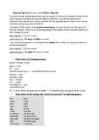
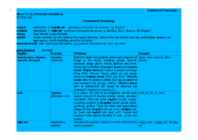
speech, english, reported, direct, says, speak, tense, kaudkõne, poor, weather, check, change, pronouns, present, verbs, person, singular, place, expressions, tenses, spoke, questions, asked, edasiandmiseks, otsesest, tähtsaimad, tell, know, kaugkõne, tabelid, speaks, note, indirectReported Speech (in other words Indirect Speech) If we report what another person has said, we usually do not use the speaker's exact words (direct speech), but reported (indirect) speech. Therefore, you need to learn how to transform direct speech into reported speech. We use reported speech when we are saying what other people say, think or believe. - Example: If this verb is in the present tense (says), it's easy. We just put 'she says' and then the sentence. When we are reporting things in the present, future or present perfect we don't change the tense. : direct speech: "I like ice cream" reported speech: She says she likes ice cream - But, if the reporting verb is in the past tense (said), then usually we change the tenses in the reported speech: direct speech: "I like ice cream" reported speech: She said she liked ice cream. ......... · When there are Changing tenses:
Reported speech is often also called indirect speech. When we use reported speech, we are usually talking about the past (because obviously the person who spoke originally spoke in the past). The verbs therefore usually have to be in the past too. For example: "I'm going to the cinema". He said he was going to the cinema. Basic tense chart The tenses generally move backwards in this way (the tense on the left changes to the tense on the right): present simple past simple I'm a teacher. He said he was a teacher past continuous. present continuous He said he was having lunch with his I'm having lunch with my parents. parents.
We can report people's words by using direct speech or direct speech reported speech. speech `I'm tired!', Helen said. Helen said (that) she was tired. The main verb of the sentence is usually past ( Tom said that... / I told her that...) and the rest of the sentence is usually past too. Sequence of tenses if the verb in the main sentence is in the past tense the other verbs are usually in one of the past tense too. Present Simple Past Simple I'm a teacher. He said (that) he was a teacher Present Progressive Past Progressive I'm having lunch with my He said (that) he was having parents. lunch with his parents. Past Simple Past Perfect He said (that) he had bought a I bought a new car. new car.
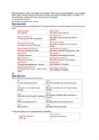
· DIRECT · INDIRECT · Am, is, are · Was/were · Shall/will · Should/would · Can · Could · May · Might · Must · Have/has to · Ought to · Had to CHANGES OF ADVERB OF TIME & PLACE · DIRECT · INDIRECT · NOW · THEN · TOMORROW · THE FOLLOWING DAY · NEXT WEEK · THE FOLLOWING WEEK · TONIGHT · THAT NIGHT · TODAY · THAT DAY · YESTERDAY · THE DAY BEFORE · LAST NIGHT · THE NIGHT BEFORE · LAST WEEK · THE WEEK BEFORE · HERE · THERE · THIS · THAT · THESE · THOSE CHANGES OF TENSES · DIRECT · INDIRECT
English structure revision for the exam 1. Terms Language → A systematic, conventional (tavakohane) use of sounds, signs or written symbols in a human society for communication and self-expression. Human language at all levels is rule- or principle- governed (valitsema) meaning that language corresponds to the grammar. Natural language is usually spoken, while language can also be encoded into symbols (such as letters, morse etc) For example: Estonian, English. Linguistics → The scientific study of human natural language. Broadly, there are three aspects to the study which are Pragmatics (studies the use of language → interested in the gap between the sentence’s meaning and the speaker’s meaning). Semantics (concerned with the meaning of the language aspects and the way they change, also how objects and language and thinking and language are related).
speakers and writers. Prescriptive grammar: a set of rules and examples dealing with the syntax and word structures of a language, usually intended as an aid to the learning of that language. Prescriptive grammar refers to the structure of a language as certain people think itshould be used. Phonology: the subfield of linguistics that studies the structure and systematic patterning of sounds in human language. Phonetics: of the acoustic detail of speech sounds and how they are articulated. Phone: [p] A phone is actual pronunciation of a phoneme. A phone is represented between brackets Allophone: e.g. pin spin Phoneme: /p/ - /iz/ `houses' /s/ voicless `cats' /z/ `boys' /t/ `learned' /id/ `wanted' A phoneme is the smallest unit of the sound system of a language. If two sounds have the same phoneme, they are treated equally. A phoneme is represented between slashes.
Book 1 BASIC ENGLISH BASIC ENGLISH GRAMMAR GRAMMAR BASIC ENGLISH GRAMMAR Book 1 Book 1 Younger students at beginning to intermediate levels will greatly benefit from this step-by-step approach to English grammar basics. This is the ideal supplement to your language arts program whether your students are native
INGLISE KEELE GRAMMATIKA Present Simple Lihtoleviku moodustamine Jaatav vorm Eitav vorm Küsiv vorm I make I do not make Do I make? He/she/it speaks He/she/it does not speak Does he/she/it speak? We/you/they go We/you/they do not go Do we/you/they go? NB! ERANDID! · Verbidele, mis lõpevad ss, h, ch, tch, x või oga, lisatakse ainsuse kolmdandas pöördes es. he does he goes he misses he watches he mixes · Verbid, mis lõpevad yga, mille ees on konsonant, muudavad y iks enne es lisamist. fly he flies carry he carries
'How are you?' Very often people expect you to say something positive. Here's a breakdown of how you can express how you really are without complaining too much. · Fine, thanks. / On top of the world, thanks. · OK, thanks · Not so bad, thanks. / Can't complain, thanks. · So so, thanks. / So and so, thanks. · Not so good, actually 1 The English alphabet Spelling Work with your partner and spell out first your name and then some names of places. Write down each letter as you hear it, and then say the word. The English alphabet on the phone: You might find the following alphabet (used by international airlines) useful when trying to spell a word on the telephone. A Alpha O Oscar Ä Alpha-Echo Ö Oscar-Echo
Style The term style is a polysemantic one. The latin word ,,stilus" meant a writing instrument used by the ancients for writing on waxed tablets. Already, in classical latin the meaning of style was extended to denote the manner of expressing one's ideas in written or oral form. One of the abts/the best was given by Jonathan Swift: ,,Proper words in proper places." In present- day english, the world style is used in about half a dozen basic meanings. 1. the characteristic manner in which a writer expresses his ideas. Some speak about the style of Hemingway, Dickens etc. 2. the manner of expressing ideas, characteristic of a literary movement or period. Style of symbolism, romanticism 3. the use of language to pick a literary genre-comedy, novel, drama, O.D (poetic form) etc. 4
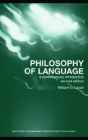
Topics are structured in four parts in the book. Part I, Reference and Referring, includes topics such as Russell's Theory of Descriptions, Donnellan's distinction, problems of anaphora, the description theory of proper names, Searle's cluster theory, and the causalhistorical theory. Part II, Theories of Meaning, surveys the competing theories of linguistic mean- ing and compares their various advantages and liabilities. Part III, Pragmatics and Speech Acts, introduces the basic concepts of linguistic pragmatics, includes a detailed discussion of the problem of indirect force and surveys approaches to metaphor. Part IV, new to this edition, examines the four theories of metaphor. Features of Philosophy of Language include: · new chapters on Frege and puzzles, inferentialism, illocutionary theories of meaning, and relevance theory · chapter overviews and summaries · clear supportive examples · study questions
1 Grammatical Terminology PRACTICAL ENGLISH GRAMMAR FLGR.01.042 Grammatical Terminology analytic analüütiline (= uninflected - grammar is focused in the sentence , e.g. English) synthetic sünteetiline (= inflected - grammar is focused in the word, e.g. Estonian, Latin, Russian, Old English) ending lõpp (käände- ja pöördelõpud)
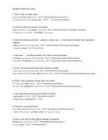
) It usually rains a lot in November. 4. Use will ..., not the present, for offers and promises. I'll cook you supper this evening. (NOT I cook you supper this evening.) I promise I'll phone you tomorrow. (NOT I promise I phone you tomorrow.) 5. Don't drop prepositions with passive verbs. I don't like to be shouted at. (NOT I don't like to be shouted.) This needs to be thought about some more. (NOT This needs to be thought some more.) 6. Don't use a present tense after It's time. It's time you went home. (NOT It's time you go home.) It's time we invited Bill and Sonia. (NOT It's time we invite Bill and Sonia.) 7. Use was/were born to give dates of birth. I was born in 1975. (NOT I am born in 1975.) Shakespeare was born in 1564. 8. Police is a plural noun. The police are looking for him. (NOT The police is looking for him.) I called the police, but they were too busy to come. 9. Don't use the to talk about things in general. Books are expensive
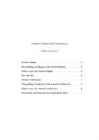
INGLISE KEEL Sisukord Sisukord 2 Ajavormid Tense vorms 3 Lihtolevik The present simple 3 Lihtminevik The past simple 3 Lihttulevik The future simple 3 Kestev olevik The present continuous 3 Kestev minevik The past continuous 4 Kestev tulevik The future conrinuous 4 Täisminevik The present perfect 4 Enneminevik The past perfect 4
INGLISE KEEL Sisukord Sisukord.................................................................................................................................. 2 Ajavormid Tense vorms.......................................................................................................3 Lihtolevik The present simple..................................................................................... 3 Lihtminevik The past simple....................................................................................... 3 Lihttulevik The future simple...................................................................................... 3
By the time she was nineteen, she was playing the violin professionally. My new house will be ready next month. In the meantime, I'm staying with relatives. 5.2 Ability peale can'i ja could'i kasutame oleviku vormi (ilma to'ta) He can type very fast. I could see him. can'i ja could'i puhul on küsimused ja eitavad laused tehtud ilma do/does'ita Can you speak French? I couldn't drive until I was 25. me kasutame be able to minevikus, olevikus ja tulevikus, muutes sõna be Past: He was able to get another job. Present: My brother is able to speak three languages. Future: I'll be able to stay in bed. Kasutame: 1) can et rääkida oleviku ja tuleviku võimalustest She can cook really delicious food. I can't come to party.
On day three we visit Stratford-upon-Avon. · Summaries of events Plots of stories, films etc, and summaries of historical events use present (and present perfect) tenses. 3 May 1945: The war in Europe comes to an end. ... At the end of the play both families realise that their hatred had caused the deaths of the lovers... · Historic present in narrative and 'funny stories' In informal speech, it is possible to use the 'historic present' to describe past events, especially to make the narration seem more immediate and dramatic. ... So then the second man asks the first one why he has a banana in his ear and the first one says... · Timetables We use the present simple for the future when we are talking about a timetable, usually a public one. The train leaves at six twenty tomorrow morning. The match starts at half past seven.
Byron) · the manner of expressing ideas characteristic of a literary movement or period (symbolism, romanticism) · the use of lg. typical of a literary genre (comedy, drama, novel) · the selective use of lg that depends on spheres of human activity. These are called functional styles or registers (fiction, newspaper) Stylistics is the study of style. However, for some reason, English stylistics is less developed than French, German or Russian. The term ,,stylistics"came into more common use in English only some 35 years ago. It was recorded much earlier; in 1882 as "the study of literary style, the study of stylistic features" Stylistics is a branch of linguistics that studies principles of selecting different linguistic means for passing on thoughts and emotions. It studies: · Different functional styles, styles of genres, individual styles
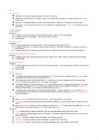
Present continuous (I am sitting there) Past continuous (I was sitting there) Past continuous (I was sitting there) Past perfect continuous (I had been sitting there) Future continuous (I will be sitting Would be going (I would be sitting there) there) Present perfect (I had sat there) Past perfect (I had sat there) Past perfect (I had sat there) Past perfect (I had sat there) · Kasutusel reported speech puhul, kui räägitakse minevikus toimunud sündmustest. Formal letter Nimi, Tähe 265 Tartu
Phonetic SD ("Rhythm And Style") 8. Lexical SD* 9. Syntactic SD* Use lecture notes 10. Graphical means and devices 11. Common literary and common colloquial vocabulary 12. Special literary vocabulary 13. Special colloquial vocabulary 14. Metre in English poetry. Modifications of metre ("Rhythm and Text") 15. Typically English stanzas ("Rhythm and Text") 16. Rhythm in poetry and in prose ("Rhythm and Text") Study independently 17. Varieties of language (I. Galperin "Stylistics") 18. Emotive prose (I. Galperin "Stylistics") 19. Scientific prose style (I. Galperin "Stylistics")
(not I want orange.) •Where is my bottle? (not Where is bottle?) When a countable noun is plural, we can use it alone: •I like oranges. •Bottles can break. We can use some and any with countable nouns: •I've got some dollars. •Have you got any pens? We can use a few and many with countable nouns: •I've got a few dollars. •I haven't got many pens. definite article The definite article the is the most frequent word in English. We use the definite article in front of a noun when we believe the hearer/reader knows exactly what we are referring to. • because there is only one: The Pope is visiting Russia. The moon is very bright tonight. The Shah of Iran was deposed in 1979. This is why we use the definite article with a superlative adjective: He is the tallest boy in the class. It is the oldest building in the town. • because there is only one in that place or in those surroundings:
Tests Superstar 1 Luke Prodromou Test 1 Name____________________ Class_______ Use your English 1 Complete these sentences using the correct form (present simple or present continuous) of the verb in brackets. _ 1 She is in a band and she _________________________________ (record) a CD at the moment. _ 2 She is an actress and often _________________________________ (appear) on television. _ 3 At the moment she _________________________________ (have) a rest because she is tired. _ 4 Mike is a doctor and he _________________________________ (live) in Manchester.
1. STYLE The term "style" is polysemantic (has many meanings): a Latin word "stilus" originally meant a writing instrument used by ancient people. Already in classical Latin the meaning was extended to denote the manner of expressing one's ideas in written or oral form. Jonathan Swift defined style as "proper words in proper places". In present day English the word "style" is used in about a dozen of principle meanings: 1. the characteristic manner in which a writer expresses his/her ideas (e.g. style of Byron) 2. the manner of expressing ideas, characteristic of a literary movement or period 3. the use of language typical of a literary genre (e.g. the style of a comedy, drama, novel). 4. the selective use of language that depends on spheres / areas of human activity (e.g. style of fiction, scientific prose,
Examples: When does the train arrive? We should call the ambulance. Example: I need a new laptop. Hand me a pencil, please. • with adjectives like rich, poor, or unemployed to talk about with professions. groups of people. Example: He is a postman. Example: Do you think the rich should pay more taxes? to show the person / thing is one of a group.
2 Motif - a dominant or recurring idea in an artistic work. Symbol - a thing that represents or stands for something else, especially a material object representing something abstract. Allusion - an expression designed to call something to mind without mentioning it explicitly; an indirect or passing reference. Simile - a figure of speech involving the comparison of one thing with another thing of a different kind, used to make a description more emphatic or vivid (e.g. as brave as a lion ). Metaphor - a figure of speech in which a word or phrase is applied to an object or action to which it is not literally applicable. Graphon - Intentional violation of the graphical shape of a word (or word combination) used to reflect its pronunciation point of view - the narrator's position in relation to a story being told
1 SYNTACTIC STYLISTIC DEVICES SYNTACTIC STYLISTIC DEVICES are based on a peculiar place of the word or phrase in the utterance (text, sentence, etc).This special place creates emphasis irrespective of the lexical meaning of the words used. Categories: syntactic stylistic devises based on: SDD: based on ABSENCE OF LOGICALLY REQUIRED ELEMENTS OF SPEECH ELLIPSIS ELLIPSIS or ELLIPTICAL SENTENCES means leaving out one or both principle members of the sentence that is the subject or predicate. NT: Where is the man I'm going to marry? - Out in the garden. (no subject) What is he doing out there? - Annoying father. Here, in the dialogue, ellipsis creates the colloquial tone of the utterance. It also renders realistically the way the characters speak. The elliptical sentences convoy/render carelessness, familiarity, harshness. It makes the
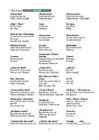
oo-sted ays I am _____ years old. How old are you? (formal) How old are you? (informal) ¿Hablas inglés? ¿Habla usted español? (No) Hablo... ah-blahs een-glehs ah-blah oo-sted eh-spahn-yol noh ah-bloh Do you speak English? Do you speak Spanish? (formal) I (don't) speak... (informal) ¿Entiende usted? / ¿Entiendes? (No) Entiendo. Yo (no lo) se. ehn-tyen-deh oo-sted / ehn-tyen- noh ehn-tyen-doh yoh noh loh seh dehs I (don't) understand. I (don't) know. Do you understand? (formal / informal)
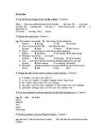
2) a / my / to / written / I / mother / already / letter / long / have 3) the / watch / often / they / TV / in / evening 4) the / gave / my / for / this / umbrella / is / that / Sally / me / my / birthday 5) particular / nothing / have / at / tell / you / to / moment / the 4. Give the comparative and the superlative of the following adjectives: ( 5 points ) e.g. tall taller the tallest lucky difficult soft good interesting 5. Put these sentences into the Reported Speech. ( 5 points ) e.g. She said:"I will call you from London." She said that she would call me from London. 1) Eric said:"Jack has gone out." 2) Frank said:"The car is waiting at the front door." 3) Tommy asked:"Is there anybody at home?" 4) I asked my friend:"Why do you come so late?" 5) Jane said:"Think before you answer!" 6. Use the correct Prepositions. ( 20 points ) 1) Jane started learning English two years........ 2) .......
It's 10 was working training regime. difficult to tell what kind of lesson 11 started 2 She hadn't studied basic Nepalese. they're in. Their teacher is handing 12 had lived 3 She had obtained long-term a paper to one student. It could be 13 happened weather forecasts. that they're in a maths lesson. These 14 didn't want 4 She had planned a route to the students aren't wearing uniform. It 15 insisted looks as if one of them is asleep. summit.
Studium Units 1-4 e-formaat Toimetatud Tartu Emajõe Koolis Toimetaja I. Tars Tartus, 2016 Elektroonilisse vormingusse kohandatud õpikus kasutatud märgised, mis aitavad otsingukäsu kasutamisel navigeerida * Tavakirjas leheküljenumbri ees on kolm järjestikust sidekriipsu, tühik ja vastava lehekülje number, näiteks, --- 5; * peatüki ette on kirjutatud kolm x-i, tühik ja vastava peatüki number, näiteks xxx 5; * visuaalne info on pandud kahekordsete ümarsulgude vahele. I Love English 6 töövihik sobib inglise keele õpetamiseks 8. klassis Töövihik vastab riiklikule õppekavale Retsenseerinud Piret Kärtner, Viive Latt, Ingrit Tera Toimetanud Viiu Menning, Nicola Fyfe, Tiina Helekivi Kujundanud ja küljendanud Eve Kurm Tehniliselt toimetanud Andero Kurm Illustreerinud Ülle Meister Esikaas: Boswell and Dr. Johnson (foto Scanpix). Vaata Unit 20. Autoriõigus: Mare Jõul, Ülle Kurm, 2009 Kirjastus Studium, 2009 Kõik õigused on kaitstud
(Instructions on an exam paper) Books must be returned on or before the date due. (Instructions in a library) 4 • Have to expresses a general obligation based on a law or rule, or based on the authority of another person: I can’t play tennis tomorrow. I have to go to the dentist. (I have an appointment.) Children have to go to school until they are 16. (A law) Mum says you have to tidy your room before you go out. (Mother’s order!) Must and have to are sometimes interchangeable: I must be home by midnight. I have to be home by midnight. Have to is used more often than must. If you are unsure which to use, it is probably safer to use have to. • NB! The negatives mustn’t and don’t have to are completely different. Mustn’t means be forbidden. Don’t have to expresses the absence of obligation.
Available at http://ltprofessionals.com/journalpdfs/vol1no1/features/winter2000kahny.pdf accessed 27.12.2012 ESOL Teaching Skills TaskBook. Classroom dynamics: unit 1 a). Available at http://akoaotearoa.ac.nz/download/ng/file/group-4/n2431-esol-teaching-skills- taskbook-unit-1-a---classroom-dynamics.pdf accessed 27.12.2012 III Language teaching methods. · (Traditional: the grammar-translation method/ classical method.) · Traditional: the direct method Youtube: http://www.youtube.com/watch?v=XiQvG-fvzLM Kids lesson (direct method) Language is primarily speech Reading skills are developed through practice with speaking Realia is used to convey the meaning Demonstration instead of translation or explanation Complete sentences instead of vocabulary lists The purpose of language learning is communication Pronunciation Self correction The goals of the teacher are communication, demonstration instead of translation (the
but he had presented his theory already on 1 May, 1875 in a comprehensive personal letter to his friend and mentor, Vilhelm Thomsen. It was received with great enthusiasm by the young generation of comparative philologists, the so- called Junggrammatiker, because it was an important argument in favour of theNeogrammarian dogma that the sound laws were without exceptions ("die Ausnahmslosigkeit der Lautgesetze"). BREAKING IN OLD ENGLISH Vowel breaking is a sound change whereby a single vowel changes to become a diphthong in specific environments. The resulting sound preserves the original vowel, which is either preceded or followed by a glide. This process is manifested in a variety of Germanic languages and is characteristic of Old English. Certain front vowels, /æ/ /e/ and /i/, in their short and long variants, were diphthongized when
 annaabi.ee